OPEN ACCESS Journal of Korean Tunnelling and Underground Space Association 21(1)189-199(2019)
https://doi.org/10.9711/KTAJ.2019.21.1.189
eISSN: 2287-4747 pISSN: 2233-8292
Received December 4, 2018 Revised December 24, 2018 Accepted December 28, 2018
This is an Open Access article distributed under the terms of the Creative Commons Attribution Non-Commercial License (http://creativecommons.org/
licenses/by-nc/4.0/) which permits unrestricted non- commercial use, distribution, and reproduction in any medium, provided the original work is properly cited.
Copyright ⓒ2019, Korean Tunnelling and Underground Space Association
터널형 구조물의 방재시설 가동에 따른 화재연기 거동에 관한 수치 해석적 연구
이호형
1*ㆍ최판규
2ㆍ이상돈
3ㆍ허원호
4ㆍ조종복
51
정회원, (주)주성지앤비 대리
2
정회원, (주)주성지앤비 팀장
3
정회원, 한국도로공사 도로교통연구원 수석연구원
4
정회원, (주)마이닝테크 대표이사
5
정회원, (주)삼보기술단 부장
A numerical study on the fire smoke
behavior by operating the fire prevention system in tunnel-type structure
Ho-Hyung Lee
1*ㆍPan-Gyu Choi
2ㆍSang-Don Lee
3ㆍWon-Ho Heo
4ㆍJong-Bok Jo
51
Researcher, Jusung G&B Inc.
2
Team Leader, Jusung G&B Inc.
3
Senior Researcher, Korea Expressway Corporation Research Institute
4
C.E.O, MiningTech Inc.
5
Head of Department, Sambo Engineering
*Corresponding Author : Ho-Hyung Lee, [email protected]
“상기 논문은 본 학회 논문집 21권 1호(2019년 1월호, pp.189-199)에 게재되었으나 논문의 게재를 취소합니다. 해당 논문은 한국터널지하공간학회 연구윤리규정에 대하 여 윤리위원회 심의를 통하여, 연구결과 소유자로부터 ‘정당한 승인’절차 없이 도용된
‘한국터널지하공간학회 연구윤리 규정 제4조(연구 부정행위 금지) 제2항 2호 표절’, 사사에 관련 연구사업명 오기로 인한 ‘한국터널지하공간학회 연구윤리 규정 제7조 (인용 및 참고표시)’관련 연구윤리 위반 논문으로 확인 되었습니다.”
The above article, which was published in JKTA (Journal of Korean Tunnelling and Underground Space Association) Vol. 21, No. 1, was retracted. It was confirmed by deliberation of the ethics committee that this article violated research ethics related to the ethic regulation No. 4 (plagiarism) of Korean Tunnelling and Underground Space Association by an illegal use of research results without their owners’ permission procedure and the ethic regulation No. 7 (citation and reference indication) of Korean Tunnelling and Underground Space Association by a misentry of the research project title in acknowledgements.
OPEN ACCESS Journal of Korean Tunnelling and Underground Space Association 21(1)189-199(2019)
https://doi.org/10.9711/KTAJ.2019.21.1.189
eISSN: 2287-4747 pISSN: 2233-8292
Received December 4, 2018 Revised December 24, 2018 Accepted December 28, 2018
This is an Open Access article distributed under the terms of the Creative Commons Attribution Non-Commercial License (http://creativecommons.org/
licenses/by-nc/4.0/) which permits unrestricted non- commercial use, distribution, and reproduction in any medium, provided the original work is properly cited.
Copyright ⓒ2019, Korean Tunnelling and Underground Space Association
화재연기 거동에 관한 수치 해석적 연구
이호형
1*ㆍ최판규
2ㆍ이상돈
3ㆍ허원호
4ㆍ조종복
51
정회원, (주)주성지앤비 대리
2
정회원, (주)주성지앤비 팀장
3
정회원, 한국도로공사 도로교통연구원 수석연구원
4
정회원, (주)마이닝테크 대표이사
5
정회원, (주)삼보기술단 부장
A numerical study on the fire smoke
behavior by operating the fire prevention system in tunnel-type structure
Ho-Hyung Lee
1*ㆍPan-Gyu Choi
2ㆍSang-Don Lee
3ㆍWon-Ho Heo
4ㆍJong-Bok Jo
51
Researcher, Jusung G&B Inc.
2
Team Leader, Jusung G&B Inc.
3
Senior Researcher, Korea Expressway Corporation Research Institute
4
C.E.O, MiningTech Inc.
5
Head of Department, Sambo Engineering
*Corresponding Author : Ho-Hyung Lee, [email protected]
Abstract
In this study, behaviors of fire smoke in the operation of disaster prevention facilities (smoke damper, jet fan) in a tunnel-type structure (soundproof tunnel) were investigated numerically and results of the investigation were compared and analyzed. Through the simulation and analysis, it was found that there was a significant change in the patterns of fire smoke between the opening of the ceiling of a fire vehicle and the closing, and it was shown that the critical temperatures of PC and PMMA, main materials of a soundproof tunnel were not exceeded. In addition, the simulation of installation intervals of smoke dampers showed that the maximum temperature of a soundproof tunnel without smoke dampers was 552°C while it reached 405°C when smoke dampers were installed at the installation interval of 50 m. The simulation of the operation of a jet fan showed that the maximum temperature of a soundproof tunnel without a jet fan was 549°C while it reached only 86°C when a jet fan was operating.
Therefore, it is highly expected that they could create a favorable environment for evacuation and protection of soundproofing materials, and it would be necessary to promote basic studies on tunnels serving various functions and purposes.
Keywords: Tunnel-type structure, Exhaust facility, Smoke control facility, Fire smoke, Numerical analysis
Retraction
초 록
본 연구에서는 배연댐퍼 또는 제트팬과 같은 방재시설이 설치된 터널형 구조물(방음터널)에 대하여 방재시설 가동에 따 른 화재연기의 거동을 수치해석적으로 고찰하고 해석결과를 비교 ‧ 검토하여 다음과 같은 결론을 얻었다. 화재차량 천장 부 개방 유무에 따라 방음터널 내 화재양상이 확연하게 달라지는 것을 확인하였으며, 방음터널의 주요 자재인 PC와 PMMA의 임계온도를 초과하지 않는 것으로 나타났다. 또한 배연댐퍼의 설치간격에 따른 해석결과, 방음터널 내 발생하 는 최대 온도가 미설치시에는 최대 552°C인 반면, 설치간격이 50 m인 경우에는 405°C로 나타났으며, 제트팬 가동 여부 에 따른 해석결과, 방음터널 내 발생하는 최대 온도는 제트팬 미가동시에는 549°C인 반면, 가동시에는 86°C로 나타나 화재시 피난환경과 방음자재보호에 있어 매우 유리한 환경을 조성할 것으로 예상되며, 향후 다양한 목적을 가진 터널을 대상으로도 이러한 기초연구의 활성화가 필요할 것으로 사료된다.
주요어:터널형 구조물, 배연시설, 제연설비, 화재연기, 수치해석
1. 서 론
최근 도시지역을 통과하는 고속화도로(고속도로 포함) 등에서 주거지역의 소음 및 환경대책으로 터널형 구조 물(이하 방음터널)의 설치가 증가되고 있으며, 이외에도 도심지의 교통량 해소와 경관대책 등의 다양하고 특수한 목적을 갖는 소형차전용터널, 복층터널, 수중터널, 하 ‧ 해저터널과 복잡한 진출입로가 포함된 네트워크형 터널 등의 특수한 형태의 터널이 지속적으로 설계 및 운영되고 있다.
일반 도로터널과 달리 소형차 전용 도로터널의 특성이 반영된 화재 위험도평가기법에 관한 연구(Ryu and Choi, 2018)와 대배기구 배연방식을 적용한 소형차 전용 터널의 화재특성에 관한 연구(Ryu et al., 2017), 네트워크형 터널의 풍량 과 오염물질 농도해석에 관한 연구(Kim et al., 2017), 중규모터널(연장 750 m 이내)에 화재시 화재 연기의 확산을 차단 및 지연 하는 설비에 관한 연구(Kim et al., 2016)등 해당 목적에 맞는 터널의 방재대책을 위 하여 국내외적으로 관련된 연구가 활발히 진행 중이지만, 화재시 방음터널 내 화재연기 거동에 관한 연구는 찾기 힘들다.
일반적으로 도로터널은 화재 발생 시 터널 이용객의 안전한 피난과 화재연기의 제어를 위한 환기 및 방재시설 등 의 대책은 국토교통부의 “도로터널 방재시설 설치 및 관리지침(MOLIT, 2016)”과 “도로설계편람(MOLIT, 2011)”
에 따라 도로터널의 연장, 교통량 등을 고려하여 방재등급과 연장등급을 선정하여 등급별로 방재시설을 설치하 도록 규제하고 있다. Table 1과 Fig. 1에는 2017년 고속도로 터널과 13개의 방음터널을 대상으로 연장등급을 비 교한 결과를 나타내었다.
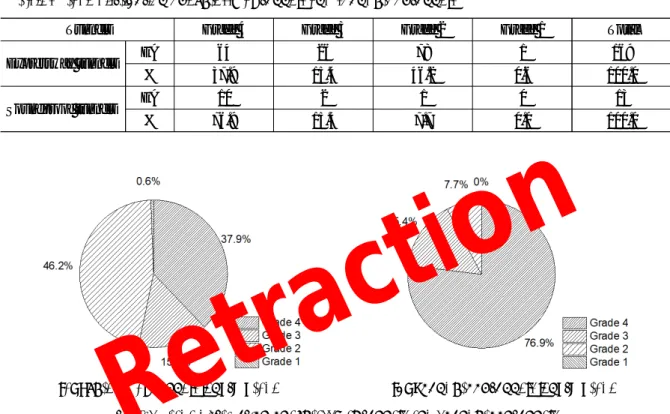
각 표와 그림에서 보는 것과 같이 고속도로 터널의 경우 46.2%가 2등급, 37.9%가 4등급, 15.4%가 3등급, 0.6%
가 1등급으로 나타난 반면, 방음터널의 경우 76.9%가 4등급으로 조사되어 대부분의 방음터널에서 옥내소화전과 같은 소화시설이 필수적으로 설치되지 않고 있다. 그 결과 방음터널은 고속도로터널과 비교하였을 때 상대적으로 화재에 대하여 취약할 수밖에 없으며, 초기소화 및 배연설비의 설치가 반드시 고려가 되어야 할 것으로 예상된다.
Retraction
하지만“도로터널 방재시설 설치 및 관리지침”에서 방음터널과 관련된 내용을 포함하고 있으나, 터널 내 화재시 방재와 관련된 부분에 대하여 세부적으로 다루고 있지 못하고 있는 실정이다(MOLIT, 2016).
따라서 본 연구에서는 방음터널 내 화재시 방재시설의 가동에 따른 화재연기의 거동을 수치해석을 통해 분석 하여 배연설비 등의 방재시설의 필요성에 대하여 검토하였다.
Table 1. Grade distribution of expressway tunnels and soundproof tunnels
Tunnels Grade 4 Grade 3 Grade 2 Grade 1 Total
Expressway tunnels EA 64 26 78 1 169
% 37.9 15.4 46.2 0.6 100.0
Soundproof tunnels EA 10 2 1 0 13
% 76.9 15.4 7.7 0.0 100.0
(a) Expressway tunnels length grade (b) Soundproof tunnels length grade Fig. 1. Grade distribution of expressway tunnels and soundproof tunnels
2. 방음터널 방재시설 가동에 따른 수치해석
2.1 해석대상 및 종류
본 연구는 비정상상태의 3차원 수치해석을 수행하였으며, 해석대상은 일반적인 방음터널의 크기인 왕복 4차 로 터널로 설정하여 대상의 연장을 1 km로, 구배는 0%로 설정하였다. 화재차량의 제원은 한국도로공사의 “도로 터널 제연용 제트팬 산정기준 개선연구”에서 제시된 값을 인용하여 길이 10.77 m, 폭 2.45 m, 높이 3.12 m로 설정 하였으며(Korea Expressway Corporation, 2012), 화재차량의 위치는 방음터널의 중앙부인 500 m 지점에 위치 시켰으며 발열량은 Ultrafast 급 화재로 최대 발열량이 20 MW가 되도록 하였으며, 연기발생량은 80 m
3
/s로 설정 하였다(MOLIT, 2016). 이때, 외기 조건은 15°C의 등온조건을, 터널 입구부에서의 유입풍속 및 유입 공기 온도는 각각 0.5 m/s, 15°C로 설정하였다. 이에 대한 세부적인 내용을 Table 2에 정리하여 나타내었다. 또한, 방음터널의Retraction
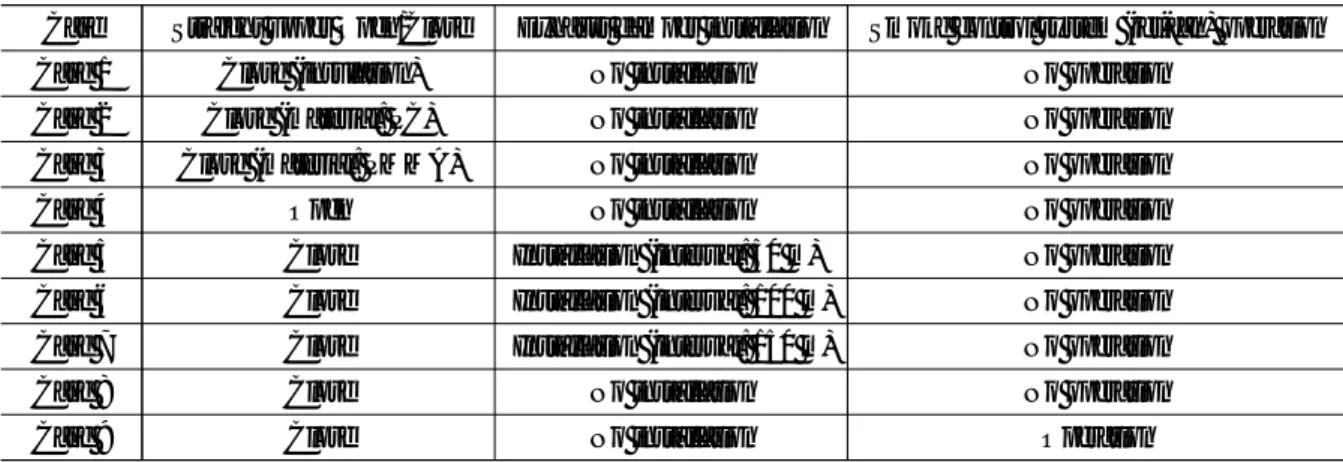
방재시설 가동에 따른 화재해석을 수행하기 위하여 해석의 종류를 Table 3에 나타내었다. 화재차량 직상부 개방 조건에 따른 화재해석을 통해 방재시설의 필요성에 대하여 검토를 수행하였으며, 이를 위해 방음터널에서 주로 사용되는 자재인 PC (폴리카보네이트)와 PMMA (폴리메타크릴산 메틸)의 열적특성을 고려하기 위하여 방음터 널의 천장부와 측벽부를 추가로 모델링 하였다. 화재차량 직상부의 개방크기는 화재차량과 유사한 10 m × 3 m (길이 × 폭)로 설정하였다.
또한, 방음터널 배연시설의 설치간격을 50 m, 100 m, 150 m로 구분하였다. 각 배연시설의 크기는 천장부에 설 치되는 방음자재 1개의 크기와 유사한 2 m × 1 m (가로 × 세로)로 설정하였으며, 배연풍량은 방음터널의 경우 천 장부에 과도한 하중을 싣기에는 구조적으로 문제가 발생 할 수 있기 때문에 비교적 소량이라 할 수 있는 1 m
3
/s을 적용하여 각 배연댐퍼에서의 배연풍속은 0.5 m/s가 되도록 설정하였다.Table 2. Boundary condition
Contents Input values
Length 1 km
Slope 0%
HRR (SPR) 20 MW (80 m
3/s)
State condition Unsteady-state condition
Flow condition Incompressible ideal gas
Turbulence model Standard k-ε
Lining inside Coupled heat transfer condition
Inflow velocity, Temperature 0.5 m/s, 15°C
Outside temperature 15°C
Inlet initial condition 0.5 m/s (velocity inlet condition) Inlet/outlet condition Atmospheric pressure boundary condition
Table 3. Simulation case
Case Straight upper Open/Close Exhaust damper installation Smoke control system (jet-fan) operation
Case 1 Close (insulation) No installation No operation
Case 2 Close (material: PC) No installation No operation
Case 3 Close (material: PMMA) No installation No operation
Case 4 Open No installation No operation
Case 5 Close Installation (interval: 50 m) No operation
Case 6 Close Installation (interval: 100 m) No operation
Case 7 Close Installation (interval: 150 m) No operation
Case 8 Close No installation No operation
Case 9 Close No installation Operation
Exhaust damper and Smoke control system operation time: fire occurrence 1 min later
Retraction
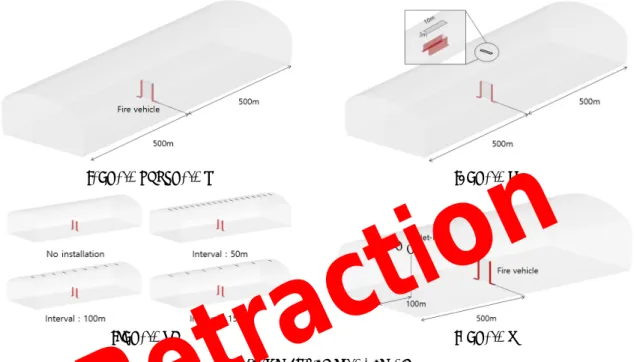
제연설비(제트팬) 가동 유무에 따른 수치해석을 수행하기 위하여 제트팬의 설치 위치 및 대수는 터널 입구(차 량진행방향)으로부터 100 m를 이격시켜 설치하였다. 제트팬의 제원은 내경 1,250 mm의 토출풍속 30 m/s의 일 반 도로터널형 제트팬을 적용하였으며, 제트팬의 설치대수는 3대로 설정하였다. Fig. 2에는 본 연구에서 수행된 해석에 대한 개요도를 나타내었다.
(a) Case 1~3, Case 8 (b) Case 4
(c) Case 5~7 (d) Case 9
Fig. 2. Simulation case domain
2.2 방음터널 천장부 개방에 따른 영향 해석
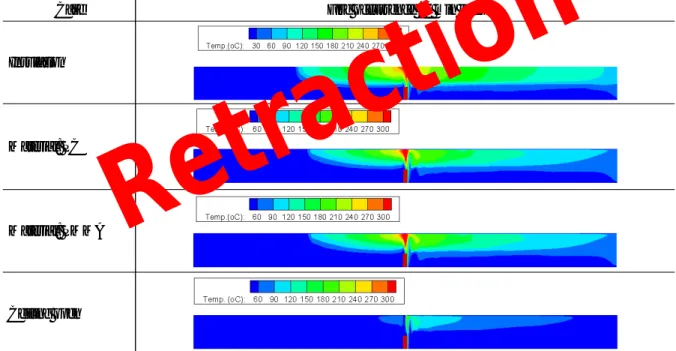
Fig. 3에는 방음터널 재질과 화재차량 천장부 개방에 따른 화재차량 직상부 온도 분포를 나타내었다. 그림에서 보는 것과 같이 방음터널의 천장부가 개방되지 않을 경우, 방음터널 외부 재질(단열, PC, PMMA)에 따른 직상부 온도는 각각 최대 534°C (단열조건), 529°C (재질: PC), 526°C (재질: PMMA) 순으로 높게 나타났다. 한편, “방 음터널 형식과 화재강도에 따른 화재시뮬레이션 및 해석”에 따르면 방음자재 중 PC와 PMMA의 가열시 급속한 열분해가 발생하는 온도인 임계온도는 각각 450°C와 300°C로 규정함에 따라 방음터널에서 주로 사용되는 재질 인 PC와 PMMA의 임계온도에는 충분히 도달됨을 알 수 있다(Korea Expressway Corporation, 2018).
그러나 화재차량 천장부가 개방되는 경우 방음터널 내 발생된 열기류의 대부분이 개방된 직상부를 통하여 급 격히 배출되고, 화재발생 10분 후 168°C를 유지하는 것으로 나타남에 따라 방음터널 내 배연시설이 설치가 될 경 우 화재양상이 확연히 달라짐을 확인하였다. 즉, 다양한 방음터널 내 방재시설 설치에 따른 화재해석에 대한 영향 성 검토가 필요한 것으로 분석되었으며, Fig. 4에는 화재발생 10분 후 각 해석종류에 따른 방음터널 내 온도분포 를 나타내었다.
Retraction
Fig. 3. Temperature distribution by opening the ceiling to material
Case Fire occurrence 10 min later
Insulation
Material: PC
Material: PMMA
Ceiling open
Fig. 4. Results of simulation - Effect of opening of the ceiling of a soundproof tunnels
2.3 방음터널 배연시설 설치간격에 따른 영향 해석
방음터널 천장부 개방에 따라 터널 내 온도가 확연히 변화됨에 따라 배연시설(배연댐퍼)의 설치에 따른 영향을 해석하였다. 배연댐퍼의 설치간격을 미설치, 50 m, 100 m, 150 m로 설정하여 각 배연댐퍼의 설치간격에 따른 배 연효과를 분석하였다.
Retraction
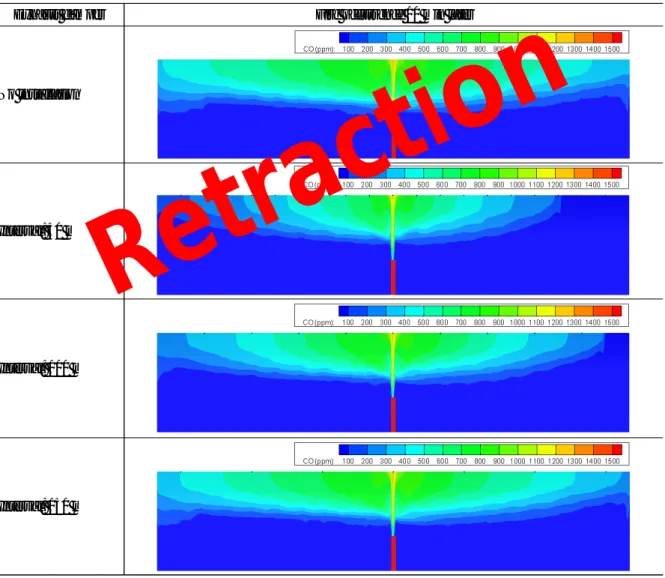
배연댐퍼 설치간격에 따른 화재연기 중 CO의 확산 결과를 Fig. 5와 Table 4에 나타내었다. CO의 확산거리는 배연댐퍼 미설치시가 가장 길게 나타났으며, 배연댐퍼 설치간격 50 m, 100 m, 150 m 순으로 짧게 나타났다. 모든 배연댐퍼에서 설정한 동일한 배연풍속인 0.5 m/s가 적용하고 있음에 따라 배연댐퍼의 설치 수가 많을수록 배연 량이 증가되기 때문에 이러한 결과가 나타났으며, 정량적으로 화재발생 10분 후 각 해석종류에 따른 CO의 최대 확산거리는 배연댐퍼 미설치시 500 m 이상, 배연댐퍼 설치간격 50 m인 경우 355 m, 배연댐퍼 설치간격 100 m인 경우 450 m, 배연댐퍼 설치간격 150 m인 경우에는 500 m 이상의 최대 확산거리를 나타내었다.
즉, 배연댐퍼의 설치간격이 50 m와 100 m인 경우 일정구간의 배연구역이 형성됨을 확인 할 수 있으며, 배연댐 퍼가 설치될 경우, 배연댐퍼로 화재연기가 배출됨에 따라 화재시 보다 안전한 피난환경을 조성 할 수 있을 것으로 기대된다.
Exhaust damper Fire occurrence 10 min later
No installation
Interval: 50 m
Interval: 100 m
Interval: 150 m
Fig. 5. Results of simulation - Effect of exhaust damper installation
Retraction
Table 4. Maximum diffusion distance of CO
Exhaust damper Maximum diffusion distance of CO
No installation More than 500 m
Interval: 50 m 355 m
Interval: 100 m 450 m
Interval: 150 m More than 500 m
또한, Fig. 6에는 각 해석종류에 따른 화재차량 직상부의 최대 온도를 나타내었다. 그림에서 보는 것과 같이 배 연댐퍼 미설치시에는 552°C인 반면, 배연댐퍼 설치간격이 50 m인 경우 405°C, 설치간격이 100 m인 경우 416°C, 설치간격이 150 m인 경우 430°C로 나타나 방음터널 내 화재시 온도를 저감 시키는 것으로 나타났다. 모두 방음 터널의 주요 재질인 PC의 임계온도인 450°C를 초과하지 않아 화재시 방음자재의 탈락은 발생하지 않을 것으로 예상된다. 이상에서 방음터널에 소량의 배연풍량이 존재할 경우 화재시 양상은 크게 변화되며, 방음터널의 주요 자재인 PC와 PMMA의 임계온도 보다 낮은 온도가 형성되는 것으로 분석되었다.
Fig. 6. Results of simulation - Effect of exhaust damper installation
2.4 제연설비 가동에 따른 영향 해석
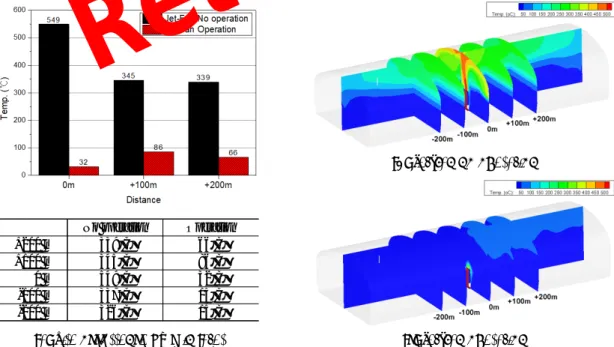
Fig. 7에는 화재진행 및 제트팬 가동여부에 따른 화재연기 중 CO의 거동을 나타내었다. 먼저 제트팬 미가동시 의 화재연기의 확산을 보면 화재진행에 따라 화재차량으로부터 발생된 화재연기가 양측으로 확산되기 시작하는 것을 확인 할 수 있으며, 일반적인 화재진행의 양상임을 확인 할 수 있다. 또한 화재발생 10분 후에는 100 ppm 이 하의 CO 농도가 방음터널 전반에 분포되는 것을 확인 할 수 있다. 한편 제트팬이 가동이 될 경우 화재차량으로부 터 발생된 화재연기가 제트팬의 작동방향으로 이동하면서 방음터널 전반에 희석효과를 나타내고 있음을 확인 할 수 있다.
Retraction
Fig. 8에는 화재발생 10분 후 제트팬 가동 여부에 따른 열기류의 분포를 나타내었다. 화재연기의 확산과 마찬 가지로 제트팬이 가동되지 않을 경우에는 화재차량으로부터 양측으로 확산되어 열기류가 이동하게 되며, 화재차 량 직상부에는 열축적이 발생해 최대 549°C의 온도를 발생시키는 것으로 나타났다. 그러나 제트팬이 가동이 될 경우 화재차량으로부터 발생된 열기류가 제트팬의 영향으로 터널 외부로 점차 이동하여 배출됨에 따라 화재차량 직상부에 열축적 정도가 감소하여 화재차량 직상부 근처의 최대온도는 86°C로 나타났다.
Time Jet-fan no operation Jet-fan operation
Fire occurrence 1 min later
Fire occurrence 5 min later
Fire occurrence 10 min later
Fig. 7. Results of simulation - Effect of smoke control system (jet-fan) operation
No operation Operation
+200 m 339°C 66°C
+100 m 345°C 86°C
0 m 549°C 32°C
-100 m 337°C 15°C
-200 m 326°C 15°C
(b) Jet-fan no operation
(a) Fire occurrence 10 min later (c) Jet-fan operation Fig. 8. Temperature distribution to smoke control system (jet-fan) operation
Retraction
이상에서 제트팬 가동 여부에 따른 해석결과 방음터널 내 제연설비가 가동 될 경우 피난환경과 방음자재보호 에 있어 매우 유리한 환경을 제공할 수 있을 것으로 예상되나, 제트팬은 하중이 존재하는 설비이므로 방음터널에 설치시에 하중과 관련된 설계적인 부분이 반드시 고려되어야 한다.
3. 결 론
본 연구에서는 방음터널의 방재시설(배연댐퍼, 제트팬) 가동에 따른 화재연기의 거동을 수치해석적으로 고찰 하고 해석결과를 비교 ‧ 검토하여 다음과 같은 결과를 얻었다.
1. 화재시 화재차량 천장부가 개방되는 경우 방음터널 내 발생된 열기류의 대부분이 개방된 직상부를 통하여 급 격히 배출되어 화재발생 10분 후 168°C를 유지하는 것으로 분석되었고, 방음터널에 주요 자재로 사용되는 PC와 PMMA의 임계온도를 초과하지 않은 것으로 나타났다.
2. 배연댐퍼의 설치간격에 따른 해석결과, 설치간격이 50 m와 100 m인 경우 일정구간의 배연구역이 형성됨을 확인 할 수 있으며, 배연댐퍼 미설치시에는 화재차량 직상부의 온도가 552°C인 반면, 배연댐퍼 설치간격이 50 m인 경우 405°C, 설치간격이 100 m인 경우 416°C, 설치간격이 150 m인 경우 430°C로 나타나 방음터널 내 화재시 온도를 저감 시키는 것으로 나타났다.
3. 제트팬 가동 여부에 따른 해석결과, 제트팬이 가동되지 않을 경우에는 화재차량 직상부에 열기류가 축적됨에 따라 화재발생 10분 후 최대 549°C의 열환경이 조성되는 반면, 제트팬이 가동될 경우 최대 86°C의 열환경이 조성됨에 따라 화재시 피난환경과 방음자재 보호에 있어 매우 유리한 환경을 조성할 것으로 분석되었다.
4. 방음터널의 방재시설 가동 유무에 따라 화재시 터널 내 피난환경 및 열환경 뿐 아니라 방음자재 보호에도 안전 한 상황을 조성하는 것으로 나타났으며, 향후 다양한 목적을 가진 터널을 대상으로 이러한 기초연구의 활성화 가 필요할 것으로 사료된다.
감사의 글
본 연구는 국토교통부(국토교통과학기술진흥원) 2014년 건설기술연구사업의 ‘대심도 복층터널 설계 및 시공 기술개발(14SCIP-B088624-01)’연구단을 통해 수행되었습니다. 연구지원에 감사드립니다.
References
1. Kim, H.G., Choi, P.G., Ryu, J.O., Lee, C.W. (2017), “Development of a program to predict the airflow rate and pollutant concentration in complex network-type tunnels”, Journal of Korean Tunnelling and Underground Space Association, Vol. 19, No. 2, pp. 213-229.
Retraction
2. Kim, H.G., Lee, H.H., Choi, P.G., Song, S.H. (2016), “A study on the applicability of the local smoke spread prevention & procrastination facility in medium - length tunnel”, Journal of Korean Society of Hazard Mitigation, Vol. 16, No. 2, pp. 297-305.
3. Korea Expressway Corporation (2012), A study on the improvement of calculation criteria for jet-fan for road tunnel, Korea Expressway Corporation, Gim-Cheon, pp. 32-81.
4. Korea Expressway Corporation (2018), Simulation and analysis for the sound barrier tunnel depending on shape and fire intensity, Korea Expressway Corporation, Gim-Cheon, pp. 11-63.
5. MOLIT (2011), Road design manual (617. Ventilation), Ministry of Land, Infrastructure and Transport, Se-Jong, pp. 617-28 - 617-35.
6. MOLIT (2016), Guidelines for fire prevention equipment’s installation and management in road tunnels, Ministry of Land, Infrastructure and Transport, Se-Jong, pp. 56-57.
7. Yoo, J.O., Kim, J.S., Rhee, K.S. (2017), “An analytical study on the fire characteristics of the small tunnel with large smoke exhaust port”, Journal of Korean Tunnelling and Underground Space Association, Vol.
19, No. 3, pp. 375-388.
8. Ryu, J.O., Choi, P.G. (2018), “A study on the development and applicability of fire risk assessment method for small road tunnels passing only small cars”, Journal of Korean Tunnelling and Underground Space Association, Vol. 20, No. 6, pp. 917-930.