• 검색 결과가 없습니다.

Significance of albumin to globulin ratio as a predictor of febrile urinary tract infection after ureteroscopic lithotripsy

N/A
N/A
Protected

Academic year: 2021

Share "Significance of albumin to globulin ratio as a predictor of febrile urinary tract infection after ureteroscopic lithotripsy"

Copied!
6
0
0

로드 중.... (전체 텍스트 보기)

전체 글

(1)

Introduction

Advancements in endourology have introduced the era of retro- grade intrarenal surgery (RIRS) and ureteroscopic lithotripsy

Significance of albumin to globulin ratio as a predictor of febrile urinary tract infection after ureteroscopic

lithotripsy

Seung Yun Yi

1

, Dong Jin Park

2

, Kyungchan Min

1

, Jae-Wook Chung

3

, Yun-Sok Ha

3

, Bum Soo Kim

4

, Hyun Tae Kim

4

, Tae-Hwan Kim

3

, Eun Sang Yoo

4

1

Department of Urology, Kyungpook National University Hospital, Daegu, Korea

2

Department of Urology, Dongguk University Gyeonju Hospital, Gyeongju, Korea

3

Department of Urology, School of Medicine, Kyungpook National University, Kyungpook National University Chilgok Hospital, Daegu, Korea

4
Department of Urology, School of Medicine, Kyungpook National University, Kyungpook National University Hospital, Daegu, Korea

Background: We aimed to analyze the effectiveness of albumin to globulin ratio (AGR) in predict- ing postoperative febrile urinary tract infection (fUTI) after ureteroscopic lithotripsy (URS) and retrograde intrarenal surgery (RIRS).

Methods: From January 2013 to May 2018, 332 patients underwent URS and RIRS. The rate of postoperative fUTI and risk factors for postoperative fUTI were analyzed using logistic regression.

Patients were divided into postoperative fUTI and non-postoperative fUTI (non-fUTI) groups. AGR with other demographic and perioperative data were compared between the two groups to pre- dict the development of fUTI after URS.

Results: Of the 332 patients, postoperative fUTI occurred in 41 (12.3%). Preoperative pyuria, mi- croscopic hematuria, diabetes mellitus, hypoalbuminemia, and hyperglobulinemia were more prevalent in the fUTI group. Patients in the fUTI group had larger stone size, lower preoperative AGR, longer operation time, and longer preoperative antibiotic coverage period. In a multivariable logistic analysis, preoperative pyuria, AGR, and stone size were independently correlated with postoperative fUTI (p <0.001, p =0.008, and p =0.041, respectively). Receiver operating curve analysis showed that the cutoff value of AGR that could predict a high risk of fUTI after URS was 1.437 (sensitivity, 77.3%; specificity, 76.9%), while the cutoff value of stone size was 8.5 mm (sensitivity, 55.3%; specificity, 44.7%).

Conclusion: This study demonstrated that preoperative pyuria, AGR, and stone size can serve as prognostic factors for predicting fUTI after URS.

Keywords: Albumin to globulin ratio; Biomarkers; Nephrolithiasis; Ureteroscopy; Urinary tract in- fections

Yeungnam Univ J Med 2021;38(3):225-230 https://doi.org/10.12701/yujm.2021.00955

Received: January 31, 2021 Revised: March 18, 2021 Accepted: March 19, 2021 Corresponding author:

Eun Sang Yoo, MD

Department of Urology, School of Medicine, Kyungpook National University, Kyungpook National University Hospital, 680

Gukchaebosang-ro, Jung-gu, Daegu 41944, Korea

Tel: +82-53-420-5843 Fax: +82-53-421-9618 E-mail: [email protected]

(URS), with a higher stone-free rate and lower morbidity [1].

However, postoperative urinary tract infection (UTI) and subse- quent sepsis remain a burden for postoperative care, despite proper administration of prophylactic intravenous antibiotics. UTI is one

Copyright © 2021 Yeungnam University College of Medicine

This is an Open Access article distributed under the terms of the Creative Commons Attribution Non-Commercial License (http://creativecommons.org/licenses/by-nc/4.0/)

which permits unrestricted non-commercial use, distribution, and reproduction in any medium, provided the original work is properly cited.

(2)

of the most common postoperative complications after RIRS, and it has been reported that the rate varies widely between studies [2].

Postoperative UTI can be life-threatening because it can lead to sepsis and septic shock. If it advances to septic shock, higher post- operative mortality and longer hospital stays would be expected [3]. Attempts have been made to determine the risk factors to min- imize postoperative febrile UTI. Some studies have suggested that the neutrophil-to-lymphocyte ratio (NLR) and platelet-to-lym- phocyte ratio (PLR) can be effective biomarkers for predicting postoperative UTI after percutaneous nephrolithotomy [4,5].

Albumin and globulin are the main components of serum pro- teins, and these proteins play a pivotal role in acute inflammatory reactions and chronic inflammation. In this study, we validated the effectiveness of the albumin to globulin ratio (AGR) in predicting postoperative febrile UTI (fUTI). However, to date, few studies have evaluated AGR as a predictor of postoperative infection after URS and RIRS. AGR has already been studied in different types of cancer, and it has been found to be a possible prognostic marker for cancer [6]. However, so far, there have been limited studies in- vestigating whether AGR can be used as a prognostic marker to predict postoperative fUTI in URS and RIRS.

Materials and methods

Patients who underwent URS and RIRS from January 2013 to May 2018 in a tertiary general hospital in South Korea were in- cluded in this study. Patients with bilateral stones and those with- out preoperative serum albumin and globulin data were excluded from this study. A total of 332 patients were included in the study.

Patients were divided into the postoperative fUTI group (fUTI group) and non-postoperative fUTI group (non-fUTI group).

Postoperative fUTI was diagnosed if the patient’s body tempera- ture was above 38°C with pyuria and other fever foci that should have been excluded within a week after the surgery. Preoperative clinical data including age, sex, and underlying diseases such as hy- pertension, diabetes mellitus (DM), chronic renal failure (CRF) defined as an estimated glomerular filtration rate of less than 60 mL/min per 1.73 m

2

, body mass index (BMI), presence of pyuria, presence of microscopic hematuria, presence of preoperative uret- eral stent and percutaneous nephrostomy (PCN), and history of previous URS and RIRS were collected. Stone size prior to surgery was measured using noncontrast computed tomography, and the largest diameter was recorded. Preoperative pyuria was defined as more than five to 10 white blood cells (WBC) per high-power field (HPF), while preoperative microscopic hematuria was defined as more than three red blood cells per HPF on laboratory urinalysis.

Blood samples were collected within 1 month prior to surgery, and

AGR was calculated using the equation of ‘AG ratio=albumin/to- tal protein without albumin.’ WBC counts were collected to demonstrate their effectiveness as an inflammatory indicator. Ster- ile preoperative urine culture was performed before surgery.

The patients were admitted to the hospital a day before surgery.

None of the patients had preoperative fever. Fluoroquinolone was administered from the day of admission to the day of surgery. Un- der spinal or general anesthesia, we used a semi-rigid ureteroscope and/or flexible ureteroscope for lithotripsy. A hydrophilic guide- wire was used to engage the semi-rigid ureteroscope into the ure- ter. For renal stones, we used Amplatz Super Stiff guidewire (Cook Medical Inc., Bloomington, IN, USA) and Flexor Ureteral Access Sheath (Cook Medical Inc.) prior to the engagement of the flexible ureteroscope. A 200- or 365-micro holmium laser lithotripter was used to fragment the target stone into pieces, with a power of 20 joules and 0.5 frequency. We used a stone basket to remove the fragments larger than 2 mm., and six French ureteral stents were kept for 2 weeks after the surgery. Patients were discharged on postoperative day one, and antibiotics were prescribed for 5 days if there was no evidence of postoperative UTI.

Chi-square test for categorical variables and Student t-test for continuous variables were used to analyze the baseline characteris- tics. Multivariate logistic regression analysis was performed using the forward-likelihood ratio method, and p-values, odds ratios (ORs), and 95% confidence intervals (CIs) were collected. A re- ceiver operating characteristic (ROC) curve was used to deter- mine the optimal cutoff value and its sensitivity and specificity. Sta- tistical significance was set at p<0.05. IBM SPSS version 18.0 for Windows (IBM Corp., Armonk, NY, USA) was used for the analy- sis.

Results

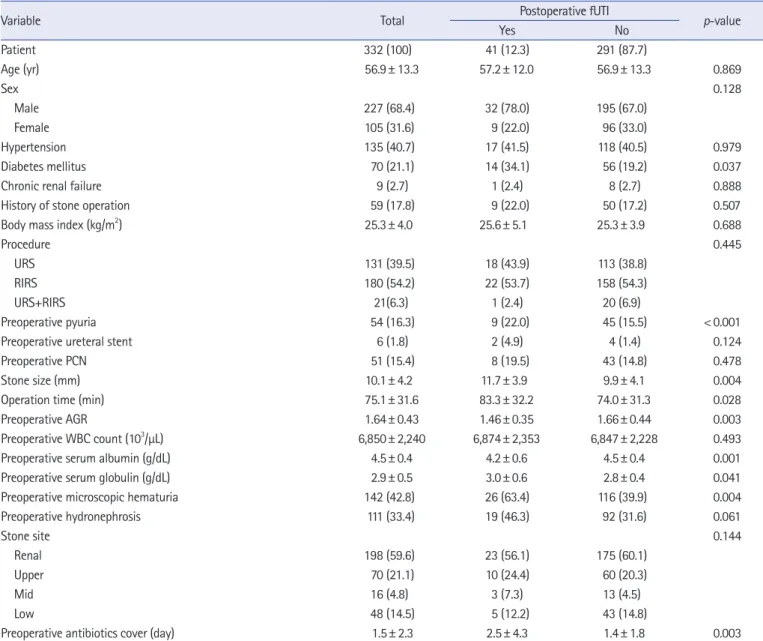
Table 1 shows the baseline characteristics of the patients and the

chi-square test between the two groups. Of the 332 patients, 41

were included in the fUTI group and 291 were included in the

non-fUTI group. Of all the patients, 135 had hypertension, 70 had

DM, and nine had CRF. The mean age was 56.9±13.3 years, mean

stone size was 10.1±4.2 mm, and mean preoperative AGR was

1.64±0.43. Preoperative pyuria, microscopic hematuria, hypoal-

buminemia, hyperglobulinemia, and DM were more prevalent in

the fUTI group (p =0.001, p =0.004, p =0.001, p =0.041, and

p =0.037, respectively). Patients in the fUTI group had larger

stone size, lower preoperative AGR, longer operation time, and lon-

ger preoperative antibiotic coverage period (p=0.004, p=0.003,

p=0.028, and p=0.003, respectively). There were no statistically sig-

nificant differences in hypertension, CRF, age, BMI, operation histo-

(3)

ry, sex, preoperative ureteral stenting, preoperative PCN, preopera- tive WBC counts, and operation sites.

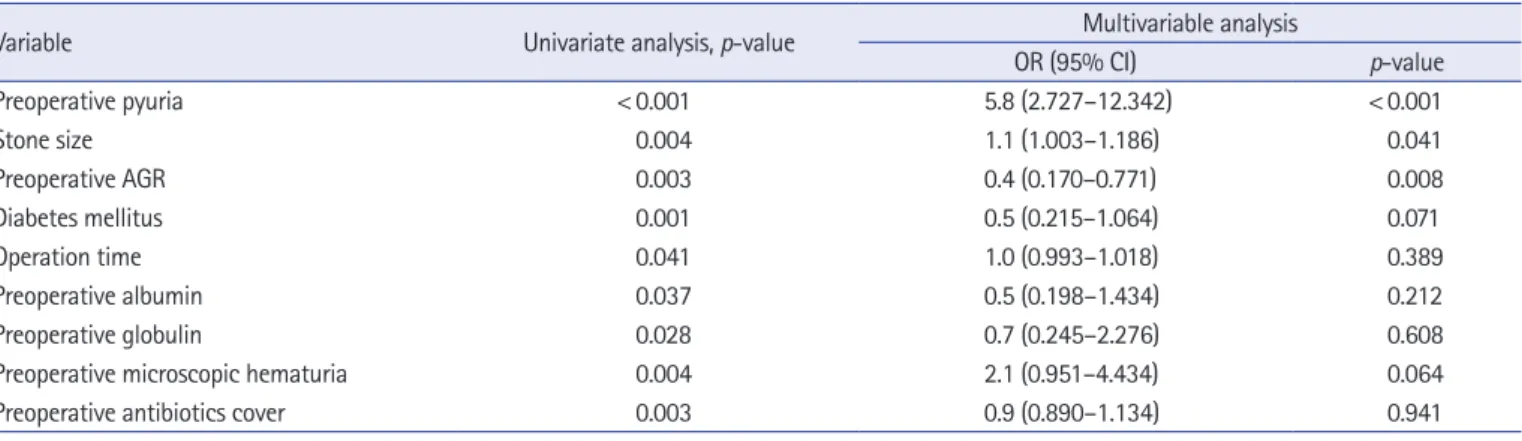
Table 2 shows the results of the multivariate logistic regression analysis for predicting postoperative fUTI. In multivariate logistic regression analysis for the factors that were statistically significant on univariate logistic regression analysis, stone size (OR, 1.1; 95%

CI, 1.003–1.186; p=0.041), preoperative AGR (OR, 0.4; 95% CI, 0.170–0.771; p=0.008), and preoperative pyuria (OR, 5.7; 95%

CI, 2.727–12.342; p<0.001) were found to be significant factors.

According to ROC curves for predicting postoperative fUTI, the optimal cutoff value of AGR was 1.437 (area under the curve [AUC], 0.646; sensitivity, 77.3%; specificity, 76.9%) (Table 3), and the optimal

cutoff value of stone size was 8.5 mm (AUC, 0.640; sensitivity, 55.3%; specificity, 44.7%) (Table 3).

Discussion

Advancements in laser technology and ureteroscopy have made lithotripsy less invasive and have yielded a higher stone-free rate with fewer complications. One of the most common postoperative complications is UTI, even when prophylactic antibiotics are ade- quately administered. Fan et al. [7] found that preoperative pyuria was the most important parameter for UTI, and similarly, our study showed that the presence of pyuria prior to surgery signifi- Table 1. Comparison of demographic, clinical, and postoperative data between postoperative fUTI group and non-fUTI group

Variable Total Postoperative fUTI

p-value

Yes No

Patient 332 (100) 41 (12.3) 291 (87.7)

Age (yr) 56.9± 13.3 57.2± 12.0 56.9± 13.3 0.869

Sex 0.128

Male 227 (68.4) 32 (78.0) 195 (67.0)

Female 105 (31.6) 9 (22.0) 96 (33.0)

Hypertension 135 (40.7) 17 (41.5) 118 (40.5) 0.979

Diabetes mellitus 70 (21.1) 14 (34.1) 56 (19.2) 0.037

Chronic renal failure 9 (2.7) 1 (2.4) 8 (2.7) 0.888

History of stone operation 59 (17.8) 9 (22.0) 50 (17.2) 0.507

Body mass index (kg/m

2

) 25.3± 4.0 25.6± 5.1 25.3± 3.9 0.688

Procedure 0.445

URS 131 (39.5) 18 (43.9) 113 (38.8)

RIRS 180 (54.2) 22 (53.7) 158 (54.3)

URS+RIRS 21(6.3) 1 (2.4) 20 (6.9)

Preoperative pyuria 54 (16.3) 9 (22.0) 45 (15.5) < 0.001

Preoperative ureteral stent 6 (1.8) 2 (4.9) 4 (1.4) 0.124

Preoperative PCN 51 (15.4) 8 (19.5) 43 (14.8) 0.478

Stone size (mm) 10.1± 4.2 11.7± 3.9 9.9± 4.1 0.004

Operation time (min) 75.1± 31.6 83.3± 32.2 74.0± 31.3 0.028

Preoperative AGR 1.64± 0.43 1.46± 0.35 1.66± 0.44 0.003

Preoperative WBC count (10

3

/μL) 6,850± 2,240 6,874± 2,353 6,847± 2,228 0.493

Preoperative serum albumin (g/dL) 4.5± 0.4 4.2± 0.6 4.5± 0.4 0.001

Preoperative serum globulin (g/dL) 2.9± 0.5 3.0± 0.6 2.8± 0.4 0.041

Preoperative microscopic hematuria 142 (42.8) 26 (63.4) 116 (39.9) 0.004

Preoperative hydronephrosis 111 (33.4) 19 (46.3) 92 (31.6) 0.061

Stone site 0.144

Renal 198 (59.6) 23 (56.1) 175 (60.1)

Upper 70 (21.1) 10 (24.4) 60 (20.3)

Mid 16 (4.8) 3 (7.3) 13 (4.5)

Low 48 (14.5) 5 (12.2) 43 (14.8)

Preoperative antibiotics cover (day) 1.5± 2.3 2.5± 4.3 1.4± 1.8 0.003

Values are presented as number (%) or mean±standard deviation.

AGR, albumin to globulin ratio; fUTI, febrile urinary tract infection; low, low ureter stone; mid, mid ureter stone; PCN, percutaneous nephrostomy; renal,

renal stone; RIRS, retrograde intrarenal surgery; upper, upper ureter stone; URS, ureteroscopic lithotripsy; WBC, white blood cell.

(4)

cantly contributed to the rate of UTI. Lai and Assimos [8] found that preoperative hydronephrosis was significantly associated with postoperative infection; however, our study showed that hydrone- phrosis was not a contributing factor to fUTI. In our study, some patients with preoperative hydronephrosis underwent PCN prior to the operation due to ongoing infection or acute renal failure, which may lower the risk of fUTI in patients with preoperative hy- dronephrosis.

In our study, the stone size was found to be a risk factor for post- operative fUTI because larger stones may require a longer opera- tion time. Moreover, larger stones might require excessive intrare- nal and intraureteral irrigation, which can lead to increased renal pelvic pressure, and the whole sequence would contribute to a higher risk of UTI, which is more likely to increase the absorption of bacteriotoxins and true pathogens [9].

Our results also showed that preoperative AGR is a significant factor that is highly associated with the incidence of postoperative fUTI. Patients with a lower AGR (<1.437) were more susceptible to UTI after URS and RIRS. Previous studies have shown the ef- fectiveness of AGR as a postoperative prognostic factor in patients with different cancers [10-12]. Moreover, Jian et al. [13] and Xun et al. [14] showed the validity of low AGR to predict postoperative fUTI in patients who underwent stone removal operation. Albu- min and globulins are major serum proteins that reflect nutritional status and systemic inflammation. Low albumin levels usually re- flect malnutrition, which makes one more vulnerable to systemic

infections, including UTI. In addition, hypoalbuminemia has been found to lower target organ exposure to antibiotics, which decreas- es the effectiveness of antibiotics [15]. Non-albumin serum pro- teins are involved in various inflammatory reactions and consist of proteins such as globulin, C-reactive protein (CRP), and comple- ments [16,17]. High globulin components are highly associated with worse prognosis in chronic inflammatory conditions, espe- cially in patients with cancer [18]. High globulin levels reflect the inflammatory and active immune response of a host due to highly accumulated immunoglobulins and CRPs [19]. Hypoalbumin- emia and hyperglobulinemia were more prevalent in the fUTI group, but each variable was not found to be a useful predictor of fUTI. Albumin can be influenced by various confounding factors such as stress, illness, hepatic insufficiency, and changes in the vol- ume of body fluids, and this could affect the efficiency and accura- cy of albumin as a prognostic marker [20]. Previous studies have proposed that AGR provides an assessment of albumin and globu- lin together, which could reflect the body’s nutritional status and inflammatory states comprehensively, and this increases its value as a novel biochemical index [20,21]. Thus, patients with a lower AGR could be more susceptible to acute inflammatory conditions (especially fUTI) after surgery.

Our study had some limitations. First, our study had the poten- tial for selection bias due to the retrospective nature of the study design. Second, more inflammatory markers such as NLR, PLR, CRP, and erythrocyte sedimentation rate were not estimated in Table 2. Multivariate logistic regression analysis for predicting postoperative febrile urinary tract infection after ureteroscopic lithotripsy and/or retrograde intrarenal surgery

Variable Univariate analysis, p-value Multivariable analysis

OR (95% CI) p-value

Preoperative pyuria < 0.001 5.8 (2.727–12.342) < 0.001

Stone size 0.004 1.1 (1.003–1.186) 0.041

Preoperative AGR 0.003 0.4 (0.170–0.771) 0.008

Diabetes mellitus 0.001 0.5 (0.215–1.064) 0.071

Operation time 0.041 1.0 (0.993–1.018) 0.389

Preoperative albumin 0.037 0.5 (0.198–1.434) 0.212

Preoperative globulin 0.028 0.7 (0.245–2.276) 0.608

Preoperative microscopic hematuria 0.004 2.1 (0.951–4.434) 0.064

Preoperative antibiotics cover 0.003 0.9 (0.890–1.134) 0.941

AGR, albumin to globulin ratio; CI, confidence interval; OR, odds ratio.

Table 3. Receiver operating characteristics curve analysis

Variable AUC SD p-value 95% CI Cutoff value Sensitivity (%) Specificity (%)

AGR 0.646 0.048 0.002 0.552–0.741 1.437 77.3 76.9

Stone size 0.640 0.039 0.004 0.563–0.717 8.5 55.3 44.7

AGR, albumin to globulin ratio; AUC, area under the curve; CI, confidence interval; SD, standard deviation.

(5)

our study due to the retrospective nature of our study design. Fi- nally, because our study population included patients from only one institution, ethnic and geographic variations in stone disease were not reflected in the study population.

Predicting postoperative fUTI after URS and RIRS is important because this complication can be life-threatening and can increase the cost of healthcare, mortality of patients, and hospital stay. Eval- uation of preoperative AGR is cost-effective and reliable for pre- dicting postoperative fUTI. According to our study, patients with preoperative pyuria, AGR below 1.437, or stone size greater than 8.5 mm should be monitored closely after surgery. Monitoring vi- tal signs and giving careful attention to clinical symptoms would be necessary to manage postoperative fUTI. Further large-scale pro- spective studies are required to validate the efficacy of AGR in pre- dicting postoperative fUTI.

Notes

Ethical statements

This was a retrospective study using personal medical records, and informed consent was waived. The study was approved by the In- stitutional Review Board (IRB) of Kyungpook National University Hospital (IRB No: 2020-10-009-001).

Conflicts of interest

No potential conflict of interest relevant to this article was report- ed.

Funding

This research was supported by the Basic Science Research Pro- gram through the National Research Foundation of Korea (NRF)

& funded by the Korean government (MSIT) (2019R1F1A1044473) (2019R1H1A1079839) (2020R1I1A3071568).

Author contributions

Conceptualization: SYY, YSH, ESY; Data curation: DJP, KM; In- vestigation: SYY, THK; Formal analysis: DJP, KM; Funding acqui- sition: YSH, BSK; Validation: ESY; Writing-original draft: SYY;

Writing-review & editing: JWC, HTK, ESY.

ORCID

Seung Yun Yi, https://orcid.org/0000-0003-4736-8198 Dong Jin Park, https://orcid.org/0000-0003-1667-2146 Kyungchan Min, https://orcid.org/0000-0001-5238-6265 Jae-Wook Chung, https://orcid.org/0000-0002-1055-2357 Yun-Sok Ha, https://orcid.org/0000-0003-3732-9814 Bum Soo Kim, https://orcid.org/0000-0002-4873-3049

Hyun Tae Kim, https://orcid.org/0000-0002-4730-3776 Tae-Hwan Kim, https://orcid.org/0000-0003-4924-4826 Eun Sang Yoo, https://orcid.org/0000-0002-7442-6886

References

1. Baseskioglu B. The prevalence of urinary tract infection follow- ing flexible ureterenoscopy and the associated risk factors. Urol J 2019;16:439–42.

2. Senocak C, Ozcan C, Sahin T, Yilmaz G, Ozyuvali E, Sarikaya S, et al. Risk factors of infectious complications after flexible urete- ro-renoscopy with laser lithotripsy. Urol J 2018;15:158–63.

3. Knopf HJ, Graff HJ, Schulze H. Perioperative antibiotic prophy- laxis in ureteroscopic stone removal. Eur Urol 2003;44:115–8.

4. Cetinkaya M, Buldu I, Kurt O, Inan R. Platelet-to-lymphocyte ratio: a new factor for predicting systemic inflammatory re- sponse syndrome after percutaneous nephrolithotomy. Urol J 2017;14:4089–93.

5. Sen V, Bozkurt IH, Aydogdu O, Yonguc T, Yarimoglu S, Sen P, et al. Significance of preoperative neutrophil-lymphocyte count ratio on predicting postoperative sepsis after percutaneous nephrolithotomy. Kaohsiung J Med Sci 2016;32:507–13.

6. He J, Pan H, Liang W, Xiao D, Chen X, Guo M, et al. Prognostic effect of albumin-to-globulin ratio in patients with solid tumors:

a systematic review and meta-analysis. J Cancer 2017;8:4002–

10.

7. Fan S, Gong B, Hao Z, Zhang L, Zhou J, Zhang Y, et al. Risk fac- tors of infectious complications following flexible ureteroscope with a holmium laser: a retrospective study. Int J Clin Exp Med 2015;8:11252–9.

8. Lai WS, Assimos D. Factors associated with postoperative infec- tion after percutaneous nephrolithotomy. Rev Urol 2018;20:7–

11.

9. Li T, Sun XZ, Lai DH, Li X, He YZ. Fever and systemic inflam- matory response syndrome after retrograde intrarenal surgery:

Risk factors and predictive model. Kaohsiung J Med Sci 2018;

34:400–8.

10. Azab BN, Bhatt VR, Vonfrolio S, Bachir R, Rubinshteyn V, Alkaied H, et al. Value of the pretreatment albumin to globulin ratio in predicting long-term mortality in breast cancer patients.

Am J Surg 2013;206:764–70.

11. Du XJ, Tang LL, Mao YP, Sun Y, Zeng MS, Kang TB, et al. The pretreatment albumin to globulin ratio has predictive value for long-term mortality in nasopharyngeal carcinoma. PLoS One 2014;9:e94473.

12. Duran AO, Inanc M, Karaca H, Dogan I, Berk V, Bozkurt O, et

al. Albumin-globulin ratio for prediction of long-term mortality

(6)

in lung adenocarcinoma patients. Asian Pac J Cancer Prev 2014;15:6449–53.

13. Jian ZY, Ma YC, Liu R, Li H, Wang K. Preoperative positive urine nitrite and albumin-globulin ratio are independent risk factors for predicting postoperative fever after retrograde Intra- renal surgery based on a retrospective cohort. BMC Urol 2020;20:50.

14. Xun Y, Yang Y, Yu X, Li C, Lu J, Wang S. A preoperative nomo- gram for sepsis in percutaneous nephrolithotomy treating soli- tary, unilateral and proximal ureteral stones. PeerJ 2020;8:e9435.

15. Ulldemolins M, Roberts JA, Rello J, Paterson DL, Lipman J.

The effects of hypoalbuminaemia on optimizing antibacterial dosing in critically ill patients. Clin Pharmacokinet 2011;50:99–

110.

16. Codina Cazador A, Salvá Lacombe JA, Fernández-Llamazares Rodríguez J, Ruiz Feliu B, Codina Barreras A, Moreno Aguado V. Immunoglobulins and the complement system in colorectal cancer. Rev Esp Enferm Apar Dig 1989;75:143–8.

17. Cohen MH, Makuch R, Johnston-Early A, Ihde DC, Bunn PA Jr, Fossieck BE Jr, et al. Laboratory parameters as an alternative to performance status in prognostic stratification of patients with small cell lung cancer. Cancer Treat Rep 1981;65:187–95.

18. Zhang W, Zhangyuan G, Wang F, Zhang H, Yu D, Wang J, et al.

High preoperative serum globulin in hepatocellular carcinoma is a risk factor for poor survival. J Cancer 2019;10:3494–500.

19. Du XJ, Tang LL, Mao YP, Guo R, Sun Y, Lin AH, et al. Circulat- ing EBV DNA, globulin and nodal size predict distant metasta- sis after intensity-modulated radiotherapy in stage II nasopha- ryngeal carcinoma. J Cancer 2016;7:664–70.

20. Zhou T, He X, Fang W, Zhan J, Hong S, Qin T, et al. Pretreat- ment albumin/globulin ratio predicts the prognosis for small- cell lung cancer. Medicine (Baltimore) 2016;95:e3097.

21. Zhang Y, Wang L, Lin S, Wang R. Preoperative albumin-to-glob-

ulin ratio as a significant prognostic indicator in urologic can-

cers: a meta-analysis. Cancer Manag Res 2018;10:4695–708.

수치

Table 2 shows the results of the multivariate logistic regression  analysis for predicting postoperative fUTI
Table 3. Receiver operating characteristics curve analysis

참조

관련 문서

&amp; Balakrishnan, 2013), the ratio of the current MI’s mean latency to minimum observed mean latency of any MI in the connection’s history; and (iii) sending ratio, the

We should also lower the credit card commission to an extend of increasing cost of compananies, elevate tax credits ratio to business persons in

In conclusion, we found that MPV acted as a positive acute phase reactant in children with UTI, and MPV levels were significantly elevated in children with APN on DMSA

In our study, we found that the majority of ADRs were due to antipyretics or NSAIDs which were used to manage febrile illness for control of proportion of positive test

Our study shows a significant difference in the incidence of VUR among children with and without renal lesions (42.9% vs. According to the systematic overview of 33 studies

□ The least-upper-bound property (sometimes called completeness or supremum property) is a fundamental property of the real number system. The least-upper-bound

□ The least-upper-bound property (sometimes called completeness or supremum property) is a fundamental property of the real number system. The least-upper-bound

이것은 가 위로 유계가 아니라는 문제의 가정에 모순이다... 유리수의