Volatile Compounds and Antiproliferative Effects of Dendropanax morbifera on HepG2 Cells
Seun-Ah Yang1*, Coralia V. Garcia1 and Ji-Won Lee2
1Major in Food Science and Technology, Keimyung University, Daegu 42601, Korea
2Korea Food Research Institute, Gyeonggi-do 13539, Korea
Received March 16, 2017 /Revised April 26, 2017 /Accepted April 27, 2017
Dendropanax morbifera Lev. is known in Korea for its golden sap and medicinal properties. The many biological activities of the leaf and stem extracts suggest that this tree could be a valuable source of medicinal compounds for the treatment of various ailments such as dermatitis, migraines, dysmenor- rhea, muscle pain, and infectious diseases. However, there is little information on the composition and biological activity of the volatile fraction of D. morbifera. Therefore, in this study, the volatile com- pounds in leaves, stems, and sap of D. morbifera were isolated using solvent and supercritical fluid extraction (SFE), and analyzed by gas chromatography/mass spectrometry to reveal their chemical composition and identify potential compounds of interest. Fifteen compounds were identified in the leaf extracts, whereas 29 and 3 compounds were identified in the stem and sap extracts, respectively.
The volatile profiles obtained using solvent and SFE differed. Esters and aromatic hydrocarbons pre- dominated in the solvent extract of leaves and SFE extract of stems, whereas the solvent extract of stems and SFE extract of leaves contained terpenoids. Limonene, α-pinene, and β-myrcene were iden- tified in the volatile extract of sap, with limonene representing 96.30% of the total peak area. In addi- tion, the antiproliferative effects of the solvent extracts of leaves and stems were evaluated, revealing that these solvent extracts were particularly effective in decreasing the proliferation of HepG2 cells.
Key words : Antiproliferative effect, Dendropanax morbifera, GC/MS, HepG2 cells, volatiles
*Corresponding author
*Tel : +82-53-580-5117, Fax : +82-53-580-5372
*E-mail : [email protected]
This is an Open-Access article distributed under the terms of the Creative Commons Attribution Non-Commercial License (http://creativecommons.org/licenses/by-nc/3.0) which permits unrestricted non-commercial use, distribution, and reproduction in any medium, provided the original work is properly cited.
Journal of Life Science 2017 Vol. 27. No. 5. 561~566 DOI : https://doi.org/10.5352/JLS.2017.27.5.561
Introduction
Dendropanax morbifera Lev. (Araliaceae) is a broad leaf ev- ergreen tree species endemic in Korea, found in isolated pockets in the southwestern coastal areas of the country ranging from Jeju Island to Wando Island and Haenam [13].
D. morbifera is an economically important species tradition- ally used to extract a golden sap used as varnish in wood and metal, and is also used as an ornamental plant [2, 13].
Furthermore, the sap extracted from this tree, known as Hwangchil lacquer, contains benzoic acid and can be used as a sedative [2], and its leaves, stems, roots, and seeds are used in traditional medicine to treat skin diseases, migraines, dysmenorrhea, muscle pain, and infectious diseases [12, 18].
The antioxidant and anticancer activities of stem and leaf extracts [10], and the antidiabetic, anticomplement, anti-
atherogenic, hepatoprotective, and antiinflammatory activ- ities [3, 4, 6, 11, 17] of leaf extracts of D. morbifera have been reported. Furthermore, the essential oil extracted from the flowers of this tree has been reported to have larvicidal ef- fects against Aedes aegypti, the mosquito that acts as a vector of dengue fever [5].
The various biological activities of D. morbifera extracts suggest that this tree could be a valuable source of medicinal compounds for the treatment of various diseases. Neverthe- less, previous reports have mainly concentrated on crude aqueous or alcoholic extracts [3, 10, 14]. Some compounds have also been identified, including an antiinflammatory tri- terpenoid [20], an anticomplement polyacetylene [18], and antiinflammatory phenolics [11]. However, there is little in- formation on the composition and biological activity of the volatile fraction of D. morbifera, although it has been reported that the essential oil from its leaves has antiatherogenic ef- fects [4]. Essential oils are of interest to the food and pharma- ceutical industries because of their aroma and biological activities. Therefore, in this study, volatile extracts from stems, leaves, and sap of D. morbifera were obtained using solvent and supercritical fluid extraction (SFE), and analyzed to elucidate their chemical composition and identify poten-
tial compounds of interest. Furthermore, the antiprolifer- ative activities of the solvent extracts of leaves and stems were evaluated using human hepatocyte carcinoma cells.
Materials and Methods
Plant material
Dried leaves, stems, and sap of D. morbifera were obtained from Nowha Agricultural Cooperative Association (Wando- gun City, Jeollanam-do, Korea) in April 2015.
Reagents
Fetal bovine serum (FBS), minimal essential medium (MEM), and other cell culture reagents were obtained from Gibco BRL (Grand Island, NY, USA). The lactate dehydroge- nase (LDH) assay kit was from BioVision (Mountain View, CA, USA). Earle’s basal salt solution (EBSS), trypsin solution, MTT [3-(4,5-dimethylthiazol-2-yl)-2,5-diphenyl tetrazolium bromide], Triton X-100, t-BHP, CCl4, silymarin, and all other reagents were from Sigma Chemical Co. (St. Louis, MO, USA).
Preparation of solvent extracts of D. morbifera Ground leaves and stems of D. morbifera were extracted 10-fold (w/v) with 70% ethanol at room temperature for 24 hr. After filtering, the extracts were concentrated in a rotary vacuum evaporator at 55℃ and freeze-dried. Sap was ex- tracted in the same way, but was sonicated before filtering.
The crude extracts were successively partitioned in hexane:
water (1:1), and the hexane fractions were evaporated. Prior to GC/MS analysis, the concentrate was dissolved in hexane at a concentration of 300 μg/ml.
Supercritical fluid extraction of leaves and stems from D. morbifera
A Waters AD-RC08 apparatus (Milford, MA, USA) was used to perform the SFE of leaf and stem samples. The su- percritical fluid was CO2, and ethanol (96% purity) was used as a co-solvent. Briefly, D. morbifera leaves or stems were placed in the extraction vessel of the SFE equipment and extraction was performed statically at a total flow rate of 50 ml/min (CO2: ethanol flow rate = 47.5:2.5 ml/min), pres- sure of 40 MPa, and temperature of 50℃ for 120 min. The extracts were stored in the dark at 4°C.
GC/MS analysis
A Shimadzu QP2010 Plus gas chromatograph/mass spec- trometer (Kyoto, Japan) fitted with a DB-5 column (0.25-mm i.d. ×30-m length, 0.25-μm film thickness; J&W Scientific, Folsom, CA, USA) was used for the analysis. Helium was used as a carrier gas, pumped at a flow rate of 1.0 ml/min, and a split ratio of 10:1 was used. The oven temperature was maintained at 40℃ for 10 min, then increased to 220°C at a rate of 4℃/min, and held at 220℃ for 5 min. The tem- peratures of the injector, ion source, and interface were 280, 250, and 280℃, respectively. Total ion current (TIC) chroma- tograms were recorded in a range of 60-600 m/z. Com- pounds were identified by comparison of their mass spectra with those in the NIST and WILEY libraries of the GC-MS system, as well as those available in the literature.
Cell culture
HepG2 cells (KCLB No. 88065) were purchased from the Korean Cell Line Bank and cultured in MEM (Gibco BRL) with 10% heat-inactivated FBS (Gibco BRL) and 1% strepto- mycin/penicillin at 37℃ in a humidified incubator with an atmosphere of 5% CO2 in air.
Determination of cell viability
Cell viabilities were determined using the MTT assay and by measuring LDH leakage [15] in supernatants, using LDH kits (BioVision). MTT and LDH assays were both performed according to the manufacturer’s instructions. HepG2 cells were seeded at a density of 2×10⁴ cells/well in 96-well microplates. The next day, cells were pretreated with various leaf and stem solvent extract concentrations (0, 10, 100, 500, and 1,000 μg/ml) at 37℃ for 24 hr.
Statistical analysis
For cell viability, the assays were performed in triplicate.
Data are expressed as the mean ± standard error of the mean (SEM). Significant differences were assessed using the Student’s t test for each paired experiment; the level of sig- nificance was set at p<0.05.
Results and Discussion
Composition of leaf extracts
The composition of the solvent and SFE extracts of leaves is summarized in Table 1. The compounds are listed in their order of elution from the DB-5 column. The yield of ex-
Table 1. Volatile compounds in solvent and SFE extracts of leaves
Compound RT
(min)
Peak area (%)
Solvent SFE
Ethyl propanoate Propyl acetate m-Ethyltoluene o-Ethyltoluene Pseudocumene γ-Muurolene α-Amorphene α-Selinene α-Muurolene γ-Cadinene δ-Cadinene Fonenol Cubenol Calarene α-Cadinol
3.333 3.400 15.933 16.050 17.742 36.650 37.208 37.317 37.408 37.842 37.950 41.108 41.267 41.683 42.058
15.38 3.52 1.80 1.42 5.30
10.01 2.31 4.23 4.03 10.24 18.53 38.03 3.70 3.07 5.85
Table 2. Volatile compounds in solvent and SFE extracts of stems
Compound RT
(min)
Peak area (%)
Solvent SFE
Ethyl propanoate Propyl acetate α-Pinene m-Ethyltoluene o-Ethyltoluene Hemellitol Sabinene γ-Pinene
1-Ethyl-4-methylbenzene γ-Myrcene
Pseudocumene 3-Octanol Cumene Limonene Eucalyptol Isopregol p-Menthone Isomenthone Neomenthol Isopulegone Menthol Neoisomenthol α-Terpineol cis-Isopulegone Piperitone Menthol acetate trans-Caryophyllene Germacrene D Caryophyllene oxide
3.325 3.400 14.167 15.925 16.058 16.425 16.617 16.767 16.867 17.725 17.733 18.233 19.108 19.625 19.800 25.050 25.367 25.750 25.958 26.142 26.283 26.658 27.008 28.533 29.167 30.483 34.848 36.825 39.933
2.02
1.54 2.25
1.11
0.32
7.58 0.66 1.85 16.55 8.60 5.24 0.31 37.74 0.75 0.42 4.57 1.31 5.46 1.05 0.67
46.10 9.35
6.01 4.69 3.35
2.34
16.64
3.53
3.92
4.07 traction was low, being 0.51% for solvent extraction and
0.018% for SFE. Ten compounds were detected in both the solvent and SFE extracts of leaves; however, the chemical profiles obtained using these techniques were different and no common compounds were present.
In the solvent extract, esters predominated, with ethyl propanoate and propyl acetate representing almost 19% of the total peak area. Both esters have fruity odorous notes, with ethyl acetate being described as having a pineapple smell [1]. Aromatic hydrocarbons were also present in the solvent extract, with pseudocumene representing approx- imately 5% of the total peak area.
By contrast, the SFE extract of leaves was composed of sesquiterpenoids, with fonenol (38.03%), δ-cadinene (18.53
%), γ-cadinene (10.24%), and γ-muurolene (10.01%) having the highest concentrations as % of peak area. Sesquiterpe- noids are known for their herbal and spicy odorous notes and biological activities [9, 16, 22]. Terpenoids are also an important component in the essential oil of other medicinal Araliaceae species including Panax ginseng, Schefflera spp., and Eleutherococcus spp. [8, 19]. The alpha isomer of selinene was present in the SFE extract of D. morbifera leaves, whereas the beta isomer of this compound was reported to be present in the flowers, whose essential oil has larvicidal properties [5].
Composition of stem extracts
The composition of the solvent and SFE extracts of stems is summarized in Table 2. The compounds are listed in their
order of elution from the DB-5 column. The yield of ex- traction was low, being 0.41% for solvent and 0.19% for SFE.
Twenty compounds were detected in the solvent extract and 10 compounds were detected in the SFE extract.
Monoterpenoids predominated in the solvent extract, rep- resenting more than 97% of the total peak area. Menthol (37.74%), p-menthone (16.55%), isomenthone (8.60%), and li- monene (7.58%) were the compounds with the highest concentrations. In addition, two sesquiterpenoids (trans-car- yophyllene and germacrene D) and an alcohol (3-octanol) were found, although at low concentrations. Menthol, p- menthone, and isomenthone have mint-like aromas, whereas limonene is described as citrus and minty. Trans-car- yophyllene and germacrene D have woody and spicy notes [1].
The SFE extract contained mainly esters and aromatic hy- drocarbons, which were not present in the solvent extract.
Table 3. Volatile compounds in solvent extract of sap
Compound RT (min) Peak area (%)
α-Pinene γ-Myrcene Limonene
14.200 17.733 19.642
0.82 2.88 96.30
A
B
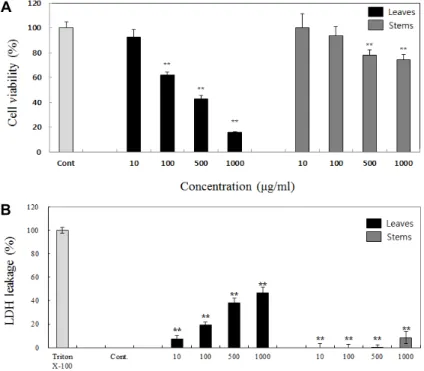
Fig. 1. Antiproliferative effect of D. morbifera solvent extracts of leaves and stems on HepG2 cells.
The cell death (A) and LDH leakage (B) in HepG2 cells were measured by the MTT as- say and LDH assay. Values shown are means
± SEM of three independent experiments, and the error bars represent the standard de- viation; *p<0.05, **p<0.01.
Ethyl propanoate and ethyl acetate represented more than half of the total peak area of the SFE extract. Both esters have fruity smells, with ethyl acetate being described as pineapple-like [1]. Only one sesquiterpenoid (caryophyllene oxide) was detected in the SFE extract of stems. Furthemore, only trans-caryophyllene was detected in both the solvent and SFE extracts with concentrations of 1.05% and 3.92%, respectively.
Volatile compounds in sap
Three monoterpenoids were detected, namely α-pinene, β-myrcene, and limonene. Limonene represented 96.30% of the peak area. Limonene has a citrus, minty odor, whereas α-pinene has a pine-like smell, and β-myrcene has a balsa- mic aroma [1]. The volatile profile of the sap reported here differed from that reported in a previous study, in which α- and β-selinene, germacrene D, δ-cadinene and β-elemene were found [2]. Nevertheless, we detected α-selinene and δ- cadinene in leaves and germacrene D in stems of D.
morbifera. This result suggests that the composition of sap may differ according to the individual trees, region, and
season.
The most abundant volatile in sap, limonene, was also one of the major compounds in the solvent extract of D. mor- bifera stems, and has been reported to have antimicrobial and anticancer activities [7, 21].
Antiproliferative activity of solvent extracts A previous study evaluated the antioxidant and anti- cancer activities of D. morbifera, and reported that methanol extracts of stems and leaves exhibited high antioxidant and anticancer activities, which were associated to the presence of phenolic compounds [10]. Another study evaluated the immune activation activity of ethanol and aqueous extracts of D. morbifera leaves [14]. Ethanol is less toxic and easier to dispose of than methanol; thus, in this study we prepared solvent extracts of the leaves and stems of D. morbifera, using ethanol and hexane, and evaluated their antiproliferative ac- tivities on liver cancer cells.
To test the effects of the crude solvent extracts on the cell viability of HepG2 liver cancer cells, an MTT assay was performed. HepG2 cells were cultured in medium contain- ing 10% FBS with or without the extracts for 24 hr. As a result, a dose-dependent decrease in cell proliferation was observed when the cells were treated with the solvent ex- tracts (0, 10, 100, 200 and 400 μg/ml) (Fig. 1). The anti- proliferative effect of the leaf extract on HepG2 cells was substantially stronger than that of the stem extract. The IC50
value of the leaf extract on HepG2 cells was 345.48 μg/ml, and that of the stem extract was 1,136.30 μg/ml. Further- more, pretreatment with leaf extract effectively increased the leakage of LDH from HepG2 cells (Fig. 1).
Hyun et al. [10] evaluated the antioxidant activity and anticancer potential of methanol extracts of five D. morbifera parts against various tumor cell lines (COLO-205, HOS, SNU-245, -308, and Huh-BAT, -7), and their results sug- gested that the extracts of debarked stems, green leaves, and yellow leaves were a potent source of anticancer compounds, particularly against Huh-7 cells. Hyun et al. [10] also in- dicated that rutin and rosmarinic acid were the major bio- active compounds in leaves and debarked stems, respec- tively. However, in contrast with their results, the solvent extract of stems used in our experiment exhibited only a slight anticancer activity. A possible explanation for this out- come could be the difference in the solvent and cancer cell lines used. Nevertheless, the solvent extract of leaves ana- lyzed here exhibited a high antiproliferative activity against HepG2 cells, which agreed with its reported bioactivity.
In conclusion, the volatile compounds of leaves, stems, and sap of D. morbifera were extracted using solvent and SFE and analyzed by GC/MS, revealing that terpenoids were the predominant compounds in the extracts. Evalu- ation of the antiproliferative activity showed that the solvent extracts of leaves had a stronger antiproliferative effect against HepG2 cells than that of the stem extracts. This result suggests that D. morbifera can be a source of anticancer com- pounds, and further analysis of the leaf extracts using HPLC is planned for identifying their bioactive compounds.
Acknowledgments
This work was supported by the Korea Institute of Planning and Evaluation for Technology in Food, Agricul- ture, Forestry, and Fisheries (IPET) through the High-Value Added Food Technology Development Program (No. 115009- 3) and Technology Commercialization Support Program (No. 314082-3), funded by the Ministry of Agriculture, Food, and Rural Affairs (MAFRA).
References
1. Acree, T. and Arn, H. Flavornet and human odor space.
Available from: http://www.flavornet.org. Accessed Nov.
15, 2015.
2. Ahn, J., Kim, S., Kim, M., Kim, O., Kim, K. and Hwang,
B. 2003. Seasonal variations in yields of Hwangchil lacquer and major sesquiterpene compounds from selected superior individuals of Dendropanax morbifera Lév. J. Plant Biol. 46, 38-40.
3. Bae, D., Kim, J., Lee, S. Y., Choi, E. J., Jung, M. A., Jeong, C., Na, J. R., Kim, J. J. and Kim, S. 2015. Hepatoprotective effects of aqueous extracts from leaves of Dendropanax morbi- fera Leveille against alcohol-induced hepatotoxicity in rats and in vitro anti-oxidant effects. Food Sci. Biotechnol. 24, 1495-1503.
4. Chung, I. M., Kim. M. Y., Park, W. H. ans Moon, H. I. 2009.
Antiatherogenic activity of Dendropanax morbifera essential oil in rats. Pharmazie 64, 547-549.
5. Chung, I. M., Seo, S. H., Kang, E. Y., Park, S. D., Park, W.
H. and Moon, H. I. 2009. Chemical composition and larvici- dal effects of essential oil of Dendropanax morbifera against Aedes aegypti L. Biochem. Syst. Ecol. 37, 470-473.
6. Chung, I. M., Song, H. K., Kim, S. J. and Moon, H. I. 2011.
Anticomplement activity of polyacetylenes from leaves of Dendropanax morbifera Leveille. Phytother. Res. 25, 784-786.
7. Crowell, P. L., Chang, R. R., Ren, Z. B., Elson, C. E. and Gould, M. N. 1991. Selective inhibition of isoprenylation of 21-26-kDa proteins by the anticarcinogen d-limonene and its metabolites. J. Biol. Chem. 266, 17679-17685.
8. Deepa, H. R. and Nalini, M. S. 2013. Phytochemical screen- ing, total phenolic content and in vitro antioxidant studies of leaf, bark and flower extracts of Schefflera spp. (Aralia- ceae) J. App. Pharm. Sci. 3, 94-98.
9. Duran-Pena, M. J., Botubol Ares, J. M., Hanson, J. R., Collado, I. G. and Hernandez-Galan, R. 2015. Biological ac- tivity of natural sesquiterpenoids containing a gem-dime- thylcyclopropane unit. Nat. Prod. Rep. 32, 1236-1248.
10. Hyun, T. K., Kim, M. O., Lee, H., Kim, Y., Kim, E. and Kim, J. S. Evaluation of anti-oxidant and anti-cancer properties of Dendropanax morbifera Léveille. Food Chem. 141, 1947-1955.
11. Hyun, T. K., Ko, Y. J., Kim, E. H., Chung, I. M. and Kim, J. S. 2015. Anti-inflammatory activity and phenolic composi- tion of Dendropanax morbifera leaf extracts. Ind. Crops Prod.
74, 263-270.
12. Kim, H. and Song, M. J. 2013. Oral traditional plant-based therapeutic applications for pain relief recorded in North Jeolla province, Korea. Indian J. Tradit. Know. 12, 573-584.
13. Kim, S. H., Jang, Y. S., Han, J. G., Chung, H. G., Lee, S.
W. and Cho, K. J. 2006. Genetic variation and population structure of Dendropanax morbifera Lev. (Araliaceae) in Korea. Silvae Genet. 55, 7-13.
14. Lee, S. H., Lee, H. S., Park, Y. S., Hwang, B., Kim, J. H.
and Lee, H. Y. 2002. Screening of immune activation activ- ities in the leaves of Dendropanax morbifera Lev. Kor. J. Med.
Crop Sci. 10, 109-115.
15. Lima, C. F., Andrade, P. B., Seabra, R. M., Fernandes- Ferreira, M. and Pereira-Wilson, C. 2005. The drinking of a Salvia officinalis infusion improves liver antioxidant status in mice and rats. J. Ethnopharmacol. 97, 383-389.
16. Lu, J. J., Dang, Y. Y., Huang, M., Xu, W. S., Chen, X. P.
and Wang, Y. T. 2012. Anti-cancer properties of terpenoids
초록:황칠나무의 휘발성 화합물 분석 및 HepG2 세포의 증식 억제 효과
양선아1*․코랄리아 가르시아1․이지원2
(1계명대학교 식품가공학전공, 2한국식품연구원)
황칠나무(Dendropanax morbifera Lev.)는 황금빛의 수액과 약리효과로 한국에서 알려져 있으며, 잎 및 줄기 추출 물의 다양한 효능은 피부질환, 편두통, 월경통, 근육통 및 전염성 질환 등의 질병을 개선하는 약리 성분을 공급하 는 우수한 공급원이 될 수 있는 것을 시사한다. 그러나, 황칠나무 추출물의 효능에 관해서는 다양한 연구가 보고 되어 있으나, 부위별 휘발성 성분의 조성에 대한 보고는 전무한 상황이다. 따라서, 본 연구는 황칠나무의 잎, 줄기 및 수액의 주요 휘발성 성분을 규명하기 위하여, 유기용매 및 초임계유체추출법을 이용한 추출물을 가스크로마토 그래피-질량분석법으로 분석하였다. 잎 추출물에서는 15가지 화합물이 검출되었으며, 줄기 및 수액에는 각각 29 가지 및 3가지 성분이 확인되었다. 또한 용매와 초임계유체추출법을 사용하여 얻은 휘발성 성분의 프로파일은 다르게 나타났다. 잎의 용매 추출물과 줄기의 초임계유체 추출물에서는 에스테르와 방향족 탄화수소가, 잎의 초임 계유체 추출물 및 줄기의 초임계유체 추출물에는 테르페노이드가 주요 성분으로 나타났다. 한편, limonene (96.3%), α-pinene, 그리고 β-myrcene은 수액 용매 추출물의 휘발성 성분으로 확인되었다. 잎 및 줄기의 용매 추출물의 암 세포 증식 억제 효과를 평가한 결과, 잎의 용매 추출물이 HepG2 세포의 증식을 유의적으로 감소시키는 것으로 나타났다.
isolated from Rhizoma Curcumae–A review. J. Ethnophar- macol. 143, 406-411.
17. Moon, H. I. 2011. Antidiabetic effects of dendropanoxide from leaves of Dendropanax morbifera Leveille in normal and streptozotocin-induced diabetic rats. Hum. Exp. Toxicol. 30, 870-875.
18. Park, B. Y., Min, B. S., Oh, S. R., Kim, J. H., Kim, T. J., Kim, D. H., Bae, K. H. and Lee, H. K. 2004. Isolation and anticomplement activity of compounds from Dendropanax morbifera. J. Ethnopharmacol. 90, 403-408.
19. Yoo, K. Y. and Park, S. Y. 2012. Terpenoids as potential anti- Alzheimer’s disease therapeutics. Molecules 17, 3524-2538.
20. Yu, H. Y., Kim, K. S., Lee, Y. C., Moon, H. I. and Lee, J.
H. 2012. Oleifolioside A, a new active compound, attenuates LPS-stimulated iNOS and COX-2 expression through the downregulation of NF-kb and MAPK activities in RAW 264.7 macrophages. Evid. Based Complement.
Alternat. Med. 2012, 637512.
21. Van Vuuren, S. F. and Viljoen, A. M. 2007. Antimicrobial activity of limonene enantiomers and 1,8-cineole alone and in combination. Flavour Frag. J. 22, 540-544.
22. Wang, G. W., Qin, J. J., Cheng, X., Shen, Y. H., Shan, L., Jin, H. Z. and Zhang, W. D. 2014. Inula sesquiterpenoids:
structural diversity, cytotoxicity and anti-tumor activity.
Expert Opin. Inv. Drug. 23, 317-345.