INTRODUCTION
Benign prostatic hyperplasia (BPH) is the most com- mon cause of lower urinary tract symptoms (LUTS) in aging men [1]. LUTS is categorized as any combina- tion of symptoms related to storage, voiding, or post- micturition including, but not limited to, frequency, urgency, and nocturia [2]. The prevalence of both BPH and LUTS markedly increases with age: about 8% in men age 31–40 to over 80% of men older than 80 are affected [3]. From an healthcare economics perspective, BPH has accounted for 4.4 million office visits, 105,000 hospitalizations, and 21 to 38 million hours lost in pro-
ductivity in the United States according to data from 2003 [4].
For decades, the gold standards of treatment for LUTS due to BPH were transurethral resection of the prostate (TURP) and open simple prostatectomy (OSP) for prostates <80 g and >80 g, respectively [5].
While highly effective, these procedures are not with- out their morbidities. TURP, for example, commands a recurrence rate of 15% over five to ten years. In a multicenter evaluation of over 10,000 patients undergo- ing TURP, the most common immediate complications included surgical reoperation (5.6% of patients), trans- fusions (2.9%), and transurethral resection syndrome
Received: May 17, 2019 Revised: Jul 1, 2019 Accepted: Jul 1, 2019 Published online Aug 20, 2019 Correspondence to: Run Wang https://orcid.org/0000-0002-6635-4093
Department of Urology, McGovern Medical School, University of Texas Health Sciences Center at Houston, 6431 Fannin Drive, Houston, TX 77030, USA.
Tel: +1-713-530-3941, Fax: +1-713-500-7319, E-mail: [email protected] Copyright © 2020 Korean Society for Sexual Medicine and Andrology
An Update on Minimally Invasive Surgery for Benign Prostatic Hyperplasia: Techniques, Risks, and Efficacy
Aditya Srinivasan , Run Wang
Department of Urology, McGovern Medical School, University of Texas Health Sciences Center at Houston, Houston, TX, USA
Benign prostatic hyperplasia (BPH), a common cause of lower urinary tract symptoms in the elderly male population, has conventionally treated by transurethral resection of the prostate (TURP). During recent years, newer minimally invasive therapies (MITs) have entered the playing field and challenged TURP with their convenience, lack of sexual side effects, and overall safety. The present paper provides an update on the more heavily studied and most recent MITs, analyzing their mechanism of action, tolerability, and efficacy in clinical practice. Particularly, robust clinical data have propelled UroLift and Rezuum to the forefront in the armamentarium of minimally invasive BPH treatment. Newer mechanical therapies such as the temporary implantable nitinol device, ClearRing, ZenFlow Spring, and Butterfly are appealing options as they forego cutting, ablation, heating, or removing prostatic tissue. It is obvious that there is wide variation in the degree of clinical readi- ness of each modality and only time and long-term, multicenter studies will decide which of these therapies are accepted by the patient and urologist.
Keywords:
Keywords: Benign prostatic hyperplasia; Prostate; Surgery; Urination
This is an Open Access article distributed under the terms of the Creative Commons Attribution Non-Commercial License (http://creativecommons.org/licenses/by-nc/4.0) which permits unrestricted non-commercial use, distribution, and reproduction in any medium, provided the original work is properly cited.
pISSN: 2287-4208 / eISSN: 2287-4690 World J Mens Health 2020 Oct 38(4): 402-411 https://doi.org/10.5534/wjmh.190076
(1.4%) [6]. In the long term, many patients experience retrograde ejaculation and erectile dysfunction as a result of this procedure. Close to 8% of patients under- going OSP require transfusions and close to 4% require intervention for severe bleeding, making this a less popular option today [1].
Several new technologies have been developed in recent years in an effort to limit surgical morbidity of TURP and OSP. These minimally invasive surgical therapies (MIST) are typically done with minimal an- esthesia as an outpatient procedure or reduced hospital stay and involve a quicker recovery period. They are generally well tolerated and have improved complica- tion profiles (including less effects on sexual dysfunc- tion) but these benefits are countered by higher rates of failure and less overall improvement to LUTS [7].
The purpose of this review is to briefly review the methodology, efficacy, and safety of varieties of MIST and their current use in patients with BPH.
MECHANICAL STRATEGIES
Mechanical MIST generally boil down to a physi- cal retraction of obstructing prostatic lobes. This type of strategy involves no cutting, ablation, heating or removal of prostatic tissue and preserves ejaculatory function, making it one option for therapy.
1. Prostatic urethral lift (UroLift
TM)
Prostatic urethral lift or UroLiftTM, manufactured by NeoTract (Pleasanton, CA, USA), is a novel technique that can be performed in the outpatient setting. The UroLift delivery device is a disposable cartridge con- sisting of nonabsorbable monofilament sutures placed through the urethra to access the enlarged prostate [7]. The device retracts the obstructing prostatic lobes and delivers a small transprostatic permanent implant via a needle, creating a continuous anterior channel through the prostatic lumen from the bladder neck to the verumontanum or seminal colliculus. This keeps the lateral lobes under traction and establishes a more open prostatic urethra. Because there is no tissue re- moval or ablation involved, this method theoretically avoids damage to the primary neurovascular bundle and dorsal venous complex [8].
Most studies have outlined common inclusion and exclusion criteria for use of this new technique. Table 1 from Jones et al’ 2016 article [8] summarizes this. Of
note, the most important contraindicatory factors to this surgical option include men with obstructing me- dian lobes, men with large prostate burdens (>100 mL) and patients with a history of urinary retention [8].
The advantages of this procedure make it a very attractive option. UroLift can be done under local or general anesthesia, is a short and very safe procedure, and has a short learning curve for health care provid- ers. Unlike TURP, which can cause retrograde ejacula- tion in up to 75% of men, there are no reported cases of sexual dysfunction resulting from UroLift [9]. The implants also hold the prostatic urethra open during the period of expected postoperative edema, so urinary catheterization rates have been shown to be as low as 20% for an overall mean duration of one day [10].
Side effects are due to the irritation induced by the mechanical implant, causing mild dysuria, hematuria, pelvic discomfort and urgency.
The biggest limitation to this procedure is by far the exclusion criteria noted above, which eliminate a large proportion of patients from trying this procedure. The lack of sufficient long term results is also a significant disadvantage (only two studies have been published with follow-up data of over two years, with the most recent data by Roehrborn et al [10,11] showing improve- ment in quality of life (QoL), flow rate, and symptoms durable up to five years). Most of the main cohort studies have outcomes at one year [12-15]. And while data has shown improvement in subjective outcomes, such as international prostate symptom score (IPSS) and QoL, only marginal improvements were seen in more objective parameters, such as maximum urinary flow rate (Qmax) and postvoid residual (PVR) [9]. The 5-year LIFT trial mentioned above also noted a slightly higher retreatment rate for the UroLift at 2% to 3%
Table 1. Inclusion and exclusion criteria for the UroLift technique Inclusion criteria Exclusion criteria
• Age>50 y
• Prostate volume 20–70 mL (on ultrasound)
• IPSS>12
• Qmax<15 mL/s
• PVR<350 mL
• Obstructive median lobe
• Active urinary tract infection
• PSA>10 ng/mL (unless negative biopsy)
• Prostatitis within past 1 year
• History of urinary retention
• Previous BPH surgery
IPSS: international prostate symptom score, Qmax: maximum urinary flow rate, PVR: postvoid residual, PSA: prostate specific antigen, BPH:
benign prostatic hyperplasia.
Adopted from Jones et al (Ther Adv Urol 2016;8:372-6) [8].
per year compared with a retreatment rate of 1% to 2%
per year for TURP [10].
The most recent systematic review included 5 cases series and one clinical trial and reported improvements in LUTS, as measured by IPSS, BPH Impact Index, Qmax, and PVR [7,16]. These differences were signifi- cant (p<0.05).
2. Intraprostatic stents
Intraprostatic stents come in either a temporary fla- vor or more permanent type (UroLume). Briefly, these stents are positioned endoscopically and placed into the prostatic urethra to open up the bladder outlet [7].
Permanent stents promote epithelialization, fasten onto the prostatic stroma, and can be placed in less than 15 minutes under regional anesthesia [17]. Howev- er, the disadvantages of this procedure include possible infection (making the stent hard to remove) and pos- sible dislodging of the stent, which can lead to urinary obstruction or total incontinence. The risk of urethral injury and stent migration is also higher compared to a temporary stent [18].
Temporary stents are non-epithelializing, prohibitive of tissue ingrowth, and are either retrievable or biode- gradable [17]. They can also be placed rather quickly and are preferred in patients who cannot undergo gen- eral anesthesia. In a systematic review in 2007, stent failure rates approached 16% in 606 patients, mostly due to stent migration [19]. Removal of these stents requires undergoing general anesthesia which can be dangerous in patients who cannot handle these proce- dures.
Outcomes for the permanent stents have been under- whelming. Masood et al’s 12 year analysis [20] reported that only 18% of patients had their stents placed at the end of the follow-up and in 40% of cases, the stent was removed due to malpositioning, dislodgement, and irritation symptoms. Limited long-term studies and high complication rates have reduced the utility of this device as a long-term durable option in BPH manage- ment.
The dearth of robust data on intraprostatic stents has led the European Association of Urology to recom- mend their use as an alternative to catheterization in men unfit for invasive procedures requiring spinal or general anesthesia.
3. Temporary implantable nitinol device
A nickel-titanium alloy, or nitinol, device aims to re- lieve LUTS due to BPH by using expanded struts that exert a radial force [21]. The radial force compresses obstructive prostatic lobes causing local ischemic necro- sis of the urethral mucosa [22]. Five days after place- ment, the nitinol wires expand and sink into the peri- urethral tissues, allowing a decrease of bladder neck tension, reducing urinary flow obstruction. To date, the 12-month and 36-month follow-up results of the first prospective in-human clinical trial have been reported by Porpiglia et al [23,24].
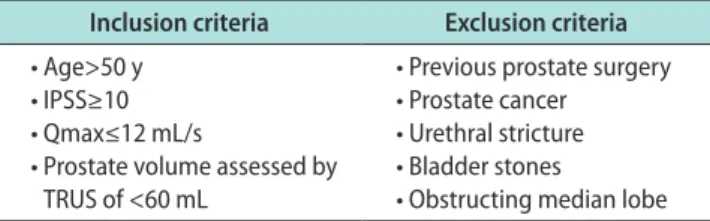
Device related side effects include discomfort, mild dysuria and perineal pressure, increased urgency and mild hematuria [22]. Inclusion and exclusion criteria used in the initial study are listed in Table 2 [23].
In the initial study with 12-month follow-up, tempo- rary implantable nitinol device (TIND) was implanted within the bladder neck and prostatic urethra using a rigid cystoscope in 32 patients and removed five days later in the outpatient setting [23]. Four complications were reported: one urinary retention, one transient incontinence due to device displacement, one pros- tatic abscess and one urinary tract infection. After 12 months, the median IPSS was 9 (down from a preop- erative median IPSS of 19), the mean improvement in IPSS compared with baseline was 45%, and the mean improvement in Qmax versus preoperatively was 67%, all statistically significant changes [23]. No additional medical or surgical therapy was required at the time of the patients’ last follow-up visit 12 months post proce- dure.
The extended 3-year follow-up results corroborated the initial 1-year results [24]. No further complications were recorded during the 36-month follow-up. The change from baseline in IPSS (median score of 12 at 36
Table 2. Inclusion and exclusion criteria for temporary implantable nitinol device
Inclusion criteria Exclusion criteria
• Age>50 y
• IPSS≥10
• Qmax≤12 mL/s
• Prostate volume assessed by TRUS of <60 mL
• Previous prostate surgery
• Prostate cancer
• Urethral stricture
• Bladder stones
• Obstructing median lobe IPSS: international prostate symptom score, Qmax: maximum urinary flow rate, TRUS: transrectal ultrasonography.
months), Qmax (41% rise from baseline), and QoL (me- dian score of 2) were all statistically significant. This limited data has suggested that TIND implantation is well-tolerated, though more studies need to be done.
4. Emerging mechanical therapies
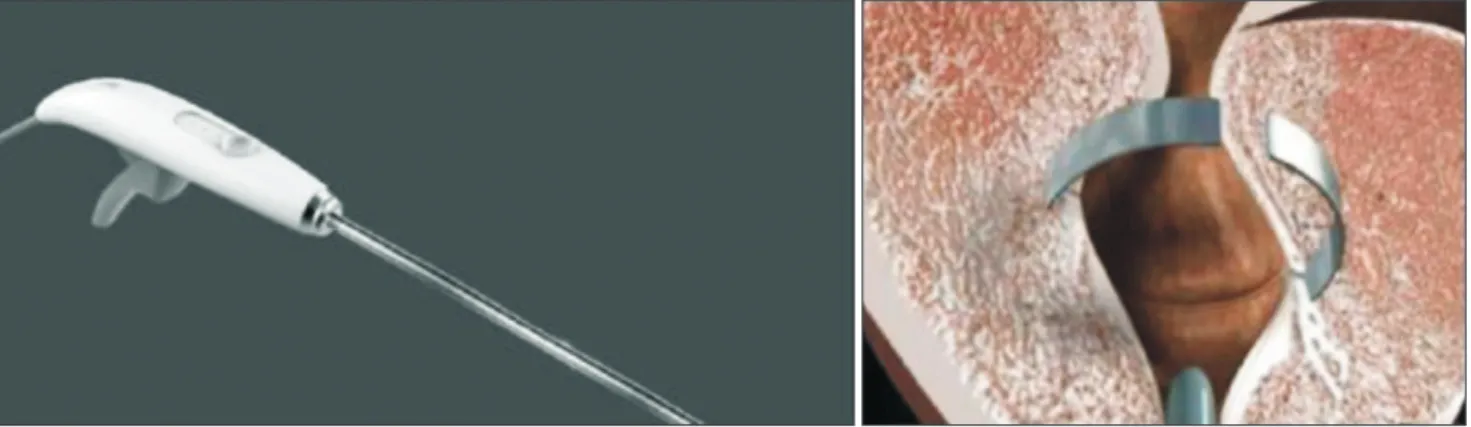
The ClearRingTM device (manufactured by ProArc Medical; Fig. 1) is an implantable C-shaped ring that is deployed in a circular incision in the prostatic tissue, compressing the prostatic transition zone tissue [25].
A recently published multicenter single-arm study in October 2018 treated 29 patients with mean IPSS 21.6, mean Qmax 8 mL/s and prostates between 35 and 50 mL using this device [25]. Ejaculation was preserved and there was no reported effect on erectile function.
By 12 months, mean IPSS and Qmax improved by 53%
and 49%, respectively.
Currently undergoing clinical trials, the ZenFlowTM Spring (Fig. 2) is a small nitinol implant deployed through a flexible cystoscope in the outpatient setting used to treat BPH symptoms [22]. Designed to be a per- manent device, the spring creates an internal tension that imbeds it into the wall of the prostatic urethra [26].
Patients have been followed out for 12 months and so far, early clinical cases have shown a low rate of side effects, fast recovery and durable results for this pe- riod.
The ButterflyTM device (Fig. 3) is another upcoming metallic implant that functions by retracting the lat- eral lobes of the prostate and is delivered with either a rigid or flexible cystoscope. It is designed to be perma- nent but can easily be extracted. A multicenter trial to assess safety and efficacy is underway [22].
BOTULINUM TOXIN
INTRAPROSTATIC INJECTIONS
A variety of pharmaceutical or chemical compounds may be injected deep into the prostate to elicit either Fig. 2. ZenFlow Spring (with permission from ZenFlow).
Fig. 3. Butterfly device (with permission from Butterfly Medical).
Delivery device Nitinol C-shape Implant
Fig. 1. ClearRing (with permission from ProArc Medical).
cellular apoptotic pathways or module neurotransmit- ter activity. While transurethral ethanol ablation of the prostate and Topsalysin (PRX302, a pore-forming ablative agent) are treatments falling under the cate- gory of intraprostatic injections, this review article will focus on botulinum toxin.
Botulinum neurotoxin-A (BoNT-A) acts by binding presynaptically to high-affinity recognition sites on the cholinergic nerve terminals and decreases the release of acetylcholine at the neuromuscular junction. Para- sympathetic stimulation affects the growth and secre- tion of the prostate epithelium. While the mechanism has not been extensively studied, in canine models, there has been marked atrophy and diffuse apoptosis of the prostate following the blocked release of acetyl- choline [27,28]. This treatment has also been shown to decrease prostatic outflow obstruction by decreasing smooth muscle tone [17].
In large scale randomized controlled trials (RCTs), BoNT-A has not shown superiority to placebo [29,30].
Marberger et al’s randomized double-blind placebo-con- trolled study [29] in 2013 found no significant differ- ence between the placebo group and the Botox group in improvement of LUTS and BPH symptoms. McVary et al’s multicenter, RCT [30] in 2014 also showed no significant difference in placebo or treatment groups in terms of IPSS, Qmax, total prostate volume, PVR or increase in prostate specific antigen (PSA) levels. While other studies have shown small benefits to PVR and increased peak flow rates, the results are overall mixed.
Therefore, the utility of BoNT-A in the treatment of LUTS is, although promising, limited to select patients who are not able to undergo more invasive procedures or adhere to oral medications long-term.
PROSTATIC ARTERY EMBOLIZATION
Prostatic artery embolization (PAE) is a procedure carried out by interventional radiology where the ves- sels feeding the prostate (prostatic arteries) are blocked to impede prostatic growth and decrease urinary tract symptoms. In brief, embolization is performed by first advancing a catheter through the common femoral ar- tery to the internal iliac artery and then through the inferior vesicle artery before arriving at the prostatic artery [17]. Prior to this, a Foley catheter is inserted to serve as a reference point for surrounding structures.
Then, after an arteriogram is done, microspheres (tiny
particles) are injected through the catheter and into the prostatic arteries. Ideally, the prostate should begin to reduce in size over the next several days, relieving symptoms. This effect is a result of the ischemia of intraprostatic vessels and subsequent inflammatory response along with a decrease in dihydrotesterone and intraprostatic testosterone, all of which initiate and aid the shrinking process [31,32].
Inclusion and exclusion criteria for this procedure are listed in Table 3 [31,32]. Approximately 33% of pa- tients seen in a pre-procedural evaluation satisfy the criteria to be selected for PAE [31]. Indications for PAE as a first choice therapy for BPH include patients with special risks regarding surgery or anesthesia, sexually active men (as retrograde ejaculation is a common com- plication of TURP), prostate volume>65 mL, perma- nent bladder cathether, and recurrent bleeding caused by BPH [32].
PAE is a very safe method overall that is still accom- panied by certain complications. Dysuria, hematuria, hematospermia, urinary retention, and rectal bleeding with the procedure have been noted in the literature [7,17,32]. ‘Post-prostatic artery embolization syndrome’
is another complication which involves the mixture of small amounts of blood with urine and stool [33]. Pa- tients can also experience pelvic and perineal pain and pressure for up to a few days after the procedure.
Failure rates are relatively high in PAE. A systemat- ic review done in 2014 by Schreuder et al [34] identified up to a 19% failure rate with 15% of patients requiring TURP within the first year after treatment. Overall, there is growing evidence for the efficacy of this treat- ment. The previously mentioned systematic review
Table 3. Inclusion and exclusion criteria for prostatic artery embolization Inclusion criteria Exclusion criteria
• Age>40 y • Malignancy
• Prostate volume≥30 mL • Bladder anomalies
• IPSS≥18 and/or QoL≥3 • Chronic renal failure
• Acute urinary retention • Acute urinary infection
• BPH refractory to medical therapy
• Renal insufficiency (eGFR<60 mL/min)
• Qmax≤15 mL/s at micturition volume of minimum 150 mL
• Advanced atherosclerosis of the iliac or prostatic arteries
• Urethral strictures
IPSS: international prostate symptom score, QoL: quality of life, BPH:
benign prostatic hyperplasia, Qmax: maximum urinary flow rate, eGFR: estimated glomerular filtration rate.
found short term improvements in prostate volume, PVR and PSA but these improvements did not persist after 30 months [34]. In 2017, Shim et al [35] published a systematic review encompassing sixteen studies and found that PAE significantly improved outcomes with regards to IPSS, maximal urinary flow rates, and pros- tate volume in comparison with control groups. The dearth of long term data for this procedure impedes progression into a forerunner in BPH treatment.
WATER VAPOR THERAPY (REZUM
TM)
The RezumTM system, manufactured by Boston Sci- entific, transforms sterile water into stored thermal energy (in the form of vapor or steam) to ablate pros- tatic tissue primarily in the outpatient setting [7,21].
Briefly, water vapor is transported transurethrally via cystoscopy. The thermal energy generated travels through the transition zone of the prostate, disrupts cell membranes and causes instant cell necrosis.
Inclusion and exclusion criteria for the Rezum ther- mal therapy are mentioned as follows in Table 4 [36,37].
In contrast with some of the other techniques men- tioned above, patients with a median lobe obstruction can still qualify to receive this therapy.
This procedure is quite safe with a minimal perioper- ative effects. The most important advantages are ease (day procedure with no general anesthesia needed) and no reports of sexual dysfunction [7,36,37]. Other advan- tages include significant improvements in Qmax, IPSS, QoL, and PVR and cost-effectiveness. The most signifi- cant disadvantages include limited long-term data and inability to ascertain incidental cases of prostate cancer [7,36,37]. TURP, in contrast, provides benefit by collect- ing tissue specimens which can detect prostate cancer.
Another disadvantage is post-procedure catheterization
in over half of patients.
Since approval in 2015 by the US Food and Drug Administration, a three year prospective, multicenter RCT has been published that found a significant (160%, p<0.0001) improvement in IPSS and at least a 50% im- provement in QoL, Qmax, and BPH impact index that persisted for at least 3 years (p<0.001) in 197 men over the age of 50 meeting the inclusion criteria mentioned above [38]. This RCT also found applicability to treat- ment of median lobe tissue with overall preservation of sexual function. A crossover trial published by Roehr- born et al [39] in 2017 found significant mean improve- ments in IPSS, Qmax, and PVR at 12 months (p<0.001);
this type of study has participants serving as self- controls which eradicates the placebo effects in other studies. In other pilot trials, similar results have been found which demonstrates the substantial, prolonged symptomatic relief derived from the Rezum procedure.
To date, there have been no reports of effects on ejacu- latory function unlike the relatively high incidence seen in most surgical treatments of BPH.
The most common adverse events are dysuria, hema- turia, urinary tract infections (UTIs) and symptoms of urgency that typically resolve within weeks after the procedure [40]. In the literature, more serious adverse events, such as urosepsis, extended urinary retention, and nausea and vomiting have been reported but these complications are not the norm. The clinical effective- ness, long-term positive benefits, and applicability to the outpatient setting make Rezum a versatile and novel treatment for TURP.
HISTOTRIPSY
The least studied technique thus far, histotripsy uses high intensity ultrasound technology to vaporize fluid in prostatic tissues and release gaseous microbubbles which cause tissue destruction [7,21,41]. In animal stud- ies with canines by Darnell et al [42] in 2015 found that histotripsy caused 31% decrease in prostate volume with limited inflammation and fibrosis. The prostatic urethra was well preserved in these models.
An in-human prospective single-arm clinical trial was conducted from July 2013 to June 2017 and inves- tigated the safety and efficacy in men aged 50 or older with BPH and LUTS [41]. Results showed a significant increase in IPSS (p<0.001) of 12.5 points at 1 month and 10.4 points at 6 months but no clinical improvement in Table 4. Inclusion and exclusion criteria for Rezum
Inclusion criteria Exclusion criteria
• Age≥45 y with symptomatic BPH • PVR>300 mL
• Prostate volume<120 mL • PSA>2.5 ng/mL
• IPSS≥13 • Recurrent or active UTI
• PVR<250 mL • Prior prostate intervention/surgery
• 5≤Qmax≤15 mL/s
BPH: benign prostatic hyperplasia, IPSS: international prostate symp- tom score, PVR: postvoid residual, Qmax: maximum urinary flow rate, PSA: prostate specific antigen, UTI: urinary tract infection.
Adopted from Westwood et al (Ther Adv Urol 2018;10:327-33) [37].
uroflow or PVR. Of the 25 men who underwent histo- tripsy treatment, there were no serious adverse events intraoperatively and postoperatively, transient urinary retention, a minor anal abrasion, and microscopic he- maturia were the only noted adverse events [41].
Although prostate histotripsy has shown safety in this pilot human trial, its marginal improvement in LUTS warrants exploration with more studies in the future.
AQUABLATION
A robotic-assisted novel technique, Aquablation uti- lizes high-pressure saline to dissect prostatic tissue under transrectal ultrasound guidance [7,21,43]. Once resection is complete, cauterization can be used to initi- ate hemostasis.
Because careful patient selection is a necessary in- gredient for successful therapy, patients should be assessed for inclusion and exclusion criteria, listed in Table 5 [43]. Inclusion criteria include LUTS refractory
to medical therapy, age over 50, IPSS>12, Qmax≤12 mL/
s, and prostate size 25 to 80 mL. Specific exclusion cri- teria include active UTI, large prostate size (>100 mL), PVR>400 mL and abnormal renal function.
The primary advantages of Aquablation include a resection time of under 10 minutes, preservation of sex- ual function and urinary continence, and avoidance of thermal damage (which seems to be the reason for the reduction in urinary symptoms) [21,43,44]. With only
Table 5. Inclusion and exclusion criteria for Aquablation Inclusion criteria Exclusion criteria
Age≥50 y Active UTI
IPSS>12 Large prostate size>100 mL LUTS refractory to medical therapy PVR>400 mL
Qmax≤12 mL/s Abnormal renal function
Prostate size 25–80 mL
IPSS: international prostate symptom score, LUTS: lower urinary tract symptoms, Qmax: maximum urinary flow rate, UTI: urinary tract in- fection, PVR: postvoid residual.
Adopted from Taktak et al (Ther Adv Urol 2018;10:183-8) [43].
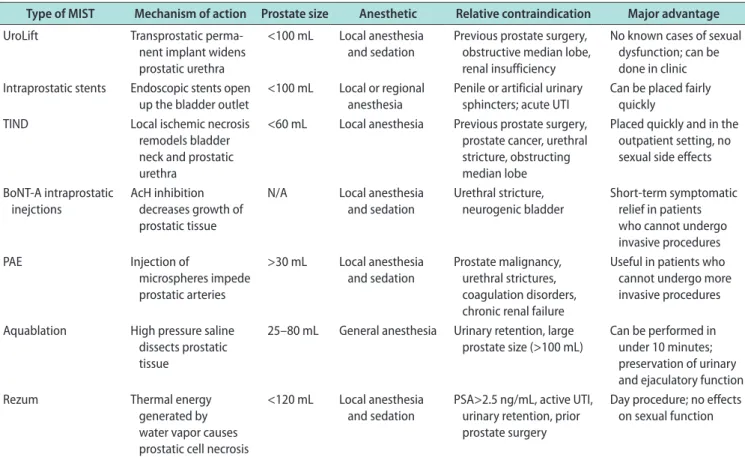
Table 6. Types of MIST and factors specific to each type
Type of MIST Mechanism of action Prostate size Anesthetic Relative contraindication Major advantage UroLift Transprostatic perma-
nent implant widens prostatic urethra
<100 mL Local anesthesia and sedation
Previous prostate surgery, obstructive median lobe, renal insufficiency
No known cases of sexual dysfunction; can be done in clinic Intraprostatic stents Endoscopic stents open
up the bladder outlet <100 mL Local or regional
anesthesia Penile or artificial urinary
sphincters; acute UTI Can be placed fairly quickly
TIND Local ischemic necrosis
remodels bladder neck and prostatic urethra
<60 mL Local anesthesia Previous prostate surgery, prostate cancer, urethral stricture, obstructing median lobe
Placed quickly and in the outpatient setting, no sexual side effects BoNT-A intraprostatic
inejctions AcH inhibition decreases growth of prostatic tissue
N/A Local anesthesia
and sedation Urethral stricture,
neurogenic bladder Short-term symptomatic relief in patients who cannot undergo invasive procedures
PAE Injection of
microspheres impede prostatic arteries
>30 mL Local anesthesia and sedation
Prostate malignancy, urethral strictures, coagulation disorders, chronic renal failure
Useful in patients who cannot undergo more invasive procedures Aquablation High pressure saline
dissects prostatic tissue
25–80 mL General anesthesia Urinary retention, large prostate size (>100 mL)
Can be performed in under 10 minutes;
preservation of urinary and ejaculatory function
Rezum Thermal energy
generated by water vapor causes prostatic cell necrosis
<120 mL Local anesthesia and sedation
PSA>2.5 ng/mL, active UTI, urinary retention, prior prostate surgery
Day procedure; no effects on sexual function
MIST: minimally invasive surgical therapies, TIND: temporary implantable nitinol device, BoNT-A: botulinum neurotoxin-A, PAE: prostatic artery embolization, N/A: not available, UTI: urinary tract infection, PSA: prostate specific antigen.
one double blind RCT to date, lack of consistent Level 1 evidence and long-term follow-up pose the biggest disadvantages to this procedure [45]. This procedure is also not suitable for large prostates, large median lobes and requires general anesthesia and inpatient admis- sion. Many of the previously reviewed techniques were outpatient procedures such as PAE and UroLift.
Only one double-blind RCT has been done compar- ing Aquablation to the gold standard TURP, and its results were published recently in June 2018 [45]. In 181 patients with BPH and moderate to severe LUTS, Aquablation therapy was found to produce large IPSS improvements at six months and demonstrated non- inferiority to TURP (p<0.0001). The rate of ejaculatory dysfunction was also significantly lower (p=0.0003) than of TURP.
There have been no reports of negative effects on sexual function, major adverse events, or any cases where blood transfusion have been required. The most common complications to date have been dysuria, catheter insertion for urinary retention, and medically treated UTIs.
RECOMMENDATIONS AND SUMMARY
The MIST, though many are under study, are a unique set of procedures that represent a shift in the treatment of BPH. These personalized approaches al- low the most efficacious treatment for a select group of patients. Table 6 lists a summary of the types of MIST discussed above in this article and factors specific to each type [7]. Histotripsy is not included in this table because only one pilot human trial has been done. The emerging mechanical therapies have also not been in- cluded because of a lack of data. American Urological Association guidelines suggest surgical intervention for patients with moderate to severe symptoms of BPH and for patients who have experienced BPH-related acute urinary retention and other complications. The wide variety of options available now tailor therapies to a patient’s own anatomy, comorbidities, and other risk factors.
Conflict Interest
The authors have nothing to disclose.
Author Contribution
Conceptualization: AS, RW. Data curation: AS, RW. Formal analysis: AS, RW. Investigation: AS, RW. Methodology: AS, RW.
Project administration: AS, RW. Resources: AS, RW. Software:
AS, RW. Supervision: AS, RW. Validation: AS, RW. Visualizaton:
AS, RW. Writing–original draft: AS, RW. Writing–reviewing &
editing: AS, RW.
REFERENCES
1. Sivarajan G, Borofsky MS, Shah O, Lingeman JE, Lepor H.
The role of minimally invasive surgical techniques in the management of large-gland benign prostatic hypertrophy.
Rev Urol 2015;17:140-9.
2. Abrams P, Chapple C, Khoury S, Roehrborn C, de la Rosette J; International Scientific Committee and members of the committees, 6th International Consultation on New Develop- ments in Prostate Cancer and Prostate Diseases. Evaluation and treatment of lower urinary tract symptoms in older men.
J Urol 2009;181:1779-87.
3. Parsons JK. Benign prostatic hyperplasia and male lower urinary tract symptoms: epidemiology and risk factors. Curr Bladder Dysfunct Rep 2010;5:212-8.
4. Patel ND, Parsons JK. Epidemiology and etiology of benign prostatic hyperplasia and bladder outlet obstruction. Indian J Urol 2014;30:170-6.
5. Oelke M, Bachmann A, Descazeaud A, Emberton M, Gravas S, Michel MC, et al.; European Association of Urology. EAU guidelines on the treatment and follow-up of non-neurogenic male lower urinary tract symptoms including benign pros- tatic obstruction. Eur Urol 2013;64:118-40.
6. Reich O, Gratzke C, Bachmann A, Seitz M, Schlenker B, Hermanek P, et al. Morbidity, mortality and early outcome of transurethral resection of the prostate: a prospective multi- center evaluation of 10,654 patients. J Urol 2008;180:246-9.
7. Christidis D, McGrath S, Perera M, Manning T, Bolton D, Lawrentschuk N. Minimally invasive surgical therapies for benign prostatic hypertrophy: the rise in minimally invasive surgical therapies. Prostate Int 2017;5:41-6.
8. Jones P, Rai BP, Aboumarzouk O, Somani BK. UroLift: a new minimally-invasive treatment for benign prostatic hyperpla- sia. Ther Adv Urol 2016;8:372-6.
9. Jones P, Rajkumar GN, Rai BP, Aboumarzouk OM, Cleave- land P, Srirangam SJ, et al. Medium-term outcomes of urolift (minimum 12 months follow-up): evidence from a systematic review. Urology 2016;97:20-4.
10. Roehrborn CG, Rukstalis DB, Barkin J, Gange SN, Shore ND,
Giddens JL, et al. Three year results of the prostatic urethral L.I.F.T. study. Can J Urol 2015;22:7772-82.
11. Roehrborn CG, Barkin J, Gange SN, Shore ND, Giddens JL, Bolton DM, et al. Five year results of the prospective random- ized controlled prostatic urethral L.I.F.T. study. Can J Urol 2017;24:8802-13.
12. Woo HH, Chin PT, McNicholas TA, Gill HS, Plante MK, Bruskewitz RC, et al. Safety and feasibility of the prostatic urethral lift: a novel, minimally invasive treatment for lower urinary tract symptoms (LUTS) secondary to benign pros- tatic hyperplasia (BPH). BJU Int 2011;108:82-8.
13. McNicholas TA, Woo HH, Chin PT, Bolton D, Fernández Arjona M, Sievert KD, et al. Minimally invasive prostatic urethral lift: surgical technique and multinational experience.
Eur Urol 2013;64:292-9.
14. Chin PT, Bolton DM, Jack G, Rashid P, Thavaseelan J, Yu RJ, et al. Prostatic urethral lift: two-year results after treatment for lower urinary tract symptoms secondary to benign pros- tatic hyperplasia. Urology 2012;79:5-11.
15. Bozkurt A, Karabakan M, Keskin E, Hirik E, Balci MB, Nuho- glu B. Prostatic urethral lift: a new minimally invasive treat- ment for lower urinary tract symptoms secondary to benign prostatic hyperplasia. Urol Int 2016;96:202-6.
16. Sánchez-Gómez LM, Polo-deSantos M, Gómez-Sancha F, Luengo-Matos S. Efficacy and safety of the urolift® system for the treatment of benign prostate hyperplasia symptoms:
systematic review. Actas Urol Esp 2015;39:311-9.
17. Nimeh T, Magnan B, Almallah YZ. Benign prostatic hyper- plasia: review of modern minimally invasive surgical treat- ments. Semin Intervent Radiol 2016;33:244-50.
18. Papatsoris AG, Junaid I, Zachou A, Kachrilas S, Zaman F, Masood J, et al. New developments in the use of prostatic stents. Open Access J Urol 2011;3:63-8.
19. Armitage JN, Cathcart PJ, Rashidian A, De Nigris E, Ember- ton M, van der Meulen JH. Epithelializing stent for benign prostatic hyperplasia: a systematic review of the literature. J Urol 2007;177:1619-24.
20. Masood S, Djaladat H, Kouriefs C, Keen M, Palmer JH. The 12-year outcome analysis of an endourethral wallstent for treating benign prostatic hyperplasia. BJU Int 2004;94:1271-4.
21. Chung ASJ, Woo HH. Update on minimally invasive surgery and benign prostatic hyperplasia. Asian J Urol 2018;5:22-7.
22. Sountoulides P, Karatzas A, Gravas S. Current and emerging mechanical minimally invasive therapies for benign prostatic obstruction. Ther Adv Urol 2019;11:1756287219828971.
23. Porpiglia F, Fiori C, Bertolo R, Garrou D, Cattaneo G, Am- parore D. Temporary implantable nitinol device (TIND): a novel, minimally invasive treatment for relief of lower urinary
tract symptoms (LUTS) related to benign prostatic hyperpla- sia (BPH): feasibility, safety and functional results at 1 year of follow-up. BJU Int 2015;116:278-87.
24. Porpiglia F, Fiori C, Bertolo R, Giordano A, Checcucci E, Garrou D, et al. 3-year follow-up of temporary implantable nitinol device implantation for the treatment of benign pros- tatic obstruction. BJU Int 2018;122:106-12.
25. Vjaters E, Nitsan D, Mullerad M, Engelstein D, Leibovitch I, Feld Y. First-in-man safety and efficacy of the ClearRing implant for the treatment of benign prostatic hyperplasia. Eur Urol Focus 2020;6:131-6.
26. Zenflow, Inc. Zenflow [Internet]. South San Francisco: Ze- nflow, Inc.; c2014 [cited 2019 May 17]. Available from: http://
www.zenflow.com/.
27. Chuang YC, Giannantoni A, Chancellor MB. The potential and promise of using botulinum toxin in the prostate gland.
BJU Int 2006;98:28-32.
28. Ng LG. Botulinum toxin and benign prostatic hyperplasia.
Asian J Urol 2018;5:33-6.
29. Marberger M, Chartier-Kastler E, Egerdie B, Lee KS, Grosse J, Bugarin D, et al. A randomized double-blind placebo-con- trolled phase 2 dose-ranging study of onabotulinumtoxinA in men with benign prostatic hyperplasia. Eur Urol 2013;63:496- 503.
30. McVary KT, Roehrborn CG, Chartier-Kastler E, Efros M, Bugarin D, Chen R, et al. A multicenter, randomized, double- blind, placebo controlled study of onabotulinumtoxinA 200 U to treat lower urinary tract symptoms in men with benign prostatic hyperplasia. J Urol 2014;192:150-6.
31. A Pereira J, Bilhim T, Duarte M, Rio Tinto H, Fernandes L, Martins Pisco J. Patient selection and counseling before pros- tatic arterial embolization. Tech Vasc Interv Radiol 2012;15:
270-5.
32. Teichgräber U, Aschenbach R, Diamantis I, von Rundstedt FC, Grimm MO, Franiel T. Prostate artery embolization: indi- cation, technique and clinical results. Rofo 2018;190:847-55.
33. Carnevale FC, Antunes AA. Prostatic artery embolization for enlarged prostates due to benign prostatic hyperplasia. How I do it. Cardiovasc Intervent Radiol 2013;36:1452-63.
34. Schreuder SM, Scholtens AE, Reekers JA, Bipat S. The role of prostatic arterial embolization in patients with benign pros- tatic hyperplasia: a systematic review. Cardiovasc Intervent Radiol 2014;37:1198-219.
35. Shim SR, Kanhai KJ, Ko YM, Kim JH. Efficacy and safety of prostatic arterial embolization: systematic review with meta- analysis and meta-regression. J Urol 2017;197:465-79.
36. Woo HH, Gonzalez RR. Perspective on the Rezūm® system:
a minimally invasive treatment strategy for benign prostatic
hyperplasia using convective radiofrequency water vapor thermal therapy. Med Devices (Auckl) 2017;10:71-80.
37. Westwood J, Geraghty R, Jones P, Rai BP, Somani BK. Rezum:
a new transurethral water vapour therapy for benign prostatic hyperplasia. Ther Adv Urol 2018;10:327-33.
38. McVary KT, Roehrborn CG. Three-year outcomes of the pro- spective, randomized controlled Rezūm system study: con- vective radiofrequency thermal therapy for treatment of lower urinary tract symptoms due to benign prostatic hyperplasia.
Urology 2018;111:1-9.
39. Roehrborn C, Gange S, Gittelman M. PD23-10. Convective radiofrequency thermal therapy: durable two-year outcomes of a randomized controlled and prospective crossover study to relieve lower urinary tract symptoms due to benign pros- tatic hyperplasia. J Urol 2017;197 Suppl:e450-1.
40. Dixon C, Cedano ER, Pacik D, Vit V, Varga G, Wagrell L, et al. Efficacy and safety of Rezūm system water vapor treatment for lower urinary tract symptoms secondary to benign pros- tatic hyperplasia. Urology 2015;86:1042-7.
41. Schuster TG, Wei JT, Hendlin K, Jahnke R, Roberts WW. His- totripsy treatment of benign prostatic enlargement using the Vortx Rx system: initial human safety and efficacy outcomes.
Urology 2018;114:184-7.
42. Darnell SE, Hall TL, Tomlins SA, Cheng X, Ives KA, Roberts WW. Histotripsy of the prostate in a canine model: character- ization of post-therapy inflammation and fibrosis. J Endourol 2015;29:810-5.
43. Taktak S, Jones P, Haq A, Rai BP, Somani BK. Aquablation: a novel and minimally invasive surgery for benign prostate en- largement. Ther Adv Urol 2018;10:183-8.
44. Gilling P, Reuther R, Kahokehr A, Fraundorfer M. Aquabla- tion - image-guided robot-assisted waterjet ablation of the prostate: initial clinical experience. BJU Int 2016;117:923-9.
45. Gilling P, Barber N, Bidair M, Anderson P, Sutton M, Aho T, et al. WATER: a double-blind, randomized, controlled trial of Aquablation® vs transurethral resection of the prostate in benign prostatic hyperplasia. J Urol 2018;199:1252-61.