pISSN 2288-6575 • eISSN 2288-6796 https://doi.org/10.4174/astr.2021.100.3.175 Annals of Surgical Treatment and Research
Factors associated with long-term graft patency after lower extremity arterial bypasses
Ki-Sang Jung1,*, Seon-Hee Heo1,*, Shin-Young Woo1, Yang-Jin Park1, Dong-Ik Kim1, Young-Wook Kim2
1Division of Vascular Surgery, Department of Surgery, Samsung Medical Center, Sungkyunkwan University School of Medicine, Seoul, Korea
2Department of Surgery, Kangbuk Samsung Hospital, Sungkyunkwan University School of Medicine, Seoul, Korea
INTRODUCTION
Lower extremity arterial bypass (LEAB) has been performed less frequently than in the past since endovascular treatment (EVT) has become more popular in treatment of chronic arterial occlusive disease (CAOD) of the lower extremity (LE) [1]. Though it is known that LEAB carries relatively higher mortality and morbidity rates compared to EVT, a successful LE vein bypass is the most durable treatment option for patients with CAOD [2,3].
In current practice, LEAB is recommended for patients with severe ischemic symptoms, and acceptable surgical risk and who are not suitable for EVT [4,5].
For patients with critical limb ischemia (CLI), it is still elusive which treatment is the best optimal initial therapy between EVT and open surgical treatment. Prospective multicenter trials such as Best endovascular versus best surgical therapy for patients with critical limb ischemia (BEST-CLI) [6] and Bypass versus angioplasty in severe ischaemia of the leg-2 (BASIL-2)
Received August 25, 2020, Revised November 18, 2020, Accepted December 1, 2020
Corresponding Author: Young-Wook Kim
Division of Vascular Surgery, Department of Surgery, Kangbuk Samsung Hospital, 29 Saemunan-ro, Jongno-gu, Seoul 03181, Korea
Tel: +82-2-1599-8114, Fax: +82-2-2001-2117 E-mail: [email protected]
ORCID: https://orcid.org/0000-0002-1106-3037
*Ki-Sang Jung and Seon-Hee Heo contributed equally to this study as co- first authors.
Copyright ⓒ 2021, the Korean Surgical Society
cc Annals of Surgical Treatment and Research is an Open Access Journal. All articles are distributed under the terms of the Creative Commons Attribution Non- Commercial License (http://creativecommons.org/licenses/by-nc/4.0/) which permits unrestricted non-commercial use, distribution, and reproduction in any medium, provided the original work is properly cited.
Purpose: This study was conducted to determine factors associated with long-term graft patency after lower extremity arterial bypass (LEAB).
Methods: Database of LEABs for patients with chronic arterial occlusive disease (CAOD) at a single institution was retrospectively reviewed. To determine the factors we compared demographic, clinical, and procedural variables between 2 patient groups; group I (graft patency < 2 years) and group II (graft patency ≥ 5 years after LEAB) using univariable and multivariable analyses.
Results: Among 957 LEABs, 259 limbs (group I, 125 limbs and group II, 134 limbs) in 213 patients were included for the analysis. On a univariable analysis, younger age (69 years vs. 66 years, P = 0.024), hypertension (60.8% vs. 74.6%, P = 0.017), claudication (51.2% vs. 70.9%, P = 0.001), absence of prior intervention (50.4% vs. 73.9%, P < 0.001), common femoral artery based bypass (57.6% vs. 70.1%, P = 0.035), above-the knee bypass (36.8% vs. 64.2%, P < 0.001), postoperative graft salvage procedure (3.2% vs. 14.8%, P = 0.001), and statin use (75.2% vs. 88.8, P = 0.004) were associated with long-term patency. On a multivariate analysis hypertension (odds ratio [OR], 1.91; P = 0.038), claudication (OR, 2.08; P = 0.032), no prior intervention (OR, 2.48; P = 0.001), vein graft (OR, 4.36; P = 0.001), above-the knee bypass (OR, 4.68; P < 0.001), and graft salvage procedures (OR, 7.70; P < 0.001) were identified as independent factors.
Conclusion: These factors can be considered in decision making before treatment of patients with CAOD.
[Ann Surg Treat Res 2021;100(3):175-185]
Key Words: Arterial bypass, Graft patency, Lower extremity, Peripheral arterial disease
[7] are now underway to determine the best initial treatment option for those specific groups of patients.
Many clinical studies have been conducted to determine risk factors of graft occlusion, which tested conduit materials, bypass procedures, indications for LEAB, coexisting disease, extent of the arterial lesion, presence of prior surgical or endovascular intervention, etc. [8-11]. Furthermore, we have known that the risk factors for limb loss are not only ischemic condition but also sites of the ischemic wound and presence of foot infection [12].
Though a patent graft cannot guarantee the limb salvage, graft patency still remains as the most important parameter of the successful treatment of the ischemic limb. In this study, we attempted to determine factors associated with long-term patency after LEAB.
METHODS
After being approved by an Institutional Review Board of Samsung Medical Center (No. 2019-11-054-001), a retrospective study was conducted with waiving informed consents from the individual patients.
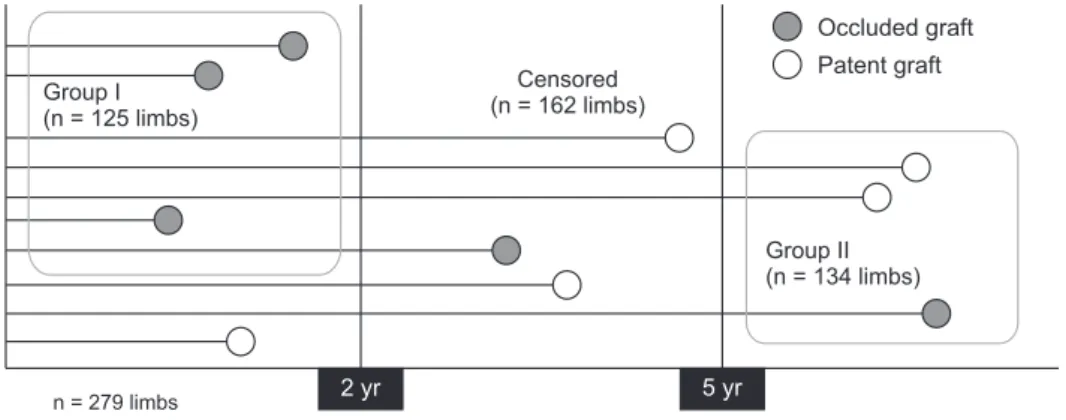
From the database of all consecutive patients who underwent LEAB at a tertiary referral center from September 2003 to May 2018, LEABs due to CAOD with proven graft patency shorter than 2 years (group I) and longer than 5 years (group II) were included for our comparative study. Fig. 1 shows the scheme of this comparative study.
Graft patency was determined by periodic examinations of duplex ultrasonography (DUS, Philips iU22, Philips Healthcare Solutions, Bothell, WA, USA; GE Logiq E9, GE Medical Systems, Milwaukee, WI, USA) every 3 months during the first postoperative year, and every 6–12 months after then.
In cases with unobvious findings of graft patency on DUS, CT angiography or femoral arteriography was performed to determine whether the graft is failing or occluded.
LEAB was performed for patients with CLI or disabling
short distance (usually <3 block distance) claudication which did not respond to conservative treatment. Regarding bypass conduit, autologous vein graft or polytetrafluoroethylene graft was liberally used in the above-the-knee (AK) popliteal bypass in discretion of surgeons. In cases of below-the-knee (BK) arterial bypass, we used vein graft as the first choice. When an ipsilateral great saphenous vein (GSV) was not available, alternative vein grafts, such as opposite GSV, arm veins, short saphenous veins, or spliced vein grafts, were used. In cases with autologous vein graft unavailable, we used a PTFE graft with distal vein cuff in BK arterial bypass.
Postoperatively, we routinely prescribed antiplatelet agents such as aspirin or clopidogrel. Postoperative statin was routinely used since 2014. For a certain period of time during the study, one surgeon in our group routinely used warfarin (134 limbs) after LEAB for the purpose of clinical research.
We compared patient demographics, coexisting medical conditions, risk factors of atherosclerosis, indication for LEAB, past history of arterial intervention in the index limb, procedural details of LEAB, reintervention (either endovascular or open surgical) rate after LEAB (not for an occluded graft but for failing graft), and postoperative medications between the 2 groups with univariable and multivariable analyses.
Hypertension was defined as systolic blood pressure > 140 mmHg or diastolic blood pressure > 90 mmHg on at least 2 occasions or current use of antihypertensive agents. Diabetes mellitus was defined as presence of history of diabetes regardless of duration of disease, use of antidiabetic agents, or a fasting blood glucose > 126 mg/dL. Hyperlipidemia was defined as history of dyslipidemia and/or treated by a physician or total serum cholesterol > 200 mg/dL or LDL cholesterol ≥ 130 mg/dL or current use of lipid-lowering agent. Coronary artery disease was defined as history of myocardial infarction, angina pectoris or history of percutaneous coronary intervention or coronary artery bypass grafting, and chronic renal insufficiency was defined as serum creatinine > 2.0 mg/dL or on dialysis.
To find any association between postoperative antihy-
Time after graft implantation
2 yr 5 yr
n = 279 limbs
Occluded graft Patent graft Group I
(n = 125 limbs)
Group II (n = 134 limbs) Censored
(n = 162 limbs)
Fig. 1. Scheme of comparative study to determine factors associated with long-term graft patency after lower extremity arterial bypasses.
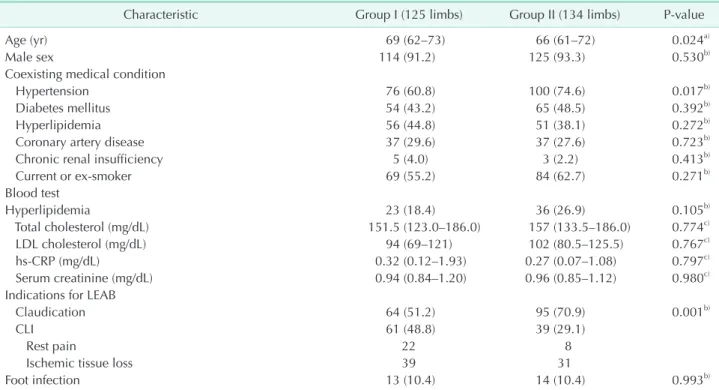
Table 1. Comparison of demographic and clinical characteristics between groups
Characteristic Group I (125 limbs) Group II (134 limbs) P-value
Age (yr) 69 (62–73) 66 (61–72) 0.024a)
Male sex 114 (91.2) 125 (93.3) 0.530b)
Coexisting medical condition
Hypertension 76 (60.8) 100 (74.6) 0.017b)
Diabetes mellitus 54 (43.2) 65 (48.5) 0.392b)
Hyperlipidemia 56 (44.8) 51 (38.1) 0.272b)
Coronary artery disease 37 (29.6) 37 (27.6) 0.723b)
Chronic renal insufficiency 5 (4.0) 3 (2.2) 0.413b)
Current or ex-smoker 69 (55.2) 84 (62.7) 0.271b)
Blood test
Hyperlipidemia 23 (18.4) 36 (26.9) 0.105b)
Total cholesterol (mg/dL) 151.5 (123.0–186.0) 157 (133.5–186.0) 0.774c)
LDL cholesterol (mg/dL) 94 (69–121) 102 (80.5–125.5) 0.767c)
hs-CRP (mg/dL) 0.32 (0.12–1.93) 0.27 (0.07–1.08) 0.797c)
Serum creatinine (mg/dL) 0.94 (0.84–1.20) 0.96 (0.85–1.12) 0.980c)
Indications for LEAB
Claudication 64 (51.2) 95 (70.9) 0.001b)
CLI 61 (48.8) 39 (29.1)
Rest pain 22 8
Ischemic tissue loss 39 31
Foot infection 13 (10.4) 14 (10.4) 0.993b)
Values are presented as median (interquartile range), number (%), or number only.
Group I, limbs showed graft occlusion within 2 years after graft implantation; group II, limbs showed patent graft for 5 years or longer after graft implantation.
hs-CRP, high-sensitivity CRP; LEAB, lower extremity arterial bypass; CLI, critical limb ischemia.
a)Independent t-test, b)chi-square test, c)Bonferroni test.
957 LEABs in 782 patients (September 2003 May 2018)
Exclusion (254 limbs) - Graft infection (97 limbs) - Acute ischemia (22 limbs) - Trauma (20 limbs)
- Other disease (tumor, aneurysm, etc.) (115 limbs)
Censored (444 limbs) - Lost to follow up (128 limbs) - Graft patency <5 yr (271 limbs) - Occluded graft between 2 5 yr
after LEAB (45 limbs)
259 Limbs in 213 patients included for a comparative analysis
Compare variables between
group I (125 limbs in 103 patients) and group II (134 limbs in 123 patients)
Subgroup analyses
Compare variables between group I (125 limbs) and group II (134 limbs) separately in claudication group (159 limbs) and critical limb ischemia group (100 limbs)
Fig. 2. Patient inclusion for a comparative study. Group I, limbs showed graft occlusion within 2 years after lower extremity arterial bypass (LEAB); group II, limbs showed patent graft for longer than 5 years after LEAB.
pertensive medication and long-term graft patency, we investigated postoperative prescribed antihypertensive agents and compared graft patency according to their acting mechanisms of the antihypertensive agents.
After the multivariable analyses to determine factors associated with long-term graft patency, additional subgroup analysis was performed in claudication and CLI group, separately.
For univariable analysis, numeric data were compared with the independent t-test and categorical data were compared with the chi-square test. Multiple hypothesis was corrected with Bonferroni method. Multivariable analysis was conducted
with a logistic regression model using variables showed P < 0.2 on the univariable analysis and previously reported variables related to graft patency. Additionally, Kaplan-Meier survival curve and log-rank test were used to confirm the multivariable analysis. IBM SPSS Statistics ver. 22 (IBM Corp., Armonk, NY, USA) was used for statistic support.
RESULTS
Over the past 13 years, 957 LEABs were performed in 782 patients (mean age, 63.7 years; male, 85.8%) at a single institution. After excluding LEABs due to non-atherosclerotic
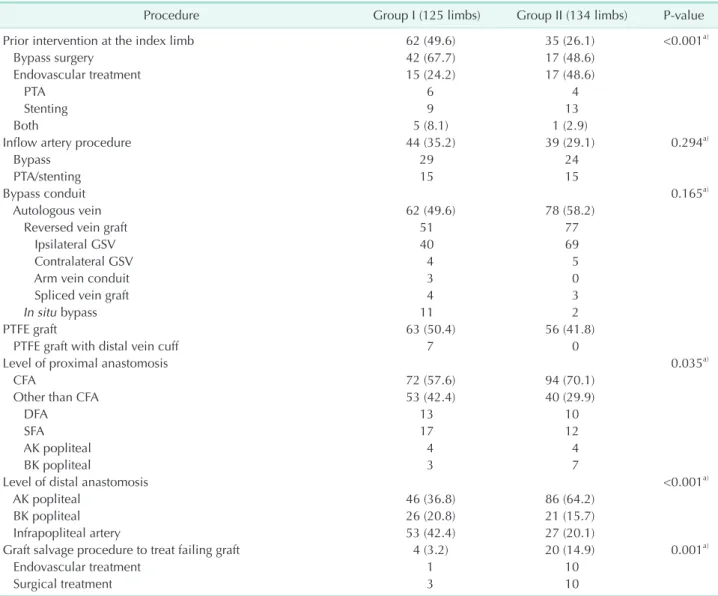
Table 2. Comparison of bypass procedures between groups
Procedure Group I (125 limbs) Group II (134 limbs) P-value
Prior intervention at the index limb 62 (49.6) 35 (26.1) <0.001a)
Bypass surgery 42 (67.7) 17 (48.6)
Endovascular treatment 15 (24.2) 17 (48.6)
PTA 6 4
Stenting 9 13
Both 5 (8.1) 1 (2.9)
Inflow artery procedure 44 (35.2) 39 (29.1) 0.294a)
Bypass 29 24
PTA/stenting 15 15
Bypass conduit 0.165a)
Autologous vein 62 (49.6) 78 (58.2)
Reversed vein graft 51 77
Ipsilateral GSV 40 69
Contralateral GSV 4 5
Arm vein conduit 3 0
Spliced vein graft 4 3
In situ bypass 11 2
PTFE graft 63 (50.4) 56 (41.8)
PTFE graft with distal vein cuff 7 0
Level of proximal anastomosis 0.035a)
CFA 72 (57.6) 94 (70.1)
Other than CFA 53 (42.4) 40 (29.9)
DFA 13 10
SFA 17 12
AK popliteal 4 4
BK popliteal 3 7
Level of distal anastomosis <0.001a)
AK popliteal 46 (36.8) 86 (64.2)
BK popliteal 26 (20.8) 21 (15.7)
Infrapopliteal artery 53 (42.4) 27 (20.1)
Graft salvage procedure to treat failing graft 4 (3.2) 20 (14.9) 0.001a)
Endovascular treatment 1 10
Surgical treatment 3 10
Values are presented as number (%) or number only.
Group I, limbs showed graft occlusion within 2 years after graft implantation; group II, limbs showed patent graft for 5 years or longer after graft implantation.
PTA, percutaneous transluminal angioplasty; PTFE, polytetrafluoroethylene; GSV, great saphenous vein; CFA, common femoral artery;
DFA, deep femoral artery; SFA, superficial femoral artery; AK, above-the-knee; BK, below-the-knee.
a)Chi-square test.
causes (254 limbs), and censoring limbs lost to follow up (127 limbs), grafts maintaining patency for less than 2 years (154 limbs), and patent grafts for 2–5 years after LEAB (167 limbs), 259 limbs in 213 patients (mean age, 67 years; male, 91.2%, CLI, 38.6%; diabetes mellitus, 46.0%; redo bypass, 8.1%) were included for the analysis (Fig. 2). Group I and II was 125 limbs and 134 limbs and mean duration of follow-up was 55.35 ± 7.92 months and 106.06 ± 5.77 months, respectively.
When patient characteristics were compared between the 2 groups, group II patients were younger (median, 69 years vs. 66 years; P = 0.024), more frequently hypertensive (60.8%
vs. 74.6%, P = 0.017) compared to group I patients (short-term graft patency). Group II had more limbs with claudication as an indication for LEAB (51.2% vs. 70.9%, P = 0.001); however, no significant differences were found in frequencies of other comorbidities or blood test results (Table 1).
When we compared procedural details of the LEABs between the groups, group II patients had less frequent history of prior arterial intervention (49.6% vs. 26.1%, P < 0.001), had more frequent common femoral artery (CFA) origin bypass (57.6% vs.
70.1%, P = 0.035), AK bypass (36.8% vs. 64.2%, P < 0.001) and more common graft salvage procedures (3.2% vs. 14.9%, P = 0.001) after LEABs (Table 2).
When we compared postoperative medications between the groups, use of statins was more common in group II than group I (75.2% vs. 88.8%, P = 0.004) (Table 3).
After seeing that hypertension was more frequently associated with group II, we conducted a subgroup analysis with antihypertensive agents according to their action mechanisms to find which antihypertensive agent(s) is (are) associated with long-term graft patency. However, no significant difference between antihypertensive agents was found (Table 3).
After conducting a subgroup univariable analysis in claudi-
cation and CLI groups (Table 4), we performed multivariable analysis with whole patients and a subgroup analysis in claudication and CLI groups, separately.
On a multivariable analysis, hypertension (odds ratio [OR], 1.91; 95% confidence interval [CI], 1.02–3.60; P = 0.038), claudication (OR, 2.08; 95% CI, 1.09–3.98; P = 0.032), no prior intervention (OR, 2.48; 95% CI, 1.33–4.63; P = 0.001), vein graft (OR, 4.36; 95% CI, 1.75–10.87; P = 0.001), AK bypass (OR, 4.68;
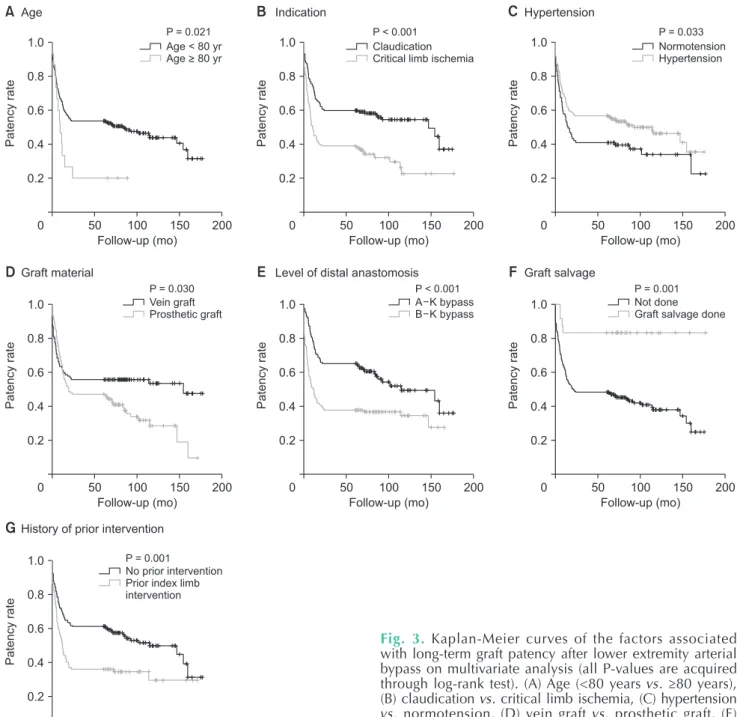
95% CI, 2.07–10.60; P < 0.001), and postoperative graft salvage procedures (OR, 7.70; 95% CI, 2.24–26.49; P < 0.001) were identified as independent factors associated with long-term graft patency (Table 5). Kaplan-Meier survival curve and log- rank test were shown in Fig. 3
When we conducted a multivariable analysis separately in claudication and CLI patient groups, no prior intervention, vein graft, AK bypass, and graft salvage procedure were associated with long-term graft patency in the claudication group, while hypertension, vein graft, graft salvage procedure, and low high-sensitivity (hs)-CRP was associated with long-term graft patency in the CLI group (Table 6). The common factors in both claudication and CLI groups were vein graft and postoperative graft salvage procedure. When blood hs-CRP level was analyzed as a continuous variable, increased level of hs-CRP was associated with decrease in frequency of long-term patency patients (18.5% decrease per 0.01 mg/dL increase of hs-CRP) only in the CLI limbs, not in claudication limbs.
DISCUSSION
For the treatment of CAOD of the LE, use of EVT has increased due to its merit of less invasiveness, lower morbidity and mortality compared to LEAB [13,14]. However, many patients require LEAB as a primary treatment due to unfavorable Table 3. Comparison of postoperative medication between groups
Postoperative medication Group I (125 limbs) Group II (134 limbs) P-value
Single antiplatelet therapy 24 (19.2) 21 (15.7) 0.454a)
Dual antiplatelet therapy 97 (77.6) 110 (82.1) 0.367a)
Warfarin 70 (56.0) 64 (47.8) 0.185a)
Statin medication 94 (75.2) 119 (88.8) 0.004a)
Antihypertensive drugc) 76 (60.8) 100 (74.6) 0.017a)
ACE inhibitor 5 (6.6) 9 (9.0) 0.557b)
ARB 35 (46.1) 49 (49.0) 0.698b)
CCB 37 (48.7) 59 (59.0) 0.173b)
BB 27 (35.5) 29 (29.0) 0.357b)
Diuretics 18 (23.7) 36 (36.0) 0.079b)
Values are presented as number (%).
Group I, limbs showed graft occlusion within 2 years after graft implantation; group II, limbs showed patent graft for 5 years or longer after graft implantation.
ACE, angiotensin converting enzyme; ARB, angiotensin II receptor blocker; CCB, calcium channel blocker; BB, beta-blocker.
a)Chi-square test, b)Bonferroni test; c)76 limbs for group I and 100 limbs for group II were investigated.
anatomy for an EVT or the secondary treatment options after failures of EVT [15].
According to the practice guidelines [16] for the treatment of CAOD of the LE, EVT is recommended as an initial treatment hoping that it does not adversely affect the results of open surgery that will be performed later. There are increasing reports showing adverse effects of prior EVT on the results of
later LEAB [5,17].
For assessment of treatment results after LE arterial revascularization, various objective and subjective endpoints have been used, including patency of the treated artery or bypass graft, healing rates of the ischemic wound, limb salvage, walking ability, ankle brachial index, absence of target limb revascularization, reintervention rate, cost, treatment-related Table 4. Univariable analysis for the factors associated with long-term graft patency in claudication and CLI patient groups
Variable Group I Group II P-value
Claudication group (159 limbs)
No. of limbs 64 95
Hypertension 39 (60.9) 68 (71.6) 0.161a)
Blood test
Total cholesterol (mg/dL) 147.5 (116–187) 161 (138–196) 0.033b)
LDL cholesterol (mg/dL) 91 (61–111) 108 (80–138) 0.012b)
Prior intervention on the index artery 35 (54.7) 29 (30.5) <0.001a)
Bypass 28 15
Endovascular treatment 10 15
Conduit 0.030a)
Autologous vein graft 27 (42.2) 57 (60.0)
PTFE graft 37 (57.8) 56 (40.0)
Level of proximal anastomosis 0.068a)
CFA 40 (62.5) 72 (75.8)
Other than CFA 24 (37.5) 23 (24.2)
Level of distal anastomosis 0.031a)
AK popliteal 33 (51.6) 69 (72.6)
BK popliteal 15 (23.4) 13 (13.7)
Distal artery 16 (25.0) 13 (13.7)
Graft salvage procedure 2 (3.1) 13 (13.7) 0.032a)
Postoperative warfarin 40 (62.5) 42 (44.2) 0.019a)
Postoperative statin 54 (84.4) 86 (90.5) 0.242a)
CLI group (100 limbs)
No. of limbs 61 39
Hypertension 37 (60.7) 32 (82.1) 0.023a)
Prior intervention of the index artery 27 (44.3) 6 (15.4) <0.001a)
Bypass surgery 19 3
Endovascular treatment 10 3
Graft type 0.732a)
Autologous vein 35 (57.4) 21 (53.8)
PTFE graft 26 (42.6) 18 (46.2)
Level of proximal anastomosis 0.701a)
CFA 32 (52.5) 22 (56.4)
Other than CFA 29 (47.5) 17 (43.6)
Level of distal anastomosis 0.026a)
AK popliteal 13 (21.3) 17 (43.6)
BK popliteal 11 (18.0) 8 (20.5)
Distal artery 37 (60.7) 14 (35.9)
Graft salvage procedure 2 (3.3) 7 (17.9) 0.034a)
Postoperative statin 40 (65.6) 33 (84.6) 0.041a)
Values are presented as number only, number (%), median (interquartile range).
Group I, limbs showed graft occlusion within 2 years after graft implantation; group II, limbs showed patent graft for 5 years or longer after graft implantation.
CLI, critical limb ischemia; PTFE, polytetrafluoroethylene; CFA, common femoral artery; AK, above-the-knee; BK, below-the-knee.
a)Chi-square test, b)Bonnferroni test.
morbidity and mortality, etc. [12,18-22].
In the past, outcomes of EVT were often assessed with procedural success and a relatively short-term efficacy of the treatment [2,18,19,23]. Though there have been improvements in the results of EVT [24] it is still incomparable to that of successful LEAB, particularly in the long-term results.
According to systematic reviews and meta-analyses regarding bypass surgery vs. endovascular interventions in severe or CLI, bypass surgery and endovascular approach may have similar effect on mortality and major amputations. However, better primary and primary assisted patency can be expected with open surgery though quality of evidence was low due to imprecision and heterogeneity [10,25].
A prospective study, the BASIL trial, recommended LEAB rather than EVT as an initial treatment for patients with severe leg ischemia and life expectancy longer than 2 years [26]. Some other studies also suggested LEAB as the first-line treatment option when long-term efficacy is required [27,28].
Additionally, Global Vascular Guidelines on the Management of Chronic Limb-Threatening Ischemia warned that nonselective endovascular-first approach carries some risk of both clinically ineffective and cost-ineffective treatment and potential for harm [16].
If we can select an optimal patient group considering risk and benefits of the EVT and LEAB, we can avoid unnecessary intervention or extra-cost and reduce the treatment-related complications. Under the assumption that there is suitable patients group for LEAB, we attempted to determine factors associated with long-term graft patency after LEAB.
For a comparative analysis, we arbitrarily defined a long-term patency as limbs with graft patency of ≥5 years after LEAB regardless of current patency and a short-term patency group as limb with graft patency of <2 years after LEAB. When we defined short-term patency group as <2 years of graft patency, we tried to keep an influence of technical failure to be minimal in our comparative study. Patient characteristics, procedural details, and postoperative management were compared
between the 2 patient groups.
On univariable analysis, younger age, hypertension, claudication as indication for surgery, no prior history of arterial intervention in the index limb, CFA origin bypass, postoperative graft salvage procedure, and statin use were more common in the long-term patency group. On multivariable analysis, presence of hypertension, claudication as an indication for LEAB, no prior arterial intervention, vein graft, AK bypass, and postoperative graft salvage procedure were identified as independent factors associated with long-term graft patency.
Among those factors, use of autologous vein graft, claudication as an indication for LEAB, short graft (AK bypass), and graft salvage procedure are well-known factors for long-term graft patency. Multivariable analysis showed that hypertension (vs. normotension) was independent factor associated with long-term graft patency after LEAB.
Regarding hypertension as a protective factor on graft patency after LEAB, the mechanism is not well known. In our previous study with crossover femoro-femoral bypass with prosthetic graft, we found that hypertension acted as a protective factor on graft occlusion [29]. To determine any class effect of antihypertensive agent on the graft patency, we conducted a subgroup analysis with patients who prescribed antihypertensive agent after LEAB according to the action mechanisms of the antihypertensive agents. Among 176 limbs of them, we found no significant relationship between specific antihypertensive agent and graft patency. Further investigations are recommended to reveal the mechanism of the beneficial effects of hypertension or antihypertensive agent on the graft patency.
In comparison of postoperative medications between 2 groups, statin prescription was more common in long patency group whereas there was no differences in antithrombotic medications.
Regarding the effect of prior intervention on the late LEAB, a recent systemic review warned the adverse effect of EVT on the results of the late LEAB [30]. Similarly, prior intervention was Table 5. Multivariable analysisa) for the factors associated with long-term graft patency
Variable Reference OR (95% CI) P-value
Age < 80 yr Age ≥ 80 yr 2.83 (0.67–11.90) 0.163
Hypertension Normotension 1.91 (1.02–3.60) 0.038
Claudication Critical limb ischemia 2.08 (1.09–3.98) 0.032
No prior intervention Prior target limb intervention 2.48 (1.33–4.63) 0.001
Vein graft Prosthetic graft 4.36 (1.75–10.87) 0.001
AK arterial bypass BK or distal arterial bypass 4.68 (2.06–10.60) <0.001
Graft salvage procedure No graft salvage procedure 7.70 (2.24–26.49) <0.001
Postoperative warfarin No warfarin 1.00 (0.49–2.03) 0.976
Postoperative statin No statin 2.28 (0.99–5.22) 0.053
OR, odds ratio; CI, confidence interval; AK, above-the-knee; BK, below-the-knee.
a)Logistic regression model.
an independent factor associated with early graft occlusion in our study.
Postoperative graft salvage procedure to treat failing grafts was associated with long-term graft patency whether it was endovascular or surgical intervention. We assumed that there may be some bias regarding postoperative graft salvage procedure because most failing grafts were vein grafts. And it is easy to anticipate that a successful graft salvage procedure can improve graft patency.
From the results of current study, we found that long-term
graft patency can be expected for patients with claudication, use of autologous vein conduit, AK bypass, presence of hypertension, and no prior history of arterial intervention in the index limb.
Our study has some limitations due to its retrospective design and arbitrary grouping of patients for the comparison.
We thought further investigation is required to confirm the association between hypertension and graft patency.
In conclusion, we have experienced that LEAB is still a recommendable treatment option for a selected group of
Patencyrate
1.0
0.8
0.6
0.4
0.2
0
A
Follow-up (mo)
200 150 100 50 Age
Patencyrate
1.0
0.8
0.6
0.4
0.2
0
B
Follow-up (mo)
200 150 100 50
Patencyrate
1.0
0.8
0.6
0.4
0.2
0
C
Follow-up (mo)
200 150 100 50
P = 0.021 P < 0.001 P = 0.033
Claudication Critical limb ischemia
Normotension Hypertension Age < 80 yr
Age > 80 yr
Indication Hypertension
Patencyrate
1.0
0.8
0.6
0.4
0.2
0
D
Follow-up (mo)
200 150 100 50
Patencyrate
1.0
0.8
0.6
0.4
0.2
0
E
Follow-up (mo)
200 150 100 50
Patencyrate
1.0
0.8
0.6
0.4
0.2
0
F
Follow-up (mo)
200 150 100 50 Vein graft
Prosthetic graft
A K bypass B K bypass
Not done Graft salvage done
P = 0.030 P < 0.001 P = 0.001
Graft material Level of distal anastomosis Graft salvage
Patencyrate
1.0
0.8
0.6
0.4
0.2
0
G
Follow-up (mo)
200 150 100 50
No prior intervention Prior index limb intervention P = 0.001 History of prior intervention
Fig. 3. Kaplan-Meier curves of the factors associated with long-term graft patency after lower extremity arterial bypass on multivariate analysis (all P-values are acquired through log-rank test). (A) Age (<80 years vs. ≥80 years), (B) claudication vs. critical limb ischemia, (C) hypertension vs. normotension, (D) vein graft vs. prosthetic graft, (E) anastomosis level (above-the-knee vs. below-the-knee), (F) graft salvage procedure, and (G) prior intervention of index artery.
patients. In decision making for the treatment of CAOD patients requiring long-term graft patency, above-described factors can be considered.
ACKNOWLEDGEMENTS
Conflict of Interest
No potential conflict of interest relevant to this article was reported.
ORCID iD
Ki-Sang Jung: https://orcid.org/0000-0002-6740-7206 Seon-Hee Heo: https://orcid.org/0000-0002-0250-2229
Shin-Young Woo: http://orcid.org/0000-0001-9461-4852 Yang-Jin Park: https://orcid.org/0000-0001-8433-2202 Dong-Ik Kim: https://orcid.org/0000-0003-0674-8725 Young-Wook Kim: https://orcid.org/0000-0002-1106-3037
Author Contribution
Conceptualization: KSJ, SHH, YWK Formal Analysis: KSJ, SHH, SYW Investigation: KSJ, SHH, YJP, DIK, YWK Methodology: KSJ, SHH, SYW, YWK Project Administration: KSJ, SHH, YWK Writing – Original Draft: KSJ, SHH, YWK Writing – Review & Editing: All authors
REFERENCES
1. Sachs T, Pomposelli F, Hamdan A, Wyers M, Schermerhorn M. Trends in the national outcomes and costs for claudication and limb threatening ischemia: angioplasty vs bypass graft. J Vasc Surg 2011;54:1021-31.
2. Antoniou GA, Chalmers N, Georgiadis GS, L a zar ides MK , A ntoniou SA , Serracino-Inglott F, et al. A meta- analysis of endovascular versus surgical reconstruction of femoropopliteal arterial disease. J Vasc Surg 2013;57:242-53.
3. Antoniou GA, Georgiadis GS, Antoniou SA, Makar RR, Smout JD, Torella F.
Bypass surgery for chronic lower limb ischaemia. Cochrane Database Syst Rev 2017;4:CD002000.
4. Uhl C, Hock C, Betz T, Töpel I, Steinbauer M. Pedal bypass surgery after crural endovascular intervention. J Vasc Surg 2014;59:1583-7.
5. Hossain S, Leblanc D, Farber A, Power AH, DeRose G, Duncan A, et al. Editor’s choice:
infrainguinal bypass following failed endovascular intervention compared with primary bypass: a systematic review and meta-analysis. Eur J Vasc Endovasc Surg 2019;57:382-91.
6. Menard MT, Farber A, Assmann SF, Choudhry NK, Conte MS, Creager MA, et al. Design and rationale of the Best Endovascular Versus Best Surgical Therapy for Patients With Critical Limb Ischemia (BEST-CLI) Trial. J Am Heart Assoc Table 6. Subgroup analysisa) for the factors associated with long-term graft patency in claudication and critical limb ischemia patients
Variable Reference OR (95% CI) P-value
Claudication group (159 limbs)
Age < 80 yr Age ≥ 80 years 2.91 (0.41–20.62) 0.292
No prior intervention Prior index limb intervention 2.21 (1.05–4.67) 0.043
Vein graft Prosthetic graft 6.12 (2.33–16.13) 0.007
AK arterial bypass BK or distal arterial bypass 6.60 (2.38–18.27) <0.001
Graft salvage procedure No graft salvage procedure 8.13 (1.55–42.59) 0.012
Postoperative statin No statin use 2.24 (0.41–20.62) 0.294
Critical limb ischemia group (100 limbs)
Hypertension Normotension 5.13 (1.17–22.51) 0.027
No diabetes Diabetes mellitus 0.47 (0.15–1.48) 0.192
No prior intervention Prior index limb intervention 2.39 (0.62–9.23) 0.173
Vein graft Prosthetic graft 2.04 (0.35–11.96) 0.001
AK popliteal bypass BK popliteal or distal bypass 2.63 (0.43–16.21) 0.482
Graft salvage procedure No graft salvage procedure 21.12 (1.95–229.15) 0.014
Postoperative statin No statin use 1.19 (0.26–5.45) 0.945
Low hs-CRP High hs-CRP 0.82 (0.68–0.97) 0.032
OR, odds ratio; CI, confidence interval; AK, above-the-knee; BK, below-the-knee; hs-CRP, high-sensitivity CRP.
a)Logistic regression model.
2016;5:e003219.
7. Popplewell MA, Davies H, Jarrett H, Bate G, Grant M, Patel S, et al. Bypass versus angio plasty in severe ischaemia of the leg - 2 (BASIL-2) trial: study protocol for a randomised controlled trial. Trials 2016;17:11.
8. Santo VJ, Dargon P, Azarbal AF, Liem TK, Mitchell EL, Landry GJ, et al. Lower extremity autologous vein bypass for critical limb ischemia is not adversely affected by prior endovascular procedure.
J Vasc Surg 2014;60:129-35.
9. Nguyen KP, Moneta G, Landry G. Venous conduits have superior patency compared with prosthetic grafts for femorofemoral bypass. Ann Vasc Surg 2018;52:126-37.
10. Almasri J, Adusumalli J, Asi N, Lakis S, A lsawas M, Prokop LJ, et al. A systematic review and meta-analysis of revascularization outcomes of infrain- guinal chronic limb-threatening ischemia.
J Vasc Surg 2018;68:624-33.
11. Heo SH, Park YJ, Woo SY, Kim DI, Kim YW. Comparison of long-term results of above-the-knee femoro-popliteal bypass with autogenous vein and polytetrafluoroethylene grafts. Ann Surg Treat Res 2015;88:28-34.
12. Mills JL Sr, Conte MS, Armstrong DG, Pomposelli FB, Schanzer A, Sidawy AN, et al. The Society for Vascular Surgery Lower Extremity Threatened Limb Classification System: risk stratification based on wound, ischemia, and foot infection (WIfI). J Vasc Surg 2014;59:220-34.
13. Gerhard-Herman MD, Gornik HL, Barrett C, Barshes NR, Corriere MA, Drachman DE, et al. 2016 AHA/ACC guideline on the management of patients with lower extremity peripheral artery disease:
a report of the American College of Cardiology/American Heart Association Task Force on Clinical Practice Guidelines.
Circulation 2017;135:e726-79.
14. Egorova NN, Guillerme S, Gelijns A, Morrissey N, Dayal R, McKinsey JF, et al.
An analysis of the outcomes of a decade of experience with lower extremity revascularization including limb salvage, lengths of stay, and safety. J Vasc Surg
2010;51:878-85.
15. Hirsch AT, Haskal ZJ, Hertzer NR, Bakal CW, Creager MA, Halperin JL, et al. ACC/
AHA 2005 practice guidelines for the management of patients with peripheral arterial disease (lower extremity, renal, mesenteric, and abdominal aortic): a collaborative report from the American Association for Vascular Surgery/Society for Vascular Surgery, Society for Cardiovascular Angiography and Interventions, Society for Vascular Medicine and Biology, Society of Interventional Radiology, and the ACC/AHA Task Force on Practice Guidelines (Writing Committee to Develop Guidelines for the Management of Patients With Peripheral Arterial Disease): endorsed by the American Association of Cardiovascular and Pulmonary Rehabilitation; National Heart, Lung, and Blood Institute; Society for Vascular Nursing; TransAtlantic Inter- Society Consensus; and Vascular Disease Foundation. Circulation 2006;113:e463- 654.
16. Conte MS, Bradbury AW, Kolh P, White JV, Dick F, Fitridge R, et al. Global vascular guidelines on the management of chronic limb-threatening ischemia. Eur J Vasc Endovasc Surg 2019;58(1S):S1-109.
17. Dosluoglu HH, Lall P, Harris LM, Dryjski ML. Long-term limb salvage and survival after endovascular and open revascularization for critical limb ischemia after adoption of endovascular- first approach by vascular surgeons. J Vasc Surg 2012;56:361-71.
18. Whyman MR, Fowkes FG, Kerracher EM, Gillespie IN, Lee AJ, Housley E, et al. Randomised controlled trial of percutaneous transluminal angioplasty for intermittent claudication. Eur J Vasc Endovasc Surg 1996;12:167-72.
19. Greenhalgh RM, Belch JJ, Brown LC, Gaines PA, Gao L, Reise JA, et al. The adjuvant benefit of angioplasty in patients with mild to moderate intermittent claudication (MIMIC) managed by supervised exercise, smoking cessation advice and best medical therapy: results from two randomised trials for stenotic femoropopliteal and aortoiliac arterial
disease. Eur J Vasc Endovasc Surg 2008;36:680-8.
20. Nordanstig J, Taft C, Hensäter M, Perlander A, Osterberg K, Jivegård L. Improved quality of life after 1 year with an invasive versus a noninvasive treatment strategy in claudicants: one-year results of the Invasive Revascularization or Not in Intermittent Claudication (IRONIC) Trial. Circulation 2014;130:939-47.
21. Feinglass J, McCarthy WJ, Slavensky R, Manheim LM, Martin GJ. Functional status and walking ability after lower extremity bypass grafting or angioplasty for intermittent claudication: results from a prospective outcomes study. J Vasc Surg 2000;31(1 Pt 1):93-103.
22. Malgor RD, Alahdab F, Elraiyah TA, Rizvi AZ, Lane MA, Prokop LJ, et al. A systematic review of treatment of intermittent claudication in the lower extremities. J Vasc Surg 2015;61(3 Suppl):54S-73S.
23. Jones WS, Dolor RJ, Hasselblad V, Vemulapalli S, Subherwal S, Schmit K, et al.
Comparative effectiveness of endovascular and surgical revascularization for patients with peripheral artery disease and critical limb ischemia: systematic review of revascularization in critical limb ischemia.
Am Heart J 2014;167:489-98.
24. Siablis D, Kitrou PM, Spiliopoulos S, Katsanos K, Karnabatidis D. Paclitaxel- coated balloon angioplasty versus drug- eluting stenting for the treatment of infrapopliteal long-segment arterial occlusive disease: the IDEAS randomized controlled trial. JACC Cardiovasc Interv 2014;7:1048-56.
25. Abu Dabrh AM, Steffen MW, Asi N, Undavalli C, Wang Z, Elamin MB, et al. Bypass surgery versus endovascular interventions in severe or critical limb ischemia. J Vasc Surg 2016;63:244-53.
26. Bradbury AW, Adam DJ, Bell J, Forbes JF, Fowkes FG, Gillespie I, et al. Bypass versus Angioplasty in Severe Ischaemia of the Leg (BASIL) trial: a survival prediction model to facilitate clinical decision making. J Vasc Surg 2010;51(5 Suppl):52S- 68S.
27. Adam DJ, Beard JD, Cleveland T, Bell J,
Bradbury AW, Forbes JF, et al. Bypass versus angioplasty in severe ischaemia of the leg (BASIL): multicentre, randomised controlled trial. Lancet 2005;366:1925-34.
28. van der Zaag ES, Legemate DA, Prins MH, Reekers JA, Jacobs MJ. Angioplasty or bypass for superficial femoral artery
disease?: a randomised controlled trial.
Eur J Vasc Endovasc Surg 2004;28:132-7.
29. Kim YW, Lee JH, Kim HG, Huh S. Factors affecting the long-term patency of crossover femorofemoral bypass graft. Eur J Vasc Endovasc Surg 2005;30:376-80.
30. Meecham L, Patel S, Bate GR, Bradbury
AW. Editor’s choice: a comparison of clinical outcomes between primary bypass and secondary bypass after failed plain balloon angioplasty in the Bypass versus Angioplasty for Severe Ischaemia of the Limb (BASIL) Trial. Eur J Vasc Endovasc Surg 2018;55:666-71.