1. Introduction
T91 alloy, 9Cr–1Mo ferritic/martensitic steel has been widely used as tube material for heater or super-heater in the thermal power equipment due to its excellent creep resistance and low thermal expansion coefficients[1].
Boiler tube failure is one of the major damage factors af- fecting the structure integrity of equipment. T91 steel can undergo pitting corrosion caused by aggressive ions, such as sulfate ions (SO42–
) and chloride ions (Cl–). The SO42–
and Cl– concentrations can increase in power plants as a result of condenser leakage into feedwater system, the dis- solution of ion exchange resins, and the decomposition of organics. On the other hand, T91 steel has been exposed to the overheated steam, which caused oxidation problems.
Corrosion and oxide scale formation on tube surfaces sig- nificantly influence operational reliability of thermal pow- er plant boilers, which can lead to heat transfer decreasing, overheating and tube failures, loss of turbines efficiency, and diverse damages in other segments of power units.
Water chemistry has an important influence on the cor- rosion of the thermal equipment[2]. Water chemistry con-
trol is beneficial to prevent and/or reduce corrosion in boiler system and to minimize the transport of corrosion products and corrosive contaminants to the boiler. The current chemistry control strategy involves all volatile treatment (AVT) and oxygenated water treatment (OT).
The AVT relies on complete removal of oxygen (< 5 ppb) using hydrazine as an oxygen scavenger with the pH25
℃ adjusted to about 9 using ammonia. In OT operation, oxygen is added to the demineralized (< 0.2μScm−1) al- kaline (pH25 ℃ = 8.0 ~ 8.5 (ammonia)) feed water to keep the oxygen level between 30 ~ 50 ppb < 0.2. The OT promotes the formation of the stable protective magnetite (Fe3O4) layer, which reduces water-steam-side corrosion behavior in the electric power plants. Oxygenated treat- ment (OT) is gradually considered as a more effective chemical water treatment method for ultra-supercritical (USC) unit in comparison with all-volatile treatment (AVT) because it can avoid flow accelerated corrosion (FAC) which occurs in low and high pressure heater[3].
The boiler tube failures caused by corrosion and oxide scale formation in thermal power plants have been inves- tigated by many investigators. Recently, some power plants using OT technique have experienced increased iron concentrations in the drain system of the low-pressure
Corrosion Behavior and Oxide Film Formation of T91 Steel under Different Water Chemistry Operation Conditions
D. Q. Zhang1,†, C. Shi1, J. Li1, L. X. Gao1, and K. Y. Lee2
1Department of Environmental Engineering, Shanghai University of Electric Power, Shanghai 200090, PR China
2State Key Laboratory of Structural Analysis for Industrial Equipment, Department of Engineering Mechanics, Dalian University of Technology, Dalian 116024, P R China
(Received June 07, 2016; Revised January 18, 2017; Accepted January 20, 2017)
The corrosion behavior of a ferritic/martensitic steel T91 exposed to an aqueous solution containing chloride and sulfate ions is investigated depending on the stimulated all-volatile treatment (AVT) and under oxygenated treatment (OT) conditions. The corrosion of T91 steel under OT condition is severe, while the corrosion under AVT condition is not. The co-existence of chloride and sulfate ions has antagonistic effect on the corrosion of T91 steel in both AVT and OT conditions. Unlike to corrosion resistance in the aqueous solution, OT pretreatment provides T91 steel lower oxidation-resistance than VAT pretreatment. From scanning electron microscopy/energy dispersive X-ray spectroscopy (SEM/EDS) and X-ray diffraction (XRD) analysis, the lower corrosion resistance in the aqueous solution by VAT conditions possibly is due to the formation of pits. In addition, the lower oxidation resistance of T91 steel pretreated by OT conditions is explained as follows: the cracks formed during the immersion under OT conditions accelerated peeling-off rate of the oxide film.
Keywords: T91 steel, oxidation, corrosion, electric power plant
†Corresponding author: [email protected]
tion of oxide scales can cause serious problems such as tube blockages and steam turbine erosion[4]. It is gen- erally accepted that the oxide films of T91 steel consisted of two layers, an outer layer and an inner layer. The po- rous outer layer forms by the diffusion of iron ions through the Fe–Cr spinel and magnetite layers to the oxide and water vapor interface where an oxidation reaction oc- curs that accounts for the growth of the outer layer. The denser inner Cr-rich spinel oxide grows by the inward diffusion of oxygen to the oxide and metal interface. The highly defected outer layer allows for rapid oxygen inward diffusion through the magnetite[5].
However, the problems and processes involved in the early stages oxidation of T91 steel are intrinsically differ- ent from those involved in the growth of oxide layers in the further oxidation. The corrosion of T91 steel under different water chemistry control conditions and their rela- tionship with the formation of oxide scale is seldom reported. The work presented here is in line with the on- going programs worldwide particularly in addressing steam-side oxidation of candidate alloys for thermal power plant. The aim of this work is to investigate the relation- ship between corrosion under different water chemistry control condition and the formation of oxide scale. This will be useful to get the information at the early corrosion stage and evolution of oxide in the further oxidation stage.
2. Experimental Procedure 2.1 Materials
The used steel specimens were from T91 alloy with the following composition (wt%): C 0.08 ~ 0.12; Si 0.20 ~ 0.50; Mn 0.30 ~ 0.60; Cr 9 ~ 12; Mo 0.085 ~ 1.05; V 0.18 ~ 0.25; P ≤ 0.02; S ≤ 0.01; Ni ≤ 0.40 and Fe balance.
All reagents were analytical grade and used as received.
2.2 Electrochemical measurements
Electrochemical measurements were performed in a conventional three-electrode cell connected to a computer- controlled electrochemical workstation (Solartron 1287 Electrochemical Interface coupled with a 1260 Impedance/
Gain-Phase Analyzer). Zplot and CorrWare software packages were used for the electrochemical analysis. The electrochemical cell was open to air and the test solution was not stirred or deaerated. The T91 working electrodes
amplitude was used to perturb the system. Polarization studies were carried out at a scan rate of 0.5 mVs−1. All potentials were presented in mV(SCE).
2.3 SEM and EDS characterization
The steel specimens were immersed in the test solution at 25 ℃ for 1 h. Then the specimens were transferred to a tube furnace for a high temperature oxidization test.
The surface microstructure of the different steel specimens was investigated by a scanning electron microscope (SEM) after the corrosion immersion test. An energy dispersive spectroscopy (EDS) was recorded to give the chemical composition of the surface film.
2.4 XRD analysis
X-ray diffraction (XRD) analysis was done using BRUKER-D8 X diffractometer with a step size of 0.1 and with time per step as 7 s. The phases present in the 15CrMo steel specimens before and after the high temper- ature oxidization test were analyzed by XRD with Cu Ka radiation.
3. Resutls and Discussion
3.1 Electrochemical measurements under different water chemistry condition
In order to control corrosion throughout the steam/water circuits of the electric power plants, it is essential for the technician of the plant to choose and optimize a water chemistry condition. All volatile treatment (AVT) in- volves the addition of ammonia (or an amine or blend of amines of lower volatility than ammonia) and a re- ducing agent (usually hydrazine or one of the acceptable substitutes) to the condensate or feedwater of the plant.
With oxygenated treatment (OT), oxygen is injected into the feedwater to keep the oxygen level between 30-50 ppb. This forms a thicker protective layer of hematite (Fe2O3) on top of the magnetite (Fe3O4). OT operation can reduce the risk of flow-accelerated corrosion. In this research, 50μg/L hydrazine is added and the dissolved oxygen content is controlled below 10μg/L for AVT condition. The dissolved oxygen content is set at 100μ g/L for OT condition by pumped in pure nitrogen gas.
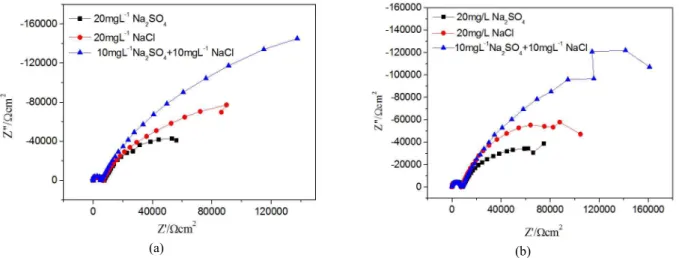
Fig.1 shows the electrochemical impedance plots of T91 electrode after 1 h immersed in different water chemistry
control condition.
As shown in Fig.1a, two capacitive loops in the high frequency and in the low frequency are observed for T91 steel electrode. The high-frequency semicircle is attributed to the parasitic capacitive reactance owing to the refer- ence circuit in the low conductivity solution[6]. Therefore, the impedance plots can be analyzed by the equivalent circuits with the charge-transfer resistance (Rct) paralleling to the double-layer capacitance (Cdl). The ZSimpWin soft- ware is used for impedance data analysis and the fit pa- rameters are listed in Table1, where Rs stands for the sol-
ution resistance.
It is obvious that the T91 electrode under AVT con- dition has larger Rct values compared to that under OT condition. This indicates that the OT operation need to a strict control of all indexes of water quality. Actually, there is a requirement to stop injecting oxygen into the feedwater if the cation conductivity exceeds 0.3 μS/cm.
Under the same water chemistry condition, the SO42-
ions have the most serious attack effect, for 20 mgL-1 Na2SO4
leads to the smallest Rct values. It is reported that the initiation of pitting corrosion by SO42–
ions takes place
(a) (b)
Fig. 1 Nyquist plots of T91 electrode after 1 h immersed in different water chemistry control condition: (a) AVT; (b) OT.
Table 1 Electrochemical impedance parameters of T91 steel electrode after 1 h immersed in different water chemistry condition Water chemistry condition Rs/Ω·cm2 Cdl/Fcm-2 (´10-5) Rct/kΩ·cm2
AVT
20 mgL-1 Na2SO4 7649 7.925 74.98
20mgL-1 NaCl 6934 5.022 116.3
10 mgL-1 Na2SO4 +10mgL-1 NaCl 5770 3.516 196.7
OT
20 mgL-1 Na2SO4 9287 5.524 62.54
20mgL-1 NaCl 8166 4.252 101.1
10 mgL-1 Na2SO4 +10mgL-1 NaCl 8983 2.199 175.6
Table 2 Electrochemical polarization parameters of T91 steel electrode after 1 h immersed under different water chemistry condition
Water chemistry condition E/V I0 /µAcm-2
AVT
20 mgL-1 Na2SO4 -0.2333 0.22921
20mgL-1 NaCl -0.2104 0.14618
10 mgL-1 Na2SO4 +10mgL-1 NaCl -0.0722 0.10049
OT
20 mgL-1 Na2SO4 -0.24657 0.27562
20mgL-1 NaCl -0.24729 0.21201
10 mgL-1 Na2SO4 +10mgL-1 NaCl -0.2154 0.06268
through an adsorption mechanism. The formation of Fe2+
is the favored adsorption of SO42–
ions on oxide films, and creates an electrostatic field across the film/solution interface. When the electrostatic field reaches a certain value, SO42–
ions penetrate the oxide layer, react with steel at the steel/oxide interface, and promote the local dis- solution of T91 steel, resulting in a pit nucleus[7]. From Table 1, the co-existence of Na2SO4 and NaCl has an an- tagonistict effect for corrosion action. This is attributed to the competitive adsorption between SO42-
ions and Cl- ions.
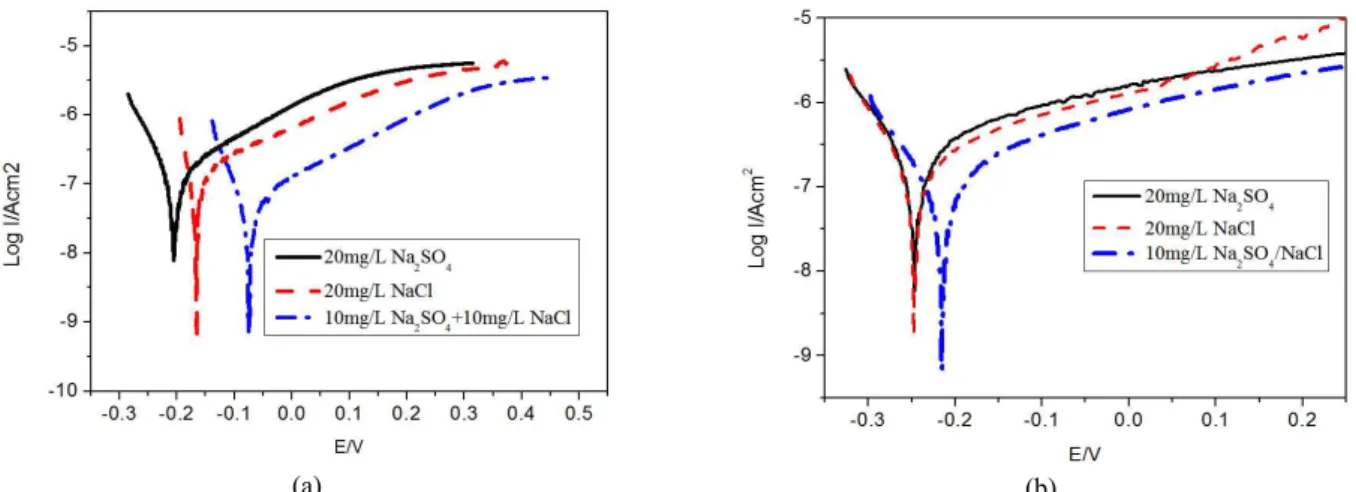
Fig.2 shows the electrochemical polarization curves of T91 electrode after 1 h immersed under different water chemistry control condition. The values of Ecorr and icorr
are summarized in Table 2.
It is clear that the presence of SO42-
ions leads to the most serious corrosion of T91 steel. In the co-existence of Na2SO4 and NaCl, T91 steel has the minimum corro- sion current densities. This indicates that an antagonistict effect for corrosion action exists between SO42-
ions and Cl- ions. The T91 electrode under AVT condition has
more positive corrosion potential compared to that under OT condition. It shows that OT operation can not get a passive surface for T91 steel in the presence of corrosive ions, such as SO42-
and Cl-[8].
3.2 Surface analysis for T91 steel under different water chemistry condition
3.2.1 SEM and EDS investigation
The microstructure of T91 steel after 6 h immersed un- der different water chemistry condition containing 10 mg/L
(a) (b)
Fig. 2 Polarization curves of T91 electrode after 1 h immersed under different water chemistry control condition: (a) AVT; (b) OT.
A
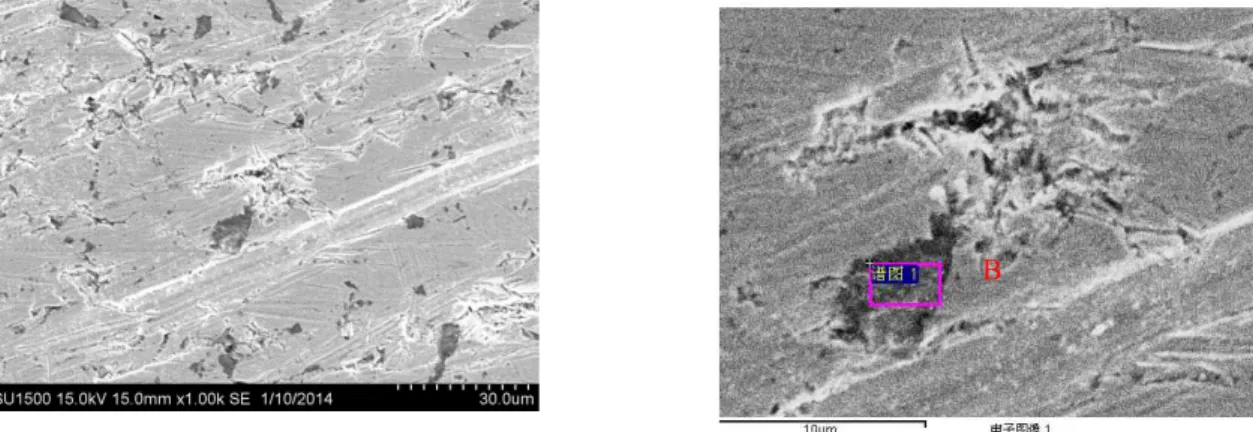
Fig. 3 SEM images of T91 steel after 6 h immersed under AVT condition containing 10 mg/L Na2SO4 + 10 mg/L NaCl.
Table 3 The chemical compositions of T91 steel surface obtained by the EDS analysis
Composition/at% AVT OT
“A” spot “B” spot
C 18.28 43.83
O 64.18 26.18
Si - 5.28
Cr 2.01 3.00
Fe 15.52 21.71
Na2SO4 + 10 mg/L NaCl are shown in Fig.3 and Fig.4. EDS analysis for “A”and “B” spots are shown in Table 3.
The surface of T91 steel has some corrosion pits after 6 h immersion in solution containing 10 mg/L Na2SO4
+ 10 mg/L NaCl under AVT condition. Meanwhile, there
are many corrosion area with cracks on the surface of T91 steel under OT condition. Elemental compositions for
“A” spot and “B” spot suggest a higher oxygen concen- tration, this corresponding to corrosion products[9].
B
Fig. 4 SEM images of T91 steel after 6 h immersed under OT condition containing 10 mg/L Na2SO4 + 10 mg/L NaCl.
(a) (b)
Fig. 5 XRD pattern of T91 steel after 6 h immersed under different water chemistry condition containing 10 mg/L Na2SO4 + 10 mg/L NaCl: (a) AVT; (b) OT.
C
Fig. 6 SEM images of T91 steel after 500 ℃ oxidization for 6 h pretreated by AVT operation.
3.2.2 XRD analysis
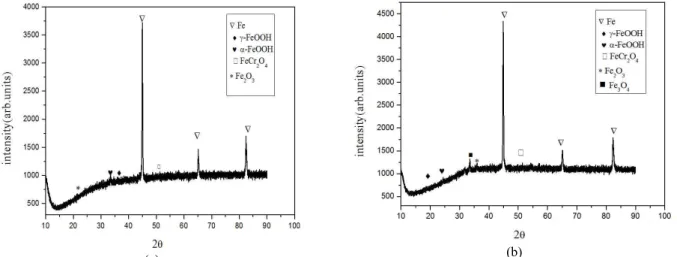
Fig.5 shows the XRD pattern of T91 steel after 6 h immersion in solution containing 10 mg/L Na2SO4 + 10 mg/L NaCl under different water chemistry condition.
There are no evidence difference in the phase composition of T91 steel after immersed in 10 mg/L Na2SO4 + 10 mg/L NaCl solution under AVT or OT condition. The main phase compositions are Fe.
3.3 Surface analysis for T91 steel after high-temperature oxidization test
3.3.1 SEM and EDS investigation
The T91 steel was immersed in solution containing 10 mg/L Na2SO4 + 10 mg/L NaCl for 6 h under different water chemistry condition. Then the specimens were trans- ferred to be oxidized at 500 ℃ under air condition in tube-furnace for 6 h. SEM images for the high temperature oxidation specimens are illustrated in Fig.6 and Fig.7. EDS analysis for “C”and “D” spots is shown in Table 4.
It is found that the oxide film on T91 surface after 500 ℃ oxidization has a multi-layer structure. The oxide film is easy to peel off from the surface of T91 steel for OT operation compare to that for AVT operation.
There is an oxide film with many cracks on T91 surface under OT operation. The pre-corrosion under different wa- ter chemistry condition gives a change for the oxide scale structure formed by the high-temperature oxidation.
D
Fig. 7 SEM images of T91 steel oxidized at 500 ℃ for 6 h after pretreated by OT operation.
(a) (b)
Fig. 8 XRD pattern of T91 steel oxidized at 500 ℃ for 6 h after pretreated by different water chemistry condition: (a) AVT;
(b) OT.
Table 4 The chemical compositions of T91 steel surface obtained by the EDS analysis
Composition / wt% AVT OT
“C” spot “D” spot
C 8.2 10.06
O 53.95 34.52
Cr 4.02 8.94
Fe 33.35 46.48
Elemental compositions of “C” spot and “D” spot sug- gest that they corresponds to corrosion products. The high- er Cr content for OT operation compared to that for AVT operation is observed. These indicate that the more oxide film formed for OT operation after high temperature oxi- dation test.
3.3.2 XRD analysis
Fig.8 shows the XRD pattern of different water chemistry pretreated T91 steel after 500 ℃ oxidization for 6 h.
There is no evidence difference in the phase composi- tion of T91 steel after 500 ℃ oxidization for 6 h under AVT or OT condition. The main phase compositions are Fe and Fe2O3. The presence of Fe3O4 for OT operation represents the cracked multilayer oxide film. It has been reported that the oxide scale was constituted by a layered (or duplex) structure, composed of Fe and Cr oxides[10].
The outer layer is predominantly iron oxides, whereas the innermost layer contains significant amount of chromium.
The OT operation with the contamination of SO42-
and Cl- ions brings a high cracked oxide scale.
4. Conclusions or Summary The SO42-
and Cl- ions initiate the corrosion of T91 steel under both AVT and OT operation. Under the same water chemistry condition, the SO42-
ions have the most serious attack effect. The co-existence of Na2SO4 and NaCl has an antagonistict effect for corrosion action. In the presence of erosion ions, such as SO42-
and Cl-, OT operation aggravates the corrosion of T91 steel compared to AVT operation. The OT operation with the con- tamination of SO42-
and Cl- ions brings a high cracked oxide scale after high oxidation test.
Acknowledgments
We are grateful to supports from Shanghai S&T Committee project (11JC1404400, 14DZ0500700, 14DZ2261000), and from Shanghai Key Laboratory of Materials Protection and Advanced Materials in Electric Power.
References
1. R. Viswanathan, J. Sarver, and J. M. Tanzosh, J. Mater.
Eng. Perform., 15, 255 (2006).
2. D. A. Guzonas and W. G. Cook, Corros. Sci., 65, 48 (2012).
3. B. C. Syret, Corros. Sci., 35, 1189 (1993).
4. YY. Kaiju, Q. Shaoyu, T. Rui, Z. Qiang, and Z. Lefu., J. Supercrit. Fluid., 50, 235 (2009).
5. J.-L. Huang, K.-Y. Zhou, J.-Q. Xu, and C.-X. Bian, J. Loss Prevent. Proc., 26, 22 (2013).
6. Y. Feng, G. Zhou, and S. Cai, Electrochim. Acta, 36, 1093 (1991).
7. S. Xiong, Z. Zhu, H. Zhang, and L. Jing, Corrosion, 68, 1 (2012).
8. D. Laverde, T. Gómez-Acebo, and F. Castro, Corros. Sci., 46, 613 (2004).
9. J. L. Huang, K. Y. Zhou, and J. Q. Xu, Mater. Corros., 65, 786 (2015).
10. Y. Chen, K. Sridharan, and T. Allen, Corros. Sci., 48, 2843 (2006).