Analysis of Microsatellite Loci for Swimming Crab Portunus trituberculatus Populations in the Korean Side of the Yellow Sea
Hye Jin Lee
1,2, Seong Jong Yoon
3, Young Se Hyun
1, Hye Jin Kim
1, Sung-Il Hwang
4, Joo-Seung Bae
5and Ki Wha Chung
1*
1
Department of Biological Science, Kongju National University, Chungnam 314-701, Korea
2
Division of DNA Analysis, Criminal Investigation Command, Ministry of National Defense, Seoul 140-701, Korea
3
Korea Fisheries Resources Agency, Busan 612-020, Korea
4
Underwater Ecology Institute, Jeonnam 550-833, Korea
5
Fishery Division, Incheon Metropolitan City, Incheeon 405-750, Korea
Received September 5, 2013 /Revised September 24, 2013 /Accepted September 25, 2013
The swimming crab, Portunus trituberculatus, inhabits seafloor habitats containing sand or pebbles and is widely distributed throughout the world. The present study investigated genetic polymorphisms of 10 microsatellites in 281 samples of P. trituberculatus collected from four locations along the coastal water of the Korean side of the Yellow Sea (Yeonggwang, Taean, Sorea, and Yeonpyeong-do Island).
The number of alleles per locus ranged from 50 to 129, with a mean of 69.5. The observed and ex- pected hetrozygosity varied from 0.111 to 1.000 and from 0.609 to 0.979, respectively. The inbreeding coefficients (Fis) varied among the loci from -0.0207 to 0.8175. The genetic differentiation (Fst) was less than 0.05 (range 0.0020-0.0124). Therefore, the four groups of P. trituberculatus appeared to exhibit little genetic differentiation. The lack of differentiation was confirmed in a phylogenetic tree constructed by the unweighted pair group method with the arithmetic average (UPGMA). The hypervariation be- tween the populations and the lack of genetic differentiation may reflect active gene flow among the Yellow Sea populations and the absence of geographical boundaries. The highly polymorphic micro- satellite loci will be useful for molecular and phylogenetic studies, as well as stock management, of swimming crab, which is an important fishery resource.
Key words : Microsatellite, polymorphism, Portunus trituberculatus, swimming crab, Yellow Sea
*Corresponding author
*Tel : +82-41-850-8506, Fax : +82-41-850-0957
*E-mail : [email protected]
This is an Open-Access article distributed under the terms of the Creative Commons Attribution Non-Commercial License (http://creativecommons.org/licenses/by-nc/3.0) which permits unrestricted non-commercial use, distribution, and reproduction in any medium, provided the original work is properly cited.
Journal of Life Science 2013 Vol. 23. No. 9. 1088~1095 DOI : http://dx.doi.org/10.5352/JLS.2013.23.9.1088
Introduction
The swimming crab, Portunus trituberculatus (Crustacea:
Decapoda: Brachyura) belongs to the crustacean brachyuran species, which inhabit both seawater and freshwater world- wide, comprising about 6,000 species [3]. P. trituberculatus is distributed in coastal waters of East Asia with sand or pebble habitats. Because P. trituberculatus is one of the most common edible crab species in East Asia, it is considered to be a commercially important fishery resource. Thus, there have been performed considerable efforts to increase the aquacultural yield of P. trituberculatus by artificial prop- agation and the release of young swimming crabs.
Based on the analyses of mitochondrial DNA (mtDNA), several molecular approaches have been taken to under- stand the population genetic structures of P. trituberculatus.
Imai et al [9] investigated the restriction fragment length polymorphisms (RFLP) in the whole mtDNA of Japanese samples. Liu et al [11] and Xu et al [23] studied the genetic differentiation among geographical populations captured from several coastal areas of China, based on the mitochon- drial 16S rDNA and cytochrome c oxidase subunit 1 (CO1) genes. Particularly, Cho et al [5] performed the phylogenetic analysis using haplotypes of the mtDNA control region in subject with P. trituberculatus collected in the Korean coastal area of the Yellow Sea. However, these mtDNA markers have been shown to have some restriction in application to the various studies of phylogenetic analysis, molecular breeding and individual identification and forensics.
Therefore, more effective molecular markers for population genetic studies are required.
Microsatellites, also called short tandem repeats (STRs),
have been regarded to be effective molecular markers for
population genetic study due to their high level of in-
Fig. 1. Sampling locations of swimming crab,
P. trituberculatus
. Swimming crabs were collected from four sites along the coast of the Yellow Sea in Korea: Yeonggwang (A), Taean (B), Sorea (C), and Yeonpyeong-do Island (D) during June to October, 2010.formativity and wide distributions in the genome [7, 20].
Microsatellites have been widely applied for chromosomal mapping and identification of quantitative trait loci [18, 19], phylogenic study [8], and forensic application [2, 12, 25] as well as fishery study [1]. Microsatellites have characteristics of co-dominant and multiallelic inheritance. Microsatellites in P. trituberculatus have very recently been studied in sam- ples collected from the East China Sea [6, 24] and the Yellow Sea in Korea [10].
Because of their phylogeographic distribution and im- portance as a fishery resource in East Asia, the determination of population genetic structure in P. trituberculatus is important. Most molecular genetic studies for P. tritubercula- tus have been performed in samples collected from coastal waters near the China and Japan. However, little phyloge- netic study has been performed in crabs from Korean coastal water, although genetic polymorphisms of mtDNA [5] and microsatellites [10] have been studied in samples from the Yellow Sea.
In the present study, we identified many microsatellite motifs from P. trituberculatus genome, and 10 markers (PS27, PS108, PS247, PS260, PS385, PS747, PS756, PS400, PS703, and PS704) were analyzed for their genetic variation and pop- ulation genetic structure among four populations collected
from coastal waters of the Yellow Sea in Korea.
Materials and Methods Sample collection and extraction of genomic DNA
Samples of P. trituberculatus (n=281) were collected from four locations along the coastal water of the Korean side of the Yellow Sea: Yeonggwang (Jeonnam, n=83), Taean (Chungnam, n=93), Sorea (Incheon, n=78), and Yeonpyeong- do Island (Incheon, n=27) during June to October, 2010 (Fig.
1). Crab tissues (usually leg muscle) were disrupted by a TissueLyser II (Qiagen, Hilden, Germany), and then used for genomic DNA purification. DNA was purified using a QIAamp DNA Micro kit (Qiagen, Hilden, Germany). The purified DNA was quantified by a spectrophotometer (Smart Spec 3000, BIO-RAD, USA) and stored at -20
oC until use.
Preparation of locus-specific primers
The flanking sequences of DNA fragments with the mi- crosatellite repeat motifs were used to design locus-specific primers. The primer pairs were designed according to the following criteria by using the PRIMER 3 program (ver.
0.4.0, http://fokker.wi.mit.edu/primer3/): length, 20-26 bp;
melting temperature, 55
oC or higher, and PCR product size,
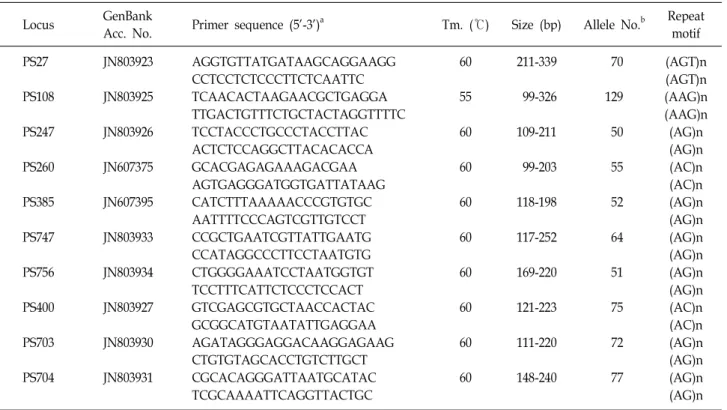
Table 1. Primer sequences, annealing temperatures and allelic structures of the polymorphic microsatellite markers in
P. trituberculatus
Locus GenBank
Acc. No. Primer sequence (5'-3')a Tm. (℃) Size (bp) Allele No.b Repeat motif PS27
PS108 PS247 PS260 PS385 PS747 PS756 PS400 PS703 PS704
JN803923 JN803925 JN803926 JN607375 JN607395 JN803933 JN803934 JN803927 JN803930 JN803931
AGGTGTTATGATAAGCAGGAAGG CCTCCTCTCCCTTCTCAATTC TCAACACTAAGAACGCTGAGGA TTGACTGTTTCTGCTACTAGGTTTTC TCCTACCCTGCCCTACCTTAC ACTCTCCAGGCTTACACACCA GCACGAGAGAAAGACGAA AGTGAGGGATGGTGATTATAAG CATCTTTAAAAACCCGTGTGC AATTTTCCCAGTCGTTGTCCT CCGCTGAATCGTTATTGAATG CCATAGGCCCTTCCTAATGTG CTGGGGAAATCCTAATGGTGT TCCTTTCATTCTCCCTCCACT GTCGAGCGTGCTAACCACTAC GCGGCATGTAATATTGAGGAA AGATAGGGAGGACAAGGAGAAG CTGTGTAGCACCTGTCTTGCT CGCACAGGGATTAATGCATAC TCGCAAAATTCAGGTTACTGC
60 55 60 60 60 60 60 60 60 60
211-339 99-326 109-211 99-203 118-198 117-252 169-220 121-223 111-220 148-240
70 129 50 55 52 64 51 75 72 77
(AGT)n (AGT)n (AAG)n (AAG)n (AG)n (AG)n (AC)n (AC)n (AG)n (AG)n (AG)n (AG)n (AG)n (AG)n (AC)n (AC)n (AG)n (AG)n (AG)n (AG)n
aForward primers represent only locus-specific sequence (5’-M13 sequence was not shown).
bObserved allele numbers were obtained from 281 samples collected from 4 different localities.
100–350 bp. Particularly, all forward primers (designated as M13F-forward primer) were prepared to have M13 uni- versal primer sequence at the 5’-upstream of locus-specific sequence (5’-TGTAAAACGACGGCCAGT-locus specific for- ward primer-3’).
PCR and genotyping of microsatellites
PCR was performed as described by Schuelke [16] with minor modifications. The reaction mixture contained 0.25 pmol of reverse primer, 1 pmol of each M13F-forward pri- mer and FAM-labeled M13F primer (FAM-5’-TGTAAAACG- ACGGCCAGT-3’), 10-20 ng of genomic DNA, 0.25 unit of AmpliTaq Gold polymerase (Applied Biosystems, Foster City, CA, USA) and 1X buffer with dNTPs in a total volume of 10 µl. Thermal cycling was conducted on a PTC-200 DNA engine (MJ Research, Waltham, MA) using the following condition: 95
oC for 11 min, 20 cycles of 95
oC for 30 s; 45 s at a given annealing temperature for each marker; 72
oC for 1 min, 15 cycles of 95
oC for 30 s; 45 s at 53
oC; 72
oC for 1 min with a final elongation of 68
oC for 60 min. Primer sequences, GenBank accession number, annealing temper- ature and repeat unit of each locus are listed in Table 1.
Each PCR product was separated by an ABI 3100 genetic
analyzer (Applied Biosystems). The Liz-500 was used for in- ternal standard. Genotypes were determined using the Genotyper program, ver. 3.7 (Applied Biosystems). The nu- cleotide sequences for microsatellite markers were de- termined by using a Chromas program, ver. 2.33 (Technely- sium Pty, Australia).
Statistical analyses
Allele frequencies were calculated from the observed
genotypes. Genotyping errors (i.e. null alleles, stuttering and
large allele dropout) which can cause deviations from
Hardy-Weinberg proportions were determined using
MICRO-CHECKER version 2.2.3 software [21]. Corrections
of the significance level for multiple tests were adjusted us-
ing the Bonferroni procedure [13]. The diversity statistics
(observed and expected heterozygosities), the Hardy-Wein-
berg equilibrium (HWE) for each locus, tests for genotypic
linkage disequilibrium, the inbreeding coefficient (Fis) per
locus and sample [22], and assessments of multi-locus Fst
values were carried out using GENEPOP software, ver. 4.0
[15]. A phylogenetic dendrogram using allele frequencies
was constructed by the unweighted pair group method with
arithmetic average (UPGMA) with the SAHN module of
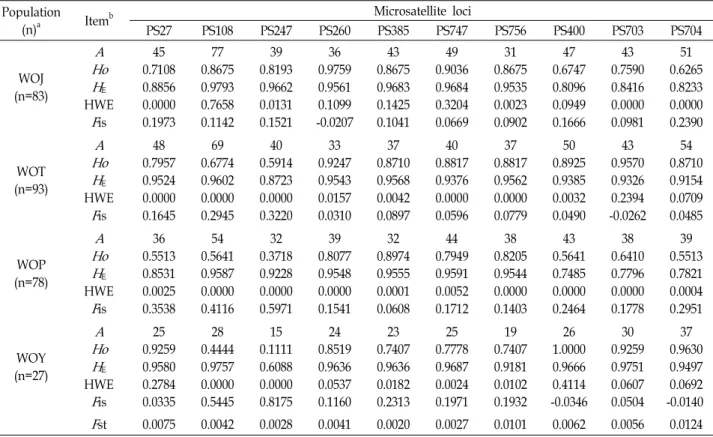
Table 2. Summary of variation across 10 microsatellite loci in swimming crab (
P. trituberculatus
) from four natural populations Population(n)a Itemb Microsatellite loci
PS27 PS108 PS247 PS260 PS385 PS747 PS756 PS400 PS703 PS704
WOJ (n=83)
A Ho H
EHWE
F
is45 0.7108 0.8856 0.0000 0.1973
77 0.8675 0.9793 0.7658 0.1142
39 0.8193 0.9662 0.0131 0.1521
36 0.9759 0.9561 0.1099 -0.0207
43 0.8675 0.9683 0.1425 0.1041
49 0.9036 0.9684 0.3204 0.0669
31 0.8675 0.9535 0.0023 0.0902
47 0.6747 0.8096 0.0949 0.1666
43 0.7590 0.8416 0.0000 0.0981
51 0.6265 0.8233 0.0000 0.2390 (n=93)WOT
Ho A H
EHWE
F
is48 0.7957 0.9524 0.0000 0.1645
69 0.6774 0.9602 0.0000 0.2945
40 0.5914 0.8723 0.0000 0.3220
33 0.9247 0.9543 0.0157 0.0310
37 0.8710 0.9568 0.0042 0.0897
40 0.8817 0.9376 0.0000 0.0596
37 0.8817 0.9562 0.0000 0.0779
50 0.8925 0.9385 0.0032 0.0490
43 0.9570 0.9326 0.2394 -0.0262
54 0.8710 0.9154 0.0709 0.0485 (n=78)WOP
Ho A H
EHWE
F
is0.551336 0.8531 0.0025 0.3538
0.564154 0.9587 0.0000 0.4116
0.371832 0.9228 0.0000 0.5971
0.807739 0.9548 0.0000 0.1541
0.897432 0.9555 0.0001 0.0608
0.794944 0.9591 0.0052 0.1712
0.820538 0.9544 0.0000 0.1403
0.564143 0.7485 0.0000 0.2464
0.641038 0.7796 0.0000 0.1778
0.551339 0.7821 0.0004 0.2951
WOY (n=27)
A Ho H
EHWE
F
is0.925925 0.9580 0.2784 0.0335
0.444428 0.9757 0.0000 0.5445
0.111115 0.6088 0.0000 0.8175
0.851924 0.9636 0.0537 0.1160
0.740723 0.9636 0.0182 0.2313
0.777825 0.9687 0.0024 0.1971
0.740719 0.9181 0.0102 0.1932
1.000026 0.9666 0.4114 -0.0346
0.925930 0.9751 0.0607 0.0504
0.963037 0.9497 0.0692 -0.0140
F
st 0.0075 0.0042 0.0028 0.0041 0.0020 0.0027 0.0101 0.0062 0.0056 0.0124aYeonggwang (WOJ), Taean (WOT), Sorea (WOP), and Yeonpyeong-do Island (WOY).
bNumber of alleles (
A
), observed heterozygosity (H
O), expected heterozygosity (H
E),P
-values for the Hardy-Weinberg equilibrium (HWE) tests, inbreeding coefficient (F
is), and genetic differentiation between populations (F
st).NTSYS-pc, ver. 2.1 [14]. The gene diversity (GD) was de- termined using the formula GD=n(1-∑P
i2)/(n-1), where n represents the number of samples, and Pi is the allele fre- quencies in a given population sample. The polymorphism information content (PIC), power of exclusion (PE), and power of discrimination (PD) were calculated by the PowerStatsV12 program (Promega, Madison, WI, USA).
Results Isolation of polymorphic microsatellite loci
We have previously identified 684 microsatellite motifs from the P. trituberculatus genome [10]. From the isolated microsatellite motifs, 87 locus-specific primer pairs were pre- pared and used for PCR amplification and genotyping on the genome of P. trituberculatus. PCR amplification was dis- tinctly achieved at 60 primer sets, however, 27 primer pairs failed to obtain a clear PCR product or genotyping result from the PCR product. Genotyping of 60 loci revealed that 52 loci were polymorphic from 30 P. trituberculatus samples collected from the Korean side of the Yellow Sea (86.7%),
whereas 8 loci showed monomorphic. Most polymorphic lo- ci were determined to be highly informative. Forty four loci exhibited observed allele numbers of 10 or more. Moreover, 11 loci showed more than 30 alleles.
Population genetic study
From the polymorphic loci, 10 loci (PS27, PS108, PS247, PS260, PS385, PS747, PS756, PS400, PS703, and PS704) were chosen, and were examined for their polymorphism and phylogenetic analysis of P. trituberculatus populations. We analyzed a total of 281 P. trituberculatus samples collected from the west side of Korea including Yeonggwang (WOJ, n=83), Taean (WOT, n=93), Sorea (WOP, n=78), and Yeonpyeong-do Island (WOY, n=27) (Fig. 1).
The genotyping results revealed that all the populations
of P. trituberculatus were highly polymorphic with a total
observed allele number of 695. The number of alleles per
locus ranged from 50 (PS247) to 129 (PS108) with a mean
number of 69.5 (Table 1). The observed and expected hetero-
zygosities varied from 0.111 to 1.000 and from 0.609 to 0.979,
respectively. Significant deviations of the Hardy-Weinberg
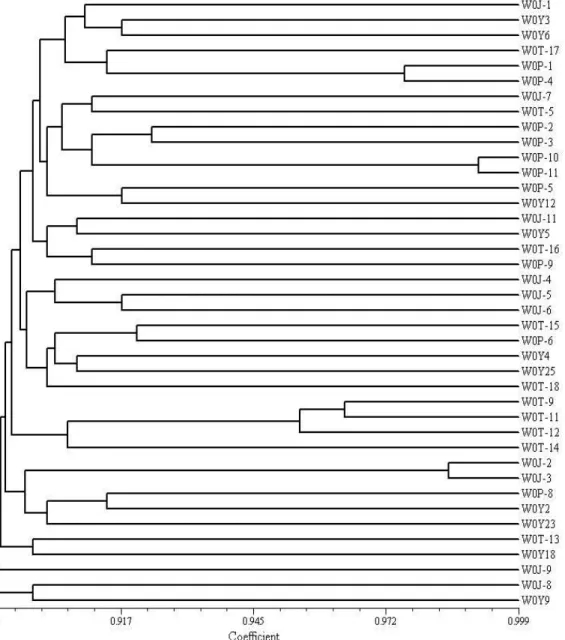
Fig. 2. Phylogenetic relationship of 40
P. trituberculatus
samples based on the microsatellite marker typing. The dendrogram was constructed by the unweighted pair group method with arithmetic average (UPGMA).equilibrium (HWE) were detected in three loci in Yeonggwang, five loci in Taean, eight loci in Sorea, and two loci in Yeonpyeong-do Island population (Table 2). The in- breeding coefficients (Fis) varied among loci from -0.0207 to 0.2390 in Yeonggwang, from -0.0262 to 0.3220 in Taean, from 0.0608 to 0.4116 in Sorea, and from -0.0346 to 0.8175 in the Yeonpyeong-do Island population (Table 2). In addi- tion, linkage disequilibrium was revealed between six of the locus pairs (PS27 and PS385, PS260 and PS400, PS385 and PS400, PS747 and PS400, PS747 and PS704, PS756 and PS704) after Bonferroni correction (p<0.00357). We estimated the ge- netic differentiation (Fst value) between these populations.
From the results, the Fst over all samples per locus ranged
from 0.0020 to 0.0124 (p<0.05) (Table 2). The phylogenetic tree constructed by using the UPGMA also suggested that there is no significant genetic difference between Yeong- gwang, Taean, Sorea, and Yeonpyeong-do Island pop- ulations (Fig. 2).
Forensic analysis
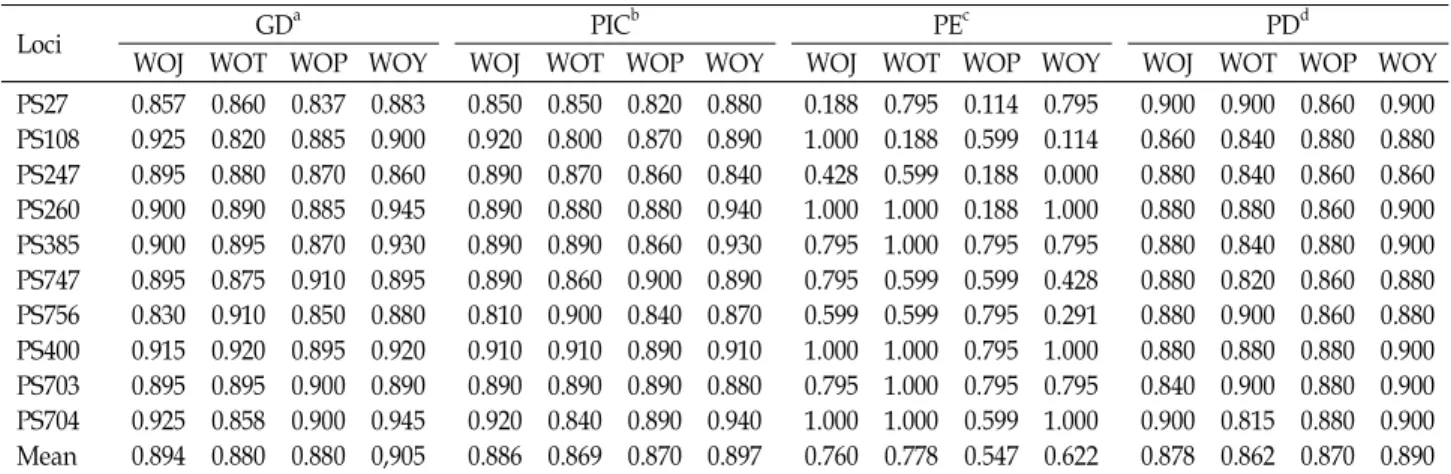
Several forensic parameters revealed that all the analyzed loci are highly useful for individual identification and pater- nity test (Table 3). High levels of gene diversity (GD) were calculated from all the loci ranging from 0.820 at PS108 (Taean) to 0.945 at PS260 and PS704 (Yeonpyeong-do Island).
The power of exclusion (PE) and discrimination (PD) indexes
Table 3. Genetic diversity and forensic parameters of 10 microsatellite loci of
P. trituberculatus
Loci GDa PICb PEc PDd
WOJ WOT WOP WOY WOJ WOT WOP WOY WOJ WOT WOP WOY WOJ WOT WOP WOY
PS27PS108 PS247 PS260 PS385 PS747 PS756 PS400 PS703 PS704 Mean
0.857 0.925 0.895 0.900 0.900 0.895 0.830 0.915 0.895 0.925 0.894
0.860 0.820 0.880 0.890 0.895 0.875 0.910 0.920 0.895 0.858 0.880
0.837 0.885 0.870 0.885 0.870 0.910 0.850 0.895 0.900 0.900 0.880
0.883 0.900 0.860 0.945 0.930 0.895 0.880 0.920 0.890 0.945 0,905
0.850 0.920 0.890 0.890 0.890 0.890 0.810 0.910 0.890 0.920 0.886
0.850 0.800 0.870 0.880 0.890 0.860 0.900 0.910 0.890 0.840 0.869
0.820 0.870 0.860 0.880 0.860 0.900 0.840 0.890 0.890 0.890 0.870
0.880 0.890 0.840 0.940 0.930 0.890 0.870 0.910 0.880 0.940 0.897
0.188 1.000 0.428 1.000 0.795 0.795 0.599 1.000 0.795 1.000 0.760
0.795 0.188 0.599 1.000 1.000 0.599 0.599 1.000 1.000 1.000 0.778
0.114 0.599 0.188 0.188 0.795 0.599 0.795 0.795 0.795 0.599 0.547
0.795 0.114 0.000 1.000 0.795 0.428 0.291 1.000 0.795 1.000 0.622
0.900 0.860 0.880 0.880 0.880 0.880 0.880 0.880 0.840 0.900 0.878
0.900 0.840 0.840 0.880 0.840 0.820 0.900 0.880 0.900 0.815 0.862
0.860 0.880 0.860 0.860 0.880 0.860 0.860 0.880 0.880 0.880 0.870
0.900 0.880 0.860 0.900 0.900 0.880 0.880 0.900 0.900 0.900 0.890
aGD: gene diversity, bPIC: polymorphism information contents, cPE: power of exclusion, anddPD: power of discrimination.
ranged from 0.114 at PS27 (Sorea) to 1.000 at several loci and 0.815 at PS704 (Taean) to 0.900 at several loci, respectively. The polymorphism information contents (PIC) was also very high ranging from 0.800 at PS108 (Taean) to 0.940 at PS704 (Yeonpyeong-do Island). Microsatellites are usually called highly informative loci, if the PIC values are higher than 0.7.
Discussion
The swimming crab, P. trituberculatus is one of the most important fishery resources in the East Asian countries.
However, the population genetic structure of this species was less understood at the molecular level. Although several molecular phylogenetic analyses have been taken, most studies have been performed on the mtDNA polymorphisms [5, 9, 11, 23], and fewer studies were done for microsatellite loci [6, 10, 24].
The present study identified 52 polymorphic micro- satellite loci. Of them, 10 hypervariable loci were chosen, and were examined for their polymorphism and phyloge- netic analysis of four P. trituberculatus populations. The gen- otyping results revealed that all the analyzed loci were high- ly informative for four examined populations with high level of the PIC (≥0.7). The mean number of alleles per locus, PIC, observed and expected hetrozyosities were 69.5, 0.881, 0.762 and 0.916, respectively. The PD and PE, which are im- portant indexes for individual identification and paternity examination, also showed high values with means of 0.863 and 0.677, respectively. The high polymorphism found in this study is most likely due to the large number of alleles found in P. trituberculatus. Besides, most microsatellite loci
are dinucleotides, which typically show higher levels of polymorphism [7]. The number of alleles per locus is pos- itively correlated with the number of repeat motifs [4, 7].
Significant deviations of the Hardy-Weinberg equilibrium (HWE) were detected in three loci in Yeonggwang, five loci in Taean, eight loci in Sorea, and two loci in Yeonpyeong-do Island population. The observed heterozygosities in four populations were significantly lower than the heterozygosity expected value, especially in Taean and Sorea populations.
Similarly, previous study for Wonsando Island and Jeonjangpo P. trituberculatus populations also showed devia- tions from HWE in many loci [10]. The departure from HWE in several loci may due to small sample sizes and hy- per-polymorphisms, as well as heterozygote deficiency by null alleles, stuttering or large allele dropout [17].
The genetic differentiation (Fst value) showed less than 0.05 (range 0.0020-0.0124), therefore, we suggested that four groups of P. trituberculatus were considered to indicate little genetic differentiation. We also confirmed this suggestion from the phylogenetic analysis. We could not find any stat- istically significant geographical structure from a neigh- bor-joining tree, in which there is no apparent relationship between the location where a given sample was located and its genetic relationship with the other samples. The high lev- el of genetic diversity and little genetic differentiation be- tween populations may reflect active gene flow among the Yellow Sea populations of P. trituberculatus. The low genetic differentiation of P. trituberculatus is consistent with other studies. The mtDNA haplotype study also suggested that three P. trituberculatus groups from the Korean side of the Yellow Sea have no significant geographical structure [5].
Populations of P. trituberculatus in the East China Sea and
in the Korean Yellow Sea also revealed low genetic differ- entiation between the populations from the F-statistic analy- sis using microsatellites [10, 24]. The swimming crab, P. tritu- berculatus in the Yellow Sea may go on an excursion with a long migration track.
Because swimming crab is a commercially very important fishery resource, more than 10 million young crabs are stocked in the Yellow Sea in each year, to increase the amount of catch in Korea. However, the economic and eco- logical effects of crab stocking have not been exactly determined. Several forensic parameters indicated that the examined loci are suitable for individual identification and paternity test, thus the developed microsatellite loci may be available for determination of stocking effect by a maternity test between parent (female) and recaptured crabs. Although this study did not examine the cross-species amplification, the developed loci may be applicable to other related spe- cies, since several P. trituberculatus microsatellites have been applied in two other portunid species, P. pelagicus and P.
sanguinolentus [24]. Altogether, we consider that these highly polymorphic microsatellite markers will provide a useful tool for the population structure and ecogenetic studies as well as management of swimming crab, P. trituberculatus.
Acknowledgements
This study was supported by the Korea Fisheries Resour- ces Agency (FIRA), Ministry for Food, Agriculture, Forestry and Fisheries, and the National Research Foundation (NRF) grant funded by the Ministry of Education (2011-0013694), Republic of Korea.
References
1. An, H. S., Lee, J. H., Noh, J. K., Kim, H. C., Park, C. J., Min, B. H., and Myeong, J. I. 2010. Ten new microsatellite markers in cutlassfish
Trichiurus lepturus
derived from an enriched genomic library.Anim Cells Sys
14, 169-174.2. Blouin, M. S., Parsons, M., Lacaille, V. and Lotz, S. 1996.
Use of microsatellite loci to classify individuals by relatedness.
Mol Ecol
5, 393-401.3. Bowman, T. E. and Abele, L. G. 1982. Classification of the recent Crustacea, pp. 1-92. In: Vol. 1: Systematics, the Fossil Record, and Biogeography, L.G. Abele (ed.),
The Biology of Crustacea.
Academic Press, New York, NY.4. Brandstrom, M. and Ellegren, H. 2008. Genome-wide analy- sis of microsatellite polymorphism in chicken circumventing the ascertainment bias.
Genome Res
18, 881-887.5. Cho, E. M., Min, G. S., Kanwal, S., Hyun, Y. S., Park, S.
W. and Chung, K. W. 2009. Phylogenetic analysis of mi- tochondrial DNA control region in the swimming crab,
Portunus trituberculatus
.Anim Cells Sys
13, 305-314.6. Cui, Z., Liu, Y., Wang, H., Wu, D., Luan, W., Tan, F. and Huang, M. 2012. Isolation and characterization of micro- satellites in
Portunus trituberculatus. Conservation Genet Resour
4, 251-255.7. Ellegren, H. 2004. Microsatellites: simple sequences with complex evolution.
Nat Rev Genet
5, 435-445.8. Goldstein, D. B., Linares, A. R., Cavalli-Sforza, L. L. and Feldman, M. W. 1995. An evaluation of genetic distances for use with microsatellite loci.
Genetics
139, 463-471.9. Imai, H., Fujii, Y. and Karakawa, J. 1999. Analysis of the population structure of the swimming crab,
Portunus tritu- berculatus
in the coastal waters of Okayama Prefecture, by RFLPs in the whole region of mitochondrial DNA.Fish Sci
65, 655-656.10. Lee, H. J., Lee, D. H., Yoon, S. H., Kim, D. H., Kim, S. G., Hyun, Y. S., Min, G. S. and Chung, K. W. 2013. Characteriza- tion of 20 microsatellite loci by multiplex PCR in swimming crab,
Portunus trituberculatus
.Genes Genom
35, 77-85.11. Liu, Y., Liu, R., Ye, L., Liang, J., Xuan, F. and Xu, Q. 2009.
Genetic differentiation between populations of swimming crab
Portunus trituberculatus
along the coastal waters of the East China Sea.Hydrobiologia
618, 125-137.12. Madsen, B. E., Villesen, P. and Wiuf, C. 2010. Short tandem repeats and genetic variation.
Methods Mol Biol
628, 297-306.13. Rice, W. R. 1989. Analyzing tables of statistical tests.
Evolution
43, 223-225.14. Rohlf, F. J. 2002.
NTSYSPC: Numerical Taxonomy System, ver.
2.1.
Exeter Publishing, Ltd. Setauket, New York.15. Rousset, F. 2008. GENEPOP'007: a complete re-implementa- tion of the GENEPOP software for Windows and Linux.
Mol Ecol Resour
8, 103-106.16. Schuelke, M. 2000. An economic method for the fluorescent labeling of PCR fragment.
Nat Biotechnol
18, 233-234.17. Sekino, M., Hara, M. and Taniguchi, N. 2002. Loss of micro- satellite and mitochondrial DNA variation in hatchery strains of Japanese flounder
Paralichthys olivaceus
.Aquacul- ture
213, 101-122.18. Suji, K. K., Biji, K. R., Poornima, R., Prince, K. S., Amudha, K., Kavitha, S., Mankar, S. and Babu, R. C. 2012. Mapping QTLs for plant phenology and production traits using Indica rice (
Oryza sativa
L.) lines adapted to rainfed environment.Mol Biotechnol
52, 151-160.19. Tanksley, S. D., Grandillo, S., Fulton, T. M., Zamir, D., Eshed, Y., Petiard, V., Lopes, J. and Beck-Bunn, T. 1996.
Advanced backcross QTL analysis in a cross between an elite processing line of tomato and its wild relative
L.
pimpinellifolium. Theor Appl Genet
92, 213-224.20. Tautz, D. 1989. Hypervariability of simple sequences as a general source for polymorphic DNA markers.
Nucleic Acids Res
17, 6463-6471.21. van Oosterhout, C., Hutchinson, W. F., Wills, D. P. M. and Shipley, P. 2004. MICRO-CHECKER: software for identify- ing and correcting genotyping errors in microsatellite data.
초록:서해안에서 채집된 꽃게( Portunus trituberculatus ) 집단에 대한 microsatellite 좌위의 분석 이혜진
1․윤성종
2․현영세
1․김혜진
1․황성일
3․배주승
4․정기화
1*
(
1공주대학교 생명과학과,2국방조사본부,3수산자원관리공단 자원경제실,4수중생태기술연구소,5인천시청 수산자 원팀)꽃게(Portunus trituberculatus)는 세계적으로 넓게 분포하는 갑각류로 모래나 돌멩이가 있는 해저에 서식한다.
본 연구는 서해의 4개 지점(영광, 태안, 소래, 연평도)에서 채집된 P. trituberculatus 281 개체에 대해 10 종류 mi- crosatellite 좌위의 유전적 다형성을 조사하였다. 좌위당 대립유전자 수는 50-129개로 평균 69.5개였으며, 관측 및 예상 이형접합도는 각각 0.111-1.000 및 0.609-0.979 범위에 있었다. 좌위별 근친계수((Fis)는 -0.0207에서 0.8175 범 위였다. 유전적 분화도(Fst)는 0.05보다 낮게 나타났는데, 이것은 4 꽃게 간의 유전적 분화(genetic differentiation) 가 매우 낮은 이루어진 것으로 추정하게 한다. UPGMA을 이용한 계통도 작성에서도 4 그룹 간의 유전적 거리는 매우 가깝다는 결과를 얻을 수 있었다. 매우 높은 다형성과 집단간의 낮은 유전적 분화는 서해안의 꽃게 집단은 활발한 유전적 흐름(gene flow)이 일어나며, 그룹간 지리적 경계가 없음을 제시한다.
Mol Ecol Notes
4, 535-538.22. Weir, B. S. and Cockerham, C. C. 1984. Estimating F-sta- tistics for the analysis of population structure.
Evolution
38, 1358-1370.23. Xu, Q., Liu, R. and Liu, Y. 2009. Genetic population struc- ture of the swimming crab,
Portunus trituberculatus
in the East China Sea based on mtDNA 16S rRNA sequences.J Exp Mar Biol Ecol
371, 121-129.24. Xu, Q. and Liu, R. 2011. Development and characterization
of microsatellite markers for genetic analysis of the swim- ming crab,
Portunus trituberculatus
.Biochem Genet
49, 202- 212.25. Yoo, S. Y., Cho, N. S., Park, M. J., Seong, K. M., Hwang, J. H., Song, S. B., Han, M. S., Lee, W. T. and Chung, K.
W. 2011. A large population genetic study of 15 autosomal short tandem repeat loci for establishment of Korean DNA profile database.