CO 2 농도와 온도증가에 따른 인삼의 생육 및 생리․생태학적 반응 연구
이경미 ・ 김해란 ・ 임 훈 ・ 유영한†
충남 공주시 신관동 182번지 자연과학대학 생명과학과
Effect of Elevated CO 2 Concentration and Temperature on the Growth and Ecophysiological Responses of Ginseng ( Panax ginseng C. A. Meyer)
Kyoung Mi Lee, Hae Ran Kim, Hoon Lim, and Young Han You†
Department of Biological science, Kongju National University, Chungnam 314-701, Korea
106
† Corresponding author: (Phone) +82-41-850-8508 (E-mail) [email protected]
<Received 13 September, 2011; Revised 3 April, 2012; Accepted 7 May, 2012>
ABSTRACT In order to understand the growth and ecophy
-siological response of ginseng to global warming condition, we cultivated one and two year ginseng seedlings in control (ambient CO2 + ambient temperature) and global warming treatment (elevated CO2 + elevated temperature) from March 2010 to July 2011. Shoot appearance and initiation of flowering were advanced by 3-4 days in global warming treatment than in control.However, timing of fruit setting and seed ripeness was similar in both control and global warming treatment. Shoot length was longer in global warming treatment than in control, and also the number of leaves was much in global warming treatment.
Fresh root weight was not different between control and global warming treatment. Photosynthetic rate was higher in global warming treatment than at control. Photosynthetic rate and transpiration rate were higher in two year seedlings than in one year seedlings at control, but was not different between seedling age of ginseng in global warming treatment. Water use efficiency was higher in one year seedlings than two year seedlings at control and global warming treatment. These results demonstrated that Korean ginseng more or less positively responds to global warming situation.
Keywords : ginseng, global warming, ecology, environmental
treatment, phenologyCO
2는 인위적으로 발생하는 가장 주된 온실가스로 그 배 출량은 꾸준히 증가하고 있다(IPCC, 2007). 대기 중 CO2농 도 증가는 지구의 기온을 지난 100년간 약 0.74℃나 상승시 켰다(IPCC, 2007). 한편, 우리나라의 평균 CO2농도(2010 년)는 394.5 ppm으로 1999년 대비 6.4% 증가하였고, 그에따라 전 지구의 평균 기온상승(0.74℃)의 2배 이상으로 우 리나라의 평균기온은 약 1.7℃상승하였다(Korea Meterological Administration, 2009; IPCC, 2007).
이러한 이산화탄소 농도와 기온 상승은 농작물의 재배면적 과 생육반응 및 생산량을 변화시킨다. 대기 중 CO2농도가 2배 증가하고, 평균기온이 2℃ 상승하면, 중국 동북지역에 서 사과의 재배면적은 북쪽으로 110-160 km 넓어지며, 목 화의 경우 220 km 정도 재배면적이 현재보다 더 북상하는 것으로 예측되었다(Jun, 1996). 또한 인삼을 재배할 수 있는 임계 해발고도는 약 750-800 m까지 높아질 것으로 예상하 였다.
우리나라의 경우, 기온상승에 따라 사과의 주산지인 경북 영천의 재배 면적은 크게 감소한 반면(Shim et al., 2008), 단감은 과거에 남해안의 경남과 전남 중심에서 재배되었지 만, 현재는 이보다 북쪽에서도 재배가 되고 있으며, 이러한 결과는 지구온난화의 영향으로 해석되고 있다(Han et al., 2009).
평균기온의 상승은 여름철 작물인 벼의 단위면적당 수량을 감소시키는 반면, 겨울철 작물인 보리의 수량을 증가시키 고, 고온성 작물인 고추의 생육에는 긍정적인 영향을 미칠 것으로 보고되었다(Lee et al., 2008a). 또한 배추는 대기 조 건보다 온도만 4℃ 이상 높은 조건에서는 그 생산량이 감소 하지만, 여기에 CO2농도를 대기조건보다 2배 이상으로 동 시에 높였을 때 그 생육이 호전되었다(Lee et al., 2009a).
CO2농도와 온도상승은 작물의 생육뿐만 아니라 생리적 특성에도 영향을 미친다. 저온성 작물인 배추와 무는 고온 조건에서 광합성률이 감소하는 반면, 동일 조건에서 CO2농 도를 대기보다 2배로 동시에 높여 주었을 때, 광합성률이
Fig. 2. Average CO
2concentration(ppm) in control(ambient CO
2+ ambient temperature) and global warming treatment (elevated CO
2+ elevated temperature) in 2010 and 2011. Vertical bars mean standards deviation of sample.
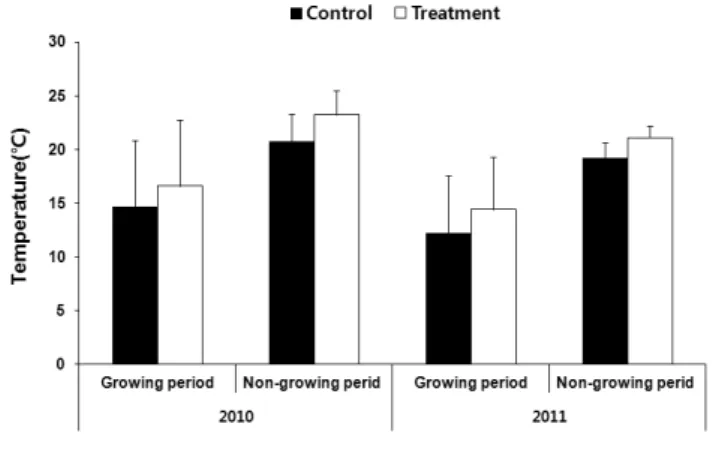
Fig. 1. Average temperature(℃) in control(ambient CO
2+ ambient temperature) and global warming treatment (elevated CO
2+ elevated temperature) in 2010 and 2011. Vertical bars mean standards deviation of sample.
크게 증가하였다(Lee et al., 2009a; Lee et al., 2009b).
인삼(Panax ginseng C.A. Meyer)은 두릅나무과에 속하는 다 년생 숙근초로서, 각종 질병의 예방과 치료에 탁월한 효과 가 있고, 약리・효능면에서 그 우수성을 인정받는 생약으로 소비량은 해마다 증가하고 있다. 그러나 반음지성 저온작물 인 인삼은 최근 지구온난화의 영향으로 인해 고온장해 발생 이 증가하여 생산량 및 품질이 저하 될 것으로 예상된다 (Cha et al., 2010).
인삼을 주제로 한 연구 중에는 생화학적, 분자적 연구는 많지만(Kim et al., 2009) 지구온난화 조건을 직접적으로 처 리하여 한 경우는 없다. 따라서 본 연구는 지구 온난화 조건 이 되었을 때 인삼의 생리・생태학적 반응이 어떻게 변하는 지 알아보고자 시도하였다.
재료 및 방법
환경 요인의 처리
지구온난화 조건의 처리는 자연광이 입사되는 유리 온실에 서 수행하였다. 대조구(control)는 대기 중 CO2농도(360~
370 ppm)와 온도를 그대로 반영하였다. 그리고 CO2 + 온 도상승구는 유리온실 안에 gas regulator를 이용하여 CO2가 스를 주입하였으며, CO2 농도 모니터링 장치(Telair 7001, Onset Computer Mexico)를 각각 설치하여 30분 간격으로 기록하였다. CO2 + 온도상승구의 CO2 농도는 대조구보다 약 2배인 750-800 ppm으로 유지시켰다(Fig. 1). 온도는 온 도데이터로거(TR-710, T & D, USA)를 두 곳에 설치하여 30 분 간격으로 기록하였다. CO2 + 온도상승구의 온도는 대조 구의 것보다 연 평균 2℃ 높게 유지되었다(Fig. 2). 이 때의 온
도는 냉온방기(Paraus System Co, 2009)를 통하여 조절되었다.
본 실험에서 사용한 환경 조건은 2040년대 온실가스 (CO2) 배출량이 현재보다 약 2배 증가하고, 그로 인하여 현 재 대기의 온도보다 2.4℃상승한다는 시나리오(IPCC, 2007) 를 바탕으로 하였다.
나머지 환경요인인 광, 수분과 유기물은 모두 동일하게 처리하였다. 광은 온실 안의 광을 이용했으며, 수분공급은 3~4일을 간격으로 처리하였다. 토양은 동일 입자 크기의 모래를 사용하였다.
실험재료
인삼(Panax ginseng C.A. Meyer)은 금산의 한 농가에서 종자를 파종하여 1년간 키운 종삼을 구입하였고, 구배 당 1 개 화분(가로 15 cm × 세로 26 cm × 높이 13.5 cm)에 8개 체씩 이식하여 실험하였다.
생리・생태학적 항목 측정
인삼의 식물 계절학적 반응은 꽃이 처음 보이는 시기와 열매가 처음 보이는 시기 그리고 열매 성숙시기를 관찰하였 다. 꽃이 처음 보이는 시기는 화서의 수술이 나올 때, 열매 가 처음 보이는 시기는 꽃이 떨어지고 열매가 둥글게 나왔 을 때를 기록하였다. 그리고 열매가 성숙한 시기는 열매가 전체적으로 붉은색 일 때를 기록하였다.
인삼의 생태학적 반응을 알아보기 위해 이식 후 약 1달간 개엽수를 세어 개엽율을 계산하였고, 2~3일 간격으로 줄 기 길이(cm)와 잎 개수(장)를 측정하였다. 그리고 1년생 인 삼의 지하부 생산량은 2010년 9월에 인삼을 수확하고 흐르 는 물에 씻은 후 흡수지로 수분을 제거하여 저울(UX 420H,
Fig. 3. Leaf unfolding rate(%) of one year seedlings of ginseng under control(ambient CO
2+ ambient temperature) and global warming treatment(elevated CO
2+ elevated temperature).
*(marker) on the graph indicates significant different of leaf unfolding rate between control and global warming treatment (p < 0.05).
Fig. 4. Shoot length(cm) of one year seedlings of ginseng under control(ambient CO
2+ ambient temperature) and global warming treatment(elevated CO
2+ elevated temperature).
Vertical bars mean standards deviation of sample. *(marker) on the graph indicates significant difference of shoot length between control and global warming treatment (p
< 0.05).
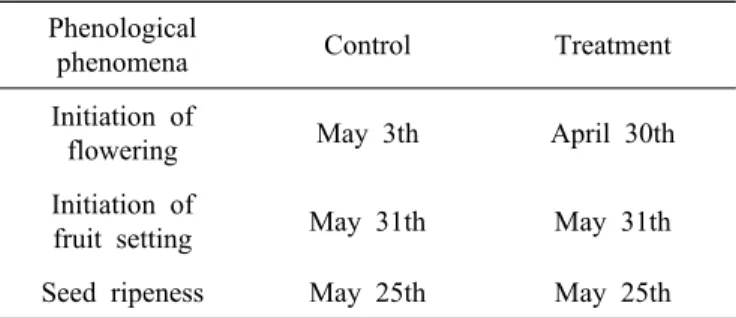
Table 1. Starting time of flower, fruit and seed ripeness of one year seedlings of ginseng grown in control and global warming treatment.
Phenological
phenomena Control Treatment
Initiation of
flowering May 3th April 30th
Initiation of
fruit setting May 31th May 31th
Seed ripeness May 25th May 25th
SHIMADZU, Japan)로 생중량을 측정하였다.
인삼의 생리학적 반응을 알아보기 위해서는 2011년 6월, 오 전 10~12시 사이에 1년생과 2년생 인삼을 대상으로 LCi Ultra Compact Photosynthesis System(ADC, 2005)을 이용해 광합성률과 증산률을 측정하였다. 광합성 측정 당시, 대조 구와 CO2 + 온도상승구의 광량은 각각 472.8 ± 110.79μ molm-1s-1, 468.6 ± 201.44μmolm-1s-1, 상대습도는 70.79 ± 18.56%와 72.04 ± 16.59%으로 통계적으로 차이가 없었다.
광량은 Quantum sensor(LI-250A, LI-COR, USA)를 이용하 여 측정하였으며, 상대습도는 습도데이터로거(TR-72U, T&D, USA)로 30분 간격으로 24시간 동안 기록하였다. 수분이용 효율(Water use efficiency, WUE)은 광합성률 / 증산률로 계산하였다.
통계분석
대조구와 CO2 + 온도상승구간 인삼의 생리・생태학적 반 응의 차이는 수집한 데이터가 정규분포를 이루지 못해 비모 수적 통계분석(Kurskal-Wallis)을 실시하였다. 각 항목별 분 산 분석을 실시해 구배별 차이의 유의성을 검정하였으며, 구배별 차이의 유의성은 포스트-훅 검정에 의해 평균치의 피셔 최소 유의차 범위(Fisher LSD)를 계산하였다(Noh &
Jeong, 2002). 이상의 통계 분석은 Statistica 통계패키지(Statsoft Co. 2006)를 이용하였다.
결과 및 고찰
생태학적 반응
CO2농도와 온도가 상승함에 따라 우리나라의 약용식물 인 인삼의 식물계절학적 반응과 생육 반응을 분석하였다.
인삼의 계절학적 반응에서 인삼의 꽃대가 보이는 시기는 대 조구보다 CO2 + 온도상승구에서 3일 먼저 빨랐고, 열매가 처음 보이는 시기와 열매가 성숙한 시기는 대조구와 CO2 +
온도상승구간 차이가 없었다(Table 1).
위의 결과는 지구온난화 조건에서 식물계절현상이 대조 구보다 빨라진다는 다른 연구 결과와 일치한다. CO2농도와 온도를 동시에 처리했을 때 미국자리공(Kim & You, 2010c, 섬자리공(Shin, 2012) 그리고 독미나리(Hong, 2012)에서는 꽃대 형성 시기가 빨라졌다. 미국자리공의 열매 형성시기는 대조구보다 CO2 + 온도상승구에서 빨리 형성되었다(Kim
& You, 2010c).
인삼의 개엽율은 1년생 인삼을 이식한 후 1주일 이후인 4월 6일에 대조구와 CO2 + 온도상승구에서 각각 12.5%, 19%으로 CO2 + 온도상승구의 개엽율이 대조구보다 더 높 았다. 그러나 최종 개엽율은 대조구와 CO2 + 온도상승구에 서 차이가 없었다(Fig. 3).
Fig. 5. No. of leaves of one year seedlings under control(ambient CO
2+ ambient temperature) and global warming treatment (elevated CO
2+ elevated temperature). Vertical bars mean standards deviation of sample. Alphabets on the bars indicate significant difference between control and global warming treatment(p < 0.05).
Fig. 6. Fresh weight of one year seedlings under control(ambient CO
2+ ambient temperature) and global warming treatment (elevated CO
2+ elevated temperature). Vertical bars mean standards deviation of sample. Alphabets on the bars indicate significant difference between control and global warming treatment(p < 0.05)
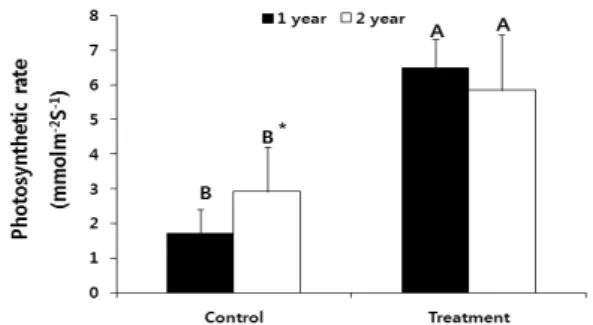
Fig. 7. Photosynthesis rate of ginseng(one or two year seedlings) under control(ambient CO
2+ ambient temperature) and global warming treatment(elevated CO
2+ elevated temperature).
Vertical bars mean standards deviation of sample. Alphabets on the bars indicates significant difference between control and global warming treatment. *(maker) on the alphabet means significant difference between one year seedlings and two year seedlings(p < 0.05).
Fig. 8. Transpiration rate of ginseng(one or two year seedlings) under control(ambient CO
2+ ambient temperature) and global warming treatment(elevated CO
2+ elevated temperature, treatment). Vertical bars mean standards deviation of sample. Alphabets on the bars indicates significant difference between control and global warming treatment. *(maker) on the alphabet means significant difference between one year seedlings and two year seedlings(p < 0.05).
1년생 인삼의 줄기 길이는 대조구(10.86 ± 3.5cm)보다 CO2 + 온도상승구(15.60 ± 4.24 cm)가 더 길었다(Fig. 4).
1년생 인삼의 잎수는 대조구(8.1 ± 0.76장)보다 CO2 + 온도 상승구(9.5 ± 1.10장)에서 많았고(Fig. 5), 지하부 생량무게 는 대조구(1.63 ± 0.41g)보다 CO2 + 온도상승구(1.96 ± 0.33 g) 가 무거웠지만 통계적으로 차이가 없었다(Fig. 6). 본 실험 결과와 유사하게, CO2 농도가 높은 처리구에서 키운 창질 경이는 대조구보다 지상부와 지하부 생물량 그리고 잎 무게 가 증가하였다(Fajer et al., 1991). 또한, 토마토는 대조구보 다 CO2농도와 온도를 상승시킨 처리구에서 식물체길이와 총 생산량이 증가하여 본 연구와 같은 결과를 나타냈다(Lee
et al., 2008b). 그러나 토마토를 이용한 실험에서는 단기간
실험을 진행하여, 온실에서 장기간 진행한 본 실험보다 실 제로 식물이 자연에 살아가는 환경을 조성할 수 없는 단점이있다(Kim & You, 2010a).
반면, 인삼과 같은 다년생 초본이 아닌 일년생 초본을 대 상으로 한 연구에서 어저귀(Abutilon theophrasti)의 상대 생장률은 CO2 농도가 증가 할수록 대조구보다 처리구가 더 낮은 상대 생장율을 보였다(Garbutt et al., 1990).
위의 결과를 종합해 보면, CO2농도와 온도상승은 인삼의 식물계절시기를 앞당기고 지상부의 생육반응에 긍정적인 영향을 미칠 것으로 판단된다.
생리학적 반응
광합성률은 1년생과 2년생 인삼 모두 대조구보다 CO2 +
A A
A
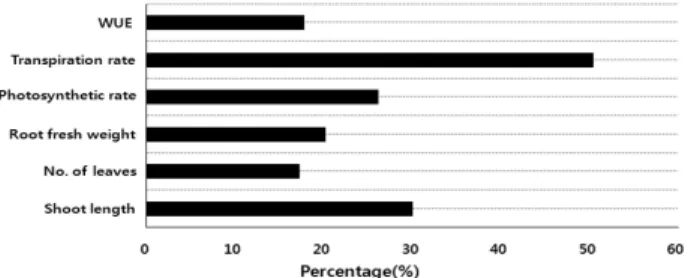
Fig. 10. Percentage variation of measured growing and ecophy -siological parameters of one year seedlings(closed bars) under global warming treatment relative to control.
Fig. 9. Water use efficiency of ginseng(one and two year seedlings) under control(ambient CO
2+ ambient temperature) and global warming treatment(elevated CO
2+ elevated temperature, treatment). Vertical bars mean standards deviation of sample. Alphabets on the bars indicates significant difference between control and global warming treatment. *(maker) on the alphabet means significant difference between one year seedlings and two year seedlings(p < 0.05).
온도상승구에서 높았다(p < 0.05, Fig. 7). 그리고 대조구에서 광합성률은 1년생(1.72 ± 0.68mmol-2s-1)보다 2년생(2.917 ± 0.81mmol-2s-1)이 높은 반면 CO2 + 온도상승구에서는 1년 생(6.5 ± 1.2mmol-2s-1)과 2년생(5.85 ± 1.59mmol-2s-1)간 차 이를 보이지 않았다(Fig. 7).
증산률은 1년생에서 대조구(0.17 ± 0.04mmol-2s-1)보다 CO2
+ 온도상승구(0.34 ± 0.09mmol-2s-1)가 높았고, 2년생은 대조 구(1.06 ± 0.12mmol-2s-1)와 CO2 + 온도상승구(1.14 ± 0.17mmol-2s-1) 에서 차이가 없었다. 그리고 1년생 인삼의 증산률은 2년생보 다 대조구와 CO2 + 온도상승구에서 모두 높았다(Fig. 8).
수분이용효율은 1년생에서는 대조구(10.49 ± 5.01umCO2mmd H2O-1)와 CO2 + 온도상승구(19.92 ± 5.83umCO2mmdH2O-1)가 차이가 없었고, 2년생에서는 대조구(2.52 ± 0.52umCO2mmdH2O-1) 보다 CO2 + 온도상승구(5.35 ± 1.57umCO2mmdH2O-1)가 높 았다. 그리고 대조구와 CO2 + 온도상승구 모두 2년생보다 1년 생이 높았다(Fig. 9).
본 실험결과와 유사하게 섬시호는 CO2농도와 온도를 대 기조건 보다 높인 처리구에서 광합성률과 증산률이 증가하 였다(Jeong, 2012). 야콘은 일반 대기조건에서 18℃~38℃
까지 온도를 변화시켰을 때 광합성률이 증가하지 않았지만, 대기 조건보다 CO2 농도만 높인 처리구에서는 광합성률과 증산률이 증가하였다(Lee & Choi, 2011).
또한, 옥수수의 유모기 및 5~6엽기의 생육은 CO2 처리량 이 증가함에 따라 지상부 길이, 지상부 건물중 및 광합성률 이 증가하였다(Kim et al., 2008).
결과적으로 대조구보다 CO2 + 온도상승구에서 인삼의
광합성률, 증산률 그리고 수분이용효율이 증가하였다. CO2
농도가 증가하면 일반적으로 광합성률과 수분이용효율은 증가하지만, 증산률은 낮아진다(Morison, 1987; Ainsworth
& Rogers, 2007). 그리고 일반적으로 온도가 높아지면 증산 률은 증가한다(Kim, 2010a). 이러한 이유로 본 실험에서는 대조구보다 CO2 + 온도상승구가 2℃ 높았기 때문에 증산 률이 증가한 것으로 보인다.
이와 유사하게, CO2 + 온도상승구에서 섬자리공과 미국 자리공의 광합성률과 수분이용효율은 2종 모두 증가하였지 만, 증산률은 모두 대조구와 CO2 + 온도상승구보다 온도상 승구가 가장 높은 연구결과가 있다(Kim, 2010b).
CO2농도와 온도를 증가시킨 CO2 + 온도상승구에서는 지 상부 길이, 잎수, 지하부의 생중량, 광합성률, 수분이용효율 이 대조구보다 CO2 + 온도상승구에서 20~30% 증가하였 고, 증산률은 50%로 가장 크게 증가하였다(Fig. 10).
이를 종합해 보면, CO2농도와 온도 상승은 인삼의 지상 부 생장과 지하부 생물량을 높이고, 광합성률과 수분이용효 율을 증가시킨다. 따라서 지구온난화는 인삼의 생리・생태 학적 반응에 다소 긍정적인 영향을 미칠 것으로 판단된다.
적 요
본 연구는 CO2농도와 온도가 상승함에 따라 인삼의 생육반 응 및 광합성 특성의 변화를 알아보기 위해 실험하였다. 유 리 온실 안에 대조구(대기중 CO2 농도)와 CO2 + 온도상승 구(750-800 ppm, 2°C 상승)로 나누어 비교하였으며 다음과 같다.
1. 인삼의 개엽율은 1년생 인삼을 이식한 후 1주일 이후 인 4월 6일에 CO2 + 온도상승구의 개엽율이 대조구보 다 더 높았다. 그러나 최종 개엽율은 CO2 + 온도상승 구간 차이가 없었다.
2. 꽃이 나오는 시기는 대조구보다 CO2 + 온도상승구가 3일 빨랐고, 열매관찰시기와 열매 성숙시기는 대조구 와 CO2 + 온도상승구간 차이가 없었다.
3. 인삼의 줄기길이는 대조구보다 CO2 + 온도상승구에서 길었고, 잎수는 대조구보다 CO2 + 온도상승구에서 많 았다.
4. 지하부 생량무게는 대조구와 CO2 + 온도상승구간 차 이가 없었다.
5. 광합성은 모두 대조구보다 CO2 + 온도상승구가 높았 다. 대조구 내에서는 년도별 광합성이 차이가 있었다.
하지만 CO2 + 온도상승구에는 1년생과 2년생 간 차이가 없었다.
6. 증산률은 대조구와 CO2 + 온도상승구에서 모두 년생 간 차이가 있었다. 1년생은 대조구보다 CO2 + 온도상 승구가 높았고, 2년생은 대조구와 CO2 + 온도상승구간 차이가 없었다.
7. 수분이용효율은 대조구와 CO2 + 온도상승구에서 모두 1년생과 2년생간 차이가 있었다. 1년생은 대조구와 CO2 + 온도상승구간 차이가 없었고, 2년생은 대조구 보다 CO2 + 온도상승구가 높았다.
이상으로 볼 때 지구온난화는 인삼의 생육과 생리・생태 학적 반응에 다소 긍정적인 영향을 준다.
사 사
본 논문은 2010년 교육과학기술부의 지역거점사업 / 에너 지자립형 그린빌리지 핵심기술 사업단(과제번호 2011-50300) 에 대하여 수행되었음에 감사를 드립니다.