국가 폐암 검진에 대한 반대 의견
신상원 1 , 이정권 2
1고려대학교 의과대학 내과학교실, 2성균관대학교 의과대학 가정의학과교실
National Lung Cancer Screening Program in Korea: More Harm Than Good
Sang Won Shin 1 , Jungkwon Lee 2
1
Department of Internal Medicine, Korea University College of Medicine, Seoul, Korea
2
Department of Family Medicine, Sungkyunkwan University School of Medicine, Seoul, Korea
Although the result of low dose computed tomography (LDCT) screening for high risk smoker for lung cancer (National Lung Screening Trial, NLST) showed 20% of lower lung cancer death compare to chest X-ray screen- ing, which published in 2011, after more than 8 years passed, no European or Asian country has implemented organized lung cancer screening with LDCT, and there are no National Lung Cancer Screening Program globally. In United States, where LDCT lung screening has become standard procedure, the screening rate is extremely low, less than 5%. That is because in spite of the considerable the benefit of the screening, the harms of screening; specifically, most notably due to the high level of false positives, and physical, psychological, and economical burdens. Recently the controversies regarding the harms of LDCT lung screening has been in- creasingly debated. Also, the novel strategies, such as artificial intelligence and volumetric measurement of suspicious nodules has been adopted for recently launched lung cancer screening clinical trials. However, amid of skeptical opinions increasing globally, Korean Government recently decided to include LDCT lung can- cer screening as national cancer screening program, becoming Korea as the first and the only national lung cancer screening program worldwide. Without randomized trial proven to be effective for Korea population, hur- ried implementation of national lung cancer screening program could have more harmful effect than benefit in terms of public health perspectives.
Korean J Health Promot 2019;19(4):166-170 Keywords: Lung cancer, Screening, Korea
■
Received: Sep. 25, 2019
■Revised: Sep. 30, 2019
■Accepted: Sep. 30, 2019
■Corresponding author : Sang Won Shin, MD, PhD
Department of Internal Medicine, Korea University College of Medicine, 73 Goryeodae-ro, Seongbuk-gu, Seoul 02841, Korea Tel: +82-2-920-5350, Fax: +82-2-920-5680
E-mail: [email protected]
ORCID: https://orcid.org/0000-0002-9182-1589
Copyright ⓒ 2019 The Korean Society of Health Promotion and Disease Prevention
This is an Open Access article distributed under the terms of the Creative Commons Attribution Non-Commercial License (http://creativecommons.org/licenses/by-nc/3.0/), which permits unrestricted noncommercial use, distribution, and reproduction in any medium, provided the original work is properly cited.
서 론
폐암은 주요 의료 선진국에서 가장 높은 암 사망률을 차지 하고 있으며, 이를 감소시키기 위한 연구와 노력이 계속되고 있다. 특히 증상이 없는 고위험 흡연자에서 저선량 컴퓨터단 층촬영(low dose computed tomography, LDCT) 검진이 흉부 X-선 촬영에 비하여 상대적 폐암 사망률을 20% 감소시킨다 는 미국 National Lung Screening Trial (NLST) 연구가 2011년 에 발표되었고,
1)
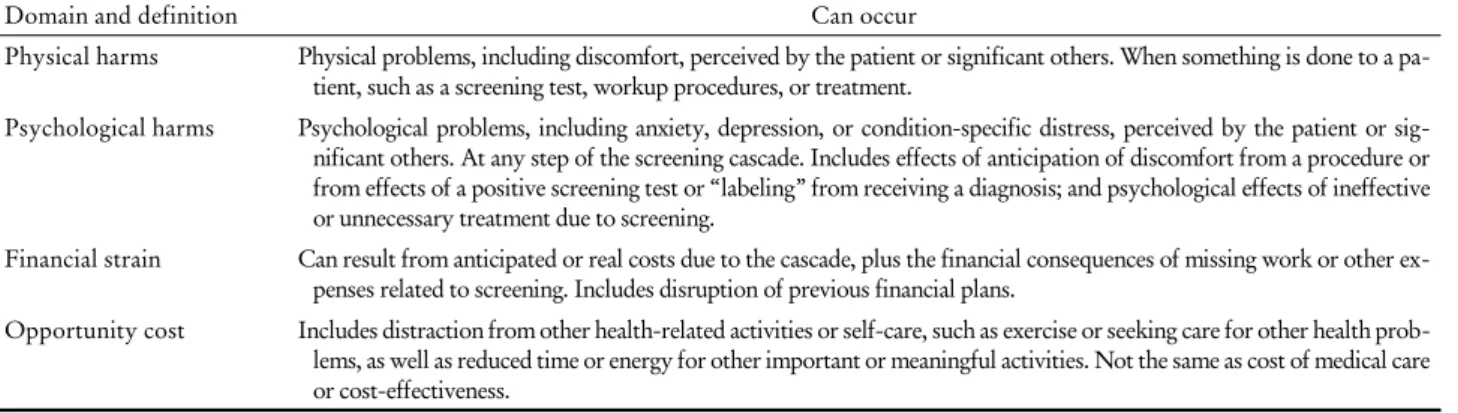
이 연구 결과를 토대로 신속하게 2013년 United States Preventive Service Task Force에서는 LDCTTable 1. Taxonomy of the harms of LDCT lung screening: domains and definitions
26)Domain and definition Can occur
Physical harms Physical problems, including discomfort, perceived by the patient or significant others. When something is done to a pa- tient, such as a screening test, workup procedures, or treatment.
Psychological harms Psychological problems, including anxiety, depression, or condition-specific distress, perceived by the patient or sig- nificant others. At any step of the screening cascade. Includes effects of anticipation of discomfort from a procedure or from effects of a positive screening test or “labeling” from receiving a diagnosis; and psychological effects of ineffective or unnecessary treatment due to screening.
Financial strain Can result from anticipated or real costs due to the cascade, plus the financial consequences of missing work or other ex- penses related to screening. Includes disruption of previous financial plans.
Opportunity cost Includes distraction from other health-related activities or self-care, such as exercise or seeking care for other health prob- lems, as well as reduced time or energy for other important or meaningful activities. Not the same as cost of medical care or cost-effectiveness.
Abbreviation: LDCT, low dose computed tomography.
lung screening을 B등급으로 권장하여, 미국 내에서는 표준 치료로 인정되어 대상이 되는 흡연자에게 권장하고 있다.
2)
NLST 연구에서 발표된 폐암 사망률 20% 감소는 획기적인 발전으로 수많은 생명을 구할 수 있는 가능성이 있을 것으로 평가되었으나, 그에 따른 반대 급부, 즉 위해성도 만만치 않다.가장 중요한 위해성으로는 검진을 받은 환자의 약 30%에서 진단받게 되는 위양성(false positive)이었다. 이와 더불어 약 15-20%까지 발생하는 것으로 추측되는 불필요한 폐암의 과 잉 진단(overdiagnosis), 양성 병변의 확진을 위하여 필요한 추가 CT 검사로 인한 방사선 노출의 증가, 위양성과 과잉 진단으로 인한 폐 절제술과 이로 인한 폐기능 저하 및 삶의 질 감소, 평균 수명의 감소 등이 주된 해악으로 지적되고 있 다.
3-5)
이러한 해악에 대한 우려 때문에, NLST 연구 결과 발표 후 8년이 경과한 2019년 현재, 유럽을 포함하여 아시아 등 주요 의료 선진국은 폐암 검진을 표준 의료 행위로 인정하 지 않고 있으며, 국가 검진으로도 인정하고 있지 않다.6)
유일 하게 표준 의료로 인정받은 미국에서도 전체 수검 비율은 전체 대상자의 5%에 미치지 못하며, 미국의 많은 일차의료 담당 의료진들은 폐암 검진의 효과와 이득에 대하여 회의적 의견을 견지하고있다.5-7)
오히려 최근 들어 국제 학회와 주요 의학 저널 등에서 폐암 검진에 대한 논란은 점차 커지는 상황 이며, 인공 지능, 생체 표지자를 이용하여 위양성을 감소시키 고 효과를 증가시키기 위한 새로운 연구를 시작하고 있다.3,4,8)
즉, 현 시점에서 세계적인 관점에서 보면 기존의 NLST 기반 의 폐암 검진은 효과와 이득 그리고 해악을 감안하면, 대규모 국가 검진으로 사용될 정도의 효과가 검증된 방법이 아니며, 추후 보다 획기적인 새로운 방법을 이용한 임상 연구가 이루 어지기를 기다리는 상황이라고 할 수 있다.9)
본 론
왜 세계 의료계가 NLST에 기반한 폐암 검진의 효과에 대
하여 신뢰를 갖지 못하고 어떤 나라에서도 국가 검진으로 실시하지 않은 이유에 대하여 살펴보고자 한다. 폐암 검진 연구가 시작된 지 무려 20여 년이 경과한 현 시점에서 대부 분의 의료 선진국에서 표준 치료로 인정받지 못하는 이유에 대하여 4개의 카테고리로 나누어서 설명해보면 다음과 같 다(Table 1).
1. 폐암 사망률 감소 효과를 검증한 후속 연구 없음
새로운 신약이나 새로운 치료법이 효과 있는 것으로 인정 받으려면, 최소한 2개 이상 대단위 무작위 시험과 메타분석 에서 효과가 증명되고 재현되어야 한다. 그러나 NLST 연구 가 2011년 발표된 이래 많은 폐암 검진 임상 연구가 있었지 만 대부분 유럽과 아시아 국가를 중심으로 한 매우 소규모 임상 연구이어서, 현재까지 지면으로 발표된 어떤 임상 연 구에서도 NLST 연구에서 보여준 20% 폐암 사망률 감소를 재현하지는 못하였다.
5,10)
대부분의 메타분석 연구에서도 폐 암 검진의 폐암 사망률 감소 효과는 뚜렷하게 증명되지 못 하였다.7)
그나마 NLST 연구와 비견할 수 있는 정도의 임상 연구인 유럽의 Dutch-Belgian Randomized Lung Cancer Screening Trial (NELSON) 연구에서 NLST 연구와 비슷한 약 20%의 사망률 감소를 2018년 국제 폐암학회에서 발표하 였다. 하지만 NELSON 연구는 LDCT screening과 no screening을 비교하는 연구로 비교 대상이 다르고, LDCT screening의 시기와 횟수,11)
특히 의심 병변의 판정 방법에 서 부피의 개념(volumetric method)을 사용하는 등12)
기존 의 NLST 연구 결과를 증명했다고 판단하기 어렵다.10,13)
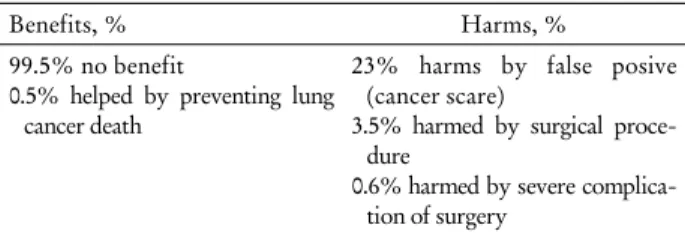
더 구나 세계학회에서 NELSON 연구 결과를 발표한지 1년이 넘도록 논문으로 결과가 발표되지 않고 있어서, 아직 그 이 유에 대한 논란이 많은 상황이며, 이에 대한 본격적인 토론 과 비평은 아직 시작되지 않은 단계이다.Table 2. Benefits and harms of LDCT lung screening
1,19,26)• One in 217 were helped (prevented death)
• One in 4 were harmed (false positive CT scan)
• One in 30 were harmed (unnecessary surgery)
• One in 161 were harmed (surgical complication)
Benefits, % Harms, %
99.5% no benefit
0.5% helped by preventing lung cancer death
23% harms by false posive (cancer scare)
3.5% harmed by surgical proce- dure
0.6% harmed by severe complica- tion of surgery
Abbreviations: CT, computed tomography; LDCT, low dose com- puted tomography.
2. 높은 위양성과 이로 인한 후속 조치로 유발되는 위해성
LDCT screening의 가장 큰 임상적인 위해는 약 30%에 달하는 위양성과 이로 인한 후속 검사, 조직 생검, 생검을 위한 수술로 이어지는 일련의 추가적인 의학적 행위로 발생 되는 신체적, 정신적, 경제적 피해이다.
8,14,15)
검진을 시행한 약 30%의 수검자가 받게 되는 의심 병변(positive lesion)의 95% 이상은 위양성이며, 따라서 검진을 받지 않았다면 아 무런 후속 검사나 의학적 처치를 받지 않았을 흡연자가 단 순히 검진을 받았다는 이유로 추가 검사, 조직 생검, 수술까 지 받아야 하는 것이다.13,16,17)
이로 인하여 추가로 방사선 위 험에 노출되는 것은 물론, 폐 조직검사로 인한 출혈과 감염 혹은 폐기종에 의한 폐기능 저하를 초래할 수 있다. 특히 일 부 환자에서는 병변의 병리적인 진단을 위하여 폐 수술이 필요할 수 있으며, 이는 상당한 육체적, 정신적, 경제적인 피 해를 초래할 수 밖에 없다. 폐의 조직 생검 및 수술은 다른 암 검진, 예를 들면 유방암 검진, 위암 및 대장암 검진으로 인한 위양성이 초래하는 위험성과는 차원이 다른 높은 위험 성을 내포한다는 점에서 환자에게 가해지는 정신적, 신체적 위해는 대단히 심각하게 고려되어야 할 것이다.5,7)
기존의 발표된 NLST 연구에서는 위양성 환자의 약 2% 이내에서 만 수술이 필요하였으나, 이는 고도로 통제되고 관리되는 임상 시험의 결과일 뿐이므로, 실제 임상 시험의 통제를 벗 어난 의료 환경에서는 의사 환자 간의 법적 분쟁 및 책임 소재를 고려하면, 유용성의 비율이나 수술이 필요한 환자의 비율이 훨씬 높을 수밖에 없다는 우려가 보고되고 있다.3,4,8)
3. 폐암 과잉 진단과 이로 인한 폐기능 저하, 삶의 질 저하 및 생존 기간 감소
대부분의 암 검진은 필수적으로 과잉 진단, 즉 치료가 필 요치 않는 암을 진단하고 치료하는 상황을 수반하게 되
며,
6,7,9)
특히 생존에 필수적인 장기인 폐의 경우는 그 위해가한층 더 심할 수밖에 없다.
6,18)
일반적으로 폐암 검진으로 인 한 과잉 진단율은 약 20%로 보고되고 있다.19,20)
물론 과잉 진단으로 인한 일차적인 피해는 불필요한 폐 수술 혹은 항 암 치료를 받는 것이지만, 대부분의 환자가 폐 절제술을 받 게 된다는 점을 고려하면 폐 절제술로 인한 폐기능의 감소 는 남은 여생에서 필연적으로 삶의 질 감소와 생존 기간 감 소를 초래할 가능성이 크다. 따라서 폐암 검진에서의 과잉 진단은 단순히 불필요한 수술이나 항암 치료를 받는다는 것 을 떠나, 삶의 질 감소, 생존 기간의 단축을 초래할 가능성 이 있다.5,18)
4. 흡연자의 건강에 대한 적절한 대처를 위한 기회의 상실
일반적으로 흡연자가 갖는 가장 큰 건강에 대한 염려는 폐암일 수 있으나, 현실적으로는 흡연자의 주요 사망원인은 심혈관질환, 만성 폐질환 및 폐 이외의 주요 장기의 암 등으 로 사망할 가능성이 더 높다.
14,21)
따라서 적절한 운동과 체 중 관리, 영양섭취 등 다양한 형태의 건강관리가 필요하다.폐암 검진에서 의심되는 병변이 있다는 진단을 받으면, 이 로 인한 정신적 부담, 경제적 손실 등으로 일반적인 건강관 리에 상당한 지장을 초래할 가능성이 보고되고 있다.
2,14,21,22)
상황에 따라서는 실직, 자해와 자살 등의 심각한 후유증을 초래할 수도 있다.
9,18,21)
폐암 검진에서 발견된 의심 병변의 95% 이상이 위양성임을 감안하면, 너무 많은 수검자들이 불필요한 위험에 노출된다고 해야 할 것이다.3,23)
폐암에 대 한 일반적인 공포가 매우 크다는 점을 감안하면, 폐암 검진 에서 나타나는 의심 병변이 주는 우려와 이로 인한 정신적 감정적 위해, 이로 인한 건강 증진의 기회 손실은 매우 심각 한 폐암 검진의 위해성이다.18,19)
1990년대 중반 시작된 LDCT를 이용한 폐암 검진 연구는 담배 회사의 지원을 받는 과정에서 여러 가지 논란을 야기 시켰고, 세계적인 관점에서 보면 폐암 검진의 효과와 위해 성에 대한 논란은 아직 진행 중이다.
3,24,25)
특히 효용성 면에 서 보더라도, 폐암 검진은 전체 수검자의 99.5%는 전혀 이 득이 없으며, 단지 0.5%만이 폐암 사망을 피할 뿐이다. 이에 반하여, 30%는 위양성에 의한 불필요한 검사와 치료의 악 순환을 겪어야 하며, 0.6%에서는 치명적인 수술 부작용을 겪게 된다(Table 2).1,3,26)
즉, 폐암 검진은 대부분의 수검자가 어떠한 건강상의 이득이 없으며, 적지 않은 추가 검사 등 후 속 의료 행위로 인한 피해를 입게 된다. 이러한 불균형적인 이득/위해 비율로 인하여, 표준 치료로 인정받은 미국에서 도 의료진이 충분한 설명과 함께 수검자가 검진의 위험성을 인지하고 받아들여야 하는 동의 의무 조항을 포함한, 소위“shared decision”을 통하여 실시하도록 규정하고있다.
27,28)
이렇듯 폐암 검진은 상당한 위해성을 갖고 있어서 다수의 국민을 대상으로 한 국가 검진으로는 매우 부적절함을 여실 히 증명하고 있다.결 론
2019년 현 시점에 굳이 대한민국에서 논란이 많은 폐암 검진을 세계 최초로 도입해야 할 의학적, 학술적 이유가 없 다. 무리한 폐암 검진으로 위양성, 과잉 진단을 초래하여 불 행한 환자를 양산해야 할 이유가 어디 있는가? 국가 암 검진 사업으로 폐암 검진을 도입하여 수많은 국민에게 권할 수 있으려면, 단순한 시범사업이나 소수의 외국 연구의 참고만 으로 결정할 사안이 아니다. 현재 대한민국에서만 세계에서 유일하게 시행하는 국가 폐암 검진은 불행한 선의의 피해자 를 양산할 가능성이 많으므로 조속히 재고해야 할 것이다.
요 약
고위험 흡연자를 대상으로 저선량 컴퓨터단층촬영(LDCT) 선별검사로 폐암 사망률을 20% 감소시킨다는 미국의 연구 (NLST) 결과가 2011년 발표되었으나, 8년이 경과한 2019년 폐암 검진을 국가 검진으로 채택하여 시행하는 의료 선진국은 없다. 표준 의료 행위로 권유되고 있는 미국에서도 대상 환자 의 LDCT screening의 수검률은 5% 이내로 극히 낮은 실정이 다. 폐암 검진으로 인한 폐암 사망률 감소의 이득에도 불구하 고 과도하게 높은 위양성으로 인한 신체적, 정신적, 경제적 위해와 과잉진단으로 인한 불필요한 치료로 발생되는 위해의 가능성 등에 대한 우려가 크다. 최근 폐암 검진의 효용성과 위해성에 대한 논란이 가중되는 상황이며, 인공지능 등 새로 운 첨단 기술을 이용한 새로운 폐암 검진 개발을 위한 연구가 시작되는 추세이다. 최근 대한민국 정부는 기존의 미국 NLST 연구를 기반으로 한 LDCT 폐암 검진을 국가 암 검진으로 채택하기 위하여 법을 개정하였다. 폐암 검진의 효과에 대한 검증이 세계 의학계의 논란으로 가중되는 상황에서, 굳이 한 국에서 세계 최초, 세계 유일의 폐암 검진을 많은 국민을 대상 으로 시도하는 것은 현 시점에서는 무모하고 위험한 정책이라 고 판단된다. 의도와는 다르게 흡연자뿐 아니라 전체 국민의 건강에 커다란 위협이 될 가능성이 높다. 국가 폐암 검진은 중단되어야 하며, 최소한 국내 환자를 대상으로 한 무작위 연구를 먼저 실시하여 확실한 효과가 증명된 다음에야 실시하 는 것이 적절할 것이다.
중심 단어: 폐암, 검진, 대한민국
ORCID
Sang Won Shin https://orcid.org/0000-0002-9182-1589 Jungkwon Lee https://orcid.org/0000-0001-5503-9605
REFERENCES