Management of Cancer Survivors in Clinical and Public Health Perspectives: Current Status and Future Challenges in Korea
The number of cancer survivors is increasing dramatically. Many cancer survivors face lifetime risks associated with their cancer therapy, with a significant proportion at risk for serious morbidity and premature mortality. Concerns regarding the long-term physical, psychosocial, and economic effects of cancer treatment on cancer survivors and their families are increasingly being recognized and addressed by public and private sector. This article summarizes economic burden of cancer survivors, main post-treatment health problems including secondary primary cancer and comorbidities, health behaviors such as smoking, exercise and physical activity, nutrition, and psychosocial problems. Faced with various health and psychosocial problems specific to this population, several healthcare and policy models are being suggested to address these issues, including ‘shared care model’ and ‘integrative supportive care service delivery system for cancer survivors’. More effort is needed to make the cancer survivorship agenda a reality, attended by a wide variety of stakeholders including researchers, patients, providers, and policy makers.
Key Words: Cancer; Survivors; Second Primary Neoplasm; Korea Dong Wook Shin,1,2 BeLong Cho,1,2
So Young Kim,3 Je Hyuck Jung,4 and Jong Hyock Park3
1Department of Family Medicine & Health Promotion Center, Seoul National University Hospital, Seoul; 2Cancer Survivorship Clinic, Seoul National University Cancer Hospital, Seoul; 3Cancer Policy Branch, National Cancer Control Research Institute, National Cancer Center, Goyang; 4Division of Disease Policy, Ministry of Health and Welfare, Seoul, Korea
Received: 31 October 2012 Accepted: 4 March 2013 Address for Correspondence:
Jong Hyock Park, MD
Division of Cancer Policy and Management, National Cancer Control Research Institute, National Cancer Center, 323 Ilsan-ro, Ilsandong-gu, Goyang 410-769, Korea Tel: +82.31-920-2940, Fax: +82.31-920-2949 E-mail: [email protected]
This work was supported by a grant of the National R&D Program for Cancer Control No. 1210150 and No. 1020010.
http://dx.doi.org/10.3346/jkms.2013.28.5.651 • J Korean Med Sci 2013; 28: 651-657
INTRODUCTION
With the increasing incidence of cancer and improvement in survival (1), the number of cancer survivors in Korea continues to rise, with more than 800,000 Koreans now living with a histo- ry of cancer. It is estimated that the number would reach as many as 1 million in the year 2014 (2). Although many people who survived cancer return to normal functioning after the completion of treatment, cancer and its treatment can also re- sult in a wide range of physical and psychological problems which persist in a chronic, long-term manner, leading to in- creased healthcare cost and productivity loss.
Therefore, increasing attention is paid to such continued health problems and needs of this growing population and its successful management. Understanding issues in cancer survi- vorship is not only critical for the clinicians to develop follow- up care plans that may allow for adequate surveillance, preven- tion, and the management of long-term and late effects of can- cer, but also is a key to the development of cancer control plan from the public health perspective.
The purpose of this article was to briefly describe the current health problems faced by cancer survivors in Korea and to discuss potential solutions both from clinical and policy perspectives.
To provide a broad perspective on current status and future challenges in management of cancer survivors in Korea, we performed a narrative review. We searched pivotal papers on this topic, and priority was given to literature from Korea. After the literature review, health problems of cancer survivors were categorized into four topics: 1) second primary cancer; 2) co- morbidity; 3) poor health behavior; and 4) psychosocial prob- lems. We also looked up examples from other countries to iden- tify gaps in current status in survivorship care and to propose care models in Korea.
SEASONS OF SURVIVORSHIP
A cancer survivor is defined as a person from the moment of diagnosis and then onward for the remainder of his/her life, and cancer survivorship also includes a cancer survivor’s family and caregivers. Cancer survivors experience different health and psychosocial problems according to their stage, as de- scribed by Mullan (3) as 3 seasons of survival in their journey: 1) acute survivorship; 2) extended survivorship; and 3) perma- nent survivorship. In acute survivorship when treatment is on- going, adequate management of pain, fatigue, and psychologi- cal distress are of main concern. Extended survivorship is a pe-
riod of transition when physical, psychological, social and fi- nancial readjustment is taking place with surveillance for re- currence ongoing. Finally, permanent survivorship is a period when a gradual sense of confidence develops with lowered risk of recurrence. Cancer survivors face various problems during their journey through the different phases of survivorship.
ECONOMIC BURDEN OF CANCER SURVIVORS
To estimate economic burden in cancer survivors, we perform- ed analysis on medical expenses of cancer survivors using the 2001-2010 Korean National Health Insurance claims data. A to- tal of 105,502 cancer survivors who were diagnosed with cancer was compared to that of matched control. The analysis perform- ed for this study was approved by the institutional review board of National Cancer Center (NCCNCS-10-352). Informed con- sent was waived by the board.
Healthcare cost of cancer survivors jumped at the year of di- agnosis, and decreased in the following years. However, it re- mained 2 to 3 times higher than that of matched control, even at long-term survivorship phase of ≥ 5 yr after diagnosis, sug- gesting higher healthcare need in this vulnerable population (Fig. 1).
Economic burden incurred by cancer is estimated to be aro- und 14.1 trillion Korean Won (KRW) (13 billion US dollars) as of year 2005 (4). Morbidity costs accounted for 3.2 trillion won, and the proportion from the total burden is very rapidly increasing
as shown by doubling from 1.6 trillion won in 2002. The relative proportion of morbidity costs in Korea is much higher than that of the US (23% vs 8%), indicating lack of successful rehabilita- tion programs for cancer survivors can lead to productivity loss and social burden in Korea.
HEALTH PROBLEMS OF CANCER SURVIVORS Second primary cancer
One of the salient aspects of cancer survivorship is second pri- mary cancer (SPC). SPC is a new primary cancer developing in a person with a history of cancer in a new site or tissue and sub- sequent to the initial cancer. SPC can occur in concordant (the same type of cancer as the first; e.g. newly developed left breast cancer after right breast cancer), or discordant sites (a different type from the first; e.g. newly developed colon cancer after breast cancer). Genetic predisposition, shared environmental factor, and cancer treatment place cancer survivors at higher risk of developing SPC compared with the general population. Popu- lation-based cancer registry data shows overall estimates of rel- ative risk to be 1.1-1.6 (5-8) (Table 1), and SPC comprises a sig- nificant portion of all incident cancers (16% in the US, 8.5% for Sweden) (5, 6). To date, there is no official report regarding sec- ond primary cancer incidence from Korean Central Caner Reg- istry.
SPCs can lead to additional mortality (9), and screening for SPC is expected to reduce mortality through early detection at a stage when the SPC is more amenable to treatment. Indeed, earlier and more frequent screening for SPC has been recom- mended for certain cancer survivor groups (e.g. breast cancer screening for young female Hodgkin’s lymphoma survivors who were exposed to chest irradiation). As there is very few data on the effectiveness or cost-effectiveness of second prima- ry cancer screening, no specific evidence-based guideline for SPC screening is available. However, it is well accepted that cancer survivors should receive cancer screening according to general cancer screening guideline, and the US guidelines be- gan to include SPC screening.
In Korea, screening rates among cancer survivors were 48.5%, 54.7%, 34.7%, and 28.6% for breast, cervical, gastric, and colorec- tal cancer screening, respectively, indicating similar rate with non-cancer control (10). Another study found only 37.7% of survivors had undergone all appropriate SPC screening tests
Table 1. Relative incidence of second primary cancer reported from population cancer registry
Countries Total Male Female References
United States, SEER (SIR) 1.14* 1.11* 1.17* Curtis et al. (5)
Sweden, National (SIR) NR 1.3 (1.2-1.3) 1.6 (1.5-1.6) Dong et al. (6)
Japan, Osaka (SIR) 1.21 (1.19-1.23) 1.17 (1.14-1.19) 1.31 (1.27-1.35) Tabuchi et al. (7)
Denmark, National (HR) 1.25 (1.24-1.26) NR NR Nielsen et al. (8)
*P < 0.05 (95% confidence interval was not reported). SIR, standardized incidence ratio; HR, hazard ratio; NR, not reported.
Fig. 1. Trend of medical expenses of cancer survivors compared with general popula- tion. Medical expenses covered by the National Health Insurance (not including out- of-pocket payments).
Medical expenses (1,000 KRW)
Year
2001 2002 2003 2004 2005 2006 2007 2008 2009 2010 9,000
8,000 7,000 6,000 5,000 4,000 3,000 2,000 1,000 0
Cancer diagnosis &
treatment
7,741
4,252
3,122 3,119 3,175 3,190 3,164 3,240
904 1,028
635 696 787 874 984 1,132 1,259 1,371 1,518 1,672
Cancer patients General population
(11). When compared to the US, screening rates among Korean cancer survivors is suboptimal, emphasizing the need for a more systematic approach.
A number of barriers have been identified. First, cancer sur- vivors were shown to have limited knowledge about SPC and its screening. Having been not heard of SPC, they were found to be unable to differentiate SPC from ‘recurrence’ or ‘metastasis’, also unaware of their increased risk of SPC (12). They were also found to have difficulty in the distinction between ‘cancer scre- ening’ and ‘routine surveillance test’ after cancer treatment (11, 12). Second, oncologists do not consider SPC screening as their responsibility (13). Lack of established guidelines and short con- sultation time have been shown to further worsen the situation (13). As a result, only 21.5% of survivors were shown to have been recommended for screening for SPC (11). Third, coordi- nation system for personal guidance is lacking. An intervention with an educational material increased knowledge of SPC and its screening, but failed to increase screening rate (14). There- fore, further efforts are needed to increase awareness of SPC risk in cancer survivors and physicians, and to establish proper coordination systems (11-14).
Comorbidity
Comorbidity, i.e., concomitant illness, is another concern for cancer survivors as the cancer is the disease of the elderly (Ta- ble 2). Comorbidity can be present at the time of diagnosis and treatment, and often influence the choice of treatment. In addi- tion, comorbidity can also occur as a late effect of cancer treat- ment, including surgery, radiation, and chemotherapy. For ex- ample, breast cancer patients who received adjuvant treatment have higher risk for cardiovascular disease from radiation-related cardiac damage, as well as cardiotoxicity from anthracyclines,
paclitaxel and trastuzumab. Prostate cancer patients who re- ceived androgen deprivation therapy are also at risk for cardio- vascular disease. Cardiovascular disease is the most common concomitant disease entity, and more attention is being paid to metabolic syndrome and its individual components. Osteopo- rosis is another common treatment sequelae of cancer treat- ment, including oophorectomy, androgen deprivation therapy, aromatase inhibitors, and chemotherapy, and can lead to frac- ture and disability.
Therefore, people diagnosed with cancer suffer from more comorbidities than general population control (15) and have an increased risk of death from non-cancer causes. An investi- gation in non-cancer death in Korea also revealed 24.0% of long-term cancer survivors died of non-cancer diseases, and excess mortality was observed in younger survivors (16). The proportion of non-cancer death is expected to rise because of improving cancer survival, and appropriate medical attention is warranted to prevent premature deaths from non-cancer causes.
However, it has been noted that cancer survivorship often re- ceive suboptimal care for chronic medical conditions, such as follow-up for heart failure, necessary diabetic care, or recom- mended preventive services (17). However, survivors who had been followed up by both primary care physicians and oncolo- gists had better care (17), suggesting that disease-specific, nar- row specialty model of cancer care may limit appropriate care.
In addition, cancer survivors were shown not to adhere to treat- ment for non-cancer conditions, such as hypertension (18). Fu- ture work should examine how to improve screening and treat- ment of co-morbid disease in Korean healthcare system and how to increase survivors’ adherence to them.
HEALTH BEHAVIORS OF CANCER SURVIVORS
Occurrence of cancer is often associated with unhealthy behav- iors, such as smoking, poor diet, and sedentary lifestyle. Chang- ing such unhealthy behaviors may help reduce cancer treatment sequelae, recurrence, and risk for other common diseases.
Smoking
Continued smoking after having been diagnosed with cancer has many negative consequences for cancer survivors: 1) di- minished effectiveness of anticancer treatment (e.g. head and neck cancer patients who continued smoking during radiother- apy had poor locoregional control, poorer disease-free and overall survival as compared with those who quit before radia- tion therapy); 2) increased risk of treatment complication (e.g.
postoperative pulmonary complications); 3) shortened survival time due to disease progression and recurrence, SPCs, and co- morbidity (19). Smoking cessation can ameliorate such negative effects from smoking (20), however, many cancer patients, who Table 2. Common late effects of cancer treatments
Cancer treatment Late effect
Bilateral oophorectomy Cardiovascular disease Osteoporosis Chest/breast irradiation Coronary artery disease
Cardiomyopathy/Heart failure Abdominal irradiation Liver disease
Cisplatin (Platinum agents) Cardiovascular disease Hypertension Hyperlipidemia Weight gain
Impaired renal function/microalbuminuria Gonadal dysfunction
Decreased pulmonary function
Anthracycline Cardiomyopathy
Cardiovascular disease Hematopoietic stem cell transplantation Diabetes
Hypertension Cardiovascular disease Androgen deprivation therapy Cardiovascular disease
Diabetes Aromatase inhibitor Osteoporosis
were smoking prior to their illness, continue to smoke after di- agnosis and treatment with a reported prevalence ranging from 7, even to 60%. Therefore, support for cancer patients to stop smoking seems a critical extension of present treatment proto- cols, and integration of such programs is becoming routine, es- pecially for smoking-related cancer, and ‘Stop smoking clinic for cancer survivors’ was initiated in many countries, such as by the Netherlands Cancer Institute (21). However, we are not aware of any dedicated program for cancer survivors in Korea.
Exercise and physical activity
Exercise has been shown to improve fitness and physical func- tioning, reduce fatigue, and modestly decrease weight and body fat in cancer survivors, and may extend survival in cancer survi- vors (22). Cancer survivors are recommended to avoid inactivi- ty, and recommendation for most exercise is the same as age- appropriate guidelines for the general public (23). However, cancer survivors often remain inactive because of persistent ef- fects of cancer treatments, as well as clinicians’ advice that can- cer patients should rest and avoid activity (23). There are several points which apply to cancer survivors. Pre-exercise medical assessment and exercise testing is often necessary, considering common toxicities associated with cancer treatments including increased risk for fractures and cardiovascular events with hor- monal therapies, neuropathies related to chemotherapy, etc (23). In addition, exercise prescription should be individualized according to cancer survivors’ pretreatment fitness, comorbidi- ties, and negative treatment effects. For example, a stationary bike may be preferable over weight bearing exercise for people with peripheral neuropathy (23).
Nutrition
Nutritional issues differ according to phase of cancer trajecto- ries. Symptoms such as anorexia, early satiety, change in taste and smell, and bowel disturbances are common side effects of cancer treatment and can lead to malnutrition and weight loss during cancer treatment. Individual nutritional advice can ame- liorate such toxicities. After recovery, dietary patterns and wei- ght management become important to promote overall health, prevent SPCs, and control comorbidities. Obesity is associated with an increased risk of recurrence of breast and other can- cers, and avoidance of weight gain and weight maintenance throughout treatment is recommended. While it is not clear that intentional weight reduction can improve prognosis, there is some evidence that a low-fat diet which resulted in 4% weight loss reduced risk of recurrence among breast cancer survivors (24). A dietary pattern high in fruits, vegetables, whole grains, poultry, and fish was found to be associated with reduced mor- tality in breast and colorectal cancer patients. There are numer- ous other issues regarding nutrition, including specific dietary composition (e.g. fat in breast cancer), specific food (e.g. toma-
to in prostate cancer), and dietary supplement (e.g. multivita- mins). However, drawing conclusion is difficult due to paucity and inconsistency of results.
Health behaviors play a significant role in that they may mo- dify the progression of disease, as well as influence risk for co- morbid conditions, such as cardiovascular disease. Patients with “cancer” diagnosis are probably more receptive for lifestyle advice by their physicians, and the diagnosis and treatment pe- riod offer a “teachable moment”.
Although largely consensus-based because scientific eviden- ces are limited for specific cancer survivors, there are guidelines which provide specific recommendations of health behaviors for survivors with common cancers in the US (23, 25). Given the differences in the epidemiology of cancer, living environ- ment, diet, and culture between the US and Korea, they cannot be directly applicable. Further research efforts are needed to address the unique needs of Korean cancer survivors. In addi- tion, it is not realistic to expect oncologists to give detailed guid- ance on these complex issues when mean consultation time is very short and insufficient. In the US, there are certifications such as ACSM Cancer Exercise Trainer CertificationSM, Certi- fied Specialists in Oncology Nutrition, and Tobacco Treatment Specialist. It is needed to establish such support systems so that oncologists can refer their cancer patients to support person- nels who are certified within the area of cancer supportive care.
PSYCHOSOCIAL PROBLEMS OF CANCER SURVIVORS
Distress and mental health
Cancer diagnosis places significant distress on the patients and their caregivers. Higher level of anxiety and depression is seen with people with cancer. They are also at risk of mental disor- ders, such as major depression, drug dependence, simple pho- bia and agoraphobia. As a result, suicide is more common in cancer survivors than in the general population, meaning that cancer diagnosis is a significant risk factor for suicide (26). Cli- nicians should be alert for signs of clinical depression or anxiety so that appropriate referrals to mental health professionals can be made. Recommendation for distress management in cancer patients has been developed by the National Cancer Center, and includes screening, assessment and triage, pharmacologi- cal and non-pharmacological management (27). In addition to medical attention, social support is also helpful for improving mental health and QOL in cancer patients (28).
Employment and work-related difficulty
One study shows that almost half of the cancer patients (47.0%) lost their job after cancer diagnosis, and among those who lost their job in the first year, only 30.5% were re-employed during follow-up (29). Survivors had relatively lower employment rate
than the general population. And those who were working had difficulties such as fatigue and exhaustion (30, 31)
Social stigma
Cancer survivors also suffer from stigma. In general, people have negative attitude toward cancer survivors that cancer patients would not be able to make contributions to society (71.8%), and that they would avoid working with persons who have cancer (23.5%) (32). Social advocacy campaigns for cancer survivors would be necessary to reduce such negative attitude.
MODEL OF CARE DELIVERY FOR CANCER SURVIVORS: SHARED CARE
Cancer diagnosis may shift attention of patients and physicians away from important non-cancer problems, and cancer survi- vors often underuse other necessary non-cancer-related health- care, such as treatment for comorbidities or recommended preventive services (17). Development of care models which can ensure quality of comprehensive cancer care is needed, as a narrow subspecialty model of cancer care has led to cancer treatment often being given outside the full medical context of the patient. Oncologists could not identify the needs of the pa- tients as perceived by themselves (33). In 2005, the Institute of Medicine (IOM) (34) described the situation of cancer survi- vors as “Lost in Transition”, and the President’s Cancer Panel called for the remedy for this “Broken system”.
Various models have been suggested in the US and other
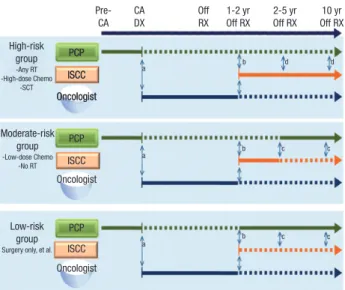
countries, including exclusive responsibility for follow-up care by family physicians, shared care with primary care physicians or nurse practitioners, and specialized multidisciplinary survi- vorship programs (35). Among those, shared care model by both oncologists and primary care physicians has been mostly highlighted as a viable option (35) (Fig. 2) and is also well appli- cable to the Korean healthcare system and culture. Shared care between oncologists and primary care physicians can enhance quality of non-cancer care (17), and also has a positive influ- ence on patients’ attitudes towards the healthcare system.
However, there are challenges in the successful implementa- tion of shared care model in survivorship care. There is limited information about “the best way to share the care” of these pa- tients. In a study which compared expectations for cancer sur- vivorship care among patients and their physicians, expecta- tions were incongruent regarding the role and responsibilities for primary cancer follow-up, cancer screening, and general preventive health (36). Furthermore, survivors were not confi- dent with their primary care physicians’ ability to deliver can- cer-specific survivorship care and worried about poor commu- nication between their oncologists and primary care physicians (37). To improve communication between the physicians, a cancer survivorship care plan including treatment history and follow-up care plan was suggested by the Institute of Medicine and by others (34). However, oncologists felt burdensome to complete it given their busy schedule.
In Korea, an institution-based shared care model was sug- gested as a potential solution given current oncology practices in Korea (13). It was preferred for the following reasons: easy information sharing by electronic medical record, easy access and communication with primary care physicians if necessary, and patients’ preference for being cared for at the same institu- tion where they undergo cancer treatment (13).
Fig. 2. Model for shared care of cancer survivors. Solid line connotes primary respon- sibility; Dashed line connotes secondary responsibility. CA, cancer; DX, diagnosis; Off RX, completion of cancer therapy; PCP, primary care physician; ISCC, integrated sup- portive cancer center. a, cancer diagnosis and planned therapeutic approach; b, can- cer summary (care plan), cancer diagnosis, cancer therapy, surveillance recommen- dations, contact information; c, periodic update with changes in surveillance recom- mendations and new information regarding potential late effects; d, periodic update of survivo’s health for primary care physician’s record.
Pre- CA
CA DX
Off RX
1-2 yr Off RX
2-5 yr Off RX
10 yr Off RX High-risk
group
-Any RT -High-dose Chemo
-SCT
PCP ISCC Oncologist
PCP
a
a
a
b
b
b d
c
c c
c d
ISCC Oncologist
PCP ISCC Oncologist
PCP ISCC Oncologist Moderate-risk
group
-Low-dose Chemo -No RT
Low-risk group
Surgery only, et al.
Fig. 3. Lifetime risk-based cancer survivorship healthcare delivery system.
Providing integrated supportive care for cancer survivors
Providing community-based, integrated supportive care for canver survivors
Lifetime risk-based cancer survivorship healthcare delivery system Initial phase
NCC
(within NCC/RCC)ISCC
· Secondary hospitals
· Primary hospitals
· Health centers
· Social welfare agencies
· Healing & meditation center, et cetra
· Secondary hospitals
· Primary hospitals
· Health centers
· Social welfare agencies
· Healing & meditation center, et cetra
· Secondary hospitals
· Primary hospitals
· Health centers
· Social welfare agencies
· Healing & meditation center, et cetra
Care plan
Local
Link Local
Link Local
Link Oncologist
(Routine F/U) Oncologist
(Routine F/U) Oncologist
(Routine F/U) Oncologist
(Routine F/U) Oncologist
(Routine F/U) Oncologist (Routine F/U)
Care plan
Care
plan Care
plan Care
plan Care
plan
(within NCC/RCC)ISCC ISCC
Designated PCP
Designated PCP
NCC NCC
RCC RCC RCC
Intermediate Final
NATIONAL POLICY FOR CANCER SURVIVORSHIP AND FUTURE CHALLENGES
Since 2010, the cancer policy branch of the National Cancer Control Institute has been developing ‘integrative supportive care service delivery system for cancer survivors’, which is wider in scope than shared care with primary care physicians (Fig. 3).
Composition of integrative supportive care team has been de- fined, and includes professionals for psycho-oncology, rehabil- itation, pain control, nutrition management, social work servic- es, etc. A coordination system has been also established: pri- mary assessment by nurse coordinators, and further evaluation and referral to necessary care by dedicated physicians (i.e. usu- ally family physicians or internists of the cancer center dedicat- ed in survivorship care). Need assessment tools were also de- veloped for both cancer survivors and their caregivers (38, 39).
Demonstration projects for shared care between regional can- cer centers and public health centers are currently ongoing (40).
In the future, community-based models including primary care physicians in the community are to be pursued.
Based on such policy model, integrated supportive cancer survivorship centers were included in the recently announced
‘Cancer Objectives of Healthy People 2020 in Korea’. The Minis- try of Health and Welfare aimed to designate at least 12 inte- grated supportive cancer survivorship centers at regional can- cer centers, and increase its utilization rate up to 10% of cancer patients by the year 2020 (Table 3). By this plan, we expect can- cer survivorship care to be systematically developed and dis- seminated to regional level at a faster rate than ever.
However, there are several challenges for further develop- ment of survivorship care from national public health perspec- tives. First, a legal foundation for cancer survivorship care should be prepared, like the Comprehensive Cancer Care Improve- ment Act in the US. Second, a reimbursement mechanism is necessary for new items of survivorship care, including treat- ment summary, need assessment, transition visit, etc. Third, a care delivery system including community resources such as primary care clinics and public health centers, and an informa- tion system to support this are limited. Fourth, evidence-based clinical and public health guidance based on more precise sta-
tistics and vigorous research on cancer survivorship in Korea is needed. Finally, training of professionals who will be involved in survivorship care would be necessary.
CONCLUSION
Cancer survivors experience various health and psychosocial problems specific to this population during their cancer care trajectory. Several healthcare and policy models are being sug- gested to address these issues, including ‘shared care model’
and ‘integrative supportive care service delivery system for can- cer survivors’. Above all, there needs to be more effort to make the cancer survivorship agenda a reality, attended by policy makers and a wide variety of stakeholders including research- ers, patients, and providers.
DISCLOSURE
The authors have no conflicts of interest to disclose.
REFERENCES
1. Jung KW, Park S, Kong HJ, Won YJ, Boo YK, Shin HR, Park EC, Lee JS.
Cancer statistics in Korea: incidence, mortality and survival in 2006- 2007. J Korean Med Sci 2010; 25: 1113-21.
2. National Cancer Center (Korea). Cancer facts and figures. Goyang: Na- tional Cancer Center, 2012.
3. Mullan F. Seasons of survival: reflections of a physician with cancer. N Engl J Med 1985; 313: 270-3.
4. Kim J, Hahm MI, Park EC, Park JH, Park JH, Kim SE, Kim SG. Economic burden of cancer in South Korea for the year 2005. J Prev Med Public Health 2009; 42: 190-8.
5. Curtis RE, Freedman DM, Ron E, Ries LA, Hacker DG, Edwards BK, Tuc- ker MA, Fraumeni JFJ. New malignancies among cancer survivors: SEER cancer registries, 1973-2000. Bethesda: National Cancer Institute, 2006.
6. Dong C, Hemminki K. Second primary neoplasms in 633,964 cancer patients in Sweden, 1958-1996. Int J Cancer 2001; 93: 155-61.
7. Tabuchi T, Ito Y, Ioka A, Miyashiro I, Tsukuma H. Incidence of metachro- nous second primary cancers in Osaka, Japan: update of analyses using population-based cancer registry data. Cancer Sci 2012; 103: 1111-20.
8. Nielsen SF, Nordestgaard BG, Bojesen SE. Associations between first Table 3. Cancer Objectives of Healthy People 2020 in Korea
Indicators 2005 2008 2020
Reduction in overall cancer death rate (per 100,000 population) 112.2 103.8 78.7
Increase in the overall cancer survival rate (%) 50.8 57.1 67.8 (‘15)
Increase in the awareness of cancer prevention (%) NA 51.7 70.0
Increase in cancer screening rate (%) 40.3 50.7 80.0
Increase in the rate of participation in National Cancer Screening Program (%) 19.6 31.7 70.0
Decrease in regional differences in National Cancer Screening Program (%p) 9.4 8.3 5.0
Designation of integrated supportive cancer survivorship center (number) NA NA 12
Increase in utilization rate of integrated supportive cancer survivorship center among cancer patients (%) NA NA 10.0 NA, not applicable. (Source: Ministry of Welfare and Korean Institute of Health and Social Affairs, 3rd term National Plan for Health Promotion: 2011-2020).
and second primary cancers: a population-based study. CMAJ 2012;
184: E57-69.
9. Schaapveld M, Visser O, Louwman MJ, de Vries EG, Willemse PH, Otter R, van der Graaf WT, Coebergh JW, van Leeuwen FE. Risk of new pri- mary nonbreast cancers after breast cancer treatment: a Dutch popula- tion-based study. J Clin Oncol 2008; 26: 1239-46.
10. Cho J, Guallar E, Hsu YJ, Shin DW, Lee WC. A comparison of cancer screening practices in cancer survivors and in the general population:
the Korean National Health and Nutrition Examination Survey (KN- HANES) 2001-2007. Cancer Causes Control 2010; 21: 2203-12.
11. Shin DW, Kim YW, Oh JH, Kim SW, Chung KW, Lee WY, Lee JE, Lee WC, Guallar E, Cho J. Knowledge, attitudes, risk perception, and cancer screening behaviors among cancer survivors. Cancer 2011; 117: 3850-9.
12. Shin DW, Baik YJ, Kim YW, Oh JH, Chung KW, Kim SW, Lee WC, Yun YH, Cho J. Knowledge, attitudes, and practice on second primary cancer screening among cancer survivors: a qualitative study. Patient Educ Couns 2011; 85: 74-8.
13. Shin DW, Kim Y, Baek YJ, Mo HN, Choi JY, Cho J. Oncologists experience with second primary cancer screening: current practices and barriers and potential solutions. Asian Pac J Cancer Prev 2012; 13: 671-6.
14. Shin DW, Cho J, Kim YW, Oh JH, Kim SW, Chung KW, Lee WY, Lee JE, Guallar E, Lee WC. Efficacy of an educational material on second pri- mary cancer screening practice for cancer survivors: a randomized con- trolled trial. PLoS One 2012; 7: e33238.
15. Shin DW, Nam JH, Kwon YC, Park SY, Bae DS, Park CT, Cho CH, Lee JM, Park SM, Yun YH. Comorbidity in disease-free survivors of cervical cancer compared with the general female population. Oncology 2008;
74: 207-15.
16. Shin DW, Ahn E, Kim H, Park S, Kim YA, Yun YH. Non-cancer mortality among long-term survivors of adult cancer in Korea: national cancer registry study. Cancer Causes Control 2010; 21: 919-29.
17. Earle CC, Neville BA. Under use of necessary care among cancer survi- vors. Cancer 2004; 101: 1712-9.
18. Shin DW, Park JH, Park JH, Park EC, Kim SY, Kim SG, Choi JY. Antihy- pertensive medication adherence in cancer survivors and its affecting factors: results of a Korean population-based study. Support Care Can- cer 2010; 19: 211-20.
19. Kenfield SA, Stampfer MJ, Chan JM, Giovannucci E. Smoking and pros- tate cancer survival and recurrence. JAMA 2011; 305: 2548-55.
20. Parsons A, Daley A, Begh R, Aveyard P. Influence of smoking cessation after diagnosis of early stage lung cancer on prognosis: systematic review of observational studies with meta-analysis. BMJ 2010; 340: b5569.
21. De Bruin-Visser JC, Ackerstaff AH, Rehorst H, Retèl VP, Hilgers FJ. Inte- gration of a smoking cessation program in the treatment protocol for pa- tients with head and neck and lung cancer. Eur Arch Otorhinolaryngol 2012; 269: 659-65.
22. Meyerhardt JA, Giovannucci EL, Holmes MD, Chan AT, Chan JA, Cold- itz GA, Fuchs CS. Physical activity and survival after colorectal cancer diagnosis. J Clin Oncol 2006; 24: 3527-34.
23. Schmitz KH, Courneya KS, Matthews C, Demark-Wahnefried W, Gal- vão DA, Pinto BM, Irwin ML, Wolin KY, Segal RJ, Lucia A, et al. Ameri- can College of Sports Medicine roundtable on exercise guidelines for can- cer survivors. Med Sci Sports Exerc 2010; 42: 1409-26.
24. Chlebowski RT, Blackburn GL, Thomson CA, Nixon DW, Shapiro A, Hoy MK, Goodman MT, Giuliano AE, Karanja N, McAndrew P, et al.
Dietary fat reduction and breast cancer outcome: interim efficacy results from the Women’s Intervention Nutrition Study. J Natl Cancer Inst 2006;
98: 1767-76.
25. Rock CL, Doyle C, Demark-Wahnefried W, Meyerhardt J, Courneya KS, Schwartz AL, Bandera EV, Hamilton KK, Grant B, McCullough M, et al.
Nutrition and physical activity guidelines for cancer survivors. CA Can- cer J Clin 2012; 62: 243-74.
26. Ahn E, Shin DW, Cho SI, Park S, Won YJ, Yun YH. Suicide rates and risk factors among Korean cancer patients, 1993-2005. Cancer Epidemiol Biomarkers Prev 2010; 19: 2097-105.
27. Natoinal Cancer Center (Korea). Recommendations for distress man- agement in cancer patients. Goyang: National Cancer Center, 2009.
28. Eom CS, Shin DW, Kim SY, Yang HK, Jo HS, Kweon SS, Kang YS, Kim JH, Cho BL, Park JH. Impact of perceived social support on the mental health and health-related quality of life in cancer patients: results from a nationwide, multicenter survey in South Korea. Psychooncology 2012.
doi: 10.1002/pon.3133.
29. Park JH, Park EC, Park JH, Kim SG, Lee SY. Job loss and re-employment of cancer patients in Korean employees: a nationwide retrospective co- hort study. J Clin Oncol 2008; 26: 1302-9.
30. Lee MK, Lee KM, Bae JM, Kim S, Kim YW, Ryu KW, Lee JH, Noh JH, Sohn TS, Hong SK, et al. Employment status and work-related difficul- ties in stomach cancer survivors compared with the general population.
Br J Cancer 2008; 98: 708-15.
31. Ahn E, Cho J, Shin DW, Park BW, Ahn SH, Noh DY, Nam SJ, Lee ES, Yun YH. Impact of breast cancer diagnosis and treatment on work-related life and factors affecting them. Breast Cancer Res Treat 2009; 116: 609- 16.
32. Cho J, Smith K, Choi EK, Kim IR, Chang YJ, Park HY, Guallar E, Shim YM. Public attitudes toward cancer and cancer patients: a national sur- vey in Korea. Psychooncology 2012. doi: 10.1002/pon.3041.
33. Shin DW, Kim SY, Cho J, Sanson-Fisher RW, Guallar E, Chai GY, Kim HS, Park BR, Park EC, Park JH. Discordance in perceived needs between patients and physicians in oncology practice: a nationwide survey in Korea. J Clin Oncol 2011; 29: 4424-9.
34. Hewitt M, Greenfield S, Stovall E. From cancer patient to cancer survi- vor: lost in transition. Washington, D.C.: The National Academies Press, 2006.
35. Oeffinger KC, McCabe MS. Models for delivering survivorship care. J Clin Oncol 2006; 24: 5117-24.
36. Cheung WY, Neville BA, Cameron DB, Cook EF, Earle CC. Comparisons of patient and physician expectations for cancer survivorship care. J Clin Oncol 2009; 27: 2489-95.
37. Mao JJ, Bowman MA, Stricker CT, DeMichele A, Jacobs L, Chan D, Armstrong K. Delivery of survivorship care by primary care physicians:
the perspective of breast cancer patients. J Clin Oncol 2009; 27: 933-8.
38. Shim EJ, Lee KS, Park JH, Park JH. Comprehensive needs assessment tool in cancer (CNAT): the development and validation. Support Care Can- cer 2011; 19: 1957-68.
39. Shin DW, Park JH, Shim EJ, Park JH, Choi JY, Kim SG, Park EC. The de- velopment of a comprehensive needs assessment tool for cancer-caregiv- ers in patient-caregiver dyads. Psychooncology 2011; 20: 1342-52.
40. Natoinal Cancer Center (Korea). Development of delivery system for in- tegrated supportive cancer survivor care. Goyang: National Cancer Cen- ter, 2011.