Vol. 13, No. 4, 2010, 235-239 DOI:10.5229/JKES.2010.13.4.235
− 235 −
Electrochemical Behavior of Li 4 Ti 5 O 12 /CNT Composite for Energy Storage
Hong-Il Kim, Jeong-Jin Yang, Han-Joo Kim, Tetsuya Osaka
†, and Soo-Gil Park*
Dept. of Industrial Engineering Chemistry, Chungbuk National University, 410 Seongbong-ro, Heungdeok-ku, Cheong-ju 361-763, Korea
†
Graduate School of Science and Engineering, Waseda University, 3-4-1 Ohkubo, Shinjuku-ku 169-8555, Tokyo, Japan
(Received January 29, 2010 : Accepted February 17, 2010)
Abstract : The Li
4Ti
5O
12/CNT composite is prepared by ultrasound associated sol-gel method.
The prepared composite is characterized by SEM, TEM, XRD and TG analysis, and their elec- trochemical behaviors are investigated by cyclic voltammetry, electrochemical impedance spec- troscopy and charge-discharge test in 1M LiBF
4/PC electrolyte. From the results, it is identified that the Li
4Ti
5O
12nanoparticles coated on CNT surface have regular size with around 10~30 nm and spinel-framework structure. At the current rate of 20C, the discharge capacities of Li
4Ti
5O
12/ CNT composites with CNT contents of 15, 30 and 50 wt% are 57, 63 and 48 mAhg
−1, respectively, which have similar value. The improved electrochemical behavior of the Li
4Ti
5O
12/CNT composite electrode is attributed to the addition of CNT with electronic conductivity.
Keywords : Lithium titanium oxide, CNT, Composite, Conductivity
1. Introduction
The spinel Li
4Ti
5O
12is one of the most promising anode materials for high-power batteries or hybrid capacitors because it has an excellent Li-ion mobility and exhibits no structural change(zero-strain insertion ma- terial) during charge-discharge cycling.
1-4)This material has a theoretical specific capacity of 175 mAhg
−1and exhibits a practical specific capacity as high as 160 mAhg
−1after 100 cycles.
5,6)The flat charge and dis- charge curve of Li
4Ti
5O
12based materials show intercala- tion-deintercalation which takes place at around 1.5 V vs. Li. However, spinel Li
4Ti
5O
12has characteristics of initial capacity loss and poor rate capability due to the low electronic conductivity.
7,8)The spinel Li
4Ti
5O
12used for high performance materials need to maintain capaci- ties as current rates are increased.
To overcome this problem, several research have focused on improving its properties such as synthesis of nanoparticle size or spherical particle,
9-12)substitution
of other metals or metal oxides,
13,14)and composite with conductive carbons.
7,8,15)Especially, conductive carbons based on Li
4Ti
5O
12composite improved its electrochemi- cal behavior greatly with high rate and electronic con- ductivity. The combination material with carbon and Li
4Ti
5O
12has been commonly used as electrode materials but no previous work has been reported the influence of weight ratio between Li
4Ti
5O
12and carbon for high power lithium ion batteries or capacitors. In this work, we use composite materials from nano sized Li
4Ti
5O
12and carbon nanotube (CNT) and its electrochemical behaviors have been investigated with different contents.
2. Experimental
The Li
4Ti
5O
12/CNT composite was prepared by ultra- sound associated sol-gel method. Stoichiometric amount of lithium hydroxide (LiOH, Reagent grade, = 98%, powder) and titanium isopropoxide (Ti[OCH(CH
3)
2]
4, 99.0%) at mole ratio of Li : Ti = 4.5 : 5 were dissolved in 2-methoxy ethanol (CH
3OCH
2CH
2OH, 99.0%), respectively. This mixed solution was magnetically stirred for 1 h at room temperature. Carbon nanotube (CNT,
*E-mail: [email protected]
multi-wall type, Hanwha Nanotech Co., Ltd.) dispersed in 2-methoxy ethanol with different weight ratio was added to mixture solution. The average outer diameter of CNT is 15~20 nm and the length is 10~20 µm. The solution was stirred with 0.5 wt% PVP (poly vinyl pyrrolidone) as dispersant under ultrasound for 4 h.
After then sol solution was dried to powders at 80
oC for 10 h in air atmosphere and the powders were grounded in a zirconium mortar. The obtained powders were calcinated at 850
oC for 5 h in argon atmosphere.
Finally, Li
4Ti
5O
12/CNT composite was obtained. The crystal structure of the composite was characterized by X-ray diffraction using XDS 2000 (Sintag) model with Cu a radiation source. The morphologies of composite materials were observed by a scanning electron micro- scopy (SEM, Hitachi S-2500C) and transmission electron microscope (TEM, Carl Zeiss Libra 120). Amount of CNT in composite was identified by thermo-gravime- try (TG, TA Instruments SDT 2960) analysis with heat- ing rate of 3min
-1from 30 to 900 in air atmosphere.
The electrodes were made of Li
4Ti
5O
12and Li
4Ti
5O
12/ CNT composite (80 wt%) as an active material, carbon black (10 wt%) as an electric conductor and CMC, SBR and PTFE (2 wt%, 4 wt% and 4 wt%) as a binder on an copper foil, respectively. Li disk was used as the counter and reference electrodes. Then this electrode was dried at vacuum at 120
oC for 24 h. It was fabricated for coin cell CR2016 model to measure electrochemical behaviors in 1 M LiBF
4/PC electrolyte. And the electro- chemical behaviors were investigated by using cyclic voltammetry, AC impedance spectroscopy (Iviumstat) and charge-discharge test (Wonatech, WBCS3000).
3. Results and Discussion
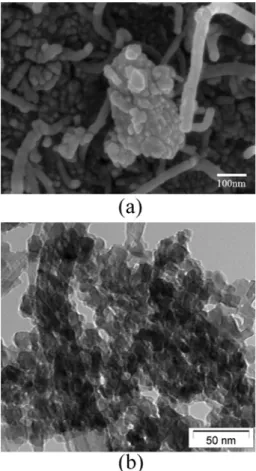
Fig. 1 presents SEM and TEM images of Li
4Ti
5O
12/ CNT composite. Fig. 1(a) shows the surface morphology of Li
4Ti
5O
12/CNT composite. As it shows, CNT had a part of straight form with thick outer diameter and Li
4Ti
5O
12nanoparticles are partly-aggregated on the surface of CNT. TEM image in Fig. 1(b) shows that Li
4Ti
5O
12particles had regular size with around 10~30 nm.
Fig. 2 shows the X-ray diffraction (XRD) patterns of Li
4Ti
5O
12and Li
4Ti
5O
12/CNT composite. The peaks located at 25.7
oand 42.5
ocould be identified to the reflection from the (002) and (100) planes of CNT and the additional peaks observed at 18.4
o, 35.6
o, 37.3
o, 44.3
o, 47.3
o, 57.2
o, 62.8
o, 66.1
o, 74.3
o, 75.3
oand 79.3
oare corresponding to (111), (311), (222), (400), (331), (511), (440), (531), (533), (622) and (444) planes of spinel structure Li
4Ti
5O
12(JCPDS no. 21-1272). A broaden and Fig. 1. (a) SEM images and (b) TEM images of Li
4Ti
5O
12/ CNT (15 wt%) composite.
Fig. 2. X-ray diffraction patterns (Cu K α ) of pristine Li
4Ti
5O
12(a) and Li
4Ti
5O
12/CNT (15 wt%) composite (b).
weaken peaks imply that Li
4Ti
5O
12/CNT composite belong to low-dimensional state. No peak of other phases was observed, which indicates that the com- posite are well crystallized.
Fig. 3 shows the TG curve of Li
4Ti
5O
12/CNT com- posite with a heating rate of 3min
−1from room temper- ature to 900
oC in air atmosphere. From the result, Li
4Ti
5O
12/CNT composite exhibit 15, 30 and 50 wt% of CNT contents, respectively. No weight loss or reaction was observed above 600
oC on the curves, indicating that at the sintering temperature of 850
oC pure phase Li
4Ti
5O
12nanoparticle can be formed. From above results, that the Li
4Ti
5O
12nanoparticles composited on the sur- face of CNT were successfully confirmed.
Fig. 4 shows the cyclic voltammogram obtained in the potential range of 0.8 to 2.5 V vs. Li disk as a refer-
ence electrode. In the voltammograms of the Li
4Ti
5O
12and Li
4Ti
5O
12/CNT composite electrode, couples of reversible redox peaks at 1.8 V/1.45 V were observed in 1 M LiBF
4/PC electrolyte at a scan rate of 1 mVs
−1, respectively. Any irreversible peak was not observed in the potential range of 0.8 to 2.5 V. The couple of peaks at 1.8V/1.45V were attributed to the redox reaction of Ti
4+/Ti
3+.
15)When Li
4Ti
5O
12nanoparticles were depos- ited on CNT, current density of Li
4Ti
5O
12/CNT composite electrode was slightly decreased than pristine Li
4Ti
5O
12particle with decreasing Li
4Ti
5O
12contents.
Fig. 5 shows Nyquist plots of the Li
4Ti
5O
12/CNT com- posite electrodes in the frequency range 100 kHz to 10 mHz with CNT contents at the voltage of 1.56, respectively. The plot is composed of a semicircle at high frequency and an oblique straight line at low frequency.
The resistance R
s, which corresponds to the electrolyte resistance, was decreased with increasing CNT contents.
The semicircle reflects the electrochemical reaction resistance and the double layer capacity of the electrode.
The comparing with pristine Li
4Ti
5O
12electrode, charge- transfer resistances R
ctof Li
4Ti
5O
12/CNT composite electrodes were decreased respectively with increasing CNT contents.
Fig. 6 shows the charge-discharge curves for the Li
4Ti
5O
12/CNT composite electrode at a current density of 1C at cut-off voltages 2.5~0.8 V. It clearly shows a curved line with lithium insertion reaction. Its reaction follows below.
16):
Fig. 3. TG curves of Li
4Ti
5O
12/CNT composite with CNT contents at air atmosphere. Temperature range: 30~900
oC, 3 min
−1.
Fig. 4. Cyclic voltammograms of Li
4Ti
5O
12(a) and Li
4Ti
5O
12/ CNT (15 wt%) composite electrode (b) at 1 mVs
−1in 1 M LiBF
4/PC electrolyte.
Fig. 5. Niquist plots of Li
4Ti
5O
12(a), Li
4Ti
5O
12/CNT (15 wt%)
(b), Li
4Ti
5O
12/CNT (30wt%) (c) and Li
4Ti
5O
12/CNT (50 wt%)
(d) composite in 1M LiBF
4/PC electrolyte. Frequency range :
100 kHz~10 mHz.
Li
4Ti
5O
12+ 3Li
++ 3e
−→ Li
7Ti
5O
12(1)
The discharge capacity of the Li
4Ti
5O
12electrode was similar to theoretical capacity of Li
4Ti
5O
12. When CNT content of Li
4Ti
5O
12/CNT composite electrode was increased, discharge capacity of Li
4Ti
5O
12/CNT compos- ite electrode was decreased from 152 mAhg
−1(Li
4Ti
5O
12) to 77 mAhg
−1(Li
4Ti
5O
12-50 wt%). When Li
4Ti
5O
12con- tents was decreased, specific capacity of Li
4Ti
5O
12/CNT composite electrode was decreased. The calculated Li
4Ti
5O
12’s capacities based on Li
4Ti
5O
12contents vs.
Li
4Ti
5O
12/CNT composite entire weight were shown (a) line in Fig. 7. The Li
4Ti
5O
12/CNT’s discharge specific capacity is very close to theoretical capacity of Li
4Ti
5O
12(175 mAhg
−1). It showed that Li
4Ti
5O
12nano- particle had reversible capacity. Generally, the large irreversible capacity of CNT is attributed to electrolyte reduction and formation of a solid electrolyte interface (SEI) layer on the carbon surface. But the irreversible capacity of Li
4Ti
5O
12/CNT is relatively lower than that of CNT since the Li
4Ti
5O
12suppress the formation of surface films.
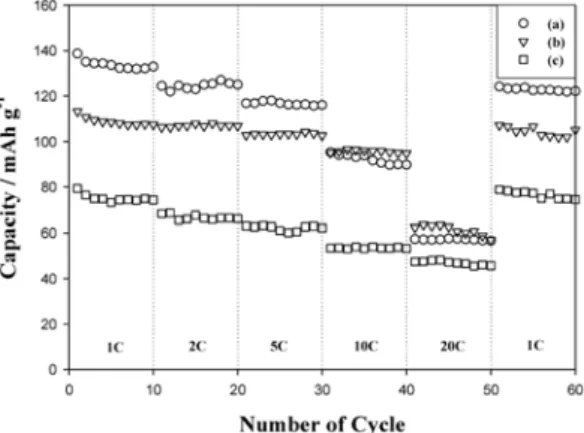
Fig. 8 shows the discharge capacity of Li
4Ti
5O
12/CNT composite electrode during cycling at different current rates in the voltage range of 2.5~0.8 V. At increasing current rate, capacity of composite electrode was gradu- ally decreased, but when the relative contents of CNT was increased on Li
4Ti
5O
12/CNT composite the capac- ities loss of composite were decreased. At the current rate of 20C, the discharge capacities of CNT contents with 15, 30 and 50 wt% are 57, 63 and 48 mAhg
−1,
respectively, which have similar value with each other.
It was attributed to electronic conductivity’s enhancement of Li
4Ti
5O
12/CNT composite electrode by increasing CNT contents. As the result, we were identified that the electrochemical behavior of Li
4Ti
5O
12/CNT compos- ite electrode was improved.
4. Conclusion
The Li
4Ti
5O
12/CNT composite was prepared by ultra- sound associated sol-gel method. We were identified that the Li
4Ti
5O
12nanoparticles had regular size with around 10~30 nm and showed spinel-framework struc- ture. At increasing current rate, capacity of composite electrode was gradually decreased but at increasing CNT contents, capacities losses were decreased. The im- Fig. 6. Charge and discharge curves of Li
4Ti
5O
12(a),
Li
4Ti
5O
12/CNT (15 wt%) (b), Li
4Ti
5O
12/CNT (30 wt%) (c) and Li
4Ti
5O
12/CNT (50 wt%) (d) composite at 1C in 1 M LiBF
4/PC electrolyte.
Fig. 7. Capacity dependence of Li
4Ti
5O
12/CNT composite entire weight (a) vs. Li
4Ti
5O
12contents (b).
Fig. 8. Cycle performance of Li
4Ti
5O
12/CNT (15 wt%) (a),
Li
4Ti
5O
12/CNT (30 wt%) (b) and Li
4Ti
5O
12/CNT (50 wt%)
(c) composite with different current rate.
proved electrochemical behavior of the Li
4Ti
5O
12/CNT composite electrode was attributed to the addition of CNT with electronic conductivity. The synthesized Li
4Ti
5O
12/ CNT composite electrode shows a promising candidate for electrode materials used in high power lithium ion batteries or capacitors.
Acknowledgement
This work is the outcome of a Manpower Devel- opment Program for Energy & Resources and the Chungbuk Local Industrial Tech. & Development Project(No. 70006864) supported by the Ministry of Knowledge and Economy.
References
1. L. Cheng, H. J. Liu, J. J. Zhang, H. M. Xiong, and Y. Y.
Xia, ‘ Nanosized Li
4Ti
5O
12prepared by molten salt method as an electrode material for hybrid electrochemical super- capacitors ’ J. Electrochem. Soc., 153, A1472 (2006).
2. K. Ariyoshi, S. Yamamoto, and T. Ohzuku, ‘ Three-volt lithium-ion battery with Li[Ni
1/2Mn
3/2]O
4and the zero- strain insertion material of Li[Li
1/3Ti
5/3]O
4’ J. Power Sources, 119-121, 959 (2003).
3. T. Ohzuku, A. Ueda, and N. Yamamoto, ‘ Zero-Strain Insertion Material of Li[Li
1/3Ti
5/3]O
4for Rechargeable Lithium Cells ’ J. Electrochem. Soc., 142, 1431 (1995).
4. A. D. Pasquier, A. Laforgue, and P. Simon, ‘ Li
4Ti
5O
12/poly (methyl)thiophene asymmetric hybrid electrochemical device ’ J. Power Sources, 125, 95 (2004).
5. K. Nakahara, R. Nakajima, T. Matsushima, and H. Majima,
‘ Preparation of particulate Li
4Ti
5O
12having excellent characteristics as an electrode active material for power storage cells ’ J. Power Sources, 117, 131 (2003).
6. Y. Bai, F. Wang, F. Wu, C. Wu, and L. Bao, ‘ Influence of composite LiCl-KCl molten salt on microstructure and
electrochemical performance of spinel Li
4Ti
5O
12’ Elect- rochim. Acta, 54, 322 (2008).
7. J. Huang and Z. Jiang, ‘ The preparation and characterization of Li
4Ti
5O
12/carbon nano-tubes for lithium ion battery ’ Electrochim. Acta, 53, 7756 (2008).
8. J. Gao, J. Ying, C. Jiang, and C. Wan, ‘ High-density spherical Li
4Ti
5O
12/C anode material with good rate capability for lithium ion batteries ’ J. Power Sources, 166, 255 (2007).
9. A. Guerfi, S. Sévigny, M. Lagacé, P. Hovington, K. Kinoshita, and K. Zaghib, ‘ Nano-particle Li
4Ti
5O
12spinel as electrode for electrochemical generators ’ J. Power Sources, 119- 121, 88 (2003).
10. M. Venkateswarlu, C. H. Chen, J. S. Do, C. W. Lin, T. C.
Chou, and B. J. Hwang, ‘ Electrochemical properties of nano-sized Li
4Ti
5O
12powders synthesized by a sol-gel process and characterized by X-ray absorption spectro- scopy ’ J. Power Sources, 146, 204 (2005).
11. J. Gao, C. Jiang, J. Ying, and C. Wan, ‘ Preparation and characterization of high-density spherical Li
4Ti
5O
12anode material for lithium secondary batteries ’ J. Power Sources, 155, 364 (2006).
12. K. Kanamura, T. Chiba, and K. Dokko, ‘ Preparation of Li
4Ti
5O
12spherical particles for rechargeable lithium batteries ’ J. Eur. Ceram. Soc., 26, 577 (2006).
13. K. Mukai, K. Ariyoshi, and T. Ohzuku, ‘ Comparative study of Li[CrTi]O
4, Li[Li
1/3Ti
5/3]O
4and Li
1/2Fe
1/2[Li
1/2Fe
1/2