뇌졸중 환자의 다리 기능에 대한 경두개직류자극의 효과:
국내 연구의 메타분석
이정우
1ǂ임지선
21ǂ
광주여자대학교 물리치료학과 교수,
2광주여자대학교 물리치료학과 학생
Effects of Transcranial Direct Current Stimulation on Lower Extremity Function of Stroke Patients : A meta-analysis of domastic research
Jeong-Woo Lee, PT, Ph.D
1ǂJi-Sun Lim, BSc
21ǂ
Dept. of Physical Therapy, Kwangju Women’s University, Professor
2
Dept. of Physical Therapy, Kwangju Women’s University, Student
Abstract
Purpose : The purpose of this meta-analysis was to evaluate the effects of transcranial direct current stimulation on the lower extremity function of stroke patients.
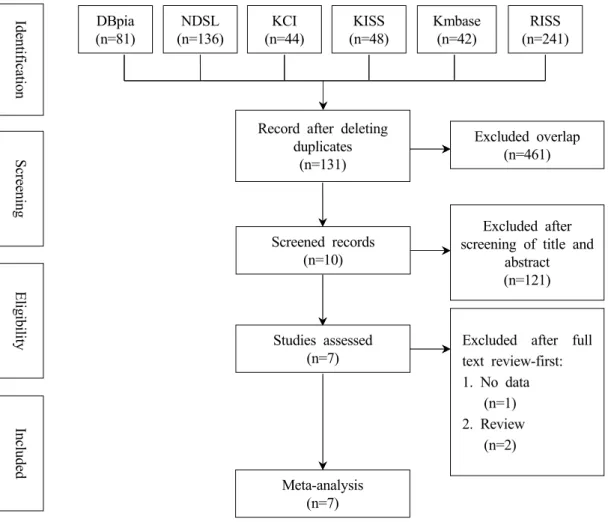
Methods : Domestic data were gathered from studies that conducted clinical trials associated with transcranial direct current stimulation and its impact on lower extremity function of stroke patients. A total of 592 studies published between 2012 and 2020 were identified, with 7 studies satisfying the inclusion data. The studies consisted of patient, intervention, comparison, and outcome (PICO) data. The search outcomes were items associated with muscle activity, balance, muscle strength and walking ability.
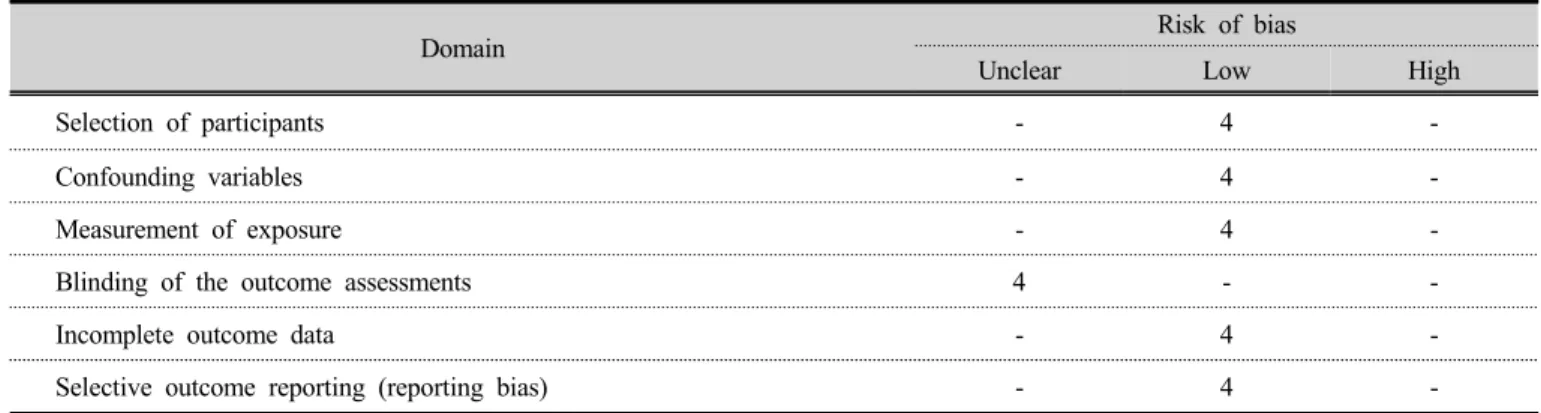
Cochrane risk of bias (ROB) was used to evaluate the quality of 3 randomized control trials. The quality of 4 non-randomized control trials was evaluated using risk of bias assessment tool for non-randomized studies (RoBANS). Effect sizes in this study were computed as the corrected standard mean difference (SMD). A random-effect model was used to analyze the effect size because of the high heterogeneity among the studies. Egger’s regression and ‘trim-and-fill’ tests were carried out to analyze the publishing bias.
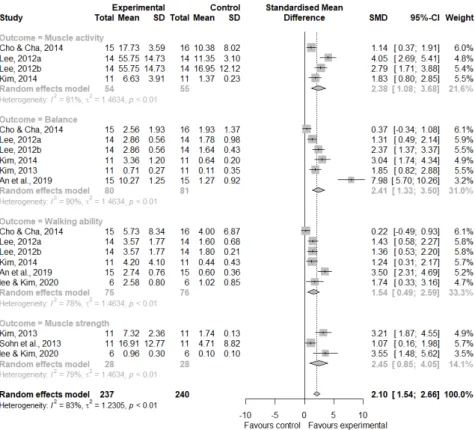
Results : The following factors had a large total effect size (Hedges’s g=2.10, 95 %CI=1.54~2.66) involving transcranial direct current stimulation on stroke patients: muscle activity (Hedges’s g=2.38, 95 %CI=1.08~3.68), balance (Hedges’s g4=2.41, 95
%CI=1.33~3.60), walking ability (Hedges’s g=1.54, 95 %CI=0.49~2.59), and muscle strength (Hedges’s g=2.45, 95 % CI:
0.85~4.05). Egger’s regression test showed that the publishing bias had statistically significant differences but ‘trim-and-fill’ test showed that there was still statistical difference.
Conclusion : This study provides evidence for the effectiveness of transcranial direct current stimulation on the lower extremity in terms of muscle activity, balance, walking ability, and muscle strength in stroke patients. However, due to the low quality of studies and high heterogeneity factors, the results of our study should be interpreted cautiously.
1)
Key Words : lower extremity function, meta-analysis, stroke, transcranial direct current stimulation
ǂ