Investigation of the association between
orthodontic treatment and temporomandibular joint pain and dysfunction in the South Korean population
Objective: This study investigated the relationship between orthodontic treatment and temporomandibular disorders (TMD) in South Korean population.
Methods: This study obtained data from the 2012 Korean National Health and Nutrition Examination Survey. The final sample size was 5,567 participants who were ≥ 19 years of age. Logistic regression analysis was performed to evaluate the relationship between orthodontic treatment and TMD. Results: Participants who underwent orthodontic treatment showed higher educational level, lower body mass index, reduced chewing difficulty, and reduced speaking difficulty.
The adjusted odds ratios (ORs) and their 95% confidence intervals (CIs) for orthodontic treatment and TMD were 1.614 (1.189–2.190), 1.573 (1.162–2.129) and 1.612 (1.182–2.196) after adjusting for age, sex and psychosocial factors.
Adjusted ORs and their 95% CIs for orthodontic treatment and clicking were 1.778 (1.289–2.454), 1.742 (1.265–2.400) and 1.770 (1.280–2.449) after adjusting for confounding factors. However, temporomandibular joint pain and functional impairment was not associated with orthodontic treatment.
Conclusions: Temporomandibular joint pain and dysfunction was not associated with orthodontic treatment.
[Korean J Orthod 2019;49(3):181-187]
Key words: Cross-sectional study, Orthodontic treatment, Temporomandibular disorders, Clicking
Hye-Young Sima Hee-Sun Kima Da-Un Junga Ho Leea Yoon-Sic Hana Kyungdo Hanb Kyoung-In Yunc
aDepartment of Dentistry, SMG-SNU Boramae Medical Center, Seoul, Korea
bDepartment of Biostatistics, College of Medicine, The Catholic University of Korea, Seoul, Korea
cDepartment of Oral and Maxillofacial Surgery, The Catholic University of Korea, Yeouido St. Mary’s Hospital, Seoul, Korea
Received November 19, 2018; Revised December 17, 2018; Accepted January 11, 2019.
Corresponding author: Kyoung-In Yun.
Clinical Associate Professor, Department of Oral and Maxillofacial Surgery, The Catholic University of Korea, Yeouido St. Mary’s Hospital, 10 63-ro, Yeongdeungpo-gu, Seoul 07345, Korea.
Tel +82-2-3779-1319 e-mail [email protected]
How to cite this article: Sim HY, Kim HS, Jung DU, Lee H, Han YS, Han K, Yun KI.
Investigation of the association between orthodontic treatment and temporomandibular joint pain and dysfunction in the South Korean population. Korean J Orthod 2019;49:181-187.
© 2019 The Korean Association of Orthodontists.
This is an Open Access article distributed under the terms of the Creative Commons Attribution Non-Commercial License (http://creativecommons.org/licenses/by-nc/4.0) which permits unrestricted non-commercial use, distribution, and reproduction in any medium, provided the original work is properly cited.
pISSN 2234-7518 • eISSN 2005-372X https://doi.org/10.4041/kjod.2019.49.3.181
INTRODUCTION
Temporomandibular disorders (TMD) are defined as clinical syndromes characterized by pain and dysfunc- tion of the temporomandibular joint (TMJ) and related masticatory muscles.1 Many factors have been suggested to cause TMD, such as unstable occlusion, psychologi- cal factors, and genetic predisposition.2 Among the po- tential factors, there has been considerable controversy regarding the relationship between occlusal interference and TMD; this has led to questions regarding whether orthodontic treatment is associated with TMD. Notably, the association between orthodontic treatment and TMD remains a controversial issue. Some clinicians have re- ported that occlusal factors, including orthodontic treat- ment, are not related to the presence of TMD.3 Other authors have reported that orthodontic treatment is re- lated to the presence of signs and symptoms of TMD.4,5 Importantly, most orthodontic patients are children and adolescents; the periods in which they undergo orth- odontic treatment coincide with the periods that exhibit the greatest prevalence of TMD. Most orthodontic pa- tients are women, in whom TMD is more common. Such age- and gender-related coincidences cause difficulty in defining the relationship between orthodontic treatment and TMD; analyses of the association between TMD and orthodontic treatment should adjust for age- and gender-related effects. However, most previous studies have not consider the effects of such confounding fac- tors and did not target representative populations.
The purpose of the present study was to investigate the relationship between a history of orthodontic treat- ment and the presence of TMD, using National Health Data, and to analyze the results while adjusting for con- founding factors.
MATERIALS AND METHODS
Study population
The data analyzed in this study were from the 2012 Korean National Health and Nutrition Examination Sur- vey (KNHANES). The KNHANES is a nationwide survey conducted by the Division of Chronic Disease Surveil- lance at the Korean Centers for Disease Control and Pre- vention. This survey is conducted once per year for the entire population. All participants signed an informed consent form. The survey comprised health interviews, health examinations, and a nutrition survey. Trained interviewers performed face-to-face interviews with a structured questionnaire. Trained and calibrated exam- iners inspected the physical status of each participant.
In this survey, a total of 8,057 participated; the overall participation rate was 80.8%. The participant rate was 79.2% for the health interview and examination portion.
Exclusion criteria for this study were age < 19 years (1,765 participants) and missing values in the health as- sessment or questionnaires (725 participants). The final sample size was 5,567 participants.
Variables
Clinical and laboratory data were obtained by use of questionnaires and clinical examinations. Higher educa- tion levels were defined as completion of high school or further education. Household income earners in the lowest quartile were classified as low-income group.
Mild-to-moderate alcohol drinkers were those who had
< 30.0 g alcohol/day. Regular exercise was defined as physical activity performed at least three times per week for at least 20 minutes per session.
Body mass index (BMI) was calculated as weight in kg, divided by height in m2. Waist circumference was measured at the narrowest point between the lower border of the rib cage and the iliac crest. Metabolic syndrome was defined in accordance with the American Heart Association/National Heart, Lung, and Blood In- stitute Scientific Statement criteria for Asians. Metabolic syndrome was diagnosed by three or more of the fol- lowing criteria: 1) waist circumference ≥ 90 cm in men or ≥ 80 cm in women; 2) fasting triglyceride ≥ 150 mg/
dL or use of lipid-lowering medication; 3) high density lipoprotein cholesterol < 40 mg/dL in men or < 50 mg/
dL in women or use of cholesterol-lowering medication;
4) blood pressure ≥ 130/85 mm Hg or use of antihyper- tensive medication; and 5) fasting blood glucose ≥ 100 mg/dL or current use of anti-diabetic medication.
Subjective mental stress rate, suicidal thoughts, and diagnosis of depression were selected as psychological variables. Subjective mental stress rate was classified as high (Likert scale 1, 2) and low (Likert scale 3, 4), based on questionnaires that used a 4-point Likert scale, from 1 (very severe) to 4 (almost never). The participants also responded “yes” or “no” to the following questions:
“Have you ever thought about suicide?” and “Are you diagnosed with depression by your doctor?”
Chewing difficulty and speaking difficulties were evaluated by using a yes/no questionnaire. A history of orthodontic treatment was evaluated by using a yes/no questionnaire. All TMD examinations were performed by trained and calibrated dentists. TMD signs and symp- toms were assessed in accordance with the criteria of the World Health Organization: 1) TMJ clicking; 2) ten- derness of the anterior temporal and/or masseter muscle areas; and 3) reduced jaw mobility. Clicking was defined as an audible or palpable TMJ sound. Tenderness was defined by using two-finger pressure and was measured twice at the thickest muscle area. Reduced jaw mobility was defined as < 30 mm, or less than three-finger width of inter-incisal distance. TMD was defined as the pres-
ence of at least one of the above signs or symptoms,
once or more per week, within the most recent 1 year. Statistical analysis
All data are presented as mean ± standard errors or percentage. Logistic regression analyses were used to evaluate associations between orthodontic treatment
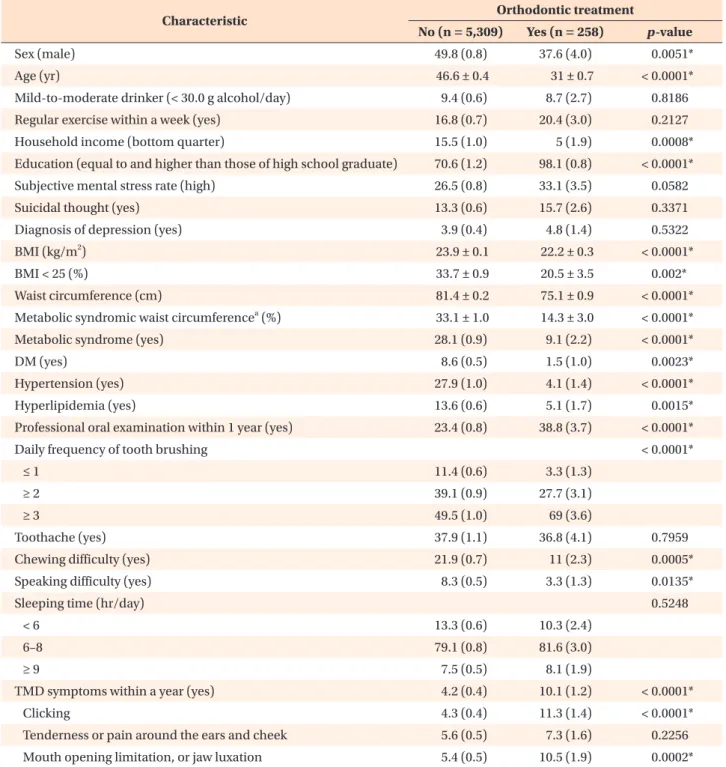
Table 1. Characteristics of the study population
Characteristic Orthodontic treatment
No (n = 5,309) Yes (n = 258) p-value
Sex (male) 49.8 (0.8) 37.6 (4.0) 0.0051*
Age (yr) 46.6 ± 0.4 31 ± 0.7 < 0.0001*
Mild-to-moderate drinker (< 30.0 g alcohol/day) 9.4 (0.6) 8.7 (2.7) 0.8186
Regular exercise within a week (yes) 16.8 (0.7) 20.4 (3.0) 0.2127
Household income (bottom quarter) 15.5 (1.0) 5 (1.9) 0.0008*
Education (equal to and higher than those of high school graduate) 70.6 (1.2) 98.1 (0.8) < 0.0001*
Subjective mental stress rate (high) 26.5 (0.8) 33.1 (3.5) 0.0582
Suicidal thought (yes) 13.3 (0.6) 15.7 (2.6) 0.3371
Diagnosis of depression (yes) 3.9 (0.4) 4.8 (1.4) 0.5322
BMI (kg/m2) 23.9 ± 0.1 22.2 ± 0.3 < 0.0001*
BMI < 25 (%) 33.7 ± 0.9 20.5 ± 3.5 0.002*
Waist circumference (cm) 81.4 ± 0.2 75.1 ± 0.9 < 0.0001*
Metabolic syndromic waist circumferencea (%) 33.1 ± 1.0 14.3 ± 3.0 < 0.0001*
Metabolic syndrome (yes) 28.1 (0.9) 9.1 (2.2) < 0.0001*
DM (yes) 8.6 (0.5) 1.5 (1.0) 0.0023*
Hypertension (yes) 27.9 (1.0) 4.1 (1.4) < 0.0001*
Hyperlipidemia (yes) 13.6 (0.6) 5.1 (1.7) 0.0015*
Professional oral examination within 1 year (yes) 23.4 (0.8) 38.8 (3.7) < 0.0001*
Daily frequency of tooth brushing < 0.0001*
≤ 1 11.4 (0.6) 3.3 (1.3)
≥ 2 39.1 (0.9) 27.7 (3.1)
≥ 3 49.5 (1.0) 69 (3.6)
Toothache (yes) 37.9 (1.1) 36.8 (4.1) 0.7959
Chewing difficulty (yes) 21.9 (0.7) 11 (2.3) 0.0005*
Speaking difficulty (yes) 8.3 (0.5) 3.3 (1.3) 0.0135*
Sleeping time (hr/day) 0.5248
< 6 13.3 (0.6) 10.3 (2.4)
6–8 79.1 (0.8) 81.6 (3.0)
≥ 9 7.5 (0.5) 8.1 (1.9)
TMD symptoms within a year (yes) 4.2 (0.4) 10.1 (1.2) < 0.0001*
Clicking 4.3 (0.4) 11.3 (1.4) < 0.0001*
Tenderness or pain around the ears and cheek 5.6 (0.5) 7.3 (1.6) 0.2256
Mouth opening limitation, or jaw luxation 5.4 (0.5) 10.5 (1.9) 0.0002*
Values are presented as mean ± standard error for continuous variables, or as proportion (standard error) for categorical variables.
BMI, Body mass index; DM, diabetes mellitus, TMD, temporomandibular disorders.
aMetabolic syndromic waist is designated as ≥ 90 cm in men and ≥ 80 cm in women.
*p < 0.05.
and TMD. Regression analyses were performed in accor- dance with KNHANES statistical guidelines. Odds ratios (ORs) and 95% confidence intervals (CIs) were estimated after adjustment for potential confounders.
Four multiple regression models were used. Model 1 was not adjusted. Model 2 was adjusted for age, while Model 3 was adjusted for age and sex because TMD is more prevalent in young female than in male. Model 4 was adjusted for the variables in Model 3, as well as income, education, subjective mental stress rate, suicidal thoughts, and diagnosis of depression; this approach was used because psychological problems have been suggested to cause TMD. Income and education lev- els were also regarded as confounding factors because orthodontically treated populations have a higher socio- economic status.
SAS version 9.2 (SAS Institute Inc., Cary, NC, USA) was used for statistical analysis and p < 0.05 was considered to indicate statistically significant differences.
RESULTS
The mean age of the orthodontic treatment group was lower than that of the group without orthodontic treatment (Table 1). Most participants in the orthodon- tic treatment group were female (62.4%). Those in the orthodontic treatment group had lower age, lower BMI, smaller waist circumference, reduced incidence of metabolic syndrome, and less difficulty when chew- ing and speaking. They also exhibited higher levels of both education and household income. TMD symptoms within the most recent 1 year were more frequent in the orthodontic treatment group, when no regression analy- sis was performed. Clicking and functional impairments significantly differed between the orthodontic treatment group and the group without orthodontic treatment.
However, the presence of tenderness or pain around the ears and cheeks did not differ between the groups.
Table 2 shows adjusted ORs and their 95% CIs. For orthodontic treatment and TMD, adjusted ORs and their 95% CIs were 1.614 (1.189–2.190), 1.573 (1.162–2.129), and 1.612 (1.182–2.196) for Models 2, 3, and 4, respec-
Table 2. Adjusted OR (95% CI) of orthodontic treatment in the multivariate logistic regression model
OR (95% CI) p-value
Model 1
TMD 2.536 (1.889–3.405) < 0.0001*
Clicking 2.817 (2.062–3.847) < 0.0001*
Tenderness or pain around the ears and cheek 1.328 (0.841–2.097) 0.2233 Mouth opening limitation, or jaw luxation 2.079 (1.398–3.092) 0.0003*
Model 2
TMD 1.614 (1.189–2.190) 0.0021*
Clicking 1.778 (1.289–2.454) 0.0005*
Tenderness or pain around the ears and cheek 1.043 (0.661–1.644) 0.8577 Mouth opening limitation, or jaw luxation 1.201 (0.797–1.810) 0.3825 Model 3
TMD 1.573 (1.162–2.129) 0.0033*
Clicking 1.742 (1.265–2.400) 0.0007*
Tenderness or pain around the ears and cheek 0.994 (0.632–1.563) 0.9787 Mouth opening limitation, or jaw luxation 1.142 (0.754–1.730) 0.5321 Model 4
TMD 1.612 (1.182–2.196) 0.0025*
Clicking 1.770 (1.280–2.449) 0.0006*
Tenderness or pain around the ears and cheek 0.978 (0.607–1.576) 0.9273 Mouth opening limitation, or jaw luxation 1.118 (0.734–1.704) 0.6032
Model 1 was not adjusted; Model 2 was adjusted for age; Model 3 was adjusted for age and sex; Model 4 was adjusted for age, sex, income, education, subjective mental stress rate, suicidal thoughts, and diagnosis of depression.
OR, Odds ratio; CI, confidence interval; TMD, temporomandibular disorders.
*p < 0.05.
tively (p < 0.05). Adjusted ORs and their 95% CIs for orthodontic treatment and clicking were 1.778 (1.289–
2.454), 1.742 (1.265–2.400), and 1.770 (1.280–2.449) for Models 2, 3, and 4, respectively (p < 0.05). Adjusted ORs and their 95% CIs in orthodontic treatment and tenderness or pain were 1.043 (0.661–1.644), 0.994 (0.632–1.563), and 0.978 (0.607–1.576) for Models 2, 3, and 4, respectively (p > 0.05). Adjusted ORs and their 95% CIs in orthodontic treatment and mouth opening limitation were 1.201 (0.797–1.810), 1.142 (0.754–
1.730), and 1.118 (0.734–1.704) for Models 2, 3, and 4, respectively (p > 0.05). These results indicate that TMJ clicking was more frequent in the orthodontic treatment group; however, TMJ pain or dysfunction did not show any difference between the orthodontic treatment group and the group without orthodontic treatment.
DISCUSSION
This study evaluated the association between orth- odontic treatment and TMD in a national sample of the South Korean population. The results indicate that orthodontic treatment was associated with TMJ click- ing, but was not associated with tenderness or pain and functional impairment of the TMJ.
The American Association of Dental Research defines TMD as a group of musculoskeletal and neuromuscular conditions involving the TMJ, masticatory muscles, and other associated tissues.6 The most common symptoms of TMD are TMJ sounds, pain, and limited mouth open- ing. However, TMJ clicking is used to screen for TMJ intra-articular disorders.7,8 Disc displacement with reduc- tion without limited opening has not been considered as a symptom requiring treatment.7,8 TMJ clicking is a clinically normal condition.8,9
In the present study, the orthodontic treatment group showed higher ORs and corresponding 95% CIs in TMD.
Hwang and Park5 also reported similar results and con- cluded that a history of orthodontic treatment could be related to increased symptoms of TMD. However, care must be taken when interpreting these results. The present subgroup analysis showed that TMJ pain or dys- function was not associated with orthodontic treatment.
Moreover, the present subgroup analysis suggested that higher ORs in TMD seem to reflect a higher prevalence of TMJ clicking in the orthodontic treatment group.
However, Hwang and Park5 did not perform any sub- group analysis. Therefore, it is inappropriate to conclude that orthodontic treatment is related to TMD without any subgroup analysis.
The orthodontic treatment group showed a higher prevalence of TMJ clicking in the present study. There are several possible explanations for this result. First, greater prevalence of TMJ clicking in the orthodontic
treatment group may be associated with the partici- pants’ states of malocclusion before orthodontic treat- ment. TMD has been a topic of interest in dentistry, especially with regard to orthodontics and malocclusion.
Various studies have been performed to determine rela- tionships between TMJ and malocclusion. Some studies have shown that children with malocclusion, such as a deep bite and unilateral crossbite, tended to experience additional symptoms of TMD with increased age.3,10 Other clinical studies showed that the mean overbite of the group with TMJ clicking was greater than that of the group without clicking.11 Furthermore, subjects with Class II malocclusion showed increased rates of TMD among orthodontic treatment patients.12 Similarly, girls with normal occlusion showed reduced prevalence of TMJ clicking, compared to girls with Class II maloc- clusion who had or had not received orthodontic treat- ment.13 However, most orthodontists have indicated that orthodontic treatment does not increase or decrease TMD signs and symptoms, despite the association of malocclusion with TMD.14,15 Some studies have reported that TMJ clicking was not reduced after treatment for TMD.16,17 The results of the present study suggested that patients with malocclusion and malocclusion-related TMJ clicking might seek orthodontic treatment; how- ever, their TMJ clicking was not affected by orthodontic treatment.
Second, the increased prevalence of TMJ clicking in the orthodontic treatment group may be associated with the age and sex of the patients. Most patients who visit orthodontic clinics are adolescents and young females.
The percentage of male patients in the orthodontic treatment group was lower than in the group without orthodontic treatment in the present study. Some stud- ies reported that TMJ clicking increased with age until adulthood.18-20 A recent longitudinal study reported that TMJ clicking increased by 3.3-fold in individuals under 40 years of age.21 In the present study, the mean age of participants in the orthodontic treatment group was 31 years, while that of the non-orthodontic treatment group was 47 years. Accordingly, the age group more affected by TMJ clicking might seek orthodontic treat- ment; this phenomenon might be reflected in this result.
Third, occlusal interference during orthodontic treat- ment may be related to the increased prevalence of TMJ clicking in the orthodontic treatment group, although the effects of occlusal interference on TMJ and masti- cator systems are controversial. Occlusal interference is inevitable during orthodontic treatment. TMJ clicking has been reported as a result of occlusal interference, especially due to lateral deviation between retruded and intercuspal positions.22,23 However, some patients who exhibited TMD signs and symptoms that resulted from occlusal interference were returned to normal after re-
moval of the interference.24 Notably, subjects without TMD adapted to the interference.25 Some studies have reported that occlusal interference affects the activi- ties of both the masticatory muscle and the TMJ.26,27 Occlusal interference increases muscle pain in TMD pa- tients.26,27 However, subjects without a history of TMD showed fewer symptoms and better adaptation to occlu- sal interference. These results are similar to our findings;
the present study showed that TMJ pain or dysfunction did not differ between the two groups.
We fully understand that these results should be cau- tiously interpreted because this study has some limita- tions. First, the data used in this study were only ob- tained from one Asian country, South Korea. Therefore, it is difficult to create a generalization about the results of the present study. However, South Korea has a very homogenous ethnic population and the results of this study are more consistent than other population-based studies. Second, it was impossible to show a cause-and- effect relationship between orthodontic treatment and TMD because the present study was a cross-sectional study, rather than a longitudinal study. Third, TMD was not diagnosed by the use of radiographs, such as magnetic resonance imaging, because national survey data were used in the present study. However, clinical diagnostic criteria for pain-related TMD and one intra- articular TMD have shown adequate validity (sensitivity
≥ 0.80, specificity ≥ 0.97), although radiographs were used as the reference standard.28 Fourth, it is impossible to investigate the previous TMD status of the patients who sought orthodontic treatment because these data were not surveyed. Fifth, the data in the present study did not provide any information regarding the nature of the original malocclusion and types of orthodontic treatment because this survey did not include any in- terviews or examinations to assess these characteristics.
Future well-controlled longitudinal studies are needed to clarify the relationships between type of orthodontic treatment or malocclusion and TMD. Sixth, there was no consideration of the possibility of bias due to dif- ferences in sample sizes between the two groups. The number participants in the orthodontic treatment group was approximately 4% of that in the control group (i.e., the group that did not receive orthodontic treatment).
Because of this difference in size, the incidence of TMJ clicking may be relatively high.
Despite these limitations, the present study provides sufficient epidemiological information regarding orth- odontic treatment and TMD. The present study used data from a nationally representative sample and ana- lyzed it in the context of multiple covariates. Most stud- ies have investigated age- or gender-specific samples and did not include adjustments for confounding fac- tors associated with TMD.13,29,30 This study showed that
TMJ pain or dysfunction was not associated with orth- odontic treatment after adjustment for age, sex, and other confounding factors. However, there remains a need to record TMD symptoms and signs, especially TMJ clicking before and during orthodontic treatment, for medico-legal purposes.
CONCLUSION
This study revealed that orthodontic treatment was not associated with TMJ pain or dysfunction.
CONFLICTS OF INTEREST
No potential conflict of interest relevant to this article was reported.
REFERENCES
1. Yun KI, Chae CH, Lee CW. Effect of estrogen on the expression of cytokines of the temporomandibular joint cartilage cells of the mouse. J Oral Maxillofac Surg 2008;66:882-7.
2. Tanaka MMY, Jóias RM, Jóias RP, Josgrilberg EB, de Mello Rode S. Evaluation of TMD signals and symp- toms in individuals undergoing orthodontic treat- ment. Braz Dent Sci 2016;19:70-5.
3. Egermark I, Magnusson T, Carlsson GE. A 20-year follow-up of signs and symptoms of temporoman- dibular disorders and malocclusions in subjects with and without orthodontic treatment in childhood.
Angle Orthod 2003;73:109-15.
4. McNamara JA Jr, Seligman DA, Okeson JP. Occlu- sion, orthodontic treatment, and temporomandibu- lar disorders: a review. J Orofac Pain 1995;9:73-90.
5. Hwang SH, Park SG. Experience of orthodontic treatment and symptoms of temporomandibular joint in South Korean adults. Iran J Public Health 2018;47:13-7.
6. Fernández-González FJ, Cañigral A, López-Caballo JL, Brizuela A, Moreno-Hay I, Del Río-Highsmith J, et al. Influence of orthodontic treatment on tem- poromandibular disorders. A systematic review. J Clin Exp Dent 2015;7:e320-7.
7. Steenks MH, Türp JC, de Wijer A. Reliability and validity of the Diagnostic Criteria for Temporo- mandibular Disorders Axis I in clinical and research settings: a critical appraisal. J Oral Facial Pain Head- ache 2018;32:7-18.
8. Schiffman E, Ohrbach R. Executive summary of the Diagnostic Criteria for Temporomandibular Disorders for clinical and research applications. J Am Dent As- soc 2016;147:438-45.
9. Magnusson T, Egermark I, Carlsson GE. A longitudi-
nal epidemiologic study of signs and symptoms of temporomandibular disorders from 15 to 35 years of age. J Orofac Pain 2000;14:310-9.
10. Carlsson GE, Egermark I, Magnusson T. Predictors of signs and symptoms of temporomandibular disor- ders: a 20-year follow-up study from childhood to adulthood. Acta Odontol Scand 2002;60:180-5.
11. Runge ME, Sadowsky C, Sakols EI, BeGole EA. The relationship between temporomandibular joint sounds and malocclusion. Am J Orthod Dentofacial Orthop 1989;96:36-42.
12. Kim TW, Byun ES, Baek SH, Chang YI, Nahm DS, Yang WS. MRI study of temporomandibular joint disorder in orthodontic patients. Korean J Orthod 2000;30:235-43.
13. Henrikson T, Nilner M, Kurol J. Signs of temporo- mandibular disorders in girls receiving orthodontic treatment. A prospective and longitudinal compari- son with untreated Class II malocclusions and nor- mal occlusion subjects. Eur J Orthod 2000;22:271- 81.
14. Sadowsky C, Polson AM. Temporomandibular dis- orders and functional occlusion after orthodontic treatment: results of two long-term studies. Am J Orthod 1984;86:386-90.
15. Rendell JK, Norton LA, Gay T. Orthodontic treat- ment and temporomandibular joint disorders. Am J Orthod Dentofacial Orthop 1992;101:84-7.
16. Sato S, Kawamura H, Nagasaka H, Motegi K. The natural course of anterior disc displacement without reduction in the temporomandibular joint: follow- up at 6, 12, and 18 months. J Oral Maxillofac Surg 1997;55:234-8; discussion 238-9.
17. Kurita K, Westesson PL, Yuasa H, Toyama M, Ma- chida J, Ogi N. Natural course of untreated symp- tomatic temporomandibular joint disc displacement without reduction. J Dent Res 1998;77:361-5.
18. Egermark I, Carlsson GE, Magnusson T. A 20-year longitudinal study of subjective symptoms of tem- poromandibular disorders from childhood to adult- hood. Acta Odontol Scand 2001;59:40-8.
19. Magnusson T, Carlsson GE, Egermark I. Changes in subjective symptoms of craniomandibular disorders in children and adolescents during a 10-year period.
J Orofac Pain 1993;7:76-82.
20. Könönen M, Waltimo A, Nyström M. Does clicking in adolescence lead to painful temporomandibular
joint locking? Lancet 1996;347:1080-1.
21. Kamisaka M, Yatani H, Kuboki T, Matsuka Y, Minakuchi H. Four-year longitudinal course of TMD symptoms in an adult population and the estima- tion of risk factors in relation to symptoms. J Orofac Pain 2000;14:224-32.
22. Randow K, Carlsson K, Edlund J, Oberg T. The ef- fect of an occlusal interference on the masticatory system. An experimental investigation. Odontol Revy 1975;27:245-56.
23. Egermark-Eriksson I, Carlsson GE, Magnusson T.
A long-term epidemiologic study of the relation- ship between occlusal factors and mandibular dys- function in children and adolescents. J Dent Res 1987;66:67-71.
24. Riise C, Sheikholeslam A. The influence of experi- mental interfering occlusal contacts on the postural activity of the anterior temporal and masseter mus- cles in young adults. J Oral Rehabil 1982;9:419-25.
25. Le Bell Y, Jämsä T, Korri S, Niemi PM, Alanen P. Ef- fect of artificial occlusal interferences depends on previous experience of temporomandibular disorders.
Acta Odontol Scand 2002;60:219-22.
26. Michelotti A, Farella M, Gallo LM, Veltri A, Palla S, Martina R. Effect of occlusal interference on habitual activity of human masseter. J Dent Res 2005;84:644-8.
27. Le Bell Y, Niemi PM, Jämsä T, Kylmälä M, Alanen P.
Subjective reactions to intervention with artificial interferences in subjects with and without a his- tory of temporomandibular disorders. Acta Odontol Scand 2006;64:59-63.
28. Schiffman E, Ohrbach R, Truelove E, Look J, An- derson G, Goulet JP, et al. Diagnostic Criteria for Temporomandibular Disorders (DC/TMD) for clinical and research applications: recommendations of the International RDC/TMD Consortium Network* and Orofacial Pain Special Interest Group†. J Oral Facial Pain Headache 2014;28:6-27.
29. Egermark I, Carlsson GE, Magnusson T. A prospec- tive long-term study of signs and symptoms of tem- poromandibular disorders in patients who received orthodontic treatment in childhood. Angle Orthod 2005;75:645-50.
30. Bourzgui F, Sebbar M, Nadour A, Hamza M. Preva- lence of temporomandibular dysfunction in orth- odontic treatment. Int Orthod 2010;8:386-98.