• 검색 결과가 없습니다.

Effect of Simultaneous Nephrectomy on Perioperative Blood Pressureand Graft Outcome in Renal Transplant Recipients with Autosomal Dominant Polycystic Kidney Disease

N/A
N/A
Protected

Academic year: 2022

Share "Effect of Simultaneous Nephrectomy on Perioperative Blood Pressureand Graft Outcome in Renal Transplant Recipients with Autosomal Dominant Polycystic Kidney Disease"

Copied!
8
0
0

로드 중.... (전체 텍스트 보기)

전체 글

(1)

Effect of Simultaneous Nephrectomy on Perioperative Blood Pressure and Graft Outcome in Renal Transplant Recipients with Autosomal

Dominant Polycystic Kidney Disease

Department of Internal Medicine, Seoul National University College of Medicine

1

, Seoul, Department of Internal Medicine, The Armed Forces Capital Hospital

2

, Seongnam, Department of Nephrology, Ajou University School of Medicine

3

, Suwon, Transplantation Center, Seoul National University Hospital, Seoul National University College of Medicine

4

, Department of Internal Medicine, Hallym University Kangdong Sacred Heart Hospital

5

, Departments of Surgery

6

and Urology

7

, Seoul National University College of Medicine, Department of Internal Medicine, Eulji General Hospital, Eulji University School of Medicine

8

,

Seoul, Korea

Hyung Ah Jo, M.D.

1

, Hayne Cho Park, M.D.

2

, Hyunsuk Kim, M.D.

1

, Miyeun Han, M.D.

1

, Jong Cheol Jeong, M.D.

3

, Kook-Hwan Oh, M.D.

1

, Jaeseok Yang, M.D.

4

, Hee Jung Jeon, M.D.

5

,

Tai Yeon Koo, M.D.

4

, Jongwon Ha, M.D.

6

, Cheol Kwak, M.D.

7

, Young-Hwan Hwang, M.D.

8

and Curie Ahn, M.D.

1,4

Background: For various reasons, kidney transplant recipients with autosomal dominant polycystic kidney disease (ADPKD) often undergo native nephrectomy in preparation for the transplantation. Simultaneous nephrectomy can result in hypotensive events perioperatively and affect transplant outcome adversely. Our aim was to evaluate the effect of simultaneous native nephrectomy (SNx) on perioperative blood pressure and graft outcome compared to non-nephrectomy (NNx) in renal transplant recipients with ADPKD.

Methods: Data regarding renal function and blood pressure were collected from 42 renal transplant recipients with ADPKD. The primary outcome was graft function over 1 year post-transplant. The secondary outcomes were patient and graft survival, post- operative hypotensive events, and blood pressure control. We compared units of anti-hypertensive medication used by trans- planted ADPKD patients in the SNx and NNx groups.

Results: Patients with SNx during kidney transplantation showed similar rates of patient and graft survival and renal function.

Although they had significantly more hypotensive events during the perioperative period (69.2% vs. 37.5% in NNx, P =0.045), no harmful influence on renal function was observed. No difference in mean blood pressure during the 1-year post-transplant period was observed between the two groups; however, the SNx group required fewer units of anti-hypertensive medication.

Conclusions: SNx is a relatively safe procedure. Graft outcome in the SNx group was not inferior to that of the NNx group, and patients with SNx can have well-controlled blood pressure.

Key Words: Autosomal dominant polycystic kidney, Nephrectomy, Kidney transplantation 중심 단어: 상염색체 우성 다낭신, 신장절제술, 신장이식

Received July 31, 2015 Revised December 28, 2015 Accepted December 28, 2015

Corresponding author: Young-Hwan Hwang

Department of Internal Medicine, Eulji General Hospital, Eulji University School of Medicine, 68 Hangeulbiseong-ro, Nowon-gu, Seoul 01830, Korea

Tel: 82-2-970-8205, Fax: 82-2-971-8212 E-mail: [email protected]

INTRODUCTION

Autosomal dominant polycystic kidney disease (ADPKD)

is the most common genetic cause of chronic kidney dis-

ease(1). About 50% of patients in their 60s progress to

end-stage renal failure, requiring renal replacement therapy,

and ADPKD is a causal disease in ∼2% of incident cases

(2)

of end-stage renal disease in Korea(2). It causes kidney en- largement and deformation, leading to destruction of the re- nal parenchyma, and thus, a decline in kidney function.

Kidney transplantation is recognized as the optimal measure by replacing the malfunctioning kidneys.

The indications for and timing of nephrectomy in ADPKD patients remain controversial for those undergoing kidney transplantation(3-11). Today, there is a general con- sensus that pre-transplant native nephrectomy should be avoided whenever possible because maintaining native kid- neys in ADPKD might help prevent renal osteodystrophy, anemia, uremia, fluid overload, congestive heart failure, and hyperkalemia(3). Pre-transplant native nephrectomy should only be carried out when there are clear indications, such as pain, recurrent hematuria, or infection. Recently, in the European Best Practice Group (EBPG) guidelines for kid- ney donor and recipient evaluation, pre-transplant neph- rectomy was recommended for ADPKD patients when they had symptoms of severe, recurrent bleeding, infection, or stones. In addition, when there is not sufficient space for the transplant kidneys, EBPG suggests unilateral neph- rectomy in ADPKD patients even if there are no symp- toms(12). However, the removal of polycystic kidneys at the time of renal grafting is still controversial.

In some ADPKD patients, the size of the kidneys and as- sociated symptoms provide sufficient indication for simulta- neous native nephrectomy (SNx). However, there are con- cerns regarding perioperative complications associated with native nephrectomy, including hypotensive events(13,14).

While we have experienced a few cases of poor graft out- come in nephrectomy patients who had severe hypotensive events during the perioperative period, few studies have ad- dressed the association between SNx and hypotensive events and graft outcome in kidney transplantation in ADPKD patients.

Thus, the purpose of this study was to determine the ef- fect of SNx on hypotensive events and graft outcome in ADPKD patients who underwent kidney transplantation.

The primary outcome was graft function after kidney trans- plantation, with or without simultaneous nephrectomy, and the secondary outcomes were patient and graft survival, postoperative hypotensive events, and blood pressure control.

MATERIALS AND METHODS

The local ethics committee approved this study. We retro- spectively reviewed the records of the 52 patients with ADPKD who underwent kidney transplantation at Seoul National University Hospital from 1999 to 2012. Ten pa- tients were excluded from the analysis due to nephrectomy prior to kidney transplantation (n=8), inadequate data (n=1), and loss to follow-up (n=1). After transplantation, the patients had regular outpatient visits at the trans- plantation center. Serum creatinine was measured by the isotope dilution mass spectrometry traceable method, and es- timated glomerular filtration rate (eGFR) was calculated us- ing the Chronic Kidney Disease Epidemiology Collaboration formula. Preoperative blood pressure was measured at the medical office prior to kidney transplantation. Postoperative blood pressure was recorded in an inpatient setting within the first week, after which it was measured during follow up in the medical office for 1 year, beginning 1 month after kidney transplantation. Hypotensive event was defined as a drop in systolic blood pressure greater than 40 mmHg or the need for volume resuscitation or inotropics to maintain adequate blood pressure. We reviewed the patients ’ clinical records for the following parameters: age at transplantation, gender, height, and weight at transplantation, date of trans- plantation, presence of hypertension, preoperative and post- operative blood pressure, units of antihypertensive medi- cation, graft source, cold ischemic times, immunosuppressive therapy, time and cause of graft loss, and patient death. We calculated units of antihypertensive medication using the lowest dose in a tablet as one unit. For example, 10 mg of amlodipine corresponds to two units, as 5 mg of amlodipine is the lowest dose in a tablet.

1. Statistical analysis

Baseline numeric parameters are shown as mean±stand-

ard deviation. Fisher exact test was used to compare catego-

rical variables. A P <0.05 was considered significant. Patient

and graft survival were analyzed using the Kaplan-Meier

method and the log-rank test. Statistical differences between

units of antihypertensive medication needed due to neph-

rectomy were calculated using the Mann-Whitney test. The

statistical analysis was performed using SPSS ver. 21.0 (IBM

(3)

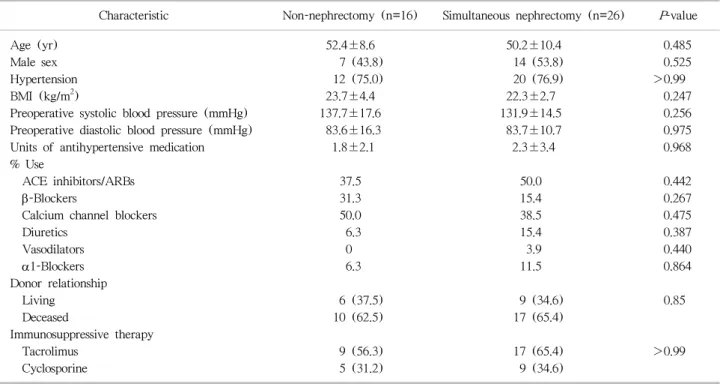
Table 1. Baseline demographic and transplant-related characteristics

Characteristic Non-nephrectomy (n=16) Simultaneous nephrectomy (n=26) P -value

Age (yr) 52.4±8.6 50.2±10.4 0.485

Male sex 7 (43.8) 14 (53.8) 0.525

Hypertension 12 (75.0) 20 (76.9) >0.99

BMI (kg/m

2

) 23.7±4.4 22.3±2.7 0.247

Preoperative systolic blood pressure (mmHg) 137.7±17.6 131.9±14.5 0.256

Preoperative diastolic blood pressure (mmHg) 83.6±16.3 83.7±10.7 0.975

Units of antihypertensive medication 1.8±2.1 2.3±3.4 0.968

% Use

ACE inhibitors/ARBs 37.5 50.0 0.442

-Blockers 31.3 15.4 0.267

Calcium channel blockers 50.0 38.5 0.475

Diuretics 6.3 15.4 0.387

Vasodilators 0 3.9 0.440

1-Blockers 6.3 11.5 0.864

Donor relationship

Living 6 (37.5) 9 (34.6) 0.85

Deceased 10 (62.5) 17 (65.4)

Immunosuppressive therapy

Tacrolimus 9 (56.3) 17 (65.4) >0.99

Cyclosporine 5 (31.2) 9 (34.6)

Data are presented as mean±SD or number (%).

Abbreviations: BMI, body mass index; ACE, angiotensin converting enzyme; ARB, angiotensin receptor blocker.

Co., Armonk, NY, USA).

RESULTS

1. Demographic and transplant-related factors Among 42 transplant recipients, 16 patients underwent kidney transplantation non-nephrectomy (NNx) group, and the other 26 patients underwent SNx group. We observed no differences between the NNx and SNx groups in regard to age (52.4±8.6 years vs. 50.2±10.4 years), prevalence of hypertension (75.0% vs. 76.9%), preoperative systolic blood pressure (137.7±17.6 mmHg vs. 131.9±14.5 mmHg), or units of antihypertensive medication (1.8±2.1 units vs.

2.3±3.4 units, all P >0.05). The reasons for SNx were crea- tion of space (n=19, 70%), recurrent hematuria (n=4, 15%), recurrent infection (n=1, 5%), abdominal pain (n=1, 5%), and possibility of kidney tumor (n=1, 5%). Additional base- line clinical characteristics are listed in Table 1.

2. Perioperative clinical outcomes

The operating time of the patients in the SNx group was

significantly longer than that of the NNx group (368.1±

74.5 minutes vs. 240.6±76.6 minutes, P <0.001). In addi- tion, estimated blood loss (719.6±432.7 mL vs. 500.0±

364.9 mL) and transfusion requirements (2.8±1.7 units vs.

2.6±0.9 units) were higher in the SNx group compared to the NNx group. The only two cases of intraoperative com- plications, hemorrhage, and renal artery thrombosis oc- curred in the SNx group (Table 2).

3. Graft and patient outcome in relation to nephrectomy

One patient in the SNx group experienced graft loss and

died of cyst infection-related sepsis. Another patient in the

SNx group had immediate graft loss due to an intraoperative

complication, renal artery thrombosis. Two other patients in

the SNx group developed delayed graft function. However,

we observed no significant differences in renal function

outcome after nephrectomy. One year after kidney trans-

plantation, eGFR was 60.53±13.46 mL/min/1.72 m

2

in the

SNx group, compared to 66.64±11.36 mL/min/1.72 m

2

in

the NNx group ( P >0.05). The actual patient 5-year surviv-

(4)

Table 2. Perioperative clinical outcomes

Variable Non-nephrectomy (n=16) Simultaneous nephrectomy (n=26) P -value

Operative time (min) 240.6±76.6 368.1±74.5 <0.001

Estimated blood loss (mL) 500.0±364.9 719.6±432.7 0.189

RBC transfusion (units) 2.6±0.9 2.8±1.7 0.807

Cold ischemic time (min) 60.8±45.3 53.5±34.5 0.569

Urinary leakage 0 0 -

Hemorrhage 0 1 -

Thrombosis 0 1 -

Wound infection 0 0 -

Urinary stricture 0 0 -

Vascular stenosis 0 0 -

Hypotensive events 6 (37.5) 18 (69.2) 0.045

Data are presented as mean±SD or number (%).

Abbreviation: RBC, red blood cell.

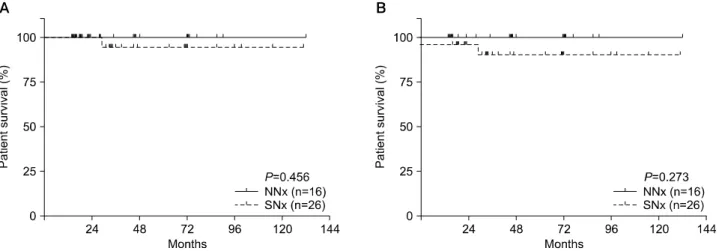
Fig. 1. Kaplan-Meier curves for (A) patient survival and (B) graft survival between non-nephrectomy (NNx, n=16) and simultaneous native nephrectomy (SNx, n=26) groups. P -value is estimated by log-rank test.

al rates were 100% vs. 94.4% ( P =0.456) (Fig. 1A) and the graft survival rates were 100% vs. 90.5% ( P =0.273) in the NNx and SNx groups, respectively (Fig. 1B).

4. Perioperative blood pressure and its effect on graft outcome

There were more hypotensive events in the SNx group (n=18, 69.2%) than in the NNx group (n=6, 37.5%, P =0.045). We explored the effects of native nephrectomy on blood pressure and graft outcome in terms of hypo- tensive events. All of the subjects in the SNx group were subdivided into two groups according to hypotensive events.

There were no significant differences in demographic or transplant-related characteristics between the two groups

(Table 3). We analyzed renal function outcomes related to hypotensive events. One patient in the SNx group who ex- perienced a hypotensive event was excluded from the renal function outcome analysis because there was immediate graft loss due to renal artery thrombosis. One year after kidney transplantation, although not significant, the hypo- tensive events group had higher eGFRs than the non-hypo- tensive events group did (64.04±12.61 mL/min/1.73 m

2

vs.

53.09±12.82 mL/min/1.73 m

2

, P =0.056) (Supplementary Table 1 Online).

There was no difference in systolic blood pressure be-

tween the NNx and SNX groups during the 1-year fol-

low-up (Fig. 2A). We examined the number of units of an-

tihypertensive medication needed due to nephrectomy.

(5)

Table 3. Demographic and transplant-related characteristics related to hypotensive events in the simultaneous native nephrectomy group Variable Hypotensive events (n=18) Non-hypotensive events (n=8) P -value

Age (yr) 49.33±10.28 52.13±11.15 0.539

Male sex 9 (50) 5 (62.5) 0.683

Hypertension 12 (67) 8 (100) 0.132

BMI (kg/m

2

) 21.72±2.70 23.44±2.33 0.144

Preoperative systolic blood pressure (mmHg) 129.50±14.75 137.25±13.08 0.214

Preoperative diastolic blood pressure (mmHg) 83.44±9.90 84.38±13.01 0.842

Units of antihypertensive medication 2.1±2.1 2.1±3.5 0.350

% Use

ACE inhibitors/ARBs 38.7 75.0 0.096

-Blockers 16.7 12.5 0.796

Calcium channel blockers 33.3 50.0 0.440

Diuretics 11.1 25.0 0.385

Vasodilators 5.6 0 0.516

1-Blockers 11.1 0 0.163

Patients on >3 antihypertensive medications 4 (22.0) 2 (25.0) 0.883

Donor relationship

Living 5 (27.7) 4 (50) 0.382

Deceased 13 (72.2) 4 (50)

Immunosuppressive therapy

Tacrolimus 11 (61.1) 6 (75) 0.667

Cyclosporine 7 (38.8) 2 (25)

Data are presented as mean±SD or number (%).

Abbreviations: BMI, body mass index; ACE, angiotensin converting enzyme; ARB, angiotensin receptor blocker.

While there were no significant differences in the pre- operative period, fewer units of antihypertensive medication were used in the SNx group than in the NNx group at 1 month (0.9±1.2 vs. 2.7±2.4, P =0.003), 3 months (0.7±0.9 vs. 1.6±1.4, P =0.013), 6 months (0.6±0.9 vs. 1.6±1.1, P =0.002), and 12 months (0.7±0.9 vs. 1.6±1.3, P =0.016), respectively (Fig. 2B).

DISCUSSION

This retrospective, single-center study sought to evaluate the effects of SNx on graft outcome and blood pressure in ADPKD patients who underwent kidney transplantation.

Regarding indications and timing of native nephrectomy, in the 1970s, bilateral nephrectomy prior to transplantation was a common procedure. The risk of infectious complica- tions in patients who underwent nephrectomy prior to trans- plantation was reduced; however, it was at the cost of in- creased perioperative risk, loss of diuresis, diminished qual- ity of life, or progression of anemia. While it is now be-

lieved that pre-transplant nephrectomy should not be rou- tine and has no advantage over transplantation with both native kidneys intact(15), native nephrectomy is still recom- mended in patients with refractory symptoms. Severe hypo- tensive events, which were probably associated with native nephrectomy, prompted us to investigate the relationship between hypotensive events after kidney transplantation and renal function outcomes.

In this study, SNx did not result in the adverse effects

on graft outcome or patient survival that were reported in

previous studies(5,6,8). However, hypotensive events during

the immediate postoperative period occurred more often

with native nephrectomy. Hypertension develops early in

the life of ADPKD patients. Increased activity of the re-

nin-angiotensin system (RAS) associated with extracellular

volume expansion might play an important role in the de-

velopment of hypertension in these patients(16,17). It has

been suggested that cyst expansion, leading to focal areas

of renal ischemia and enhanced renin release, is responsible

for high blood pressure. Thus, native nephrectomy might

(6)

Fig. 2. (A) Mean blood pressure (BP; mmHg, mean±SD [total no.]) and (B) units of antihypertensive medication during follow-up period after nephrectomy. Abbreviations: NNx, non-nephrectomy; SNx, simultaneous native nephrectomy.

a

P <0.05.

eliminate the source of renin-angiotensin release, resulting in a favorable effect on blood pressure control, as well as relieving the mass effect of cystic kidneys. In this study, patients with native nephrectomy had more hypotensive events, but they were reduced with antihypertensive medi- cations during the follow-up period. In turn, the hypo- tensive event group had comparable renal function. Overall, the ADPKD patients with native nephrectomy showed sim- ilar graft function and blood pressure level results with few- er antihypertensive medications, possibly due to diminished RAS activation. The favorable effect of native nephrectomy on blood pressure might help preserve graft function and decrease the risk of cardiovascular morbidity in ADPKD patients.

While patients who have undergone nephrectomy tend to have longer operating times, there were no significant dif- ferences in terms of perioperative complications in this study. One patient in our study had immediate graft loss due to renal artery thrombosis, which was not related to the nephrectomy. Enlarged kidneys in ADPKD often cause ad- hesion to peritoneum or adjacent organs, resulting in wide dissection in nephrectomy procedures and intraoperative bleeding. Mean estimated blood loss in SNx group was

1.4-fold higher than NNx group; however, there was no sig- nificant difference in this study. In addition, cold ischemic time in SNx group was not longer than that in NNx group, which may be explained by the fact that the time between native nephrectomy and the donor kidney implantation was controlled in Seoul National University Hospital.

CONCLUSION

In conclusion, SNx is a relatively safe procedure, and in this study, graft outcome in patients who underwent SNx was not inferior to that of patients who did not undergo SNx. Although SNx could have a potential risk of hypo- tensive events, with the support of careful monitoring and intervention, it had no harmful influence on outcome.

However, this study had several limitations. The small sample size probably limited statistical power to report a sig- nificant difference, and the reason the hypotensive events group had good renal function was not fully investigated.

Prospective studies to measure renin-angiotensin level and

evaluate cardiac function will be needed in the future.

(7)

REFERENCES

1) Goncalves S, Guerra J, Santana A, Abreu F, Mil-Homens C, Gomes da Costa A. Autosomal-dominant polycystic kid- ney disease and kidney transplantation: experience of a single center. Transplant Proc 2009;41:887-90.

2) Jin DC. Current status of dialysis therapy for ESRD patients in Korea. J Korean Med Assoc 2013;56:562-8. (진동찬. 우리 나라 말기신부전 환자의 투석현황. 대한의사협회지 2013;56:

562-8.)

3) Kirkman MA, van Dellen D, Mehra S, Campbell BA, Tavakoli A, Pararajasingam R, et al. Native nephrectomy for autoso- mal dominant polycystic kidney disease: before or after kidney transplantation? BJU Int 2011;108:590-4.

4) Tabibi A, Simforoosh N, Abadpour P, Gholamrezaie HR, Nafar M. Concomitant nephrectomy of massively enlarged kidneys and renal transplantation in autosomal dominant polycystic kidney disease. Transplant Proc 2005;37:2939-40.

5) Fuller TF, Brennan TV, Feng S, Kang SM, Stock PG, Freise CE. End stage polycystic kidney disease: indications and timing of native nephrectomy relative to kidney trans- plantation. J Urol 2005;174:2284-8.

6) Skauby MH, Oyen O, Hartman A, Leivestad T, Wadstrom J. Kidney transplantation with and without simultaneous bilateral native nephrectomy in patients with polycystic kidney disease: a comparative retrospective study. Trans- plantation 2012;94:383-8.

7) Song WL, Zheng JM, Mo CB, Wang ZP, Fu YX, Feng G, et al. Kidney transplant for autosomal dominant polycystic kidney disease: the superiority of concurrent bilateral nephrectomy. Urol Int 2011;87:54-8.

8) Drognitz O, Kirste G, Schramm I, Assmann A, Pohl M, Gobel H, et al. Kidney transplantation with concomitant unilateral nephrectomy: a matched-pair analysis on complications and outcome. Transplantation 2006;81:874-80.

9) Sulikowski T, Tejchman K, Zietek Z, Rozanski J, Domanski L, Kaminski M, et al. Experience with autosomal dominant polycystic kidney disease in patients before and after renal transplantation: a 7-year observation. Transplant Proc 2009;41:177-80.

10) Brazda E, Ofner D, Riedmann B, Spechtenhauser B, Margreiter R. The effect of nephrectomy on the outcome of renal transplantation in patients with polycystic kidney disease. Ann Transplant 1996;1:15-8.

11) Alam A, Perrone RD. Management of ESRD in patients with autosomal dominant polycystic kidney disease. Adv Chronic Kidney Dis 2010;17:164-72.

12) Abramowicz D, Cochat P, Claas FH, Heemann U, Pascual J, Dudley C, et al. European Renal Best Practice Guideline on kidney donor and recipient evaluation and perioperative care. Nephrol Dial Transplant 2015;30:1790-7.

13) Medina A, Bell PR, Briggs JD, Brown JJ, Fine A, Lever AF, et al. Changes of blood pressure, renin, and angiotensin after bilateral nephrectomy in patients with chronic renal failure. Br Med J 1972;4:694-6.

14) Cohen SL. Hypertension in renal transplant recipients: role of bilateral nephrectomy. Br Med J 1973;3:78-81.

15) Rozanski J, Kozlowska I, Myslak M, Domanski L, Sienko J, Ciechanowski K, et al. Pretransplant nephrectomy in patients with autosomal dominant polycystic kidney disease. Transplant Proc 2005;37:666-8.

16) Barrett BJ, Foley R, Morgan J, Hefferton D, Parfrey P.

Differences in hormonal and renal vascular responses be- tween normotensive patients with autosomal dominant polycystic kidney disease and unaffected family members.

Kidney Int 1994;46:1118-23.

17) Torres VE, Wilson DM, Offord KP, Burnett JC Jr, Romero

JC. Natriuretic response to volume expansion in polycystic

kidney disease. Mayo Clin Proc 1989;64:509-15.

(8)

Pre-operative eGFR 7.16±2.76 8.24±3.13 0.414

Post-operative 1 month eGFR 53.10±13.42 61.33±12.36 0.144

3 months eGFR 49.75±10.92 58.94±11.88 0.078

6 months eGFR 50.04±13.02 60.92±10.63 0.036

12 months eGFR 53.09±12.82 64.04±12.61 0.056

Data are presented as mean±SD.

Abbreviation: eGFR, estimated glomerular filtration rate.

수치

Table 1. Baseline demographic and transplant-related characteristics
Fig. 1. Kaplan-Meier curves for (A) patient survival and (B) graft survival between non-nephrectomy (NNx, n=16) and simultaneous  native nephrectomy (SNx, n=26) groups
Table 3. Demographic and transplant-related characteristics related to hypotensive events in the simultaneous native nephrectomy group Variable Hypotensive events (n=18) Non-hypotensive events (n=8) P -value
Fig. 2. (A) Mean blood pressure (BP; mmHg, mean±SD [total no.]) and (B) units of antihypertensive medication during follow-up period after nephrectomy

참조

관련 문서