• 검색 결과가 없습니다.

Influence of Environmental Exposures on Patients with Chronic Obstructive Pulmonary Disease in Korea

N/A
N/A
Protected

Academic year: 2021

Share "Influence of Environmental Exposures on Patients with Chronic Obstructive Pulmonary Disease in Korea"

Copied!
7
0
0

로드 중.... (전체 텍스트 보기)

전체 글

(1)

Influence of Environmental Exposures on Patients with Chronic Obstructive Pulmonary Disease in Korea

Yoonki Hong, M.D.

1

, Myoung Nam Lim, M.S.

2

, Woo Jin Kim, M.D.

1

, Chin Kook Rhee, M.D.

3

, Kwang Ha Yoo, M.D.

4

, Ji-Hyun Lee, M.D.

5

, Ho Il Yoon, M.D.

6

, Tae-Hyung Kim, M.D.

7

, Jin Hwa Lee, M.D.

8

, Seong Yong Lim, M.D.

9

, Sang Do Lee, M.D.

10

and Yeon-Mok Oh, M.D.

10

1

Department of Internal Medicine and Environmental Health Center, Kangwon National University Hospital,

2

Department of Respiratory Center, Kangwon National University Hospital, Kangwon National University School of Medicine, Chuncheon,

3

Department of Internal Medicine, Seoul St. Mary’s Hospital, The Catholic University of Korea College of Medicine, Seoul,

4

Department of Internal Medicine, Konkuk University School of Medicine, Seoul,

5

Department of Internal Medicine, CHA Bundang Medical Center, CHA University, Seongnam,

6

Department of Internal Medicine, Seoul National University Bundang Hospital, Seoul National University College of Medicine, Seongnam,

7

Division of Pulmonology, Department of Internal

Medicine, Hanyang University Guri Hospital, Hanyang University College of Medicine, Guri,

8

Department of Internal Medicine, Ewha Womans University Mokdong Hospital, Ewha Womans University College of Medicine, Seoul,

9

Division of Pulmonary and Critical Care Medicine, Department of Medicine, Kangbuk Samsung Hospital, Sungkyunkwan University School of Medicine, Seoul,

10

Department of Pulmonary and Critical Care Medicine and Clinical Research Center for Chronic Obstructive Airway Diseases, Asan Medical Center, University of Ulsan College of Medicine, Seoul, Korea

Background: Chronic obstructive pulmonary disease (COPD) is characterized by airflow limitation and results from environmental factors and genetic factors. Although cigarette smoking is a major risk factor, other environmental exposures can influence COPD. The purpose of this study is to investigate the clinical characteristics of COPD according to the history of environmental exposure.

Methods: The study population comprised of 347 subjects with COPD who were recruited from the pulmonary clinics of 14 hospitals within the Korean Obstructive Lung Disease Study Group. We classified environmental exposures according to history of living near factory, and direct exposure history to firewood or briquette. According to living environmental exposures, we compared the frequency of respiratory symptoms, pulmonary function, quality of life, exercise capacity, and computed tomography phenotypes.

Results: Thirty-one subjects (8.9%) had history of living near factory, 271 (78.3%) had exposure history to briquette, and 184 (53.3%) had exposure history to firewood. Patients with history of living near a factory had a significantly longer duration of sputum, while patients with exposure to firewood tended to have lower forced expiratory volume in one second, and patients with exposure to briquette tended to have lower six minute walk distance.

Conclusion: COPD subjects with the history of living near factory had more frequent respiratory symptoms such as sputum. Our data suggest that environmental exposure may influence clinical phenotype of COPD.

Keywords: Pulmonary Disease, Chronic Obstructive; Environmental Exposure; Air Pollutants; Occupational Exposure; Fossil Fuels

Address for correspondence: Yeon-Mok Oh, M.D.

Department of Pulmonary and Critical Care Medicine and Clinical Research Center for Chronic Obstructive Airway Diseases, Asan Medical Center, University of Ulsan College of Medicine, 88 Olympic-ro 43-gil, Songpa-gu, Seoul 138-736, Korea

Phone: 82-2-3010-3136, Fax: 82-2-3010-6968, E-mail: [email protected]

*The abstract presented at the “18th Congress of the Asian Pacific Society of Respirology” which will be held on 11−14 Nov 2013 at the Conference Center, Pacifico Yokohama, Japan.

Received: Mar. 16, 2014 Revised: Mar. 31, 2014 Accepted: Apr. 4, 2014

cc
It is identical to the Creative Commons Attribution Non-Commercial License (http://creativecommons.org/licenses/by-nc/3.0/).

(2)

Introduction

Chronic obstructive lung disease (COPD) is a leading cause of morbidity and mortality worldwide

1

. It is a chronic inflam- matory disease characterized by persistent airflow limitation, and developed from chronic exposures of environmental fac- tors in genetically susceptible individuals

2

. Although cigarette smoking is known a major risk factor, recent evidence indi- cates that other environmental exposures, such as air pollut- ants and workplace exposures, can influence COPD

3

.

COPD shows heterogeneous features that may present dis- tinct clinical presentation and disease progression. Therefore, environmental exposures besides cigarette smoking may in- duce specific respiratory conditions or atypical characteristics of COPD. A patient series of COPD showed that occupational inhalant exposure was associated with specific features of COPD

4

. However, regarding for clinical characteristics of pa- tients with COPD, it is generally known only about influence of cigarette smoking.

It is little known about distinct clinical characteristics of patients with COPD according for other countries. There are only a few reports about population based prevalence or risk factors in COPD. It is warrant to study about clinical character- istics and environmental influences according for other coun- tries or regions. To date, it is little known about clinical features by environmental exposures in Korean patients with COPD.

The purpose of this study is to investigate clinical character- istics of patients with COPD according to history of environ- mental exposures.

Materials and Methods

1. Study population

The data of 347 patients diagnosed with COPD were ana- lyzed retrospectively. These patients were selected from the Korean Obstructive Lung Disease (KOLD) Cohort, which con- sisted of 439 stable patients with obstructive lung disease who had been prospectively recruited from the pulmonary clinics of 16 hospitals in South Korea between June 2005 and July 2012. The inclusion criteria for KOLD patients have been de- scribed previously

5

. The patients were diagnosed with COPD if they were aged >45 years, had >10 pack-years of cigarette smoking, and had a post-bronchodilator forced expiratory vol- ume in one second (FEV

1

)/forced vital capacity<0.7, but did not have bronchiectasis or sequelae of pulmonary tuberculo- sis.

At the enrollment visit, all patients were evaluated with medical interviews, physical examinations, spirometry, bron- chodilator reversibility tests, and lung volume, and six-minute walk tests. Health-related quality of life was evaluated by cal- culating the total score of St. George’s Respiratory Question-

naire (SGRQ). Dyspnea was evaluated using the modified Medical Research Council Dyspnea grade. Cough was evalu- ated using the question, “Do you usually have cough, for more than three days during a week?” and sputum was evaluated with the question, “Do you usually have sputum, for more than three days during a week?” Wheeze was evaluated with the question, “Have you ever had wheezing or whistling in your chest?”

In addition, volumetric computed tomography (CT) was performed to evaluate airway wall thickness, emphysema severity, and mean lung density (MLD) ratio at full expiration and inspiration.

This study was approved by the Institutional Review Board of Asan Medical Center (approval No. 2005-0345) and of other 15 hospitals. Individual informed written consent was

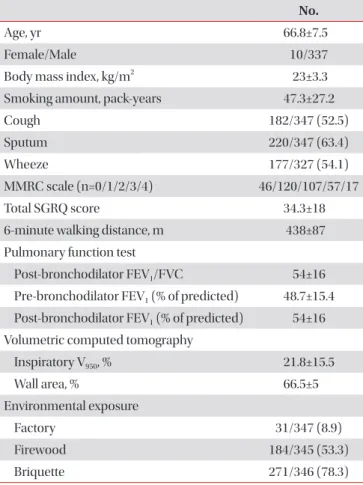
Table 1. Baseline characteristics of the patients with COPD (n=347)

No.

Age, yr 66.8±7.5

Female/Male 10/337

Body mass index, kg/m

2

23±3.3

Smoking amount, pack-years 47.3±27.2

Cough 182/347 (52.5)

Sputum 220/347 (63.4)

Wheeze 177/327 (54.1)

MMRC scale (n=0/1/2/3/4) 46/120/107/57/17

Total SGRQ score 34.3±18

6-minute walking distance, m 438±87

Pulmonary function test

Post-bronchodilator FEV

1

/FVC 54±16 Pre-bronchodilator FEV

1

(% of predicted) 48.7±15.4 Post-bronchodilator FEV

1

(% of predicted) 54±16 Volumetric computed tomography

Inspiratory V

950

, % 21.8±15.5

Wall area, % 66.5±5

Environmental exposure

Factory 31/347 (8.9)

Firewood 184/345 (53.3)

Briquette 271/346 (78.3)

Values are presented as mean±standard deviation or number (%) unless otherwise indicated.

COPD: chronic obstructive pulmonary disease; MMRC scale:

modified Medical Research Council dyspnea scale; SGRQ: St George’s Respiratory Questionnaire; FEV

1

: forced expiratory volume in 1 second; FVC: forced vital capacity; V

950

: volume fraction (%) of the lung below –950 HU.

Wall area (%)=wall area/(wall area+lumen area)×100.

(3)

Ta ble 2. U niv ar ia te an al ysis for d iffer en ce of cl inic al ch ar act er is tic s b y en vir onm en tal ex p os ur e Fa ct or y Fir ew oo d Br iq u et te Ye s N o p- valu e Ye s N o p- valu e Ye s N o p- valu e Ag e, yr 65.6 (6.7) 66.9 (7.5) 0.37 67.1 (7.4) 66.4 (7.5) 0.36 66.6 (7.3) 67.3 (8.1) 0.50 M ale 30 (96.8) 307 (97.1) 0.90 176 (95.6) 159 (98.8) 0.09 261 (96.3) 75 (100.0) 0.09 B od y mas s index , k g/m

2

22.8 (3.0) 23.0 (3.3) 0.68 22.7 (3.5) 23.4 (3.1) 0.03 23.0 (3.4) 23.1 (3.0) 0.89 Smoking amount, p ac k-ye ar 46.4 (25.6) 47.4 (27.4) 0.84 46.3 (27.3) 48.6 (27.1) 0.44 46.8 (26.2) 49.5 (30.0) 0.45 C ough 18 (58.1) 164 (51.9) 0.51 95 (51.6) 86 (53.4) 0.74 148 (54.6) 33 (44.0) 0.10 Sput um 25 (80.6) 195 (61.7) 0.04 113 (61.4) 106 (65.8) 0.39 168 (62.0) 51 (68.0) 0.34 W he eze 16 (51.6) 161 (54.4) 0.62 89 (52.4) 87 (55.8) 0.35 135 (53.4) 42 (56.8) 0.49 MMR C sc ale 1.52±1.06 1.66±1.06 0.46 1.76±1.00 1.54±1.11 0.06 1.68±1.03 1.56±1.17 0.40 Total S GR Q scor e 31.3±16.7 34.6±18.1 0.34 35.1±18.7 33.4±17.1 0.37 34.5±18.5 33.1±16.1 0.55 6-minut e w alking dis tance , m 755.9±308.6 736.8±95.7 0.95 640.0±103.9 855.8±157.2 0.24 645.9±86.8 1,079.2±28.12 0.14 Pulmonar y function t es t Pr e-br onc ho dil at or FEV

1

(% of pr edict ed) 50.0±15.9 48.5±15.4 0.60 46.9±15.7 50.5±4.9 0.03 48.3±15.5 49.9±15.3 0.42 P os t-br onc ho dil at or FEV

1

(% of pr edict ed) 55.0±16.0 54±16.0 0.67 52.0±16.0 56.0±16.0 0.02 53.0±16.0 56.0±17.0 0.17 V olumetric comput ed t omogr aph y I ns pir at or y V

950

, % 23.0±13.4 21.7±15.7 0.66 22.0±15.8 21.8±15.2 0.92 21.4±15.4 23.5±16.0 0.30 W all ar ea, % 65.2±4.2 66.7±5.1 0.14 66.4±4.9 66.7±5.2 0.62 66.4±5.1 67.1±5.0 0.25 V alues ar e pr esent ed as me an (%) or me an±s tand ar d de vi ation unles s other wise indic at ed. MMR C sc ale: mo difie d M edic al R ese ar ch C ouncil dy spne a sc ale; SGR Q: St G eor ge ’s R es pir at or y Ques tionnair e; FEV

1

: for ce d expir at or y volume in 1 se cond; V

950

: volume fr action (%) of the lung b elow –950 HU . W all ar ea (%)=w all ar ea/(w all ar ea+lumen ar ea)×100.

(4)

obtained from all patients.

2. Pulmonary function tests

The method for pulmonary function tests have been de- scribed previously

5

. Spirometry was performed by using a Vmax 22 (Sensor-Medics, Yorba Linda, CA, USA) or a PFDX (MedGraphics, St Paul, MN, USA). To assess post-broncho- dilator FEV

1

increases, spirometry was performed before bronchodilation and 15 minutes after inhalation of salbuta- mol 400 μg through a metered-dose inhaler with a spacer.

Bronchodilator reversibility was evaluated by measuring post- bronchodilator FEV

1

increase in liters. Lung volumes were measured by body plethysmography (V6200; Sensor-Medics or PFDX). Diffusing capacity for carbon monoxide (DLco) was measured by the single-breath method using a Vmax229D (Sensor-Medics) or a Masterlab Body (JaegerAB, Würtsburg, Germany). All pulmonary function tests were performed as recommended by the American Thoracic Society (ATS)/Eu- ropean Respiratory Society (ERS).

3. Computed tomography

Volumetric CT scans were obtained by using a 16-multide-

tector CT scanner (Somatom Sensation instrument; Siemens, Erlangen, Germany; GE Lightspeed Ultra instrument; General Electric Healthcare, Milwaukee, WI, USA; Philips Brilliance instrument; Philips Medical Systems, Best, The Netherlands) as previously described

6

. The volume fraction (%) of the lung below −950 hounsfield units (HU) at full inspiration was cal- culated automatically (inspiratory V

950

) from the CT data. The ratio of MLD on expiration and inspiration was calculated.

The airway dimensions, wall area (WA), lumen area (LA), and wall area percent [WA%; i.e., WA/(WA+LA)×100] were mea- sured near the origin of two segmental bronchi (the right api- cal and left apico-posterior) that were selected by consensus by two radiologists.

4. Measurement for environmental exposures

The environmental exposures were divided as follows: a his- tory of living near factory, direct exposure history to firewood, and direct exposure history to briquette. A history of living near factory was evaluated using the question, “Have you ever been live near factory for a lifetime, or now you are live near factory?” The question for direct exposure history to firewood was “For cooking and/or heating, have you ever been exposed to fuels of wood for one year or more?” and the question for

Table 3. Univariate analysis for difference of clinical characteristics by co-exposure to firewood and briquette Firewood and briquette

Yes No p-value

Age, yr 66.7 (7.2) 66.2 (7.7) 0.67

Male 160 (95.2) 58 (100.0) 0.09

Body mass index, kg/m

2

22.7 (3.5) 23.4 (2.8) 0.18

Smoking amount, pack-year 46.1 (26.9) 49.7 (30.4) 0.40

Cough 87 (51.8) 25 (43.1) 0.25

Sputum 100 (59.5) 38 (65.5) 0.42

Wheeze 80 (51.6) 32 (55.2) 0.27

MMRC scale 1.75 (0.98) 1.52 (1.14) 0.14

Total SGRQ score 35.2 (19.1) 33.1 (16.6) 0.47

6-minute walking distance, m 663.9 (1,469.4) 1,280.4 (2,728.8) 0.11

Pulmonary function test

Pre-bronchodilator FEV

1

(% of predicted) 47.2 (16.0) 51.3 (15.6) 0.10

Post-bronchodilator FEV

1

(% of predicted) 52.0 (16.0) 58.0 (17.0) 0.03

Volumetric computed tomography

Inspiratory V

950

, % 21.4 (15.9) 22.3 (15.2) 0.63

Wall area, % 66.3 (5.0) 66.7 (5.1) 0.43

Values are presented as mean (%) or mean±standard deviation unless otherwise indicated.

MMRC scale: modified Medical Research Council dyspnea scale; SGRQ: St George’s Respiratory Questionnaire; FEV

1

: forced expiratory volume in 1 second; V

950

: volume fraction (%) of the lung below –950 HU.

Wall area (%)=wall area/(wall area+lumen area)×100.

(5)

direct exposure history to briquette was “For cooking and/or heating, have you ever been exposed to fuels of charcoal for one year or more?”

According to environmental exposures, we compared the frequency of respiratory symptoms, pulmonary function, quality of life questionnaire, exercise capacity, and CT pheno- types.

5. Statistical analysis

The descriptive statistics of the clinical variables are ex- pressed as means and standard deviations, and the Student’s t- and chi-square tests were used to confirm statistical signifi- cance between the environmental exposures. And we evalu- ated these data with adjusting gender, age, body mass index (BMI), and smoking, using the statistical software SAS version 9.2 (SAS Inc., Cary, NC, USA). p-values of less than 0.05 were considered significant.

Results

1. Demographic characteristics

The demographic characteristics of 347 patients (337 males, 10 females) were represented. (Table 1). The mean age of patients with COPD was 66.8 years (standard deviation, 7.5), the mean BMI was 23.0 (3.3), and the mean smoking amount was 47.3 (27.2) pack-years. Thirty-one patients (8.9%) had his- tory of living near factory, 184 patients (53.3%) had exposure history to firewood, and 271 patients (78.3%) had exposure history to briquette.

2. Difference of clinical characteristics according to environmental exposures

On univariate analysis, patients with history of living near factory had significantly longer duration of sputum and pa- tients with exposure to firewood had lower BMI and lower FEV

1

, but patients with exposure to briquette showed no dif- ference (Table 2). Patient with co-exposure to firewood and briquette had lower FEV

1

(Table 3).

On adjusting age, gender, BMI, and smoking, patients with history of living near factory also showed longer duration of sputum (Table 4). Patients with exposure to firewood tended to have lower FEV

1

(p=0.09), briquette tended to have lower six minute walk distance (p=0.06). And patients with co-ex- posure to firewood and briquette had lower 6 minute walking distance (Table 5).

Ta ble 4. D iffer en ce of cl inic al ch ar act er is tic s a cc or d in g t o en vir onm en tal ex p os ur es , a dj us tin g g en der , a ge , B MI, an d sm ok in g Fa ct or y Fir ew oo d Br iq u et te Ye s (n=31) N o (n=316) p- valu e Ye s (n=184) N o (n=161) p- valu e Ye s (n=271) N o (n=75) p- valu e C ough 10 (32.3) 111 (35.2) 0.57 65 (35.5) 55 (34.1) 0.79 97 (35.9) 23 (30.6) 0.20 Sput um 9 (61.3) 150 (47.7) 0.04 85 (46.4) 83 (51.5) 0.38 127 (47.0) 41 (54.7) 0.10 W he eze 16 (51.6) 161 (54.4) 0.78 89 (52.4) 87 (55.8) 0.62 135 (53.4) 42 (56.8) 0.30 MMR C 1.75±0.24 1.89±0.17 0.47 1.93±0.17 1.78±0.18 0.17 1.89±0.17 1.77±0.20 0.39 SGR Q 32.3±4.2 35.6±2.9 0.32 35.8±3.0 34.3±3.2 0.44 35.4±2.9 34.2±3.6 0.60 6-minut e w alking dis tance , m 581.7±395.5 549.9±274.6 0.92 481.9±279.5 702.2±300.5 0.24 505.5±272.9 925.8±335.5 0.06 Pulmonar y function t es t Pr e-br onc ho dil at or FEV

1

(% of pr edict ed) 48.5±0.8 50.4±2.6 0.49 49.9±1.2 47.5±1.1 0.12 49.8±1.7 48.3±0.9 0.43 P os t-br onc ho dil at or FEV

1

(% of pr edict ed) 53.9±0.9 55.6±2.7 0.54 55.4±1.2 52.7±1.1 0.09 56.2±1.7 53.4±0.9 0.16 V olumetric comput ed t omogr aph y I ns pir at or y V

950

, % 21.2±3.3 20.4±2.4 0.74 22.2±2.4 21.1±2.6 0.57 20.2±2.4 22.3±2.9 0.27 W all ar ea, % 67.1±1.2 68.5±0.9 0.14 68.2±0.9 68.7±0.9 0.45 68.3±0.9 69.2±1.0 0.16 V alues ar e pr esent ed as me an (%) or me an±s tand ar d de vi ation unles s other wise indic at ed. B M I: bo dy m as s in de x; M M R C s ca le : m od ifi ed M ed ic al R es ea rc h C ou n ci l d ys pn ea s ca le ; S G R Q : S t G eo rg e’s R es pi ra to ry Q ue st io n n ai re ; F E V

1

: f or ce d ex pi ra to ry v ol um e in 1 se cond; V

950

: volume fr action (%) of the lung b elow –950 HU . W all ar ea (%)=w all ar ea/(w all ar ea+lumen ar ea)×100.

(6)

Discussion

In the current study, we show that the history of living near factory was associated with more frequent respiratory symptoms such as sputum and the exposure to firewood or briquette tend to be associated with poor lung function in a Korean COPD cohort group. Our data suggest that various environmental exposures may influence clinical features of COPD.

Although COPD is characterized by airflow limitation, it is widely recognized that significant heterogeneity exists with respect to clinical presentation, imaging, and response to therapy

7

. It is thought that clinical phenotypes of COPD are developed from various exposures to environmental factors and various responses of individuals having different genetic susceptibility. Nevertheless, it is the reality that most clinical trials in COPD recruit only cigarette smokers since cigarette smoking is known as a major risk factor

8

. Therefore, the major- ity of knowledge about clinical characteristics of patients with COPD is based on its influence of cigarette smoking. However, emerging evidence has suggested that other risk factors, such as air pollutants and workplace exposure, are strongly associ- ated with COPD

3

. To date, it is little known how environmental exposures interact with clinical characteristics of patients with COPD.

A few results on the association between environmental ex- posures and specific features of COPD have been reported. In never smoking patients, dust exposure on occupation was not

associated with chronic bronchitis in an European survey, but was significantly associated with spirometry-defined COPD in United States

9,10

. And, young COPD patients with occupa- tional exposure showed increased work-related respiratory disability, more asthma-like symptoms, and atopy, regard- less of smoking

4

. Recently, an Asian COPD cohort reported that the characteristics of COPD patients varied and history of exposure to biomass fuels or dusty jobs was related to the frequency of symptoms, severe airflow limitation, and poor quality of life

11

. Our study also shows that history of living near factory was associated with more frequent respiratory symp- toms while firewood exposure was poor lung function.

Recently, several cases of constrictive bronchiolitis, a rare respiratory condition, were reported among soldiers with a history of inhalational exposure to sulfur-mine fires

12

. This suggests that exposure to a particular inhalational dust may in- duce a specific respiratory condition and symptoms. However, to date, there is insufficient evidence to support an association between specific environmental exposure and distinct clinical outcomes of COPD. It seems to be very difficult for establish- ing causal relationship between environmental exposure and clinical features of COPD, because environmental exposures on patients are almost impossible to measure quantitatively, as its chronic and multi-factorial nature. Collection of cohort studies regarding environmental exposures, like our study, may lead us close to answer for causal relationship between environmental exposure and clinical features of COPD.

This study has several limitations. First, the intensity and du- Table 5. Difference of clinical characteristics according to co-exposure of firewood and briquette, adjusting gender, age, BMI, and smoking

Firewood and briquette

Yes (n=168) No (n=58) p-value

Cough 87 (51.8) 25 (43.1) 0.24

Sputum 100 (59.5) 38 (65.5) 0.34

Wheeze 80 (51.6) 32 (55.2) 0.27

MMRC 1.88±0.19 1.71±0.22 0.24

SGRQ 35.6±3.4 34.0±4.1 0.58

6-minute walking distance, m 524.8±338.9 1,168.1±418.4 0.02

Pulmonary function test

Pre-bronchodilator FEV

1

(% of predicted) 50.4±2.0 47.5±1.2 0.21

Post-bronchodilator FEV

1

(% of predicted) 56.8±2.0 52.7±1.2 0.08

Volumetric computed tomography

Inspiratory V

950

, % 21.0±2.6 23.4±0.3 0.29

Wall area, % 68.1±0.9 69.1±1.1 0.20

Values are presented as mean (%) or mean±standard deviation unless otherwise indicated.

BMI: body mass index; MMRC scale: modified Medical Research Council dyspnea scale; SGRQ: St George’s Respiratory Questionnaire; FEV

1

: forced expiratory volume in 1 second; V

950

: volume fraction (%) of the lung below –950 HU.

Wall area (%)=wall area/(wall area+lumen area)×100.

(7)

ration for past exposure to environmental exposure may not be accurate quantitatively because it is collected only based on participant memory and questionnaires. A long term fol- low up study design and using exposure metrics is warranted.

Second, the statistical power for the analysis may be low be- cause numbers of subjects with environmental exposure were small for showing significant difference, especially the history of living near factory. More large scale or population based study will help for identifying effects of environmental expo- sures on patients with COPD. Third, there were no matching control groups. Control groups of different regions or groups with no exposure for firewood or briquette could be com- pared. It could make clear more about correlation with envi- ronmental exposure and clinical features on COPD patients.

In conclusion, COPD subjects with the history of living near factory had more frequent respiratory symptoms such as spu- tum. Our data suggest that environmental exposure may influ- ence clinical phenotype of COPD.

Conflicts of Interest

No potential conflict of interest relevant to this article was reported.

Acknowledgements

This study was supported by a grant of the Korea Healthcare Technology R&D Project, Ministry for Health and Welfare, Re- public of Korea (HI10C2020).

References

1. Mannino DM, Buist AS. Global burden of COPD: risk factors, prevalence, and future trends. Lancet 2007;370:765-73.

2. Vestbo J, Hurd SS, Agusti AG, Jones PW, Vogelmeier C, An- zueto A, et al. Global strategy for the diagnosis, management,

and prevention of chronic obstructive pulmonary disease:

GOLD executive summary. Am J Respir Crit Care Med 2013;187:347-65.

3. Salvi SS, Barnes PJ. Chronic obstructive pulmonary disease in non-smokers. Lancet 2009;374:733-43.

4. Mak GK, Gould MK, Kuschner WG. Occupational inhalant exposure and respiratory disorders among never-smokers re- ferred to a hospital pulmonary function laboratory. Am J Med Sci 2001;322:121-6.

5. Hong Y, Chae EJ, Seo JB, Lee JH, Kim EK, Lee YK, et al. Con- tributors of the severity of airflow limitation in COPD pa- tients. Tuberc Respir Dis 2012;72:8-14.

6. Lee YK, Oh YM, Lee JH, Kim EK, Lee JH, Kim N, et al. Quan- titative assessment of emphysema, air trapping, and airway thickening on computed tomography. Lung 2008;186:157-65.

7. Han MK, Agusti A, Calverley PM, Celli BR, Criner G, Curtis JL, et al. Chronic obstructive pulmonary disease phenotypes:

the future of COPD. Am J Respir Crit Care Med 2010;182:598- 604.

8. Kohansal R, Martinez-Camblor P, Agusti A, Buist AS, Man- nino DM, Soriano JB. The natural history of chronic airflow obstruction revisited: an analysis of the Framingham off- spring cohort. Am J Respir Crit Care Med 2009;180:3-10.

9. Mwaiselage J, Bratveit M, Moen BE, Mashalla Y. Respira- tory symptoms and chronic obstructive pulmonary disease among cement factory workers. Scand J Work Environ Health 2005;31:316-23.

10. Sunyer J, Zock JP, Kromhout H, Garcia-Esteban R, Radon K, Jarvis D, et al. Lung function decline, chronic bronchitis, and occupational exposures in young adults. Am J Respir Crit Care Med 2005;172:1139-45.

11. Oh YM, Bhome AB, Boonsawat W, Gunasekera KD, Ma- degedara D, Idolor L, et al. Characteristics of stable chronic obstructive pulmonary disease patients in the pulmonology clinics of seven Asian cities. Int J Chron Obstruct Pulmon Dis 2013;8:31-9.

12. King MS, Eisenberg R, Newman JH, Tolle JJ, Harrell FE Jr, Nian

H, et al. Constrictive bronchiolitis in soldiers returning from

Iraq and Afghanistan. N Engl J Med 2011;365:222-30.

수치

Table 1. Baseline characteristics of the patients with COPD  (n=347)
Table 2. Univariate analysis for difference of clinical characteristics by environmental exposure  FactoryFirewoodBriquette YesNop-valueYesNop-valueYesNop-value Age, yr65.6 (6.7)66.9 (7.5)0.3767.1 (7.4)66.4 (7.5)0.3666.6 (7.3)67.3 (8.1)0.50 Male30 (96.8)30
Table 3. Univariate analysis for difference of clinical characteristics by co-exposure to firewood and briquette Firewood and briquette
Table 4. Difference of clinical characteristics according to environmental exposures, adjusting gender, age, BMI, and smoking FactoryFirewoodBriquette Yes (n=31)No (n=316)p-valueYes (n=184)No (n=161)p-valueYes (n=271)No (n=75)p-value Cough10 (32.3)111 (35.

참조

관련 문서

1 John Owen, Justification by Faith Alone, in The Works of John Owen, ed. John Bolt, trans. Scott Clark, &#34;Do This and Live: Christ's Active Obedience as the

• Despite medical intervention with supportive care (78% of the patients use corticosteroids), patients continued to show disabling symptoms, progressive complications,

The purpose of this study was to examine the parents' perceptions on the current status, effects and satisfaction of personal assistant service for students

In the current study, I investigated the association between vascular risk factors as chronic ischemia of the prostate and BPH by conducting experiments to elucidate

Secondly, in the results of the analysis as to the influence of the Taekowndo leader's leadership on the stress of a Taekowndo player, it appeared that in

And We tried to look out the mathematics-appraisal-guide that was reported in Korea Institute of Curriculum &amp; Evaluation(KICE) to show the education-goal

surveillance study of patients with Emergency Department injuries under the control of the Korea Centers for Disease Control and Prevention (KCDC).Statistical

Regional papers chose to report on issues that justified their bias in favor of reform, with stories such as the question of the legality of