노지 고추 연작 토양의 미생물 인지질 지방산 함량
황재문·박기춘1·김수정2*
안동대학교 원예육종학과, 1국립원예특작과학원, 2동국대학교 바이오환경과학과
Contents of Soil Microbial Phospholipid Fatty Acids as Affected by Continuous Cropping of Pepper under Upland
Jae Moon Hwang, Kee-Choon Park
1, and Su-Jung Kim
2*
Department of Horticulture and Breeding Science, Andong National Univ. Gyeongbuk, 760-749, Korea
1
Rural Development Administration, Chungbuk, 369-873, Korea
2
Department of Bio & Environmental Science, Dongguk Univ. Seoul, 100-715, Korea
This study was carried out to investigate the effect of continuous cropping of pepper on soil microbial phospholipid fatty acids (PLFAs) under upland applied without any pesticides and chemical herbicides from 2000 to 2009. Microbial PLFAs were analysed from soils sampled in 2009. Soil microbial diversities showed PLFAs of monoplanting of pepper were distinct from those of monoplanting of garlic and interplanting of garlic and pepper by principle component 2 (PC2). Furthermore, soil microbial activity of monoplanting of pepper significantly decreased PLFAs representing as VAM-fungi, whereas it significantly increased in actinomycetes and saturated/monounsaturated PLFAs' ratio. The results drove continuous cropping of pepper would vary the microbial community and their specific activity. Soil microbial activities in continuous cropping system would depend on crop root systems.
Key words: Continuous cropping, Pepper, Phospholipid fatty acids, Soil microbial community
접수 : 2010. 12. 3 수리 : 2010. 12. 16
*연락저자 : Phone: +82222603323 E-mail: [email protected]
서 언
고추 (Capsicum annuum L.)와 마늘 (Allium sativum L.)은 오랜 기간 재배되어 온 작물이며, 이들은 우리나 라에서 중요한 조미채소로 이용되고 있다. 건고추와 마늘 의 국내 재배현황을 보면, 각각 약 45,000 ha과 26,000 ha의 재배면적에서 약 117,000 MT과 357,000 MT의 생산량으로 1인당 소비량은 연간 약 4.0 kg과 8.3 kg에 이른다 (KREI, 2010). 그러나 매년 중국으로부터 값싼 고추와 마늘 수입량의 증가로 국내 고추와 마늘 생산기 반이 상당한 위협을 받고 있는 실정이다 (MFAFF, 2009).
따라서 우리나라의 고추와 마늘산업을 보호하기 위하여 품질이 우수하며 안전한 고추와 마늘을 지속적이며 친 환경적으로 생산하는 체계를 갖추어야 할 것이다.
고추와 마늘은 생장에 적합한 온도 환경이 서로 달라 고추는 2월에 파종하여 온상에서 키운 모종을 5월에 노 지에 옮겨 심고 여름을 거쳐 10월까지 재배되며, 마늘은
10월에 파종하여 겨울을 거쳐 이듬해 6월에 수확된다.
그리고 두 작물은 다른 채소에 비하여 생육기간이 8~9 개월로 길며, 마늘은 논에서 벼와 간작을 이루기도 하지 만 고추는 주로 단작을 한다 (Kim et al., 2006). 우리 나라 농가포장은 다년간 연작으로 인해 고추의 역병과 마 늘의 선충 등의 피해가 자주 발생하는 실정이다 (Hwang and Kim, 1995; Kim and Kim, 2002).
일반적으로 연작장해를 극복하는 가장 효과적인 방법 은 윤작이나 간작 등 작부체계를 개선하는 것이다. 특히 고추와 타작물인 땅콩 (Kim et al., 1990; Nam et al., 1990)과의 혼식이나 교호작 또는 비기주식물의 전작이 나 혼작 (Lee et al., 1990)의 작부체계가 고추 역병균 억제효과가 있음을 입증한 바 있다. 그러나 고추의 역병 발생률은 해마다 기상의 변화에 따라 차이가 심하여 대 략 2~20%정도로 보고되며 (Jee et al., 1988), 최근 역병저항성 품종의 개발이나 접목 묘 보급으로 역병은 줄고 있지만 근본적인 해결책을 찾지 못하고 있다. 고추 역병균은 토양 속에서 장기간 생존 (Hwang and Kim, 1995)하므로 약제 방제가 어렵고 비바람에도 전파 (Jee et al., 1988; Bowers et al., 1990)되기 때문에 윤작 이나 길항미생물을 이용하는 생물학적 방제 (Kim et al.,
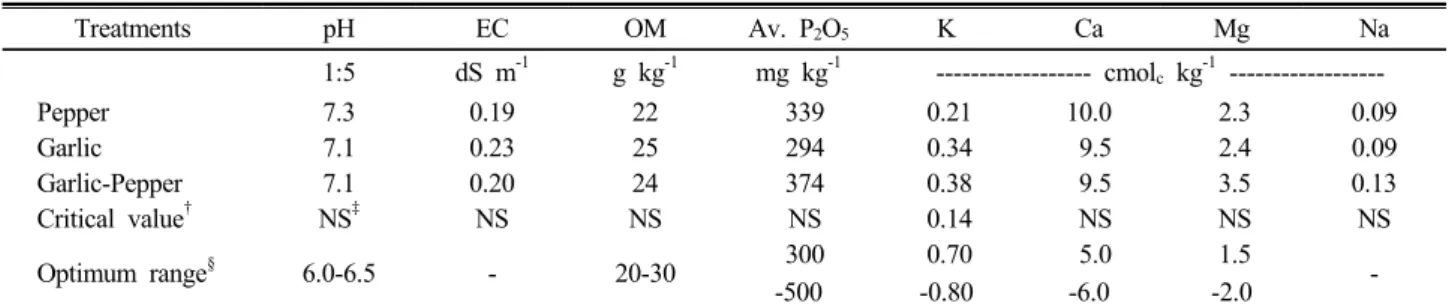
Table 1. Selected soil chemical properties as affected by monoplanting and interplanting of pepper and garlic.
Treatments pH EC OM Av. P2O5 K Ca Mg Na
1:5 dS m-1 g kg-1 mg kg-1 --- cmolc kg-1 ---
Pepper 7.3 0.19 22 339 0.21 10.0 2.3 0.09
Garlic 7.1 0.23 25 294 0.34 9.5 2.4 0.09
Garlic-Pepper 7.1 0.20 24 374 0.38 9.5 3.5 0.13
Critical value† NS‡ NS NS NS 0.14 NS NS NS
Optimum range§ 6.0-6.5 - 20-30 300
-500
0.70 -0.80
5.0 -6.0
1.5
-2.0 -
†Value within a column followed by the same letter are not significantly different at 5% level by critical value of Duncan test; ‡NS refers to not significant; §Fertilizer recommendation for crops (NIAST, 2006).
2008;)와 경종적 방제 (Hwang, 1998)를 겸한 종합방제 가 효과적이라고 하였다. 그리하여 고추 역병 방제용 길 항 균주의 개발에 대한 연구 (Kim et al., 1990; Choi et al., 1994; Kim, 1995; Lee and Kim, 2000)가 진 행되었으며, 역병 발생 포장에 토양 미생물상의 변화를 추적한 바 있다 (Jee et al., 1988; Lee et al., 1993;
Hwang, 1998).
최근 고추품종과 퇴비 시용량에 따른 토양 화학성과 미생물의 변화 (Park et al., 2008)와 고추 단작지에서 퇴비 시용량에 따른 토양 미생물의 변화 (Park and Kim, 2010)에서 인지질지방산 (Phospholipid Fatty Acids:
PLFAs)분석법을 이용하여 평가한 결과, 고추품종에 따 른 차이는 없으나 퇴비 시용량의 증가에 따라 토양 미 생물 활성도가 증가하였다고 보고하였다. 미생물의 PLFAs 분석법은 토양의 미생물 군집의 구조와 다양성을 정량 할 수 있으므로 (Baath and Anderson, 2003; Li et al., 2006) 작물 상호간에 병충해의 기주성이 없는 고 추나 마늘의 연작지에서 토양 미생물 군집의 변화를 평 가하는데 활용될 수 있다
본 연구는 고추와 마늘의 간작의 작부체계를 도입하 여 연작장해를 줄임과 동시에 친환경 고추와 마늘을 같 은 포장에서 1년 내에 생산함으로써 토지이용율도 높이 는 것을 목표로 하여 수행되었다. 본고에서는 고추 연작 지를 대상으로 고추와 마늘간작 작부체계와 마늘 연작 에 대한 토양 미생물의 PLFAs 함량을 분석하였다.
재료 및 방법
본 실험에서 사용한 토양시료는 2000년부터 2009년 까지 10년 동안 고추와 마늘의 다음과 같은 재배법을 사용한 안동대학교 자연과학대학 부속농장 (경북 안동시 송천동 388)에서 2009년에 채취되었다.
포장 설계와 작부 체계 포장은 고추와 마늘의 단 작구와 고추와 마늘 간작구의 3처리 3반복으로 설계하
였다. 실험구당 면적 12 m2를 일정하게 배치하여 매년 동일한 위치에 처리하였다. 실험 초기 (2000년)에 완숙 퇴비 (50 Mg ha-1)와 석회고토 (1.5 Mg ha-1)를 시용하 여 경운한 다음에 이랑과 고랑을 각각 1.2 m와 40 cm 폭으로 만들었고, 고추의 공시품종은 매년 일정하지 않 았으나 건고추용 시판 품종의 종자를 파종하여 30일~
50일 키운 모종을 5월 상순에 정식하였고, 마늘은 10월 중순에 의성종을 파종하여 재배하였다. 고추 단작구는 이랑에 외줄로 고추를 30 cm 간격으로 심었고 마늘 단 작구는 6조 (15 cm 간격)에 10 cm 간격으로 파종하였다.
고추와 마늘의 간작구는 마늘을 수확하기 약 한 달 전 (5월 초순경)에 고추를 이랑 중앙에 외줄로 심은 다음 마늘을 수확하였다. 또한 간작구의 고추를 당년 10월 초순에 끝내고 나서 다시 이랑 양쪽에 4조식으로 마늘 을 파종하였고, 매년 고추와 마늘은 뿌리째 수확하였다.
고추와 마늘을 심은 포장에 잡초발생을 억제하고 토양수 분 증발을 방지할 목적으로 왕겨, 짚, 퇴비 등이 포함된 유기물로 피복하였다. 시험포장은 고추와 마늘을 재배한 2000년부터 화학비료나 농약 및 비닐멀칭을 사용되지 않았고 2004년과 2008년 2회에 걸쳐 퇴비와 석회고토 가 살포되었다.
토양시료 채취 및 분석 토양분석용 시료는 수확 후 각 처리구별로 임의 3개 지점에서 깊이 10 cm까지 토 양을 채취하여 혼합한 토양을 2 mm 체로 거른 후 -80°C 냉장 보관하였다. 토양 pH와 EC는 토양과 증류수를 1:5 로 혼합하여 30분간 진탕 후 초자전극법과 전지전도도 법을 이용하여 측정하였고, 유기물 함량은 Tyurin법, 교 환성 양이온 함량은 1N NH4OAc (pH 7.0)용액으로 30분 간 진탕하여 추출한 여액을 원자흡광분광 분석기 (atomic absorption spectrophotometer, 3300, Perkin Elmer Inc., MA, USA)를 이용하여 측정하였으며, 유효인산은 Lancaster법으로 720 nm에서 비색측정 (uv-vis spectro- photometer, Cintra 40, GBC Sci., VIC, Australia)하 여 정량하였다 (NIAST, 2000).
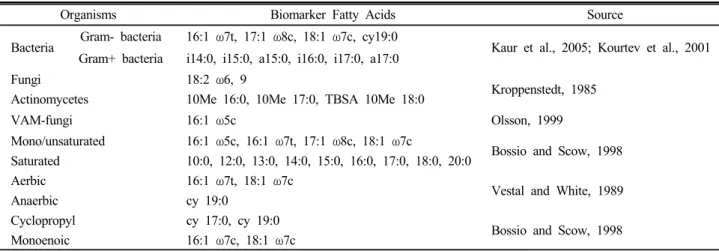
Table 2. PLFAs as biomarkers used for description of the soil microbial communities.
Organisms Biomarker Fatty Acids Source
Bacteria Gram- bacteria 16:1 ω7t, 17:1 ω8c, 18:1 ω7c, cy19:0
Kaur et al., 2005; Kourtev et al., 2001 Gram+ bacteria i14:0, i15:0, a15:0, i16:0, i17:0, a17:0
Fungi 18:2 ω6, 9
Kroppenstedt, 1985 Actinomycetes 10Me 16:0, 10Me 17:0, TBSA 10Me 18:0
VAM-fungi 16:1 ω5c Olsson, 1999
Mono/unsaturated 16:1 ω5c, 16:1 ω7t, 17:1 ω8c, 18:1 ω7c
Bossio and Scow, 1998 Saturated 10:0, 12:0, 13:0, 14:0, 15:0, 16:0, 17:0, 18:0, 20:0
Aerbic 16:1 ω7t, 18:1 ω7c
Vestal and White, 1989
Anaerbic cy 19:0
Cyclopropyl cy 17:0, cy 19:0
Bossio and Scow, 1998 Monoenoic 16:1 ω7c, 18:1 ω7c
Fig. 1. Ordination plot from principal component analysis of phospholipid fatty acids extracted from soils as affected by monoplanting and interplanting of pepper and garlic.
Error bar indicates standard deviation.
인지질 지방산 분석 냉동보관한 토양시료를 이용 하여 인지질 지방산을 추출한 후 토양미생물 군락의 구 성을 분석하였다 (Peacock et al., 2001). 간단히 요약하 면, 5 g의 토양 시료에 chloroform (4 mL), methanol (8 mL), buffer solution (3.2 mL, pH 7.4)을 혼합아 여 지질을 추출한 후 silicic acid column으로 neutral-, glyco- 및 phospho-lipid로 분리하였다. 이 중에서 인 지질을 메틸화한 지방산에 fatty acid methyl ester 19:0 를 내부 표준물질로 넣은 다음 MIDI Sherlock Microbial Identification System (MIDI Inc., DE, USA)으로 지방산을 정성 · 정량하였다. 각 인지질지방산의 값은 150 ng μL-1 농도의 내부 표준물질을 각 시료당 50 μL 넣어 서 계산하였다. 전체 PLFAs 중에서 주요 지표 지방산 은 Li et al. (2006)의 방법에 따른 지방산 분석 지표 들을 이용하여 지방산을 분류하였다 (Table 2).
통계분석 퇴비 시용에 따른 토양의 화학적 특성 및 미생물상의 변화는 Duncan test를 이용한 분산분석을 통해 평가하였고, PLFAs 변화는 다변량 주성분 분석 (multivariate principal component analysis, PCA) 을 통해 평가하였다. 통계 프로그램은 SAS (ver. 9.1.3, SAS Inst., Cary, NC, USA)를 이용하였다.
결과 및 고찰
토양 화학성 고추와 마늘에 대하여 10년 동안 단 작과 간작 형태로 재배한 토양의 2009년 화학성은 재배 법에 따라 큰 차이를 보이지 않았다 (Table 1). 토양 pH 값은 7.1-7.3으로 고추의 노지재배를 위한 적정수 준인 6.0-6.5 보다 높았으며, 또한 교환성 칼슘과 마그 네슘은 각각 9.5-10.0과 2.3-3.5 cmolc kg-1 로 적정 수준인 5.0-6.0과 1.5-2.0 cmolc kg-1 보다 높았다
(NIAST, 2006). 이는 실험초기에 시용한 석회고토와 관 련이 있는 것으로 판단된다 (Lee et al., 2010). 교환성 칼륨은 고추 단작구와 마늘과 고추 간작구 사이에 유의 적인 증가를 나타냈으나 적정범위인 0.70-0.80 보다 훨 씬 낮았다. 이는 유효인산과 더불어 식물의 필수다량영 양원소로 양분으로 이용된 것으로 판단된다.
인지질 지방산 다양성 토양에서 추출하여 확인된 34개의 PLFAs에 대하여 상대적 비율을 PCA로 분석한 결과 주성분1 (PC1)이 총 변이의 51.1%를 설명하였고, 주성분2 (PC2)가 23.1%를 설명하였다 (Fig. 1). PC1은 세 가지 종류의 작부체계를 서로 분리하지 못했지만 PC2 는 고추 단작구를 다른 처리와 분리하였다. 각 주성분에 관여 정도가 큰 지방산들을 Table 3에서 서술하였다.
이는 토양 미생물상이 고추 단작구 즉, 고추 연작지가 마늘 단작구 및 마늘과 고추의 간작구와는 완전히 다른 군락을 형성함을 보여주었다. 고추 단작구의 미생물상을
Table 3. Loading factors of Individual PLFAs most responsible for the changes in PLFAs signatures along with PC1 and PC2.
PLFAs PC1 PC2
19:0 cy ω8c 0.22 0.70
16:0 10Me -0.04 0.41
17:1 ISO I -0.56 0.21
16:00 -0.01 0.11
18:2 ω6, 9c -0.17 0.09
20:4 ω6,9,12,15c -0.17 0.05
15:0 30H 0.70 0.02
18:1 ω9c -0.14 0.02
16:1 20H -0.14 -0.09
15:0 ISO -0.04 -0.10
15:00 0.06 -0.11
12:0 ISO 0.03 -0.12
18:1 ω7c 0.06 -0.14
17:1 ω8c 0.00 -0.15
11Me 18:1 ω7c -0.06 -0.16
17:0 10Me 0.04 -0.16
15:1 ISO G -0.04 -0.17
16:1 ω5c 0.04 -0.25
Fig. 2. Microbial activity of soils as affected by mono- planting and interplanting of pepper and garlic. Error bar indicates standard deviation.
Fig. 3. Ratio indices of PLFAs of fungi, bacteria, actino- mycetes and VAM-fungi to total PLFAs (A) and Gram-/
Gram+, aerobic/anaerobic, saturated/monounsaturated, and cyclopropyl/monoenoic PLFAs' ratio (B) in soils as affected by monoplanting and interplanting of pepper and garlic.
Error bar indicates standard deviation.
다르게 하는 주요 지방산들은 19:0 CYCLO ω8c, 16:0 10 methyl, 17:1 ISO I, 16:00, 15:0 ISO, 15:00, 12:0 ISO, 18:1 ω7c, 17:1 ω8c, 11 methyl, 18:1 ω7c, 17:0 10 methyl, 15:1 ISO G, 16:1 ω5c 등 이었다 (Table 3).
이들 중에서 PC2 절대값이 0.2이상 크기인 19:0 CYCLO ω8c, 16:0 10 methyl, 17:1 ISO I, 16:00의 지방산은 정의 loading score를 가졌고, 나머지 지방산들은 부의 loading score를 가졌기 때문에 이들 고추 단작구의 정 과 부의 지방산들이 각각 반대의 방향에서 토양 미생물 상의 구분에 기여하였다.
토양 미생물 활성도 PLFAs로 측정한 토양 미생 물은 마늘 단작구의 토양에서 가장 높은 43.5 nmol PLFA g soil-1이었고, 고추 단작구에서는 가장 낮은 24.3 nmol PLFA g soil-1이었다 (Fig. 2). 마늘 단작구와 고 추 단작구는 서로 유의적인 차이를 보였다. 이는 마늘 단작구와 마늘과 고추 간작구의 관찰한 바에 따르면 마 늘은 섬유상근계 (fibrous root system)를 형성하고 고 추는 주근계 (tap root system)를 형성하므로, 섬유상 근계의 보다 넓은 비표면적에 의한 토양 미생물체량의 증가에 의한 것으로 판단된다 (Sadava et al., 2006).
미생물 군집의 구조 Figure 3A는 작부체계에 따 른 미생물상의 구조의 변화를 설명하기 위해서 세균, 곰
팡이, 방선균, 내생균근균의 비율을 분산분석한 결과이 며, Fig. 3B는 그람음성균/그람양성균 비율, 호기성균/
혐기성균 비율, 포화지방산/불포화지방산 비율 및 cyclo- 지방산/전구체 비율을 분산분석한 결과이다. Figure 3 에서 보는 바와 같이 방선균은 고추 단작구에서 유의성 있는 증가를 보였고, 반면에 내생균근균은 마늘 단작구 및 마늘과 고추 간작구에서 유의성 있는 증가를 보였다.
이는 작부체계에 따라 특정 미생물군의 활성에 차이가 있을 수 있으며, 작부체계의 차이는 세균이나 곰팡이보
다 방선균과 내생균근균의 활성에 미치는 영향이 더 클 수 있음을 의미한다. 따라서 작부체계에 의한 미생물 군 락의 변화 지표로서 방선균과 내생균근균을 이용할 수 있을 것으로 사료된다. 지표지방산을 이용한 여러 지표 를 만들 수 있는데, 대표적인 것으로서 그람음성균/그람 양성균의 비율, 호기성균/혐기성균의 비율, 포화지방산/
불포화지방산 비율, cyclopropyl 지방산/전구체 비율 등 을 들 수 있다. 이들 지표 중, 고추 단작구는 마늘 단작 구와 비교하여 포화지방산/불포화지방산 비율이 유의성 있게 증가하였다. 유의성은 없었지만 고추 단작구에서 혐 기성균의 비율과 cyclopropyl 지방산/전구체의 비율을 높인 것은 고추 단작이 혐기적, 수분포화 상태 등과 관 계할 수 있는 것으로 생각된다. 또한 방선균의 비율의 변화와 포화지방산/불포화지방산의 비율의 변화가 어느 정도 유사하였는데 (Park and Kim, 2010), 이것은 포 화지방산이 방선균을 포함한 그람양성균의 지방산과 상관 관계가 있다는 연구결과를 뒷받침한다 (Brennan, 1988).
요 약
본 연구는 고추 연작의 작부체계가 토양 미생물의 변 화에 미치는 효과를 분석하고자 10년 동안 무농약 및 화학적 무비료의 시용방법으로 수행되었다. 지표 PLFAs 분석을 통해 토양미생물상과 활성도를 평가하였다. 고추 와 마늘의 단작, 마늘과 고추의 간작의 작부체계에 따른 토양의 화학학성은 큰 차이를 보이지 않았으나 토양 미 생물의 PLFAs의 다양성은 PC2에서 다른 작부체계와 상 이한 미생물상으로 구분되었으며, 토양 미생물의 PLFAs 의 총량은 마늘 단작구와 비교하여 고추 단작구에서 유 의적인 감소를 보였으며, 미생물군집의 구조는 내생균근 균의 비율에서 유의성있는 감소를 보였다. 이는 마늘과 고추의 근계에 따라 내생균근균의 미생물체량의 감소하 였으며, 이것이 토양미생물상과 활성도를 다른 작부체계 와 구분한 것으로 판단된다.
인 용 문 헌
Baath, E. and T.H. Anderson. 2003. Comparison of soil fungal/bacterial ratios in a pH gradient using physio- logical and PLFA-based techniques. Soil Biol. Biochem.
35:955-963.
Bowers, J.H., R.M. Sonada, and D.J. Mitchell. 1990. Path coefficient analysis of the effect of rain fall variables on the epidemilogy of Phytophthora blight of pepper caused by Phytophthora capsaici. Phytopathology 80:1439-1446.
Brennan, P.J. 1988. Mycobacterium and other actinomycetes.
p. 204-298. In C. Ratledge et al. (ed.). Microbial lipids, vol. 1. Academic Press, London.
Choi, Y.C., J.G. Lee, and Y.S. Bae. 1994. Antimicroo- rganism AC-1 strain culture for control of pepper Phytophthora blight. Research Report 36. Rural Deve- lopment Administration. Suwon, Korea.
Hwang, B.K. 1998. Development of biological control system for high quality of pepper. Research Report.
Ministry for Agriculture and forestry. Seoul, Korea.
Hwang, B.K. and Kim. G.H. 1995. Phytopthora blight of pepper and its control in Korea. Plant Dis. 79:221-227.
Jee H.J., C.G. Nam, and C.H. Kim. 1988. Studies on biological control of Phytophthora blight of red pepper:
I. isolation of antagonists and evaluation of antagonistic activity in vitro and in greenhouse. Kor. J Plant Pathol.
4:305-312.
Kim, C.H. and Y.K. Kim, 2002. Present status of soil borne disease incidence and scheme for its integrated management in Korea. Res. Plant Dis. 8:146-161.
Kim, K.Y., J.Y. Oh, S.K. Park, and Y.A. Shin. 1990.
Pepper interplanting with Other vegetables for decrease in Phytophthora blight of pepper. Research Report 32.
Rural Development Administration. Suwon, Korea.
Kim, S.H., J.C. Cai, S.J. Park, and B.W. Kim. 2006.
Principles of cultivation for crops and vegetables. Hyang- moonsa. Seoul, Korea.
Kim, Y.C., H. Jung, K.Y. Kim, and S.K. Park. 2008. An effective biocontrol bioformulation against Phytophthora blight of pepper using growth mixtures of combined chitinolytic bacteria under different field conditions. Eur.
J. Plant Pathol. 120:373-382.
Kim Y.K. 1995. Biological control of Phytophthora blight of red pepper by antagonistic Bacillus polymyxa AC-1.
p. 78. PhD Thesis. Seoul National University. Seoul, Korea.
Korea Rural Economic Institute (KREI). 2010. Insight on Korean agriculture: green development and agriculture- rural sustainable vision. Ministry for Food, Agriculture, forestry, and Fisheries. Seoul, Korea.
Lee, E.T. and S.D. Kim. 2000. Selection and Antifungal activity of antagonistic bacterium Pseudomonas fluorescens sp. 2112 against red-pepper rotting Phytophthora capsici.
Kor. J. Appl. Microbiol. Biotechnol. 28:334-340.
Lee, H.W., C.H. Kim, and E.J. Lee. 1990. Effect of non-host plant interplanting cultivation on control of pepper Phytophthora blight. Kor. Plant Phathol. 6:
440-446.
Lee, H.W., J.D. Kim, Y.S. Lee, and J.T. Cho. 1993. Effect of plant for control of pepper Phytophthora blight on soil chemical property and soil microorganisms. Research Report 35. Rural Development Administration. Suwon, Korea.
Lee, Y.H., S.T. Choi, S.T. Lee, K.P. Hong, W.D. Song, J.H. Lee, and J.S. Cho. 2010. Seasonal change in the soil chemical properties from sweet persimmon orchard in Gyeongnam province. Kor. J. Soil Sci. Fer. 43:450-455.
Li, W.H., C.B. Zhang, H.B. Jiang, G.R. Xin, and Z.Y.
Yang. 2006. Changes in soil microbial community associated with invasion of the exotic weed, Mikania
micrantha HBK. Plant Soil. 281:309-324.
Ministry for food, agriculture, forestry and fisheries (MFAFF).
2009 Agricultural and forestry statistical yearbook. p.
221-223. Ministry for food, agriculture, forestry and fisheries. Seoul, Korea.
Nam, K.W., N.K. Sung, and C.H. Kim. 1990. Control of Phytophthora blight of pepper by interplanting with peanut. Kor. J. Plant Pathol. 6:207-213.
National Institute of Agricultural Science and Technology (NIAST). 2000. Analysis of soil plants. National Institute of Agricultural Science and Technology. Suwon, Korea.
NIAST. 2006. Fertilizer recommendation for crops. NIAST,
RDA, Suwon, Korea.
Park, K., T. Kwon, K. Jang, and Y. Kim. 2008. Short-term effects of cultivars and compost on soil microbial activities and diversities in red pepper field. Kor. J.
Environ. Agri. 27:1-5.
Park, K. and S.J. Kim. 2010. Changes of soil microbial phospholipid fatty acids as affected by red pepper cultivation and compost amendment. Kor. J. Soil Sci.
Fert. 43:194-199.
Peacock, A.D., M.D. Mullen, D.B. Ringelberg, D.D. Tyler, D.B. Hedrick, P.M. Gale, and D.C. White. 2001. Soil microbial community responses to diairy manure or ammonium nitrate applications. Soil Biol. Biochem.
33:1011-1019.
Sadava, D. H.C. Heller, G.H. Orians, W.K. Purves, and D.M. Hillis. 2006. Life (8th ed.). p. 744-760. Sinauer Associates Inc. MA. USA.
Vestal, J.R. and D.C. White. 1989. Lipid analysis in microbial ecology. Bioscience 39:535-541.