• 검색 결과가 없습니다.

Two-Week Repeated Dose Toxicity of Atractylodis Rhizoma Alba in F344 RatsHyoung-Yun Han

N/A
N/A
Protected

Academic year: 2022

Share "Two-Week Repeated Dose Toxicity of Atractylodis Rhizoma Alba in F344 RatsHyoung-Yun Han"

Copied!
7
0
0

로드 중.... (전체 텍스트 보기)

전체 글

(1)

22(3) : 180-186 (2016)

http://dx.doi.org/10.20307/nps.2016.22.3.180

180

Two-Week Repeated Dose Toxicity of Atractylodis Rhizoma Alba in F344 Rats

Hyoung-Yun Han

1

, Young-Su Yang

1

, Soo Nam Kim

1

, Su-Cheol Han

1

, Jong-Hwa Lee

1

, Ja Young Jeong

2

, Hang-sik Roh

2

, Ji Hyeon Seok

2

, Joo Sang Lee

3

, Jeong-Ah Kim

4

, and Byung-Sun Min

3,

*

1

Korea Institute of Toxicology, 141 Gajeong-ro, Yuseong-gu, Daejeon 34114, Korea

2

Toxicological Research Division, Toxicological Evaluation and Research Department, National Institute of Food and Drug Safety Evaluation, Chungcheongbuk-do 28159, Korea

3

College of Pharmacy, Drug Research and Development Center, Catholic University of Daegu, Gyeongsangbuk-do 38430, Korea

4
College of Pharmacy, Research Institute of Pharmaceutical Sciences, Kyungpook National University, Daegu 41566, Korea

Abstract − This research is to estimate the toxicity of Atractylodis Rhizoma Alba (ARA) in F344 rats and to find a dose level for the 13 weeks toxicity study. A hot water extract of ARA (ARWE) was administered orally to F344 rats at dose levels of 0 (vehicle control), 500, 1000, 2000, 3500, and 5000 mg/kg/day for 2 weeks. Each group was composed to five male and five female F344 rats. According to the result, there were no ARWE- related adverse changes in mortality, body weights, food consumption, urinalysis, hematology, clinical chemistry, gross finding at necropsy, and organ weight examination. Salivation was observed in 3500 and 5000 mg/kg/day in male and female rats but it could not have found any relationship with ARWE administration. Based on our findings, ARWE may not cause toxicity in rats under the experimental conditions. Therefore, dose level of 5000 mg/kg/day as a highest treatment group in 13-week exposure study is recommended for further toxicity assessment.

Keywords − Atractylodis Rhizoma Alba, Toxicity test, F344 rats, Water extract

Introduction

Medicinal herbs have been traditionally used in Korea, China, and Japan for a long time. Recently, medicinal herbs as complementary and alternative medicine have been widely used even in western countries. Traditional Oriental herbal prescriptions have become popular over the past decades; they are widely used for the treatment and prevention of various diseases because of their effectiveness (Jiang, 2005; Liu et al., 2008).

1,2

However, the safety of their use has recently been questioned due to several reports on side effects and fatalities (Ernst, 2002;

Stewart et al., 1999).

3,4

Recently, researchers using protocols for evidence-based medicine have conducted extensive studies to establish scientific evidence of the efficacy of medicinal herbs. However, few scientific studies have examined on safety and toxicity of medicinal herbs.

Atractylodis Rhizoma Alba (ARA; the rhizome of Atractylodes japonica Koid. and A. macrocephala Koid.) is well known as medicinal herb in Korea, China, and

Japan for the treatment of dizziness, anticancer activity (Cheong et al., 1999),

5

arthritis (Kim et al., 2012),

6

gastrointestinal disease, and anti-obesity activity (Han et al., 2012).

7

ARA contains several eudesmane-type sesqui- terpenoids including atractylon, atractylodes, atractylodiol (Nishikawa et al., 1977),

8

and sesquiterpene glycosides including atractyloside A and 10-epi-atractyloside A (Kitazima et al., 2003).

9

However, there is insufficient background information on toxicological evaluation of ARA extract to support the safety use. Therefore, the purpose of the present study was to evaluate the toxicity of ARA hot water extract (ARWE) orally administered in male and female F344 rats and to find a dose levels for the 13 weeks toxicity study. The present study was per- formed in compliance with the Good Laboratory Practice (GLP) of the Organization for Economic Cooperation and Development (OECD, 1997) and the Ministry of Food and Drug Safety (MFDS, Republic of Korea, 2014).

Experimental

Preparation of ARWE and HPLC analysis − Freeze- dried powdered ARWE was prepared from Atractylodis Rhizoma Alba purchased from oriental market in Ulsan-si

*Author for correspondence

Byung-Sun Min, College of Pharmacy, Drug Research and Develop- ment Center, Catholic University of Daegu, Gyeongsangbuk-do 38430, Korea.

Tel: +82-53-850-3613; E-mail: [email protected]

(2)

(Kwangmyungdang Medicinal Herbs Co.) and authenti- cated by Prof. Byung-Sun Min, College of Pharmacy, Catholic University of Daegu, Korea. HPLC analysis was performed by Prof. Byung-Sun Min and the voucher specimen CUD-3064-1 was deposited at the Herbarium of the College of Pharmacy, Catholic University of Daegu, Korea. ARA samples were proved to be safe in the aspect of the contaminations of pesticides (total dichlorodipheny- ltrichloroethane, total hexachlorocyclohexane, aldrin, endrin and dieldrin), heavy metals (As, Cd, Hg and Pb), and aflatoxin B1 (data not shown). Total dichlorodiphenyltri- chloroethane and total hexachlorocyclohexane contents were less than 0.1 and 0.2 mg/kg, respectively. Aldrin, endrin, dieldrin, and aflatoxin B1 contents were less than 0.01 mg/kg. In addition, Cd content was less than 0.3 mg/

kg. After the hazardous substances testing, the Atractylodis Rhizoma Alba extract was prepared according to the standard decoction method of the Korean Pharmacopoeia.

Active components were quantitatively determined using a high performance liquid chromatography (HPLC) method.

As a result, content of atractylenolide III, a marker compound of Atractylodis Rhizoma Alba, was 0.085 µg/

g. The Atractylodis Rhizoma Alba hot water extract (ARWE) was chemically stable at 5

o

C during 6 months (Keum et al., 2014).

10

Lyophilized ARWE powder was suspended in 10 mL distilled water (Dai Han Pharm. Co., Ltd, Korea) with concentrations of 0, 50, 100, 200, 350, and 500 mg/mL by serial dilution. The appropriate quantity of the test sample for the highest dose was measured and mixed with the vehicle. The mixture of the test sample with vehicle (distilled water) was prepared once a week and stored in a refrigerator at 5

o

C.

Animals and maintenance − Specific pathogen free F344 rats were obtained from Orient Bio Co., Ltd (Seongnam-si, Korea). Thirty males and females were assigned to each group administered at 0, 500, 1000, 2000, 3500, and 5000 mg/kg/day for 2 weeks by oral gavage. Five animals per cage for the quarantine and acclimatization periods, and 2 animals per cage for the treatment period were maintained in a polycarbonate cage (255 W × 473 L × 200H mm). Each group consisted of 5 animals of each sex. The body weight range prior to the start of dosing ranged from 126.3 to 190.8 g for males and from 96.9 to 124.8 g for females. Sterilized tap water and pelleted food for rats (PMI nutrition International, USA) were given to animals ad libitum. Animal room environment was as following; temperature: 23 ± 3

o

C, relative humidity: 50 ± 10%, 12-hour light/12-hour dark photoperiod with 150~300 lux (turn on at 8 a.m./ turn off at 8 p.m.), ventilation: 10 - 20 times/hr. All personnel in

the animal facility wore clothes, soft caps, masks, and gloves which had been autoclaved high pressure and steam (121

o

C, 20 min). This study was reviewed and assessed by the Institutional Animal Care and Use Com- mittee (IACUC) of KIT accredited by the Association for Assessment and Accreditation of Laboratory Animal Care (AAALAC) International in 1998.

Treatment and toxicity assessment − Oral administration was adopted for this toxicity assessment study because it is an intended route of ARWE to humans. The dosing volume (10 mL per kg of body weight) of test sample for each animal was calculated with the Path/Tox software based on the most recently recorded body weights before and after dosing. In a previous study of similar crude drug in Korea Institute of Toxicology (not published), doses of 0, 500, 1000, 2000, 3500, and 5000 mg/kg/day were well tolerated. Therefore, the highest dose level of 5000 mg/kg and the same doses with previous study were selected for this 2-week repeated-dose study.

Behavior changes and body conditions of all animals were checked once daily throughout the acclimation period. Clinical signs of the all animals were examined and recorded twice daily (before and after dosing) during the treatment period and once before on the day of necropsy.

Animals were weighed prior to randomization on the day of arrival, before dosing on the first day of treatment and every other day thereafter. A final weighing was performed on the day of necropsy. Food consumption was measured and recorded once weekly during the pre-treatment and treatment periods. A fixed quantity of food was provided and food consumption for individual animal was measured during a week. The amount of food intake was calculated as g/animal/day.

Urine samples were collected overnight (for approxi- mately 16 hours) from animals housed in metabolism cages in the last week of treatment. Each animal was housed in an individual metabolism cage, food was withdrawn overnight during urine collection but water was available. Urinalysis was performed using urine automatic analyzer (Cobas U411, Roche, Germany) and urine stick (Multistix, 10 TM, Roche, Germany) to evaluate the following parameters; urine volume, color, specific gravity, pH, protein, ketone body, occult blood, glucose (GLU), bilirubin (BIL), nitrite, and urobilinogen. Also microscopic examination for urine cast, epithelial cell, red blood cell (RBC), and white blood cell (WBC) were performed.

All animals were fasted overnight before necropsy and

blood sampling. Blood samples for hematology and

clinical chemistry were collected from the vena cava of

all animals at necropsy under isoflurane anesthesia. Blood

(3)

samples for hematology analysis were collected into tubes containing EDTA-2K and analyzed to evaluate white blood cell count (WBC), red blood cell count (RBC), hemoglobin (HGB), hematocrit (HCT), mean corpuscular volume (MCV), mean corpuscular hemoglobin (MCH), mean corpuscular hemoglobin concentration (MCHC), platelet (PLT), differential leucocyte absolute and relative (%) counts (neutrophil, lymphocyte, monocyte, eosinophil, basophil and large unstained cell), and reticulocyte absolute and relative (%) counts using a hematological analyzer (ADVIA 2120i, Siemens, USA). In addition, blood samples treated with 3.2% sodium citrate were analyzed for pro- thrombin time (PT) and activated partial thromboplastin time (APTT) using a coagulation analyzer (ACL Elite Pro, Instrumental Laboratory, Italy).

Blood samples for biochemical analysis were collected into tubes without anticoagulant at the same time as for hematology, placed at room temperature (for at least 90 minutes) and then centrifuged (approximately 3,000 rpm, 10 minutes, at room temperature) to obtain serum. The parameters including blood urea nitrogen (BUN), alanine

aminotransferase (ALT), aspartate aminotransferase (AST), alkaline phosphatase (ALP), creatinine (CREA), GLU, total cholesterol (TCHO), albumin/globulin ratio (A/G), total protein (TP), albumin (ALB), creatine kinase (CK), triglycerides (TG), total TBIL, and phospholipids (PL) were measured using an automatic analyzer (TBA 120FR NEO, Toshiba Co., Japan).

On the scheduled termination sacrifice (Day 15 for males and females), all surviving animals were deprived of food overnight and anesthesized by isoflurane inhalation.

After blood sampling, the animals were euthanized by exsanguination from the vena cava and aorta. A full macroscopic examination (abdominal, thoracic, and cranial cavities, etc) was performed. The absolute organ weight including brain, pituitary gland, adrenal gland, liver, spleen, kidneys, heart, thymus, lungs, salivary gland, thyroid gland, testes, epididymides, seminal vesicle, prostate, uterus, and ovaries were weighed and the relative organ weight (% of terminal body weight) were calculated.

Statistical analysis − Collected data were statistically analyzed by multiple comparison methods. When the

Fig. 1. Changes of body weights after treatment with 500, 1000, 2000, 3500 and 5000 mg/kg/day ARWE in male rats.

Fig. 2. Changes of body weights after treatment with 500, 1000, 2000, 3500 and 5000 mg/kg/day ARWE in female rats.

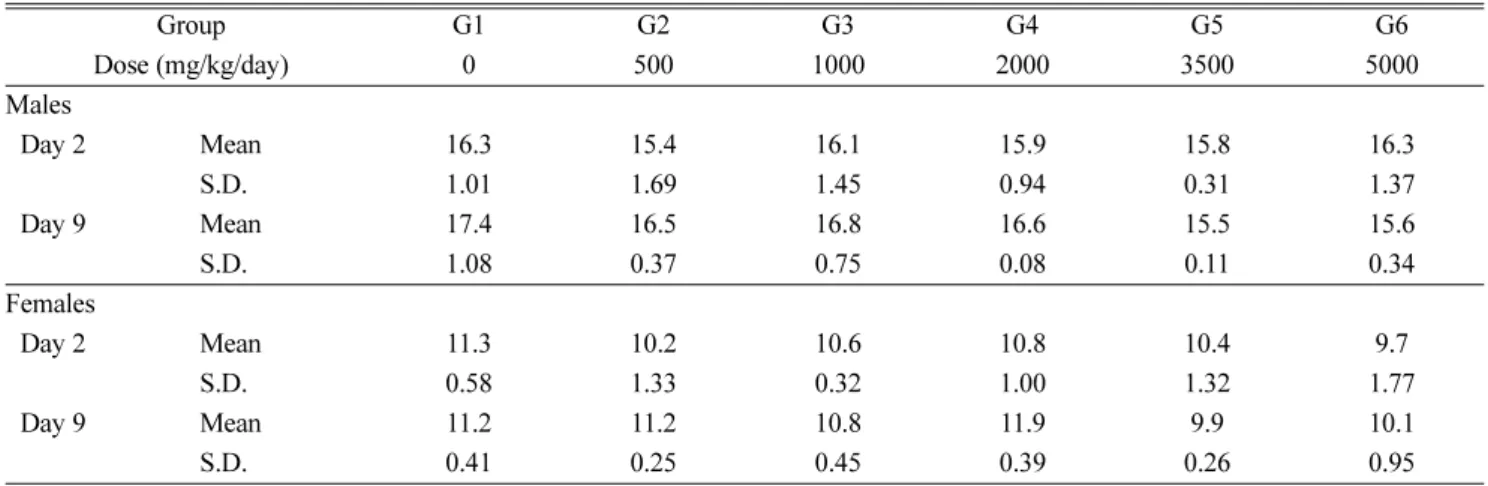
Table 1. Comparison of food intake after treatment with 500, 1000, 2000, 3500 and 5000 mg/kg/day ARWE between the treatment groups (Unit : g )

Group G1 G2 G3 G4 G5 G6

Dose (mg/kg/day) 0 500 1000 2000 3500 5000

Males

Day 2 Mean 16.3 15.4 16.1 15.9 15.8 16.3

S.D. 1.01 1.69 1.45 0.94 0.31 1.37

Day 9 Mean 17.4 16.5 16.8 16.6 15.5 15.6

S.D. 1.08 0.37 0.75 0.08 0.11 0.34

Females

Day 2 Mean 11.3 10.2 10.6 10.8 10.4 9.7

S.D. 0.58 1.33 0.32 1.00 1.32 1.77

Day 9 Mean 11.2 11.2 10.8 11.9 9.9 10.1

S.D. 0.41 0.25 0.45 0.39 0.26 0.95

(4)

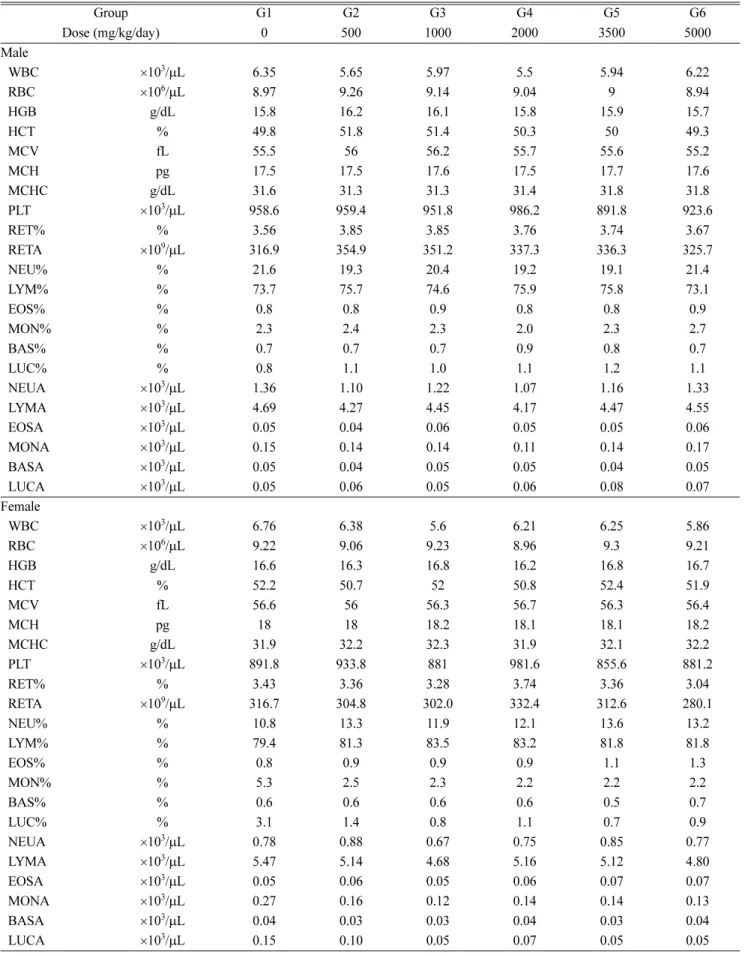
Table 2. Hematological values observed after treatment with 500, 1000, 2000, 3500 and 5000 mg/kg/day ARWE

Group G1 G2 G3 G4 G5 G6

Dose (mg/kg/day) 0 500 1000 2000 3500 5000

Male

WBC ×10

3

/µL 6.35 5.65 5.97 5.5 5.94 6.22

RBC ×10

6

/ µL 8.97 9.26 9.14 9.04 9 8.94

HGB g/dL 15.8 16.2 16.1 15.8 15.9 15.7

HCT % 49.8 51.8 51.4 50.3 50 49.3

MCV fL 55.5 56 56.2 55.7 55.6 55.2

MCH pg 17.5 17.5 17.6 17.5 17.7 17.6

MCHC g/dL 31.6 31.3 31.3 31.4 31.8 31.8

PLT ×10

3

/µL 958.6 959.4 951.8 986.2 891.8 923.6

RET% % 3.56 3.85 3.85 3.76 3.74 3.67

RETA ×10

9

/ µL 316.9 354.9 351.2 337.3 336.3 325.7

NEU% % 21.6 19.3 20.4 19.2 19.1 21.4

LYM% % 73.7 75.7 74.6 75.9 75.8 73.1

EOS% % 0.8 0.8 0.9 0.8 0.8 0.9

MON% % 2.3 2.4 2.3 2.0 2.3 2.7

BAS% % 0.7 0.7 0.7 0.9 0.8 0.7

LUC% % 0.8 1.1 1.0 1.1 1.2 1.1

NEUA ×10

3

/ µL 1.36 1.10 1.22 1.07 1.16 1.33

LYMA ×10

3

/ µL 4.69 4.27 4.45 4.17 4.47 4.55

EOSA ×10

3

/µL 0.05 0.04 0.06 0.05 0.05 0.06

MONA ×10

3

/ µL 0.15 0.14 0.14 0.11 0.14 0.17

BASA ×10

3

/ µL 0.05 0.04 0.05 0.05 0.04 0.05

LUCA ×10

3

/µL 0.05 0.06 0.05 0.06 0.08 0.07

Female

WBC ×10

3

/ µL 6.76 6.38 5.6 6.21 6.25 5.86

RBC ×10

6

/ µL 9.22 9.06 9.23 8.96 9.3 9.21

HGB g/dL 16.6 16.3 16.8 16.2 16.8 16.7

HCT % 52.2 50.7 52 50.8 52.4 51.9

MCV fL 56.6 56 56.3 56.7 56.3 56.4

MCH pg 18 18 18.2 18.1 18.1 18.2

MCHC g/dL 31.9 32.2 32.3 31.9 32.1 32.2

PLT ×10

3

/ µL 891.8 933.8 881 981.6 855.6 881.2

RET% % 3.43 3.36 3.28 3.74 3.36 3.04

RETA ×10

9

/µL 316.7 304.8 302.0 332.4 312.6 280.1

NEU% % 10.8 13.3 11.9 12.1 13.6 13.2

LYM% % 79.4 81.3 83.5 83.2 81.8 81.8

EOS% % 0.8 0.9 0.9 0.9 1.1 1.3

MON% % 5.3 2.5 2.3 2.2 2.2 2.2

BAS% % 0.6 0.6 0.6 0.6 0.5 0.7

LUC% % 3.1 1.4 0.8 1.1 0.7 0.9

NEUA ×10

3

/µL 0.78 0.88 0.67 0.75 0.85 0.77

LYMA ×10

3

/µL 5.47 5.14 4.68 5.16 5.12 4.80

EOSA ×10

3

/ µL 0.05 0.06 0.05 0.06 0.07 0.07

MONA ×10

3

/ µL 0.27 0.16 0.12 0.14 0.14 0.13

BASA ×10

3

/µL 0.04 0.03 0.03 0.04 0.03 0.04

LUCA ×10

3

/µL 0.15 0.10 0.05 0.07 0.05 0.05

(5)

Bartlett’s test indicated no significant deviations from variance homogeneity, the ANOVA test was conducted to determine if any of the group means differed at the p <

0.05 level. When found significant in ANOVA, Dunnett’s test was used to determine the difference between control group and treatment groups. In the case of significant deviations from variance homogeneity in the Bartlett’s test, a non-parametric comparison test, Kruskal-Wallace (H) test, was conducted to determine if any of the group means differed at the P < 0.05 level. When a significant difference was observed in the Kruskal-Wallace (H) test, the Dunn's Rank Sum test was conducted to quantify the specific pairs of group comparison, which are signifi- cantly different. The Fisher’s exact test was conducted to determine the pairs of group comparison (including the

prevalence or the percentage). The level of probability was taken as 1 or 5%. Statistical analyses were performed by comparing the different dose groups with the vehicle control group using Path/Tox (version 4.2.2, Xybion Medical Systems Corporation).

Result and Discussion

Many studies have reported the pharmacological effect or the analysis for extracts of Atractylodis Rhizoma Alba.

However, there is no information on its safety or toxicity as a subchronic toxicity. Therefore, to obtain the toxicity data of ARWE and to find a dose levels for the 13 weeks toxicity study, F344 rats were orally treated with ARWE for 2 weeks. Rats consisted of six groups including 0

Table 3. Clinical chemical values observed after treatment with 500, 1000, 2000, 3500 and 5000 mg/kg/day ARWE

Group G1 G2 G3 G4 G5 G6

Dose (mg/kg/day) 0 500 1000 2000 3500 5000

Male

GLU mg/dL 127.6 138.9 137.6 139.1 119.9 134.5

BUN mg/dL 16.15 16.21 16.55 16.14 16.64 15.38

CREA mg/dL 0.58 0.56 0.57 0.58 0.57 0.52

TP g/dL 6.88 7.02 7 7.31 6.88 6.56

ALB g/dL 4.73 4.81 4.8 4.93 4.74 4.62

A/G ratio 2.21 2.17 2.18 2.13 2.22 2.4

AST IU/L 108.1 119 115.5 113.6 139.2 100.9

ALT IU/L 47.8 53.4 50.1 50.7 66.3 43.5

TBIL mg/dL 0.086 0.088 0.088 0.091 0.091 0.084

ALP IU/L 605.2 604.6 652.3 628.6 620.1 577.8

TCHO mg/dL 56.8 59.8 58.0 60.8 58.2 47.2

TG mg/dL 51.7 57.3 55.3 50.4 49.8 43.8

CK IU/L 701.8 736.2 771.8 707.2 884.2 660.0

PL mg/dL 102.2 107.0 107.4 107.6 102.8 89.0

Female

GLU mg/dL 86.5 77.3 77.2 71.9 87.8 84

BUN mg/dL 19.08 18.55 18.31 18.24 18.07 17.95

CREA mg/dL 0.53 0.53 0.52 0.55 0.54 0.53

TP g/dL 6.54 6.54 6.58 6.43 6.65 6.56

ALB g/dL 4.59 4.6 4.6 4.5 4.65 4.62

A/G ratio 2.36 2.37 2.33 2.34 2.34 2.38

AST IU/L 111.4 111.3 106 108.4 137 101.1

ALT IU/L 37.2 35.7 35.5 37.1 51.9 35.9

TBIL mg/dL 0.089 0.085 0.088 0.091 0.087 0.084

ALP IU/L 508.4 498.3 470.9 509.1 493.0 492.1

TCHO mg/dL 95.8 88.0 91.2 92.0 87.4 90.4

TG mg/dL 76.9 76.1 70.2 78.8 69.6 69.0

CK IU/L 947.6 869.0 813.2 891.0 952.8 744.0

PL mg/dL 161.6 151.0 158.6 155.6 151.0 157.4

(6)

(vehicle control), 500, 1000, 2000, 3500, and 5000 mg/

kg/day. Mortality, clinical signs, body weight, food consumption, hematology, clinical chemistry, urinalysis, macroscopic findings, and organ weight were observed.

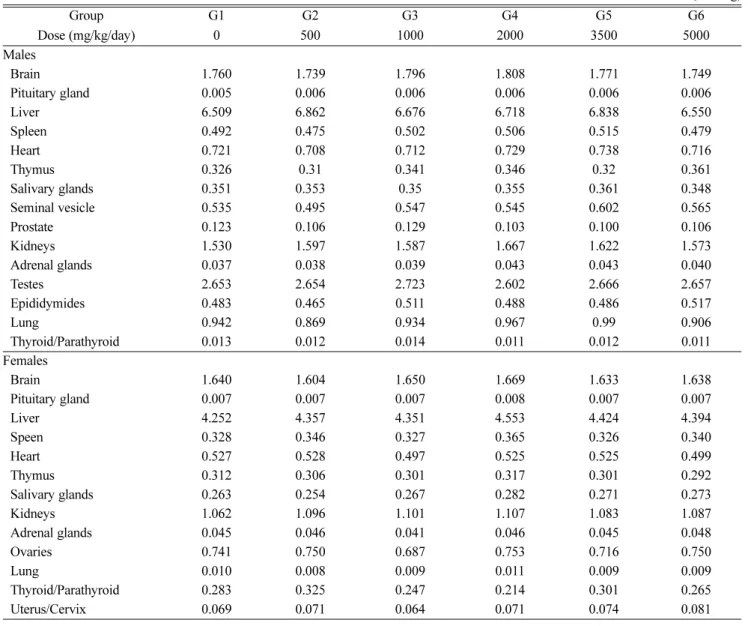
In 2-week repeated oral toxicity study, a certain treatment- related mortality was not found in any groups throughout the study period. In addition, there were no treatment- related body weights (Fig. 1 and 2), food consumption (Table 1), urinalysis, hematology (Table 2), clinical che- mistry (Table 3), and organ weight (Table 4 and Table 5).

In clinical observations, salivation was observed in 3500 and 5000 mg/kg/day groups in both sex. However, these clinical observations were not considered to be related to the ARWE because these signs were temporarily observed, and it was not showed dose-response relationship.

In macroscopic examination, diaphragmatic hernia of liver

was observed at vehicle control, 2000 mg/kg/day in males, and 500 mg/kg/day in females. However, this finding was not considered to be related to the ARWE because diaphragmatic hernia is species-specific and spontaneously occurred in F344 rats (Boorman, 1990).

11

In conclusion, ARWE was administered to male and female F344 rats at doses of 0 (vehicle control), 500, 1000, 2000, 3500, and 5000 mg/kg/day for 2 weeks by oral gavage. There were no ARWE-related adverse changes in mortality, body weights, food consumption, urinalysis, hematology, clinical chemistry, macroscopic finding at necropsy, and organ weight examination. Salivation was observed in 3500 and 5000 mg/kg/day groups in both sex.

However, the incidence and severity were insignificant and salivary gland weight was not changed. Therefore, it is considered that ARWE may not cause toxicity in rats

Table 4. Absolute organ weights after treatment with 500, 1000, 2000, 3500 and 5000 mg/kg/day ARWE (Unit : g)

Group G1 G2 G3 G4 G5 G6

Dose (mg/kg/day) 0 500 1000 2000 3500 5000

Males

Brain 1.760 1.739 1.796 1.808 1.771 1.749

Pituitary gland 0.005 0.006 0.006 0.006 0.006 0.006

Liver 6.509 6.862 6.676 6.718 6.838 6.550

Spleen 0.492 0.475 0.502 0.506 0.515 0.479

Heart 0.721 0.708 0.712 0.729 0.738 0.716

Thymus 0.326 0.31 0.341 0.346 0.32 0.361

Salivary glands 0.351 0.353 0.35 0.355 0.361 0.348

Seminal vesicle 0.535 0.495 0.547 0.545 0.602 0.565

Prostate 0.123 0.106 0.129 0.103 0.100 0.106

Kidneys 1.530 1.597 1.587 1.667 1.622 1.573

Adrenal glands 0.037 0.038 0.039 0.043 0.043 0.040

Testes 2.653 2.654 2.723 2.602 2.666 2.657

Epididymides 0.483 0.465 0.511 0.488 0.486 0.517

Lung 0.942 0.869 0.934 0.967 0.99 0.906

Thyroid/Parathyroid 0.013 0.012 0.014 0.011 0.012 0.011

Females

Brain 1.640 1.604 1.650 1.669 1.633 1.638

Pituitary gland 0.007 0.007 0.007 0.008 0.007 0.007

Liver 4.252 4.357 4.351 4.553 4.424 4.394

Speen 0.328 0.346 0.327 0.365 0.326 0.340

Heart 0.527 0.528 0.497 0.525 0.525 0.499

Thymus 0.312 0.306 0.301 0.317 0.301 0.292

Salivary glands 0.263 0.254 0.267 0.282 0.271 0.273

Kidneys 1.062 1.096 1.101 1.107 1.083 1.087

Adrenal glands 0.045 0.046 0.041 0.046 0.045 0.048

Ovaries 0.741 0.750 0.687 0.753 0.716 0.750

Lung 0.010 0.008 0.009 0.011 0.009 0.009

Thyroid/Parathyroid 0.283 0.325 0.247 0.214 0.301 0.265

Uterus/Cervix 0.069 0.071 0.064 0.071 0.074 0.081

(7)

under the given dose conditions. This study will be a valuable basic research for in-depth toxicological study such as 13-week exposure assessment.

Acknowledgments

This study was supported by a grant (13182KFDA602) from the Korea Food and Drug Administration in 2013.

References

(1) Jiang, W. Y. Trends Pharmacol. Sci. 2005, 26, 558-563.

(2) Liu, S.; Yi, L. Z.; Liang, Y. Z. J. Sep. Sci. 2008, 31, 2113-2137.

(3) Ernst, E. Trends Pharmacol. Sci. 2002, 23, 136-139.

(4) Stewart, M. J.; Moar, J. J. Forensic Sci. Int. 1999, 101, 177-183.

(5) Cheong, B. S.; Shin, M. G. Iconographical Folk Medicine

Encyclopedia; Younglim Co., Ltd: Seoul, 1999, p 1026.

(6) Kim S. H.; Park, Y. K. Kor. J. Herbology 2012, 27, 1-6.

(7) Han, Y. K.; Jung, H. W.; Park, Y. K. BMC Complement. Alternat.

Med. 2012, 12, 154.

(8) Nishikawa, Y.; Seto, T.; Watanabe, Y.; Yasuda, I. Yakugaku Zasshi 1977, 97, 515-518.

(9) Kitajima, J.; Kamoshita, A.; Ishikawa, T.; Takano, A.; Fukuda, T.;

Isoda, S.; Ida, Y. Chem. Pharm. Bull. 2003, 51, 152-157.

(10) Keum, J. H.; Han, H. Y.; Roh, H. S.; Seok, J. H.; Roh, H. S.; Lee, J. K.; Jeong, J. Y.; Kim, J. A.; Woo, M. H.; Choi, J. S.; Min, B. S. Korean Journal of Pharmacognosy 2014, 45, 135-140.

(11) Boorman G. A. Pathology of the Fischer Rat - Reference and Atlas:

Academic Press, Inc. 1990.

Received January 6, 2016 Revised February 29, 2016 Accepted February 29, 2016 Table 5. Relative organ weights after treatment with 500, 1000, 2000, 3500 and 5000 mg/kg/day ARWE ( Unit : %)

Group G1 G2 G3 G4 G5 G6

Dose (mg/kg/day) 0 500 1000 2000 3500 5000

Male

Brain 0.902 0.903 0.94 0.912 0.898 0.914

Pituitary gland 0.003 0.003 0.003 0.003 0.003 0.003

Liver 3.323 3.535 3.481 3.379 3.466 3.410

Spleen 0.252 0.246 0.262 0.255 0.260 0.250

Heart 0.369 0.366 0.371 0.367 0.373 0.373

Thymus 0.167 0.161 0.178 0.176 0.163 0.189

Salivary glands 0.180 0.182 0.182 0.178 0.183 0.182

Seminal vesicle 0.274 0.251 0.284 0.27 0.303 0.289

Prostate 0.063 0.054 0.066 0.051 0.050 0.054

Kidneys 0.782 0.824 0.828 0.839 0.820 0.819

Adrenal glands 0.019 0.020 0.020 0.021 0.022 0.021

Testes 1.359 1.367 1.419 1.304 1.350 1.383

Epididymides 0.248 0.237 0.264 0.242 0.245 0.266

Lung 0.483 0.450 0.487 0.487 0.502 0.472

Thyroid/Parathyroid 0.006 0.006 0.007 0.006 0.006 0.006

Female

Brain 1.365 1.339 1.376 1.358 1.382 1.396

Pituitary gland 0.006 0.006 0.006 0.006 0.006 0.006

Liver 3.526 3.638 3.624 3.696 3.748 3.736

Speen 0.272 0.288 0.273 0.295 0.276 0.289

Heart 0.437 0.441 0.414 0.426 0.445 0.424

Thymus 0.259 0.255 0.251 0.257 0.254 0.248

Salivary glands 0.219 0.212 0.222 0.229 0.229 0.232

Kidneys 0.882 0.914 0.917 0.900 0.916 0.925

Adrenal glands 0.037 0.038 0.035 0.037 0.038 0.041

Ovaries 0.057 0.059 0.053 0.057 0.063 0.069*

Lung 0.617 0.626 0.572 0.612 0.605 0.637

Thyroid/Parathyroid 0.008 0.007 0.008 0.009 0.007 0.008

Uterus/Cervix 0.233 0.267 0.206 0.174 0.255 0.226

* Significant differences from control group (p < 0.05).

수치

Table 1. Comparison of food intake after treatment with 500, 1000, 2000, 3500 and 5000 mg/kg/day ARWE between the treatment groups (Unit : g ) Group G1 G2 G3 G4 G5 G6 Dose (mg/kg/day) 0 500 1000 2000 3500 5000 Males Day 2 Mean 16.3 15.4 16.1 15.9 15.8 16.3
Table 2. Hematological values observed after treatment with 500, 1000, 2000, 3500 and 5000 mg/kg/day ARWE Group G1 G2 G3 G4 G5 G6 Dose (mg/kg/day) 0 500 1000 2000 3500 5000 Male WBC ×10 3 /µL 6.35 5.65 5.97 5.5 5.94 6.22 RBC ×10 6 / µL 8.97 9.26 9.14 9.04
Table 3. Clinical chemical values observed after treatment with 500, 1000, 2000, 3500 and 5000 mg/kg/day ARWE
Table 4. Absolute organ weights after treatment with 500, 1000, 2000, 3500 and 5000 mg/kg/day ARWE (Unit : g)

참조

관련 문서

Results: In this research, there were positive changes in sub-factors of body composition, cardiopulmonary endurance, and heart rate variability in obese

Age-related changes in the prevalence of osteoporosis according to gender and skeletal site: The Korea National Health and Nutrition Examination Survey 2008-2010..

As a result of the systematic strength training for six sports climbing speed athletes, there were positive changes due to the improvement of

In the control group, lifestyle-related factors were significantly different only in blood glucose (p &lt;.01) and there was no significant difference in

Third, there was no statistically significant difference in their conspicuous consumption according to their and their parents' consumer life education, the places of the

Fourth, according to the participation purpose of G.X program participants, there were significant differences in body shape, vitality, fun, and psychology,

Second, there was no statistically significant difference in the sub-factors of participation satisfaction according to age, career, occupation,

In the change of active oxygen, As a result of the active oxygen change between the two groups, there was a statistically significant difference according