• 검색 결과가 없습니다.

White Blood Cell Count to Mean Platelet Volume Ratio Is a Prognostic Factor in Patients with Non-ST Elevation Acute Coronary Syndrome with or without Metabolic Syndrome

N/A
N/A
Protected

Academic year: 2022

Share "White Blood Cell Count to Mean Platelet Volume Ratio Is a Prognostic Factor in Patients with Non-ST Elevation Acute Coronary Syndrome with or without Metabolic Syndrome"

Copied!
10
0
0

로드 중.... (전체 텍스트 보기)

전체 글

(1)

Korean Circulation Journal

Introduction

Acute coronary syndrome (ACS) as a presentation of coronary atherosclerosis is associated with inflammatory mechanisms

involved in the development of atherosclerotic plaque and subsequent rupture and thrombosis.

1)

Inflammation-based markers have been used to detect high-risk patients and their prognosis.

2)

Leukocytes have important roles in inflammatory processes.

3)

Increased white blood cell (WBC) count has been shown to be a predictor of clinical outcomes of patients with ACS.

4)

Besides leukocytes, platelets have been reported to have substantial effect on the development of cardiovascular events through inflammatory mechanisms.

5)

Mean platelet volume (MPV) as a marker of platelet activation is another inflammatory marker that has been demonstrated to be a prognostic marker in ACS setting.

6)

Metabolic syndrome (MetS) is a combined cardiovascular risk factors phenomenon. It includes visceral obesity, dysglycemia, hypertension, elevated triglycerides, and decreased high density lipoprotein.

7)

MetS has become a serious public health problem due to increases in its prevalence and risk of developing type 2 diabetes mellitus and cardiovascular atherosclerotic diseases.

8)

However,

Print ISSN 1738-5520 • On-line ISSN 1738-5555

White Blood Cell Count to Mean Platelet Volume Ratio Is a Prognostic Factor in Patients with Non-ST Elevation Acute Coronary Syndrome with or without Metabolic Syndrome

Mohammad Reza Dehghani, MD 1 , Yousef Rezaei, MD 2 , Sanam Fakour, MD 3 , and Nasim Arjmand, MD 3

1
Department of Cardiology,

2

Seyyed-al-Shohada Heart Center,

3

School of Medicine, Urmia University of Medical Sciences, Urmia, Iran

Background and Objectives: Leukocyte and platelet have been found to be associated with metabolic syndrome (MetS). We aimed to determine the usefulness of a novel marker named white blood cell count to mean platelet volume ratio (WMR) for predicting outcomes of non-ST elevation acute coronary syndrome (NSTE-ACS) with or without MetS.

Subjects and Methods: A total of 331 NSTE-ACS individuals (60±12.5 years, 57.4% male) were enrolled and followed for a median of 24 months. MetS was identified using the National Cholesterol Education Program Adult Treatment Panel III criteria.

Results: Patients were divided into two groups: high WMR (WMR≥720) and low WMR (WMR<720). Major adverse cardiovascular events (MACE) and MetS rates were significantly greater in the higher WMR group compared to those in the low WMR group (MACE: 14.3% vs.

25%, p=0.014; MetS: 50.9% vs. 75%, p<0.001). MetS was diagnosed in 62.2% of patients. MACE incidence in patients with or without MetS was comparable (p=0.737). Among MetS individuals, patients in the high WMR group had more MACE than the low WMR group (11.2% vs. 26.5%, p=0.007). However, MACE was comparable among non-MetS individuals (p=0.681). In multivariable Cox regression analysis, hazard ratios (HR) of MACE incidence for high-WMR in MetS individuals was 2.616 (95% confidence interval: 1.282–5.339, p=0.008). However, HR of MACE incidence for high WMR in non-MetS individuals was not significant.

Conclusion: Among NSTE-ACS patients without revascularization therapy, elevated admission WMR was associated with an increased risk of developing composite MACE in MetS individuals but not in non-MetS patients. (Korean Circ J 2016;46(2): 229-238)

KEY WORDS: White blood cell count; Mean platelet volume; Acute coronary syndrome; Metabolic syndrome; Inflammation.

Received: June 2, 2015

Revision Received: July 14, 2015 Accepted: August 11, 2015

Correspondence: Yousef Rezaei, MD, Seyyed-al-Shohada Heart Center, Urmia University of Medical Sciences, Urmia 5718749441, Iran

Tel: 98-912-623-1864, Fax: 98-443-237-5907 E-mail: [email protected]

• The authors have no financial conflicts of interest.

This is an Open Access article distributed under the terms of the Creative Commons Attribution Non-Commercial License (http://creativecommons.

org/licenses/by-nc/3.0) which permits unrestricted non-commercial use,

distribution, and reproduction in any medium, provided the original work

is properly cited.

(2)

the main mechanism involved in how MetS increases these risks remains to be elucidated.

8)

In terms of the pathophysiology of MetS, inflammation has been reported to be a main factor that leads to the development of MetS and cardiovascular diseases.

9)

Some studies have recently found a relationship between the presence of MetS and elevated WBC count, C-reactive protein, fibrinogen, and interleukin.

9)

Taking into account of the aforementioned evidences, we evaluated the prognostic value of a novel inflammation-based marker named white blood cell count to mean platelet volume ratio (WMR) in non-ST elevation acute coronary syndrome (NSTE-ACS) patients with or without MetS.

Subjects and Methods

Study design

This study was conducted in a prospective fashion. The study protocol was approved by both local ethics committee of Urmia University of Medical Sciences (UMSU) and our Institutional Review Board in the Seyyed-al-Shohada Heart Center of UMSU, Urmia, West-Azerbaijan province, Iran. Consent forms were obtained from all participants. The prognostic value of complete blood count components in patients diagnosed with ACS was evaluated.

A total of 862 consecutive patients admitted to emergency department with a chief complaint of new onset chest discomfort were assessed from August 2012 to March 2013. Patients with ST elevation myocardial infarction (STE-MI), non-ACS chest pain, and cases whose data were incomplete for identifying MetS, or follow-up were not available were excluded from this study. Other exclusion criteria included cancer history, inflammatory diseases, autoimmune diseases, infectious diseases, and immunosuppressed.

After using the exclusion criteria, a total of 331 NSTE-ACS patients with complete information were enrolled.

Patient selection and data collection

Patients with new onset chest discomfort were subjected to full examination, cardiac markers (creatine kinase MB isoenzyme and troponin I), and a standard 12-lead electrocardiogram along with continuous health monitoring in the emergency room.

Unstable angina in patients was defined as ischemic symptoms suggestive of an ACS without elevation in troponin with or without electrocardiogram changes indicating ischemia. Non-ST elevation myocardial infarction (NSTE-MI) in patients was defined as no ST elevation in electrocardiograms but with an increase in cardiac ischemia markers. The diagnosis of STE-MI was identified when a patient had typical ischemic chest pain lasting more than 20 minutes along with one of the following criteria: at least 1 mm ST elevation,

the elevation of cardiac markers at least twice of the maximum normal values. In addition, all new cases diagnosed with NSTE-ACS underwent diagnostic angiography. To identify MetS patients, the National Cholesterol Education Program Adult Treatment Panel III (NCEP-ATP III) criteria

10)

were used. Patients were diagnosed with MetS if they had at least three of the following factors: 1) waist circumference>102 cm in men and >88 cm in women; 2) triglyceride level of ≥150 mg/dL or taking drugs to reduce its level; 3) high density lipoprotein <40 mg/dL in men and <50 mg/dL in women or taking drugs to increase it; 4) blood pressure≥130/85 mmHg or taking antihypertensive drugs; and 5) fasting plasma glucose≥100 mg/dL or taking antidiabetic agents. To identify the incidence of major adverse cardiovascular events (MACE), all patients were followed up to December 2014. All patients with unstable angina were given anticoagulants (antiplatelet plus intravenous heparin), β blocker, angiotensin-converting enzyme inhibitors, nitrate, and statin. NSTE-MI patients were also treated as unstable angina ones. None of our patients underwent revascularization therapy in the hospital. In order to evaluate complete blood count cells, blood samples were collected upon admission and analyzed within 30 minutes of sampling using an automated blood cell counter (Sysmex, Kobe, Japan).

Patient follow-up

We followed all patients for a median of 24 months (Q1: 23 months; Q2: 25 months). Measured clinical outcomes during follow-up period were: 1) coronary artery stenting; 2) non-fatal myocardial infarction; 3) any cause of death. These end points were considered as composite MACE.

Statistical analysis

WMR value was divided into two groups according to its

median value: low WMR group (WMR<720, n=175) and high WMR

group (WMR≥720, n=156). Patients were compared based on the

WMR group. Two subgroup analyses were conducted based on

the status of MetS within the WMR group. Continuous variables

were reported as either Median (25

th

and 75

th

percentiles) or

mean±standard deviation and analyzed using Mann-Whitney

U test or t-test. Categorical variables were reported as number

(percentage). Differences between groups were compared using

chi-square test. Kaplan-Meier analysis was performed to detect

the proportion of patients remaining MACE-free during follow-up

among all patients and in those with or without MetS. Log-rank

test was used to compare groups by. In addition, multivariate Cox

regression analysis was used to estimate the hazard ratios (HR) of

composite MACE incidence for elevated WMR. The multivariate Cox

regression models were corrected for all baseline characteristics,

(3)

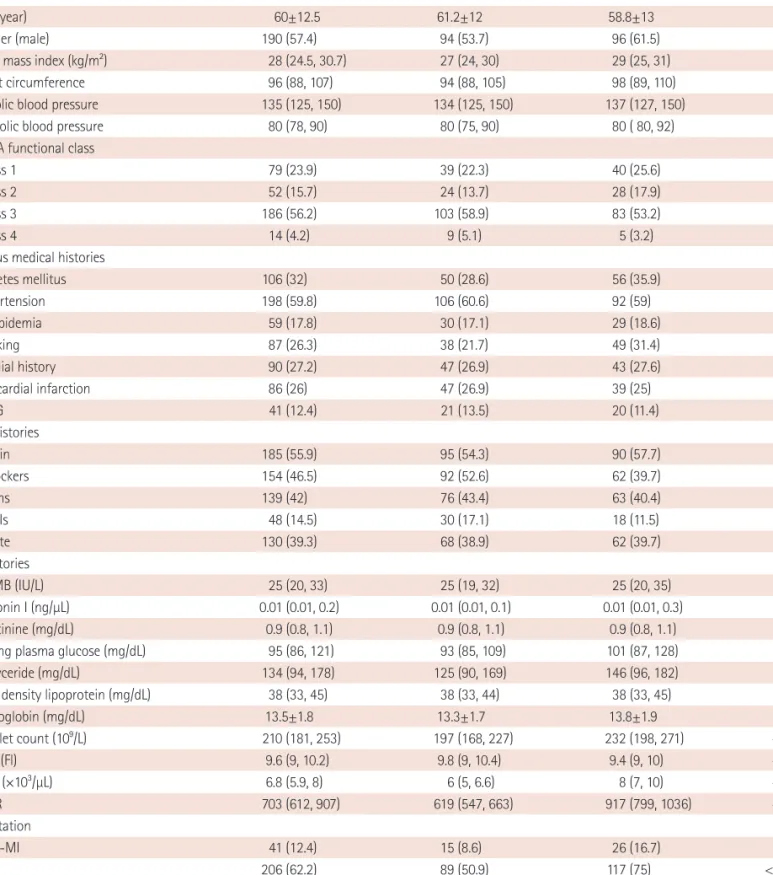
Table 1. Baseline characteristics, laboratories, and clinical outcomes in groups according to WMR values

Total(n=331) WMR<720(n=175) WMR ≥720(n=156) p

Baseline characteristics

Age (year) 60±12.5 61.2±12 58.8±13 0.089

Gender (male) 190 (57.4) 94 (53.7) 96 (61.5) 0.151

Body mass index (kg/m

2

) 28 (24.5, 30.7) 27 (24, 30) 29 (25, 31) 0.049

Waist circumference 96 (88, 107) 94 (88, 105) 98 (89, 110) 0.024

Systolic blood pressure 135 (125, 150) 134 (125, 150) 137 (127, 150) 0.614

Diastolic blood pressure 80 (78, 90) 80 (75, 90) 80 ( 80, 92) 0.429

NYHA functional class 0.470

Class 1 79 (23.9) 39 (22.3) 40 (25.6)

Class 2 52 (15.7) 24 (13.7) 28 (17.9)

Class 3 186 (56.2) 103 (58.9) 83 (53.2)

Class 4 14 (4.2) 9 (5.1) 5 (3.2)

Previous medical histories

Diabetes mellitus 106 (32) 50 (28.6) 56 (35.9) 0.154

Hypertension 198 (59.8) 106 (60.6) 92 (59) 0.767

Dyslipidemia 59 (17.8) 30 (17.1) 29 (18.6) 0.731

Smoking 87 (26.3) 38 (21.7) 49 (31.4) 0.045

Familial history 90 (27.2) 47 (26.9) 43 (27.6) 0.885

Myocardial infarction 86 (26) 47 (26.9) 39 (25) 0.701

CABG 41 (12.4) 21 (13.5) 20 (11.4) 0.575

Drug histories

Aspirin 185 (55.9) 95 (54.3) 90 (57.7) 0.533

β blockers 154 (46.5) 92 (52.6) 62 (39.7) 0.020

Statins 139 (42) 76 (43.4) 63 (40.4) 0.575

ACE-Is 48 (14.5) 30 (17.1) 18 (11.5) 0.148

Nitrate 130 (39.3) 68 (38.9) 62 (39.7) 0.869

Laboratories

CK-MB (IU/L) 25 (20, 33) 25 (19, 32) 25 (20, 35) 0.135

Troponin I (ng/µL) 0.01 (0.01, 0.2) 0.01 (0.01, 0.1) 0.01 (0.01, 0.3) 0.096

Creatinine (mg/dL) 0.9 (0.8, 1.1) 0.9 (0.8, 1.1) 0.9 (0.8, 1.1) 0.821

Fasting plasma glucose (mg/dL) 95 (86, 121) 93 (85, 109) 101 (87, 128) 0.036

Triglyceride (mg/dL) 134 (94, 178) 125 (90, 169) 146 (96, 182) 0.045

High density lipoprotein (mg/dL) 38 (33, 45) 38 (33, 44) 38 (33, 45) 0.504

Hemoglobin (mg/dL) 13.5±1.8 13.3±1.7 13.8±1.9 0.049

Platelet count (10

9

/L) 210 (181, 253) 197 (168, 227) 232 (198, 271) <0.001

MPV (Fl) 9.6 (9, 10.2) 9.8 (9, 10.4) 9.4 (9, 10) <0.001

WBC (×10

3

/µL) 6.8 (5.9, 8) 6 (5, 6.6) 8 (7, 10) <0.001

WMR 703 (612, 907) 619 (547, 663) 917 (799, 1036) <0.001

Presentation

NSTE-MI 41 (12.4) 15 (8.6) 26 (16.7) 0.026

MetS 206 (62.2) 89 (50.9) 117 (75) <0.0001

Outcomes

Follow-up duration (month) 24 (23, 25) 24 (23, 25) 24 (23, 25) 0.448

MACE 64 (19.3) 25 (14.3) 39 (25) 0.014

Values are presented as mean (±standard deviation), median (25

th

and 75

th

percentiles), and number (percentage). Statistical analyses were performed us-

ing Mann–Whitney U test, t-test and Chi-square test. WMR: white blood cell count to mean platelet volume ratio, NYHA: New York heart association,

CABG: coronary artery bypass graft surgery, ACE-I: angiotensin-converting enzyme inhibitors, CK-MB: creatine kinase MB isoenzyme, MPV: mean platelet

volume, WBC: white blood cell count, NSTEMI: non-ST elevation myocardial infarction, MetS: metabolic syndrome, MACE: major adverse cardiac events

(4)

Table 2. Baseline characteristics, laboratories, and clinical outcomes in groups according to MetS status

Non-MetS (n=125) MetS (n=206) p

Baseline characteristics

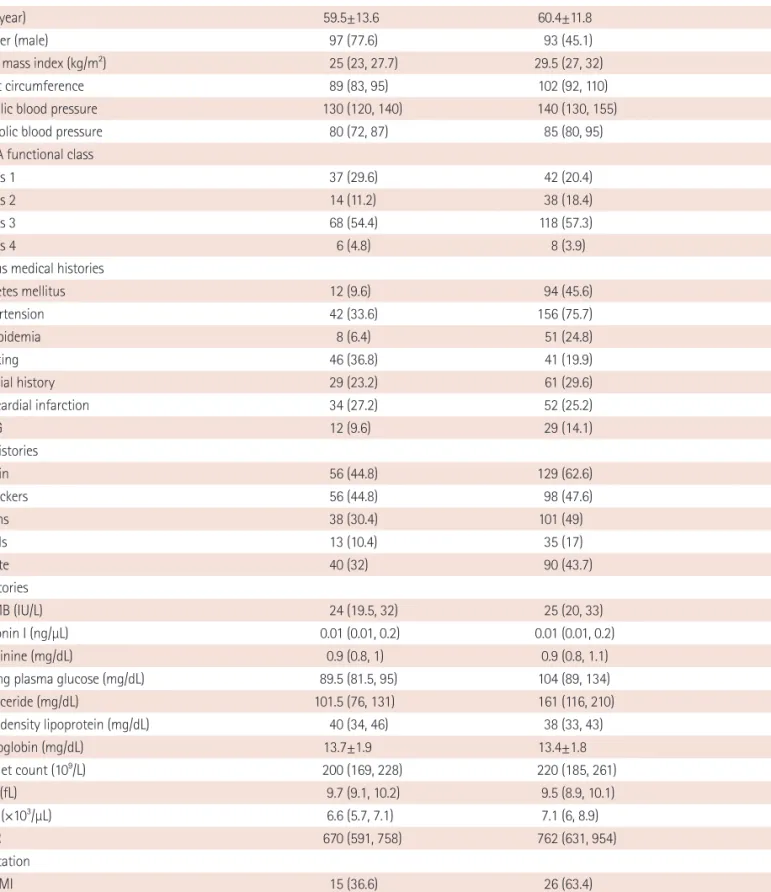
Age (year) 59.5±13.6 60.4±11.8 0.520

Gender (male) 97 (77.6) 93 (45.1) <0.001

Body mass index (kg/m

2

) 25 (23, 27.7) 29.5 (27, 32) <0.001

Waist circumference 89 (83, 95) 102 (92, 110) <0.001

Systolic blood pressure 130 (120, 140) 140 (130, 155) <0.001

Diastolic blood pressure 80 (72, 87) 85 (80, 95) <0.001

NYHA functional class 0.131

Class 1 37 (29.6) 42 (20.4)

Class 2 14 (11.2) 38 (18.4)

Class 3 68 (54.4) 118 (57.3)

Class 4 6 (4.8) 8 (3.9)

Previous medical histories

Diabetes mellitus 12 (9.6) 94 (45.6) <0.001

Hypertension 42 (33.6) 156 (75.7) <0.001

Dyslipidemia 8 (6.4) 51 (24.8) <0.001

Smoking 46 (36.8) 41 (19.9) 0.001

Familial history 29 (23.2) 61 (29.6) 0.204

Myocardial infarction 34 (27.2) 52 (25.2) 0.694

CABG 12 (9.6) 29 (14.1) 0.231

Drug histories

Aspirin 56 (44.8) 129 (62.6) 0.002

β blockers 56 (44.8) 98 (47.6) 0.624

Statins 38 (30.4) 101 (49) 0.001

ACE-Is 13 (10.4) 35 (17) 0.099

Nitrate 40 (32) 90 (43.7) 0.035

Laboratories

CK-MB (IU/L) 24 (19.5, 32) 25 (20, 33) 0.228

Troponin I (ng/µL) 0.01 (0.01, 0.2) 0.01 (0.01, 0.2) 0.621

Creatinine (mg/dL) 0.9 (0.8, 1) 0.9 (0.8, 1.1) 0.863

Fasting plasma glucose (mg/dL) 89.5 (81.5, 95) 104 (89, 134) <0.001

Triglyceride (mg/dL) 101.5 (76, 131) 161 (116, 210) <0.001

High density lipoprotein (mg/dL) 40 (34, 46) 38 (33, 43) 0.022

Hemoglobin (mg/dL) 13.7±1.9 13.4±1.8 0.125

Platelet count (10

9

/L) 200 (169, 228) 220 (185, 261) <0.001

MPV (fL) 9.7 (9.1, 10.2) 9.5 (8.9, 10.1) 0.073

WBC (×10

3

/µL) 6.6 (5.7, 7.1) 7.1 (6, 8.9) <0.001

WMR 670 (591, 758) 762 (631, 954) <0.001

Presentation

NSTEMI 15 (36.6) 26 (63.4) 0.868

Outcomes

Follow-up duration, month 24 (24, 25) 24 (23, 25) 0.136

MACE 23 (18.4) 41 (19.9) 0.737

Values are presented as mean (±standard deviation), median (25

th

and 75

th

percentiles), and number (percentage). Statistical analyses were performed us-

ing Mann–Whitney U test, t-test and Chi-square test. MetS: metabolic syndrome, NYHA: New York heart association, CABG: coronary artery bypass graft

surgery, ACE-I: angiotensin-converting enzyme inhibitors, CK-MB: creatine kinase MB isoenzyme, MPV: mean platelet volume, WBC: white blood cell count,

NSTEMI: non-ST elevation myocardial infarction, MACE: major adverse cardiac events

(5)

drug histories, conventional cardiovascular risk factors, and biomarkers. Composite MACE was entered as a dependent variable.

The WMR value was entered as a categorical variable based on its median value. All statistical analyses were performed using SPSS version 18.0 (SPSS Inc., Chicago, IL, USA). A two-tailed p less than 0.05 was considered statistically significant.

Results

Baseline characteristics and biomarkers

A total of 331 patients (190 males, 57.4%) with mean age of 60±12.5 years were followed and analyzed. All variables were compared between the low WMR group and the high group.

Patients in the high WMR group had higher body mass index and waist circumference compared to the low WMR group (p=0.049 and p=0.024, respectively). The frequency of current smoker in the high WMR group was higher than in the low WMR group (21.7%

vs. 31.4%, p=0.045). When comparing biomarkers between the two groups, fasting plasma glucose, triglyceride, hemoglobin, platelet count, WBC count, and WMR values in the high WMR group were greater than those in the low WMR group (Table 1). MPV value in the high WMR group was significantly lower than that in the low WMR group (9.8 [9, 10.4] vs. 9.4 [9, 10], p<0.001). High WMR patients had a tendency (p=0.096) to have higher troponin I compared to low WMR patients. Furthermore, the number of patients with NSTE-MI and MetS in the high WMR group was greater than that in the low WMR group (Table 1). The number of MACE incidence at follow-up period in the high WMR group was significantly greater than that in the low WMR group (14.3% vs. 25%, p=0.014).

Subgroup analyses

Based on NCEP-ATP III criteria used for identifying MetS, 62.2%

of patients in our cohort were diagnosed with MetS. Of measured biomarkers, fasting plasma glucose, triglyceride, platelet count, WBC count, and WMR in MetS patients were significantly higher than those in non-MetS individuals (Table 2). MetS patients had the tendency (p=0.073) of having lower MPV values than non- MetS ones. The number of MACE incidence in both groups was comparable (18.4% vs. 19.9%, Table 2).

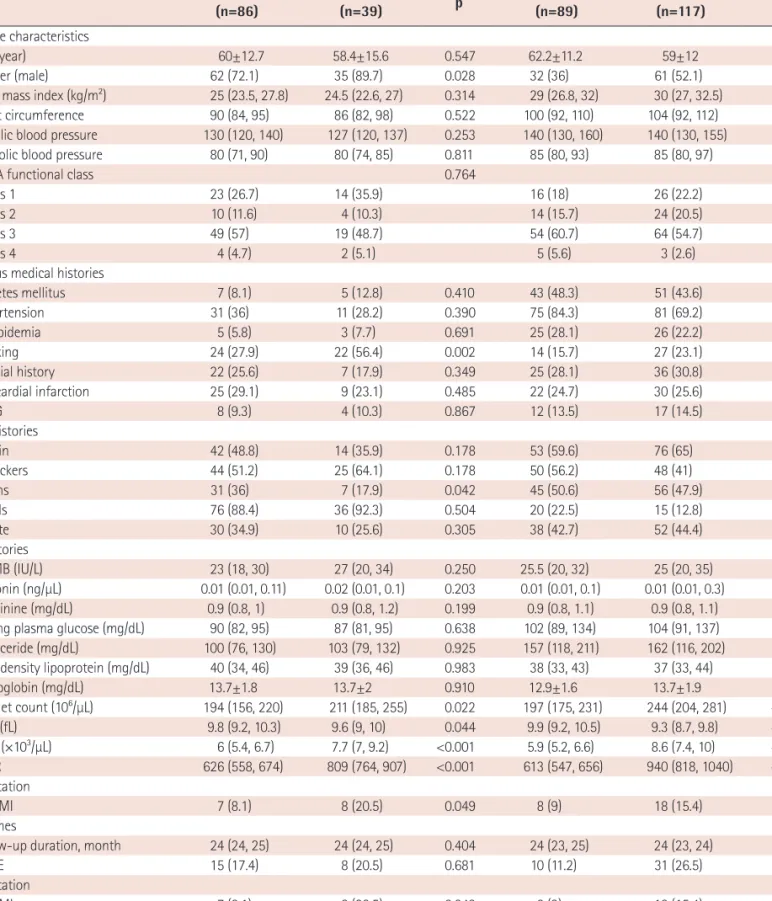
Another subgroup analysis was performed, in which patients with or without MetS were divided into two groups according to WMR values (WMR<720 vs. WMR≥720, Table 3). When comparing MetS patients according to WMR values, patients in elevated WMR group were associated with more MACE incidence at follow-up (11.2% vs. 26.5%, p=0.007). There was no difference between WMR groups regarding the number of patients with NSTE-MI (9%

vs. 25.4%, p=0.171). Moreover, among patients without MetS, MACE incidence was comparable between WMR groups (17.4% vs.

20.5%, p=0.681). The number of patients with NSTE-MI in the high WMR group was significantly higher than that in the low WMR group (8.1% vs. 20.5%, p=0.049).

Survival analysis

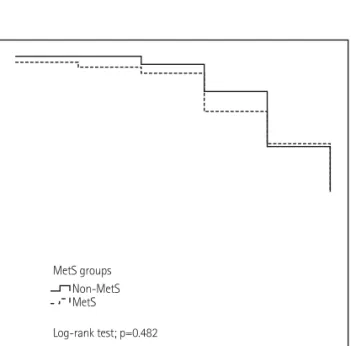
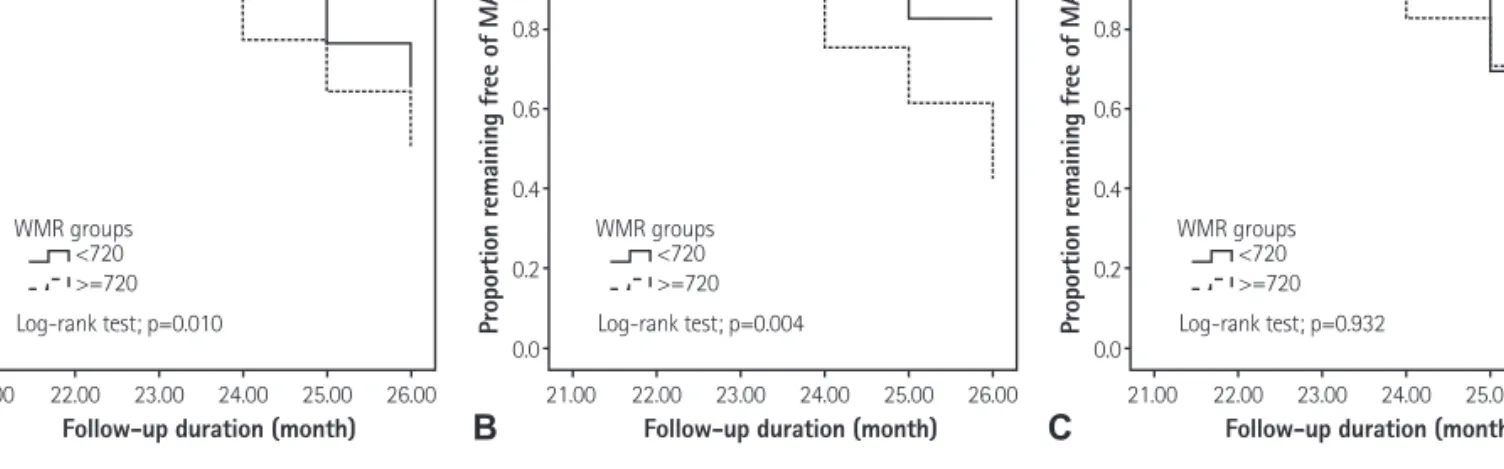
Kaplan-Meier analysis was conducted to compare MACE-free survival between study groups. When comparing patients with or without MetS, there was no difference in MACE-free survival between groups (Fig. 1). Considering all patients, the proportion of patients remaining MACE-free during follow-up was significantly different between the two WMR groups (Fig. 2A). When drawing survival curve for patients with MetS, a significant difference was observed (Fig. 2B). However, such difference was not significant among patients without MetS (Fig. 2C).

Multivariable Cox regression analysis was performed to assess the prognostic value of admission WMR after adjusting for all variables (Table 4). In the first model after entering all patients together, the HR of MACE incidence during follow-up for the high WMR group was 1.856 (95% confidence interval [CI] 1.123–3.067, p=0.016). Among patients with MetS, the HR of MACE incidence for the high WMR group was 2.616 (95% CI 1.282–5.339, p=0.008). In non-MetS individuals, HR of MACE was 1.035 without significance (95% CI 0.439–2.444, p=0.937).

Discussion

WMR as a novel inflammation-based marker has recently been introduced as an independent predictor for long-term cardiovascular events in NSTE-ACS patients.

11)

In this prospective study, for the first time, we demonstrated that elevated admission WMR values could predict MACE incidence at long-term follow-up in NSTE-ACS patients. This was more pronounced in the presence of NCEP-ATP III-defined MetS. However, it was not observed among patients without MetS.

MetS is a condition accompanying multiple cardiovascular risk factors. Associated with both type 2 diabetes mellitus and cardiovascular disease, MetS is a major public health concern.

However, despite the magnitude of studies concerning MetS

pathophysiology and prognosis, it has remained to be investigated

more to understand its nature and adverse events.

8)

In a

prospective cohort study, Wilson et al.

12)

had shown that MetS is

associated with increased risks of type 2 diabetes mellitus and

cardiovascular disease during 8-year follow-up period. In terms

of pathologic mechanisms involved in MetS pathogenesis, a

(6)

Table 3. Baseline characteristics, laboratories, and clinical outcomes in patients with or without MetS

Non-MetS MetS

WMR<720

(n=86) WMR≥720

(n=39) p WMR<720

(n=89) WMR≥720

(n=117) p

Baseline characteristics

Age (year) 60±12.7 58.4±15.6 0.547 62.2±11.2 59±12 0.044

Gender (male) 62 (72.1) 35 (89.7) 0.028 32 (36) 61 (52.1) 0.210

Body mass index (kg/m

2

) 25 (23.5, 27.8) 24.5 (22.6, 27) 0.314 29 (26.8, 32) 30 (27, 32.5) 0.475

Waist circumference 90 (84, 95) 86 (82, 98) 0.522 100 (92, 110) 104 (92, 112) 0.561

Systolic blood pressure 130 (120, 140) 127 (120, 137) 0.253 140 (130, 160) 140 (130, 155) 0.735

Diastolic blood pressure 80 (71, 90) 80 (74, 85) 0.811 85 (80, 93) 85 (80, 97) 0.894

NYHA functional class 0.764 0.457

Class 1 23 (26.7) 14 (35.9) 16 (18) 26 (22.2)

Class 2 10 (11.6) 4 (10.3) 14 (15.7) 24 (20.5)

Class 3 49 (57) 19 (48.7) 54 (60.7) 64 (54.7)

Class 4 4 (4.7) 2 (5.1) 5 (5.6) 3 (2.6)

Previous medical histories

Diabetes mellitus 7 (8.1) 5 (12.8) 0.410 43 (48.3) 51 (43.6) 0.500

Hypertension 31 (36) 11 (28.2) 0.390 75 (84.3) 81 (69.2) 0.013

Dyslipidemia 5 (5.8) 3 (7.7) 0.691 25 (28.1) 26 (22.2) 0.334

Smoking 24 (27.9) 22 (56.4) 0.002 14 (15.7) 27 (23.1) 0.191

Familial history 22 (25.6) 7 (17.9) 0.349 25 (28.1) 36 (30.8) 0.676

Myocardial infarction 25 (29.1) 9 (23.1) 0.485 22 (24.7) 30 (25.6) 0.880

CABG 8 (9.3) 4 (10.3) 0.867 12 (13.5) 17 (14.5) 0.831

Drug histories

Aspirin 42 (48.8) 14 (35.9) 0.178 53 (59.6) 76 (65) 0.427

β blockers 44 (51.2) 25 (64.1) 0.178 50 (56.2) 48 (41) 0.031

Statins 31 (36) 7 (17.9) 0.042 45 (50.6) 56 (47.9) 0.701

ACE-Is 76 (88.4) 36 (92.3) 0.504 20 (22.5) 15 (12.8) 0.068

Nitrate 30 (34.9) 10 (25.6) 0.305 38 (42.7) 52 (44.4) 0.802

Laboratories

CK-MB (IU/L) 23 (18, 30) 27 (20, 34) 0.250 25.5 (20, 32) 25 (20, 35) 0.549

Troponin (ng/µL) 0.01 (0.01, 0.11) 0.02 (0.01, 0.1) 0.203 0.01 (0.01, 0.1) 0.01 (0.01, 0.3) 0.167

Creatinine (mg/dL) 0.9 (0.8, 1) 0.9 (0.8, 1.2) 0.199 0.9 (0.8, 1.1) 0.9 (0.8, 1.1) 0.454

Fasting plasma glucose (mg/dL) 90 (82, 95) 87 (81, 95) 0.638 102 (89, 134) 104 (91, 137) 0.439

Triglyceride (mg/dL) 100 (76, 130) 103 (79, 132) 0.925 157 (118, 211) 162 (116, 202) 0.857

High density lipoprotein (mg/dL) 40 (34, 46) 39 (36, 46) 0.983 38 (33, 43) 37 (33, 44) 0.767

Hemoglobin (mg/dL) 13.7±1.8 13.7±2 0.910 12.9±1.6 13.7±1.9 0.001

Platelet count (10

6

/µL) 194 (156, 220) 211 (185, 255) 0.022 197 (175, 231) 244 (204, 281) <0.001

MPV (fL) 9.8 (9.2, 10.3) 9.6 (9, 10) 0.044 9.9 (9.2, 10.5) 9.3 (8.7, 9.8) <0.001

WBC (×10

3

/µL) 6 (5.4, 6.7) 7.7 (7, 9.2) <0.001 5.9 (5.2, 6.6) 8.6 (7.4, 10) <0.001

WMR 626 (558, 674) 809 (764, 907) <0.001 613 (547, 656) 940 (818, 1040) <0.001

Presentation

NSTEMI 7 (8.1) 8 (20.5) 0.049 8 (9) 18 (15.4) 0.171

Outcomes

Follow-up duration, month 24 (24, 25) 24 (24, 25) 0.404 24 (23, 25) 24 (23, 24) 0.285

MACE 15 (17.4) 8 (20.5) 0.681 10 (11.2) 31 (26.5) 0.007

Presentation

NSTEMI 7 (8.1) 8 (20.5) 0.049 8 (9) 18 (15.4) 0.171

Outcomes

Follow-up duration, month 24 (24, 25) 24 (24, 25) 0.404 24 (23, 25) 24 (23, 24) 0.285

MACE 15 (17.4) 8 (20.5) 0.681 10 (11.2) 31 (26.5) 0.007

Values are presented as mean (±standard deviation), median (25

th

and 75

th

percentiles), and number (percentage). Statistical analyses were performed us-

ing Mann–Whitney U test, t-test and Chi-square test. MetS: metabolic syndrome, WMR: white blood cell count to mean platelet volume ratio, NYHA: New

York heart association, CABG: coronary artery bypass graft surgery, ACE-I: angiotensin-converting enzyme inhibitors, CK-MB: creatine kinase MB isoen-

zyme, MPV: mean platelet volume, WBC: white blood cell count, NSTEMI: non-ST elevation myocardial infarction, MACE: major adverse cardiac events

(7)

cohort study has revealed that inflammation defined by elevated C-reactive protein is correlated with MetS and insulin resistance and that both inflammation and MetS can independently predict new cardiovascular events.

9)

MetS can lead to increased risk of thrombogenesis and platelet aggregation, resulting in vascular complications.

13)

It has been postulated that in patients with MetS, platelet hyperactivity leading to thrombogenesis is the main contributor to insulin resistance, dysglycemia, oxidative stress, and inflammation.

13)

In addition to its effect on platelet activation, MetS also impacts on procoagulant and hypofibrinolytic status associated with inflammatory processes. Therefore, these factors are more likely to predispose individuals to atherosclerosis, venous thrombosis,

14)

cardiovascular mortality, and stroke.

8)

In terms of the effect of MetS on the outcomes of ACS patients, some studies have shown that the presence of MetS has been associated with worse prognosis of ACS individuals

15)

and patients who are undergoing coronary revascularization.

16)

In a large multicenter study, it has been found that MetS patients have similar outcomes as non-MetS patients among NSTE-ACS cases.

17)

We also demonstrated that there was no significant difference regarding the MACE incidence between MetS patients and non-MetS patients. This might be due to the presence of NSTE-ACS in our cohort and heterogeneous population. More prospective large studies are needed to identify the exact mechanisms by which ACS patients with MetS predispose to adverse outcomes.

Regarding the relationship between WBC count and the presence of MetS, some studies have been conducted to assess this association.

In some cross-sectional studies,

18-20)

it has been found that WBC count in MetS patients is significantly higher than that in non-MetS ones, indicating that inflammation-based mechanism is involved in the MetS pathogenesis. However, Kutlucan et al.

21)

have found no difference regarding WBC count levels between patients with MetS and those without MetS. We also demonstrated that WBC count in MetS patients was significantly higher that in non-MetS individuals.

Concomitant measurement of other inflammatory markers such as C-reactive protein may be of great value to assess this relationship.

In addition to WBC count, platelet count and MPV have also been evaluated with inconsistent results among studies. The majority of cross-sectional studies have demonstrated that increased platelet count is associated with MetS patients.

19)20)22)23)

In a meta-analysis, platelet count in MetS patients was higher than that in non-MetS patients.

24)

In contrast, in a cross-sectional investigation, there was no difference in platelet count between MetS and non-MetS individuals.

21)

MPV also has inconsistent results among reports.

Park et al.

23)

have shown that MPV level is lower in MetS patients than that in non-MetS. However, Tavil et al.

25)

have found that MPV is elevated in MetS patients compared to that in non-MetS ones with normal coronary angiography. However, Kutlucan et al.

21)

showed no difference in MPV values between patients with MetS and those without MetS. Zaccardi et al.

24)

demonstrated that MPV levels were comparable between MetS and non-MetS individuals in a meta-analysis. Given these findings, it is more likely that platelet count and MPV levels are in reverse direction among MetS patients, although some studies oppose this hypothesis.

In agreement with the above mentioned results, we found that platelet count was significantly higher in MetS patients compared to that in non-MetS individuals. We found that there was a trend for non-MetS patients to have higher MPV values compared to MetS subjects. These results suggest that WMR might be of great importance in NSTE-ACS cases with MetS as an indicator of decreased MPV and elevated WBC. The reason why MPV is lower in MetS patients may be explained by the notion that the degree of inflammation can change the MPV values. In our cohort, we entered NSET-ACS with different pathophysiology from that of ST elevation myocardial infarction, in which elevated MPV have been associated with cardiovascular outcomes.

26)

In addition, some other factors including lifestyle modification, antihypertensive, lipid- lowering agents, and diet therapies can also affect MPV values.

27)

Moreover, the different timespan between developing ACS and laboratory testing may influence platelet size, suggesting that MPV may change during the acute-phase reaction. The association between ACS patients with MetS and increased inflammatory

21.00 22.00

MetS groups

Log-rank test; p=0.482 Non-MetS MetS

23.00 24.00 25.00 26.00

1.0

0.8

0.6

0.4

0.2

0.0

Proportion remaining free of MACE

Follow-up duration (month)

Fig. 1. Kaplan-Meier curve analysis showing the estimated proportion of patients remaining free of MACE incidence during follow-up in MetS vs.

non-MetS individuals. MACE: major adverse cardiac events, MetS:

metabolic syndrome.

(8)

pathways has been shown previously. However, whether such association will certainly result in increased thrombogenicity through elevated MPV remains to be established. It has been shown that both activated and inactivated platelets are involved in leukocyte and platelet conjugation process, a dynamic process in which platelet activation status and leukocytes’ adhesion ability will result in different bindings capacity to induce inflammatory and thrombogenicity.

28)

Large prospective studies with serial MPV measuring will be needed to solve this controversy.

To understand the relations of WBC count and MPV values to MetS, we introduced another novel non-invasive inflammation- based marker of complete blood count named WMR. Based on our findings, WMR was elevated in MetS patients. When comparing WMR groups, WMR≥720 was associated with higher MetS rates and MACE incidence at long-term follow-up. Furthermore, MACE incidence was significantly higher in the high-WMR group among MetS patients. However, it was not significantly higher in non- MetS patients.

Study limitations

This study had several limitations. First, our study had a small sample size. Secondly, our cohort was derived from a larger group of ACS patients. In addition, we excluded ST elevation myocardial

infarction without specified MetS cases. Hence, we are unable to prevent selection biases. It is possible that other unmeasured confounding factors might have influenced our study findings.

Although WMR may be considered as an inflammatory marker, unfortunately, we did not measure other inflammatory markers such as C-reactive protein to show any comparison between WMR and such markers. Finally, our cohort included more unstable angina patients compared to NSTE-MI. Some NSTE-ACS cases underwent revascularization at the time of this study. Therefore, our findings can be generalizable to NSTE-ACS without revascularization.

However, our findings can be of great importance among NSTE-ACS patients. Future studies will be helpful to show the prognostication of WMR in such cases.

Conclusion

This study showed that elevated admission WMR value was strongly related to the presence of MetS among NSTE-ACS individuals. Furthermore, high WMR was associated with increased long-term MACE-free survival in patients with MetS, but not in non-MetS individuals. Further large-scaled studies are needed to clarify this relationship and identify the role of WMR in the risk assessment of ACS patients with metabolic diseases.

Table 4. Adjusted HR for elevated WMR in relation to composite MACE incidence

HR 95% CI p

All patients 1.856 1.123–3.067 0.016

Patients with MetS 2.616 1.282–5.339 0.008

Patients without MetS 1.035 0.439–2.444 0.937

The analysis adjusted for all cardiovascular risk factors and other biomarkers. HR: hazard ratio, CI: confidence interval, MetS: metabolic syndrome 21.00 22.00

WMR groups Log-rank test; p=0.010

<720

>=720

23.00 24.00 25.00 26.00 1.0

0.8 0.6 0.4 0.2 Proportion remaining free of MACE 0.0

Follow-up duration (month)

21.00 22.00 WMR groups Log-rank test; p=0.004

<720

>=720

23.00 24.00 25.00 26.00 1.0

0.8 0.6 0.4 0.2 Proportion remaining free of MACE 0.0

Follow-up duration (month)

21.00 22.00 WMR groups Log-rank test; p=0.932

<720

>=720

23.00 24.00 25.00 26.00 1.0

0.8 0.6 0.4 0.2 Proportion remaining free of MACE 0.0

Follow-up duration (month) Fig. 2. Kaplan-Meier curve analyses showing the estimated proportion of patients remaining free of MACE incidence during follow-up within (A) all patients together, (B) patients with MetS, and (C) patients without MetS. MACE: major adverse cardiac events, MetS: metabolic syndrome, WMR: white blood cell count to mean platelet volume ratio.

A B C

(9)

Acknowledgments

We acknowledge the contribution of Dr. Leila Taghipour-Sani who cooperated in gathering the primary data for cohort patients.

References

1. Libby P. Mechanisms of acute coronary syndromes and their implications for therapy. N Engl J Med 2013;368:2004-13.

2. Pearson TA, Mensah GA, Alexander RW, et al. Markers of inflammation and cardiovascular disease: application to clinical and public health practice: a statement for healthcare professionals from the Centers for Disease Control and Prevention and the American Heart Association. Circulation 2003;107:499-511.

3. Margolis KL, Manson JE, Greenland P, et al. Leukocyte count as a predictor of cardiovascular events and mortality in postmenopausal women: the Women’s Health Initiative Observational Study. Arch Intern Med 2005;165:500-8.

4. Dehghani MR, Rezaei Y, Taghipour-Sani L. Superiority of total white blood cell count over other leukocyte differentials for predicting long-term outcomes in patients with non-ST elevation acute coronary syndrome. Biomarkers 2014;19:378-84.

5. Davì G, Patrono C. Platelet activation and atherothrombosis. N Engl J Med 2007;357:2482-94.

6. Rechciński T, Jasińska A, Foryś J, et al. Prognostic value of platelet indices after acute myocardial infarction treated with primary percutaneous coronary intervention. Cardiol J 2013;20:491-8.

7. Alberti KG, Zimmet PZ. Definition, diagnosis and classification of diabetes mellitus and its complications. Part 1: diagnosis and classification of diabetes mellitus provisional report of a WHO consultation. Diabet Med 1998;15:539-53.

8. Mottillo S, Filion KB, Genest J, et al. The metabolic syndrome and cardiovascular risk a systematic review and meta-analysis. J Am Coll Cardiol 2010;56:1113-32.

9. Rutter MK, Meigs JB, Sullivan LM, D’Agostino RB Sr, Wilson PW.

C-reactive protein, the metabolic syndrome, and prediction of cardiovascular events in the Framingham Offspring Study. Circulation 2004;110:380-5.

10. National Cholesterol Education Program (NCEP) Expert Panel on Detection, Evaluation, and Treatment of High Blood Cholesterol in Adults (Adult Treatment Panel III). Third report of the National Cholesterol Education Program (NCEP) expert panel on detection, evaluation, and treatment of high Blood cholesterol in adults (Adult Treatment Panel III) final report. Circulation 2002;106:3143-421.

11. Dehghani MR, Rezaei Y, Taghipour-Sani L. White blood cell count to mean platelet volume ratio as a novel non-invasive marker predicting

long-term outcomes in patients with non-ST elevation acute coronary syndrome. Cardiol J 2015.

12. Wilson PW, D’Agostino RB, Parise H, Sullivan L, Meigs JB. Metabolic syndrome as a precursor of cardiovascular disease and type 2 diabetes mellitus. Circulation 2005;112:3066-72.

13. Suslova TE, Sitozhevskii AV, Ogurkova ON, et al. Platelet hemostasis in patients with metabolic syndrome and type 2 diabetes mellitus:

cGMP- and NO-dependent mechanisms in the insulin-mediated platelet aggregation. Front Physiol 2015;5:501.

14. Alessi MC, Juhan-Vague I. Metabolic syndrome, haemostasis and thrombosis. Thromb Haemost 2008;99:995-1000.

15. Dohi T, Miyauchi K, Kasai T, et al. Impact of metabolic syndrome on 10-year clinical outcomes among patients with acute coronary syndrome. Circ J 2009;73:1454-8.

16. Kajimoto K, Kasai T, Miyauchi K, et al. Metabolic syndrome predicts 10-year mortality in non-diabetic patients following coronary artery bypass surgery. Circ J 2008;72:1481-6.

17. Mehta RH, Westerhout CM, Zheng Y, et al. Association of metabolic syndrome and its individual components with outcomes among patients with high-risk non-ST-segment elevation acute coronary syndromes. Am Heart J 2014;168:182-8.e1.

18. Gharipour M, Ramezani MA, Sadeghi M, et al. Sex based levels of C-reactive protein and white blood cell count in subjects with metabolic syndrome: Isfahan Healthy Heart Program. J Res Med Sci 2013;18:467-72.

19. Jesri A, Okonofua EC, Egan BM. Platelet and white blood cell counts are elevated in patients with the metabolic syndrome. J Clin Hypertens (Greenwich) 2005;7:705-11; quiz 712-3.

20. Liu H, Hsu CH, Lin JD, et al. Predicting metabolic syndrome by using hematogram models in elderly women. Platelets 2014;25:97-101.

21. Kutlucan A, Bulur S, Kr S, et al. The relationship between mean platelet volume with metabolic syndrome in obese individuals. Blood Coagul Fibrinolysis 2012;23:388-90.

22. Chen YL, Hung YJ, He CT, et al. Platelet count can predict metabolic syndrome in older women. Platelets 2015;26:31-7.

23. Park BJ, Shim JY, Lee HR, Jung DH, Lee JH, Lee YJ. The relationship of platelet count, mean platelet volume with metabolic syndrome according to the criteria of the American Association of Clinical Endocrinologists: a focus on gender differences. Platelets 2012;23:45-50.

24. Zaccardi F, Rocca B, Pitocco D, Tanese L, Rizzi A, Ghirlanda G. Platelet mean volume, distribution width, and count in type 2 diabetes, impaired fasting glucose, and metabolic syndrome: a meta-analysis.

Diabetes Metab Res Rev 2015;31:402-10.

25. Tavil Y, Sen N, Yazici HU, Hizal F, Abaci A, Cengel A. Mean platelet

volume in patients with metabolic syndrome and its relationship

with coronary artery disease. Thromb Res 2007;120:245-50.

(10)

26. Chu SG, Becker RC, Berger PB, et al. Mean platelet volume as a predictor of cardiovascular risk: a systematic review and meta- analysis. J Thromb Haemost 2010;8:148-56.

27. Gasparyan AY, Ayvazyan L, Mikhailidis DP, Kitas GD. Mean platelet volume: a link between thrombosis and inflammation? Curr Pharm

Des 2011;17:47-58.

28. Rinder HM, Bonan JL, Rinder CS, Ault KA, Smith BR. Activated and

unactivated platelet adhesion to monocytes and neutrophils. Blood

1991;78:1760-9.

수치

Table 1. Baseline characteristics, laboratories, and clinical outcomes in groups according to WMR values
Table 2. Baseline characteristics, laboratories, and clinical outcomes in groups according to MetS status
Table 3. Baseline characteristics, laboratories, and clinical outcomes in patients with or without MetS Non-MetS MetS WMR&lt;720 (n=86) WMR≥720(n=39) p WMR&lt;720(n=89) WMR≥720(n=117) p Baseline characteristics    Age (year) 60±12.7 58.4±15.6 0.547 62.2±11
Fig. 1. Kaplan-Meier curve analysis showing the estimated proportion of  patients remaining free of MACE incidence during follow-up in MetS vs
+2

참조

관련 문서