• 검색 결과가 없습니다.

Social determinants of mental health of women living in slum: a systematic review

N/A
N/A
Protected

Academic year: 2022

Share "Social determinants of mental health of women living in slum: a systematic review"

Copied!
13
0
0

로드 중.... (전체 텍스트 보기)

전체 글

(1)

Introduction

In recent years, owing to the expansion of urbanization, resi- dents have been given the opportunity to access extensive health care facilities [1].

However, this expansion has led to more number of resi- dents living in slums, especially around large cities [2]. With the unexpected growth of urbanization, living in slums has become a pervasive problem in many parts of the world, causing many social consequences [3].

Residents living in slums are prone to diseases, injuries,

Social determinants of mental health of women living in slum: a systematic review

Fatemeh Abdi, PhD

1

, Fatemeh Alsadat Rahnemaei, MSC

2

, Parisa Shojaei, PhD

3

, Fatemeh Afsahi, BSC

4

, Zohreh Mahmoodi, PhD

1

1

Social Determinants of Health Research Center, Alborz University of Medical Sciences, Karaj;

2

Student Research Committee, Nursing and Midwifery Faculty, Shahid Beheshti University of Medical Sciences, Tehran;

3

Department of Community Medicine, Faculty of Medicine, Tehran Medical Sciences, Islamic Azad University,

4

Master Student of Clinical Psychology, Department of Psychology, Islamic Azad University, Tehran, Iran

Objective

With the rise of urbanization globally, the problem of living in slums has become a problem for the civil society. As a vulnerable segment, women make up half of the population in these regions; therefore, women’s mental health has always been a concern. The purpose of this study was to review the social determinants of mental health in women living in slum areas.

Methods

We systematically reviewed articles published between 2009 and 2019 on the social determinants of women’s mental health in SID, Magiran, Google scholar, PubMed, Scopus, Science Direct, Embase, MEDLINE, PsychINFO, and PsychARTICLES databases using MeSH keywords according to PRISMA guidelines. The quality of the studies was assessed depending on the type of study using Ottawa Newcastle” scale and Joanna Briggs Institute quality assessment tools. Finally, 23 studies were analyzed.

Results

Different social determinants influenced the mental health of women living in slum areas. Among the structural determinants, the socioeconomic level had the highest frequency, and gender was in the second rank with the highest correlation with poorer women’s mental health status. Among the intermediate determinants, living conditions, food insecurity, social capital, and social support were most frequently associated with mental health status.

Conclusion

Women living in slum areas are prone to developing mental disorders and poorer mental health; therefore, supporting these women and creating job opportunities to raise their incomes and, subsequently, improve their social, economic, and living conditions should be taken into consideration. In addition, this requires careful planning and comprehensive social support.

Keywords: Mental health; Social determinants of health; Slums; Suburbanization; Women

Received: 2020.09.02. Revised: 2020.11.27. Accepted: 2020.12.13.

Corresponding author: Fatemeh Alsadat Rahnemaei, MSC Student Research Committee, Nursing and Midwifery Faculty, Shahid Beheshti University of Medical Sciences, 7th Floor, Bldg No.2 SBUMS, Arabi Ave, Daneshjoo Blvd, Velenjak, Tehran 19839- 63113, Iran

E-mail: [email protected] https://orcid.org/0000-0002-1149-8057

Articles published in Obstet Gynecol Sci are open-access, distributed under the terms of the Creative Commons Attribution Non-Commercial License (http://creativecommons.

org/licenses/by-nc/3.0/) which permits unrestricted non-commercial use, distribution, and reproduction in any medium, provided the original work is properly cited.

Copyright © 2021 Korean Society of Obstetrics and Gynecology

eISSN 2287-8580

(2)

premature death more than those not residing in slums;

moreover, the disease, coupled with poverty and its harmful effects, increases over time [4,5].

In the World Health Organization (WHO) Statute, drafted in 1946, health is defined as “the state of complete physical, mental, and social well-being and not merely the absence of disease” [6]. Health is, individually and socially, one of the most important aspects of human life. Health is a prerequi- site for social roles; therefore, all human beings can be fully active in society if they are healthy. Health has many dimen- sions, one of which is mental health [7].

Mental health is an aspect of the general concept of health and is defined as the power to live calmly with oneself and others; moreover, it also involves to be calm, aware of one- self and one’s feelings, make decisions in times of crisis, and successfully cope with stress [8]. Mental health is an art that helps people to psychologically and emotionally adapt to their environment and to choose the most desirable solu- tions to solve their problems, as people cannot be effective in carrying out their social responsibilities if they are mentally burdened. Today, mental health is very much in focus [9,10].

Social determinants of health are the conditions in which people are born, grow, live, and work. Justice in health means the absence of preventable health differences among populations or groups of society that can be caused by differ- ences in racial, economic, demographic, or geographical sta- tus. Health, which a community can achieve using methods that lead to interdisciplinary participation and collaboration, is a multifaceted subject; therefore, a look at the social de- terminants of health shows that the provision, maintenance, and promotion of a community’s health is not realized solely by the Ministry of Health [11].

Systematic reviews summarize the reported results with clear goals and provide the best evidence for judgment [12,13]. Women constitute half of the population of any society, and they play diverse social and economic roles.

Women’s health is at the core of ensuring the functioning of families and communities and is of particular importance in providing and maintaining family and community health.

Given the special conditions of living in suburban areas and the importance of mental health of women as a vulnerable group, we aimed to systematically review factors affecting the mental health of women living in slums.

Criteria for considering studies for this review

1. Search strategy

This study was reported based on the Preferred Reporting Items for Systematic Reviews and Meta-Analyses (PRISMA) guidelines [14]. Web of Science, MEDLINE, SID, Magiran, Iran doc, Google Scholar, PubMed, Scopus, Science Direct, Em- base, MEDLINE, PsychINFO, PsychARTICLES databases were searched for articles published between 2009 and 2019.

Keywords were selected using the MeSH keyboard (Table 1).

According to the WHO model, social determinants of health are socioeconomic structural factors such as income, education, employment, social class, gender, race, and eth- nicity; intermediate factors such as living conditions; behav- ioral and biological factors such as physical activity, alcohol consumption, and tobacco use; and health system-related factors [15].

2. Inclusion and exclusion criteria

Studies published in Persian and English between 2009 and 2019 that examined factors affecting the mental health of women living in suburban and slum areas with different ages and income levels were included.

Articles with no access to full-text articles, articles written in languages other than English and Persian, study protocols, case studies, brief reports, and studies conducted on women

Table 1. Search strategy

No. Search term

#1 “mental health”[tiab] OR “mental hygiene”[tiab] OR “mental diseases”[tiab] OR “mental problem”[tiab] OR

“mental illness”[tiab]

#2 ‘suburban area’ [tiab], OR ‘suburbia’ [tiab], OR ‘suburbanization’ [tiab], OR ‘slum’ [tiab], OR ‘informal settlement’

[tiab], OR ‘marginalization’ [taib]

#3 ‘woman’ [tiab], OR “women” [tiab], OR “female” [tiab]

#1 AND #2 AND #3

(3)

Fig. 1. Search flow diagram.

Records identified through database searching or articles' references (n=1,743)

Removing duplicate records (n=1,007)

Article remained (n=736)

Article remained (n=436)

Articles excluded (n=77) - Review articles (n=10) - Letters and comments (n=5) - Not full text (n=15) - Other reasons (n=47) Records removed from the titles and abstracts

(n=300)

Removing records based on evaluation of the full texts (n=200)

Studies included in quality appraisal (n=100)

Articles included in the review (n=23)

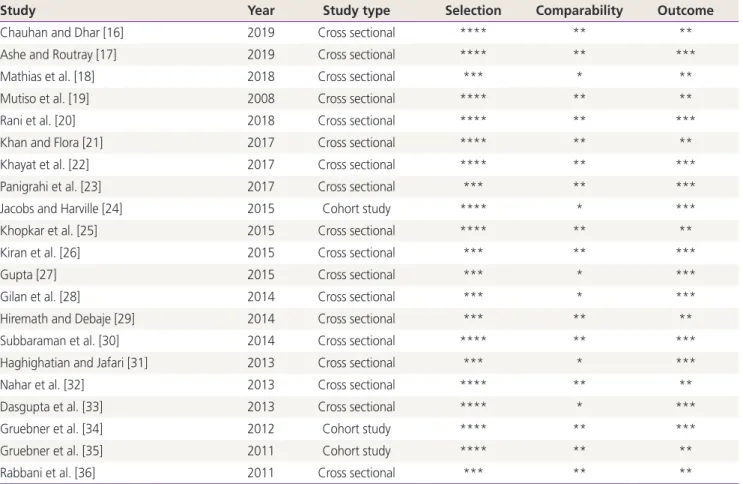
Table 2. Quality assessment of the studies by “Ottawa Newcastle” scale

Study Year Study type Selection Comparability Outcome

Chauhan and Dhar [16] 2019 Cross sectional **** ** **

Ashe and Routray [17] 2019 Cross sectional **** ** ***

Mathias et al. [18] 2018 Cross sectional *** * **

Mutiso et al. [19] 2008 Cross sectional **** ** **

Rani et al. [20] 2018 Cross sectional **** ** ***

Khan and Flora [21] 2017 Cross sectional **** ** **

Khayat et al. [22] 2017 Cross sectional **** ** ***

Panigrahi et al. [23] 2017 Cross sectional *** ** ***

Jacobs and Harville [24] 2015 Cohort study **** * ***

Khopkar et al. [25] 2015 Cross sectional **** ** **

Kiran et al. [26] 2015 Cross sectional *** ** ***

Gupta [27] 2015 Cross sectional *** * ***

Gilan et al. [28] 2014 Cross sectional *** * ***

Hiremath and Debaje [29] 2014 Cross sectional *** ** **

Subbaraman et al. [30] 2014 Cross sectional **** ** ***

Haghighatian and Jafari [31] 2013 Cross sectional *** * ***

Nahar et al. [32] 2013 Cross sectional **** ** **

Dasgupta et al. [33] 2013 Cross sectional **** * ***

Gruebner et al. [34] 2012 Cohort study **** ** ***

Gruebner et al. [35] 2011 Cohort study **** ** **

Rabbani et al. [36] 2011 Cross sectional *** ** **

(4)

with known psychological problems requiring treatment were excluded.

3. Study selection

An initial search yielded 1,743 results. The eligibility of these papers was independently evaluated by 2 authors, and any disagreements were resolved by consensus. In the first stage, 1,007 papers were excluded because they were irrelevant or duplicated. After reviewing the titles and abstracts of the remaining papers, 300 more papers were excluded. During evaluation of full texts, 200 out of the remaining 436 articles were excluded owing to being ineligible. Finally, a total of 23 eligible articles were reviewed (Fig. 1).

4. Quality assessment

The Newcastle–Ottawa scale (NOS) was used to assess the quality of the studies. This scale is used to measure the quality of cohort and case–control studies. The validity and reliability of this tool have been proven in various studies (Table 2). The checklist items focused on reporting or evalu- ating different sections of observational studies. Qualitative studies were assessed using the Joanna Briggs Institute (JBI) checklist (Table 3) [14,39].

5. Data extraction

Two authors independently performed the study selection and validity assessment and resolved any disagreements by consulting a third researcher. Data on first author name, pub-

lication year, study design, sample size, geographic region, age, social determinants of mental health, tools, results, and quality assessment were extracted and entered for analysis.

Results

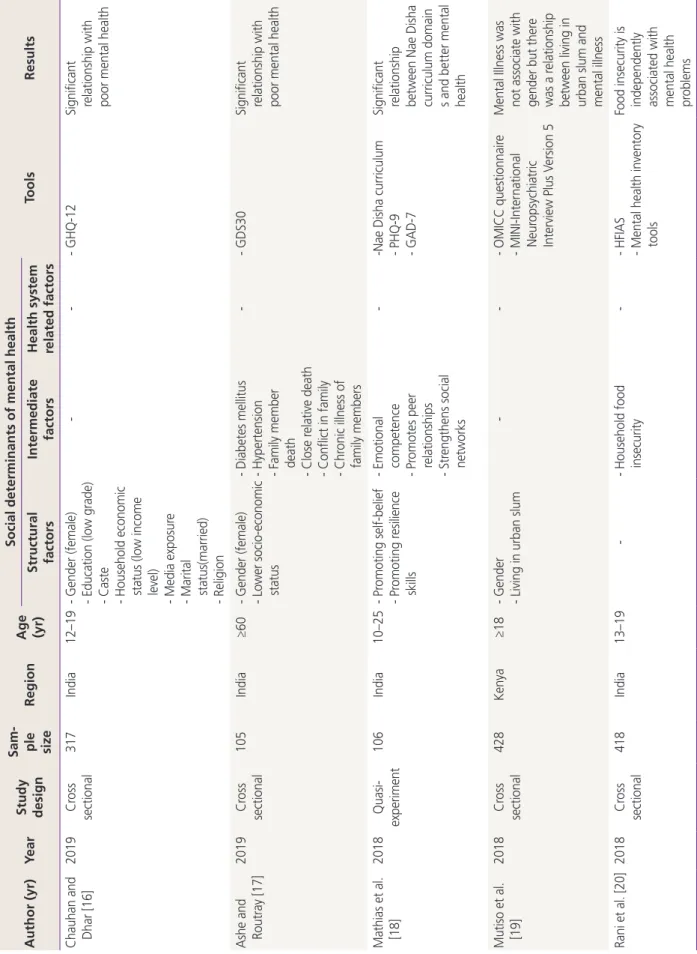
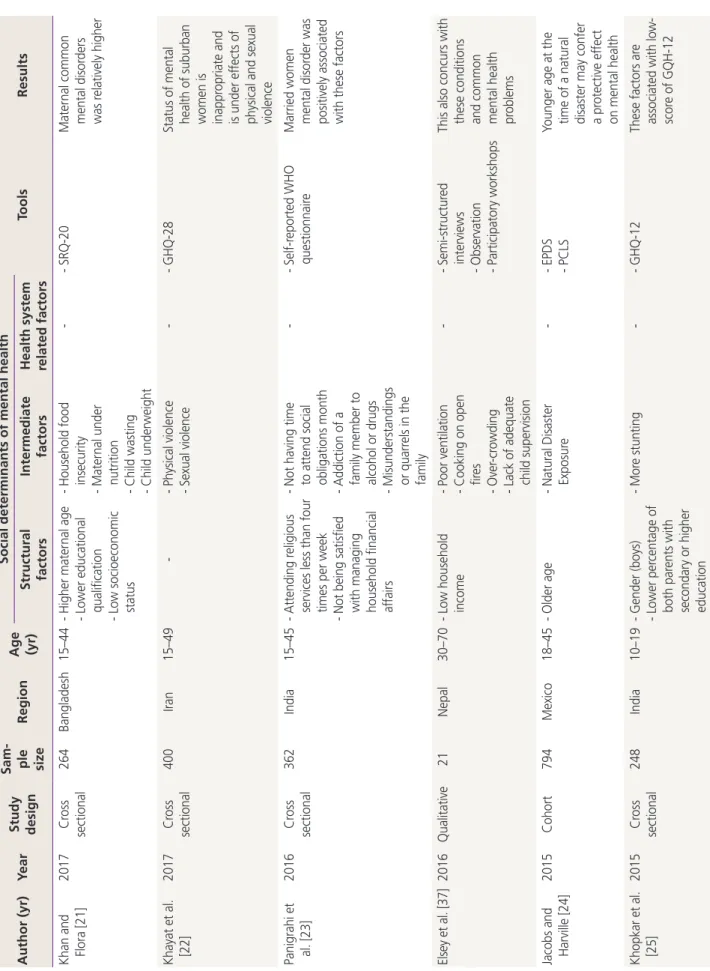
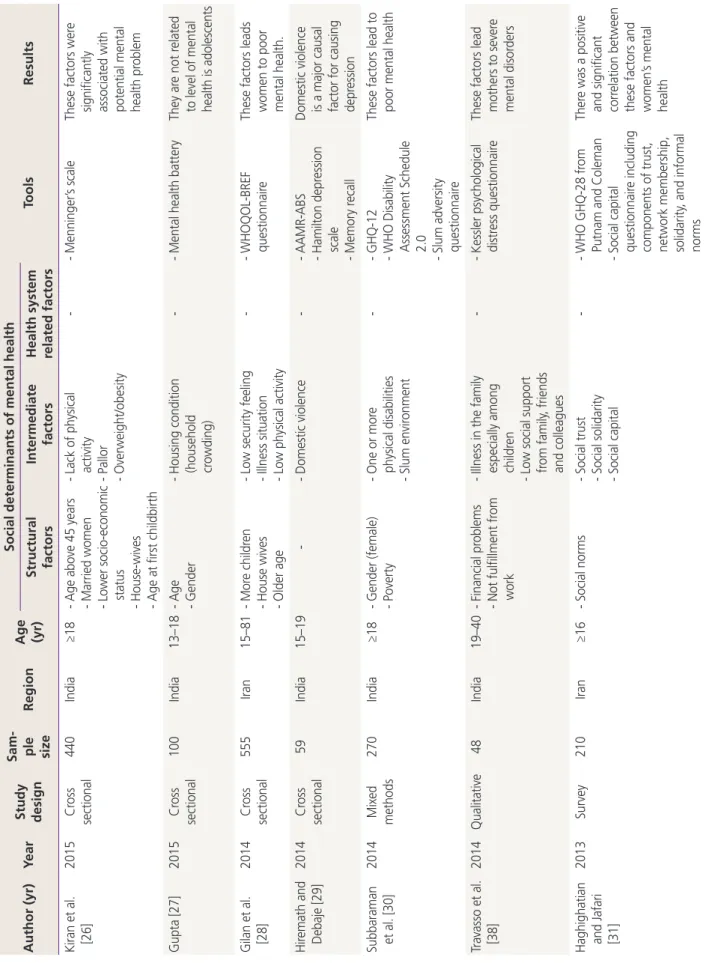
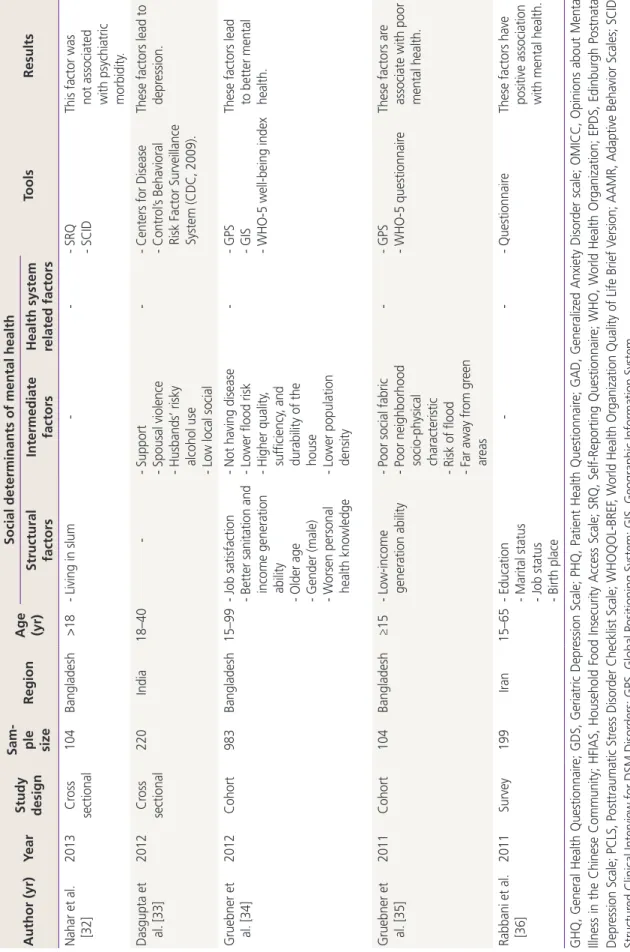
After evaluating and determining the final quality of articles, 23 relevant articles were selected (Table 1). As observed, most of the articles had a quantitative design (n=20). Other studies had a qualitative (n=2) and mixed method (n=1) design. A total of 6,755 women were examined in different age groups such as adolescence, middle age, reproductive age, and older age (total age range, 10–81 years). Studies were conducted on women from the suburbs and slums of numerous countries. The largest number of studies were conducted in India (n=12), followed by Bangladesh (n=4), Iran (n=4), Kenya (n=1), Mexico (n=1), and Nepal (n=1).

1. Structural factors

As shown in Table 4, different social determinants can con- tribute in improving or weakening women’s mental health.

The reviewed studies examined different aspects. Structural factors such as gender, level of education, age, social and economic status, household income, marital status, number of households, place of birth, occupation, religion, and place of residence were among the factors covered [16-19,21,23- 28,30-32,34,36-38]. The strongest factors that could af- Table 3. Qualitative studies assessed by Joanna Briggs Institute (JBI) checklist

Checklist

Study Elsey et al.

[37] (2016)

Travasso et al.

[38] (2014)

Subbaraman et al. [30] (2014)

Is the review question clearly and explicitly stated? Yes Yes Yes

Were the inclusion criteria appropriate for the review question? Yes Yes Yes

Was the search strategy appropriate? Yes Yes Yes

Were the sources and resources used to search for studies adequate? Yes Yes Yes

Were the criteria for appraising studies appropriate? Yes Yes Yes

Was critical appraisal conducted by two or more reviewers independently? Yes Yes Yes

Were there methods to minimize errors in data extraction? Unclear Unclear Unclear

Were the methods used to combine studies appropriate? Yes Yes Yes

Was the likelihood of publication bias assessed? Unclear Unclear Unclear

Were recommendations for policy and/or practice supported by the reported data? Unclear Unclear Unclear

Were the specific directives for new research appropriate? No No No

(5)

Table 4. Results from a systematic review of studies Author (yr) Year Study design Sam - ple size Region Age (yr)

Social determinants of mental health Tools Results Structural factors Intermediate factors Health system related factors Chauhan and Dhar [16] 2019 Cr oss sectional 317 India 12–19 - Gender (female) - Education (low grade) - Caste - Household economic status (low income level) - Media exposur e - Marital status(married) - Religion

- - - GHQ-12 Significant relationship with poor mental health Ashe and Routray [17] 2019 Cr oss sectional 105 India ≥60 - Gender (female) - Lower socio-economic status

- Diabetes mellitus - Hypertension - Family member death - Close r elative death - Conflict in family - Chr onic illness of family members

- - GDS30 Significant relationship with poor mental health Mathias et al. [18] 2018 Quasi - experiment 106 India 10–25 - Pr omoting self-belief - Pr omoting r esilience skills

- Emotional competence - Pr omotes peer relationships - Str engthens social networks - -Nae Disha curriculum - PHQ-9 - GAD-7

Significant relationship between Nae Disha curriculum domain s and better mental health Mutiso et al. [19] 2018 Cr oss sectional 428 Kenya ≥18 - Gender - Living in urban slum - - - OMICC questionnair e - MINI-Inter national Neur opsychiatric Interview Plus V ersion 5

Mental Illness was not associate with gender but ther e was a r elationship between living in urban slum and mental illness Rani et al. [20] 2018 Cr oss sectional 418 India 13–19 - - Household food insecurity - - HFIAS - Mental health inventory tools

Food insecurity is independently associated with mental health pr oblems

(6)

Author (yr) Year Study design Sam - ple size Region Age (yr)

Social determinants of mental health Tools Results Structural factors Intermediate factors Health system related factors Khan and Flora [21] 2017 Cr oss sectional 264 Bangladesh 15–44 - Higher mater nal age - Lower educational qualification - Low socioeconomic status - Household food insecurity - Mater nal under nutrition - Child wasting - Child underweight

- - SRQ-20 Mater nal common mental disor ders was r elatively higher Khayat et al. [22] 2017 Cr oss sectional 400 Iran 15–49 - - Physical violence - Sexual violence - - GHQ-28 Status of mental health of suburban women is inappr opriate and is under ef fects of physical and sexual violence Panigrahi et al. [23] 2016 Cr oss sectional 362 India 15–45 - Attending r eligious services less than four times per week - Not being satisfied with managing household financial af fairs

- Not having time to attend social obligations month - Addiction of a family member to alcohol or drugs - Misunderstandings or quarr els in the family

- - Self-r eported WHO questionnair e Married women mental disor der was positively associated with these factors Elsey et al. [37] 2016 Qualitative 21 Nepal 30–70 - Low household income - Poor ventilation - Cooking on open fir es - Over -cr owding - Lack of adequate child supervision - - Semi-structur ed interviews - Observation - Participatory workshops

This also concurs with these conditions and common mental health pr oblems Jacobs and Harville [24] 2015 Cohort 794 Mexico 18–45 - Older age - Natural Disaster Exposur e - - EPDS - PCLS Younger age at the time of a natural disaster may confer a pr otective ef fect on mental health Khopkar et al. [25] 2015 Cr oss sectional 248 India 10–19 - Gender (boys) - Lower per centage of both par ents with secondary or higher education

- Mor e stunting - - GHQ-12 These factors ar e as so ci at ed w ith lo w - scor e of GQH-12

Table 4. Continued

(7)

Author (yr) Year Study design Sam - ple size Region Age (yr)

Social determinants of mental health Tools Results Structural factors Intermediate factors Health system related factors Kiran et al. [26] 2015 Cr oss sectional 440 India ≥18 - Age above 45 years - Married women - Lower socio-economic status - House-wives - Age at first childbirth - Lack of physical activity - Pallor - Overweight/obesity

- - Menninger’ s scale These factors wer e significantly associated with potential mental health pr oblem Gupta [27] 2015 Cr oss sectional 100 India 13–18 - Age - Gender - Housing condition (household cr owding)

- - Mental health battery They ar e not r elated to level of mental health is adolescents Gilan et al. [28] 2014 Cr oss sectional 555 Iran 15–81 - Mor e childr en - House wives - Older age

- Low security feeling - Illness situation - Low physical activity

- - WHOQOL-BREF questionnair e These factors leads women to poor mental health. Hir emath and Debaje [29] 2014 Cr oss sectional 59 India 15–19 - - Domestic violence - - AAMR-ABS - Hamilton depr ession scale - Memory r ecall

Domestic violence is a major causal factor for causing depr ession Subbaraman et al. [30] 2014 Mixed methods 270 India ≥18 - Gender (female) - Poverty - One or mor e physical disabilities - Slum envir onment

- - GHQ-12 - WHO Disability Assessment Schedule 2.0 - Slum adversity questionnair e

These factors lead to poor mental health Travasso et al. [38] 2014 Qualitative 48 India 19–40 - Financial pr oblems - Not fulfillment fr om work

- Illness in the family especially among childr en - Low social support fr om family , friends and colleagues

- - Kessler psychological distr ess questionnair e These factors lead mothers to sever e mental disor ders Haghighatian and Jafari [31]

2013 Survey 210 Iran ≥16 - Social norms - Social trust - Social solidarity - Social capital

- - WHO GHQ-28 fr om Putnam and Coleman - Social capital questionnair e including components of trust, network membership, solidarity , and informal norms Ther e was a positive and significant corr elation between these factors and women’ s mental health

Table 4. Continued

(8)

Author (yr) Year Study design Sam - ple size Region Age (yr)

Social determinants of mental health Tools Results Structural factors Intermediate factors Health system related factors Nahar et al. [32] 2013 Cr oss sectional 104 Bangladesh >18 - Living in slum - - - SRQ - SCID This factor was not associated with psychiatric morbidity . Dasgupta et al. [33] 2012 Cr oss sectional 220 India 18–40 - - Support - Spousal violence - Husbands’ risky alcohol use - Low local social - - Centers for Disease - Contr ol’ s Behavioral Risk Factor Surveillance System (CDC, 2009).

These factors lead to depr ession. Gruebner et al. [34] 2012 Cohort 983 Bangladesh 15–99 - Job satisfaction - Better sanitation and income generation ability - Older age - Gender (male) - W orsen personal health knowledge

- Not having disease - Lower flood risk - Higher quality , suf ficiency , and durability of the house - Lower population density - - GPS - GIS - WHO-5 well-being index

These factors lead to better mental health. Gruebner et al. [35] 2011 Cohort 104 Bangladesh ≥15 - Low-income generation ability - Poor social fabric - Poor neighborhood socio-physical characteristic - Risk of flood - Far away fr om gr een ar eas

- - GPS - WHO-5 questionnair e These factors ar e associate with poor mental health. Rabbani et al. [36] 2011 Survey 199 Iran 15–65 - Education - Marital status - Job status - Birth place

- - - Questionnair e These factors have positive association with mental health. GHQ, General Health Questionnair e; GDS, Geriatric Depr ession Scale; PHQ, Patient Health Questionnair e; GAD, Generalized Anxiety Disor der scale; OMICC, Opinions about Mental Illness in the Chinese Community; HFIAS, Household Food Insecurity Access Scale; SRQ, Self-Reporting Questionnair e; WHO, W orld Health Organization; EPDS, Edinburgh Postnatal Depr ession Scale; PCLS, Posttraumatic Str ess Disor der Checklist Scale; WHOQOL-BREF , W orld Health Organization Quality of Life Brief V ersion; AAMR, Adaptive Behavior Scales; SCID, Structur ed Clinical Interview for DSM Disor ders; GPS, Global Positioning System; GIS, Geographic Information System.

Table 4. Continued

(9)

fect mental health according to the studies were related to household income and socioeconomic status, which were highlighted in 10 studies [16,17,21,23,26,30,34,35,37,38].

These studies indicated low income, poverty, and low socio- economic status can lead to poor mental health in women.

The second factor affecting women’s lower mental health was gender. Seven articles examined the relationship be- tween gender and mental health [16,17,19,25,27,30,34], three of which showed that women were more susceptible to mental disorders [16,17,30], one study reported this is- sue in men [25], and three studies showed no relationship in this regard [19,27,34]. Six studies also examined the rela- tionship between age and mental health [21,24,26-28,34].

Five studies showed increasing age and age at birth of the first child [21,24,26,28,34], and one study did not show any association [27]. Job status was examined in 5 studies [26,28,34,36,38] that showed that unemployment, being a housewife, and dissatisfaction were related to a low level of mental health. Another factor was living in the suburbs and slums [19,30,32]. Three studies showed that living in the slums is one of the factors that affect women’s mental health, which is aggravated by overcrowding in these areas.

A low level of education of women themselves or their par- ents at adolescence can potentially cause poor mental health in these areas [16,21,25,36]. Marital status was also exam- ined in 3 studies, which concluded that married women had poorer mental health than unmarried women [16,26,36].

The number of family members can also have an impact on mental health, with women with more children and a busy family having a poorer mental health than women with a smaller family [28,34].

2. Intermediate factors

Disease status [17,28,30] and disability [30] were studied in four articles. Chronic diseases such as diabetes and hyperten- sion or physical disabilities can also be linked to mental disor- ders in women.

Social determinants of mediators affecting mental health may also include living conditions [27,34,35], family condi- tions [17,23,34,37], domestic violence [22,29,33], nutritional status [20,21,25,34,35], and social factors [18,23,31,35,38].

Four studies found that inadequate living conditions, such as poor ventilation, poor cooking conditions, social living conditions, and living away from green spaces could be as- sociated with poor mental health.

Abuse by spouse following alcohol consumption [33], fam- ily members’ addiction [23], death of family members, family members’ illness [17], lack of understanding by family mem- bers [23], and family disputes [17] are among the factors influencing women’s mental health. Family members’ illness comprised the largest proportion and was discussed in 2 ar- ticles [17,38].

The likelihood of natural hazards such as flooding was assessed in 3 studies, and a direct relationship was shown between the risk of natural disasters and poor mental health [24,35].

Domestic violence, such as sexual and physical violence, was reported in 3 studies [22,29,33], and its relationship with the incidence of mental disorders in women has been dem- onstrated.

Nutritional status was assessed in 5 studies [20,21,25,34,35].

The lack of food security in the family was reported in 2 studies, and another study found that a poor nutritional sta- tus of mothers effectively lowered the level of women’s men- tal health. The same was true for obesity and overweight.

Social factors [18,23,31,35,38] such as the lack of social trust, social cohesion, social norms, social capital; low social support from the community, family, friends and co-workers;

poor social fabric; low security; and negligence with respect to social norms can also be associated with poor mental health in women.

According to the Nae Disha curriculum [18], strengthening and training areas; building emotional competence and peer relationships; and strengthening social networks, self-belief, and resilience tones are effective in promoting the mental health of slum women.

Other factors associated with low levels of women’s men- tal health include caste, media exposure [16], child wasting, child underweight [21], pallor, low physical activity, and obe- sity [26].

The tools used to screen for mental health and other fac-

tors are also listed separately in each study. As observed, the

General Health Questionnaire (GHQ) was used in 5 studies

with the highest frequency. Its 12-item form was used in

3 studies, and its 28-item form was used in 2 studies. Two

studies also used the WHO-5 questionnaire for mental health

screening.

(10)

Discussion

In the present study, the findings indicate that social health determinants affect slum women’s mental health. Among the structural determinants, gender and social class (educa- tion, job, and socioeconomic status) correlated the most.

According to the results, the higher the socioeconomic status and income level of this segment of society, the worse the mental health status of women. Recent findings are in line with the results of Weinberg et al. [40]. They found, in a 16- year study in the Netherlands, that socioeconomic status and educational attainment inversely and negatively correlated with mental health in adults. Sweeney et al. [41] found that socioeconomic deprivation was associated with an adverse public health status. The use of mental health services in this group of people is different from that of other groups, and they have less access to medical services to manage their mental health problems. In this group, there are more un- employment disorders that increase social stigma, which can lead to undesirable consequences such as social isolation, in- appropriate health behaviors, and an exacerbation of mental problems [41].

Influential social factors reflect different positions of people in the social ladder of power and resources. Evidence sug- gests that most illnesses and health inequalities in the world stem from social factors. The context of these factors shows that in many countries, it is impossible to achieve health goals without achieving significant success in poverty allevia- tion, food security, education, women’s empowerment, and improved living conditions in poor and densely populated areas. The definitive role of social and environmental factors that affect people’s health has long been recognized. Epide- miological research has proven that environmental and social factors have been important in improving the health of many populations in industrialized countries at the turn of the century. The WHO Statute, drafted in 1946, addressed the fact that its founders intended to address the social roots of health problems as well as confront the challenges of effec- tive health care and treatments. In this statute, health is de- fined as “the state of complete physical, mental, and social well-being and not merely the absence of disease” [6].

Education is one of the determinants of social class and socioeconomic status [4]. In the modern world, education is seen as a means of improving the quality of life of individuals and has a strong effect on mental health; moreover, stud-

ies suggest that there is a significant positive relationship between low education and mental disorders such as severe depression [21]. Carter et al. [42] also found that class dis- crimination directly and significantly correlated with educa- tion levels, depressive symptoms, and anxiety, and these re- sults are consistent with findings from a recent study. Studies conducted in Iran also indicated that the education of slum women is low, such that in a cash study by Naghdi and Zare [43], 86.7% of women living in slums in Shiraz were illiter- ate or had elementary or secondary education. Similar results were also found in studies conducted in other countries.

Of women living in slums, 12.8% were mostly illiterate and 80.6% had primary and secondary education [44]. Generally, illiteracy and low literacy in the slums and suburban areas is a significant problem associated with socioeconomic status and mental health.

Gender was another factor that was most frequently re- ported in the studies related to mental health. According to the findings of the studies, women were more susceptible to mental disorders than men. This finding is consistent with that of Gitay et al. [45]. In their study of 300 students in Pak- istan, they found that women experience mental disorders such as anxiety and depression more than men [45]. Among the intermediate determinants, living conditions, food inse- curity, social capital, and social support were most frequently associated with mental health. Living conditions and lifestyle are intermediate health determinants that can be directly or indirectly related to people’s health [46]. According to cur- rent findings, various aspects of adverse living conditions such as inadequate housing, social living conditions, and be- ing away from appropriate living facilities are associated with the mental health of this vulnerable group. Khayat et al. [46]

in their study of slum women in Zahedan found that women in these areas were experiencing very poor living conditions and health status, which resulted in a lower public health status than other women living in the same city. In addition, because of their living conditions, slum women are exposed to various kinds of violence and stress that have a negative relationship with their mental health status [47].

Food insecurity is another intermediate determinant of

health that is linked to the health of people based on the

WHO model. The results of various studies show that low

income is clearly an important determinant of food insecu-

rity, although other factors such as limited access to food as-

sistance programs, low education, and the number of family

(11)

members are also associated with increased food insecurity.

In a study by Yadegari et al. [48], they found that food inse- curity through stress, body mass index, and depression af- fects pregnancy outcomes, and this is consistent with the re- sults of the reviewed studies. Social support and social capital are other intermediate determinants associated with mental health. According to the results of the studies, the more inappropriate supportive roles these people had, the more difficulties and mental disorders they experienced. According to a model presented by Nieminen et al. [49] on the relation- ship between social capital and social support with mental health, these 2 factors directly and indirectly influence the mental health of patients. As discussed, social determinants of health, owing to their importance and role, are increasing- ly being identified as factors influencing individuals’ physical and mental health, and these health predictors require more attention.

In conclusion, structural determinants, i.e., gender and so- cial class (education, job, income, and socioeconomic status) were most frequently associated with mental health. Among the intermediate determinants, living conditions, food inse- curity, social capital, and social support were most frequently associated with mental health. The mental health of women, who constitute half of the suburban community and the foundation of families, should be considered as the highest level of health. Extensive social support and planning for the employment of women and their family members as well as helping improve their income and enhancing their socioeco- nomic status can improve their mental health, as women in these areas are more prone to having poor mental health.

Improving the socioeconomic status ensures food security for women, thus improving their nutritional status.

Limitations of this study include women’s unwillingness to participate in women’s studies, self-reporting and informa- tion recall by women, the use of a tool for mental health screening in studies, the greater likelihood of slum women residing in an area to participate in the study, the lack of rep- resentativeness, and the lack of access to full texts of a few articles.

Acknowledgments

We also appreciated Alborz University of Medical Sciences.

Conflict of interest

No potential conflicts of interest relevant to this article were reported.

Ethical approval

This study was approved by the Alborz University of Medical Sciences with ethnical code IR.ABZUMS.REC.1398.161.

Patient consent

None.

Funding information

None.

References

1. Begum S, Donta B, Nair S, Prakasam CP. Socio-demo- graphic factors associated with domestic violence in urban slums, Mumbai, Maharashtra, India. Indian J Med Res 2015;141:783-8.

2. Lotfi H, Mirzaei M, Edalatkhah F, Vazirpour S. The crisis of slumminess in metropolises management and global approaches. J Hum Geogr 2010;2:135-45.

3. Qishlaqi A, Moore F, Forghani G. Impact of untreated wastewater irrigation on soils and crops in Shiraz subur- ban area, SW Iran. Environ Monit Assess 2008;141:257- 73.

4. Jamshidi A, Jamini D, Jamshidi M, Cheraghi R. Informal settlement, prioritizing current challenges case study:

Jafar Abad District in Kermanshah City. Hum Geogr Res Q 2014;45:221-42.

5. Riahi V, Gadermarzi H, Hamidi MS. Analysis of inequali- ties spatial in rural settlements Saqqez County. Geogra- phy 2015;13:47-72.

6. R u g e r J P. H e a l t h a n d s o c i a l j u s t i c e . L a n c e t 2004;364:1075-80.

7. Razzani B, Atashzadeh-Shoorideh F, Jamshidi T, Bark-

(12)

hordari-Sharifabad M, Lotfi Z, Skerrett V. The effect of education around ethical principles on nurses’ percep- tion to patient safety culture in an Iranian mental health inpatient unit: a pilot study. BMC Nurs 2020;19:10.

8. Nazari H, Farhadi A, Jariayani M, Hosseinabadi R, Asgari S, Majidimehr M. Mental health of pregnant women referred to Khorramabad Health Centers. Yafteh 2014;16:40-8.

9. Banaian SH, Parvin N, Kazemian A. The investigation of the relationship between mental health condition and marital satisfaction. J Hamadan Nurs Midwifery Fac 2006;14:52-8.

10. Abdi F, Daryani NE, Khorvash F, Yousefi Z. Experiences of individuals with liver cirrhosis. Gastroenterol Nurs 2015;38:252-7.

11. Vahidi R, Kousha A, Kalantari H, Tabrizi J. Social deter- minants of health and their related organizations in East Azerbaijan. J Health 2013;3:20-8.

12. Abdi F, Ozgoli G, Rahnemaie FS. A systematic review of the role of vitamin D and calcium in premenstrual syn- drome. Obstet Gynecol Sci 2019;62:73-86.

13. Abdi F, Mobedi H, Bayat F, Mosaffa N, Dolatian M, Teh- rani FR. The effects of transdermal estrogen delivery on bone mineral density in postmenopausal women: a meta-analysis. Iran J Pharm Res 2017;16:380-9.

14. Rahnemaei FA, Fashami MA, Abdi F, Abbasi M. Factors effective in the prevention of preeclampsia: a systematic review. Taiwan J Obstet Gynecol 2020;59:173-82.

15. World Health Organization. A conceptual framework for action on the social determinants of health. Geneva:

World Health Organization; 2010.

16. Chauhan SK, Dhar M. Prevalence and predictors of men- tal health disorder among the adolescent living in the slums of Lucknow, India: a cross-sectional study. Com- munity Ment Health J 2020;56:383-92.

17. Ashe S, Routray D. Prevalence, associated risk factors of depression and mental health needs among geriat- ric population of an urban slum, Cuttack, Odisha. Int J Geriatr Psychiatry 2019;34:1799-807.

18. Mathias K, Pandey A, Armstrong G, Diksha P, Kermode M. Outcomes of a brief mental health and resilience pilot intervention for young women in an urban slum in Dehradun, North India: a quasi-experimental study. Int J Ment Health Syst 2018;12:47.

19. Mutiso VN, Musyimi CW, Tomita A, Loeffen L, Burns JK,

Ndetei DM. Epidemiological patterns of mental disorders and stigma in a community household survey in urban slum and rural settings in Kenya. Int J Soc Psychiatry 2018;64:120-9.

20. Rani D, Singh JK, Acharya D, Paudel R, Lee K, Singh SP.

Household food insecurity and mental health among teenage girls living in urban slums in Varanasi, India:

a cross-sectional study. Int J Environ Res Public Health 2018;15:1585.

21. Khan AM, Flora MS. Maternal common mental disorders and associated factors: a cross-sectional study in an ur- ban slum area of Dhaka, Bangladesh. Int J Ment Health Syst 2017;11:23.

22. Khayat S, Dolatian M, Navidian A, Mahmoodi Z, Kasae- ian A. Association between physical and sexual violence and mental health in suburban women of Zahedan: a cross-sectional study. J Clin Diagn Res 2017;11:IC01-5.

23. Panigrahi A, Panigrahi M, Padhy AP, Das SC. Common mental disorder and its socio-demographic correlates among married women residing in slum areas of Bhu- baneswar, India. Women Health 2017;57:521-33.

24. Jacobs MB, Harville EW. Long-term mental health among low-income, minority women following ex- posure to multiple natural disasters in early and late adolescence compared to adulthood. Child Youth Care Forum 2015;44:511-25.

25. Khopkar SA, Virtanen SM, Kulathinal S. Mental health, anthropometry and blood pressure among adolescents living in slums of Nashik, India. Tanzan J Health Res 2015;17:6.

26. Kiran MB, Srinivasan K, Niharika B, Priya S. A cross-sec- tional study of potential mental health problem in adult women living in urban slums of hyderabad. J Evol Med Dent Sci 2015;4:8561-9.

27. Gupta S. Mental health and housing structure: a slum based study. Indian J Health Wellbeing 2015;6:734-6.

28. Gilan NR, Ghasemi SR, Reshadat S, Zanganeh A, Saeidi S.

Health-related quality of life of women in marginal areas of Kermanshah and some related factors. J Kermanshah Univ Med Sci 2014;18:e74023.

29. Hiremath R, Debaje SP. Assessment of prevalence of do- mestic violence and mental health profile of adolescents exposed to domestic violence in an urban slum in Mum- bai. Int J Res Med Sci 2014;2:290-2.

30. Subbaraman R, Nolan L, Shitole T, Sawant K, Shitole

(13)

S, Sood K, et al. The psychological toll of slum living in Mumbai, India: a mixed methods study. Soc Sci Med 2014;119:155-69.

31. Haghighatian M, Jafari E. The relationship of bonding social capital with mental health among slum dwellers.

Soc Welf 2013;13:129-47.

32. Nahar JS, Haque M, Chowdhury NF, Qusar MS, Rahman W, Chowdhury HR, et al. Psychiatric morbidity among rural and slum female population: a comparative study.

Bangabandhu Sheikh Mujib Med Univ J 2013;6:146-50.

33. Dasgupta A, Battala M, Saggurti N, Nair S, Naik DD, Sil- verman JG, et al. Local social support mitigates depres- sion among women contending with spousal violence and husband’s risky drinking in Mumbai slum communi- ties. J Affect Disord 2013;145:126-9.

34. Gruebner O, Khan MM, Lautenbach S, Müller D, Krämer A, Lakes T, et al. Mental health in the slums of Dhaka - a geoepidemiological study. BMC Public Health 2012;12:177.

35. Gruebner O, Khan MM, Lautenbach S, Müller D, Krae- mer A, Lakes T, et al. A spatial epidemiological analysis of self-rated mental health in the slums of Dhaka. Int J Health Geogr 2011;10:36.

36. Rabbani R, Haghighatian M, Nazari J, Ghasemi M. A sociological study of marginalization and its impact on mental health of marginalized people (case study of Merzhan and Darak) Zeinabieh Isfahan. Shooshtar Soc Sci 2011;14:95.

37. Elsey H, Manandah S, Sah D, Khanal S, MacGuire F, King R, et al. Public health risks in urban slums: findings of the qualitative ‘Healthy Kitchens Healthy Cities’ study in Kathmandu, Nepal. PLoS One 2016;11:e0163798.

38. Travasso SM, Rajaraman D, Heymann SJ. A qualitative study of factors affecting mental health amongst low- income working mothers in Bangalore, India. BMC Wo- mens Health 2014;14:22.

39. Zare E, Roozbeh N, Akbari PA, Teshnizi SH, Ghazan- farpour M, Abdi F. HPV and its high-risk genotypes in Middle Eastern countries: a meta-analysis. Future Virol 2020;15:595-607.

40. Weinberg D, Stevens GW, Duinhof EL, Finkenauer C.

Adolescent Socioeconomic Status and Mental Health Inequalities in the Netherlands, 2001–2017. Int J Environ Res Public Health 2019;16:E3605.

41. Sweeney S, Air T, Zannettino L, Galletly C. Psychosis, socioeconomic disadvantage, and health service use in South Australia: findings from the second Austra- lian National Survey of Psychosis. Front Public Health 2015;3:259.

42. Carter SE, Walker RL, Cutrona CE, Simons RL, Beach SR. Anxiety mediates perceived discrimination and health in African-American women. Am J Health Behav 2016;40:697-704.

43. Naghdi A, Zare S. The study of social and cultural fac- tors affecting on women fertility living in slums. Sociol Women 2013;4:31-54.

44. Nwameme AU, Phillips JF, Adongo PB. Compliance with emergency obstetric care referrals among pregnant women in an urban informal settlement of Accra, Gha- na. Matern Child Health J 2014;18:1403-12.

45. Gitay MN, Fatima S, Arshad S, Arshad B, Ehtesham A, Baig MA, et al. Correction to: gender differences and prevalence of mental health problems in stu- dents of healthcare units. Community Ment Health J 2019;55:854.

46. Khayat S, Dolatian M, Navidian A, Kasaeian A, Mah- moodi Z. Association between style of living and general health in suburban women: a cross-sectional study in South East of Iran. J Clin Diagn Res 2017;11:LC09-13.

47. Khayat S, Dolatian M, Navidian A, Kasaeian A, Mah- moodi Z. Association between style of living and general health in suburban women: a cross-sectional study in South East of Iran. J Clin Diagn Res 2017;11:LC09-13.

48. Yadegari L, Dolatian M, Mahmoodi Z, Shahsavari S, Sharifi N. The relationship between socioeconomic fac- tors and food security in pregnant women. Shiraz E Med J 2017;18:e41483.

49. Nieminen T, Martelin T, Koskinen S, Aro H, Alanen E,

Hyyppä MT. Social capital as a determinant of self-rated

health and psychological well-being. Int J Public Health

2010;55:531-42.

수치

Table 1. Search strategy
Table 2. Quality assessment of the studies by “Ottawa Newcastle” scale
Table 4.Results from a systematic review of studies Author (yr)YearStudy  design Sam-ple  sizeRegionAge (yr)
Table 4.Continued
+3

참조

관련 문서

KEYWORDS social determinants of health; cardiovascular health; education; household income; health insurance; association; risk factors; cardiovascular; cardiovascular disease;

Factors Affecting Mental Health and Behavioral Problems in High School Students: Based on a Social Cognitive Career Theory.. Hae Kyoung Son 1 , Hyejung Lee 2 ,

Lee HS (2014): The factors influencing health-related quality of life in the elderly: focused on the general characteristics, health habits, mental health, chronic

The purpose of the study was to measure the 4 basic taste perceptions, nutrient intake, and mental health, and to examine the factors affecting insensitive taste perception in young

In conclusion, our findings suggest that shift work is related to an increased risk of mental health problems in electronics production workers, and that there are gender differences

Abstract This study examined the mental health status (depression, cognitive impairment and dementia) and its association with the related factors in the elderly people who

Analysis of the influence of physical and mental function, and oral health impact profiles on quality of life in the elderly people in long-term care centers using the