Received: May 1, 2021•Revised: July 6, 2021•Accepted: July 8, 2021
Corresponding Author: Abhinav Singh, MDS, Associate Professor, Department of Dentistry, Nodal Officer, Regional Training Centre for Oral Health Promotion, All India Institute of Medical Sciences, Bhopal, India
Tel: +91-9752202816 E-mail: [email protected] Copyrightⓒ 2021 Journal of Dental Anesthesia and Pain Medicine
Is aromatherapy associated with patient’s dental anxiety levels? A systematic review and meta-analysis
Abhishek Purohit
1, Abhinav Singh
1, Bharathi Purohit
2, Prateek Shakti
1, Nidhi Shah
11Department of Dentistry, Regional Training Centre for Oral Health Promotion, All India Institute of Medical Sciences, Bhopal, India
2Division of Public Health Dentistry, Centre for Dental Education & Research, WHO Collaborating Centre for Oral Health Promotion, All India Institute of Medical Sciences, New Delhi, India
The use of aromatherapy for the reduction of anxiety levels during dental treatment procedures has been well established in the literature; however, there is limited evidence regarding its efficacy. The present meta-analysis is an attempt to assess the association between the use of aromatherapy and anxiety levels among dental patients.
A comprehensive search was conducted across Medline, Scopus, Web of Science, EBSCO host, Cochrane databases, and Google Scholar for studies evaluating aromatherapy and anxiety level among dental patients. PRISMA guidelines were followed for the meta-analysis. Randomized and cluster-randomized trials comparing aromatherapy with controls were included. The random-effects model was used to assess the mean differences in anxiety levels of patients visiting dental OPD. The significance value was set at P < 0.05. Six studies were identified that met the requirements for inclusion. Aromatherapy was significantly associated with reduction in patient anxiety levels during dental treatment (pooled mean difference: -3.36 [95% CI, -3.77 – -2.95, P = 0.00001). Low heterogeneity was noted between studies (I2 = 1%, P = 0.41) analyzed in the meta-analysis. High certainty of the evidence was obtained from the association between the use of aromatherapy and dental anxiety. This meta-analysis suggests that aromatherapy is effective in reducing dental anxiety. When used judiciously, the results of this work should encourage the use of aromatherapy to reduce patient anxiety levels during dental procedures
Keywords: Aromatherapy; Dental Anxiety; Dental offices; Lavender; Odor.
This is an Open Access article distributed under the terms of the Creative Commons Attribution Non-Commercial License (http://creativecommons.org/licenses/by-nc/4.0/) which permits unrestricted non-commercial use, distribution, and reproduction in any medium, provided the original work is properly cited.
INTRODUCTION
Fear and anxiety from dentists and dentistry is a potentially distressing and common problem, both for the dentist and the patient. Previous literature has documented the prevalence of dental anxiety to be common among children and adolescents, in the range of 5% to 20%
globally [1]. Dental anxiety is considered to be a major obstacle to the completion of successful treatment.
Patients with dental anxiety are more likely to be
uncooperative during dental care, making it difficult, if not impossible, for dentists to complete the procedure.
Therefore, dental fear affects the working potential of the dental professional and compromises performance [2].
Aromatherapy has been used for almost 6,000 years, to improve a person's mood or health and works both physically and emotionally [3]. Aromatherapy is the use of aromatic compounds such as essential oils for therapeutic or medicinal purposes [4]. Aromatic oils are extracted from various parts of plants, herbs, trees, and flowers for medicinal purposes, and over forty different
types of oils are available [5]. These oils have antimicrobial activity of varying degrees and are believed to have antiviral, antifungal, and antioxidant properties.
Aromatherapy works by activating our sense of smell, and the essential oils are used in very small amounts.
Aroma has a powerful impact on the body, as they act on the olfactory nerve cells in the nasal cavity, sending impulses to the limbic system, which stimulates the nervous and circulatory system [6]. Lemon, chamomile, lavender, orange, apple, cedarwood, and bergamot are a few sources of the essential oils used regularly in aromatherapy [7]. Aromatherapy applications include massage, topical applications, inhalation, and alternative medicine [2]. Essential oils can also influence psycho- logical states, and they have been used to help patients waiting in dental offices to feel less anxious.
One of the most daunting challenges for dental practitioners has been identified as managing dental anxiety. Conscious sedation or general anesthesia is the most common method of treatment. These treatments, however, come with certain complications that necessitate extra equipment, and cannot be used for patients who have allergies or are taking other medicines [8-11].
Although aromatherapy has been used for several years, before and during dental procedures, there is no evidence to support their use and safety, to date. Therefore, the present study was conducted to establish conclusive evidence regarding aromatherapy in dental procedures.
This meta-analysis aims to provide evidence for the effectiveness of aromatherapy in reducing anxiety among dental patients.
METHODS
Inclusion criteria: The inclusion and exclusion criterion for study selection were determined before the literature search. Randomized and cluster-randomized trials comparing the effect of aromatherapy with a reported and validated measure of anxiety or stress among patients attending dental out-patient departments or clinics were
included. Non-randomized studies, i.e., those comparing two different forms of aromatherapy without a control group, were excluded. Studies in which no clinical data were reported, studies using unvalidated measures of anxiety, [12-16] and studies involving patients with a history of other surgeries (labor, heart, abdominal surgery etc) were also excluded [17-21].
Search Strategy: A literature search was conducted across Medline, Cochrane databases, Scopus, Web of Science, EBSCO host, and Google Scholar for publications up till March, 2021. Guidelines were followed for the meta-analysis. The following terms were used in the search: aromatherapy or lavender scent or odor or essential oils and dental anxiety or dental fear.
The Cochrane Database of Systematic Reviews was searched for pertinent publications. The literature search was conducted independently by two investigators (AP and AS), according to a pre-defined criteria, from the selected databases. To assess whether the articles could be retrieved in full, and to exclude ineligible studies, the title and abstracts were pre-screened. Retrieved articles were read before they were included in the review.
Differences between the judgement of the two investigators were resolved by discussion. In the event of a lack of consensus, a third person with expertise in the subject, pre-approved by the two investigators, helped make a decision. The selected papers' references were manually checked and potentially significant papers were retrieved. The articles were searched using English keywords. No restrictions were placed on the language of publications. Through manual searching of non-indexed journals, an attempt was made to check the grey literature for unpublished publications, and two related articles were thus found.
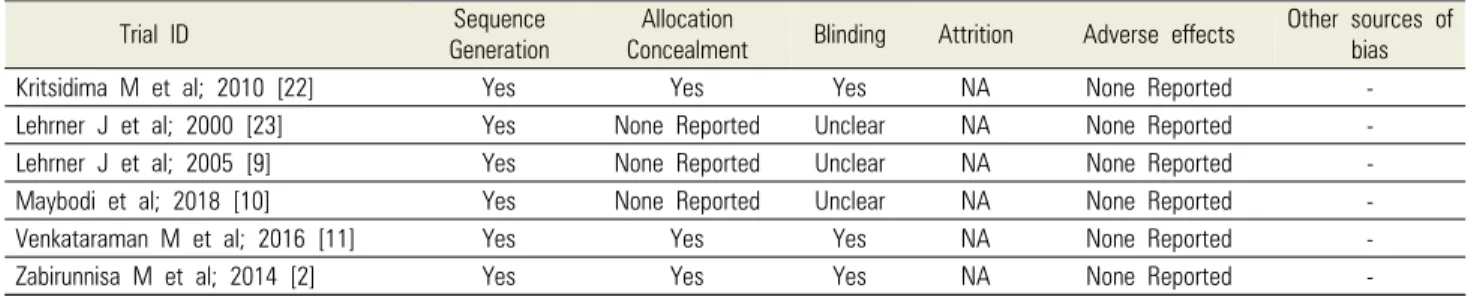
Data Extraction and Quality Assessment: The two investigators used guidelines published by the Cochrane Collaboration to extract outcome data. Differences between the two investigators were resolved by discussion. Characteristics of the trials included and excluded from the meta-analysis are presented in Table 1 and 2. Quality was assessed based on randomization
Fig. 1. Flow diagram of study selection process
(adequate sequence generation and allocation conceal- ment), blinding, anxiety level as the primary outcome measure, loss to follow-up, and other biases.
Statistical Analysis: The systematic review was conducted using the Cochrane Program Review Manager, version 5.3. The mean differences in anxiety level between the treatment (State-Trait Anxiety Inventory [STAI] and Modified Dental Anxiety Scale [MDAS]) and control groups were assessed using a random-effects model. Mean difference with 95% confidence intervals was calculated to assess anxiety levels between the two groups. Since there were less than ten studies included in the study, publication bias was not assessed. Certainty of evidence was assessed using GRADE analysis.
Statistical significance was set at P < 0.05.
RESULTS
The six trials reported in the meta-analysis compared the effect of aromatherapy on dental anxiety among the intervention and control groups. The studies were carried out with 1,318 participants (Intervention Group 693 &
Control group 625). To measure the dental anxiety, the Mean State-Trait Anxiety Inventory/Modified Dental Anxiety Scale was used, out of the six trials, five [2,9,10,11,22] reported significant (P < 0.05) positive effects of aromatherapy on dental anxiety, with one showing no effect [23].
The results of the literature search are presented in Fig.
1. Characteristics of the 6 trials included in the analysis and the 6 excluded studies are described in Tables 1 and 2. A total of 670 and 648 participants were included in
Table 1. Characteristics of studies included in meta-analysis Author; Year Study
Location
Study Design
Number of Participants
(n)
Age Mean (SD)
Method of Measuring
Anxiety
Anxiety level Mean (SD)
Method of Aromatherapy
Statistical Method (P-Value) Intervention
Group
Control Group Kritsidima M et al;
2010 [22] London RCT 340
I-170 C-170
39.3
(12.8) STAI 7.46
(2.43) 10.71
(4.35) Candle Warmer ANOVA (P < 0.001)
Lehrner J et al;
2000 [23] Austria RCT 72
I-35 C-37
34.1
(9.7) STAI 38
(11.5) 38.9
(9.5) Electrical
Dispenser ANOVA
(P > 0.5)
Lehrner J et al;
2005 [9] Austria RCT 149
I-98 C-51
40.8
(13.4) STAI 36.9
(10.7) 43.3
(13.4) Electrical
Dispenser ANOVA
(P = 0.028)
Maybodi et al;
2018 [10] Iran RCT 60
I-30 C-30
36.3
(3) STAI 36.8
(1.61) 39.73
(1.49) Not Mentioned ANOVA (P = 0.019)
Venkataraman M
et al; 2016 [11] India RCT 100
I-50 C-50
35
(12.5) MDAS 11.74
(4.10) 15.40
(4.18) Candle Warmer ANOVA (P < 0.00001)
Zabirunnisa M
et al; 2014 [2] India RCT 597
I-310 C-287
35
(12.5) MDAS 11.7
(4.10) 15.4
(4.8) Candle Warmer ANOVA (P = 0.001)
ANOVA, analysis of variance; C, Control group; I, Intervention group; MDAS, Modified Dental Anxiety Scale; n, number; RCT, randomized controlled trials; SD, standard deviation; STAI, State-Trait Anxiety Inventory.
Table 2. Characteristics of trials excluded from meta-analysis [12-15]
Author; year Study Location
Study Design
Number of Participants
(n) Reason for Exclusion
Soni S et al; 2018 India RCT 30 Different outcome measures; different age group
Pradopo S et al; 2107 Indonesia RCT 80 Different outcome measures
Toet A et al; 2010 Netherlands Non RCT 219 Non randomized controlled trial
Nardarajah D et al; 2018 India RCT 100 Different measures of anxiety
Hasheminia D et al; 2014 Iran RCT 56 Only patients with moderate and high anxiety levels were included
Bunget et al; 2018 Romania RCT 20 Insufficient data- SD not provided
RCT, randomized controlled trials; SD, standard deviation.
Table 3. Quality assessment of trials included in meta-analysis Trial ID Sequence
Generation
Allocation
Concealment Blinding Attrition Adverse effects Other sources of bias
Kritsidima M et al; 2010 [22] Yes Yes Yes NA None Reported -
Lehrner J et al; 2000 [23] Yes None Reported Unclear NA None Reported -
Lehrner J et al; 2005 [9] Yes None Reported Unclear NA None Reported -
Maybodi et al; 2018 [10] Yes None Reported Unclear NA None Reported -
Venkataraman M et al; 2016 [11] Yes Yes Yes NA None Reported -
Zabirunnisa M et al; 2014 [2] Yes Yes Yes NA None Reported -
the aromatherapy and control groups, respectively. The quality of trials included in the analysis is presented in Table 3. The allocation sequence was adequately generated in the entered studies. However, allocation concealment was declared by only two studies. No adverse effects were reported in any study.
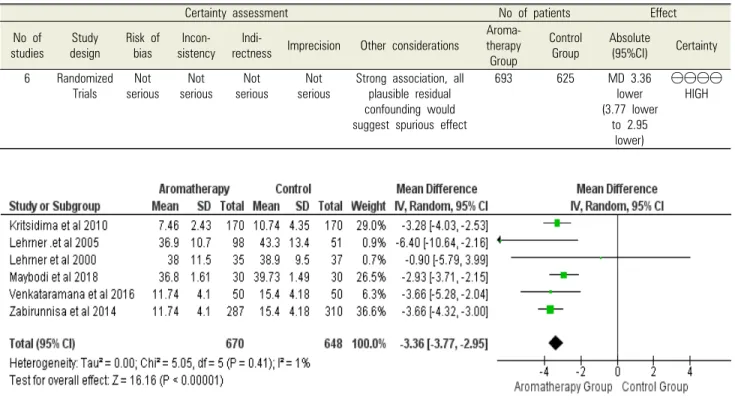
The meta-analyses of randomized controlled trials which evaluated the effect of aromatherapy on patients’ dental anxiety levels are presented in Fig. 2. Aromatherapy was associated with a significant reduction in patient dental anxiety level among patients on whom it was applied, compared to the control group (pooled mean difference:
Fig. 2. Meta-analysis of randomized control trials evaluating effect of aromatherapy on patient dental anxiety level
Table 4. GRADE assessment for certainty of evidence of association between aromatherapy versus control on patient’s dental anxiety level
Certainty assessment No of patients Effect
No of
studies Study
design Risk of bias Incon-
sistency Indi-
rectness Imprecision Other considerations Aroma- therapy
Group
Control
Group Absolute
(95%CI) Certainty 6 Randomized
Trials Not
serious Not
serious Not
serious Not
serious Strong association, all plausible residual confounding would suggest spurious effect
693 625 MD 3.36
lower (3.77 lower
to 2.95 lower)
⨁⨁⨁⨁
HIGH
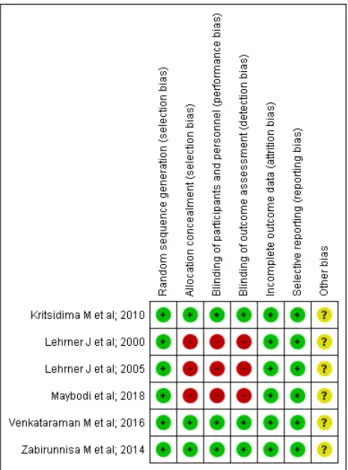
Fig. 3. Risk of bias graph: review authors' judgements about each risk of bias item presented as percentages across all included studies
-3.36 [95% CI, -3.77 –2.95], P = 0.00001; Fig. 2).
Heterogeneity between trials was very low (I2 = 1%, P
= 0.41; Fig. 2).
Grade assessment was conducted to assess the certainty of evidence. The level of evidence obtained for the association between the use of aromatherapy and dental anxiety was high (Table 4). Risk of bias was assessed by Cochrane risk of Bias assessment tool; the risk of bias graph and summary are presented in Fig. 3 and 4. Fig.
5 shows the funnel plot of included studies evaluating effect of aromatherapy on patient dental anxiety level.
DISCUSSION
The present meta-analysis is the first in the scientific literature to provide evidence on the effect of aroma- therapy on patient dental anxiety levels. This included
Fig. 4. Risk of bias summary: review authors' judgements about each risk of bias item for each included study
Fig. 5. Funnel plot of included studies evaluating effect of aromatherapy on patient dental anxiety level
six randomized clinical trials and demonstrated a significant reduction in patient dental anxiety levels upon using aromatherapy. Mean State-Trait Anxiety Inventory/
Modified Dental Anxiety Scale (STAI/MDAS) scores were calculated, which are among the commonly used anxiety tools in applied psychology. These are reliable and sensitive measures of dental anxiety, and researchers can compare their results with those of others [24].
An integral part of meta-analysis is the evaluation of the accuracy of effects across studies. Heterogeneity in meta-analysis represents the difference in research outcomes between different studies. The I2 statistic explains the percentage variance that is due to heterogeneity rather than chance across studies. An I2 value of 1% was noted in the present meta-analysis and indicates no observed heterogeneity. A lower hetero- geneity is always desirable, as it reflects consistent findings across studies.
The findings of various studies showed that inhalation
aromatherapy was effective in the reduction of anxiety level and depression [25-33]. Dentists are concerned about their patients' comfort, and aromatherapy can be used in dental clinics to help patients with dental anxiety.
Aromatherapy can also be used to treat mouth ulcers [34].
Notably, dental anxiety is related to adverse patient outcomes, and aromatherapy is one of the most effective non-pharmacological methods for managing dental anxiety [35]. The application of aromatic oils for medicinal purposes can be traced to the ancient Egyptian and Chinese cultures. Apart from providing an ambient odor, aromatherapy can provide respiratory decongestion, disinfection, and other psychological benefits. Inhaling aromas stimulates the olfactory system, related to the sense of smell. Molecules enter the body through the nose or mouth, then travel to the lungs and other areas of the body. Aromas affect the limbic system of the brain, which is related to heart rate, blood pressure, breathing, memory, stress, emotions, and hormonal balance, as they enter the brain. Aromatherapy can have a subtle but holistic impact on the whole body in this way [5].
The world Health Organization has noted the health benefits of complementary and alternative medicines.
These play a key role in not only the treatment, but also the prevention of chronic illnesses, thus enhancing the quality of life [36]. Medicinal plants were used to treat various illnesses due to their accessibility. Aromatherapy is a form of therapy that entails the use of essential oils
for treatment. At present, the World Health Organization recognizes aromatherapy as a method of treatment commonly used to relieve pain and anxiety, to improve the mood, promote a sense of relaxation, and to ameliorate daily stress problems [37-39]. The limitations of the present study include a limited number of analyzed studies, and the fact that the study protocol was not registered. The present study was intended to provide evidence for the association between aromatherapy and dental anxiety. However, further trials on the association between aromatherapy with dental anxiety are required.
CONCLUSION
This meta-analysis provided conclusive evidence related to the effectiveness of aromatherapy on anxiety levels among dental patients. These results conclude that aromatherapy is effective at reducing patient dental anxiety. When used judiciously, the results of this work should encourage the use of aromatherapy to reduce the patient dental anxiety levels.
AUTHOR ORCIDs
Abhishek Purohit: https://orcid.org/0000-0002-8857-4468 Abhinav Singh: https://orcid.org/0000-0002-8830-9955 Bharathi Purohit: https://orcid.org/0000-0003-4273-1699 Prateek Shakti: https://orcid.org/0000-0002-6493-8212 Nidhi Shah: https://orcid.org/0000-0002-5108-3235
AUTHOR CONTRIBUTIONS
Abhishek Purohit: Conceptualization, Methodology, Writing – original draft, Writing – review & editing
Abhinav Singh: Conceptualization, Methodology, Software, Supervision, Writing – original draft, Writing – review & editing Bharathi Purohit: Conceptualization, Funding acquisition,
Methodology, Supervision, Writing – original draft, Writing – review
& editing
Prateek Shakti: Methodology, Writing – original draft
Nidhi Shah: Software, Writing – original draft, Writing – review &
editing
ACKNOWLEDGEMENTS: The research was not funded.
CONFLICT OF INTEREST: The authors declare no com- peting interest in the manuscript.
SEARCH STRATEGY
1. Aromatherapy and Dental anxiety
(https://www.ncbi.nlm.nih.gov/PubMed/?term=Aromat herapy+and+Dental+anxiety)
(https://www.cochranelibrary.com/advanced-search) (https://www.sciencedirect.com/search?qs=Aromatherap y%20and%20Dental%20anxiety&lastSelectedFacet=articl eTypes&articleTypes=FLA)
(https://scholar.google.com/scholar?hl=en&as_sdt=0%2 C5&q=Aromatherapy+and+Dental+anxiety+&btnG=) 2. Odor and Dental anxiety
(https://www.ncbi.nlm.nih.gov/PubMed/?term=Odor+a nd+Dental+anxiety)
(https://www.cochranelibrary.com/advanced-search) (https://www.sciencedirect.com/search?qs=Odor%20and
%20Dental%20anxiety&articleTypes=FLA&lastSelectedF acet=articleTypes)
(https://scholar.google.com/scholar?hl=en&as_sdt=0%2 C5&q=odor+and+Dental+anxiety+&btnG=)
3. Aromatherapy or essential oils or aroma therapy AND dental anxiety or dental fear or dental phobia.
(http://web.b.ebscohost.com/ehost/resultsadvanced?vid
=4&sid=9f296f2c-aff0-4484-9767-e4d9106fa64b%40sessi onmgr102&bquery=(+aromatherapy+or+essential+oils+
or+aroma+therapy+)+AND+(+dental+anxiety+or+dent al+fear+or+dental+phobia+)&bdata=JmRiPWRkaCZjb GkwPUZUJmNsdjA9WSZ0eXBlPTEmc2VhcmNoTW9k ZT1BbmQmc2l0ZT1laG9zdC1saXZl)
(https://scholar.google.com/scholar?hl=en&as_sdt=0%2 C5&q=Aromatherapy+or+essential+oils+or+aroma+the rapy+AND+dental+anxiety+or+dental+fear+or+dental +phobia.&btnG=)
REFERENCES
1. Gao X, Hamzah SH, Yiu CK, McGrath C, King NM.
Dental fear and anxiety in children and adolescents:
qualitative study using youtube. J Med Internet Res 2013;
15: e29.
2. Zabirunnisa M, Gadagi JS, Gadde P, Myla N, Koneru J, Thatimatla C. Dental patient anxiety: possible deal with Lavender fragrance. J Res Pharm Pract 2014; 3: 100-3.
3. Worwood VA. The Complete Book of Essential Oils and Aromatherapy, Revised and Expanded: Over 800 Natural, Nontoxic, and Fragrant Recipes to Create Health, Beauty, and Safe Home and Work Environments. first ed. New World Library. 2016.
4. Fischer-Rizzi S. Complete aromatherapy handbook:
Essential oils for radiant health. New York, Sterling Publishing Company. 1990.
5. Aromatherapy: Uses, benefits, oils, and risks. Available from
https://www.medicalnewstoday.com/articles/10884.php.
6. Jimson S, Malathi L, Devi N, Sankari L. Aromatherapy in dentistry – a review. Biomed Pharmacol J 2016; 9: 827-8.
7. Chouhan S, Sharma K, Guleria S. Antimicrobial Activity of some essential oils—present status and future perspectives. Medicines (Basel) 2017; 4: 58.
8. Lim MAWT, Borromeo GL. The use of general anesthesia to facilitate dental treatment in adult patients with special needs. J Dent Anesth Pain Med 2017; 17: 91-103.
9. Lehrner J, Marwinski G, Lehr S, Johren P, Deecke L.
Ambient odors of orange and lavender reduce anxiety and improve mood in a dental office. Physiol Behav 2005;
86: 92-5.
10. Rashidi Maybodi F, Jalali Pandary M, Karami E, Ebrahimi AR. The effect of music and lavender’s aroma on patients anxiety, during periodontal surgery. J Dent Mater Tech 2018; 7: 117-22.
11. Venkataramana M, Pratap KV, Padma M, Kalyan S, Reddy AA, Sandhya P. Effect of aromatherapy on dental patient anxiety: a randomized controlled trial. J Indian Assoc Public Health Dent 2016: 14: 131.
12. Soni S, Bhatia R, Oberoi J. Evaluation of the efficacy of aromatherapy on anxiety level among pediatric patients in a dental setting: a randomized control trial. International J Oral Care Res 2018; 6: 44-9.
13. Pradopo S, Sinaredi BR, Januarisca BV. Pandan Leaves (Pandanus Amaryllifolius) aromatherapy and relaxation music to reduce dental anxiety of pediatric patients. J Int Dent Med Res 2017; 10: 933-7.
14. Nardarajah D, Dhanraj M, Jain AR. Effects of lavender aromatherapy on anxiety levels of patients undergoing mandibular third molar extraction. Drug Invent Today 2018; 10: 1318-22.
15. Hasheminia D, Kalantar Motamedi MR, Karimi Ahmadabadi F, Hashemzehi H, Haghighat A. Can ambient orange fragrance reduce patient anxiety during surgical removal of impacted mandibular third molars? J Oral Maxillofac Surg 2014; 72: 1671-6.
16. Toet A, Smeets MA, van Dijk E, Dijkstra D, van den Reijen L. Effects of pleasant ambient fragrances on dental fear: comparing apples and oranges. Chemosens Percept 2010; 3: 182-9.
17. Xiao Y, Li L, Xie Y, Xu J, Liu Y. Effects of aroma therapy and music intervention on pain and anxious for breast cancer patients in the perioperative period. Zhong Nan Da Xue Xue Bao Yi Xue Ban 2018; 43: 656-61.
18. Hanprasertpong T, Kor-anantakul O, Leetanaporn R, Suwanrath C, Suntharasaj T, Pruksanusak N, et al. Reducing pain and anxiety during second trimester genetic amniocentesis using aromatic therapy: a randomized trial.
J Med Assoc Thai 2015; 98: 734-8.
19. Fazlollahpour-Rokni F, Shorofi SA, Mousavinasab N, Ghafari R, Esmaeili R. The effect of inhalation aroma- therapy with rose essential oil on the anxiety of patients undergoing coronary artery bypass graft surgery.
Complement Ther Clin Pract 2019; 34: 201-7.
20. Hu PH, Peng YC, Lin YT, Chang CS, Ou MC.
Aromatherapy for reducing colonoscopy related procedural anxiety and physiological parameters: a randomized controlled study. Hepatogastroenterology 2010; 57: 1082-6.
21. Muzzarelli L, Force M, Sebold M. Aromatherapy and reducing preprocedural anxiety: a controlled prospective study. Gastroenterol Nurs 2006; 29: 466-71.
22. Kritsidima M, Newton T, Asimakopoulou K. The effects of lavender scent on dental patient anxiety levels: a cluster randomised‐controlled trial. Community Dent Oral
Epidemiol 2010; 38: 83-7.
23. Lehrner J, Eckersberger C, Walla P, Pötsch G, Deecke L. Ambient odor of orange in a dental office reduces anxiety and improves mood in female patients. Physiol Behav 2000; 71: 83-6.
24. Marteau TM, Bekker H. The development of a six-item short-form of the state scale of the Spielberger State—Trait Anxiety Inventory (STAI). Br J Clin Psychol 1992; 31:
301-6.
25. Fayazi S, Babashahi M, Rezaei M. The effect of inhalation aromatherapy on anxiety level of the patients in pre- operative period. Iran J Nurs Midwifery Res 2011; 16:
278-83.
26. Conrad P, Adams C. The effects of clinical aromatherapy for anxiety and depression in the high risk postpartum woman - a pilot study. Complement Ther Clin Pract 2012;
18: 164-8.
27. Wotman M, Levinger J, Leung L, Kallush A, Mauer E, Kacker A. The efficacy of lavender aromatherapy in reducing preoperative anxiety in ambulatory surgery patients undergoing procedures in general otolaryngology.
Laryngoscope Investig Otolaryngol 2017; 2: 437-41.
28. Ndao DH, Ladas EJ, Cheng B, Sands SA, Snyder KT, Garvin JH Jr, et al. Inhalation aromatherapy in children and adolescents undergoing stem cell infusion: results of a placebo-controlled double-blind trial. Psychooncology 2012; 21: 247-54.
29. Seyyed-Rasooli A, Salehi F, Mohammadpoorasl A, Goljaryan S, Seyyedi Z, Thomson B. Comparing the effects of aromatherapy massage and inhalation aromatherapy on anxiety and pain in burn patients: a single-blind randomized clinical trial. Burns 2016; 42: 1774-80.
30. Lee MS, Choi J, Posadzki P, Ernst E. Aromatherapy for health care: an overview of systematic reviews. Maturitas 2012; 71: 257-60.
31. Cai H, Xi P, Zhong L, Chen J, Liang X. Efficacy of aromatherapy on dental anxiety: a systematic review of randomised and quasi- randomised controlled trials. Oral Dis 2021; 27: 829-47.
32. Jadhav R, Mittal P. Evaluation of aromatherapy on success rate of inferior alveolar nerve block in teeth with irreversible pulpitis: a prospective randomized clinical trial.
Quintessence Int 2020; 51: 864-70.
33. Arslan I, Aydinoglu S, Karan NB. Can lavender oil inhalation help to overcome dental anxiety and pain in children? A randomized clinical trial. Eur J Pediatr 2020;
179: 985-92.
34. Sharma R, Trivedi A, Kumar R, Gupta S, Garg S.
Aromatherapy as an adjuvant therapy in dentistry. J Pearldent 2016; 7: 9-13.
35. Hosey MT, UK National Clinical Guidelines in Pediatric Dentistry. UK national clinical guidelines in paediatric dentistry. Managing anxious children: the use of conscious sedation in paediatric dentistry. Int J Paediatr Dent 2002;
12: 359-72.
36. Martin GN. The effect of exposure to odor on the perception of pain. Psychosom Med 2006; 68: 613-6.
37. Field T, Diego M, Hernandez-Reif M, Cisneros W, Feijo L, Vera Y, et al. Lavender fragrance cleansing gel effects on relaxation. Int J Neurosci 2005; 115: 207-22.
38. Weisfeld CC, Turner JA, Bowen JI, Eissa R, Roelk B, Ko A, et al. Dealing with anxious patients: an integrative review of the literature on nonpharmaceutical interventions to reduce anxiety in patients undergoing medical or dental procedures. J Altern Complement Med 2021 Jun 1. doi:
10.1089/acm.2020.0505. Epub ahead of print.
39. Gong M, Dong H, Tang Y, Huang W, Lu F. Effects of aromatherapy on anxiety: a meta-analysis of randomized controlled trials. J Affect Disord 2020; 274: 1028-40.