© 2014 Korean Breast Cancer Society. All rights reserved. http://ejbc.kr | pISSN 1738-6756
INTRODUCTION
Breast cancer is the most common cancer in women world- wide and the leading cause of cancer death among women.
This malignancy constitutes 33% of cancer among women and is responsible for 19% of cancer-related deaths [1]. Breast cancer incidence and mortality rates vary in different parts of the world, with the highest incidence rate in the United States and the lowest in Asian countries. However, the incidence is increasing in Asian countries [2]. According to statistics pro- vided by the American Cancer Society in 2013, the incidence of breast cancer is 1 in every 8 women in the United States
and the associated death rate is 1 in 36; it was estimated that 232,340 new cases of breast cancer would be diagnosed in the United States in 2013 [3]. In Iran, according to the National Center for Cancer Registration, breast cancer incidence has increased dramatically from 2001 considering breast cancer indices; in 2010, 23% of all cancers diagnosed in women were breast cancer cases. The incidence rate of breast cancer is esti- mated to be 22.09% in 100,000 women, with the age-stan- dardized incidence rate estimated as 28.25% in 100,000 wom- en [2]. Moreover, the distribution of breast cancer incidence in different age groups varies between Iranian and Western women, and studies have indicated that the mean age of pa- tients in Iran is approximately 10 years younger than in West- ern countries [4]. Tabriz is the capital of East Azerbaijan Prov- ince, with a population of over 1.5 million people, and is the largest, most populous, and industrialized city in the North West of Iran; according to recent reports from the National Center for Cancer Registration, the incidence of breast cancer
Risk Factors for Breast Cancer in Iranian Women: A Hospital-Based Case- Control Study in Tabriz, Iran
Mina Hosseinzadeh, Jamal Eivazi Ziaei1, Nader Mahdavi2, Parvaneh Aghajari3, Maryam Vahidi3, Alaviehe Fateh4, Elnaz Asghari3
Department of Nursing, Hematology and Oncology Research Center, Tabriz University of Medical Sciences, Tabriz; 1Hematology and Oncology Research Center, Tabriz University of Medical Sciences, Tabriz; 2Department of Public Health, Maragheh University of Medical Science, Maragheh; 3Department of Nursing, Tabriz Medical University, Tabriz; 4Department of Genetics, Tabriz University, Tabriz, Iran
ORIGINAL ARTICLE
Purpose: Breast cancer is the most common cancer in women worldwide and the leading cause of cancer death among wom- en. In Asian countries such as Iran, the incidence of breast can- cer is increasing. The present study aimed to assess the risk factors for breast cancer of women in Tabriz, Iran. Methods: A hospital-based case-control study was undertaken to identify breast cancer risk factors. The study consisted of 140 cases confirmed via histopathological analysis and 280 group-matched controls without any malignancy. Data were analyzed using de- scriptive and inferential statistical methods via the SPSS soft- ware version 18. Results: In a multivariate analysis, educational level (odds ratio [OR], 4.7; 95% confidence interval [CI], 2.11–
10.83), menopausal status (OR, 2.54; 95% CI, 1.41–4.59), a high-fat diet (OR, 2.76; 95% CI, 1.51–5.04), abortion (OR, 2.13;
95% CI, 1.20–3.79), passive smoking (OR, 2.76; 95% CI, 1.51–
5.04), oral contraceptive use (OR, 3.18; 95% CI, 1.80–5.59), stress (OR, 3.05; 95% CI, 1.74–5.36), and migration (OR, 3.09;
95% CI, 1.39–6.90) were factors associated with a significantly increased risk of breast cancer. Breastfeeding (OR, 0.39; 95%
CI, 0.16–0.97) and a diet containing sufficient fruit and vegeta- bles (OR, 0.22; 95% CI, 0.12–0.39) had protective roles against breast cancer. Conclusion: The study revealed that the risk fac- tors for breast cancer among women in the Tabriz area of Iran are related to the lifestyle. Therefore, the provision of education to change unhealthy lifestyle choices and periodic check-ups for early breast cancer detection are recommended.
Key Words: Breast neoplasms, Case-control studies, Iran, Risk factors
Correspondence to: Nader Mahdavi
Department of Public Health, Maragheh University of Medical Science, The first way of Hashtrood, Majles square, Maragheh, Iran
Tel: +98-9143225399, Fax: +98-4212275553 E-mail: [email protected]
Received: March 28, 2014 Accepted: July 17, 2014
Cancer
is higher in East Azerbaijan than in neighboring provinces [2].
The etiology of breast cancer is still poorly understood and known risk factors for breast cancer explain only a small pro- portion of cases. Numerous epidemiological studies conduct- ed over the last 3 decades in different populations have identi- fied a spectrum of well-established and probable risk factors for breast cancer. In addition to its association with genetic and reproductive factors, breast cancer risk displays wide eth- nic and geographic variation [3,5,6]. Considering the geo- graphic variation in breast cancer risk, the increased incidence of breast cancer in developing countries such as Iran, and the limited studies on the risk factors for breast cancer, especially in East Azerbaijan Province, the present study aimed to clarify the risk factors for breast cancer in this region; these included socioeconomic status (educational level and income), obesity, smoking, stress, migration, marital status, age at menarche, number of pregnancies, age at first pregnancy, breastfeeding, abortion, infertility, and menopausal status. Most of the previ- ous studies in Iran have investigated reproductive factors, ad- verse events, or nutritional factors separately [7-9]; the present study simultaneously assessed a greater number of probable risk factors (reproductive and lifestyle) to form a comprehen- sive investigation. By helping to identify risk factors, especially in the East Azerbaijan Province of Iran, the results can then guide the creation of new prevention strategies.
METHODS
This hospital-based case-control study was conducted on 420 women (140 cases and 280 controls) in the Imam Reza Teaching Hospital of Tabriz, between December 2012 and September 2013. The study sample size was determined by considering the 95% confidence interval (CI), a power of 80%, the prevalence of oral contraceptive use (59% in the case group and 49% in the control group) [7], and an odds ratio (OR) of 2 (where α=0.05, 1-β=0.80) according to the method given by Rothman and Greenland, 1998 [10]:
The case group was selected from patients who had been referred to the Oncology Clinic of the Imam Reza Hospital, the only public oncology hospital in Tabriz, for chemotherapy, radiation therapy, or follow-up. They had been diagnosed via histopathological analysis as having breast cancer during the previous year. For each case, two age-matched (group-matched) controls were selected from orthopedic, surgery, ear, nose, and
throat, and trauma clinics of the Imam Reza College Hospital of Tabriz, who did not have neoplastic or hormonal disease. A history of hysterectomy was considered an exclusion criterion in both the case and control groups.
Ethical approval for this study was obtained from the Ethics Committee of the Research Centre of Hematology and On- cology of Tabriz University of Medical Sciences, with the ref- erence number 5/4/81. Data were collected through face-to- face interviews by trained female interviewers after obtaining the verbal consent of participants, who were also assured of confidentiality and their right to withdraw without prejudice.
A questionnaire, designed after reviewing relevant books and articles, was used to complete the data; 10 professors and ex- perts in this area made corrections to the questionnaire. The questionnaire included 11 questions on the following demo- graphic characteristics: age, socioeconomic status (educational level and income), marital status, residence, and occupation.
A further 22 questions were about the following general risk factors: smoking, use of alcohol, hookahs, and drugs, a family history of breast cancer, physical activity (at least 30 minutes, 3 times a week), exposure to severe stress during the last 5 years (bereavement, divorce, bankruptcy, and loss of employ- ment being the major stressors), migration, anthropometry (weight and height measurements for the calculation of body mass index [BMI]), and diet (containing sufficient fruit and vegetables, or high fat). Finally, the questionnaire included 22 questions on menstrual and reproductive history including the marital status, parity, age at first pregnancy, age at men- arche, menopausal status, breastfeeding (history and dura- tion), oral contraceptive pill (OCP) use (history and dura- tion), infertility, abortion, benign lumps, breast biopsy, and hormone therapy. We defined “sufficient fruit and vegetables”
as at least five servings of fruit and vegetables per day (1 serv- ing of fruit is equal to 1 medium apple, orange, or banana, or three-quarters of a cup of strawberries or fruit juice; 1 serving of vegetables is equal to half a cup of cooked vegetables or 1 cup of raw vegetables, including cabbage, lettuce, carrots, zuc- chini, or eggplant, or a medium-sized potato or tomato). We defined a high-fat diet as the daily consumption of fried food, animal fat, mayonnaise and high-fat dairy produce.
Self-reported data (use of alcohol, cigarettes, hookahs, and drugs, abortion, and a history of benign lumps) were verified against corresponding entries in medical records, because of concerns about possible under-reporting, and any discrepancy rectified. The height and weight of women in the case and con- trol groups were measured in the clinic and the BMI calculated as weight in kilograms divided by height in meters squared.
The collected data were analyzed using the SPSS software version 18 (SPSS Inc., Chicago, USA); values of the mean,
α - -
(Z1- -√2р(1-р)+Z1-β√P1(1-P1)+P2(1-P2))2 2
N= [P1-P2]2 -p=P1+P2
2
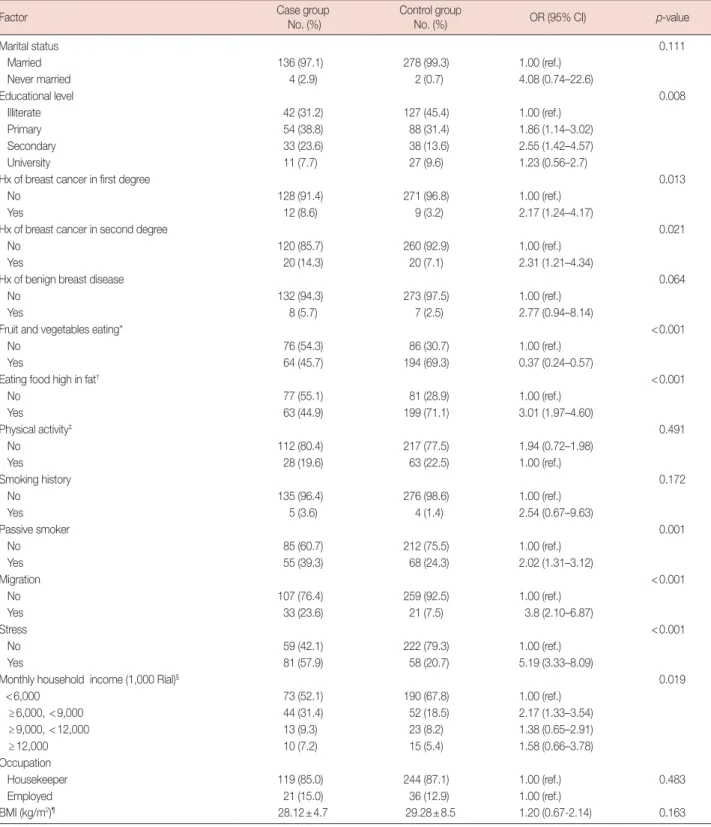
Table 1. Distribution of subjects according to sociodemographic factors and their association with risk of breast cancer (univariate analysis)
Factor Case group
No. (%)
Control group
No. (%) OR (95% CI) p-value
Marital status 0.111
Married 136 (97.1) 278 (99.3) 1.00 (ref.)
Never married 4 (2.9) 2 (0.7) 4.08 (0.74–22.6)
Educational level 0.008
Illiterate 42 (31.2) 127 (45.4) 1.00 (ref.)
Primary 54 (38.8) 88 (31.4) 1.86 (1.14–3.02)
Secondary 33 (23.6) 38 (13.6) 2.55 (1.42–4.57)
University 11 (7.7) 27 (9.6) 1.23 (0.56–2.7)
Hx of breast cancer in first degree 0.013
No 128 (91.4) 271 (96.8) 1.00 (ref.)
Yes 12 (8.6) 9 (3.2) 2.17 (1.24–4.17)
Hx of breast cancer in second degree 0.021
No 120 (85.7) 260 (92.9) 1.00 (ref.)
Yes 20 (14.3) 20 (7.1) 2.31 (1.21–4.34)
Hx of benign breast disease 0.064
No 132 (94.3) 273 (97.5) 1.00 (ref.)
Yes 8 (5.7) 7 (2.5) 2.77 (0.94–8.14)
Fruit and vegetables eating* <0.001
No 76 (54.3) 86 (30.7) 1.00 (ref.)
Yes 64 (45.7) 194 (69.3) 0.37 (0.24–0.57)
Eating food high in fat† <0.001
No 77 (55.1) 81 (28.9) 1.00 (ref.)
Yes 63 (44.9) 199 (71.1) 3.01 (1.97–4.60)
Physical activity‡ 0.491
No 112 (80.4) 217 (77.5) 1.94 (0.72–1.98)
Yes 28 (19.6) 63 (22.5) 1.00 (ref.)
Smoking history 0.172
No 135 (96.4) 276 (98.6) 1.00 (ref.)
Yes 5 (3.6) 4 (1.4) 2.54 (0.67–9.63)
Passive smoker 0.001
No 85 (60.7) 212 (75.5) 1.00 (ref.)
Yes 55 (39.3) 68 (24.3) 2.02 (1.31–3.12)
Migration <0.001
No 107 (76.4) 259 (92.5) 1.00 (ref.)
Yes 33 (23.6) 21 (7.5) 3.8 (2.10–6.87)
Stress <0.001
No 59 (42.1) 222 (79.3) 1.00 (ref.)
Yes 81 (57.9) 58 (20.7) 5.19 (3.33–8.09)
Monthly household income (1,000 Rial)§ 0.019
<6,000 73 (52.1) 190 (67.8) 1.00 (ref.)
≥6,000, <9,000 44 (31.4) 52 (18.5) 2.17 (1.33–3.54)
≥9,000, <12,000 13 (9.3) 23 (8.2) 1.38 (0.65–2.91)
≥12,000 10 (7.2) 15 (5.4) 1.58 (0.66–3.78)
Occupation
Housekeeper 119 (85.0) 244 (87.1) 1.00 (ref.) 0.483
Employed 21 (15.0) 36 (12.9) 1.00 (ref.)
BMI (kg/m2)¶ 28.12±4.7 29.28±8.5 1.20 (0.67-2.14) 0.163
Analysis was performed using T Student test, odds ratios (OR) was not calculated for this variables. But for the rest of the table variables chi-square test and uni- variate logistic regression to calculate crude OR and 95% confidence intervals (CI) were used.
Hx=history; BMI=body mass index; ref.=reference.
*Eating at least 5 servings of fruits and vegetables per day (Every serving of fruit equals one medium apples or oranges or bananas or three-fourths cup of straw- berries or fruit juice, and each serving of vegetables equals half a cup of cooked vegetables or one cup of raw vegetables or cabbage or lettuce, carrots or zucchini or eggplant or medium sized potatoes or tomatoes); †Daily use of fried foods, animal fats, mayonnaise, and high fat diary; ‡Physical activity at least 30 minutes a day, 3 times a week; §25,500 Rials (unit of currency in Iran) ~1 US dollar; ¶Mean±SD.
standard deviation, and OR with 95% CI were calculated.
Univariate logistic regression analysis was performed to calcu- late ORs and to examine the predictive effect of each factor on breast cancer risk; p<0.05 was considered statistically signifi- cant. Factors significantly associated with breast cancer risk as well as borderline variables (p<0.1) in the univariate analysis were entered into stepwise multivariate logistic models.
RESULTS
In this study, 420 women were included, 140 in the case group and 280 in the control group. The mean age of cases was 47.6±10.7 years and that of controls 46.8±10.4 years (p=0.18); 61.9% of women lived in urban areas and 39.1%
lived in rural areas.
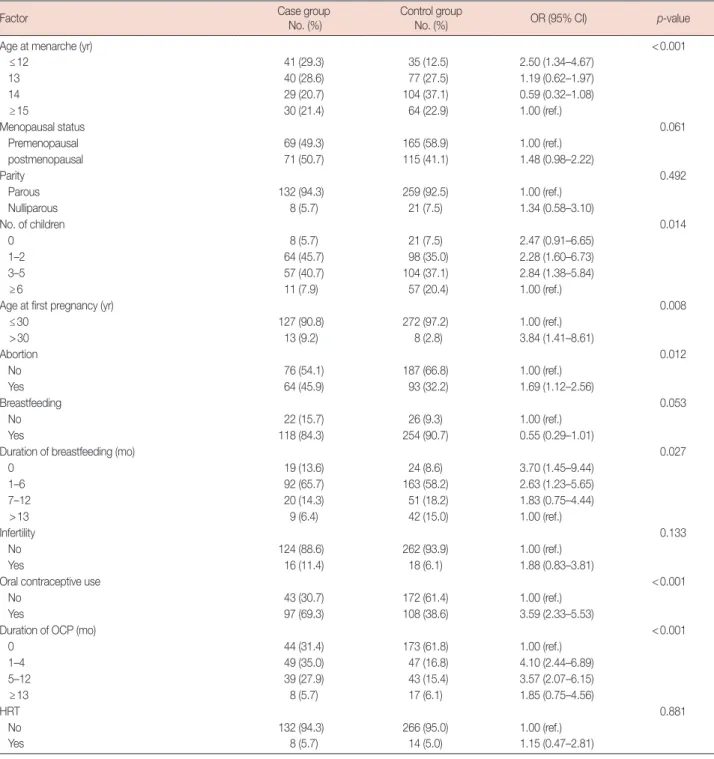
Table 2. Distribution of subjects according to reproductive variable and their association with risk of breast cancer (univariate analysis)
Factor Case group
No. (%)
Control group
No. (%) OR (95% CI) p-value
Age at menarche (yr) <0.001
≤12 41 (29.3) 35 (12.5) 2.50 (1.34–4.67)
13 40 (28.6) 77 (27.5) 1.19 (0.62–1.97)
14 29 (20.7) 104 (37.1) 0.59 (0.32–1.08)
≥15 30 (21.4) 64 (22.9) 1.00 (ref.)
Menopausal status 0.061
Premenopausal 69 (49.3) 165 (58.9) 1.00 (ref.)
postmenopausal 71 (50.7) 115 (41.1) 1.48 (0.98–2.22)
Parity 0.492
Parous 132 (94.3) 259 (92.5) 1.00 (ref.)
Nulliparous 8 (5.7) 21 (7.5) 1.34 (0.58–3.10)
No. of children 0.014
0 8 (5.7) 21 (7.5) 2.47 (0.91–6.65)
1–2 64 (45.7) 98 (35.0) 2.28 (1.60–6.73)
3–5 57 (40.7) 104 (37.1) 2.84 (1.38–5.84)
≥6 11 (7.9) 57 (20.4) 1.00 (ref.)
Age at first pregnancy (yr) 0.008
≤30 127 (90.8) 272 (97.2) 1.00 (ref.)
>30 13 (9.2) 8 (2.8) 3.84 (1.41–8.61)
Abortion 0.012
No 76 (54.1) 187 (66.8) 1.00 (ref.)
Yes 64 (45.9) 93 (32.2) 1.69 (1.12–2.56)
Breastfeeding 0.053
No 22 (15.7) 26 (9.3) 1.00 (ref.)
Yes 118 (84.3) 254 (90.7) 0.55 (0.29–1.01)
Duration of breastfeeding (mo) 0.027
0 19 (13.6) 24 (8.6) 3.70 (1.45–9.44)
1–6 92 (65.7) 163 (58.2) 2.63 (1.23–5.65)
7–12 20 (14.3) 51 (18.2) 1.83 (0.75–4.44)
>13 9 (6.4) 42 (15.0) 1.00 (ref.)
Infertility 0.133
No 124 (88.6) 262 (93.9) 1.00 (ref.)
Yes 16 (11.4) 18 (6.1) 1.88 (0.83–3.81)
Oral contraceptive use <0.001
No 43 (30.7) 172 (61.4) 1.00 (ref.)
Yes 97 (69.3) 108 (38.6) 3.59 (2.33–5.53)
Duration of OCP (mo) <0.001
0 44 (31.4) 173 (61.8) 1.00 (ref.)
1–4 49 (35.0) 47 (16.8) 4.10 (2.44–6.89)
5–12 39 (27.9) 43 (15.4) 3.57 (2.07–6.15)
≥13 8 (5.7) 17 (6.1) 1.85 (0.75–4.56)
HRT 0.881
No 132 (94.3) 266 (95.0) 1.00 (ref.)
Yes 8 (5.7) 14 (5.0) 1.15 (0.47–2.81)
OR=odds ratio; CI=confidence interval; OCP=oral contraceptive pill; HRT=hormone replacement therapy; ref.=reference.
Table 1 shows the distribution of variables, ORs, and 95%
CIs from the univariate regression analysis of general risk fac- tors, while Table 2 shows the corresponding data for repro- ductive risk factors. In the present study, there was no signifi- cant relationship of marital status, breast cancer in a second- degree relative, physical activity, smoking, BMI, parity, infer- tility, or hormone therapy after menopause with breast cancer.
Considering general risk factors, there was a significant rela- tionship of educational level (OR, 2.55; 95% CI, 1.42–4.57), breast cancer in a first-degree relative (OR, 2.17; 95% CI, 1.24–4.17), a high-fat diet (OR, 3.01; 95% CI, 1.97–4.06), pas- sive smoking (OR, 2.02; 95% CI, 1.31–3.12), migration (OR, 3.8; 95% CI, 2.1–6.87), stress (OR, 5.19; 95% CI, 3.33–8.09), income (OR, 2.17; 95% CI, 1.33–3.54), and a diet containing sufficient fruit and vegetables (OR, 0.37; 95% CI, 0.24–0.57) with breast cancer (Table 1). It should be noted that, as alco- hol, drug and hookah use were recorded in a very low num- ber of women (less than 1% in both case and control groups),
these variables were not entered in statistical analyses. Among menstrual and reproductive factors, age at menarche (OR, 2.5;
95% CI, 1.34–4.67), number of pregnancies (OR, 2.84; 95%
CI, 1.38–5.84), age at first pregnancy (OR, 3.48; 95% CI, 1.41–
8.61), abortion (OR, 1.69; 95% CI, 1.12–2.56), and OCP use (OR, 3.59; 95% CI, 2.33–5.53) showed a significant associa- tion with breast cancer (Table 2).
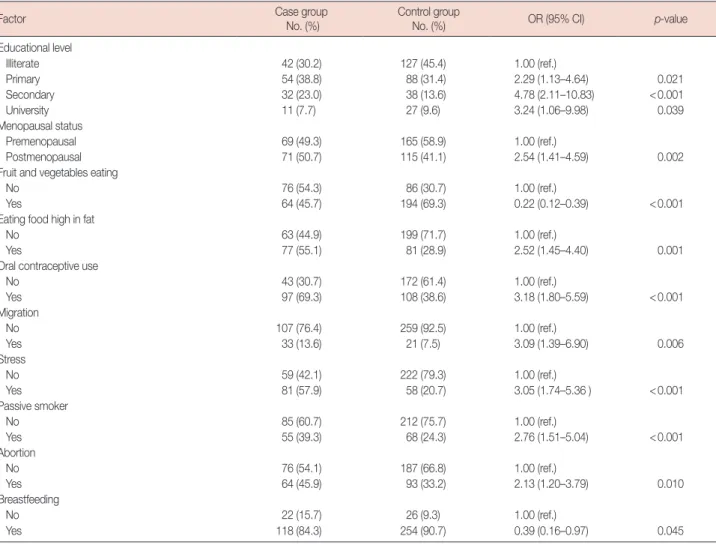
Table 3 shows the results of the multivariate logistic regres- sion analysis of risk factors for breast cancer. It should be not- ed that borderline variables (p<0.1), such as menopausal sta- tus, breastfeeding and a history of benign breast lumps, were entered into the multivariate logistic regression model along with other significant variables. Educational level (OR, 4.78;
95% CI, 2.11–10.38), menopausal status (OR, 2.54; 95% CI, 1.41–4.59), a high-fat diet (OR, 2.76; 95% CI, 1.51–5.04), abortion (OR, 2.13; 95% CI, 1.20–3.79), passive smoking (OR, 2.76; 95% CI, 1.51–5.04), OCP use (OR, 3.18; 95% CI, 1.80–
5.59), stress (OR, 3.05; 95% CI, 1.74–5.36), and migration Table 3. Risk factors for breast cancer derived from multivariate logistic regression analysis
Factor Case group
No. (%)
Control group
No. (%) OR (95% CI) p-value
Educational level
Illiterate 42 (30.2) 127 (45.4) 1.00 (ref.)
Primary 54 (38.8) 88 (31.4) 2.29 (1.13–4.64) 0.021
Secondary 32 (23.0) 38 (13.6) 4.78 (2.11–10.83) <0.001
University 11 (7.7) 27 (9.6) 3.24 (1.06–9.98) 0.039
Menopausal status
Premenopausal 69 (49.3) 165 (58.9) 1.00 (ref.)
Postmenopausal 71 (50.7) 115 (41.1) 2.54 (1.41–4.59) 0.002
Fruit and vegetables eating
No 76 (54.3) 86 (30.7) 1.00 (ref.)
Yes 64 (45.7) 194 (69.3) 0.22 (0.12–0.39) <0.001
Eating food high in fat
No 63 (44.9) 199 (71.7) 1.00 (ref.)
Yes 77 (55.1) 81 (28.9) 2.52 (1.45–4.40) 0.001
Oral contraceptive use
No 43 (30.7) 172 (61.4) 1.00 (ref.)
Yes 97 (69.3) 108 (38.6) 3.18 (1.80–5.59) <0.001
Migration
No 107 (76.4) 259 (92.5) 1.00 (ref.)
Yes 33 (13.6) 21 (7.5) 3.09 (1.39–6.90) 0.006
Stress
No 59 (42.1) 222 (79.3) 1.00 (ref.)
Yes 81 (57.9) 58 (20.7) 3.05 (1.74–5.36 ) <0.001
Passive smoker
No 85 (60.7) 212 (75.7) 1.00 (ref.)
Yes 55 (39.3) 68 (24.3) 2.76 (1.51–5.04) <0.001
Abortion
No 76 (54.1) 187 (66.8) 1.00 (ref.)
Yes 64 (45.9) 93 (33.2) 2.13 (1.20–3.79) 0.010
Breastfeeding
No 22 (15.7) 26 (9.3) 1.00 (ref.)
Yes 118 (84.3) 254 (90.7) 0.39 (0.16–0.97) 0.045
OR=odds ratio; CI=confidence interval; ref.=reference.
(OR, 3.09; 95% CI, 1.39–6.90) showed a statistically significant association with breast cancer in the multivariate logistic re- gression model; therefore, they were considered to be risk fac- tors. Breastfeeding (OR, 0.39; 95% CI, 0.16–0.97) and a diet containing sufficient fruit and vegetables (OR, 0.22; 95% CI, 0.12–0.39) both showed a statistically significant association with breast cancer, but they were negatively associated with breast cancer risk and, therefore, protective factors.
DISCUSSION
The present study shows that educational level, menopause, a high-fat diet, abortion, passive smoking, OCP use, stress, and migration are risk factors for breast cancer in Tabriz;
breastfeeding and an adequate intake of fruit and vegetables were protective against breast cancer.
The mean age of patients with breast cancer in this study was 47.6±10.7 years, which is consistent with the findings of previous studies in Iran and confirms a young age for breast cancer development in Iranian women [7].
With regard to socioeconomic status (educational level and income) and its association with breast cancer, some studies have suggested that educational level is associated with an in- creased breast cancer risk [11,12]. In our study, the results of univariate regression analysis revealed a significant relation- ship between the variables of socioeconomic status and breast cancer. However, in the final regression model, income showed no significant association with breast cancer, whereas with an increase in the level of education, the breast cancer risk also increased, though secondary-level rather than university-level education was associated with the higher breast cancer risk. A possible explanation for this might be the low number of indi- viduals with a university education in this study. It appears that the association of the socioeconomic status with breast cancer risk is mostly due to other factors; socioeconomic sta- tus can affect reproductive behavior, for example, the number of children, age at first birth, childlessness, and the duration of breastfeeding as well as lifestyle factors, including physical ac- tivity and diet [12].
Some studies have suggested an association of dietary fac- tors with breast cancer [13,14]. Fruit and vegetables are rich sources of carotenoids and flavonoids, which are potentially protective against cancer [13]. The results of our study show that eating an amount of fruit and vegetables equivalent to at least 5 units per day reduces the risk of breast cancer. Findings reported by Boggs et al. [14] from a study in Boston, United States showed that total vegetable consumption was associated with a decreased risk of breast cancer. Some studies have shown an association between the consumption of high-fat
food and breast cancer [15,16]; the findings of the present study are consistent with the published reports. In the present study, the daily intake of fat was not assessed but an evaluation of fat intake was made through questions regarding the consump- tion of fatty food, such as fried food, high-fat dairy products, and mayonnaise, and the predominant method of cooking in the home. It appears that further research is needed on this issue.
The present study showed that exposure to severe stress during the preceding 5 years can increase the risk of breast cancer, with bereavement, divorce, bankruptcy and loss of employment being the major stressors; this is consistent with the report by Lillberg et al. [17] after performing a study in Finland, which showed that divorce/separation, death of a husband, and death of a close relative or friend were each as- sociated with an increased risk of cancer. It appears that ex- amining the impact of adverse events alone is insufficient and even misleading, but when it is associated with mechanisms of adaptation and social support, it can reveal the real impact of stress on disease. Therefore, it seems that more research on this issue, simultaneously examining social support and cop- ing mechanisms, is needed.
The findings of various studies on the relationship of smok- ing and breast cancer risk are controversial, but some studies have suggested an association [18,19]. In the present study, no relationship between smoking and breast cancer was ob- served. A report of a study in Serbia proposed smoking as a risk factor for breast cancer and showed that people who quit smoking when over 50 years of age were at a higher risk [19].
The present study shows that passive smoking has a signifi- cant association with breast cancer; similar results were re- ported for a study in the United States by Petralia et al. [20].
Culturally, there is a low prevalence of smoking among Irani- an women, and owing to this, smoking by family members and partners was considered as a possible risk factor for breast cancer in the present study; however, there is still a need for further investigation.
Studies of immigrants provide important information on the contribution of environmental and genetic factors in the etiology of various cancers. Some studies have suggested an association of a geographic area and of the living environ- ment with breast cancer [21,22]. In the present study, reloca- tion and migration from a rural to urban area has been iden- tified as a risk factor for breast cancer; this may provide strong evidence for the role of the living environment and lifestyle in cancer risk [21].
The present study did not show any significant relationship between physical activity and breast cancer. In a review article by Friedenreich [23], no association between physical activity and breast cancer was found for premenopausal women, but
in postmenopausal women, physical activity throughout the lifetime reduced the risk of breast cancer; in the present study, we did not examine premenstrual and postmenopausal wom- en separately. The differences between our findings and those reviewed by Friedenreich might also be owing to the different definitions of physical activity. In the present study, the vari- able of exercise was defined as physical activity of at least 30 minutes duration, 3 times a week, whereas in the Friedenreich review, they examined all forms of physical activity (occupa- tional, household, and recreational), throughout the lifetime, and assessed all three parameters of physical activity (frequen- cy, intensity, and duration).
Our study showed no significant relationship between BMI and breast cancer, consistent with the study conducted by Hadjisavvas et al. [6] in Cyprus. One possible reason for the lack of a significant relationship in the present study is the measuring of BMI when a patient is already suffering from breast cancer; future studies should consider this matter.
Many studies have suggested an association of breast cancer risk with menstrual and reproductive factors. Some previous studies suggested that induced or spontaneous abortion were associated with breast cancer [5,24] but not all of them [25].
The results of the present study show that abortion increases breast cancer risk, although spontaneous and induced abor- tions were not separated in our analyses; future studies could examine each type of abortion individually.
The findings of our study indicate that OCP use is a risk factor for breast cancer; this is consistent with some previous studies [8,26]. In our study, the potential to investigate differ- ent types of OCP (combinations of estrogen and/or progestin) and the duration of usage, thereby providing results that were more accurate, was not achieved; more studies should be car- ried out considering different OCP combinations.
The majority of reported studies have shown an association between breastfeeding and the risk of breast cancer [5,6,27].
The present study shows that women with a history of breast- feeding have a lower risk of breast cancer; the results showed that with the increase in the duration of breastfeeding, the risk of breast cancer reduced. Consistent with this, in a collabora- tive reanalysis of 47 studies, the authors also concluded that women with a history of breastfeeding had a lower risk of breast cancer, and that a prolonged duration of lactation fur- ther reduced the risk [27]. Thus, the majority of studies have mentioned breastfeeding as a protective factor against breast cancer. Breastfeeding is hypothesized to primarily reduce the risk of breast cancer through two mechanisms, i.e., differentia- tion of breast tissue and reduction of the number of ovulatory cycles in a lifetime [5].
In some studies, early menarche has been introduced as a
risk factor for breast cancer [6,28]. This is consistent with the hypothesis that breast cancer risk is related to the extent of mitotic activity in the breast. This mitotic activity is driven by estrogen and progesterone exposure during the luteal phase of the menstrual cycle, which in turn determines the probability of tumorigenic somatic events; early menarche increases these mitotically active periods in the breast and consequently in- creases the risk of breast cancer [6]. In the present study, men- arche under the age of 12 years was significant in the univari- ate regression analysis but in the final model, it did not show a significant relationship with breast cancer.
With regard to the number of children a woman bears, the present study used univariate regression analysis to show that with an increasing number of children, the risk of breast can- cer decreased; however, there was no significant relationship between the number of children and breast cancer risk in the final model. Some studies have found that increasing parity decreases breast cancer risk in both premenopausal and post- menopausal women [6,29]. The present study did not show a statistically significant association of late pregnancy with breast cancer in the final model; this is consistent with the re- port by Hadjisavvas et al. [6], wherein only a weak association was observed between late pregnancy and breast cancer.
Surprisingly, the association between a family history of breast cancer and breast cancer risk in the present study was not significant in the multivariate model, although it was sig- nificant in the univariate model. Our findings show that most of the risk factors for breast cancer in the Tabriz region of Iran are related to lifestyle. It appears that the Iranian diet and life- style have changed during the process of rapid westernization.
Generally, the increasing adaptation to a Western lifestyle is an important determinant of the increasing breast cancer in- cidence in developing countries.
Our study has some limitations; because of its case-control nature, selection bias and recall bias arise in the study. Recall bias means that when the subjects from case and control groups are asked about factors and events related to a disease, it is more likely for the case group to remember these than the control group. In our study, most of the data were obtained from the women’s self-reports, so recall bias was more proba- ble, therefore, medical records were checked to confirm the history of participants. In addition, women referred to the hos- pital were used in the control group; this method of selection can help somewhat in minimizing selection and recall bias.
In summary, in the present study, lifestyle factors appear to pose a greater risk than the effects of reproductive factors for breast cancer of women in Tabriz. Therefore, given that cer- tain dietary factors and stress were identified as risk factors in this study, lifestyle changes as well as providing necessary
training in the field are now required to promote a healthy diet, a change of unhealthy eating patterns, and methods for coping with stress.
CONFLICT OF INTEREST
The authors declare that they have no competing interests.
REFERENCES
1. Jemal A, Siegel R, Ward E, Hao Y, Xu J, Thun MJ. Cancer statistics, 2009.
CA Cancer J Clin 2009;59:225-49.
2. Ministry of Health and Medical Education, Center for Disease Man- agement, Cancer Department. National Registration Cancer Cases Re- ported in 2010. Iran: Center for Disease Management; 2013. p.344-9.
3. Breast cancer facts and figures 2013. American Cancer Society. http://
www.cancer.org. Accessed April 28th, 2014.
4. Ebrahimi M, Vahdaninia M, Montazeri A. Risk factors for breast cancer in Iran: a case-control study. Breast Cancer Res 2002;4:R10.
5. Ozmen V, Ozcinar B, Karanlik H, Cabioglu N, Tukenmez M, Disci R, et al. Breast cancer risk factors in Turkish women: a University Hospital based nested case control study. World J Surg Oncol 2009;7:37.
6. Hadjisavvas A, Loizidou MA, Middleton N, Michael T, Papachristofo- rou R, Kakouri E, et al. An investigation of breast cancer risk factors in Cyprus: a case control study. BMC Cancer 2010;10:447.
7. Yavari P, Mosavizadeh M, Sadrol-Hefazi B, Mehrabi Y. Reproductive characteristics and the risk of breast cancer: a case-control study in Iran.
Asian Pac J Cancer Prev 2005;6:370-5.
8. Ebrahimi M, Montazeri A, Mehrdad N. Relationship between adverse life events with breast cancer in patients referred to breast cancer center.
Iranian J Breast Dis 2009;2:29-37.
9. Bidgoli SA, Azarshab H. Role of vitamin D deficiency and lack of sun exposure in the incidence of premenopausal breast cancer: a case con- trol study in Sabzevar, Iran. Asian Pac J Cancer Prev 2014;15:3391-6 10. Rothman KJ, Greenland S. Modern Epidemiology. 2nd ed. Philadel-
phia: Lippinicott-Raven; 1998. p.93-114.
11. Braaten T, Weiderpass E, Kumle M, Adami HO, Lund E. Education and risk of breast cancer in the Norwegian-Swedish women’s lifestyle and health cohort study. Int J Cancer 2004;110:579-83.
12. Cunningham R, Shaw C, Blakely T, Atkinson J, Sarfati D. Ethnic and socioeconomic trends in breast cancer incidence in New Zealand.
BMC Cancer 2010;10:674.
13. Larsson SC, Giovannucci E, Wolk A. Folate and risk of breast cancer: a meta-analysis. J Natl Cancer Inst 2007;99:64-76.
14. Boggs DA, Palmer JR, Wise LA, Spiegelman D, Stampfer MJ, Adams- Campbell LL, et al. Fruit and vegetable intake in relation to risk of breast cancer in the Black Women’s Health Study. Am J Epidemiol 2010;
172:1268-79.
15. Balasubramaniam SM, Rotti SB, Vivekanandam S. Risk factors of fe- male breast carcinoma: a case control study at Puducherry. Indian J Cancer 2013;50:65-70.
16. la Vecchia C, Negri E, Franceschi S, Decarli A, Giacosa A, Lipworth L.
Olive oil, other dietary fats, and the risk of breast cancer (Italy). Cancer Causes Control 1995;6:545-50.
17. Lillberg K, Verkasalo PK, Kaprio J, Teppo L, Helenius H, Koskenvuo M.
Stressful life events and risk of breast cancer in 10,808 women: a cohort study. Am J Epidemiol 2003;157:415-23.
18. Ilic M, Vlajinac H, Marinkovic J. Cigarette smoking and breast cancer: a case-control study in Serbia. Asian Pac J Cancer Prev 2013;14:6643-7.
19. Rollison DE, Brownson RC, Hathcock HL, Newschaffer CJ. Case-con- trol study of tobacco smoke exposure and breast cancer risk in Dela- ware. BMC Cancer 2008;8:157.
20. Petralia SA, Vena JE, Freudenheim JL, Michalek A, Goldberg MS, Blair A, et al. Risk of premenopausal breast cancer and patterns of established breast cancer risk factors among teachers and nurses. Am J Ind Med 1999;35:137-41.
21. Yavari P, Hislop TG, Bajdik C, Sadjadi A, Nouraie M, Babai M, et al.
Comparison of cancer incidence in Iran and Iranian immigrants to British Columbia, Canada. Asian Pac J Cancer Prev 2006;7:86-90.
22. Fan L, Zheng Y, Yu KD, Liu GY, Wu J, Lu JS, et al. Breast cancer in a tran- sitional society over 18 years: trends and present status in Shanghai, China. Breast Cancer Res Treat 2009;117:409-16.
23. Friedenreich CM. Physical activity and breast cancer: review of the epi- demiologic evidence and biologic mechanisms. Recent Results Cancer Res 2011;188:125-39.
24. Michels KB, Xue F, Colditz GA, Willett WC. Induced and spontaneous abortion and incidence of breast cancer among young women: a pro- spective cohort study. Arch Intern Med 2007;167:814-20.
25. Brewster DH, Stockton DL, Dobbie R, Bull D, Beral V. Risk of breast cancer after miscarriage or induced abortion: a Scottish record linkage case-control study. J Epidemiol Community Health 2005;59:283-7.
26. Rosenberg L, Zhang Y, Coogan PF, Strom BL, Palmer JR. A case-control study of oral contraceptive use and incident breast cancer. Am J Epide- miol 2009;169:473-9.
27. Collaborative Group on Hormonal Factors in Breast Cancer. Breast cancer and breastfeeding: collaborative reanalysis of individual data from 47 epidemiological studies in 30 countries, including 50,302 women with breast cancer and 96,973 women without the disease. Lancet 2002;
360:187-95.
28. Lea CS, Gordon NP, Prebil LA, Ereman R, Uratsu CS, Powell M. Differ- ences in reproductive risk factors for breast cancer in middle-aged women in Marin County, California and a sociodemographically simi- lar area of Northern California. BMC Womens Health 2009;9:6.
29. Beiler JS, Zhu K, Hunter S, Payne-Wilks K, Roland CL, Chinchilli VM.
A case-control study of menstrual factors in relation to breast cancer risk in African-American women. J Natl Med Assoc 2003;95:930-8.