Response to Plant Hormones of Senescence-related Genes for Cucumis sativus L. in Cotyledon Development
Hyeon Jeong Cha1 and Dae-Jae Kim2*
1Department of Science Education, Graduate School, Chungbuk National University, 1 Chungdae-ro, Seowon-gu, Cheongju, Chungbuk 28644, Korea
2Department of Biology Education, College of Education, Chungbuk National University, 1 Chungdae-ro, Seowon-gu, Cheongju, Chungbuk 28644, Korea
Received April 27, 2016 /Revised June 28, 2016 /Accepted June 29, 2016
This study was carried out to discover the response of cucumber (Cucumis sativus L.) senescence- asso- ciated genes (SAGs) to several plant hormones in detached and developing cotyledon. Accordingly, a collection of cucumber SAGs were examined to characterize their gene expression response through semi-quantitative RT-PCR. Cotyledons were excised at day 14 after seed sowing from plantlets, then incubated in 100 μM each of IAA or zeatin solution for up to 4 days in light and darkness. They were collected at 2-day intervals and used for total RNA extraction and subjected to RT-PCR. Gene ex- pression levels of several cucumber SAGs were significantly changed during the incubation period.
More than five cucumber SAGs involving SAG 60 responded to the IAA and zeatin treatment. In the ethylene response study, cotyledons were exposed up to 10 days by ethylene gas. Most of the cucum- ber SAGs did not show immediate response to ethylene in green cotyledon. The exceptions were PCK, SAG 158, and SAG 288 genes, which responded after 1 day of exposure to green cotyledon, while ICL and SAG 281 revealed strong responses after 10 days of being exposed to yellowing cotyledon. These results suggest that several cucumber SAGs react actively in response to starvation or senescence against exogenously applied stimulus. This induced senescence response is able to understand the SAGs role in lipids and amino acids metabolism partly and function in organ senescence during development.
Key words : Cotyledon, cucumber, gene expression, plant hormones, senescence
*Corresponding author
*Tel : +82-43-261-3260, Fax : +82-43-260-3361
*E-mail : [email protected]
This is an Open-Access article distributed under the terms of the Creative Commons Attribution Non-Commercial License (http://creativecommons.org/licenses/by-nc/3.0) which permits unrestricted non-commercial use, distribution, and reproduction in any medium, provided the original work is properly cited.
Journal of Life Science 2016 Vol. 26. No. 8. 895~903 DOI : http://dx.doi.org/10.5352/JLS.2016.26.8.895
Introduction
Plant organ senescence is referred to a sequence of bio- chemical and physiological events that constitute the final stage of development [9]. Also, senescence has been studied in many plant species [7, 19, 20, 28, 29]. Although sen- escence occurs in an age-dependent mode in many species, the initiation and progression of senescence can be modu- lated by a variety of environmental factors (exogenous and endogenous stimulus), such as temperature, mineral defi- ciency, drought conditions, and pathogen infections follow- ing nutrients, hormone and light stress. It is known that en- dogenous factors such as plant growth regulators, repro- duction and cellular differentiation also influence senescence.
Among these endogenous factors, various plant hormones
such as auxin, cytokinin, ethylene and jasmonic acid etc., have been characterized most comprehensively at the mo- lecular and physiological level [17, 21, 32, 35, 39]. More re- cently, the roles of an additional plant hormone strigo- lactones (SLs) were intensely discussed during leaf sen- escence development [41]. Another potent senescence in- ducing factor is presence or absence of light. The interaction between light and senescence is complex and many reports have been published describing both its senescence-inhibit- ing and promoting qualities [2, 22]. The plant hormones such as auxin and cytokinin, regulate many aspects of plant growth and development [28, 33]. Furthermore, gas form ethylene, which organ senescence and fruit mature motivat- ing plant hormone [26, 31, 34] is another factor to SAGs study in this research to find out the genes reaction.
Here, we demonstrated that cucumber senescence-related genes reaction to the exogenously applied indole-3-acetic acid (IAA), zeatin and ethylene for finding of the artificial stresses or induced senescence responses using detached and developing cucumber cotyledons. In this report, we discuss the selected cucumber SAGs biological function during cotyledon senescence and the reactions against the
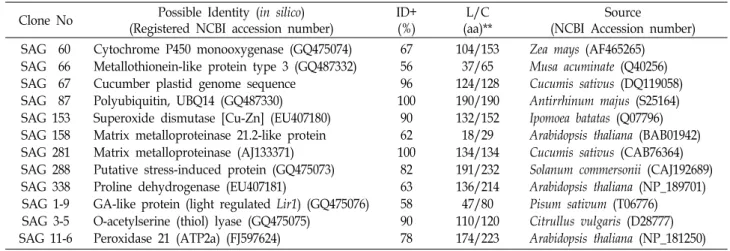
Table 1. Selected senescence-associated cDNA clones from senescing cucumber cotyledon and their amino acids sequence homology with other known genes or cDNA from various organisms
Clone No Possible Identity (in silico) (Registered NCBI accession number)
ID+
(%)
L/C (aa)**
Source
(NCBI Accession number) SAG 60
SAG 66 SAG 67 SAG 87 SAG 153 SAG 158 SAG 281 SAG 288 SAG 338 SAG 1-9 SAG 3-5 SAG 11-6
Cytochrome P450 monooxygenase (GQ475074) Metallothionein-like protein type 3 (GQ487332) Cucumber plastid genome sequence
Polyubiquitin, UBQ14 (GQ487330) Superoxide dismutase [Cu-Zn] (EU407180) Matrix metalloproteinase 21.2-like protein Matrix metalloproteinase (AJ133371) Putative stress-induced protein (GQ475073) Proline dehydrogenase (EU407181)
GA-like protein (light regulated Lir1) (GQ475076) O-acetylserine (thiol) lyase (GQ475075)
Peroxidase 21 (ATP2a) (FJ597624)
67 56 96 100
90 62 100
82 63 58 90 78
104/153 37/65 124/128 190/190 132/152 18/29 134/134 191/232 136/214 47/80 110/120 174/223
Zea mays (AF465265) Musa acuminate (Q40256) Cucumis sativus (DQ119058) Antirrhinum majus (S25164) Ipomoea batatas (Q07796) Arabidopsis thaliana (BAB01942) Cucumis sativus (CAB76364) Solanum commersonii (CAJ192689) Arabidopsis thaliana (NP_189701) Pisum sativum (T06776) Citrullus vulgaris (D28777) Arabidopsis thaliana (NP_181250) +, ID Implies that the percentage of amino acid sequence identity in a continuous region of a particular length (overlap).
**Amino acids numbers are matched length compared (L/C).
plant hormones in induced cotyledon senescence.
Materials and Methods
Plant materials and chemicals
Seeds of cucumber were imbibed in sterile water at 4°C for 12 hr and sown in wet vermiculite. The resultant plants were maintained in a growth chamber (Lab-Line Biotro- nette) at 25°C and 70% humidity under continuous illumi- nation. Plant hormone was prepared as described in the manufacture's protocol and suggestion as 100 μM of work- ing solution (Sigma). Cucumber cotyledons were detached at day 14 from seed sown and the detached cotyledons were incubated in a Petri-dish containing sterile distilled water, IAA or zeatin solution. The Ethephon (Dongbu Fine Chemical, Korea) was used to 14 day old cucumber seed- ling with 20% KOH to induce ethylene gas within the plant growth chamber following manufacture’s instruction and previous report [6]. Then, cotyledon was collected rapidly at 1, 5 and 10 day after treatment of Ethephon, then they were frozen in liquid nitrogen to isolate total RNA.
Total RNA preparation and evaluation
An RNAeasy plant mini kit (Qiagen GmBH) was used to extract total RNA from cucumber cotyledon samples and treated with DNase I (Qiagen GmBH) to remove any ge- nomic DNA contamination following manufacturer's proto- col. Three pairs of cotyledon were used from classified plant hormone-treated samples for individual extraction procedures. Twice of final elution of total RNA was carried
out in equal volumes (50 μl) of diethylpyrocarbonate (DEPC) treated sterile H2O. The quality of total RNA was examined by the 1.2% agarose gel electrophoresis in 0.5x Tris/Borate/
EDTA (TBE) buffer and quantity was estimated through Biophotometer at 260 nm (Eppendorf, Germany). Total RNA extraction and estimation were carried out three times in each experiment.
Reverse transcription (RT) reaction and PCR for cucumber genes
An equal volume (10 μl) of total RNA solution was used to produce the first-strand of complimentary DNA (cDNA) by reverse transcription (RT) reaction. The poly(A)+ RNA was primed by the oligo (dT)18 primer using an AccuPower RT PreMix (Bioneer, Korea) following standard procedure.
Polymerase chain reaction (PCR) was performed for 30 cy- cles using MyCycler (BioRad, USA) with an AccuPower PCR PreMix Kit (Bioneer, Korea) by gene-specific primers (5'-3'), as described in a previous report [19]. All primers were manufactured through Bioneer Co (Daejeon, Korea).
An equal volume (10 μl) of RT-PCR products were fractio- nated on 1.2% (w/v) agarose gel in 0.5× TBE buffer for 60 min at 100 V, and the gel was digitally photographed and processed. These RT-PCR experiments were repeated at least three times independently under the same conditions.
Results and Discussion
Genes and bioinformatics analysisCucumber SAGs were presented in Table 1, which had
14C L2 D2 L4 D4 L2 D2 L4 D4 L2 D2 L4 D4
25S 18S H2O-treated Zeatin-treated IAA-treated
14C L2 D2 L4 D4 L2 D2 L4 D4 L2 D2 L4 D4
25S 18S H2O-treated Zeatin-treated IAA-treated
Fig. 1. Electrophoretic fractionation of total RNA image from detached and incubated cucumber cotyledons after ex- traction by RNeasy Plant Mini Kit (Qiagen) on a 0.5x TBE agarose gel (1.2%) stained with ethidium bromide.
(14C, control from day 14 cotyledons after seed sown;
L, light; D, darkness; Numbers, days of incubation), 25S and 18S represent major rRNA bands.
A B C
Fig. 2. Agarose gel electrophoresis image by semi-quantitative RT-PCR product of cucumber SAGs. Actin was used as a positive control and cucumber ICL used as the sen- escence specific control. 14C, control; L, light; D, dark.
Numbers are days after detachment. Actin from Arabid- opsis; ICL and PCK from cucumber. The cucumber cDNA was presented as clone number on the left column.
been isolated from previous study [19]. However, we have cloned more than hundreds of cDNA clones which should be further identified the possible biological functions from the bioinformatics study through National Center for Bio- technology Information (NCBI) (Data not shown). Most of the cDNA clones were registered in the GenBank through NCBI, except SAG 67 and 158, which are in progress for registration.
Total RNA changes during plant hormones treatment Freshly extracted total RNA showed that small accumu- lation of transcripts in detached cotyledons in all circum- stances; water, IAA and zeatin (Fig. 1). However, there were no significant differences between water-treated and IAA/zeatin-treated cotyledons. Furthermore, total RNA change was not significant in ethylene exposed developing cucumber cotyledon up to 10 day exposure (Fig. 4).
Response to IAA and zeatin with light or dark in detached cotyledon
Several cucumber SAGs showed that three distinct pat- terns of gene expression in detached cotyledons; constitu- tively expressed, light-dependent expression and zeatin/
IAA regulated. Initially, we examined actin gene's ex- pression pattern to confirm the constitutive positive control elements (Fig. 2, Actin). Neither auxin nor zeatin-treatment affected the actin gene expression to cucumber cotyledons both in the light and in the dark conditions. Otherwise, cu- cumber ICL gene rapidly responded to zeatin whatever the
conditions of light and darkness, but the gene expression strongly depends on darkness to auxin treatment (Fig. 2, ICL). In particular, zeatin stimulates the ICL expression more than three times (Fig. 2, ICL). However, IAA showed higher effect only in the dark that implies the different mechanism of the signal path by two hormones. The PEPCK gene is for gluconeogenesis in oil-seed germination [18]
showed similar patterns of gene expression to ICL in wa- ter-treated control (Fig. 2A, ICL and PCK). The zeatin re- moved the light-dependent repression factor for PEPCK ex- pression at the early stage (L2), but there was no change in the dark. IAA showed similar response to zeatin, but re- sponded slowly in the light (Fig. 2C, PCK ). From these ob- servation, we could presume that catabolic mobilization of demolishing membranous or internal lipids following re- newal of glyoxyate cycle and gluconeogenesis to provide energy for induced senescence possibly for final stage of natural senescence [37].
The cytochrome P450 mono-oxygenase encoding SAG 60 (named as CsCYP72A) mediate a wide range of oxidative reactions involved in the biosynthesis of plant secondary metabolites, including the phenylpropanoids and phytoa- lexins. A precursor of IAA, indole-3-acetaldoxime (IAOx) was synthesized from tryptophan by the cytochrome P450s in Arabidopsis [15]. Recently, auxin and light responsive cy-
tochrome P450s also suggested that their key roles in the biosynthesis of various metabolites in Withania somnifera [30]. Interestingly, cucumber CsCYP72A was up regulated by IAA treatment in all circumstances from the day 2 (Fig.
2C, 60) and these are quite well matched with their observation.
Genes encoding metal-binding proteins were the major component of senescence [4]. Cucumber metallothionein- like type 3 protein coding SAG 66 (named as CsMTP3) is extremely active in developing cotyledon. Gene expression has been reported in Brassica napus leaves, post-harvest flor- et of broccoli (Brassica oleraces), and leaves of senescing sweet potato (Imopoea batatas) [5, 14, 24]. Furthermore, pro- tein coding GhMT3a gene showed strong expression against various external stresses not only to drought, salinity, low temperature, but also to abscisic acid (ABA), ethylene and reactive oxygen species (ROS) in cotton seedlings [40].
CsMTP3 expression was totally blocked by zeatin and IAA in this experiment (Fig. 2B and 2C, 66). In particular, IAA effect was the utmost to the CsMTP3 gene. Therefore, it would be confirmed that IAA plays a role for strong antag- onist in senescence development.
The SAG 67 was identified as a part of cucumber plastid genome. The SAG 67 gene transcripts were detected in wa- ter-treated controls and it is independent to light (Fig. 2A, 67). It implies that SAG 67 is a housekeeping gene for chlor- oplast or cytosolic metabolism rather than for photosyn- thesis. Zeatin showed a positive effect in light condition but not the case in the dark (Fig. 2B, 67). IAA suppressed Sen 67 expression progressively in all circumstances (Fig. 2C, 67). Unfortunately, we do not have further information about biological function of the SAG 67 sequence. It will be find out in the future work.
A polyubiquitin encoding SAG 87 (named as CsUBQ14) has been reported in earlier reports in natural senescing co- tyledons and petals [19, 20]. Polyubiquitin conjugate of key pro-and anti-apoptotic molecules have characterized ubiq- uitin as an essential regulatory modification targeting pro- teins for proteosomal degradation. A complete homology of amino acids sequences among plant polyubiquitins imply that the significance in plant development. Our inves- tigation showed that CsUBQ14 was not affected to the hor- mones (Fig. 2, 87). Therefore, it is not the case of the regu- latory involvement to this gene by the hormones but may play a housekeeping role as protease in overall stages of cotyledon development [19].
We have found an increase of superoxide dismutase [Cu-Zn]-like (SOD) encoding SAG 153 (named as CsSOD) expression in senescing cucumber cotyledons [19]. Howev- er, the CsSOD expression was not affected significantly in all situations, but slightly decreased by the hormones (Fig.
2, 153). Otherwise, there was no effect to the CsSOD gene expression by ethylene treatment (Fig. 4B). As we well know, the SOD plays a central role to remove toxic ROS during development both normal and stress environments for protection against such highly reactive superoxide radi- cals [36]. Therefore, we could presume that a pattern of CsSOD gene expression as a constitutive mode during whole development of cotyledon.
A matrix metalloproteinase (MMP) 21.2 encoding SAG 158 (named as CsMMP21) has shown that the gene is ex- pressed from the early stage of cotyledon senescence (stage I) in cucumber [19]. CsMMP21 gene's transcript could not be detected in green tissues until 3-4 weeks after germina- tion, but it shows strong activation at the beginning of senescence. In this study, we found that CsMMP21 rapidly reacted to zeatin after 2 days of incubation in light and darkness (Fig. 2B, 158) then, increased at day 4. The CsMMP21 also reacted to IAA as inconsistent mode whose cannot be made any conclusion in this report. The SAG 281 (Cs1-MMP) encodes a pre-pro-enzyme of zinc metal- loproteinase, especially the matrix metalloproteinase family.
MMP has been identified in higher plants [11, 23, 43]. Here, our RT-PCR again revealed that its strong responses were observed in the zeatin- and IAA-treated cotyledons (Fig. 2, 281). However, the pattern of response is slightly different between zeatin and IAA. Zeatin activated Cs1-MMP ex- pression independently in the light from day 4 cotyledons, (281, L4 and D4). Otherwise, tremendous effect of IAA can be seen only in the dark from day 2 cotyledon. Light did not affect to zeatin-treat cotyledons, but repressed the gene expression in IAA-treated cotyledon up to 8 days in the light although gene expression was maintained in the dark consistently (Data not shown). Therefore, it is clear that the Cs1-MMP has different regulatory factors for the two hormones. The role of the Cs1-MMP enzyme is unclear in plant organ senescence, but Cs1-MMP is expressed de novo at the end stage of senescence, in cucumber cotyledon and male flowers [19, 20]. Protease is probably not involved in nutrient remobilization during senescence, but it suggested a strong connection in programmed cell death (PCD) from tomato Sl2-MMP and Sl3-MMP through extracellular pro-
teolytic cascade [7, 43].
Recent database search revealed that cucumber SAG 288 encodes putative stress-induced protein, therefore we do not know exact biological function in senescing cotyledon.
However, SAG 288 DNA sequences shared some homology with Arabidopsis pentose phosphate translocator (formerly CsPPT, Data not shown). Interestingly, SAG 288 expressed a weak level in green cotyledon (Fig. 2A, 288, 14C). We also found that a weak expression in control experiment (Fig.
2A, 288) but a strong up-regulation in zeatin-treatment par- ticularly in the light (Fig. 2B, 288). However, there was no effect by the IAA treatment (Fig. 2C, 288). Unfortunately, we could not find further information about the role of SAG 288 reaction against plant hormone and exogenous stress from available databases.
SAG 338 codes an enzyme for proline dehydrogenase 2 (named as CsPDH2) for abscisic acid (ABA) synthesis dur- ing the maturation of plant organs which osmotic stress in- ducible proline oxidase [27]. The CsPDH2 gene is highly ac- tive in cotyledon senescence [19]. Effect of zeatin and IAA was minor to CsPDH2 which zeatin showed no effects but IAA suppress the gene expression in the light, from L2 to L4 (Fig. 2C, 338). The PDH is involved in drought-induced proline metabolism and turnover in many plant species has led to the hypothesis that further increases in proline accu- mulation would promote drought tolerance [3]. Although, the PDH enzymes could be classified into stress related group in plant development but we found a negligible change of the CsPDH2 gene expression from organ detach- ment stress and exogenous hormone application.
A gibberellin-stimulated (GA-like protein) SAG 1-9 (named as Cs-Lir1) is responsive to light regulation for syn- thesis of MGDG [42]. The Cs-Lir1 gene is strongly expressed in green cotyledons then gradually decreases until the end of senescence [19]. It implies that the changes of endoge- nous GA level in senescing organs. Furthermore, Cs-Lir1 al- so revealed a dark response (down-regulation) that shows clearly at D4 stages (Fig. 2A, 1-9). Furthermore, both zeatin and IAA completely shut down the Cs-Lir1 gene in the dark and some suppression in the light too (Fig. 2B and C, 1-9).
This results apparently show that the Cs-Lir1 gene ex- pression is under regulation of light condition. There is not sufficient report about Cs-Lir1 gene action in relation with senescence and stress to this point.
One of the cysteine biosynthesis involving SAG 3-5 (named as CsOAS-TL) was reported in the previous report
[19], which suggests the amino acid cysteine may have a special role in mediating cell metabolism during senescence.
Cysteine synthesis normally occurs in the plastids, mi- tochondria, and cytosol by serine acetyltransferase (SAT) and O-acetylserine (thiol) lyase (OAS-TL) through two-step process in plants [38]. Hell et al., have focused on its biosyn- thesis and have determined that reduced sulfur is chan- neled from cysteine into many sulfur-containing com- pounds in food and feed [12]. Furthermore, cysteine biosyn- thesis is part of the regulatory network that mediates be- tween inorganic sulfur supply and the demand for reduced sulfur during plant growth and in response to environ- mental changes. In accordance with biosynthesis of cys- teine, crucial role of senescence-associated serine and cys- teine proteases was proposed in the efficient protein re- mobilization during leaf senescence of oilseed rapeseed [25].
In this detached experiment, CsOAS-TL gene showed minor response to zeatin and IAA that equally negligible effect in light and darkness (Fig. 2, 3-5). Otherwise, prolonged ethyl- ene exposure revealed that gradual increase of the CsOAS- TL expression in this experiment (Fig. 4B), which could be agreed with the protein remobilization process during or- gan senescence.
Finally, a peroxidase coding SAG 11-6 (named as CsPOX) was examined to find out hormonal reaction in detached cucumber cotyledon. As a plant-specific oxidoreductase, Class III plant peroxidase (POX) is one of the many types of peroxidases that are widely distributed in animals, plants and microorganisms. POXs exist as isoenzymes in in- dividual plant species and they are involved in various physiological processes such as lignification, auxin catabo- lism, wound healing, defense and organ senescence [13].
From earlier senescence study in cucumber, a plant perox- idase (33-CPO) activity was promoted by ABA and JA as ethylene but was retarded by IAA, GA and kinetin from excised cotyledon [1]. They also showed induction of the peroxidase isoenzymes by both ethylene and JA following induced senescence in cucumber cotyledon. Here we also showed similar results that CsPOX gene expression was not affected by auxin (Fig. 2A and 2C 11-6), and additionally zeatin repressed the gene action in the dark (Fig. 2B, 11-6).
Ethylene treatment also revealed similar conclusions by gradual increase of CsPOX gene expression (Fig. 4, 11-6).
Increasing peroxidase activity was correlated with chlor- ophyll degradation during organ senescence which means ethylene could trigger the intracellular membrane destruc-
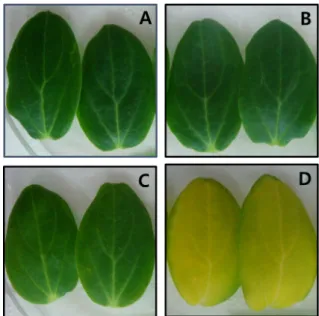
Fig. 3. Excised cucumber cotyledons before (A) and after (B, C and D) ethylene exposure to cucumber seedlings. (A) D14 control, (B) +1 day exposed, (C) +5 day exposed and (D) +10 day exposed cotyledons.
tion.
This is a probe study to find out the relations between stress and senescence correlation in cucumber cotyledon development. Application of plant hormone is considered as an internal cause of organ senescence. Detachment of plant organ is expected to play a role for rapid external stress which may elicit senescence response. Therefore, these stimuli encouraged senescence development and re- lated genes reactions. Gene’s reaction was diverse to hor- mones, light and darkness that is interesting to preview the succeeding step of study for finding of specific signal route in cotyledon senescence. Oil seed germination associated ICL and PCK showed fairly similar reaction to hormones that implies corresponding signal routes as suggested in earlier observation [18]. However, the regulatory study has not been done until currently. CsCYP72A (SAG 60) was up regulated by hormone when auxin interrupts immediately, but zeatin affected lately. CsMTP3 (SAG 66) was a dramatic example on hormonal repression as a cucumber SAG.
Additional discovery is Cs1-MMP (SAG 281), which exciting senescence specific gene for closing stage of cotyledon de- velopment [7]. Although, hormonal reactions was some- what discrete by two hormones, then Cs1-MMP strongly up regulated by them. A discrepancy is on-set stage of the gene expression, which is the first observation ever in cucumber.
Another MMP family CsMMP21 (SAG 158) also revealed that strong up regulation by the hormones but response pattern is rather different from Cs1-MMP. The SAG 288 was surprising because response begins on L2 by zeatin then on D4. The late on-set of gene expression in darkness may be starvation effect by detachment but it should be examined in the following research.
Response to ethylene exposure in developing cotyledon
After 14 days of seed sowing, seedlings of cucumber were exposed directly by ethylene gas within the plant growth chamber rather than detachment of cotyledon be- cause of technical matter of gas form ethylene. Cotyledons were collected after 1, 5 and 10 days of ethylene exposure from seedling. The ethylene effect appeared slow but rap- idly that complete yellowing of green cotyledon in 24 hr after 10 days of prolonged exposure (Fig. 3). Total amount of RNA were not changed significantly, but increased small at 5 day exposed cotyledons (Fig. 4A). Following RT-PCR approach under basis of single cotyledon, only two of those
cucumber SAG (ICL and 281) showed parallel response with the shifting point of yellowing cotyledon (Fig. 3 and 4B).
It clearly implies that ICL and SAG 281 gene are involved in cotyledon senescence at the point of chloroplast (or chlor- ophyll) destruction together with other senescence-related enzyme coding gene’s action such as various plant perox- idases [1, 8, 10, 16, 26, 34]. As discussed in earlier section, Cs1-MMP may be responsible for closing the death of a cell [43]. However, a key glyoxylate cycle enzyme coding ICL will participate in remobilization of demolishing internal membrane lipids during senescence.
Although SAG 66 gene showed very strong expression from 14C to 10 days of ethylene exposure with small in- creasing (Fig. 4B, 66), it showed clear response against eth- ylene as shown in cotton seedling development from earlier report [40]. As discussed earlier section about SAG 3-5 for cysteine protease following cysteine synthesis by CsOAS- TL, a prolonged ethylene exposure revealed that gradual in- crease of the SAG 3-5 gene expression in this experiment (Fig. 4B), which could be agreed with the protein remobili- zation process during cotyledon senescence [25].
Another interesting observation is the PCK and SAG 288 gene, which responded rapidly to ethylene after 1 day ex- posure (Fig. 4B). Especially, gradual increase of PCK gene expression means anaplerotic response to senescence induc- ing ethylene signal for supplying metabolic intermediates
A
B
Fig. 4. Total RNA and following RT-PCR result from ethyl- ene-treated cucumber cotyledon. (A) Total RNA after extraction by RNeasy Plant Mini Kit (Qiagen) on a 0.5x TBE agarose gel (1.2%) stained with ethidium bromide.
Equal volume (10 μl) of total RNA was loaded on the basis of single cotyledon level. 25S and 18S represent major rRNA bands. (B) Agarose gel electrophoresis im- age by semi-quantitative RT-PCR product of cucumber SAGs. Actin was used as a positive control and cucum- ber ICL used as the senescence specific control.
into tricarboxylic acid cycle [18]. Although the gene ex- pression was not escalating, a rapid reaction of SAG 288 gene could be a stress response against metabolic instability come from exogenous stimulus, but yet to be answered.
Similar response appeared in SAG 158 that will drive grad- ual destruction of cellular compartments such as most of MMP enzyme action during PCD or senescence [43]. SAG 338 showed some increase of the gene expression against ethylene that may be explained to be an osmotic-stress re- sponse for proline accumulation as drought tolerance [3].
As mentioned in earlier section, SAG 338 is a stress respon- sible gene in plant development, and we found some re- sponse of the CsPDH2 gene expression (Fig. 4B, 338). Rests of the cucumber SAGs could not be confirmed as reactive to ethylene stimulus in cucumber cotyledon except SAG 11-6 (Fig. 4B). As we mentioned earlier, ethylene treatment revealed a similar conclusion that by gradual increase of
SAG 11-6 expression (Fig. 4B, 11-6). Increasing peroxidase activity was correlated with chlorophyll degradation during organ senescence which means ethylene could trigger the intracellular membrane destruction by induced senescence [1].
In conclusion, we were able to confirm hormone-depend- ent cucumber SAGs such as ICL, PCK, SAG 66, SAG158, SAG281, SAG288, SAG 338, SAG3-5 and SAG11-6, using three different type of plant hormones. They can be catego- rized into two group of SAGs from this result as destruc- tion SAG and remobilization SAG; the first group would be SAG 66, 158, 281, 338 and 11-6 and, the second group would be ICL, PCK and SAG3-5. Then, we will focus on these genes developmental importance in organ senescence espe- cially about lipid metabolism and transport to other cellular compartment during development.
References
1. Abeles, F. B., Hershberger, W. L. and Dunn, L. J. 1989.
Hormonal regulation, and intracellular localization of a 33-kD cationic peroxidase in excised cucumber cotyledons.
Plant Physiol. 89, 664-668.
2. Bhalerao, R., Keskitalo, J., Sterky, F., Erlandsson, R., Bjork- backa, H., Birve, S. J., Karlsson, J., Gardestrom, P., Gustafs- son, P., Lundeberg, J. and Jansson, S. 2003. Gene expression in autumn leaves. Plant Physiol. 131, 430-442.
3. Bhaskara, G. B., Yang, T. H. and Verslues, P. E. 2015.
Dynamic proline metabolism: importance and regulation in water limited environments. Front. Plant Sci. 6, 1-7.
4. Breeze, E., Wagstaff, C., Harrison, E., Bramke, I., Rogers, H., Stead, A., Thomas, B. and Buchanan-Wollaston, V. 2004.
Gene expression patterns to define stages of post-harvest senescence in Alstroemeria petals. Plant Biotechnol. J. 525, 155-168.
5. Buchnan-Wollaston, V. 1994. Isolation of cDNA clones for genes that are expressed during leaf senescence in Brassica napus. Identification of a gene encoding a senescence-spe- cific metallothionein-like protein. Plant Physiol. 105, 839-846.
6. Choe, H. T. and Whang, M. 1986. Effects of ethephon on aging and photosynthetic activity in isolated chloroplasts.
Plant Physiol. 80, 305-309.
7. Delorme, V. G., McCabe, P. F., Kim, D. J. and Leaver, C.
J. 2000. A matrix metalloproteinase gene is expressed at the boundary of senescence and programmed cell death in cucumber. Plant Physiol. 123, 917-927.
8. Eicks, M., Maurino, V., Knappe, S., Flügge, U. I. and Fischer, K. 2002. The plastidic pentose phosphate translocator repre- sents a link between the cytosolic and the plastidic pentose phosphate pathways in plants. Plant Physiol. 128, 512-522.
9. Gan, S. and Amasino, R. M. 1997. Making sense of sen- escence. Plant Physiol. 113, 313-319.
10. Goud, P. B. and Kachole, M. 2011. Role of chloroplastidial proteases in leaf senescence. Plant Signal. Behav. 6, 1371-1376.
11. Graham, J. S., Xiong, J. and Gillikin, J. W. 1991. Purification and developmental analysis of a metalloproteinase from the leaves of Glycine max. Plant Physiol. 97, 786-792.
12. Hell, R., Jost, R., Berkowitz, O. and Wirtz, M. 2002.
Molecular and biochemical analysis of the enzymes of cys- teine biosynthesis in the plant Arabidopsis thaliana. Amino Acids 22, 245-257.
13. Hiraga, S., Sasaki, K., Ito, H., Ohashi, Y. and Matsui, H.
2001. A large family of Class III plant peroxidases. Plant Cell Physiol. 42, 462-468.
14. Huang, Y. J., To, K. Y., Yap, M. N., Chiang, W. J., Suen, D. F. and Chen, S. C. 2001. Cloning and characterization of leaf senescence up-regulated genes in sweet potato.
Physiol. Plant. 113, 384-391.
15. Hull, A. K., Vij, R. and Celenza, J. L. 2000. Arabidopsis cyto- chrome P450s that catalyze the first step of tryptophan-de- pendent indole-3-acetic acid biosynthesis. Proc. Natl. Acad.
Sci. USA 97, 2379-2384.
16. Jia, Y., Tao, F. and Li, W. 2013. Lipid profiling demon- strates that suppressing Arabidopsis phospholipase Dδ retards ABA-promoted leaf senescence by attenuating lipid degradation.
PLoS One 8, e65687.
17. Jiang, Y., Liang, G., Yang, S. and Yu, D. 2014. Arabidopsis WRKY57 functions as a node of convergence for jasmonic acid– and auxin-mediated signaling in jasmonic acid–in- duced leaf senescence. Plant Cell 26, 230-245.
18. Kim, D. J. and Smith, S. M. 1994. Molecular cloning of cu- cumber phosphoenolpyruvate carboxykinase and devel- opmental regulation of gene expression. Plant Mol. Biol. 26, 423-434.
19. Kim, D. J. 2004. A study of cotyledon senescence of cucum- ber (Cucumis sativus L.) from expressed sequence tags and their gene expression. J. Plant Biol. 47, 244-253.
20. Kim, D. J., Do, T .K. and Yi, G. Y. 2005. Coordinate ex- pression of senescence-associated genes both cotyledon and petal development in cucumber (Cucumis sativus L.) Integra- tive Biosciences 9, 127-133.
21. Kim, J., Chang, C. and Tucker, M. L. 2015. To grow old:
regulatory role of ethylene and jasmonic acid in senescence.
Front. Plant Sci. 6, 1-7.
22. Kleber-Janke, T. and Krupinska, K. 1997. Isolation of cDNA clones for genes showing enhanced expression in barley leaves during dark-induced senescence as well as during senescence under field conditions. Planta 203, 332-340.
23. McGeehan, G., Burkhart, W., Anderegg, R., Becherer, J. D., Gillikin, J. W. and Graham, J. 1992. Sequencing and charac- terization of the soybean leaf metalloproteinase. Plant Physiol. 99, 1179-1183.
24. Page, T., Griffiths, G. and Buchanan-Wollaston, V. 2001.
Molecular and biochemical characterization of postharvest senescence in broccoli. Plant Physiol. 125, 718-727.
25. Poret, M., Chandrasekar, B., Van der Hoorn, R. A. and Avice, J. C. 2016. Characterization of senescence-associated
protease activities involved in the efficient remobilization during leaf senescence of winter oilseed rape. Plant Sci. 246, 139-153.
26. Purvis, A. C. and Barmore, C. R. 1981. Involvement of eth- ylene in chlorophyll degradation in peel of citrus fruits.
Plant Physiol. 68, 854-856.
27. Qin, X. and Zeevaart, J. A. 2002. Overexpression of a 9-cis-epoxycarotenoid dioxygenase gene in Nicotiana plum- baginifolia increases abscisic acid and phaseic acid levels and enhances drought tolerance. Plant Physiol. 128, 544- 551.
28. Smart, C. M. 1994. Gene expression during leaf senescence.
New Phytol. 12, 419-448.
29. Smart, C. M., Hosken, S. E., Thomas, H., Greaves, J. A., Blair, B. G. and Schuch, W. 1995. The timing of maize sen- escence and characterization of senescence-related cDNAs.
Physiol. Plant 93, 673-682.
30. Srivastava, S., Sangwan, R. S., Tripathi, S., Mishra, B., Narnoliya, L. K., Misra, L. N. and Sangwan, N. S. 2015.
Light and auxin responsive cytochrome P450s from Withania somnifera Dunal: cloning, expression and molec- ular modelling of two pairs of homologue genes with dif- ferential regulation. Prptoplama 252, 1421-1437.
31. Taiz, L. and Zeiger, E. 2006. Water and Plant Cells, Plant Physiology, 4th edn. Sinauer Associates Inc, p 672.
32. Talla, S. K., Panigrahy, M., Kappara, S., Nirosha P., Nee- lamraju, S. and Ramanan, R. 2016. Cytokinin delays dark-induced senescence in rice by maintaining the chlor- ophyll cycle and photosynthetic complexes. J. Exp. Bot. 67, 1839-1851.
33. Thomas, H. and Stoddart, J. L. 1980. Leaf senescence. Annu.
Rev. Plant Physiol. 31, 83-111.
34. Trebitsh, T., Goldschmidt, E. E. and Riov, J. 1993. Ethylene induces de novo synthesis of chlorophyllase, a chlorophyll degrading enzyme, in Citrus fruit peel. Proc. Nati. Acad. Sci.
USA 90, 9441-9445.
35. Trivellini, A., Cocetta, G., Vernieri. P., Mensuali-Sodi. A.
and Ferrante, A. 2015, Effect of cytokinins on delaying pe- tunia flower senescence: a transcriptome study approach.
Plant Mol. Biol. 87, 169-180.
36. Wang, W., Xia, M. X., Chen, J., Yuan, R., Deng, F. N. and Shen, F. F. 2016. Gene expression characteristics and regu- lation mechanisms of superoxide dismutase and its physio- logical roles in plants under stress. Biochemistry 81, 465-480.
37. Watanabe, M., Balazadeh, S., Tohge, T., Erban, A., Giavalis- co, P., Kopka, J., Mueller-Roeber, B., Fernie, A. R. and Hoefgen, R. 2013. Comprehensive dissection of spatio- temporal metabolic shifts in primary, secondary, and lipid metabolism during developmental senescence in Arabidopsis.
Plant Physiol. 162, 1290-1310.
38. Wirtz, M, Beard, K. F., Lee, C. P., Boltz, A., Schwarzländer, M., Fuchs, C., Meyer, A. J., Heeg, C., Sweetlove, L. J., Ratcliffe, R. G. and Hell, R. 2012. Mitochondrial cysteine synthase complex regulates O-acetylserine biosynthesis in Plants. J. Biol. Chem. 287, 27941-27947.
39. Xu, F., Meng, T., Li, P., Yu, Y., Cui, Y., Wang, Y., Gong,
초록:오이 떡잎에서 노쇠화 관련 유전자들의 식물 호르몬에 대한 반응 연구
차현정1․김대재2*
(1충북대학교 대학원 과학교육과, 2충북대학교 사범대학 생물교육과)
본 연구는 발달중인 오이 떡잎에 식물호르몬을 처리하여 나타나는 노쇠화 관련 유전자들(SAG)의 유전자 발현 반응을 탐구하기 위하여 수행되었다. 따라서 선별된 오이의 노쇠화 관련 유전자들에 대하여 그들의 유전자 발현 반응을 특정하기 위하여 역전사-중합효소연쇄반응(RT-PCR)을 통하여 조사되었다. 파종 후 14일 된 오이의 떡잎을 절취한 후 100 µM IAA또는 zeatin 용액 위에 두고 빛이 있거나 없는 조건에서 4일 째 까지 처리하였다. 떡잎은 2일 간격으로 회수하여 총RNA추출과 RT-PCR의 시료로 사용하였다. RT-PCR 결과에 따르면 몇몇 오이의 SAG 전사체들은 처리기간 동안에 상당한 변화를 나타냈다. 에틸렌 반응 실험에서는 처리 1일 후 반응을 나타낸 PCK, SAG 158과 SAG 288을 제외한 대부분의 오이 SAGs는 즉각 반응을 보이지 않았으나 ICL과 SAG 281은 10일 처리 후 노란 떡잎에서 강한 반응을 나타냈다. 이러한 결과들은 몇몇 오이의 SAGs가 외부적 자극에 대하여 영양 결핍 이나 노쇠화 반응을 나타냄을 의미한다. 떡잎의 발달 동안에 이와 같은 노쇠화 유도 반응은 기관의 노쇠화에서 SAGs의 대사적 역할과 기능을 이해 할 수 있는 정보를 제공한다.
Q. and Wang, N. N. 2011. A soybean dual-specificity kin- ase, GmSARK, and its Arabidopsis homolog, AtSARK, reg- ulate leaf senescence through synergistic actions of auxin and ethylene. Plant Physiol. 157, 2131-2153.
40. Xue, T., Li, X., Zhu, W., Wu, C., Yang, G. and Zheng, C.
2009. Cotton metallothionein GhMT3a, a reactive oxygen species scavenger, increased tolerance against abiotic stress in transgenic tobacco and yeast. J. Exp. Bot. 60, 339-349.
41. Yamada, Y. and Umehara, M. 2015. Possible roles of strigo- lactones during leaf senescence. Plants 4, 664-677.
42. Yamaryo, Y., Kanai, D., Awai, K., Shimojima, M., Masuda, T., Shimada, H., Takamiya, K. and Ohta, H. 2003, Light and cytokinin play a co-operative role in MGDG synthesis in greening cucumber cotyledons. Plant Cell Physiol. 44, 844- 855.
43. Zimmermann, D., Gomez-Barrera, J. A., Pasule, C., Brack- Frick, U. B., Sieferer, E., Nicholson, T. M., Pfannstiel, J., Stintzi, A. and Schaller, A. 2016. Cell death control by ma- trix metalloproteinases. Plant Physiol. 171, 1456-1469.