http://dx.doi.org/10.7236/JIIBC.2013.13.1.191
JIIBC 2013-1-26
스마트 폰을 이용한 시설물 유지관리 시스템 구현
Implementation of Facility Maintenance Management System using Smart Phones
주영도
*Young-Do Joo
요 약 최근 스마트폰의 폭발적인 수요 확대와 모바일 관련 기술이 발전함에 따라 오프라인 현장에서 언제 어디서 나 온라인 정보를 활용하여 실시간적으로 의사소통 및 업무처리를 할 수 있는 시스템의 요구가 증대되고 있다
.
본 논 문은 공동주택 및 각종 시설물 하자 관리와 유지보수 관리 업무에 적용될 수 있는 안드로이드 기반의 모바일 어플리 케이션을 개발하여 스마트폰을 이용한 실시간 시설물 유지관리 시스템을 구현하는 방안을 제시한다.
제안하는 시스템 은 시설물 유지관리를 위하 제반 데이터의 분류 및 표준화를 통해 웹 기반 시스템과 모바일 시스템간의 상호유기적 인 통합관리 시스템 개발을 목표로 한다.
Abstract Recently, the demand for mobile systems is remarkably growing due to the explosive spread of smart phones. The mobile system based on the smart phones enables the real time communication and business process by utilizing the on-line information on the spot anytime and anywhere. This paper proposes a development model to use android-based mobile applications to be applicable to the facility defect maintenance management in apartment buildings. The proposed methodology aims to implement an incorporated system to bind the web-based system and the mobile system in systematic interaction in order to feasibly realize the concept of mobile office.
Key Words : Facility Completion Inspection, Facility Maintenance Management, Mobile Application, Mobile Office
*정회원, 강남대학교 컴퓨터미디어정보공학부 접수일자 2013년 1월 2일, 수정완료 2013년 2월 2일 게재확정일자 2013년 2월 8일
Received: 2 January 2013 / Revised: 2 February 2013 / Accepted: 8 February 2013
*Corresponding Author: [email protected]
Dept. of Computer and Media Information, Kangnam University, Korea
I. Introduction
The construction works have unique characteristics to suffer from the replacement and the supplementation of the facilities unlike the manufacturing business when the finished goods are faulty or defective. In addition, the construction industry involves ordering companies, designing companies, construction contractors
and maintenance companies to be different from each construction site. To prevent the unnecessary loss of man power and material resources after the facility completion, the quality-based construction management is required systematically through the complete information of facility defect from the time of the design and the construction launching.
In spite of the endeavoring efforts of constructors,
the efficient quality-inspection and defect management is a still difficult task owing to the shortage of personnels for the quality control, excessive paper works, the complexity of work process and the old-fashioned management system based on the manual process and data of spread-sheet type. In case of the public house for installment sale managed by the constructors, the facility maintenance system is developed and operated by each construction company but, it demands a great deal of time and expense at the system implementation and modification according to the frequent change of construction process. On the other hand, the maintenance management of the public rental house is charged by local governments and official institutions as it is a public asset unlike the public house for instalment sale similar to a regular apartment. The government has policy loophole in planning the maintenance for the public rental house due to the lack of elementary data
[1,2].
This paper proposes a system model to support the efficient maintenance management to be applied to apartment houses including the public house for installment sale and the public rental house. The proposed system standardizes the inspection data different from the constructors and the construction sites, and provides the real-time collection of data/information occurring from the sites. A methodology to implement a mobile system based on mobile applications to enable seamless link with the conventional web-based system for the facility maintenance management is presented in this paper.
II. Design of System Process
There is no difference between the public house for installment sale and the public rental house in technical method for the facility maintenance management.
However, the management ways make some difference between both housing systems. It is not so feasible to apply the standard management of facilities to the
public house for installment sale whose management is strongly private by the contracting-out according to each apartment complex. The management work is relatively well standardized by the self-defining term in the public rental house as several complexes of apartment are governed by the integrated management.
Accordingly, the database associated with the work is easily established and then the resulting system can practically back up the business and the decision-making process
[3,4].
The work process for the system design is divided by 2 categories.
1) Facility completion inspection: act of management related with preliminary inspection on facility defects before the residents move into
2) Facility maintenance management: act of management related with treatment of facility defects while the residents live in after move-in.
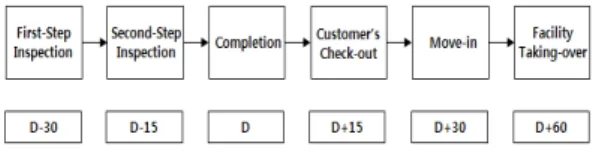
Fig. 1 shows the procedures to conduct two-phase inspection at facility completion. The facility completion inspection is normally called a move-in inspection as it is carried out just before and after move-in time. The check results complied from inspectors during the two-phase inspection are delivered to the construction company that accounts for all the maintenance treatment by itself.
그림 1. 시설물 준공 점검 프로세스
Fig. 1. Process for Facility Completion Inspection
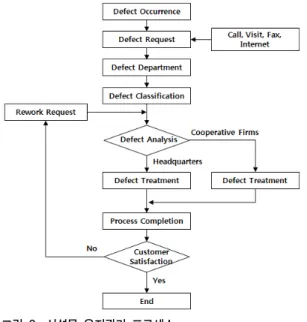
Fig. 2 demonstrates the processing of the facility
defect treatment on public complaints raised from the
residents. The defect processing after the move-in is
handled by the staffs visit from a main office of the
construction company or by a maintenance
subcontractor under the guidance of the staffs in
residence on sites.
As you notice from Fig. 2, the residents request the defect treatment through a call center, a visit to property management office in the apartment complex, a fax and the internet. The department at the headquarters in charge of the defect management classifies the defect type from the accepted applications. According to repair types, the defects are handled by a self-processing and the transferring processing to cooperative firms based on the liability of the case. After the completion of the defect case, the department in charge accepts the confirmation document and checks the customer satisfaction. If any dissatisfaction form the resident is brought about, the department is supposed to request a rework.
그림 2. 시설물 유지관리 프로세스
Fig. 2. Process for Facility Maintenance Management
III. The Proposed System
1. System Architecture
The operation basis of the proposed system consists of android-based mobile applications and web-based PC applications. The system works through the communication of relevant information between the
mobile applications and the web system. The defect information are entered into a smart phone which is conveniently portable anytime and anywhere, and all the input data can be transferred to the PC of the person in charge through the server and the mobile network.
Fig. 3 depicts the comprehensive architecture of the system. The system is composed of a web server to drive the web system and a middleware server to drive the smart phone. The data form the web system are delivered to the users by the communication between a WAS(Web Application Server) and the web server while the data for the mobile system are delivered and stored in the mobile terminal by the direct communication from the middleware server to the DB server.
그림 3. 웹/모바일 시스템의 전체구조
Fig. 3. Overall Architecture of Web/Mobile System
Fig. 4 shows a hierarchy of mobile architecture for the target system. Each module performs the following function.
• TcpNetIo: TCP communication with the middleware server for facility management
• Seed B Manager: Manipulation of data to send to
server
• Send Packet Data: Manipulation of data to send to server
• Recv Packet Data: Manipulation and parsing of data to arrive to server
• Activity: Screen and control connection to each functional module
• Dialog Manager: Management of pop-up screens
• SMS Control: Transmission and management of SMS
• Sign Control: Conversion input signature to image
• Cam Control: Camera control
• SQLite Data Manager: Storage and inquiry of data to android DB
• Android Application Framework: Android Internal Framework
• Android Libraries: Android built-in LIB
• Android Runtime: Core java libraries
그림 4. 모바일 구조 계층도
Fig. 4. Hierarchy of Mobile Architecture
2. Service Implementation
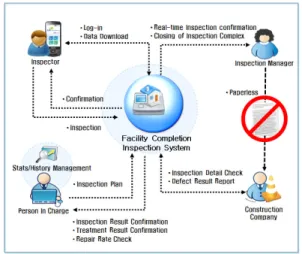
The service model is realized into the system development according to the design of the facility completion inspection process and facility maintenance management process mentioned in earlier section. Fig.
5 demonstrates a service flow to deal with the
outstanding defects through the development of facility completion inspection system and mobile system to collect the defect cases from the sites.
그림 5. 시설물 준공 점검 서비스 흐름도
Fig. 5. Facility Completion Inspection Service Flow
An inspection personnel gains access to the system after the authentication of a mobile phone through the application program downloaded in advance. All the facilities at a complex, a building, and a household as well as the defect types registered in the mobile system undergo an inspection by the touch process on the mobile phone. The outcomes of such spot inspection are stored into the DB server, in the manner of real-time.
An inspection manager closes the inspection on the complex after the confirmation of all the inspection results gathered automatically. He transfers the results to the construction company of the corresponding complex. The construction company checks out the inspection status and feeds the reporting results into the web system following the appropriate maintenance treatment on the defects. Finally, a person responsible for the defect management monitors the progress of works and the treatment results from the web system.
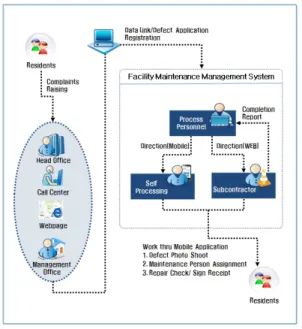
Fig. 6 demonstrates a service flow to accept and
settle down public complaints raised from the residents
by the web and mobile system to computerize the
facility maintenance management.
그림 6. 시설물 유지관리 서비스 흐름도
Fig. 6. Facility Maintenance Management Service Flow
A resident applies for a defect complaint through various channels such as the head office of the construction company , the designated call center, the home-page or the property management office at the resident's apartment complex. The defect application is transferred to a personnel in charge of the defect maintenance for each complex and then is issued a direction to the self-processing team or to the maintenance subcontractor. Following the direction, the self-processing team or the maintenance company carries out the repair process after confirming the defect case accepted on the mobile phone and making a visit reservation using the resident's registered phone number. At the completion time of repair process, the maintenance personnel receives a personal signature from the resident on his mobile phone. At the same time, the scene of the repair treatment is stored in the web system by the photographing. Ultimately, the staff at the headquarters responsible for the defect management can monitor and confirm the maintenance result reported instantly.
3. Mobile Applications
The service implementation is grounded on the development of mobile applications for work process as well as the refinement of the web system. The mobile system consists of 3 mobile applications for the individual inspector for the facility completion inspection, the personnel in charge of the defect management and the defect maintenance company to perform the repair work, respectively. Each application has access limitations of functions available depending on the user authorization.
The application for the inspector comprises a inspection function to register the defect details and to transmit the inspection output to the construction company and a confirmation function to check out the repair result after the completion of the defect maintenance. The application for the personnel responsible the defect management includes a registration function to allow for the application of the resident's complaints, a defect monitoring function to check the progress status of the complaint treatment, and a direction function to issue repair orders to the maintenance company. Finally, the application for the maintenance company incorporates various functions to offer repair work compliant to the construction company, photo shooting of the defect treatment and the on-site completion by the receipt of the signature from the resident.
The web system coupled with the mobile applications involves the basic management of mobile phones and users by the mobile authentication
[5,6,7]. The mobile application is vulnerable to security issues in that it is distributed in the form of apk file. Therefore, it is necessary to devise the measures to prevent the program loading and the login permission when an unauthorized mobile phone tries to access to the system using the illegal program. Fig. 7 shows the procedures to determine the program accessability of the mobile phone after the access to the mobile system.
If it is the authorized terminal, the login screen is
popped up to follow the valid login procedure.
그림 7. 모바일 폰 인증 및 로그인
Fig. 7. Mobile Phone Authentication and Login
Fig. 8 shows the screens for the procedures to select the facility spots and repair types at the time to move into an apartment. The facility spots are represented by a list-type menu and a floor plan. In case of the household without a floor plan, the spot is chosen by the direct touch of the list.
그림 8. 시설물 장소 및 보수 공사 종류 선택
Fig. 8. Selection of Facility Spot and Repair Type
Fig. 9 shows the screens to register the defect location indicated from the inspection. The defect region is partitioned in 6 coordinates such as the front, the rear, the right, the left, the ceiling and the floor to point out the location more accurately. Each partition is again divided by 9 sections equally. The defect location is delivered to the construction company by the photo shoot with relevant messages.
The maintenance personnel confirms the defect case to be assigned to himself using the mobile application.
He completes the defect treatment by registering the process results with the site photographing and the approval signature from the resident. The completed case is reported to the maintenance management staff to conduct the confirmation and the monitoring of the
repair process including the rework direction. Fig. 10 shows the screens for the completion of repair process by the photo registration and the signature of the resident.
그림 9. 하자 세부 위치 결정 및 사진 촬영 Fig. 9. Defect Locating and Photo Shoot
그림 10. 현장 보수처리 완료
Fig. 10. On-site Completion of Repair Process