일품벼 돌연변이 유래 고아밀로스 벼품종의 저항전분 특성
윤미라* ・ 이점식 ・ 이정희 ・ 곽지은 ・ 천아름 ・ 김보경 농촌진흥청 국립식량과학원
Content and Characteristics of Resistant Starch in High Amylose Mutant Rice Varieties Derived from Ilpum
Mi-Ra Yoon*, Jeom-Sig Lee, Jeong-Heui Lee, Jieun Kwak, Areum Chun, and Bo-Kyeong Kim National Institute of Crop Science, RDA, Suwon 441-857, Korea
Abstract : This study was conducted to analyze the starch characteristics of three rice cultivars, Goami 2, Goami 3 and Goami 4 with high amylose content and resistant starch. These rice varieties were developed by mutation breeding based on N-methyl- N-nitrosourea (MNU) treatment in a japonica variety, Ilpum. Resistant starch contents of three high amylose mutant rice varieties and Ilpum were 11.87~13.69% and 0.36%, respectively. The X-ray diffraction patterns of starches of three varieties, Goami 2, Goami 3 and Goami 4 displayed B-type pattern. The proportion of amylopectin short chains of 6 to 12 in DP of the high amylose mutant rice varieties was significantly lower than that of Ilpum. Resistant starch contents had positive correlation with the amylose content, total dietary fiber content, medium length chains of 13 to 24, long chains of ≥ 25 in DP of amylopectin, pasting temperature and setback viscosity.
Keywords : Mutant rice variety, High amylose, Resistant starch, Starch characteristics
*Corresponding author (E-mail: [email protected], Tel: +82- 31-290-6723, Fax: +82-31-290-6730)
(Received on August 16, 2013. Revised on October 23, 2013.
Accepted on October 29, 2013.)
Copyright ⓒ 2013 by the Korean Society of Breeding Science 324
This is an Open-Access article distributed under the terms of the Creative Commons Attribution Non-Commercial License (http://creativecommons.org/licenses/by-nc/3.0) which permits unrestricted non-commercial use, distribution, and reproduction in any medium, provided the original work is properly cited.
서 언
쌀은 우리나라의 주식임에도 불구하고 최근 식생활의 고급 화, 다양화 추세가 증대됨에 따라 국내 쌀 소비량은 매년 감 소하고 있다. 반면, 기능성 식품에 대한 소비자의 관심은 높아 지고 있으며 쌀에 있어서도 색깔이 있는 기능성 쌀이나 술과 떡, 과자 등 가공용 원료로 이용되거나 쌀전분을 이용한 다양 한 소재 활용을 위한 연구가 진행되고 있다(Choi 2002, Hong et al. 2012, Kim et al. 2007, Shi and Gao 2011, Yoon et al. 2011).
쌀에서 전분은 수분을 제외하면 약 90%을 차지하는 주요 구성 성분이다. 쌀 전분은 아밀로스(amylose)와 아밀로펙틴 (amylopectin)으로 구성되어 있으며 이들 성분 비율에 따라 전분의 호·노화 및 물리적 특성에 상당한 차이를 나타내기 때
문에 이러한 특성을 고려하여 밥쌀용이나 가공 용도에 맞는 적절한 쌀을 선택하는 것은 무엇보다도 중요하다(Choi 2002, Choi 2010, Choi et al. 2006, Kang et al. 2004). 더욱이 원 료 쌀의 기능성 및 가공성은 물리·화학적 처리나 미생물을 이용 한 초미세 전분 제조, 다양한 발효 처리 등(Haralampu 2000, Kwak 2010)으로 높일 수 있으나, 활용성을 더 높이기 위하 여 전분 구조 및 형태, 이화학적 특성이 다양한 품종을 개발 하는 것도 중요하다. 이러한 맥락에서 쌀 소비 확대 및 전분 용도 다양화를 위하여 벼의 수정된 어린 배에 화학적 돌연변 이 N-methyl-N-nitrosourea (MNU) 처리를 통하여 당 함량이 높은 당질미, 쌀이 밀과 같은 가루 성질을 나타내는 분질미, 찹쌀과 멥쌀의 중간 성질을 나타내는 중간찰, 씨눈이 보통 쌀 의 2~4배가 되는 거대배아미 등 다양한 전분 특성을 가진 품 종들이 개발되고 있다(Choi 2002, Hong et al. 2011, Hong et al. 2012). 고아미2호는 일품벼에 MNU를 처리하여 육성 된 품종으로 아밀로오스 함량 및 식이섬유 함량이 높은 것으 로 알려져 있으며, 고아미2호의 발아 및 초기 생육의 단점을 개선하여, 고아미2호를 모본으로 대안벼와 인공 교배하여 육
성한 고아미3호와 고아미4호 품종이 육성되었다(Kang et al.
2003, Lee et al. 2011).
한편, 난소화성 탄수화물인 저항전분(Resistant starch, RS) 은 식이섬유와 유사한 생리활성 기능이 있으며 특히, 식후 혈당 과 인슐린 분비 상승을 억제하고 지질대사 개선, 대장암 예방 효 과가 있다고 보고되고 있다(Lee and Shin 2005). EURESTAR (European Flair Concerted Action on Resistant Starch)에서 는 저항전분을 “건강한 사람의 소장에서 소화되지 않는 전분 및 전분 분해물의 총체”라고 정의하고 있으며(Delcour and Eerlingen 1996), Englyst et al. (1982)은 저항전분을 4가지 유형(RS1, 부분적으로 도정된 낱알이나 종자와 같이 물리적 으로 소화효소의 접근이 어려운 것; RS2, 바나나, 감자, 고아 밀로오스 옥수수 전분과 같이 B형의 결정성을 가지고 소화효 소에 의해 분해되기 어려운 전분; RS3, 가공의 결과로 호화된 전분이 노화되어 형성; RS4, 화학적으로 변성된 전분)으로 더 세분화하여 이에 관한 활발한 연구가 진행되고 있다(Eeringen et al. 1993, Englyst et al. 1982, Gough and Pybus 1971, Kruger et al. 1987)
따라서 본 연구에서는 최근 건강기능성 전분 소재로 관심 이 높고 그 활용도가 기대되는 일품벼 유래 돌연변이 고아밀 로스 품종인 고아미2호, 고아미3호, 고아미4호의 저항전분 함 량과 전분 특성을 분석하고 일반 메벼인 일품과 특성을 비교 하였으며, 향후 전분 원료 선발이나 육종 연구의 기초자료로 활용하고자 한다.
재료 및 방법
실험재료
본 실험에 사용된 재료는 자포니카 타입의 밥쌀용인 일품 벼, 일품벼에 메칠니트로조우레아(N-methyl-N-nitrosourea) 처 리에 의해 돌연변이를 유발하여 육성된 고아미2호와 고아미2 호를 모본으로 하여 대안벼와 인공 교배하여 육성한 고아미3 호, 고아미4호이다. 2011년도에 농촌진흥청 국립식량과학원 에서 표준재배법에 의하여 재배 생산하여 수확하였으며 제현 기(SY88-TH, 쌍용, 한국)를 통하여 왕겨를 제거한 현미 시료 를 시험용 도정기(MC-90A, Toyo, Japan)를 이용하여 정백 율 91%로 도정하였다, 백미로 만든 후 진공포장하여 4℃ 냉 장실에서 보관하며 분석에 사용하였다. 품종별 이화학 분석을 위하여 분쇄기(CyclotecTM 1093, FOSS Co., Denmark)를 이용하여 분쇄한 후 100 mesh 체에 내려서 쌀가루를 제조하
였다. 또한 백미로부터 배유 전분 분획은 알칼리침지법(Yamamoto et al. 1973)의 방법에 따라 제조하였다.
외관특성, 일반 성분 및 아밀로스 분석
품종별 백미의 외관특성인 형태와 크기를 조사하기 위해 Caliper (Model CD-15CP, Mitutoyo Corp., Japan)를 이용 하여 길이, 폭, 두께를 측정하였고 완전립 무게를 측정하여 천 립중을 비교하였다.
쌀의 일반성분은 AOAC 방법에 따라 수분함량은 105℃
상압가열건조법, 조단백질은 Micro Kjeldahl법, 조회분은 550℃
회화법으로 측정하였다. 또한 품종별 분쇄한 쌀가루의 색도는 색차계(CR-300, Minolta Co., Japan)를 이용하였고 아밀로오 스 함량은 Juliano (1985)의 비색정량법에 따라 전분 호화액 을 요오드 정색반응 후 620 nm의 파장에서 흡광도를 측정하 여 계산하였다.
저항전분 및 총식이섬유 분석
쌀의 저항전분 함량 분석은 Megazyme kit를 이용하여 AOAC 방법으로 측정하였다(McCleary et al. 2002). 즉, 시료 100 mg에 pancreatin α-amylase로 37℃에서 16시간 반응시킨 후 침전물에 2M KOH 용액을 첨가하여 분산 및 용해시킨다.
1.2 M sodium acetate buffer (pH 3.8)와 amyloglucosidase 을 첨가하여 50℃에서 30분 반응시킨 후 가수분해 된 glucose 양에 따라 저항전분 함량을 계산하였다.
총식이섬유 함량은 AOAC 방법에 의한 Megazyme kit를 이용하여 분석하였는데, 쌀가루 시료 1 g에 50 mM MES/TRIS 용액(pH 8.2) 40 mL 첨가한 후 α-amylase, protease, amylo- glucosidase 효소 용액으로 차례로 가수분해 한 다음, 4배 정 도의 95% 에탄올을 가하여 효소활동을 정지시킨다. 효소에 의해 분해되지 않은 침전된 부분을 여과 건조하여 식이섬유 함량을 측정하였다.
전분 X선 회절도 측정
쌀 전분 입자의 결정성과 결정강도는 X선 회절기(Philips, X’ pert PW3710, Netherland)를 이용하여 Target: Cu-kα, scanning speed; 0.04° 2θ/s, voltage; 40 kV, current; 30 mA의 조건으로 회절각도(2θ)를 5°부터 35°까지 회절시켜 나 타나는 피크의 위치와 높이로써 결정성과 결정강도를 비교하 였다.
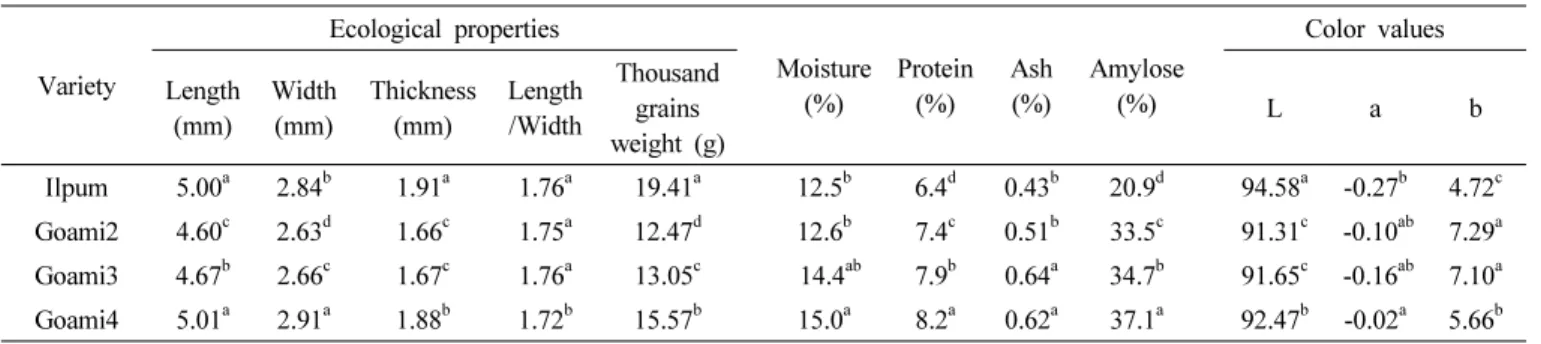
Table 1. Agronomical properties and proximate composition of Ilpum and high amylose mutants.
Variety
Ecological properties
Moisture (%)
Protein (%)
Ash (%)
Amylose (%)
Color values Length
(mm)
Width (mm)
Thickness (mm)
Length /Width
Thousand grains weight (g)
L a b
Ilpum 5.00
a2.84
b1.91
a1.76
a19.41
a12.5
b6.4
d0.43
b20.9
d94.58
a-0.27
b4.72
cGoami2 4.60
c2.63
d1.66
c1.75
a12.47
d12.6
b7.4
c0.51
b33.5
c91.31
c-0.10
ab7.29
aGoami3 4.67
b2.66
c1.67
c1.76
a13.05
c14.4
ab7.9
b0.64
a34.7
b91.65
c-0.16
ab7.10
aGoami4 5.01
a2.91
a1.88
b1.72
b15.57
b15.0
a8.2
a0.62
a37.1
a92.47
b-0.02
a5.66
bMean with same letter are not significantly different (p<0.05)
아밀로펙틴 측쇄사슬 길이 분포 분석
아밀로펙틴 측쇄 사슬길이 분포는 HPAEC-PAD (high perfor- mance anion exchange chromatography-pulsed amperometric detection)을 이용하여 분석하였다(Hanashiro et al. 1996).
시료를 90% methanol 처리 후 중탕 가열한 호화액에 sodium azide 용액, 600 mM sodium acetate buffer (pH 4.4), isoamylase 를 첨가하여 교반한 후 37℃에서 24시간 반응 시켰다. 0.2 μm syringe filter 이용하여 여과한 다음 100 μL주입하였다. 분석 에 사용한 컬럼은 CarboPac TM PA-1 column (2.0 × 250 mm, Dionex, USA), 이동상 용매는 150 mM sodium hydroxide와 500 mM sodium acetate를 분당 1.0 mL의 유속으로 흘려 분 리하였고 기체는 질소를 사용하였다.
신속점도계를 이용한 호화점도 특성
품종별 쌀가루 및 전분의 가열에 의한 호화점도 특성은 AACC 방법(2000)에 의하여 신속점도측정기기(RVA-4, Newport scientific, Australia)를 이용하여 분석하였다. 쌀가루 3 g (수분 14% 기 준)에 25 ml 증류수로 현탁액을 만들어 50℃부터 호화를 시 작하여 95℃까지 상승시킨 후 50℃로 다시 냉각시키면서 점 도를 측정하였다. RVA viscogram으로부터 호화개시온도, 최고(peak)점도, 최저(trough)점도, 최종(final)점도, 강하점 도(breakdown, 최고-최저) 및 치반점도(setback, 최종-최고) 등의 RVA 특성을 조사하였다.
통계분석
본 실험결과는 SPSS package를 이용하여 one-way ANOVA 및 다 범위 검정(Duncan’s multiple range test)을 통하여 p<0.05 수준에서 유의성 있는 그룹간의 차이를 검정하였으 며, 상관관계는 Pearson의 상관계수로 나타내었다.
결과 및 고찰
외관 특성 및 이화학 특성
일품벼와 고아밀로스 품종인 고아미2호, 고아미3호, 고아 미4호 백미의 외관 특성을 비교해 본 결과(Table 1), 길이, 폭, 두께 차이에서 일품벼는 고아미2호와 고아미3호에 비해 상대적으로 높았고 고아미4호와는 비슷한 외관 특성을 보였 다. 백미의 천립에 해당하는 낟알의 무게 차이는 일품벼가 19.4 g으로 고아밀로스 품종들에 비해 높았으며, 고아밀로스 품종 간에는 고아미2호와 고아미3호는 유사하였고, 고아미4 호가 길이, 폭, 두께, 천립중의 무게에서 각각 5.01 mm, 2.91 mm, 1.88 mm, 15.57 g로 고아미2호와 고아미3호에 비해 높 아 유의적인 차이를 보였다.
수분, 단백질, 회분, 아밀로스 함량 분석 결과(Table 1), 조 단백질 함량은 5.4~8.2%로 일품벼와 고아밀로스 품종인 고 아미2호, 고아미3호, 고아미4호간 유의적인 함량 차이를 나타 냈고 고아미4호가 가장 높았다. 조회분 함량은 고아밀로스 품 종(0.51~0.64%)이 일품벼(0.43%)에 비해 높았다. 고아미2호, 고아미3호 및 고아미4호의 아밀로스 함량은 각각 33.5%, 34.7%, 37.1%로 일반 메벼인 일품벼(20.9%)에 비해 높게 나 타내어 유의적인 차이를 보였다. 쌀가루의 색도 측정결과 명 도는 일품벼, 고아미2호, 고아미3호, 고아미4호에서 각각 94.58, 91.31, 91.65, 92.47로 고아미2호, 고아미3호가 유의적 으로 낮게 나타냈고 일품벼가 가장 높았다. 적색도(+a, redness) 는 일품벼가 가장 높았고 황색도(+b, yellowness)는 고아밀로 스 품종이 7.29, 7.10, 5.66로 일품(4.72)에 비해 높은 값을 나타냈다.
저항전분 및 총식이섬유 함량
보통 쌀에서 난소화성인 저항전분의 함량은 미미한 것으로
Table 2. Contents of total dietary fiber (TDF) and resistant starch of Ilpum and high amylose mutants.
Variety TDF (%, g/100 g) Resistant starch (%)
Total starch (%) Milled rice (A) Rice starch (B) B-A
Ilpum 2.52
d0.34
d0.36
d0.02 82.7
aGoami2 5.88
b6.57
b11.87
c5.30 84.3
aGoami3 8.54
a8.21
a12.98
b4.77 84.0
aGoami4 4.48
c5.64
c13.69
a8.05 82.7
aMean with same letter are not significantly different (p<0.05)
Fig. 1. X-Ray diffractograms of Ilpum and high amylose mutant
알려져 있다(Lee and Shin 2005). 일품벼 및 일품벼 유래 돌연변이 고아밀로스 품종들의 저항전분 함량을 분석한 결과 (Table 2), 일품벼의 백미에서는 0.34%, 고아밀로스 품종인 고아미2호, 고아미3호 및 고아미4호의 백미에서는 5.64~
8.21%로 일품벼 대비 15배 이상 높은 함량이었다. 품종별 백 미 배유로부터 전분 분획의 저항전분 함량에서 고아미2호, 고 아미3호 및 고아미4호는 각각 11.87%, 12.98% 및 13.69%로 일품벼(0.36%) 대비 30배 이상의 높은 함량을 나타냄을 확인 하였다. 고아밀로스 품종 간에는 고아미4호의 저항전분 함량 이 13.69%로 가장 높은 함량을 나타냈고, 쌀전분 및 백미로 부터의 저항전분 함량 차이가 가장 컸다. 아밀로스 함량이 높 을수록 저항전분의 함량이 높음을 확인할 수 있었는데, 이 같 은 결과는 저항전분과 식이섬유 함량은 아밀로스 함량과 정 의 상관성을 가진다는 보고(Zhu et al. 2011)와 유사하며 쌀 의 아밀로오스 함량과 저항전분은 밀접한 관련성이 있을 것 으로 생각된다.
품종별 식이섬유 함량은 일품벼는 2.52%, 돌연변이 고아 밀로오스 품종은 5.88~8.54%로 고아미3호가 가장 높았다.
식이섬유 함량 역시 저항전분 함량과 유사하게 돌연변이 고 아밀로스 품종이 높은 함량을 나타냈으며 일품벼 대비 2~4 배 정도로 높은 함량 차이를 보였다. 이 같은 결과를 통하여 고아미2호, 고아미3호, 고아미4호는 일반쌀인 일품벼에 비해 저항전분과 식이섬유 함량이 유의적으로 높음을 확인할 수 있었다. 식이섬유 및 저항전분을 많이 함유한 식품 섭취 시 혈당 상승을 억제하는 효과가 높음이 보고된 바(Lee and Shin 2002, Nishimune et al. 1991, Wolever 1990), 이러한 기능성 탄수화물을 함유하고 있는 고아밀로스 쌀을 이용하여 당뇨병환자의 식이요법이나 다이어트용 소재 개발을 통한 그 활용도를 확대할 수 있을 것이다.
전분의 결정구조 및 아밀로펙틴 중합도 차이
일품벼 유래 돌연변이 고아밀로스 품종들의 아밀로펙틴 분 자의 cluster 구조 결정성을 확인하고자 품종 간 X-선 회절도 를 비교하였다. 전분입자의 결정성은 짧은 사슬들이 평형하게 집합체를 이루고 있는 아밀로펙틴의 결정화도에 기인하며 X- 선 회절도에 나타난 피크 위치나 높이는 결정강도를 나타내 므로 전분입자의 결정형을 검토하는데 널리 활용되고 있다.
일품의 회절각도(2θ)는 15.0, 17~18, 22~23에서 강한 피크 를 보여 구조가 치밀하고 수분이 적은 구조로 알려져 있는 전 형적인 A형 양상을 나타내었으며(Imberty and Pérez 1989, Kang et al. 2003), 저항전분 함량이 많았던 고아미2호, 고아 미3호, 고아미4호는 감자 등 괴경식물 전분에서 확인할 수 있 는 B형의 형태를 나타내어 일품 대비 아밀로펙틴 결정형의 차이를 확인할 수 있었다(Fig. 1).
쌀 전분의 아밀로펙틴 미세구조는 품종이나 등숙 환경에 따라 상당한 차이를 나타내는 것으로 알려져 있다(Hizukuri
Table 3. Amylopectin chain length distributions in Ilpum and high amylose mutants.
Variety DP ≤12 (A, %) 12<DP ≤24 (B
1, %) 24<DP ≤36 (B
2, %) 36<DP (B
3, %)
Ilpum 40.3
a46.0
b9.7
d4.0
cGoami2 25.7
b55.9
a13.0
b5.4
bGoami3 24.5
c54.9
a14.0
a6.5
aGoami4 26.2
b56.0
a11.9
c5.8
abMean with same letter are not significantly different (p<0.05)
Fig. 2. Comparison of amylopectin chain length distribution between Ilpum and high amylose mutants.
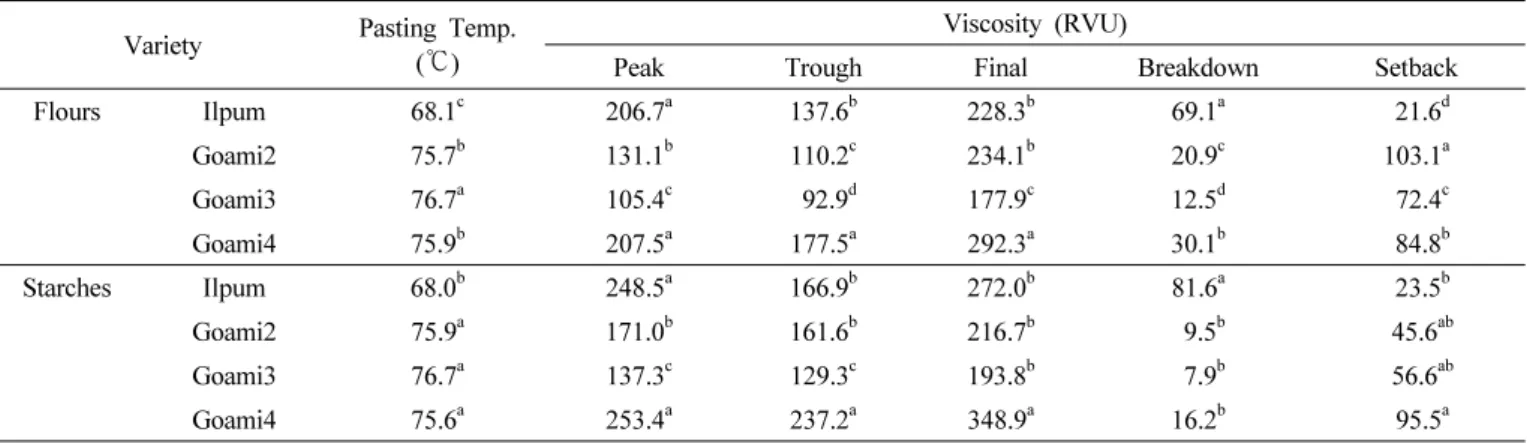
Table 4. Pasting properties of the four rice flours and starches between Ilpum and high amylose mutants by rapid visco-analyzer.
Variety Pasting Temp.
( ℃)
Viscosity (RVU)
Peak Trough Final Breakdown Setback
Flours Ilpum 68.1
c206.7
a137.6
b228.3
b69.1
a21.6
dGoami2 75.7
b131.1
b110.2
c234.1
b20.9
c103.1
aGoami3 76.7
a105.4
c92.9
d177.9
c12.5
d72.4
cGoami4 75.9
b207.5
a177.5
a292.3
a30.1
b84.8
bStarches Ilpum 68.0
b248.5
a166.9
b272.0
b81.6
a23.5
bGoami2 75.9
a171.0
b161.6
b216.7
b9.5
b45.6
abGoami3 76.7
a137.3
c129.3
c193.8
b7.9
b56.6
abGoami4 75.6
a253.4
a237.2
a348.9
a16.2
b95.5
aMean with same letter are not significantly different (p<0.05)
et al. 1983). HPAEC-PAD (high performance anion exchange chromatography-pulsed amperometric detection)을 이용한 품종간 아밀로펙틴 측쇄 사슬 길이 분포 결과(Table 3, Fig.2), 저항전분 함량이 많았던 돌연변이 고아밀로스 품종인 고 아미2호, 고아미3호, 고아미4호는 짧은 사슬(A)인 DP 6-12 비율이 각각 25.7%, 24.5%, 26.2%로 일품벼(40.3%)에 비해 유의적으로 낮은 분포 비율을 나타냈다. 반면, 고아밀로스 품종
은 중간사슬인 DP 13-24, DP 25-36 분포에서는 54.9~55.9%, 11.9~14.0%로 높은 비율을 나타냈다. 아밀로오스 함량이 높 고 저항전분이 많았던 고아미2호, 고아미3호, 고아미4호는 일 품벼에 비해 사슬길이가 긴 B 사슬이 많았는데, 이같은 결과 는 아밀로오스 함량이 높은 벼 품종들은 아밀로오스 함량이 낮은 품종보다 사슬길이가 긴 B 사슬이 많이 분포한다고 보 고한 결과(Takeda et al. 1989)와 유사한 결과라고 할 수 있 겠다. 더불어 돌연변이 고아밀로스 품종 간에도 저항전분 함 량이 가장 높았던 고아미3호는 DP 6-12 사슬 분포 비율이 24.5%로 고아미2호(25.7%)와 고아미4호(26.2%)에 비해 낮 은 분포 비율을 보였는데, 향후 아밀로펙틴 미세구조와 저항 전분 함량과의 연관성 구명이 필요한 것으로 고찰된다.
호화점도 특성
신속점도계(Rapid Visco Analyzer)를 이용하여 쌀가루와 전분의 가열에 따른 호화특성을 비교하였다(Table 4). 모든 품종에서 쌀가루의 호화점도 특성이 전분에 비해 낮은 결과 를 보였는데, 이는 쌀가루 내부에 존재하는 전분 외의 다른 성분인 단백질, 지방 등이 쌀가루의 팽윤과 호화 특성을 억제 하기 때문인 것으로 보인다(Fitzgerald et al. 2003). 저항전분
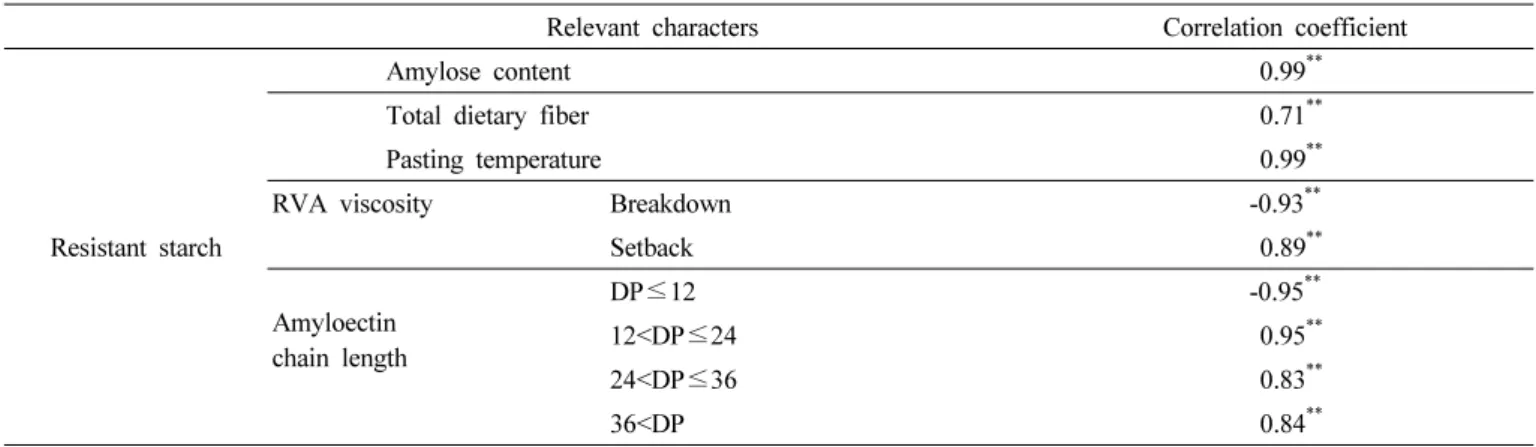
Table 5. Correlation coefficients between resistant starch contents of rice varieties and physicochemical properties of Ilpum and high amylose mutants.
Relevant characters Correlation coefficient
Resistant starch
Amylose content 0.99
**Total dietary fiber 0.71
**Pasting temperature 0.99
**RVA viscosity Breakdown -0.93
**Setback 0.89
**Amyloectin chain length
DP ≤12 -0.95
**12<DP ≤24 0.95
**24<DP ≤36 0.83
**36<DP 0.84
***,**
: Significant at 5% and 1% level, respectively
함량이 많았던 고아미2호, 고아미3호 및 고아미4호의 호화개 시온도가 75.9~76.7℃로 유의하게 높았는데, 이는 저항전분 함량이 높은 품종은 전분을 호화시키는데 더 높은 온도가 요 구됨을 알 수 있었다. 아밀로펙틴 클러스터 내에 보다 긴 체 인이나 큰 결정구조간의 상호작용에 의하여 가열 시 호화온 도가 높게 반영된다고 하였는데(Matveev et al. 2001), 일품 벼 유래 돌연변이 고아밀로스 품종은 Table 3에서 제시된 바 와 같이 일품에 비해 긴 사슬 분포 비율이 높았었던 결과와도 일치하고 있다. 품종별 호화점도 특성 중 최고점도(peak)의 경우 일품에 비해 고아미2호와 고아미3호가 낮았으나, 고아 미4호는 일품벼와 비슷하였다. 최고점도는 아밀로오스 용출 속도에 영향을 받는 것으로, 아밀로스 함량과는 부의 상관성 이 있는 것으로 알려져 있다(Fitzgerald et al. 2003). 고아밀 로스 품종 간에도 고아미4호는 고아미2호나 고아미3호에 비 해 최고, 최저 및 최종점도가 높게 나타냈다. 아밀로스 함량과 아밀로펙틴 사슬 길이 차이 외에도 저항전분의 함량이 가장 높았던 고아미3호는 최고, 최저 및 최종점도가 가장 낮았다.
향후 이들 저항전분의 특성을 가진 고아밀로스 품종의 전분 호화 및 점도 특성에 대하여 심도 있는 연구가 필요하리라 생 각된다. 최고점도와 최저점도의 차이인 강하점도는 고아밀로 스 품종이 일품에 비해 낮았고, 노화도 경향을 나타내는 치반 점도(setback)는 저항전분이 많은 고아밀로스 품종이 일품벼 에 비해 유의적으로 높은 특성을 보였는데, 이는 전분의 노화 가 저항전분의 함량과도 연관성이 있을 것으로 추정되는 결 과로 생각된다.
저항전분함량과 쌀의 이화학적 특성과의 상관
저항전분과 쌀의 이화학성분 특성과의 상관관계를 비교해 본 결과(Table 5), 쌀의 저항전분 함량은 쌀의 아밀로스 함량 과 식이섬유 함량이 많을수록, 호화개시온도가 높을수록, 아 밀로펙틴의 장쇄사슬이 많을수록 유의하게 높아졌다. 반면, 호화점도 특성에서 강하점도와 아밀로펙틴의 측쇄사슬에서 짧은 사슬인 DP6-12 분포와는 부의 상관관계가 있음을 알 수 있었다.
적 요
일품벼 유래 돌연변이 고아밀로스 품종인 고아미2호, 고아 미3호, 고아미4호의 저항전분 함량과 전분 특성을 분석한 결 과, 저항전분 함량은 11.87~13.69%로 일품(0.36%)에 비해 상당히 높은 유의적인 함량 차이를 나타냈다. 총식이섬유 함 량 역시 고아밀로스 품종이 일품벼 대비 2~4배 정도로 높았 다. X-선 회절도에 의한 아밀로펙틴 결정 구조 차이에서 일품 의 회절각도(2θ)는 15.0, 17~18, 22~23에서 강한 피크를 보여 전형적인 A형 양상을 보인 반면, 고아미2호, 고아미3호, 고아미4호는 B형의 형태를 나타냈다. 고아밀로스 품종은 아 밀로펙틴 짧은 사슬(A, DP 6-12) 비율이 24.5~26.2%로 일 품(40.3%)에 비해 유의적으로 낮은 분포 비율을 나타냈다.
저항전분 함량이 많은 고아미2호, 고아미3호, 고아미4호는 신 속점도계에 의한 호화 점도 특성에서 호화개시온도가 높고 강하점도는 유의적으로 낮은 특성을 보였다. 저항전분과 쌀의 이화학성분 특성과의 상관성 분석 결과, 쌀의 아밀로스 함량 과 식이섬유 함량이 많을수록, 호화개시온도가 높을수록, 아
밀로펙틴의 장쇄사슬이 많을수록 저항전분의 함량이 높아지 는 정의 상관성을 나타냈다.
사 사
본 연구는 농촌진흥청 공동연구사업(과제번호: PJ906950) 의 지원에 의해 이루어진 것임.
References