Factors Influencing Life Satisfaction
in Korean Baby-boomer Men with Drinking Problems
Kim, Minju
Department of Nursing, Dong-A University
Purpose: The purpose of this study was to examine the levels of life satisfaction and identify factors influencing life satis- faction in Korean baby-boomer men with drinking problems. Methods: The study used cross-sectional design with secondary analysis of the 7th data of Korean Welfare Penal Study collected in 2012 from 6,000 Korean households. Among 1,572 baby-boomers born between 1955 and 1963, 349 men with a drinking problem were selected as a sample by the Alcohol Use Identification Test (AUDIT) scores. Levels of depression, self-esteem, and life satisfaction were measured. Descriptive statistics, t-tests, ANOVA, Pearson's correlation coefficients, and stepwise multiple regression were conducted with SPSS/WIN 21.0. Results: The findings indicated that the mean AUDIT score was 13.7. Means were 2.8 for depression, 20.2 for self-esteem, and 23.2 for life satisfaction. The results of multiple regression analysis showed that self-esteem, de- pression, educational level, and levels of problem drinking significantly predicted life satisfaction, explaining 41.1% of the variance. Conclusion: Problem drinking, depression, and self-esteem were important to improve life satisfaction among Korean baby-boomer men. Further study is necessary to examine the mediating effects of depression and self-esteem in the relationship between problem drinking and life satisfaction.
Key Words: Baby boom, Life satisfaction, Depression, Self-esteem, Drinking
Corresponding author: Kim, Minju
Department of Nursing, Dong-A University, 32 Daesingongwon-ro, Seo-gu, Busan 602-714, Korea.
Tel: +82-51-240-2674, Fax: +82-51-240-2920, E-mail: [email protected] - This work was supported by Dong-A university research fund.
투고일: 2013년 11월 12일 / 수정일: 2013년 11월 25일 / 게재확정일: 2013년 11월 25일
INTRODUCTION 1. Need for Study
With dramatic shifts in life expectancy over the past century, the period of life after middle age is longer.
Thus, it is important for people to not only live longer, but also to live well. According to Statistics Korea (2010a), the elderly population is expected to increase from 11.4% in 2010 to 20% in 2020 and 32.4% in 2030. The ag- ing of Korean baby boomers who were born in between 1955 and 1963 contributes to the increase of the elderly population that accounted for 14.6% of the Korean pop- ulation in 2010 (Statistics Korea, 2010a). Korean baby boomers are different from the current elderly genera- tion. They are more educated and independent (Jung, 2012). They have strong responsibilities for their parents as well as for grown children, but their expectation for supporting from their children when they are old is rela-
tively low (Jung, 2012). Korean baby boomers play sig- nificant roles in family as well as the entire society. They have higher satisfaction with their current life compared to the older people. In addition, this unique cohort group is interested in their quality of life, especially in their older life (Chung & Lee, 2012).
People with drinking problems have relatively lower life satisfaction compared to those with no drinking problem (Strine, Chapman, Balluz, Moriarty, & Mokdad, 2008). In the United States, rates of heavy alcohol use have been shown to be higher among baby boomers than in the earlier cohorts (DHHS, 2000; Koenig, Geor- ge, & Schneider, 1994). Alcohol has been generally ac- cepted in Korean society to keep a relationship with friends or business partners (Ryu, Crespi, & Maxwell, 2013; Weatherspoon, Park, & Johnson, 2001). The re- sults of the Korea National Health & Nutrition Examina- tion Survey in 2011 showed that 77.6% of men and 44.2
% of women drank alcohol monthly. High-risk drinking
rate was 26.0% in men and 6.3% in women (Mininstry of Health and Welfare, 2012). In Korea, alcohol use is esti- mated to cause 8.9% of all death, compared with 3.8%
of all deaths in the world (Statistics Korea, 2010b). Men in their 50~60s, including baby boomers, showed the highest weekly heavy drinking rate and highest rates of drunk driving experience (Ministry of Health and Wel- fare, 2012), which is consistent with the US data (DHHS, 2000). It suggests that the prevalence of problem drink- ing among older adults may increase as the baby-boomer cohort enters the senior years. Excessive alcohol use may result in adverse health consequences that need more expensive prevention and treatment services (Colliver, Compton, Gfroerer, & Condon, 2006). According to Kim (2011), baby boomers have more medical expenses per person for alcoholic mental and behavioral disorder compared to older people.
Depression is associated with reduced life satisfaction and increased risk of suicide (Kim, 2002; Lee, Kim, &
Oh, 2003; Park & Song, 2012). In a previous study, de- pression was negatively associated with life satisfaction among men with alcoholism (Park, Jin, & Hoe, 2011).
On the other hand, self-esteem had a positive relation- ship with life satisfaction (Kim & Kim, 2008; Kwon, 2009). Depression and self-esteem are important for people with drinking problems. Previous studies found positive relationships between drinking and depression (Kwon & Sung, 2010; Lee & Lee, 2007). In addition, problem drinkers are more likely to have suicidal idea- tion compared to other individuals (Kwon, Kim, & Um, 2011; Yoon, Kim, & Chae, 2010). Kwon (2009) reported that older adults with drinking problems showed high level of depression and low levels of self- esteem and life satisfaction.
Even though life satisfaction in people with drinking problem is significantly low (Donovan, Mattson, Cisler, Longabaugh, & Zweben, 2005), only few studies inves- tigated life satisfaction in people with drinking problem.
In addition, many studies on alcohol use have focused on older adults (Baik, 2011; Kwon, 2009; Kwon et al., 2011; Yoon et al., 2010), college students (Noh & Jeong, 2003), middle aged women (Hoe & Son, 2011), and ge- neral adults (Kwon & Kim, 2004; Kwon & Sung, 2010;
Lee & Lee, 2007). No study examined life satisfaction in Korean baby boomers with drinking problem. As the baby boomers are getting older, their life satisfaction could be reduced because of adverse health consequen- ces of alcohol use (Colliver et al., 2006). Thus, it is nec- essary to examine the characteristics of Korean baby
boomers, especially men, with drinking problems be- cause of their high rates of heavy drinking, and to identi- fy factors related to their life satisfaction. Especially, ba- by-boomer men should be targeted because they are more likely to engage in binge drinking (Ministry of Health and Welfare, 2012) and have higher medical ex- penses per person for alcohol related mental and behav- ioral disorders compared to women (Kim, 2011). Under- standing the factors that influence life satisfaction among baby- boomer men with drinking problem is important to reduce the risk of adverse health consequences and the numbers of people who may need prevention and treatment services.
2. Purpose of Study
The purpose of this study was to examine the level of life satisfaction and to identify factors influencing life satisfaction in Korean baby-boomer men with drinking problems. Specific aims are to: examine socio-demogra- phic characteristics and levels of problem drinking, de- pression, self-esteem, and life satisfaction,; examine the levels of life satisfaction by socio-demographic charac- teristics,; explore the relationship among problem drink- ing, depression, self-esteem, and life satisfaction,; and identify factors influencing life satisfaction in Koran ba- by-boomer men with drinking problems.
METHODS 1. Study Design
This study used a cross-sectional design using a sec- ondary analysis of data, that are part of the 7th year data of the Korean Welfare Penal Study collected in 2012 from 6,000 households.
2. Participants
The original Korean Welfare Penal Study was con- ducted between February and June in 2012. Interview- ers asked questions regarding socio-demographic char- acteristics, welfare, and health to participants and re- corded their answers. A total of 14,604 participated in the Korean Welfare Penal Study.
The target population of this study was baby-boomer
men with drinking problems. Inclusion criteria were
men who were born in between 1955 and 1963 in Korea
and obtaining a score of 8 or more on the Alcohol Use
Disorder Identification Test (AUDIT) based on the scor- ing system of the World Health Organization (WHO) (Babor, Higgins-Biddle, Saunders, & Monteiro, 2001).
Overall, 1,572 baby boomers (755 men and 817 women) participated in the Korean Welfare Penal Study. Through AUDIT, 349 (46.3%) men and 43 (5.3%) women were identified to have drinking problem. Hence, this study examined the levels of life satisfaction in 349 Korean ba- by-boomer men with drinking problems.
3. Measurements
1) The Alcohol Use Disorder Identification Test
AUDIT is a 10-item scale developed by WHO to deter- mine harmful alcohol consumption (Babor et al., 2001).
It includes three domains, alcohol consumption, alcohol dependence, and alcohol-related problems measured on a 4-point of Likert scale, with possible scores ranging from 0~40. Based on WHO's scoring system of the AUDIT, total scores of 8 or more for men (7 for women and older adults) indicate a hazardous and harmful alco- hol use, as well as possible alcohol dependence (Babor et al., 2001). Higher scores indicate greater severity of al- cohol problems and dependence. The Cronbach's alpha was .85 in this study.
2) Life Satisfaction
Life satisfaction scale comprises 7 domains, including health, family income, living environment, family rela- tionship, work, social relationship, and leisure time measured on a 5-point of Likert scale (1=not at all to 5=very satisfied). Higher scores indicate high level of life satisfaction. The Cronbach's alpha was .789 in a pre- vious study (Kim & Kim, 2008) and .75 in this study.
3) Depression
Depression was measured with the 11-item version of the Center for Epidemiologic Studies Depression Scale (CESD-11) originally comprising 20 items developed by Radloff (1977). The CESD-11 consists of four subscales, including depressed (3 items), positive (2 items), somatic (4 items), and interpersonal (2 items) affects. The items are assessed using a three-point response format (0=
hardly ever or never; 1=some of the time; 2=much or most of the time), with a possible score ranging of from 0 to 33. Two positively-worded items in the positive affect scale were recoded. Higher scores indicate high level of depression. The Cronbach's alphas were .84 to .90 in Radloff's (1977) study that used the original
20-item CESD. The Cronbach's alpha was .85 in this study.
4) Self-esteem
Self-esteem was measured with Rosenberg Self-Esteem Scale developed by Rosenberg (1979). It is a 10-item scale with 5 positively worded items and 5 negatively worded items. The items are measured on a 4-point Likert scale (0=strongly disagree to 3=strongly agree).
Negatively worded items were reversed. High scores in- dicate higher self-esteem. The Cronbach's alphas of this scale were .77 to .88 in the study by Rosenberg (1979) and .73 in this study.
4. Ethical Consideration
Local ethics committee approved this study accord- ing to national regulations (IRB No. 2-1040709-AB-N-01- 201309-HR-01-02). Informed written consent was waived because this study was a secondary research using the data of the Korean Welfare Penal Survey.
5. Data Analyses
Data were analyzed with SPSS 21.0. Descriptive sta- tistics, t-tests, and ANOVA with Scheffé test were used to explain the characteristics of participants and identify differences in life satisfaction by variables. Pearson's cor- relation coefficients were estimated to identify the rela- tionship of life satisfaction with continuous variables, including AUDIT, depression, and self-esteem. To iden- tify factors influencing life satisfaction, stepwise multi- ple regression analysis was conducted with factors influ- encing life satisfaction via bivariate tests, except marital status and occupation because one group was too small for further analysis.
RESULTS
1. Characteristics of Korean Baby-boomer Men with Drinking Problem
1) Demographic Characteristics of Baby-boomer Men
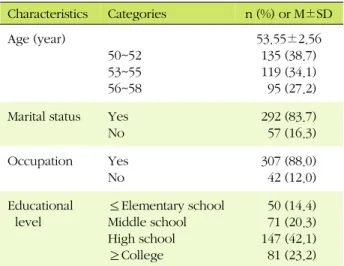
Table 1 shows demographic characteristics of baby-
boomer men with drinking problems. Baby-boomer
men were 53 years old on average, with age ranging
from 50 to 58. Most were married (83.7%) and had a job
(88.0%). In addition, approximately 65.3% had more
than high school education.
2) Levels of AUDIT, depression, self-esteem, and life satis- faction
Mean AUDIT scores was 13.67, with a range of 8 to 40. The mean score of levels of depression was 2.67 (range 0~21), while the mean score of levels of self-es- teem was 20.15 (range 7~30). In addition, life satisfac- tion in baby-boomer men with drinking problems was 23.19 with a range of 9 to 33 (Table 2).
2. Life Satisfaction by Demographic Characteristics
Life satisfaction differed by marital status, working sta- tus, and educational level (Table 3). Baby-boomer men having a partner (t=6.42, p<.001) and a job (t=7.56, p<
.001) showed higher level of life satisfaction. In addition, educational level was associated with life satisfaction (F=9.50, p <.001). Participants with more than college education reported higher level of life satisfaction com- pared to those with less than middle school education.
However, life satisfaction was not significantly different by age.
3. Correlations among AUDIT, Depression, Self-esteem, and Life Satisfaction
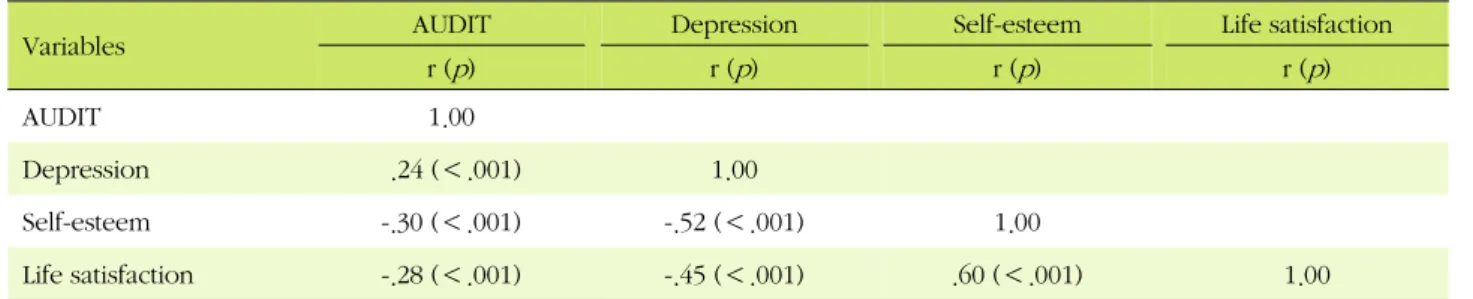
Table 4 shows the results of correlations among AUDIT, depression, self-esteem, and life satisfaction. Life satis- faction was positively associated with self-esteem (r=
.60) and negatively associated with AUDIT (r=-.28) and depression (r=-.45).
4. Factors Influencing Life Satisfaction
Stepwise multiple regression analysis was conducted to identify factors influencing life satisfaction, including educational level, AUDIT, depression, and self-esteem (Table 5). Tests for multicollinearity indicated that a very low level of multicollinearity was present (Tolerance=
0.66 to 0.93; VIF=1.08 to 1.51). The results of the re- gression indicated that these four predictors explained 41.1% of the variance (F=59.95, p <.001). It was found that self- esteem (
β=.45, p <.001), depression (
β=-.18, p <.001), educational level (
β=.12, p =.004), and AUDIT (
β=-.10, p =.030) significantly predicted life satisfaction in baby-boomer men with drinking problem.
DISCUSSION
This study was conducted to identify factors influenc- ing life satisfaction in Korean baby-boomer men with drinking problems. Among 755 Korean baby-boomer men participating in the 7th Korean Welfare Penal Study, 349 (46.2%) men reported problem drinking in the previous year. The gender difference in problem drinking was consisted with previous studies, which showed higher rates of problem drinking in men than women (Kim, 2006; Park et al., 2011). Additionally, 13.1% of the elderly in a previous study that used 11 points as the cutoff point of AUDIT scores were classi- fied as problem drinkers (Yoon et al., 2010). In our study, 28.5% of baby boom men would be classified as problem drinkers if 11 points were used as the cutoff point to select the sample. Although we used a different measure to identify problem drinkers, Ryu, Crespi, and Maxwell (2013) reported that 21.2% of male adults en- gaged high-risk drinking. As a result, the prevalence of problem drinking in baby-boomer men is much higher compared to other populations, such as older adults and general male adults. Korean baby-boomers still play piv- otal roles in various settings. They are actively involved in social relationship, which could increase the likeli-
Table 1. Demographic Characteristics of the Study Subjects(N=349) Characteristics Categories n (%) or M±SD Age (year)
50~52 53~55 56~58
53.55±2.56 135 (38.7) 119 (34.1) 95 (27.2) Marital status Yes
No
292 (83.7) 57 (16.3) Occupation Yes
No
307 (88.0) 42 (12.0) Educational
level
≤Elementary school Middle school High school
≥College
50 (14.4) 71 (20.3) 147 (42.1) 81 (23.2)
Table 2. Levels of AUDIT, Depression, Self-esteem, and Life
Satisfaction (N=349)
Variables M±SD Min Max
AUDIT 13.67±5.41 8 40
Depression 2.76±4.11 0 21
Self-esteem 20.15±4.13 7 30
Life satisfaction 23.19±4.02 9 33
AUDIT=Alcohol use disorders identification test.
Table 3. Differences in Life Satisfaction by Demographic Characteristics (N=349)
Characteristics Categories Life satisfaction
M±SD t or F p
Age (year) 50~52
53~55 56~58
23.33±3.96 23.06±4.13 23.17±3.98
0.14 .896
Marital status Yes
No
23.72±3.63 20.35±4.67
6.42 <.001
Occupation Yes
No
23.75±3.61 19.12±4.49
7.56 <.001
Educational level ≥Elementary schoola Middle schoola High school
≤Collegeb
21.72±4.10 22.10±3.55 23.29±4.03 24.89±3.72
9.50 a<b
<.001
Table 4. Correlations among AUDIT, Depression, Self-esteem, and Life Satisfaction (N=349)
Variables AUDIT Depression Self-esteem Life satisfaction
r (p) r (p) r (p) r (p)
AUDIT 1.00
Depression .24 (<.001) 1.00
Self-esteem -.30 (<.001) -.52 (<.001) 1.00
Life satisfaction -.28 (<.001) -.45 (<.001) .60 (<.001) 1.00
AUDIT=Alcohol use disorders identification test.
Table 5. Factors Influencing Life Satisfaction (N=349)
Variables B SE β t p
(Constant)
Self-esteem .44 .05 .45 8.86 <.001
Depression -.17 .05 -.18 -3.62 <.001
Educational level .49 .17 .12 2.90 .004
AUDIT -.07 .03 -.10 -2.18 .030
R2=.411, Adjust R2=.404, F=59.95, p<.001 AUDIT=Alcohol use disorders identification test.
hood of high-risk drinking. Thus, it is necessary to de- velop an intervention program to change their drinking behaviors.
Life satisfaction was different by marital status, occu- pation, and educational levels in this study. People with a job showed higher life satisfaction in this study. Since they may have higher economic status, so their sat- isfactions with family income, living environment, and leisure time could be higher compared to those without
job. Chung and Lee (2012) reported that life satisfaction
in baby boomers differed by educational levels and mar-
ital status. Consisted with our study, baby boomers with
high educational level and with a partner showed high
level of life satisfaction. As a result, considering their po-
sitions in the family and society, the relationships with
others may be important for Korean baby-boomer men
with drinking problems. The roles of the closed ones,
such as their partner or coworkers, may be important to
increase life satisfaction in baby-boomer men, and fur- thermore, the program that would include the closed ones can help reduce problem drinking in baby-boomer men. Consisted with previous studies, baby-boomer men with more drinking problem reported lower life satisfaction (Donovan et al., 2005; Strine et al., 2008).
Drinking could affect their physical and psychological health status, as well as their social relationships. How- ever, Kwon (2009) reported that problem drinking was not associated with life satisfaction directly but via de- pression and self-esteem as mediating factors.
Life satisfaction was associated with self-esteem and depression in this study. More depressed persons re- ported lower life satisfaction, while people with higher self-esteem reported higher life satisfaction. These re- sults were consisted with previous studies (Lee, Kim, &
Oh, 2003; Park, Jin, & Heo, 2011; Park & Song, 2012). In a previous study with older people, life satisfaction had a negative relationship with depression, and a positive relationship with self-esteem, particularly self-esteem mediated the relationship between depression and life satisfaction (Kim & Kim, 2008). In Kwon's (2009) study, depression and self-esteem mediated the relationship between problem drinking and life satisfaction in older adults. Thus, it appears that enhancing self-esteem and reducing depressive symptoms could improve life sat- isfaction in people with drinking problem. Thus, it is ne- cessary to examine the mediating effects of self-esteem and depression in the relationship between problem drinking and life satisfaction.
This study has some limitations. This study used a secondary analysis with a part of the data of the 7th Korean Welfare Penal Study that was selected based on our research questions. Some socio-demographic varia- bles that might influence life satisfaction were not in- cluded in this study. Thus, it is necessary to examine the relationship between life satisfaction and other socio- demographic characteristics in baby-boomer men. In ad- dition, few people with depressive symptoms were in- cluded in this study. Thus, future study needs to exam- ine the relationship between depression and life sat- isfaction in baby-boomer men with various levels of de- pression.
CONCLUSION
The study aimed to identify factors influencing life satisfaction in Korean baby-boomer men with drinking problems to contribute to the development of programs
designed to reduce problem drinking. The results of this study showed that life satisfaction had a positive rela- tionships with self-esteem and educational level, while it had a negative relationship with depression and levels of problem drinking. Future studies should examine the direct and indirect effects of self-esteem on the relation- ship between depression and life satisfaction in Korean baby-boomer men with drinking problems.
REFERENCES
Babor, T. F., Higgins-Biddle, J. C., Saunders, J. B., & Monteiro, M.
G. (2001). The Alcohol Use Disorders Identification Test:
Guidelines for use in primary care. Retrieved from http://
growyourwellness.com/sites/default/files/pdf/AUDIT%
20test%20guidelines.pdf
Chung, S. D., & Lee, H. H. (2012). Life satisfaction for baby- boomers: Compare 1998 with 2008. Journal of Welfare for the Aged, 55, 105-131.
Colliver, J. D., Compton, W. M., Gfroerer, J. C., & Condon, T.
(2006). Projecting drug use among aging baby boomers in 2020. Annals of Epidemiology, 16 (4), 257-265. http://dx.
doi.org/10.1016/j.annepidem.2005.08.003
DHHS. (2000). Special report to the U.S. congress on alcohol and health: Highlights from current research (NIH Publication No. 00-1583). Washington: National Institutes of Health, Na- tional Institute on Alcohol Abuse and Alcoholism. Retrieved from http://pubs.niaaa.nih.gov/publications/10report/intro.
pdf.
Donovan, D., Mattson, M. E., Cisler, R. A., Longabaugh, R., &
Zweben, A. (2005). Quality of life as an outcome measure in alcoholism treatment research. Journal of Studies on Alco- hol. Supplement, 15, 119-139; discussion 192-193.
Hoe, M., & Son, J. (2011). The effect of poverty on longitudinal relationship between change of problem drinking and change of self-esteem in middle aged women. Mental Health & Social Work, 37, 89-116.
Jung, K. H. (2012). An outlook of baby boomers' old age life.
Health Welfare Policy Forum, 187, 40-49.
Kim, G. S. (2006). A study on the relationship between family functions and coping behaviors with the alcoholic patients' clinical history. Journal of Social Welfare Development, 12 (1), 1-24.
Kim, H. O. (2011). Comparison of medical expenses by disease between baby boomers and older people. Master's degree, Yonsei University, Seoul.
Kim, H. S. (2002). A study on epistemology of Korean elder's sui- cidal thought. Journal of the Korea Gerontological Society, 22(1), 159-172.
Kim, K. H., & Kim, J. H. (2008). The effects of self-esteem on the relationship between the elderly depression and life satis- faction. Family and Culture, 20(4), 95-116.
Koenig, H. G., George, L. K., & Schneider, R. (1994). Mental health care for older adults in the year 2020: A dangerous and avoided topic. The Gerontologist, 34(5), 674-679. http://
dx.doi.org/10.1093/geront/34.5.674
Kwon, H. J., & Kim, S. O. (2004). A study of depression, drinking motives, drinking problem in men. Chung-Ang Journal of Nursing, 8(1), 119-128.
Kwon, H. S. (2009). Effects of problem drinking of elderly on life satisfaction mediated by depression and self-esteem: A la- tent means analysis application between poor and non- poor elderly. Journal of Korean Gerontological Society, 29(4), 1521-1538.
Kwon, H. S., & Sung, H. J. (2010). Effects of problem drinking of adult on depression: Gender difference. Social Science Dis- cussion & Policy, 3(1), 147-167.
Kwon, J. D., Kim, Y. J., & Um, T. Y. (2011). Suicidal ideation among older adults who live alone with care services: A moderating effect of alcohol drinking in the relationship between previous suicidal attempts and suicidal ideation.
Journal of Welfare for the Aged, 51 , 297-320.
Lee, B. J., & Lee, J. S. (2007). Mediating effects of alcohol-in- duced stress in the relation between alcohol use and de- pressive symptoms. Social Science Research Review, 23(2), 193-212.
Lee, J. I., Kim, K. H., & Oh, S. H. (2003). Depression and life satis- faction of middle-aged man. Korean Journal of Adult Nurs- ing, 15(3), 422-431.
Ministry of Health and Welfare. (2012). Korean health statistics 2011: Korean National Health and Nutrition Examination Survey (KNHANES V-2). Seoul: Korea Centers for Disease Control and Prevention.
Noh, A. Y., & Jeong, M. (2003). The factors that influence college students' drinking problems. Korean Journal of Counseling, 4(1), 5-18.
Park, B. S., Jin, H. M., & Hoe, M. (2011). The relationship of de- pression and life satisfaction on male alcoholics: Exploring on the roles of family function and family support. Mental Health & Social Work, 38, 172-204.
Park, Y. S., & Song, J. Y. (2012). The moderating effect of social supports on the relationship between depression and satis- faction of life of the older man with a chronic disease. Kore- an Journal of Social Welfare Education, 17, 79-96.
Radloff, L. S. (1977). The CES-D scale: A self-report depression scale for research in the general population. Applied Psy- chological Measurement, 1, 385-401.
Rosenberg, R. L. (1979). Conceiving the self. New York: Basic Book.
Ryu, S. Y., Crespi, C. M., & Maxwell, A. E. (2013). Drinking Pat- terns Among Korean Adults: Results of the 2009 Korean Community Health Survey. Journal of Preventive Medicine and Public Health, 46 (4), 183-191.
Statistics Korea. (2010a). 2010 Census. Retrieved November 2, 2013, from http://kosis.kr/statisticsList/statisticsList_01List.
jsp?vwcd=MT_ZTITLE&parentId=A
Statistics Korea. (2010b). 2009 Results of Korean causes of death.
Retrieved September 11, 2013, from http://stat.kpha.or.kr/
stat/t3/stat.php?sid=3_1
Strine, T., Chapman, D., Balluz, L., Moriarty, D., & Mokdad, A.
(2008). The associations between life satisfaction and health- related quality of life, chronic illness, and health behaviors among U.S. community-dwelling adults. Journal of Com- munity Health, 33(1), 40-50. http://dx.doi.org/10.1007/s10 900- 007-9066-4
Weatherspoon, A. J., Park, J. Y., & Johnson, R. C. (2001). A fam- ily study of homeland Korean alcohol use. Addictive Be- haviors, 26(1), 101-113. http://dx.doi.org/10.1016/S0306- 4603(00)00093-9
Yoon, M. S., Kim, S. H., & Chae, W. S. (2010). The effects of alco- hol use, mental health factors on seniors' ideation of sui- cide. Journal of Korean Alcohol Science, 11(1), 27-44.