Received: February 10, 2019 Revised: June 2, 2019 Accepted: June 24, 2019
Address for Correspondence: Somayeh Abdolahian, Department of Midwifery and Reproductive Health, School of Nursing and Midwifery, Shahid Beheshti University of Medical Sciences, Tehran 1996835119, Iran
Tel: 98-009821-88655376, E-mail: [email protected], ORCID: https://orcid.org/0000-0001-9394-7196
REVIEW ARTICLE
INTRODUCTION
Description of the condition
Menopause is an important period in the life of women; one reason being the numerous problems it may cause, affecting the quality of life of women [1,2].
One common problem is vaginal discomfort [3], and it is estimated that up to 40% of post-menopausal women experience this problem [4], leading to loss of collagen, elastin, and smooth muscles in the vagina [5]. Low estradiol levels, which menopausal women commonly experience, can cause a deficient maturation of vagi- nal mucosa [6]. This condition is clinically presented by dryness, irritation, itch, and dyspareunia [7] and it could affect daily activities, sexuality, relationships, and
quality of life [8]. To evaluate vaginal health, it is neces- sary to assess vaginal epithelial cell measurement, vagi- nal dryness, and vaginal acidity (pH).
Description of the intervention
Treatment approaches that are used for vaginal health improvement in menopausal women are hormonal therapy and complementary therapy [6,9].
Such treatments are commonly based on local hor- monal therapy, in the form of vaginal creams, tablets, or suppositories [10,11], although other routes of hor- mone administration have also proven to be successful.
Despite the fact that the benefits of estrogen replace- ment in preventing vaginal complications and reducing the incidence of related symptoms are well established
Effect of Vitamin D on the Vaginal Health of Menopausal Women: A Systematic Review
Hedyeh Riazi1, Masumeh Ghazanfarpour2, Mahboubeh Taebi3, Somayeh Abdolahian4
1Department of Midwifery and Reproductive Health, School of Nursing and Midwifery, Shahid Beheshti University of Medical Sciences, Tehran, Iran, 2Department of Nursing and Midwifery, Razi School of Nursing and Midwifery, Kerman University of Medical Sciences, Kerman, Iran, 3Department of Midwifery and Reproductive Health, Isfahan University of Medical Sciences, Isfahan, Iran, 4Student Research Committee, Department of Midwifery and Reproductive Health, School of Nursing and Midwifery, Shahid Beheshti University of Medical Sciences, Tehran, Iran
Menopause is associated with the onset of climacteric symptoms due to low estradiol levels, which may cause insufficient maturation of the vaginal mucosa. Vitamin D may regulate the growth and differentiation of cells that are adversely affected due to low estradiol levels, thereby restoring vaginal health. The objective of this systematic review, the first on this subject, was to investigate the effect of vitamin D on the vaginal health of menopausal women. PubMed, Embase, Scopus, Web of Science, and Google Scholar databases and reference lists of hand-searched articles were searched for published studies from February 2000 to November 2018. The selection criteria were as follows: randomized or quasi-randomized trials that compared the effects of vitamin D or related compounds, alone or with calcium, on vaginal health (growth and differentiation of epithelial cells, dryness, acidity [pH]) outcomes in menopausal women.
The methodological quality of these studies was examined using the Cochrane tool checklist by two independent investigators, following which the data were extracted. Of six examined studies, two showed that vitamin D administration improved the growth and differentiation of vaginal epithelial cells, improved vaginal pH, and decreased vaginal dryness in menopausal women. Although the level of evidence for the effects of vitamin D on vaginal health is low in our study, we concluded that vitamin D may improve the vaginal health of women, especially during menopause.
Key Words: Menopause, Systematic review, Vitamin D
[12], hormonal therapy has various limitations and contraindications [13].
Vitamins D and E have been used for the treatment of menopausal disorders and vaginal discomfort [14,15].
Vitamin D is involved in the regulation of growth and differentiation of many cells, especially tissues lining the stratified squamous epithelium [16], which are present in the vagina and are regulated by Vitamin D [17]. Vitamin D3 binds to an intracellular receptor that is a member of the steroid-thyroid hormone receptor family. Vitamin D3 and its receptors form a complex that binds to the Vitamin D3 response element of genes and either positively or negatively affects the transcrip- tion of that gene [18,19].
The importance of this review: Being free of sexual problems can improve the confidence and mental state of women [20]; therefore, it is important to resolve sexual problems associated with menopause. Accord- ingly, vitamin D may be useful in vaginal discomfort in menopause women [7,21-23]; however, some experi- mental results are controversy [24,25].
Objective
Review of the literature showed that there was no study that summarized the effects of vitamin D on vaginal health in menopausal women; therefore, the aim of this systematic review study was to evaluate and summarize the effects of vitamin D on vaginal health in menopausal women.
MATERIALS AND METHODS
In this narrative systematic review the following cri- teria were used to determine their eligibility into our study.
Inclusion criteria: we performed a screening of titles or abstracts followed by a full-text review. Studies were considered eligible if they met the following criteria:
they were clinical randomized, placebo-controlled, double-blind, single-blind, non-blinded trials, or co- hort trials published in the English language biomedi- cal journals until 2019; they were quasi-randomized trials, the study populations were menopausal women;
vitamin D supplementation alone or plus calcium was studied; the study was published in English language journals without reference to a scientific quality index;
and all clinically-used dosages and durations of vitamin D administration in menopausal women were consid- ered.
Exclusion criteria: vitamin D was used in combination with other drugs except calcium, data was insufficient, studies were conducted on animals or in in vitro mod- els, and the diagnostic criteria were not applied to the study subjects. Case reports and articles on non-vaginal health were excluded.
Participants are menopausal women. Types of inter- vention are use of vitamin D supplementation alone or plus calcium. Exposure is vaginal health such as vagi- nal epithelial cells, vaginal dryness and vaginal pH in menopausal women. Types of outcome measures are performance-based; outcome measure was the Vaginal Maturation Index and vaginal pH and vaginal dry- ness. Primary outcomes are change in vaginal epithelial cells in menopausal women. Secondary outcomes are change in vaginal pH and vaginal dryness.
Search methods for identification of studies
The electronic search engines included PubMed, Web of Science, Scopus, Google scholar, and Embase using the Preferred Reporting Items for Systematic Reviews and Meta-Analyses (PRISMA) guideline.
Search strategy: the search strategy included a combi- nation of key words, and medical subject headings: vi- tamin D, vaginal, and menopause. We checked all titles and abstracts. Full text copies were obtained when the studies were considered possibly relevant. Searching other resources: gray literature and the reference list of articles.
Data collection and analysis Selection of studies
Two review authors independently screened titles and abstracts for inclusion of all potential studies, and after they were identified they were then coded as ‘retrieve’
(eligible or potentially eligible/unclear) or ‘do not re- trieve’. Next, the full-text studies coded as ‘retrieve’ were obtained and the two review authors independently screened the full-texts and identified studies for inclu- sion, and identified and recorded reasons for exclusion of the ineligible studies.
Data extraction and management
The following data were extracted (if available): au- thor, publication year, and methodology (including criteria for menopause diagnosis, sample size, study de- sign, dosage of intervention, duration of intervention, and main outcomes). We resolved any disagreement
through discussion or, if required, we consulted a third person and used the consensus strategy. We identified and excluded duplicates and collated multiple reports of the same study. We recorded the selection process in sufficient detail to complete a PRISMA flow diagram.
Assessment of risk of bias in included studies
One reviewer assessed the quality of the included studies according to criteria for selection, methods of outcome assessment, and data analysis, using the Co- chrane scale. If there were disagreements between the two reviewers during the process of study selection, the issues were resolved through discussion among mul- tiple investigators.
Measures of treatment effect
For vaginal health outcomes we used the epithelial cells score (%) or number of participants with vaginal health improvement after intervention or after com- parison with the control group.
Dealing with missing data
To complete the information that was unavailable from the published reports, we contacted the research- ers of the relevant studies and they provided the miss- ing information.
Assessment of heterogeneity
Methodological diversity such as variability in the study design and risk of bias were observed during this review. Some variations in the materials and methods such as varied drug forms of vitamin D, different inclu- sion criteria, or measurement scale in some studies led to no meta-analysis of the review.
RESULTS
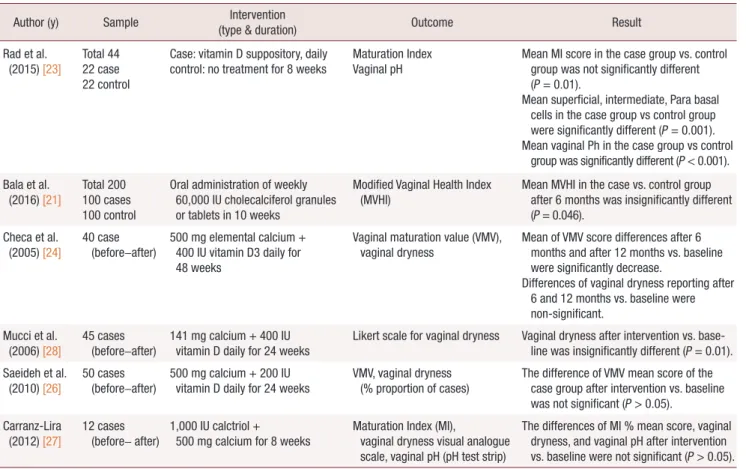
A total of 351 studies seemed to be potentially rel- evant in the first search. However, 340 studies were excluded (irrelevant subjects) after screening the titles and/or abstracts. Finally, full texts of the remaining 11 studies were evaluated in depth, 6 trials with a total of 391 participants met the inclusion criteria. Table 1 shows the diagram of the retrieved articles included in
Table 1. The characteristics of articles included in the systematic review
Author (y) Sample Intervention
(type & duration) Outcome Result
Rad et al.
(2015) [23]
Total 44 22 case 22 control
Case: vitamin D suppository, daily control: no treatment for 8 weeks
Maturation Index Vaginal pH
Mean MI score in the case group vs. control group was not significantly different (P = 0.01).
Mean superficial, intermediate, Para basal cells in the case group vs control group were significantly different (P = 0.001).
Mean vaginal Ph in the case group vs control group was significantly different (P < 0.001).
Bala et al.
(2016) [21] Total 200 100 cases 100 control
Oral administration of weekly 60,000 IU cholecalciferol granules or tablets in 10 weeks
Modified Vaginal Health Index
(MVHI) Mean MVHI in the case vs. control group
after 6 months was insignificantly different (P = 0.046).
Checa et al.
(2005) [24] 40 case
(before–after) 500 mg elemental calcium + 400 IU vitamin D3 daily for 48 weeks
Vaginal maturation value (VMV),
vaginal dryness Mean of VMV score differences after 6 months and after 12 months vs. baseline were significantly decrease.
Differences of vaginal dryness reporting after 6 and 12 months vs. baseline were non-significant.
Mucci et al.
(2006) [28]
45 cases
(before–after) 141 mg calcium + 400 IU vitamin D daily for 24 weeks
Likert scale for vaginal dryness Vaginal dryness after intervention vs. base- line was insignificantly different (P = 0.01).
Saeideh et al.
(2010) [26] 50 cases
(before–after) 500 mg calcium + 200 IU
vitamin D daily for 24 weeks VMV, vaginal dryness
(% proportion of cases) The difference of VMV mean score of the case group after intervention vs. baseline was not significant (P > 0.05).
Carranz-Lira
(2012) [27] 12 cases
(before– after) 1,000 IU calctriol +
500 mg calcium for 8 weeks Maturation Index (MI),
vaginal dryness visual analogue scale, vaginal pH (pH test strip)
The differences of MI % mean score, vaginal dryness, and vaginal pH after intervention vs. baseline were not significant (P > 0.05).
the systematic review.
Description of studies Results of the search
The search was updated from February 2000 to No- vember 2018. We screened a total of 351 records from the following databases: Web of Science (7), PubMed (17), EMBASE (7), Google Scholar (31), Scopus (289).
Overall, this review has a total of six trials, 23 dupli- cated, 5 animal studies, 50 breast cancer studies that were excluded, 11 studies selected for full text assess- ment in which 6 studies were excluded. See Figure. 1
for the study flow diagram. Six trials were included in this review: 2 studies were individually random- ized controlled trials (RCTs) [21,23] and 4 were quasi- randomized [24,26-28]. A total of 391 participants were part of the 6 trials. Overall, the included trials fall into two main groups: vitamin D alone and vitamin D plus calcium. See Table 2 for excluded studies [7,15,22,29,30]
and their reason.
Risk of bias in included studies Allocation (selection bias)
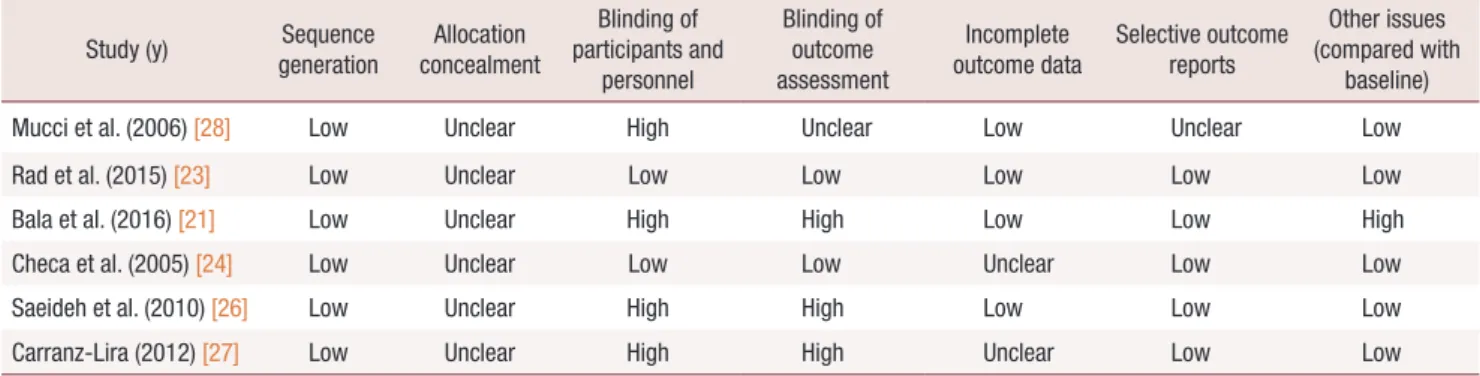
Table 3 shows the results for the random sequence generation and allocation concealment for the Co- chrane Risk of Bias tool. For random sequence genera- tion, 6 trials were deemed to be at low risk and for al- location concealment and 6 trials were at unclear risk.
Blinding (performance bias and detection bias) Four trials did not report any attempt to blind as- sessors to treatment assignment [21,26-28]. In 2 trial reports, the participants or providers, or both, were blinded to treatment allocation [23,24].
Incomplete outcome data (attrition bias)
Two trials did not provide information about the
Table 3. Risk of Bias score in included studies
Study (y) Sequence
generation Allocation concealment
Blinding of participants and
personnel
Blinding of outcome assessment
Incomplete
outcome data Selective outcome reports
Other issues (compared with
baseline)
Mucci et al. (2006) [28] Low Unclear High Unclear Low Unclear Low
Rad et al. (2015) [23] Low Unclear Low Low Low Low Low
Bala et al. (2016) [21] Low Unclear High High Low Low High
Checa et al. (2005) [24] Low Unclear Low Low Unclear Low Low
Saeideh et al. (2010) [26] Low Unclear High High Low Low Low
Carranz-Lira (2012) [27] Low Unclear High High Unclear Low Low
Table 2. Characteristics of excluded studies
Study (y) Reason for exclusion
Kaur et al. (2017) [22] RCT: same method and result, and author with Bala et al. [21]’s study
LeBlanc et al. (2014) [29] Nested case control study LeBlanc et al. (2015) [30] Nested case control study Lee et al. (2017) [15] Case control study Yildirim et al. (2004) [7] Cross–sectional study 351 Study records identified
through database searching (Feb 2009 to Nov 2018)
92 Studies selected based on abstract
11 Studies selected based on full text
6 Studies were included
259 Study were excluded due to irrelevant title
81 Study were excluded:
24 duplicated, 5 animal study and 50 studies about breast cancer
5 Studies were excluded
Fig. 1. Consort flow diagram.
number of participants allocated to groups via random- ization [24,27] and 4 trials reported attrition bias.
The potential sources of bias
In 6 studies, the inclusion and exclusion criteria and selective outcomes were clearly defined. The interven- tion and control groups were demonstrably comparable in 2 trials [21,23].
Effects of interventions
Vitamin D alone versus placebo or no treatment Two studies used vitamin D alone vs. a placebo or no treatment. In the study of Rad et al. [23], 1,000 IU doses of vitamin D vaginal suppository were used with for eight weeks, but in Bala et al. [21]’s study 60,000 IU doses of vitamin D were administered orally and weekly. In two studies that included 244 menopausal women, both studies showed vitamin D was effective in the vaginal health of these women.
Vitamin D plus calcium versus baselin
Four studies used vitamin D plus calcium and com- pared the results versus baseline [24,26-28]. In the study of Checa et al. [24], 40 menopausal women used 500 mg of elemental calcium plus 400 IU vitamin D3 for 24 weeks. In Mucci et al. [28]’s method, 141 mg cal- cium plus 400 IU of vitamin D were used daily, for 24 weeks in 45 women. In Carranza-Lira et al. [27]’s study, 12 women used 1000 IU of calcitriol plus 500 mg of cal- cium daily for eight weeks, and in the study of Saeideh et al. [26], 50 cases used 500 mg of calcium plus 200 IU of vitamin D daily, for 24 weeks. The 4 studies included 147 women. One study showed vitamin D plus calcium effectiveness in vaginal health [28] and 3 showed no positive result regarding vaginal health [24,26,27].
Epithelial cell
Rad et al. [23] showed that use of vitamin D can im- prove the superficial, intermediate, parabasal of vaginal cells. Also, the mean vaginal maturation score between the case and control group was significantly increased.
Bala et al. [21] reported that use of vitamin D signifi- cantly affected the vaginal health index such as vaginal epithelial integrity. Checa et al. [24] reported vaginal maturation mean score after 24 weeks (–38.7%; after 12 months, –51.8% significantly decreased). Saeideh et al. [26] showed vaginal maturation mean score was not significant between the before intervention (27.51
± 18.98) vs. after intervention (29.41 ± 18.75). In Car- ranza-Lira et al. [27]’s study, the mean % score change maturation index and parabasal and intermediate cells were not significant but the mean % score in superficial cells before intervention 2.5 ± 4.5% vs. after interven- tion 10.0 ± 8.5% was significantly changed. Three studies reported vitamin D can positively affect vaginal epithelial especially in superficial cells [21,23,27], al- though two other studies were inconsistent regarding this result [24,26].
Vaginal pH
Vaginal acidity (pH) was affected in two studies and pH mean score was significantly decreased in the vita- min D group. In the study of Carranza-Lira et al. [27], the mean score of the pH strip test (1.5 ± 1.2 vs. 1.7 ± 1.0) did not significantly change before and after the intervention. Two studies reported significant change in vaginal pH [21,23] and one study result was negative [27].
Vaginal dryness
Bala et al. [21] found that use of vitamin D orally sig- nificantly affected vaginal moisture and consistency.
Checa et al. [24] showed that after 24 weeks, 21.4% of cases and after 12 months, 15.8% of cases suffered from vaginal dryness, but this change was not significant (P = 0.5). In Mucci et al. [28]’s study, 13.3% of cases reported improvement after intervention vs. baseline and 39% of the vaginal dryness mean score decreased and this change was significant (P = 0.01). Saeideh et al. [26] reported the number of vaginal dryness before intervention was 36 cases and after intervention was 37 cases, and Carranza-Lira et al. [27] reported severity mean score using the visual analogue scale before inter- vention (58.5 ± 24.0) vs. after intervention (64.4 ± 27.2) was not significant. Two studies showed vitamin D can improve vaginal dryness [21,28] and three studies were inconsistent [24,26,27].
DISCUSSION
Summary of main results
Vitamin D alone versus placebo or no treatment Vitamin D alone, in the high doses tested or vaginal- use format, appears to be have an effect on vaginal epithelial cells especially superficial cells and vaginal pH decrease (two trials, 244 participants) [21,23]. Use
of vitamin D alone in the vaginal formats and 1,000 IU doses tested daily appears not to be able to reduce vaginal dryness (one study, 44 participants). Duration time of use of vitamin D was 8–10 weeks, which seems sufficient time for vaginal health improvement except for vaginal dryness.
Vitamin D plus calcium versus baseline
Although there was no firm evidence that vitamin D (including 25-hydroxy vitamin D) with calcium was more effective than vitamin D alone for vaginal health in menopausal women, only one study (calcium plus vitamin D) reported positive vaginal health results [28]
while three studies did not report any positive results [24,26,27]. The calcium dose in all of the studies was 500 mg daily except for one study [28] that used a low dose (141 mg daily). The dose of vitamin D in two studies [24,28] was the same (400 IU), but their results were different. The study with low dose calcium and 400 IU vitamin D was effective in reducing vaginal dry- ness [28]. Intervention durations were different, such as 8 weeks [27], 24 weeks [26,28] and the longest being 48 weeks [24]. Only 24 weeks duration of vitamin D plus calcium had positive results in vaginal dryness [28].
Adverse effects
Three trials reported adverse effects [24,26,28], which was mostly gastric discomfort. Overall, none of the trials reported the effect of vitamin D on mortality;
however, use of calcium and vitamin D for a long time is dangerous and is not recommended for menopausal women, but in another study [31], which was not in- cluded in our study, the use of vitamin D and calcium was associated with a reduction in mortality (risk ratios 0.94, 95% CI 0.89 to 0.99). It is highly recommended to measure the level of vitamin D before high doses are administered and it is better to prescribe the supple- ment based on blood vitamin D levels [32]. Calcium supplements could increase the risk of myocardial infarction [33], particularly in people with a higher dietary calcium intake. Supplements of calcium and vitamin D could also increase the risk of myocardial infarction and stroke [34] but might also decrease the risk of breast cancer [35].
Overall completeness and applicability of evidence This review included an evidence base from six trials that examined vitamin D (including 25-hydroxy vita- min D) with or without calcium in the improvement
of vaginal health in menopausal women with a mean age of 50 years or over. Vitamin D was administered in a variety of formats and doses (oral daily, oral weekly, and vaginal suppository). However, three of the trials in this review tested daily vitamin D3 in doses greater than 800 IU [21,23,27] and one of these trials recruit participants with very low (mean < 12 ng/mL) baseline 25-hydroxy vitamin D blood levels [21]. American Ge- riatric Society suggests that a minimum blood vitamin D level of 30 ng/mL (75 nmol/L) is necessary in older adults to minimize the risk of menopause complica- tions. It has been suggested that higher doses of vitamin D are required in women with vitamin D insufficiently [36], and vitamin D level testing before intervention is necessary for future studies in vaginal health in meno- pausal women.
Mean duration of 24 weeks for oral use with a low dose of calcium [28] and high dose vitamin D alone [21,23] is optimal for vaginal health in menopause women.
Quality of the evidence
This review included a small body of evidence from six trials with 391 participants. Our assessments of risk of bias and quality assessment are presented in Table 3.
Potential biases in the review process
We believe that selection bias is very low in this re- view. We have searched a wide range of databases for relevant journals. One report of studies that was pub- lished at a different time but using the same method and result was excluded [22]. We only included RCTs and the other low quality evidences such as observa- tional or case-control were excluded.
Agreements and disagreements with other studies or reviews
Although the results of two included studies [23,27]
and two excluded studies [15,37] showed improved su- perficial vaginal cells by using vitamin D, another study reported that vitamin D was not associated with meno- pausal related symptoms in menopausal women [29].
The Cochrane review reported that supplements of vitamin D and calcium may prevent hip or other types of fracture [38] and another study suggested that high intakes of dietary vitamin D and calcium may be mod- estly associated with a lower risk of early menopause [39].
However, the use of complementary therapy such
herbal medicine and supplements is beneficial for menopause symptoms such as hot flashes [40], but the results of a meta-analysis study conducted in 2017 showed that oral phytoestrogen cannot be effective in severe vaginal atrophy [41]. Other treatments for vagi- nal atrophy in postmenopausal women may be the use of laser therapy, in which a study published in 2017, found the effectiveness of this method in improving vaginal health in postmenopausal women and improv- ing their sexual quality, but the use of this method is not recommended due to need of advanced equipment that comes with a high cost [42].
Limitations
One of the limitations of this systematic review was using varied drug forms of vitamin D in the evaluated studies. Other limitations were the different ages of the menopausal women and different inclusion criteria in the studies. The weak methodology of some stud- ies used in our systematic review is also a limitation of this study. Small sample sizes, inadequate treatment allocation, unclear blinding method, and unmentioned randomization technique can degrade the validity of the results. Since there was large variation on the meth- odology of examined studies, it was impossible to do a meta-analysis.
Implications for practice
Vitamin D alone in the high doses and combined for- mulations that have been used in some studies appears to be effective in vaginal health in menopausal women.
Implications for research
There is a need to confirm vitamin D treatment ef- fects on vaginal health using longitudinal studies.
Result of this study show that the superficial epithelial cell can be improved with vitamin D. It has been sug- gested that the topical use of vitamin D in future stud- ies be also compared with vaginal estrogen and vitamin D suppository.
ACKNOWLEDGMENTS
This study was supported by the student research committee of Shahid Beheshti University of Medical Sciences, Tehran, Iran.
CONFLICTS OF INTEREST
No potential conflict of interest relevant to this article was reported.
REFERENCES
1. Ghazanfarpour M, Abdolahian S, Zare M, Shahsavari S. Associa- tion between anthropometric indices and quality of life in meno- pausal women. Gynecol Endocrinol 2013; 29: 917-20.
2. Ghazanfarpour M, Kaviani M, Abdolahian S, Bonakchi H, Na- jmabadi Khadijeh M, Naghavi M, et al. The relationship between women's attitude towards menopause and menopausal symptoms among postmenopausal women. Gynecol Endocrinol 2015; 31:
860-5.
3. Huang AJ, Moore EE, Boyko EJ, Scholes D, Lin F, Vittinghoff E, et al. Vaginal symptoms in postmenopausal women: self-reported severity, natural history, and risk factors. Menopause 2010; 17:
121-6.
4. Weber MA, Limpens J, Roovers JP. Assessment of vaginal atrophy:
a review. Int Urogynecol J 2015; 26: 15-28.
5. Tersigni C, Di Simone N, Tempestilli E, Cianfrini F, Russo R, Moruzzi MC, et al. Non-hormonal treatment of vulvo-vaginal atrophy-related symptoms in post-menopausal women. J Obstet Gynaecol 2015; 35: 835-8.
6. Naumova I, Castelo-Branco C. Current treatment options for postmenopausal vaginal atrophy. Int J Womens Health 2018; 10:
387-95.
7. Yildirim B, Kaleli B, Düzcan E, Topuz O. The effects of postmeno- pausal Vitamin D treatment on vaginal atrophy. Maturitas 2004;
49: 334-7.
8. Palma F, Volpe A, Villa P, Cagnacci A. Vaginal atrophy of women in postmenopause. Results from a multicentric observational study: The AGATA study. Maturitas 2016; 83: 40-4.
9. Ballagh SA. Vaginal hormone therapy for urogenital and meno- pausal symptoms. Semin Reprod Med 2005; 23: 126-40.
10. Dessie SG, Armstrong K, Modest AM, Hacker MR, Hota LS. Ef- fect of vaginal estrogen on pessary use. Int Urogynecol J 2016; 27:
1423-9.
11. Lynch C. Vaginal estrogen therapy for the treatment of atrophic vaginitis. J Womens Health (Larchmt) 2009; 18: 1595-606.
12. Gambacciani M, Levancini M. Hormone replacement therapy and the prevention of postmenopausal osteoporosis. Prz Menopau- zalny 2014; 13: 213-20.
13. Castelo-Branco C, Cancelo MJ, Villero J, Nohales F, Juliá MD.
Management of post-menopausal vaginal atrophy and atrophic vaginitis. Maturitas 2005; 52 Suppl 1: S46-52.
14. Parnan emamverdikhan A, Golmakani N, SharifiSistani N, Taghi Shakeri M, Hasanzade Mofrad M, Sajadi Tabassi A. Comparing
two treatment methods of vitamin E suppository and conjugated estrogen vaginal cream on the quality of life in menopausal wom- en with vaginal atrophy. J Midwifery Reprod Health 2014; 2: 253- 61.
15. Lee A, Lee MR, Lee HH, Kim YS, Kim JM, Enkhbold T, et al. Vi- tamin D proliferates vaginal epithelium through RhoA expression in postmenopausal atrophic vagina tissue. Mol Cells 2017; 40: 677- 84.
16. Welsh J. Cellular and molecular effects of vitamin D on carcino- genesis. Arch Biochem Biophys 2012; 523: 107-14.
17. Irwýng MF, Thomas BF. Fitzpatrick's dermatology in general medicine. 5th ed. New York: McGraw-Hill; 1999.
18. Kim TH, Lee HH, Park J. Immunohistochemical detection of the 1,25-dihydroxy vitamin D receptor in the human vagina. Iran J Reprod Med 2014; 12: 805-10.
19. Pike JW, Meyer MB. The vitamin D receptor: new paradigms for the regulation of gene expression by 1,25-dihydroxyvitamin D(3).
Endocrinol Metab Clin North Am 2010; 39: 255-69.
20. Riazi H, Alaei S, Emamhadi M, Nazparvar B, Salmani F. The comparison of spiritual health and self-esteem in women with and without sexual violence. Electron Physician 2017; 9: 5705-11.
21. Bala R, Kaur H, Nagpal M. Authenticity of vitamin D in modified vaginal health index in geriatric subjects. Int J Reprod Contracept Obstet Gynecol 2016; 5: 4119-22.
22. Kaur H, Bala R, Nagpal M. Role of Vitamin D in urogenital health of geriatric participants. J Midlife Health 2017; 8: 28-35.
23. Rad P, Tadayon M, Abbaspour M, Latifi SM, Rashidi I, Delaviz H. The effect of vitamin D on vaginal atrophy in postmenopausal women. Iran J Nurs Midwifery Res 2015; 20: 211-5.
24. Checa MA, Garrido A, Prat M, Conangla M, Rueda C, Carreras R.
A comparison of raloxifene and calcium plus vitamin D on vaginal atrophy after discontinuation of long-standing postmenopausal hormone therapy in osteoporotic women. A randomized, masked- evaluator, one-year, prospective study. Maturitas 2005; 52: 70-7.
25. Zareai M. Effect of vitamin E on the vaginal atrophy of postmeno- pausal women. Value Health 2014; 17: A750.
26. Saeideh Z, Raziyeh M, Soghrat F. Comparing the effects of con- tinuous hormone replacement therapy and tibolone on the genital tract of menopausal women; a randomized controlled trial. J Re- prod Infertil 2010; 11: 183-7.
27. Carranza-Lira S, Amador-Pérez C, Macgregor-Gooch AL, Estra- da-Moscoso I. [Changes in maturation index and vaginal dryness in postmenopausal women who use or not calcitriol]. Rev Med Inst Mex Seguro Soc 2012; 50: 537-40. Spanish.
28. Mucci M, Carraro C, Mancino P, Monti M, Papadia LS, Volpini G, et al. Soy isoflavones, lactobacilli, Magnolia bark extract, vitamin D3 and calcium. Controlled clinical study in menopause. Minerva Ginecol 2006; 58: 323-34.
29. LeBlanc ES, Desai M, Perrin N, Wactawski-Wende J, Manson JE,
Cauley JA, et al. Vitamin D levels and menopause-related symp- toms. Menopause 2014; 21: 1197-203.
30. LeBlanc ES, Hedlin H, Qin F, Desai M, Wactawski-Wende J, Perrin N, et al. Calcium and vitamin D supplementation do not influence menopause-related symptoms: Results of the Women's Health Initiative Trial. Maturitas 2015; 81: 377-83.
31. Avenell A, Gillespie WJ, Gillespie LD, O'Connell D. Vitamin D and vitamin D analogues for preventing fractures associated with involutional and post-menopausal osteoporosis. Cochrane Data- base Syst Rev 2009; (2): CD000227.
32. Kennel KA, Drake MT, Hurley DL. Vitamin D deficiency in adults: when to test and how to treat. Mayo Clin Proc 2010; 85:
752-7; quiz 757-8.
33. Bolland MJ, Avenell A, Baron JA, Grey A, MacLennan GS, Gam- ble GD, et al. Effect of calcium supplements on risk of myocardial infarction and cardiovascular events: meta-analysis. BMJ 2010;
341: c3691.
34. Bolland MJ, Grey A, Avenell A, Gamble GD, Reid IR. Calcium supplements with or without vitamin D and risk of cardiovascular events: reanalysis of the Women's Health Initiative limited access dataset and meta-analysis. BMJ 2011; 342: d2040.
35. Bolland MJ, Grey A, Gamble GD, Reid IR. Calcium and vitamin D supplements and health outcomes: a reanalysis of the Women's Health Initiative (WHI) limited-access data set. Am J Clin Nutr 2011; 94: 1144-9.
36. Bischoff-Ferrari HA, Shao A, Dawson-Hughes B, Hathcock J, Giovannucci E, Willett WC. Benefit-risk assessment of vitamin D supplementation. Osteoporos Int 2010; 21: 1121-32.
37. Zeyneloglu HB, Oktem M, Haberal NA, Esinler I, Kuscu E. The effect of raloxifene in association with vitamin D on vaginal matu- ration index and urogenital symptoms in postmenopausal osteo- porotic women. Fertil Steril 2007; 88: 530-2.
38. Avenell A, Mak JC, O'Connell D. Vitamin D and vitamin D ana- logues for preventing fractures in post-menopausal women and older men. Cochrane Database Syst Rev 2014; (4): CD000227.
39. Purdue-Smithe AC, Whitcomb BW, Szegda KL, Boutot ME, Man- son JE, Hankinson SE, et al. Vitamin D and calcium intake and risk of early menopause. Am J Clin Nutr 2017; 105: 1493-501.
40. Ghazanfarpour M, Sadeghi R, Abdolahian S, Latifnejad Roud- sari R. The efficacy of Iranian herbal medicines in alleviating hot flashes: a systematic review. Int J Reprod Biomed (Yazd) 2016; 14:
155-66.
41. Chen MN, Lin CC, Liu CF. Efficacy of phytoestrogens for meno- pausal symptoms: a meta-analysis and systematic review. Climac- teric 2015; 18: 260-9.
42. Tadir Y, Gaspar A, Lev-Sagie A, Alexiades M, Alinsod R, Bader A, et al. Light and energy based therapeutics for genitourinary syn- drome of menopause: consensus and controversies. Lasers Surg Med 2017; 49: 137-59.