
D I A B E T E S & M E T A B O L I S M J O U R N A L
This is an Open Access article distributed under the terms of the Creative Commons Attribution Non-Commercial License (https://creativecommons.org/licenses/by-nc/4.0/) which permits unrestricted non-commercial use, distribution, and reproduction in any medium, provided the original work is properly cited.
Diabetes Management in Patients with Heart Failure
Jia Shen, Barry H. Greenberg
Division of Cardiology, Department of Medicine, University of California San Diego, La Jolla, CA, USA
Diabetes and heart failure (HF) are common diseases, each affecting large segments of the world population. Moreover, preva- lence rates for both are expected to rise dramatically over coming decades. The high prevalence rates of both diseases and well- recognized association of diabetes as a risk factor for HF make it inevitable that both diseases co-exist in a large number of pa- tients, complicating their management and increasing the risk of a poor outcome. Management of diabetes has been shown to impact clinical events in patients with HF and there is emerging evidence that agents used to treat diabetes can reduce HF events, even in non-diabetic patients. In this review we summarize the clinical course and treatment of patients with type 2 diabetes mel- litus (T2DM) and HF and review the efficacy and safety of pharmacological agents in patients with T2DM at risk for HF and those with established disease.
Keywords: Diabetes mellitus; Heart failure; Risk factors; Sodium glucose cotransporter 2 inhibitor
Corresponding author: Barry H. Greenberg https://orcid.org/0000-0002-6605- 9385
Division of Cardiology, Department of Medicine, UC San Diego Health Cardiovascular Institute, 9452 Medical Center Drive, La Jolla, CA 92037-7411, USA
E-mail: [email protected]
INTRODUCTION
There are over 463 million people afflicted with diabetes melli- tus (DM) worldwide [1], whereas over 26 million have heart failure (HF) [2]. The prevalence of both diseases are expected to increase over time. While each condition is individually as- sociated with considerable morbidity and mortality, they often occur together, complicating management, adversely affecting patient outcomes, and increasing cost of care. The prevalence of diabetes in patients with HF ranges from 25% to 45% and is higher in hospitalized patients (Table 1) [3-17]. Diabetes con- tributes to disease progression in HF and is associated with worse prognosis, even when guideline recommended HF ther- apies are utilized [6,7]. The relationship between hyperglyce- mia and cardiovascular (CV) outcomes in patients with diabe- tes and HF is complex. Data from outcomes trials indicate that HF is a critical outcome in patients with DM and suggest that glucose-lowering medications may influence the risk of HF development and progression. The intensity of, and specific pharmacologic agent chosen for glycemic control in patients
with type 2 diabetes mellitus (T2DM) are critical components of HF management. This review will summarize contempo- rary data on the outcomes, efficacy, and safety of pharmaco- logical agents in patients with T2DM at risk for HF and those with established disease.
IMPACT OF DIABETES ON HEART FAILURE OUTCOMES
Approximately 25% of HF patients overall and 40% of hospi- talized HF patients have DM [3,4,18]. The presence of DM in HF patients is associated with an increased risk of death, hos- pitalization, and prolonged hospital stay [19,20]. In the Effect of Candesartan for the Management of Patients with Chronic Heart Failure (CHARM) program DM was present in 28.4% of patients and was associated with increased risk of CV death or HF hospitalization in patients with both heart failure with pre- served ejection fraction (HFpEF) (hazard ratio [HR], 2.0; 95%
confidence interval [CI], 1.70 to 2.36) and heart failure with reduced ejection fraction (HFrEF) (HR, 1.60; 95% CI, 1.44 to https://doi.org/10.4093/dmj.2020.0296
pISSN 2233-6079 · eISSN 2233-6087
1.77) [21]. For all-cause mortality, the adjusted risk conferred by DM was similar in both HFrEF (adjusted hazard ratio [aHR], 1.55; 95% CI, 1.38 to 1.74) and HFpEF (aHR, 1.84; 95%
CI, 1.51 to 2.26) groups [21].
The European Society of Cardiology (ESC) and Heart Fail- ure Association (HFA) Long-Term Registry, a multinational cohort of 9,428 outpatients with HF compared outcomes be- tween patients with and without DM. Overall, those with DM (36.5%) had higher cumulative rates of 1-year all-cause death
(HR, 1.28; 95% CI, 1.07 to 1.54), CV death (HR, 1.28; 95% CI, 0.99 to 1.66), and HF hospitalization (HR, 1.37; 95% CI, 1.17 to 1.60) [22]. There was a significant and independent associa- tion between increasing glycosylated hemoglobin (HbA1c) levels and risk of 1-year survival outcomes [22]. Finally, in a large meta-analysis of 381,725 patients with acute and chronic HF over a median follow-up of 3 years, DM was associated with a higher risk of all-cause death (HR, 1.28; 95% CI, 1.21 to 1.35), CV death (HR, 1.34; 95% CI, 1.20 to 1.49), and hospital- ization (HR, 1.35; 95% CI, 1.20 to 1.50) [23]. The impact of DM on mortality and hospitalization was greater in patients with chronic as opposed to acute HF [23].
MANAGEMENT OF DIABETES IN HEART FAILURE PATIENTS
Target glycemic control in HF patients
Numerous clinical trials have evaluated the relationship be- tween tight glycemic control and CV end points. While inten- sive glycemic treatment to achieve low HbA1c targets reduced the long-term risk of microvascular complications (retinopa- thy, nephropathy, and peripheral neuropathy), it has not been shown to significantly reduce the risk of major adverse CV events [24-27]. Prospective, randomized controlled trials ad- dressing the optimal glycemic targets in HF patients with DM have not been performed. Four large trials that studied the ef- fect of intensive glucose lowering on CV risk enrolled few pa- tients with HF and HF hospitalization was not a primary end point [28-31].
In contrast to epidemiologic evidence demonstrating a lin- ear relationship between elevated HbA1c levels and worse CV outcomes in subjects free of HF at baseline [32], the relation- ship between HbA1c and outcomes appears more complex in patients with HF [33]. Several studies have demonstrated a U- shaped relationship between HbA1c and mortality, with the lowest risk in patients with HbA1c 7% to 8% [33-36]. A meta- analysis of 37,229 patients followed from 2.3 to 10.1 years found that compared to regular glycemic control, intensive glycemic control in patients with T2DM did not significantly reduce the occurrence of HF events (odds ratio [OR], 1.20;
95% CI, 0.96 to 1.48) while intensive glycemic control with thi- azolidinediones (TZDs) increased the risk of HF (OR, 1.33;
95% CI, 1.02 to 1.72) [37].
Current guidelines recommend an HbA1c goal of <7% for most adults but allow for individualization based on patient Table 1. Prevalence of diabetes in patients with heart failure in
the general population and in selected trials of heart failure
Country/Clinical Trial Number
Prevalence of diabetes in heart failure
patients, % Country
USA, Olmsted County [9] 25.0
Europe, EuroHeart Failure Survey [10] 27.0 England, Heart of England Study [11] 24.0
Italy [12] 30.0
China, Shanghai [13] 29.1
Korea, National Sample Cohort [5] 49.1 Japan, CHART Cohort Study [14] 47.4 Clinical trial
SOLVD [3] 2,569 25.8
MERIT-HF [15] 3,991 24.5
CHARM-Alternative [7] 2,028 27.0
SHIFT [16] 6,558 30.4
EMPHASIS-HF [4] 2,737 31.4
PARADIGM-HF [6] 8,442 34.7
OPTIME (hospitalized) [17] 949 44.2
DAPA-HF [8] 4,744 45.0
CHART, Chronic Heart Failure Analysis and Registry in the Tohoku District; SOLVD, Effect of Enalapril on Survival in Patients with Re- duced Left Ventricular Ejection Fractions and Congestive Heart Fail- ure; MERIT-HF, Metoprolol CR/XL Randomized Intervention Trial in Congestive Heart Failure; CHARM, Effect of Candesartan for the Management of Patients with Chronic Heart Failure; SHIFT, Systolic Heart Failure Treatment with the If Inhibitor Ivabradine Trial; EM- PHASIS-HF, Eplerenone in Patients with Systolic Heart Failure and Mild Symptoms; PARADIGM-HF, Prospective comparison of ARNI with ACEI to Determine Impact on Global Mortality and morbidity in Heart Failure; OPTIME, Outcomes of a Prospective Trial of Intra- venous Milrinone for Exacerbations of Chronic Heart Failure; DAPA- HF, Dapagliflozin in Patients with Heart Failure and Reduced Ejec- tion Fraction.
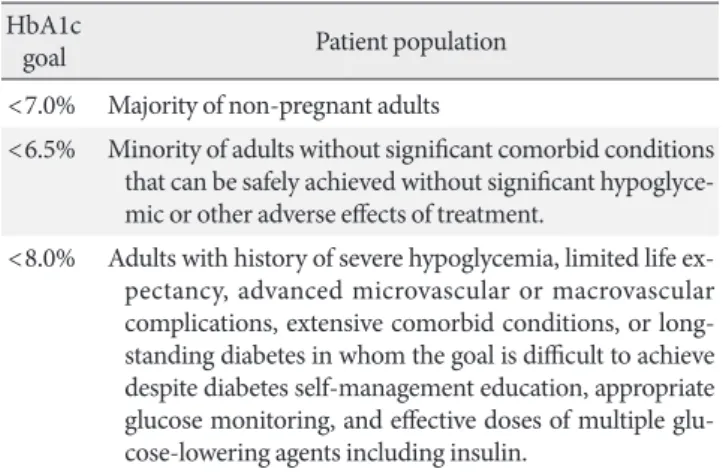
characteristics and comorbid conditions [38]. A higher goal of
<8.0% is recommended for older patients, those with limited
life expectancy, advanced macrovascular complications, or ex- tensive comorbid conditions (Table 2) [38].
Choice of glucose lowering agents in patients with HF or at high risk for developing HF
This section reviews data on the glucose-lowering medications by class. CV outcomes of trials of glucagon-like peptide-1 (GLP-1) receptor agonists, dipeptidyl peptidase-IV (DPP-4) inhibitors, sodium-glucose cotransporter 2 (SGLT2) inhibitors are summarized in Tables 3-5.
Metformin
Metformin is the preferred initial pharmacologic agent for treating T2DM [39]. Once initiated, metformin should be con- tinued as long as it is tolerated and not contraindicated; other agents are added to metformin as needed [39]. Metformin de- creases hepatic glucose production and intestinal absorption of glucose, while improving insulin sensitivity by increasing Table 2. American Diabetes Association glycemic targets in
adults [38]
HbA1c
goal Patient population
<7.0% Majority of non-pregnant adults
<6.5% Minority of adults without significant comorbid conditions that can be safely achieved without significant hypoglyce- mic or other adverse effects of treatment.
<8.0% Adults with history of severe hypoglycemia, limited life ex- pectancy, advanced microvascular or macrovascular complications, extensive comorbid conditions, or long- standing diabetes in whom the goal is difficult to achieve despite diabetes self-management education, appropriate glucose monitoring, and effective doses of multiple glu- cose-lowering agents including insulin.
HbA1c, glycosylated hemoglobin.
Table 3. Summary of glucagon-like peptide-1 receptor agonist cardiovascular outcome trials
Variable ELIXA [63] LEADER [65] SUSTAIN-6 [66] EXSCEL [64] REWIND [68] PIONEER-6 [67]
No. of patients 6,068 9,340 3,297 14,752 9,901 3,183
Drug Lixisenatide Liraglutide Semaglutide Exenatide Dulaglutide Semaglutide
Dose 10 or 20 µg daily 1.8 mg or max tolerated dose per
day
0.5 or 1 mg sq per
week 2 mg per week 1.5 mg per week 14 mg or max tolerated dose per
day Main inclusion criteria T2DM+history
of ACS (<180 days)
T2DM+CVD, CKD, or HF at
≥50 yr or CV risk at ≥60 yr
T2DM+CVD, CKD, or HF at
≥50 yr or CV risk at ≥60 yr
T2DM±CVD T2DM+prior ACS or RF for
CVD
T2DM+high CVD risk
Age, yr 60.3 64.3 64.6 62 66.2 66.0
Female sex, % 30.7 35.7 39.3 38.0 46.3 31.6
HF patients, % 22.4 17.8 23.6 16.2 8.6 12.2
Median follow-up, yr 2.1 3.8 2.1 3.2 5.4 1.3
Primary outcome 4-point MACEa
1.02 (0.89–1.17) 3-point MACEb
0.87 (0.78–0.97) 3-point MACEb
0.74 (0.58–0.95) 3-point MACEb
0.91 (0.83–1.00) 3-point MACEb
0.88 (0.79–0.99) 3-point MACEb 0.79 (0.57–1.11) HF hospitalization 0.96 (0.75–1.23) 0.87 (0.73–1.05) 1.11 (0.77–1.61) 0.94 (0.78–1.13) 0.93 (0.77–1.12) 0.86 (0.48–1.55) CV death 0.98 (0.78–1.22) 0.78 (0.66–0.93) 0.90 (0.65–1.48) 0.88 (0.76–1.02) 0.91 (0.78–1.06) 0.49 (0.27–0.92) All-cause mortality 0.94 (0.78–1.13) 0.85 (0.74–0.97) 1.05 (0.74–150) 0.86 (0.77–0.97) 0.90 (0.80–1.01) 0.51 (0.31–0.84) Values are presented as hazard ratio (95% confidence interval).
ELIXA, Evaluation of Lixisenatide in Acute Coronary Syndrome; LEADER, Liraglutide Effect and Action in Diabetes: Evaluation of Cardiovas- cular Outcome Results; SUSTAIN-6, Semaglutide and Cardiovascular outcomes in Patients with Type 2 Diabetes; EXSCEL, Exenatide Study of Cardiovascular Event Lowering; REWIND, Researching Cardiovascular Events with A Weekly Incretin in Diabetes; PIONEER-6, Peptide Inno- vation for Early Diabetes Treatment; T2DM, type 2 diabetes mellitus; ACS, acute coronary syndrome; CVD, cardiovascular disease; CKD, chronic kidney disease; HF, heart failure; RF, risk factor; CV, cardiovascular; MACE, major adverse cardiovascular event.
aComposite outcome of cardiovascular death, nonfatal myocardial infarction, nonfatal stroke, or hospitalization for unstable angina, bCompos- ite outcome of cardiovascular death, nonfatal myocardial infarction, or nonfatal stroke.
peripheral glucose uptake and utilization [40]. The advantages of metformin include affordability, associated weight reduc- tion, improved endothelial function, and low risk of hypogly- cemia. Although metformin was previously contraindicated in HF due to concerns of lactic acidosis, several studies have shown a survival benefit [41-43]. A retrospective cohort study, using Taiwan’s National Health Insurance database, compared HF hospitalization rates among 41,909 people with T2DM treated with metformin against propensity matched peers that had never received the drug [44]. Metformin use was associat- ed with a reduced adjusted risk of HF hospitalization (aHR, 0.57; 95% CI, 0.53 to 0.62) and all-cause mortality (aHR, 0.67;
95% CI, 0.60 to 0.75) [44]. A meta-analysis of nine cohort studies including 34,504 patients with DM and HF, metformin was associated with 20% reduction in all-cause mortality com- pared to control (mostly sulfonylurea therapy) (aOR, 0.80; 95%
CI, 0.73 to 0.88) [45]. Importantly, in patients with HFrEF (left ventricular ejection fraction [LVEF] <40%), metformin was not associated with an increased risk of mortality or lactic aci-
dosis [45]. Metformin is generally safe to use in patients with HF and T2DM but should be discontinued in patients who present with acute decompensated HF or have estimated glo- merular filtration rate (eGFR) <30 mL/min/1.73 m2.
Sulfonylureas
Sulfonylureas decrease plasma glucose by stimulating insulin secretion from pancreatic β-cells [46]. To date there are limited studies evaluating the safety and efficacy of sulfonylureas in patients with T2DM and HF. The United Kingdom Prospective Diabetes Study (UKPDS) compared sulfonylureas or insulin to treatment with dietary intervention found no difference in HF events in 3,867 newly diagnosed subjects with diabetes [26].
The Bypass Angioplasty Revascularization Investigation 2 Dia- betes (BARI-2D) trial found no difference between an insulin- providing (sulfonylurea or insulin) or an insulin-sensitizing (metformin or TZD) strategy in 2,368 patients with diabetes and coronary artery disease, of which 141 had a history of HF, at 5.3 years [47]. A retrospective cohort study using the UK
Table 4. Summary of dipeptidyl peptidase-IV inhibitor cardiovascular outcome trials
Variable SAVOR-TIMI [75] EXAMINE [76] TECOS [77] CARMELINA [78] CAROLINA [50]
No. of patients 16,492 5,380 14,671 6,979 6,042
Drug Saxagliptin Alogliptin Sitagliptin Linagliptin Linagliptin
Dose 2.5 or 5 mg daily 12.5 or 25 mg daily 50 or 100 mg daily 5 mg 5 mg
Main inclusion criteria T2DM+history of or risk factors for
CVD
T2DM+ACS within 15–90 days of
randomization
T2DM+history of
CVD T2DM+high
CVD and renal risk T2DM+high CVD risk
Age, yra 65.1 61.0 65.4 65.8 64.0
Female sex, % 33.1 32.1 29.9 37.1 39.9
HF patients, % 12.8 27.9 18.3 26.8 4.5
Median follow-up, yr 2.1 1.5 3.0 2.2 6.3
Primary outcome 3-point MACEb
1.00 (0.89–1.12) 3-point MACEb
0.96 (95% UL ≤1.16) 4-point MACEb
0.98 (0.89–1.08) 3-point MACEb
1.02 (0.89–1.17) 3-point MACEb 0.98 (0.84–1.14) Heart failure hospitalization 1.27 (1.07–1.51) Not reported 1.00 (0.83–1.20) 0.90 (0.74–1.08) 1.21 (0.92–1.59) Cardiovascular death 1.03 (0.87–1.22) 0.85 (0.66–1.10) 1.03 (0.89–1.19) 0.96 (0.81–1.14) 1.00 (0.81–1.24) All-cause mortality 1.11 (0.96–1.27) 0.88 (0.71–1.09) 1.01 (0.90–1.14) 0.98 (0.84–1.13) 0.91 (0.78–1.06) Values are presented as hazard ratio (95% confidence interval).
SAVOR-TIMI, Saxagliptin Assessment of Vascular Outcomes Recorded in Patients with Diabetes Mellitus–Thrombolysis in Myocardial Infarc- tion 53; EXAMINE, Examination of Cardiovascular Outcomes With Alogliptin Versus Standard of Care; TECOS, Trial Evaluating Cardiovas- cular Outcomes with Sitagliptin; CARMELINA, Cardiovascular and Renal Microvascular Outcome Study with Linagliptin in Patients with Type 2 Diabetes Mellitus; CAROLINA, Cardiovascular Outcome Study of Linagliptin versus Glimepiride in Patients with Type 2 Diabetes;
T2DM, type 2 diabetes mellitus; CVD, cardiovascular disease; ACS, acute coronary syndrome; HF, heart failure; MACE, major adverse cardio- vascular event; UL, upper limit of one-sided confidence interval.
aAge was reported as means in all trials except EXAMINE, which reported median age, bComposite outcome of cardiovascular death, myocar- dial infarction, or ischemic stroke with addition of hospitalization for unstable angina in TECOS trial.
Table 5. Summary of sodium-glucose cotransporter 2 inhibitor cardiovascular outcome trials VariableEMPA-REG OUTCOME [85]CANVAS Program [86] DECLARE- TIMI 58 [87] CREDENCE [88]DAPA-HF [8]SOLOIST-WHF [89]EMPEROR- Reduced [98]VER TIS-CV [90]
No. of patients 7,0204,3305,81217,1604,4014,7441,2223,7308,246 Drug EmpagliflozinCanagliflozinDapagliflozinCanagliflozinDapagliflozinSotagliflozin EmpagliflozinErtugliflozin Dose 10 or 25 mg daily 100 or 300 mg daily 10 mg daily 100 mg daily 10 mg daily 200 or 400 mg daily10 mg daily 5 or 15 mg daily Main inclusion criteriaT2DM+CVD T2DM+CVD or >2 CVD risk factors T2DM+CVD or multiple RF for CVD
T2DM+CKDa NYHA II– IV+LVEF ≤40% T2DM+recent HF admission NYHA II– IV+LVEF ≤40%CVD+T2DM Age, yr63.163.364.063.3 66.369.566.864.4 Female sex, %28.535.837.435.823.433.723.923.5 HF patients,%10.114.410.114.8100100b10023.7 Median follow-up, yr3.15.72.14.22.61.50.81.33.0 Primary outcome 3-point MACEc 0.86 (0.74–0.99)3-point MACEc 0.86 (0.75–0.97)Progression to albuminuriad 0.73 (0.67–0.79)
3-point MACEc 0.93 (0.84–1.03) CV death or HF hospitalization 0.83 (0.73–0.95) 4-point adverse renal outcomese 0.70 (0.59–0.82) 3-point CV eventsf 0.74 (0.65–0.85) CV death or HF hospitalizations 0.67 (0.52–0.85) CV death or HF hospitalizations 0.75 (0.65–0.86)
4-point MACE 0.97 (0.85–1.11) CV death or HF hospitalization 0.88 (0.75–1.03) Heart failure hospitalization0.65 (0.50–0.85)0.67 (0.52–0.87)0.73 (0.61–0.88)0.61 (0.47–0.80)0.70 (0.59–0.83)0.70 (0.59–0.83)0.64 (0.49–0.83)0.69 (0.59–0.81)0.70 (0.54-0.90) CV death 0.62 (0.49–0.77)0.87 (0.72–1.06)0.98 (0.82–1.17)0.78 (0.61–1.00)0.82 (0.69–0.98)0.84 (0.58–1.22)0.92 (0.75–1.12)0.92 (0.77–1.11) All-cause mortality 0.68 (0.57–0.82)0.87 (0.74–1.01)0.93 (0.82–1.04)0.83 (0.68–1.02)0.83 (0.71–0.97)0.82 (0.59–1.14)0.92 (0.77–1.10)0.93 (0.80–1.08) Values are presented as hazard ratio (95% confidence interval). EMPA-REG OUTCOME, Empagliflozin Cardiovascular Outcome Event Trial in Type 2 Diabetes Mellitus Patients; CANVAS, Canagliflozin and Cardiovascular and Renal Events in Type 2 Diabetes; DECLARE-TIMI 58, Dapagliflozin Effect on Cardiovascular Events-Thrombolysis in Myocardial Infarction; CREDENCE, Canagliflozin and Renal Events in Diabe- tes with Established Nephropathy Clinical Evaluation; DAPA-HF, Dapagliflozin in Patients with Heart Failure and Reduced Ejection Fraction; SOLOIST-WHF, Sotagliflozin in Pa- tients with Diabetes and Recent Worsening Heart Failure; EMPEROR-Reduced, Empagliflozin Outcome Trial in Patients with Chronic Heart Failure and a Reduced Ejection Fraction; VERTIS-CV, Cardiovascular Outcomes with Ertugliflozin in Type 2 Diabetes; T2DM, type 2 diabetes mellitus; CVD, cardiovascular disease; RF, risk factor; NYHA, New York Heart Association; LVEF, left ventricular ejection fraction; HF, heart failure; MACE, major adverse cardiovascular event; CV, cardiovascular. a Chronic kidney disease defined as estimated glomerular filtration rate of 30 to <90 mL/min/1.73 m2 and albuminuria (urinary albumin-to-creatinine ratio, >300 to 5,000 mg/g), b79.1% of patients had a left ventricular ejection fraction of <50%, cComposite outcome of myocardial infarction, stroke, and cardiovascular death, dProgression is defined as the devel- opment of micro-albuminuria (urine albumin-to-creatinine ratio [UACR] 30 to 300 mg/g) in participants with normoalbuminuria (UACR <30 mg/g) or macro-albuminuria (UACR >300 mg/g) in patients with micro-albuminuria, eComposite outcome of doubling of serum creatinine, end-stage renal disease, renal or cardiovascular death, fComposite outcome of cardiovascular death, hospitalization due to heart failure, and urgent visit due to heart failure.
general practice research database of 91,521 patients with DM found that compared with metformin, monotherapy with first- or second-generation sulfonylureas was associated with a sig- nificant 24% to 61% increased risk for all-cause mortality (P<0.001) and second-generation sulfonylureas with an 18%
to 30% increased risk for HF (P=0.01 and P<0.001, respec- tively) [48]. A retrospective cohort study of 407,145 Veterans Health Administration patients who were initiated on metfor- min or sulfonylureas found that sulfonylureas were associated with an increased risk of HF hospitalization (aHR, 1.30; 95%
CI, 1.20 to 1.42) [49]. Finally, the Cardiovascular Outcome Study of Linagliptin versus Glimepiride in Patients with Type 2 Diabetes (CAROLINA) trial found no difference in major ad- verse CV events or HF hospitalizations in 6,033 patients ran- domized to either linagliptin (DPP-IV inhibitor) or glimepiri- de (sulfonylurea) [50]. Sulfonylureas increase the risk of hypo- glycemia and may increase HF risk in patients with T2DM. Al- though clinical data is limited, alternative agents with well-es- tablished safety profiles may be preferable in patients at high risk for or with established HF.
Insulin
Insulin has paracrine effects and can alter the metabolic milieu of cardiomyocytes resulting in maladaptive remodeling and myocardial dysfunction [51]. Observational studies have sug- gested greater CV mortality and increased HF prevalence in in- sulin treated patients with T2DM [52]. Few trials have prospec- tively evaluated the relationship between insulin treatment and HF outcomes. Such studies are challenging because insulin therapy is typically recommended in addition to other medica- tions or when oral medications fail, both of which are potential confounders to clinical outcomes. A retrospective meta-analy- sis of 24,012 patients found that insulin was associated with a higher risk of all-cause mortality (OR, 2.02; 95% CI, 1.87 to 2.19) and hospitalization for HF (OR, 1.42; 95% CI, 1.32 to 1.53) [53]. The Outcome Reduction with Initial Glargine Inter- vention (ORIGIN) trial which randomized 12,537 patients with DM, impaired glucose tolerance, or impaired fasting glucose to either insulin glargine or therapy without insulin reported a neutral effect on both initial and recurrent HF hospitalizations during a median follow-up of 6.2 years [54]. These findings raise the possibility that previously reported observational studies linking insulin use to HF may have confounded insulin use with other factors linked to poor prognosis (i.e., advanced age, difficult to control T2DM, chronic kidney disease [CKD]).
While these results are reassuring as they suggest insulin usage is not irrevocably linked to adverse CV outcomes in patients with HF, additional research is needed to inform guidelines on glucose management in high-risk patients with HF.
Thiazolidinediones
TZDs bind to and activate the nuclear receptor known as per- oxisome proliferator activated receptor-alpha, which is respon- sible for regulating the expression of several metabolic genes.
They stimulate insulin sensitivity through increased insulin- dependent glucose disposal and reduced hepatic glucose out- put [55]. Both rosiglitazone and pioglitazone are associated with reduced blood pressure, increased fluid retention, and in- creased risk of HF [56-58]. In the Efficacy of Pioglitazone on Macrovascular Outcomes in Patient with Type 2 Diabetes (PROACTIVE) trial, 5,238 patients with DM and macrovascu- lar disease were randomized to receive pioglitazone or placebo and followed for a mean of 2 years [59]. Pioglitazone resulted in a 16% risk reduction in the secondary endpoint of all-cause mortality, nonfatal myocardial infarction (MI), and stroke (HR, 0.84; 95% CI, 0.72 to 0.98). However, compared to place- bo pioglitazone was associated with an increased risk of HF (HR, 1.41; 95% CI, 1.10 to 1.80) [56]. The Rosiglitazone Evalu- ated for Cardiac Outcomes and Regulation of Glycaemia in Diabetes (RECORD) trial found an increased risk of HF death or hospitalization associated with rosiglitazone (HR, 2.10; 95%
CI, 1.35 to 3.27) [60]. Several large meta-analyses have demon- strated an increased risk of HF and CV mortality with rosigli- tazone use [28-30,58]. Due to increased sodium reabsorption, fluid retention, and increased risk for HF exacerbations, use of TZDs as a class is contraindicated in patients with New York Heart Association (NYHA) class III–IV HF [31,39].
Glucagon-like peptide-1 receptor agonists
GLP-1 is a peptide hormone released from the distal ileum and colon after oral nutrient consumption. Following administra- tion of GLP-1 receptor agonists, elevated concentrations of GLP-1 reduce glucose by increasing glucose-dependent insulin secretion, decreasing glucagon secretion, and inducing satiety by delaying gastric emptying [61]. Beneficial secondary effects of decreased appetite include weight loss and improved lipid levels [62]. There are currently six U.S. Food and Drug Admin- istration (FDA)-approved GLP-1 receptor agonists—albiglu- tide, dulaglutide, exenatide, liraglutide, lixisenatide, and sema- glutide—for the treatment of T2DM. They are typically ad-
ministered as a subcutaneous injection daily or weekly and can be given alone or in combination with other glucose-lowering agents.
In large randomized controlled trials GLP-1 receptor ago- nists have had mixed effects, generally demonstrating CV ben- efits in patients with T2DM but no apparent impact on HF hospitalizations (Table 3). In the Evaluation of Lixisenatide in Acute Coronary Syndrome (ELIXA) trial, lixisenatide did not significantly reduce major adverse CV events in patients with recent history of acute coronary syndrome or unstable angina at a median of 5 years (HR, 1.02; 95% CI, 0.89 to 1.17) [63].
Similarly, the Exenatide Study of Cardiovascular Event Lower- ing (EXSCEL) trial, weekly exenatide did not reduce CV events or mortality compared to placebo [64]. However, in the Lira- glutide Effect and Action in Diabetes: Evaluation of Cardiovas- cular Outcome Results (LEADER) trial, liraglutide resulted in a 13% risk reduction in CV death, MI, or stroke [65]. In Sema- glutide and Cardiovascular outcomes in Patients with Type 2 Diabetes (SUSTAIN-6), weekly semaglutide resulted in a 24%
reduction in major adverse CV events along with a 39% reduc- tion in the incidence of nonfatal stroke [66]. In the Research- ing Cardiovascular Events with A Weekly Incretin in Diabetes (REWIND) trial, weekly dulaglutide resulted in a 12% reduc- tion in CV events [67]. In the only oral GLP-1 receptor agonist trial, Peptide Innovation for Early Diabetes Treatment (PIO- NEER-6), max tolerated oral semaglutide was not inferior to placebo at reducing CV events [68]. The baseline prevalence of HF in these studies were relatively low, ranging from 8.6% in REWIND to 23.6% in SUSTAIN-6. Finally, in a large meta- analysis of 111,029 patients, treatment with GLP-1 receptor agonists was not associated with an increased risk of HF (OR, 0.62; 95% CI, 0.31 to 1.22) [69].
Although GLP-1 receptor agonists appear to improve cardi- ac function in animal studies of HF, improvements seen in preclinical trials have not translated into improved CV out- comes in clinical trials [70]. The Functional Impact of GLP-1 for Heart Failure Treatment (FIGHT) trial randomized 300 patients with HFrEF to receive liraglutide or placebo [71]. Af- ter 6 months, when compared to placebo liraglutide did not improve post-hospitalization clinical stability or HF readmis- sions in patients with advanced HF [71]. Finally, a small study of albiglutide in NYHA II–III patients found that albiglutide did not significantly improve LVEF, 6-minute walk test, or myocardial glucose and oxygen use, but did result in a modest improvement in peak oxygen consumption [71]. In the Effect
of Liraglutide on Left Ventricular Function (LIVE) trial 241 patients with LVEF ≤45% were randomized to liraglutide or placebo. After 24 weeks, there were no significant differences in LVEF [72]. Furthermore, treatment with liraglutide was as- sociated with a significant increase in heart rate and serious adverse CV events [72].
The effects of GLP-1 receptor agonists are heterogenous and may reduce the risk of major adverse CV events and mortality in the general population of patients with T2DM. While they appear safe to use in patients with HFrEF they have not been shown to reduce HF hospitalizations. There are no data to guide their use in patients with HFpEF.
Dipeptidyl peptidase-IV inhibitors
DPP-4 is an enzyme that inactivates GLP-1, which is responsi- ble for insulin stimulation, suppression of glucagon, and de- layed gastric emptying (as previously mentioned) [73]. DPP-4 inhibitors inhibit the degradation of GLP-1, therefore effec- tively improving effects of insulin and insulin sensitivity. DPP- 4 inhibition is also thought to mediate beneficial CV effects in- dependent of GLP-1 by inducing endothelial nitric oxide syn- thase and regulating inflammation [74]. There are currently four FDA-approved DPP-4 inhibitors available for the treat- ment of T2DM—saxagliptin, alogliptin, sitagliptin, and lina- gliptin. These drugs do not lead to weight gain, are not associ- ated with hypoglycemia, and can be administered in patients with renal insufficiency. Although DPP-4 inhibitors have not been shown to have a significant effect on CV events, results have been heterogenous and an increased risk of HF hospital- ization was found with saxagliptin [75].
The CV safety of DDP-4 inhibitors has been demonstrated in several large clinical trials (Table 4). The Saxagliptin Assess- ment of Vascular Outcomes Recorded in Patients with Diabe- tes Mellitus–Thrombolysis in Myocardial Infarction 53 (SA- VOR-TIMI 53) trial found no difference in CV events in pa- tients treated with saxagliptin versus placebo; however, there was a 27% relative risk increase in HF hospitalization [75].
Similarly, the Examination of Cardiovascular Outcomes With Alogliptin Versus Standard of Care (EXAMINE) trial, found similar rates of CV events and a trend towards increased rates of HF hospitalizations (106 vs. 89, P=0.22) in patients treated with alogliptin compared with placebo [76]. The Trial Evaluat- ing Cardiovascular Outcomes with Sitagliptin (TECOS) study demonstrated no effect of sitagliptin on CV events or HF hos- pitalizations [77]. Similarly, the Cardiovascular and Renal Mi-
crovascular Outcome Study with Linagliptin in Patients with Type 2 Diabetes Mellitus (CARMELINA) trial demonstrated no difference in CV outcomes and, importantly, no increased risk of HF hospitalizations in secondary analysis [78]. While the CAROLINA study had a relatively low prevalence of HF (4.5%) it did not find a significant difference on major adverse CV events or HF hospitalizations in patients treated with lina- gliptin compared to glimepiride over a median follow up of 6.3 years [50].
Mechanisms for the possible deleterious effect of DDP-IV inhibitors on HF events remain uncertain. One that has been proposed is potentiation of stromal cell-derived factor 1 (SDF- 1) and indirect activation of the sympathetic nervous system and stimulation of β-adrenergic receptors resulting in cardio- myocyte apoptosis [79]. The first meta-analyses were dominat- ed by the large contribution of the single large SAVOR-TIMI 53 trial [80]. Subsequent trials have not demonstrated an in- creased HF risk and recent meta-analyses have demonstrated no statistically significant increase in HF risk compared with placebo [81]. Currently, there is no evidence that DPP-IV in- hibitors provide a CV benefit in patients with T2DM. In pa- tients with high CV risk, saxagliptin may increase the risk for HF hospitalizations and should be avoided [75]. Overall, DPP- IV inhibitors can be considered as third- or fourth-line agents in patients with HF and T2DM behind metformin, SGLT2 in- hibitors, and GLP-1 receptor agonists.
Sodium-glucose cotransporter 2 inhibitors
The SGLT2 is a high-capacity, low-affinity transporter ex- pressed almost exclusively in the initial convoluted portion of the proximal tubule of the nephron where it accounts for 90%
of glucose reabsorption [82]. SGLT2 inhibition lowers the threshold of saturation, thereby increasing glucose secretion in the urine. Patients with T2DM express significantly higher numbers of SGLTs in the proximal tubule than do healthy in- dividuals [83]. Consequently, glucose reabsorption from glo- merular filtrate is greatly increased in these patients. SGLT2 inhibitors lower the threshold for glucose excretion to <200 to 250 mg/100 mL in urine [84]. Since glucosuria diminishes sig- nificantly as blood glucose normalizes, the risk of hypoglyce- mia with SGLT2 inhibitors is low unless they are used con- comitantly with insulin or insulin secretagogues [84]. Beyond effects on blood glucose, SGLT2 inhibitors have diuretic and natriuretic effects, impact weight loss, and lower systolic blood pressure [85]. There are currently four FDA approved SGLT2
inhibitors—canagliflozin, dapagliflozin, empagliflozin and er- tugliflozin.
There have been several large clinical trials evaluating the CV outcomes of SGLT2 inhibitors (Table 5). The Empagliflozin Cardiovascular Outcome Event Trial in Type 2 Diabetes Melli- tus Patients (EMPA-REG OUTCOME) trial randomized 7,020 patients with T2DM to empagliflozin or placebo daily [85].
After a median of 3.1 years, treatment with empagliflozin was associated with a 14% relative risk reduction in adverse CV events driven largely by a 35% risk reduction in HF hospital- izations [85]. The CANVAS program, integrated data from two trials involving 10,142 patients with T2DM at high risk for car- diovascular disease (CVD) were randomized to canagliflozin or placebo [86]. After a median of 3.1 years, canagliflozin re- sulted in a significant 14% risk reduction in CV events (HR, 0.86; 95% CI, 0.75 to 0.97) and 33% risk reduction in HF hos- pitalizations (HR, 0.67, 95% CI, 0.52 to 0.87) [86]. Dapa- gliflozin Effect on Cardiovascular Events-Thrombolysis in Myocardial Infarction (DECLARE-TIMI 58) randomized 17,160 patients who had or were at risk for CVD to dapa- gliflozin or placebo. After a median of 4.2 years, treatment with dapagliflozin did not result in a significant difference in major adverse CV events but did result in a 27% risk reduction HF hospitalization (HR, 0.73; 95% CI, 0.61 to 0.88) [87]. The Canagliflozin and Renal Events in Diabetes with Established Nephropathy Clinical Evaluation (CREDENCE) trial random- ized 4,401 patients with T2DM and CKD (eGFR 30 to <90 mL/min/1.73 m2) to canagliflozin or placebo [88] was stopped early after a prespecified interim analysis found a 20% reduced risk of adverse CV events (HR, 0.80; 95% CI, 0.67 to 0.95), and a 30% reduced risk for HF hospitalization (HR, 0.70; 95% CI, 0.47 to 0.80) with canagliflozin [88]. The effects of sotagliflozin (a drug that inhibits SGLT1 as well as SGLT2 activity) were as- sessed in 1,222 patients with T2DM who were recently hospi- talized for worsening HF in the Sotagliflozin in Patients with Diabetes and Recent Worsening Heart Failure (SOLOIST- WHF). Although the trial was stopped prematurely by the sponsor due to lack of funding, sotagliflozin was associated with a significant reduction in the composite end-point of CV death and HF hospitalization (HR, 0.67; 95% CI, 0.52 to 0.85) [89]. Finally, the recently published Evaluation of Ertugliflozin Efficacy and Safety Cardiovascular Outcomes Trial (VERTUS- CV) randomized 8,246 patients with T2DM and CVD to re- ceive ertugliflozin or placebo [90]. In secondary analysis, com- pared to placebo ertugliflozin significantly reduced the risk of
first HF hospitalization (HR, 0.70; 95% CI, 0.54 to 0.90) and the composite for total HF hospitalization and CV death (HR, 0.83; 95% CI, 0.72 to 0.96) [91].
A recent meta-analysis of three large clinical trials, including 34,322 patients (60.2% with established CVD), found that SGLT2 inhibitors reduced major adverse CV events by 11%
(HR, 0.89; 95% CI, 0.83 to 0.96), and the risk of CV death or hospitalization for HF by 23% (HR, 0.77; 95% CI, 0.71 to 0.84) [92]. Real-world studies, such as Comparative Effectiveness of Cardiovascular Outcomes in New Users of SGLT2 Inhibitors (CVD-REAL) reported that SGLT2 inhibitors, versus other glucose-lowering drugs, result in a 39% risk reduction in HF hospitalization (HR, 0.61; 95% CI, 0.51 to 0.73) and 51% risk reduction in mortality (HR, 0.49; 95% CI, 0.41 to 0.57) [93].
Similarly, the Non-interventional Study on the Effectiveness and Safety of Empagliflozin Compared With DPP-4 Inhibitors in Patients With Type 2 Diabetes in the United States (EM- PRISE) trial found that empagliflozin, compared to sitagliptin, significantly reduced HF hospitalizations (HR, 0.50; 95% CI, 0.28 to 0.91) [94]. These results reinforce the CV benefits of SGLT2 inhibitors in practice-based settings.
SGLT2 inhibitors are the first class of glucose-lowering agents demonstrated to reduce the risk of HF hospitalization in patients with T2DM and subsequent trials were designed to assess their effectiveness as a HF therapy, regardless of whether T2DM was present. In the Dapagliflozin in Patients with Heart Failure and Reduced Ejection Fraction (DAPA-HF) trial [8], 4,744 patients without or without T2DM with NYHA Class II–
IV HF and ejection fraction ≤40% were randomized to receive dapagliflozin or placebo in addition to recommended HF therapy [8]. After a median of 1.5 years, treatment with dapa- gliflozin resulted in a 26% risk reduction in HF hospitalization or CV death (HR, 0.74; 95% CI, 0.65 to 0.85). Benefits of dapa- gliflozin were similar in patients with and without T2DM. The frequency of adverse events related to volume depletion, renal dysfunction, and hypoglycemia did not differ between treat- ment groups [8]. In the Empagliflozin Outcome Trial in Pa- tients with Chronic Heart Failure and a Reduced Ejection Fraction (EMPEROR-Reduced), 3,730 symptomatic HFrEF patients were assigned to received either empagliflozin or pla- cebo, in addition to standard therapy. During a median follow- up of 16 months, the primary outcome of CV death and HF hospitalization was reduced by 25% in the empagliflozin group (HR, 0.75; 95% CI, 0.65 to 0.86) and the effect of the SGLT2 in- hibitor was present regardless of the presence or absence of
T2DM. A subsequent prespecified meta-analysis of the results from DAPA-HF and EMPEROR-Reduced in which the effects of SGLT2 inhibition on mortality were assessed showed that among 8,474 patients combined from trials, treatment with an SGLT2 inhibitor significantly reduced all-cause and CV mor- tality [95].
Impaired renal function is common in patients with HF and 32% have CKD as defined as eGFR <60 mL/min/1.73 m2. When present, CKD or worsening renal function is associated with increased mortality [96]. Several studies have examined the ef- fect of SGLT2 inhibitors on renal function. In the CREDENCE trial, treatment with canagliflozin was associated with a signifi- cant reduction in the primary composite outcome of develop- ment of end-stage kidney disease, doubling of serum creati- nine level, or death from renal or CV causes (HR, 0.70; 95%
CI, 0.59 to 0.82) [88]. In the DAPA-HF trial, compared with placebo treatment with dapagliflozin reduced the rate of de- cline in eGFR between day 14 and 720 (–2.87 mL/min/1.73 m2 vs. –1.09 mL/min/1.72 m2, P<0.001) [97]. Similarly, in the EMPEROR-Reduced trial, the rate of decline in eGFR over the duration study was slower in the empagliflozin group than in the placebo group (–0.55 mL/min/1.73 m2/year vs. –2.28 mL/
min/1.73 m2/year; 95% CI, 1.10 to 2.37) [98].
The potential mechanisms by which SGLT2 inhibitors im- prove CV outcomes are undergoing investigation [99]. The early and significant reduction in HF hospitalizations pro- duced by SGLT2 inhibitors suggest that the predominant mechanism may be related to their hemodynamic effects.
SGLT2 inhibitors act in the proximal tubule to inhibit Na+ re- absorption resulting in osmotic diuresis, leading to reduced ventricular filling pressure, and cardiac workload [100].
SGLT2 inhibitors may also improve CV function due to a shift in myocardial fuel energetics. Under normal physiological conditions, 70% cardiac energy is derived from mitochondrial oxidation of free fatty acids (FFAs) [101]. In T2DM, as a result of peripheral insulin resistance, FFA oxidation markedly in- creases resulting in oxidative stress and cardiac lipotoxicity [102]. SGLT2 inhibitors increase hepatic synthesis and de- crease the urinary excretion of ketones producing a mild, but persistent, hyperketonemia [103]. Under these conditions, be- ta-hydroxybutyrate is freely taken up by the heart and kidney and oxidized in preference to FFAs and glucose, producing fuel more efficiently. As noted earlier, sotagliflozin is a combined SGLT1 and SGLT2 inhibitor. The SGLT1 is found in nephrons, heart, skeletal muscle and small intestine, where it is the pri-
mary mediator for glucose reabsorption. Additional clinical benefits conferred by the addition of SGLT1 inhibition are un- certain at present, as head-to-head comparison between com- bined SGLT and SGLT2 inhibition alone have not been per- formed.
Large scale outcome studies assessing potential benefits of SGLT2 inhibitors in HF patients are currently underway. The Empagliflozin Outcome Trial in Patients with Chronic Heart Failure with Preserved Ejection Fraction (EMPEROR-PRE- SERVED) trial has been designed to evaluate the effects of em- pagliflozin versus placebo on clinical outcomes in patients with HFpEF and it includes patients with and without T2DM.
In addition, the Dapagliflozin Effect on Symptoms and Bio- markers in Patients with Heart Failure (DEFINE-HF) and Dapagliflozin in Preserved Ejection Fraction Heart Failure (PRESERVED-HF), and Empagliflozin Impact on Hemody- namics in Patients with Heart Failure (EMBRACE-HF) trials will evaluate potential mechanisms of SGLT2 inhibition in pa- tients with established HFrEF and HFpEF.
Overall, SGLT2 inhibitors have demonstrated consistent re- ductions in CV mortality and HF hospitalizations making them the therapeutic agent of choice in the treatment of T2DM in patients with established HF or at high risk for developing HF. Recent trial results indicating benefits of SGLT2 inhibitors, regardless of whether they have T2DM indicate an important role of these drugs in the management of patients with HFrEF.
These benefits, however, should be balanced by their potential risks including hypotension, genital mycotic infections, as well as lower-limb amputation and fractures (seen with cana- gliflozin only). SGLT2 inhibitors are contraindicated in pa- tients with eGFR <30 mL/min/m2.
CONCLUSIONS
The relationship between hyperglycemia and CV outcomes in patients with diabetes and HF is complex. Data from CV out- comes trials have underscored that HF is a critical outcome in patients with diabetes and suggest that glucose-lowering medi- cations may influence the risk of HF development and pro- gression. The advent of novel antihyperglycemic agents that can significantly reduce morbidity and mortality due to HF has impacted management choices for patients with T2DM. In particular, the consistent reductions in CV mortality and HF hospitalizations with SGLT2 inhibitors suggest that they should be considered in all patients with T2DM with HF or at
high risk for developing HF. Future challenges include whether the SGLT2 inhibitors can improve outcomes in patients with HFpEF and the identification of therapeutic strategies that not only achieve and maintain glycemic control, but also reverse or prevent complications of DM. Given the high prevalence of HF in DM, there is a strong imperative for further therapeutic advances in these areas. The results of ongoing and future clin- ical trials designed to test the effects of currently available and novel antihyperglycemic agents in HF are eagerly anticipated.
CONFLICTS OF INTEREST
No potential conflict of interest relevant to this article was re- ported.
ORCID
Jia Shen https://orcid.org/0000-0001-8994-3969
Barry H. Greenberg https://orcid.org/0000-0002-6605-9385
FUNDING
None
ACKNOWLEDGMENTS
None
REFERENCES
1. Saeedi P, Petersohn I, Salpea P, Malanda B, Karuranga S, Un- win N, et al. Global and regional diabetes prevalence estimates for 2019 and projections for 2030 and 2045: Results from the International Diabetes Federation Diabetes Atlas, 9th edition.
Diabetes Res Clin Pract 2019;157:107843.
2. Ambrosy AP, Fonarow GC, Butler J, Chioncel O, Greene SJ, Vaduganathan M, et al. The global health and economic bur- den of hospitalizations for heart failure: lessons learned from hospitalized heart failure registries. J Am Coll Cardiol 2014;
63:1123-33.
3. SOLVD Investigators, Yusuf S, Pitt B, Davis CE, Hood WB, Cohn JN. Effect of enalapril on survival in patients with re- duced left ventricular ejection fractions and congestive heart failure. N Engl J Med 1991;325:293-302.
4. Zannad F, McMurray JJ, Krum H, van Veldhuisen DJ, Swed-
berg K, Shi H, et al. Eplerenone in patients with systolic heart failure and mild symptoms. N Engl J Med 2011;364:11-21.
5. Lee JH, Lim NK, Cho MC, Park HY. Epidemiology of heart failure in Korea: present and future. Korean Circ J 2016;46:
658-64.
6. McMurray JJ, Packer M, Desai AS, Gong J, Lefkowitz MP, Riz- kala AR, et al. Angiotensin-neprilysin inhibition versus enala- pril in heart failure. N Engl J Med 2014;371:993-1004.
7. Granger CB, McMurray JJ, Yusuf S, Held P, Michelson EL, Olofsson B, et al. Effects of candesartan in patients with chronic heart failure and reduced left-ventricular systolic function intolerant to angiotensin-converting-enzyme inhibi- tors: the CHARM-Alternative trial. Lancet 2003;362:772-6.
8. McMurray JJ, Solomon SD, Inzucchi SE, Kober L, Kosiborod MN, Martinez FA, et al. Dapagliflozin in patients with heart failure and reduced ejection fraction. N Engl J Med 2019;381:
1995-2008.
9. From AM, Leibson CL, Bursi F, Redfield MM, Weston SA, Ja- cobsen SJ, et al. Diabetes in heart failure: prevalence and im- pact on outcome in the population. Am J Med 2006;119:591- 9.
10. Cleland JG, Swedberg K, Follath F, Komajda M, Cohen-Solal A, Aguilar JC, et al. The EuroHeart Failure survey pro- gramme: a survey on the quality of care among patients with heart failure in Europe. Part 1: patient characteristics and di- agnosis. Eur Heart J 2003;24:442-63.
11. Davies M, Hobbs F, Davis R, Kenkre J, Roalfe AK, Hare R, et al. Prevalence of left-ventricular systolic dysfunction and heart failure in the Echocardiographic Heart of England Screening study: a population based study. Lancet 2001;358:
439-44.
12. Amato L, Paolisso G, Cacciatore F, Ferrara N, Ferrara P, Cano- nico S, et al. Congestive heart failure predicts the development of non-insulin-dependent diabetes mellitus in the elderly. The Osservatorio Geriatrico Regione Campania Group. Diabetes Metab 1997;23:213-8.
13. Shi C, Wang LJ, Hu DF, Li JP, Zhu TQ, Shan Y, et al. Preva- lence, clinical characteristics and outcome in patients with chronic heart failure and diabetes. Chin Med J (Engl) 2010;
123:646-50.
14. Shiba N, Shimokawa H. Chronic heart failure in Japan: impli- cations of the CHART studies. Vasc Health Risk Manag 2008;
4:103-13.
15. Hjalmarson A, Goldstein S, Fagerberg B, Wedel H, Waagstein F, Kjekshus J, et al. Effects of controlled-release metoprolol on
total mortality, hospitalizations, and well-being in patients with heart failure: the Metoprolol CR/XL Randomized Inter- vention Trial in congestive heart failure (MERIT-HF). MER- IT-HF Study Group. JAMA 2000;283:1295-302.
16. Swedberg K, Komajda M, Bohm M, Borer JS, Ford I, Dubost- Brama A, et al. Ivabradine and outcomes in chronic heart fail- ure (SHIFT): a randomised placebo-controlled study. Lancet 2010;376:875-85.
17. Felker GM, Benza RL, Chandler AB, Leimberger JD, Cuffe MS, Califf RM, et al. Heart failure etiology and response to milrinone in decompensated heart failure: results from the OPTIME-CHF study. J Am Coll Cardiol 2003;41:997-1003.
18. Sarma S, Mentz RJ, Kwasny MJ, Fought AJ, Huffman M, Suba- cius H, et al. Association between diabetes mellitus and post- discharge outcomes in patients hospitalized with heart failure:
findings from the EVEREST trial. Eur J Heart Fail 2013;15:
194-202.
19. Greenberg BH, Abraham WT, Albert NM, Chiswell K, Clare R, Stough WG, et al. Influence of diabetes on characteristics and outcomes in patients hospitalized with heart failure: a re- port from the Organized Program to Initiate Lifesaving Treat- ment in Hospitalized Patients with Heart Failure (OPTI- MIZE-HF). Am Heart J 2007;154:277.
20. Allen LA, Magid DJ, Gurwitz JH, Smith DH, Goldberg RJ, Saczynski J, et al. Risk factors for adverse outcomes by left ventricular ejection fraction in a contemporary heart failure population. Circ Heart Fail 2013;6:635-46.
21. MacDonald MR, Petrie MC, Varyani F, Ostergren J, Michelson EL, Young JB, et al. Impact of diabetes on outcomes in patients with low and preserved ejection fraction heart failure: an analysis of the Candesartan in Heart failure: Assessment of Reduction in Mortality and morbidity (CHARM) programme.
Eur Heart J 2008;29:1377-85.
22. Dauriz M, Targher G, Laroche C, Temporelli PL, Ferrari R, Anker S, et al. Association between diabetes and 1-year ad- verse clinical outcomes in a multinational cohort of ambula- tory patients with chronic heart failure: results from the ESC- HFA heart failure long-term registry. Diabetes Care 2017;40:
671-8.
23. Dauriz M, Mantovani A, Bonapace S, Verlato G, Zoppini G, Bonora E, et al. Prognostic impact of diabetes on long-term survival outcomes in patients with heart failure: a meta-analy- sis. Diabetes Care 2017;40:1597-605.
24. Stettler C, Allemann S, Juni P, Cull CA, Holman RR, Egger M, et al. Glycemic control and macrovascular disease in types 1
and 2 diabetes mellitus: meta-analysis of randomized trials.
Am Heart J 2006;152:27-38.
25. ADVANCE Collaborative Group, Patel A, MacMahon S, Chalmers J, Neal B, Billot L, et al. Intensive blood glucose con- trol and vascular outcomes in patients with type 2 diabetes. N Engl J Med 2008;358:2560-72.
26. UK Prospective Diabetes Study (UKPDS) Group. Intensive blood-glucose control with sulphonylureas or insulin com- pared with conventional treatment and risk of complications in patients with type 2 diabetes (UKPDS 33). Lancet 1998;352:
837-53.
27. Ismail-Beigi F, Craven T, Banerji MA, Basile J, Calles J, Cohen RM, et al. Effect of intensive treatment of hyperglycaemia on microvascular outcomes in type 2 diabetes: an analysis of the ACCORD randomised trial. Lancet 2010;376:419-30.
28. Singh S, Loke YK, Furberg CD. Long-term risk of cardiovas- cular events with rosiglitazone: a meta-analysis. JAMA 2007;
298:1189-95.
29. Mannucci E, Monami M, Di Bari M, Lamanna C, Gori F, Gen- sini GF, et al. Cardiac safety profile of rosiglitazone: a compre- hensive meta-analysis of randomized clinical trials. Int J Car- diol 2010;143:135-40.
30. Graham DJ, Ouellet-Hellstrom R, MaCurdy TE, Ali F, Sholley C, Worrall C, et al. Risk of acute myocardial infarction, stroke, heart failure, and death in elderly medicare patients treated with rosiglitazone or pioglitazone. JAMA 2010;304:411-8.
31. Kaul S, Bolger AF, Herrington D, Giugliano RP, Eckel RH.
Thiazolidinedione drugs and cardiovascular risks: a science advisory from the American Heart Association and American College of Cardiology Foundation. Circulation 2010;121:
1868-77.
32. Iribarren C, Karter AJ, Go AS, Ferrara A, Liu JY, Sidney S, et al.
Glycemic control and heart failure among adult patients with diabetes. Circulation 2001;103:2668-73.
33. Aguilar D, Bozkurt B, Ramasubbu K, Deswal A. Relationship of hemoglobin A1C and mortality in heart failure patients with diabetes. J Am Coll Cardiol 2009;54:422-8.
34. Eshaghian S, Horwich TB, Fonarow GC. An unexpected in- verse relationship between HbA1c levels and mortality in pa- tients with diabetes and advanced systolic heart failure. Am Heart J 2006;151:91.
35. Gerstein HC, Swedberg K, Carlsson J, McMurray JJ, Michel- son EL, Olofsson B, et al. The hemoglobin A1c level as a pro- gressive risk factor for cardiovascular death, hospitalization for heart failure, or death in patients with chronic heart fail-
ure: an analysis of the Candesartan in Heart failure: Assess- ment of Reduction in Mortality and Morbidity (CHARM) program. Arch Intern Med 2008;168:1699-704.
36. Elder DH, Singh JS, Levin D, Donnelly LA, Choy AM, George J, et al. Mean HbA1c and mortality in diabetic individuals with heart failure: a population cohort study. Eur J Heart Fail 2016;18:94-102.
37.Castagno D, Baird-Gunning J, Jhund PS, Biondi-Zoccai G, MacDonald MR, Petrie MC, et al. Intensive glycemic control has no impact on the risk of heart failure in type 2 diabetic pa- tients: evidence from a 37,229 patient meta-analysis. Am Heart J 2011;162:938-48.
38. American Diabetes Association. 6. Glycemic targets: standards of medical care in diabetes-2020. Diabetes Care 2020;43(Sup- pl 1):S66-S76.
39. American Diabetes Association. 9. Pharmacologic approaches to glycemic treatment: standards of medical care in diabe- tes-2020. Diabetes Care 2020;43(Suppl 1):S98-S110.
40. Gong L, Goswami S, Giacomini KM, Altman RB, Klein TE.
Metformin pathways: pharmacokinetics and pharmacody- namics. Pharmacogenet Genomics 2012;22:820-7.
41. UK Prospective Diabetes Study (UKPDS) Group. Effect of in- tensive blood-glucose control with metformin on complica- tions in overweight patients with type 2 diabetes (UKPDS 34).
Lancet 1998;352:854-65.
42. Eurich DT, Majumdar SR, McAlister FA, Tsuyuki RT, Johnson JA. Improved clinical outcomes associated with metformin in patients with diabetes and heart failure. Diabetes Care 2005;
28:2345-51.
43. Romero SP, Andrey JL, Garcia-Egido A, Escobar MA, Perez V, Corzo R, et al. Metformin therapy and prognosis of patients with heart failure and new-onset diabetes mellitus: a propen- sity-matched study in the community. Int J Cardiol 2013;166:
404-12.
44. Tseng CH. Metformin use is associated with a lower risk of hospitalization for heart failure in patients with type 2 diabe- tes mellitus: a retrospective cohort analysis. J Am Heart Assoc 2019;8:e011640.
45. Eurich DT, Weir DL, Majumdar SR, Tsuyuki RT, Johnson JA, Tjosvold L, et al. Comparative safety and effectiveness of met- formin in patients with diabetes mellitus and heart failure:
systematic review of observational studies involving 34,000 patients. Circ Heart Fail 2013;6:395-402.
46. Proks P, Reimann F, Green N, Gribble F, Ashcroft F. Sulfonyl- urea stimulation of insulin secretion. Diabetes 2002;51 (Suppl

![Table 5. Summary of sodium-glucose cotransporter 2 inhibitor cardiovascular outcome trials VariableEMPA-REG OUTCOME [85]CANVAS Program [86] DECLARE-TIMI 58 [87] CREDENCE [88]DAPA-HF [8]SOLOIST-WHF [89]EMPEROR-Reduced [98]VERTIS-CV [90]](https://thumb-ap.123doks.com/thumbv2/123dokinfo/5220459.123308/5.892.99.796.141.1085/cotransporter-inhibitor-cardiovascular-variableempa-program-credence-emperor-reduced.webp)
