대한소화기학회지 2008;52:192-195
접수: 2008년 4월 24일, 승인: 2008년 7월 20일 연락처: 이항락, 133-070, 서울시 성동구 행당동 산 17
한양대학교병원 소화기내과
Tel: (02) 2290-8354, Fax: (02) 2298-9183 E-mail: [email protected]
Correspondence to: Hang Lak Lee, M.D.
Department of Gastroenterology, Hanyang University Hospi- tal, San 17, Haengdang-dong, Seongdong-gu, Seoul 133-070, Korea
Tel: +82-2-2290-8354, Fax: +82-2-2298-9183 E-mail: [email protected]
다양한 약제에 의해 급성 췌장염이 발생한 궤양성 대장염 환자 1예
한양대학교 의과대학 내과학교실
손창남ㆍ이항락ㆍ주용원ㆍ이오영ㆍ한동수ㆍ윤병철ㆍ최호순ㆍ함준수
A Case of Acute Pancreatitis Induced by Multiple Drugs in a Patient with Ulcerative Colitis
Chang Nam Son, M.D., Hang Lak Lee, M.D., Yong Won Joo, M.D., Oh Young Lee, M.D., Dong Soo Han, M.D., Byung Chul Yoon, M.D.,
Ho Soon Choi, M.D., and Joon Soo Hahm, M.D.
Department of Internal Medicine, Hanyang University Hospital, Seoul, Korea
Acute pancreatitis is a serious disease with fatality rate up to 15%. We recently experienced a case of acute pan- creatitis induced by multiple drugs in a patient with ulcerative colitis. A 20-year-old female visited with abdomi- nal pain and hematochezia and diagnosed of ulcerative colitis. Sulfasalazine and prednisolone were used.
However, acute pancreatitis occurred after 4 weeks of treatment with additional azathioprine treatment. Drug-in- duced pancreatitis was suspected, and she was recovered with conventional therapy for acute pancreatitis.
Therefore, it was proposed that acute pancreatitis was induced by azathioprine. However, after the administration of sulfasalazine, pancreatitis relapsed. Furthermore, even the re-administration of 5-ASA and azathioprine induced relapse of acute pancreatitis. We concluded that acute pancreatitis was induced by multiple drugs in this patient with ulcerative colitis. (Korean J Gastroenterol 2008;52:192-195)
Key Words: Acute pancreatitis; Ulcerative colitis; Azathioprine; Sulfasalazine; 5-aminosalicylate
서 론
급성 췌장염은 치명률이 15%나 되는 심각한 질병이다.1 췌장염의 흔한 원인으로는 담석증, 알코올 남용, 고칼슘혈 증, 고중성지방혈증, 여러 가지 약제 등이 있다.2,3 궤양성 대 장염 환자에서 급성 췌장염의 발생은 일반인보다 2배 정도 높은 것으로 알려져 있다.4 이러한 경우 췌장염의 흔한 원인 에 의한 발생과 염증성 장질환의 장외 발현, 치료 약물에 의 한 부작용을 생각해 볼 수 있다.5 궤양성 대장염의 치료약제 중 급성 췌장염을 일으킬 수 있는 것은 sulfasalazine, mesala-
zine, 스테로이드, azathioprine, 6-mercaptopurine 등이 있고 각 각의 약물에 따라 췌장염이 발생하는 기전은 다양하다.6 국 내에서도 각각의 약물에 의한 췌장염7-9은 보고되었으나 me- salazine과 azathioprine 두 가지 약제와 동시에 관련이 있는 급성췌장염은 국외에서 2000년 Glintborg10이 처음으로 보고 한 후 2003년 Toubanakis 등11이 보고하였으나 국내에서는 아직 보고가 없다.
이번 증례는 궤양성 대장염이 진단되어 azathioprine 복용 후 급성 췌장염이 발생하여 sulfasalazine을 투여한 후 다시 급성 췌장염을 보이고 5-aminosalicylate 제제로 바꾸었으나
손창남 외 7인. 다양한 약제에 의해 급성 췌장염이 발생한 궤양성 대장염 환자 1예 193
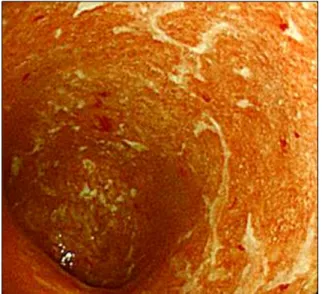
Fig. 1. Colonoscopic findings. It shows diffuse mucosal hyper- emia and multiple ulcerations from rectum to transverse colon.
Fig. 2. The clinical course of the patient. After the oral admin- istration of sulfasalazine and aza- thioprine, epigastric pain and fe- ver develope and serum amylase and WBC levels increase to 565 IU/L and 17,600/mm3. Symptoms and biochemical results improve with NPO and discontinuation of sulfasalazine and azathioprine.
Instead, sulfasalazine and 5-ASA are applied respectively. But similar events recur. And after the re-administration of azathio- prine, acute pancreatitis also re- curs.
5-ASA, 5-aminosalicylate acid.
상복부 통증과 아밀라아제 상승이 있어 다시 azathioprine 재 투여를 하였으나 복통과 아밀라아제 상승을 보였다. 저자들 은 궤양성 대장염에 대한 치료 도중 다양한 약제에 의해 반 복적으로 급성 췌장염이 발생했던 1예를 경험하였기에 보 고한다.
증 례
20세 여자 환자가 1년 전부터 시작된 설사, 간헐적인 혈변 을 주소로 내원하여 외래에서 시행한 대장내시경(Fig. 1) 및 조직검사에서 궤양성 대장염으로 진단받고 입원하였다. 흡 연력, 음주력이나 약물 복용력은 없었고 가족력에서 특이사 항 없었다. 입원 당시 체온은 36.5oC, 맥박수는 84회/분, 혈 압은 120/80 mmHg, 호흡수는 20회/분이었고 신체검사에서
약한 상복부 압통이 있었으나 반발통은 없었다. 입원당시 일반혈액검사에서 백혈구 7,000/mm3 (호중구 53.7%, 림프구 34.3%), 혈색소 11.5 g/dL, 혈소판 335,000/mm3, 적혈구 침강 속도 33 mm/hr였다. 생화학검사는 AST 12 IU/L, ALT 6 IU/L이었다. prednisolone 25 mg/day, sulfasalazine 3 g/day으로 약물치료를 시작하였고 4개월 동안 prednisolone을 감량하면 서 azathioprine 하루 아침 식후 50 mg을 추가하였다.
Azathioprine을 투여한 지 27일 후, 환자는 갑자기 심한 상 복부 복통과 함께 38.2oC의 고열이 발생하였다(Fig. 2). 혈액 검사는 백혈구 17,600/mm3 (호중구 87.8%, 림프구 6.5%), 아 밀라아제 565 IU/L로 증가되어 있었다. 신체검사에서 명치 주위로 심한 압통을 보였다. 상복부 복통과 고열을 일으키 는 질환으로 급성 담낭염, 급성 담관염, 급성 간염, 급성 췌 장염 등을 감별하여야 할 것으로 생각하였고 복부전산화단 층촬영에서 췌장의 부종 비대와 함께 췌장 주위의 미만 지 방 침윤이 관찰되었으나(Fig. 3) 간 및 담관계, 비장, 신장에 이상 소견이 없어 CT grade 1 급성 췌장염으로 진단하였다.
모든 약제를 끊고 3일 동안 시행한 급성 췌장염의 일반적인 치료 후에 발열이 소실되고 상복부 통증이 사라지고 아밀라 아제 수치도 정상이 되었다(Fig. 4). 투약을 중단한 predni- solone, sulfasalazine, azathioprine 중에서 저자들은 sulfasa- lazine, prednisolone을 4개월간 사용하여도 문제 없었으므로 azathioprine이 급성 췌장염의 원인일 것이라고 생각하여 식 사가 가능하게 된 후 궤양성 대장염에 대해 prednisolone 25 mg/day, sulfasalazine 3 g/day으로 4일간 복용 후 퇴원하였다.
그러나 환자는 퇴원 당일 저녁부터 다시 상복부 통증이 발 생하였다. 혈액검사에서 백혈구 15,100/mm3 (호중구 79.9%, 림프구 14.8%), 아밀라아제 802 IU/L로 증가되었다. 급성 췌 장염 재발로 진단하고 다시 입원하여 모든 약제를 중단하고 금식을 하였으며 일주일간의 치료로 병세는 호전되었다.
증상 호전 후 5-ASA (AsacolⓇ) 800 mg씩 저녁 식후 1회
194 The Korean Journal of Gastroenterology: Vol. 52, No. 3, 2008
Fig. 4. Abdominal computed tomography shows mildly improved peripancreatic fatty infiltration of tail portion of pancreas.
Fig. 3. Abdominal computed tomography shows parenchymal en- largement of pancreas with peripancreatic fatty infiltration.
다음날 아침 식후 1회 총 1,600 mg 경구 투여한 뒤 바로 경 한 복통과 함께 혈청 아밀라아제의 상승 소견이 있어 약제 를 중단했고 일주일 후 azathioprine 50 mg/day 추가했으나 하루 만에 혈청 아밀라아제 469 U/L까지 증가하여 다시 모 든 약제를 끊고 췌장염이 호전된 후 궤양성 대장염에 대해 prednisolone 25 mg/day만 처방하여 퇴원하였다.
처음 급성 췌장염 발생 시 azathioprine이 원인으로 생각되 어 중단하고 sulfasalazine을 투여하였으나 췌장염이 재발하 였고 5-ASA (AsacolⓇ)를 경구 투여했으나 췌장염이 발생하 였다. 호전 후 다시 azathioprine을 투여 다시 췌장염이 생긴 것으로 보아 궤양성 대장염의 주요 약제인 azathioprine, sul- fasalazine, 5-ASA 모두가 췌장염의 원인이라 생각한다. 현재 환자는 외래추적관찰이 중단된 상태이다.
고 찰
궤양성 대장염 환자에서 발생한 급성 췌장염의 원인으로 는 췌장염의 원인으로 잘 알려져 있는 음주, 바이러스 감염, 외상, 담석, 영양실조, 고중성지방혈증, 부갑상샘항진증 등 이 있고 약물 부작용인 경우, 궤양성 대장염의 장외 발현인 경우, 원인 불명인 경우가 있다.5
궤양성 대장염의 치료약제인 sulfasalazine, mesalazine, aza- thioprine은 급성 췌장염을 일으킬 수 있는 것으로 알려져 있 고 각각의 약물에 따라 췌장염이 발생하는 기전은 다양하 다.6 Sulfasalazine은 sulfapyridine과 5-ASA가 azo 결합에 의해 연결된 화합물로 30%의 환자에서 과민반응을 일으키는데 이는 sulfapyridine 잔기로 인한 부작용 때문으로 췌장염도 이러한 부작용의 한 종류이다.12 5-ASA로 유발된 췌장염의 병리기전은 5-ASA에 의하여 췌장 도관의 투과성이 증가되 는 것으로 생각되며 또한 알레르기 과민반응도 관여한다.13 이번 증례의 경우에 급성 췌장염의 병리기전이 앞서 언급한 여러 가지 원인을 생각할 수 있으나 정확한 원인을 규명하
기는 어렵다.
Azathioprine 치료를 하는 환자 15%에서 다양한 부작용들 이 나타나는데 췌장염은 가장 흔한 부작용이다.14 Azathio- prine 치료를 하는 환자에서 급성 췌장염의 위험도는 8배 증 가한다.15 췌장염이 생기는 원인은 아직 명확하지는 않으나 여러 보고자들에 의하면 약제에 대한 과민반응에 의한 것으 로 알려져 있다.8,11 Azathioprine에 의한 췌장염은 주로 투약 후 2개월 이내에 발생하고 투약 중단 후 빠른 증상의 호전 을 보이며 재투약 후 수시간 내에 재발하는 양상을 보인 다.11
최근 궤양성 대장염 치료에 infliximab의 사용을 시도하고
있다.16-18 중등도 및 중증 궤양성 대장염 환자를 대상으로
infliximab 치료를 시행한 다기관 연구인 ACT1 and ACT2 (Active Ulcerative Colitis Trials 1 and 2) 연구에서 infliximab 5 mg/kg과 10 mg/kg 용량을 0, 2, 6주와 매 8주마다 투여한 군과 위약(placebo) 군을 비교해 보았을 때 8주에서 임상적 인 반응률은 69%, 61%, 37%, 30주에서 64%, 69%, 29%, 54 주에서 45%, 44%, 20%로 infliximab 치료 군에서 치료 효과 가 우수하였다.16 이 연구는 궤양성 대장염의 일반적인 치료 에 반응하지 않는 중등도 및 중증 궤양성 대장염에서 infliximab이 임상 반응의 호전과 관해를 가져올 수 있음을 보여주고 있다.16 궤양성 대장염 치료에서 infliximab 사용은 스테로이드, azathioprine, mercaptopurine 치료에 반응이 없는 경우에 가능하고 그리고 corticosteroid 사용을 최소화할 수 있다.19 이번 증례의 경우와 같이 스테로이드 외에 다른 약물 의 사용이 어려운 경우 infliximab 치료가 대안이 될 수 있다.
급성 췌장염의 발생은 예측 불가능하나, Castiglione 등이 크론병 환자를 대상으로 azathioprine을 투여하는 동안 투여 첫 2개월 동안은 매주 혈청 아밀라제를 측정하여 고아밀라 제혈증이 발생하면 약제의 투여를 중단함으로써 췌장염의 발생을 줄일 수 있었다고 보고하였다.20 치료약제에 의한 급 성 췌장염은 흔하진 않으나 궤양성 대장염 치료 약제를 투
Son CN, et al. A Case of Acute Pancreatitis Induced by Multiple Drugs in a Patient with Ulcerative Colitis 195
여시 자세한 문진과 검사로 기저질환 여부를 자세히 평가하 고 정기적인 아밀라아제 측정으로 치료약제에 의한 급성 췌 장염 발생 예방에 노력하여야 한다.8
저자들은 궤양성 대장염 환자에서 다양한 약제에 의한 급 성 췌장염이 발생한 증례를 경험하여 이를 보고한다.
참고문헌
1. Eland IA, Sturkenboom MJ, Wilson JH, Striker BH. Inci- dence and mortality of acute pancreatitis between 1985 and 1995. Scand J Gastroenterol 2000;35:1110-1116.
2. Steinberg W, Tenner S. Acute pancreatitis. N Engl J Med 1994;330:1198-1210.
3. Gullo L, Migliori M, Olah A, et al. Acute pancreatitis in five European countries: Etiology and mortality. Pancreas 2002;24:
223-227.
4. Rasmussen HH, Fonager K, Sorensen HT, Pedersen L, Dah- lerup JF, Steffensen FH. Risk of acute pancreatitis in patients with chronic inflammatory bowel disease. A Danish 16-year nationwide follow up study. Scand J Gastroenterol 1999;34:
199-201.
5. Herrlinger KR, Stange EF. The pancreas and inflammatory bowel disease. Int J Pancreatol 2000;27:171-179.
6. Trivedi CD, Pitchumoni CS. Drug-induced pancreatitis: an update. J Clin Gastroenterol 2005;39:709-716.
7. Lee HY, Kim BI, Yoo TW, et al. Acute pancreatitis induced by 5-aminosalicylic acid in a patients with ulcerative colitis.
Korean J Gastroenterol 2002;40:282-285.
8. Kim SH, Lee SH, Koh YS, et al. A case of azathioprine in- duced recurrent acute pancreatitis in a patient with Behcet's disease. J Korean Rheum Assoc 2004;11:57-60.
9. Kim KH, Kim TN, Jang BI. A case of acute pancreatitis caused by 5-aminosalicylic acid suppositories in a patient with ulcerative colitis. Korean J Gastroenterol 2007;50:379- 383.
10. Glintborg B. Pancreatitis in a patient with Crohn's disease treated with mesalamine and azathioprine. Ugeskr Laeger
2000;162:4553-4554.
11. Toubanakis C, Batziou E, Sipsas N, Galanopoulos G, Tzivras M, Archimandritis A. Acute pancreatitis after long-term ther- apy with mesalazine, and hyperamylasaemia associated with azathioprine in a patient with ulcerative colitis. Eur J Gastro- enterol Hepatol 2003;15:933-934.
12. Makins RJ, Cowan RE. 5-amino-salicylate in the management of inflammatory bowel disease. Colorectal Dis 2001;3:218- 222.
13. Fernandez J, Sala M, Panes J, Feu F, Navarro S, Teres J.
Acute pancreatitis after long-term 5-aminosalicylic acid. Am J Gastroenterol 1997;92:2302-2303.
14. Lamers CB, Griffioen G, Van Hogenzand RA, Veenendaal RA. Azathioprine: an update on clinical efficacy and safety in inflammatory bowel disease. Scand J Gastroenterol 1999;
34(suppl 230):111-115.
15. Floyd A, Pedersen L, Nielsen GL, et al. Risk of acute pan- creatitis in users of azathioprine: a population-based case-con- trol study. Am J Gastroenterol 2003;98:1305-1308.
16. Rutgeerts P, Sandborn WJ, Feagan BG, et al. Infliximab for induction and maintenance therapy for ulcerative colitis. N Engl J Med 2005;353:2462-2476.
17. Jarnerot G, Hertervig E, Friis-liby I, et al. Infliximab as res- cue therapy in severe to moderately severe ulcerative colitis:
a randomized, placebo-controlled study. Gastroenterology 2005;
128:1805-1911.
18. Probert CS, Hearing SD, Schreiber S, et al. Infliximab in moderately severe glucocorticoid resistant ulcerative colitis: a randomised controlled trial. Gut 2003;52:998-1002.
19. Kornbluth A, Marion JF, Salomon P, Janowitz HD. How ef- fective is current medical therapy for severe ulcerative and Crohn's colitis? An analytic review of selected trials. J Clin Gastroenterol 1995;20:280-284.
20. Castiglione F, Del Vecchio Blanco G, Rispo A, Mazzaca G.
Prevention of pancreatitis by weekly amylase assay in pa- tients with Crohn's disease treated with azathioprine. Am J Gastroenterol 2000;95:2394-2395.