http://dx.doi.org/10.4174/astr.2016.90.5.239 Annals of Surgical Treatment and Research
A comparative study of postoperative pain for open thyroidectomy versus bilateral axillo-breast approach robotic thyroidectomy using a self-reporting application for iPad
Young Jun Chai1,2,*, Junho Song3,*, Jiyoung Kang4, Jung-Woo Woo2,5, Ra-Yeong Song2,5, Hyungju Kwon2,5, Su-Jin Kim2,5, June Young Choi6, Kyu Eun Lee2,5
1Department of Surgery, Seoul Metropolitan Government-Seoul National University Boramae Medical Center, Seoul, 2Cancer Research Institute, Seoul National University College of Medicine, Seoul, 3Graduate School of Convergence Science and Technology, Seoul National University, Suwon, 4Department of Nursing, Seoul National University Hospital, Seoul National University College of Medicine, Seoul, 5Department of Surgery, Seoul National University Hospital, Seoul National University College of Medicine, Seoul, 6Department of Surgery, Seoul National University Bundang Hospital, Seongnam, Korea
INTRODUCTION
Thyroid carcinoma is the most common endocrine malig
nancy necessitating thyroid surgeries with an excellent over
all survival outcome. In general, open thyroid surgeries are well tolerated, but may result in conspicuous neck scars. To minimize such undesirable outcomes, remotely accessed endo
scopic thyroid surgeries utilizing the da Vinci robot surgical Purpose: Postoperative pain for robotic thyroid surgeries including bilateral axillo-breast approach (BABA) has not been well studied. In this study, we have developed a self-reporting application (SRA) for iPad and prospectively collected pain scores from open thyroidectomy (OT) and BABA robotic thyroidectomy (RT) patients.
Methods: Female patients who underwent total thyroidectomy for papillary thyroid carcinoma were included. Patients recorded pain scores for throat, anterior neck, posterior neck, chest, and back on postoperative days 1, 2, and 3. Once discharged, on postoperative day 14, a survey was also conducted on satisfaction of SRA and cosmesis.
Results: A total of 54 patients were enrolled (27 BABA RT and 27 OT). There were no significant differences between the 2 groups in clinicopathological characteristics and postoperative complication rates. Postoperative pain scores at days 1, 2, 3, and 14 were not significantly different between the groups for throat, anterior neck, posterior neck, or back. Postoperative analgesic requirements were similar between the 2 groups. Wound satisfaction scores were significantly higher in the BABA RT group (BABA RT 7.4 vs. OT 5.7; P = 0.016). Satisfaction scores for the usefulness of SRA were above 7.2 for all four questionnaire items on the 10-point scale.
Conclusion: Postoperative pain for BABA RT is equivalent to OT but offers greater cosmetic satisfaction for patients.
A mobile device application such as SRA may facilitate proper assessment and management of pain in postoperative patients.
[Ann Surg Treat Res 2016;90(5):239-245]
Key Words: Robotic thyroidectomy, Bilateral axillo-breast approach, BABA, Postoperative pain, iPAD
Reviewed January February March April May June July August September October November December
Received November 17, 2015, Revised January 18, 2016, Accepted February 15, 2016
Corresponding Author: Kyu Eun Lee
Department of Surgery, Seoul National University Hospital, Seoul National University College of Medicine, 101 Daehak-ro, Jongno-gu, Seoul 03080, Korea
Tel: +82-2-2072-2081, Fax: +82-2-766-3975 E-mail: [email protected]
*Young Jun Chai and Junho Song contributed equally to this study as co-first authors.
Copyright ⓒ 2016, the Korean Surgical Society
cc Annals of Surgical Treatment and Research is an Open Access Journal. All articles are distributed under the terms of the Creative Commons Attribution Non- Commercial License (http://creativecommons.org/licenses/by-nc/4.0/) which permits unrestricted non-commercial use, distribution, and reproduction in any medium, provided the original work is properly cited.
system have been adopted. Thus far, surgical safety and on
cologic outcomes are reported to be comparable to traditional open surgery [1].
Among the various robotic thyroidectomy (RT) approaches, unilateral transaxillary approach is one of the most widely used methods [2]. Despite several advantages of this approach, complete removal of the contralateral thyroid gland is diffi
cult due to limited view and challenging dissection of the contralateral recurrent laryngeal nerve [3]. On the other hand, bilateral axillobreast approach (BABA) RT uses 4 small inci
sions via bilateral axillae and areolae. The right areolar skin incision is used as a camera port to offer a near symmetrical midline view (Fig. 1), which is familiar to surgeons [4,5]. This enables surgeons to perform bilateral thyroid lobectomy safely and completely in direct vision of bilateral recurrent laryngeal nerves [68]. However, there are some concerns that BABA RT might cause greater pain compared to conventional open thyroidectomy (OT) because BABA RT requires subcutaneous tissue tunneling from the four skin incision sites and wide flap dissection around neck.
In order to assess the postoperative pain for BABA RT and compare it to that of conventional OT, we have developed an iPad (Apple, Cupertino, CA, USA) application named self
reporting application (SRA). Using this application, postoperative pain scores were entered by the patients at bedside, which were then uploaded to the database using wireless networks. Pain scores were compartmentalized and recorded separately for throat, anterior neck, left and right chest, posterior neck, and back.
METHODS
Patients
The Institutional Review Board at Seoul National University Hospital approved this study (IRB No. H1212074451). Female patients undergoing total thyroidectomy with ipsilateral central lymph node dissection for preoperative diagnosis consistent with papillary thyroid cancer were enrolled in this prospective study. Only female patients were enrolled given the predominant prefe rence for RT. Patients were allocated into RT or OT group based on their preference during the clinic visit. Age range for both RT and OT groups were 21 to 60 and all participants were capable of using iPad. Exclusion criteria included the patients who underwent lateral neck lymph node dissection or who had difficulties using iPad even after instruction. Once the patient consented to the study, medical staff (J.K, Y.J.C) provided iPads and explained how to input the pain scale data using the SRA program prior to the surgery.
Several educational video clips regarding thyroid cancer, thyroid surgery, BABA RT procedure, and postoperative care were also provided via the iPads.
Preoperative work-up
Along with the routine preoperative workup for OT patients, BABA RT patients had additional breast imaging workups, preoperatively. Breast ultrasound and mammography were per
formed routinely within 3 months of surgery, and proper man
agement including further imaging workup or breast biopsy were selected according to the results. When the patients had mastalgia or inflammation on the breast, the operation was delayed and the patients were referred to breast surgeons.
Operative methods
OT was performed using a standard transverse low cervical incision along the natural skin crease (average, 5 to 6 cm). Once the subplatysmal flaps were created the midline fascia was divided to expose the thyroid gland. Then, the thyroid isthmus was routinely transected. After detaching strap muscles from the lateral side of the thyroid glands, superior and inferior thyroidal arteries were ligated and divided after recurrent laryngeal nerve identification. Superior and inferior parathyroid glands were preserved when possible. Midline fascia and platysma were approximated and then skin was closed using an absorbable suture.
BABA RT techniques are described in detail previously [4]. In brief, patients were placed in a supine position with slight neck extension. After drawing an outline for the flap dissection, about 200 mL of diluted epinephrine (1:200,000) were injected along the upper chest and the subplatysmal space. Then, two superomedial circumareolar marginal incisions (right, 1.2 cm; left, 0.8 cm) and two axillary skin incisions (0.8 cm each) Fig. 1. Location of 4 incisions and flap dissection area (in red)
for bilateral axillo-breast approach robotic thyroidectomy.
were made for the port sites. Flap dissections were initially carried out using endoscopic instruments and CO2 insufflation was followed by the docking of robotic instruments. Once the working space was established, the rest of the surgical approaches were essentially the same compared to OT. Thyroid specimens were pulled out through the left axillary incision using an endoplastic bag. The midline and the skin closure were done in a routine manner.
Lymph node dissection was performed in the same principle and same manner for both OT and BABA RT patients. A prophylactic ipsilateral central lymph node dissection was performed routinely regardless of tumor size. Bilateral central lymph node dissection was performed for the bilateral tumors.
Definition of hypoparathyroidism and vocal cord palsy
A serum total calcium level less than 8 mg/dL with hypo
calcemic symptoms during the hospitalization was defined as
transient hypoparathyroidism. Permanent hypoparathyroidism was diagnosed when oral calcium supplementation was re
quired for more than 6 months in setting serum parathyroid hormone levels of less than 5 pg/mL. Indirect laryngoscopy was performed in all patients and transient vocal cord palsy was diagnosed when the palsy lasted for less than 6 months while permanent palsy was diagnosed if the symptom lasted for more than 6 months.
Evaluation items
The following questions were answered by the patients daily from postoperative days 1 to 3 and then at postoperative day 14; (1) voice quality, (2) throat pain, (3) anterior neck pain, (4) posterior neck pain, (5) right anterior chest pain, (6) left anterior chest pain, and (7) back pain. Each question was scored using a visual analog scale (VAS) ranging from 0 (no voice change or no pain) to 10 (worst voice change or worst pain), and the patient could mark the score by dragging a pointer with their finger (Fig. 2). Corresponding flickering red light assisted in selection visualization while Faces Pain Rating Scale was used to understand the VAS (Fig. 3). On postop day 14, the following surveys were obtained at the follow up clinic: (1) degree of wound satisfaction, (2) Voice Handicap Index10 (VHI10) questionnaire, and (3) 4 questions regarding the usefulness of the SRA. Pathological data including tumor size, multifocality, extrathyroidal extension, lymphovascular invasion, presence of thyroiditis, and TNM stage were retrieved from the database of Seoul National University Hospital, and they were based on the pathologic reports.
Results acquisition
Input data were automatically uploaded to a designated web
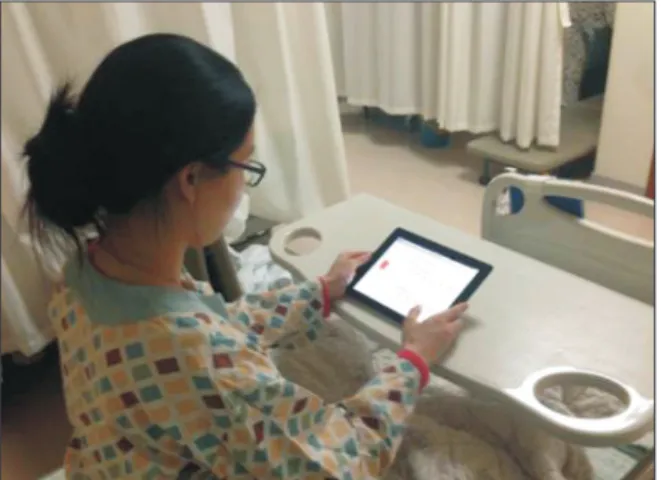
site via the institutional WiFi and the data were downloaded from the website in the Microsoft Excel 2010 file format. Data Fig. 2. Patient using self-reporting application.
Fig. 3. Pain assessment question- naire.
How severe is throat pain?
No pain Worst pain
0 10
How severe is anterior neck pain?
No pain Worst pain
10 0
How severe is right chest pain?
No pain Worst pain
0 10
How severe is left chest pain?
No pain Worst pain
0 10
How severe is posterior neck pain?
No pain Worst pain
0 10
How severe is back pain?
No pain Worst pain
0 10
input times for each question were recorded.
Statistical analysis
Results were analyzed with IBM SPSS Statistics ver. 19.0 (IBM Co., Armonk, NY, USA). Univariate analysis was performed using the Student ttest for continuous variables and chisquare or Fisher exact tests for categorical variables. Differences were
considered significant when P < 0.05.
RESULTS
From March 2013 to May 2014, 54 patients were enrolled for
Table 1. Clinicopathological characteristics of the open and robotic thyroidectomy group
Characteristic Open thyroidectomy
(n = 27)
Robotic thyroidectomy
(n = 27) P-value
Age (yr) 38.9 ± 7.5 36.0 ± 8.3 0.191
Body mass index
(kg/m2) 23.9 ± 4.0 22.1 ± 3.3 0.085
Tumor size (cm) 0.9 ± 0.5 0.8 ± 0.4 0.436
Multifocality 7 (25.9) 7 (25.9) 1.000
Extrathyroidal extension 18 (66.7) 16 (59.3) 0.573 Lymphovascular
invasion 6 (22.2) 8 (29.6) 0.535
Thyroiditis 9 (33.3) 10 (37.0) 0.776
T stage
T1 8 (29.6) 11 (40.7) 0.451
T2 1 (3.7) 0 (0)
T3 18 (66.7) 16 (59.3)
N stage
N0 11 (40.7) 13 (48.1) 0.584
N1a 16 (59.3) 14 (51.9)
TNM stage
I 24 (88.9) 25 (92.6) 1.000
III 3 (11.1) 2 (7.4)
Values are presented as mean ± standard deviation or number (%).
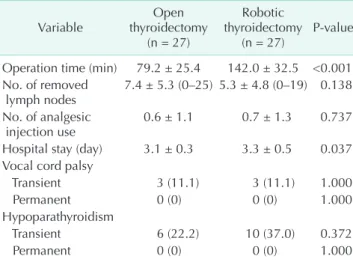
Table 2. Surgical outcomes of the open and robotic thyroi- dectomy group
Variable Open
thyroidectomy (n = 27)
Robotic thyroidectomy
(n = 27) P-value Operation time (min) 79.2 ± 25.4 142.0 ± 32.5 <0.001 No. of removed
lymph nodes 7.4 ± 5.3 (0–25) 5.3 ± 4.8 (0–19) 0.138 No. of analgesic
injection use 0.6 ± 1.1 0.7 ± 1.3 0.737
Hospital stay (day) 3.1 ± 0.3 3.3 ± 0.5 0.037 Vocal cord palsy
Transient 3 (11.1) 3 (11.1) 1.000
Permanent 0 (0) 0 (0) 1.000
Hypoparathyroidism
Transient 6 (22.2) 10 (37.0) 0.372
Permanent 0 (0) 0 (0) 1.000
Values are presented as mean ± standard deviation (range) or number (%).
Table 3. Visual analog scale for the postoperative pain of the open and robotic thyroidectomy group
Variable Open
thyroidectomy (n = 27)
Robotic thyroidectomy
(n = 27) P-value Throat pain
Day 1 4.6 ± 2.4 5.0 ± 1.9 0.425
Day 2 3.5 ± 2.4 4.0 ± 1.8 0.374
Day 3 2.4 ± 2.6 2.7 ± 1.7 0.546
Day 14 1.9 ± 2.2 1.2 ± 1.4 0.191
Anterior neck pain
Day 1 4.6 ± 2.2 4.2 ± 2.2 0.512
Day 2 3.3 ± 2.4 4.1 ± 1.5 0.141
Day 3 2.3 ± 2.5 3.0 ± 1.5 0.245
Day 14 2.2 ± 2.1 2.4 ± 2.3 0.713
Posterior neck pain
Day 1 3.0 ± 2.5 4.2 ± 2.9 0.145
Day 2 2.6 ± 2.9 3.1 ± 2.8 0.582
Day 3 1.9 ± 2.2 1.9 ± 2.0 0.950
Day 14 0.8 ± 1.3 1.4 ± 2.2 0.179
Back pain
Day 1 1.5 ± 2.3 2.4 ± 2.3 0.143
Day 2 1.5 ± 1.9 2.1 ± 1.9 0.237
Day 3 1.1 ± 1.8 1.6 ± 1.9 0.383
Day 14 0.6 ± 1.3 1.0 ± 1.6 0.311
Values are presented as mean ± standard deviation.
Visual analog scale ranges 0 (no pain) to 10 (worst pain).
Table 4. Satisfaction score for voice quality and wound in the open and robotic thyroidectomy group
Variable Open
thyroidectomy (n = 27)
Robotic thyroidectomy
(n = 27) P-value Voice quality
satisfaction
Day 1 3.4 ± 2.5 4.3 ± 2.4 0.164
Day 2 3.4 ± 2.4 3.7 ± 1.9 0.641
Day 3 2.3 ± 2.5 2.7 ± 1.8 0.511
Day 14 3.3 ± 3.1 2.7 ± 2.7 0.483
Voice Handicap
Index-10 11.7 ± 9.1 12.2 ± 8.0 0.849
Wound satisfaction
at day 14 5.7 ± 2.6 7.4 ± 2.6 0.024
Values are presented as mean ± standard deviation.
Visual analog scale ranges 0 (no voice change) to 10 (worst voice change) for voice quality satisfaction. Visual analog scale ranges 0 (least satisfied) to 10 (most satisfied) for wound satisfaction at day 14.
the study (27 for OT, 27 for RT group). Patient demographics and clinicopathological characteristics are demonstrated in Table 1. There were no significant differences between the OT and RT groups in terms of age, body mass index, tumor size, multifocality, extrathyroidal extension, lymphovascular inva
sion, presence of thyroiditis, and TNM stage.
Table 2 demonstrates surgical outcomes of the OT and RT groups. RT group was associated with longer operation time (79.2 ± 25.4 minutes for OT vs. 142.0 ± 32.5 minutes for RT, P < 0.001), and longer hospital stay (3.1 ± 0.3 days for OT vs.
3.3 ± 0.5 days for RT, P = 0.037) than OT group. There was no significance difference in the number of removed lymph nodes (7.4 ± 5.3 for OT vs. 5.3 ± 4.8 for RT, P = 0.138). No significant differences were found in the total number of analgesic injections during hospitalization (0.6 ± 1.1 for OT vs. 0.7 ± 1.3 for RT, P = 0.737) or postoperative complications such as transient vocal cord palsy (11.1% for OT vs. 11.1% for RT, P = 1.000) and transient hypoparathyroidism (22.2% for OT vs. 37.0% for RT, P = 0.372). There was no complication such as open conversion from RT, tracheal injury, hematoma, chyle leak, or wound problem in either of the groups.
Postoperative pain scores at days 1, 2, 3, and 14 were not significantly different in the 2 groups for throat, anterior neck, posterior neck, or back (Table 3). Mean postoperative pain scores at days 1, 2, 3, and 14 were 3.6, 2.9, 2.3, and 1.4, respectively for the right chest, and 4.5, 3.2, 2.5, and 1.4, respectively for the left chest. Table 4 showed that patient satisfaction for voice quality was similar at days 1, 2, 3, and 14 in the 2 groups, and the mean VHI10 scores at day 14 were similar between the groups (OT 11.7 ± 9.1 vs. RT 12.2 ± 8.0, P = 0.849). Wound satisfaction scores of the RT group were higher than the OT group (OT 5.7
± 2.6 vs. RT 7.4 ± 2.6, P = 0.024). Satisfaction scores for the usefulness of SRA were 7.6 ± 2.2, 7.6 ± 2.2, 7.2 ± 2.1, and 7.5 ± 2.2 on the 10point scale (Table 5).
DISCUSSION
With the evolution of endoscopic and robotic surgical tech
niques for thyroidectomy, appropriate assessment and man
agement of postoperative pain for these patients are essential as pain management can be often overlooked amidst all the
interest towards success of the novel surgical approach [9].
Furthermore, some of the patients, especially in pediatric pop ulations, may not have acquired appropriate cognitive or social communication skills [10]. Regarding postoperative pain for BABA RT, compared to conventional open thyroidectomies which are generally well tolerated, one may expect a signi
ficantly greater pain associated with BABA RT given the wide skin flap creation.
Postoperative pain score at days 1, 2, 3, and 14 were not significantly different in the 2 groups for throat, anterior neck, posterior neck, or back, which is in concordance with the results by Ryu et al. [11], who reported that transaxillary RT does not cause more pain nor does it require more analgesic injection after surgery when compared with OT. As for possible reasons for similar pain after RT with OT, Ryu et al. [11]
suggested that the axilla is less sensitive to pain and less mobile than the neck. In addition, it might be because postoperative pain is more dependent on the pressure put into the skin incision and strap muscles during the operation rather than the range of the dissection. During the BABA RT procedure, little pressure is applied to the incision sites because the robotic arms are relatively fixed and supported at pivot points, whereas the neck skin and strap muscles are extensively stretched and manipulated by retractors during OT.
Meanwhile, subcutaneous tunneling from the both areolae to the neck area is a unique process in BABA RT, and causes chest pain, which is not present in the OT group patients.
Chest pain scores in the BABA RT group at days 1, 2, and 3 were considerable. However, the mean pain scores at day 14 decreased to 1.4 and the pain score of 1.4 can be considered minimum based on the pain scale of 0 to 10, and can be properly treated with usual analgesic medications.
Thyroid cancer patients choose RT mainly for the cosmetic purpose. More than 85% of the patients who undergo RT are female [6,12], and they do not want to leave visible scars on the neck. The cosmetic satisfaction in patients who underwent unilateral transaxillary RT was reported to be higher than patients who underwent OT [13,14]. In this study, wound satisfaction scores at day 14 were significantly higher in the BABA RT group than in the OT group (7.4 ± 2.6 vs. 5.7 ± 2.6, P = 0.024), which suggests that BABA RT is superior to OT in Table 5. Questionnaire about the usefulness of self-reporting application
Question Satisfaction score
How satisfied are you with the use of self-reporting application as an input method? 7.6 ± 2.2 Would it be helpful for you if the other doctors could use your information? 7.6 ± 2.2 Would it be helpful if your family members could communicate with the medical team using this system? 7.2 ± 2.1 Would it be helpful if your medical information is shared with your family members under your consent? 7.5 ± 2.2 Values are presented as mean ± standard deviation.
Visual analog scale ranges 0 (never agree) to 10 (totally agree).
terms of cosmesis. These results are partially limited due to the small number of study patients, and further study with larger population and longer followup is necessary for more accurate comparison of OT and BABA RT.
In this study, SRA was optimized to evaluate postoperative pain as objectively as possible at multiple potential pain sites.
For example, we have assessed throat pain separately from anterior neck pain in order to distinguish the pain related to flap formation in BABA RT patients from routine sore throat observed in the OT patients. Another benefit of this system is the convenience of instant automatic upload of user input to the database, which can be easily retrieved in an Excel format.
Previous studies have demonstrated positive effects on management of diabetes or hypertension patients using mobile applications [15,16]. Mobile applications are also useful for evaluation of medical care satisfaction for patients [17].
One limitation of such patient directed application is that it requires familiarity and active participation from the patient.
Therefore, health care providers should offer appropriate education and motivation to use the application regularly. In this study, we have uploaded several educational video clips in the iPad and provided free WiFi service to encourage the use of the device. We also demonstrated that a mobilebased application can be easily used for pain assessment among the hospitalized patients, and found potential benefits in utilizing
this in accurate pain assessment and immediate intervention, which are essential for pain management in the future. Further efforts to make SRA more userfriendly are necessary in order to promote facile exchange of feedback between patients and health care providers, especially in elderly or adolescent patients. For the future, in addition to being a study tool, it would be more meaningful if SRA can be used as an actual pain management tool according to the pain score with an immediate feedback method.
In conclusion, this is the first study to evaluate postoperative pain after BABA RT in comparison to OT. The results suggest that BABA RT offers greater cosmetic satisfaction without increased pain compared to OT. Furthermore, utilization of mobile applications such as SRA for pain assessment can be useful and potentially beneficial for pain management as well.
CONFLICTS OF INTEREST
No potential conflict of interest relevant to this article was reported.
ACKNOWLEDGEMENTS
This study was supported by Korean Foundation for Cancer Research (grant number: CB20110301).
1. Kim WW, Kim JS, Hur SM, Kim SH, Lee SK, Choi JH, et al. Is robotic surgery supe
rior to endoscopic and open surgeries in thyroid cancer? World J Surg 2011;35:779
84.
2. Kang SW, Jeong JJ, Yun JS, Sung TY, Lee SC, Lee YS, et al. Robotassisted endo
scopic surgery for thyroid cancer: ex
perience with the first 100 patients. Surg Endosc 2009;23:2399406.
3. Lee S, Lee CR, Lee SC, Park S, Kim HY, Son H, et al. Surgical completeness of robotic thyroidectomy: a prospective comparison with conventional open thyroidectomy in papillary thyroid carcinoma patients. Surg Endosc 2014;28:106875.
4. Lee KE, Choi JY, Youn YK. Bilateral axillo
breast approach robotic thyroidectomy.
Surg Laparosc Endosc Percutan Tech 2011;
21:2306.
5. Kim HY, d'Ajello F, Woo SU, Son GS, Lee JB, Bae JW. Robotic thyroid surgery using bilateral axillobreast approach: personal initial experience over two years. Minerva Chir 2012;67:3948.
6. Lee KE, Kim E, Koo do H, Choi JY, Kim KH, Youn YK. Robotic thyroidectomy by bilateral axillobreast approach: review of 1,026 cases and surgical completeness.
Surg Endosc 2013;27:295562.
7. Lee KE, Koo do H, Im HJ, Park SK, Choi JY, Paeng JC, et al. Surgical completeness of bilateral axillobreast approach robo tic thyroidectomy: comparison with con
ven tional open thyroidectomy after pro
pensity score matching. Surgery 2011;150:
126674.
8. Lee KE, Koo do H, Kim SJ, Lee J, Park KS,
Oh SK, et al. Outcomes of 109 patients with papillary thyroid carcinoma who underwent robotic total thyroidectomy with central node dissection via the bilateral axillobreast approach. Surgery 2010;148:120713.
9. Breivik H, Stubhaug A. Management of acute postoperative pain: still a long way to go! Pain 2008;137:2334.
10. Stanford EA, Chambers CT, Craig KD. A normative analysis of the development of painrelated vocabulary in children. Pain 2005;114:27884.
11. Ryu HR, Lee J, Park JH, Kang SW, Jeong JJ, Hong JY, et al. A comparison of post
operative pain after conventional open thyroidectomy and transaxillary single
incision robotic thyroidectomy: a pro spec
tive study. Ann Surg Oncol 2013;20:2279
REFERENCES
84.
12. Ban EJ, Yoo JY, Kim WW, Son HY, Park S, Lee SH, et al. Surgical complications after robotic thyroidectomy for thyroid carci
noma: a single center experience with 3,000 patients. Surg Endosc 2014;28:2555
63.
13. Lee J, Nah KY, Kim RM, Ahn YH, Soh EY, Chung WY. Differences in postoperative outcomes, function, and cosmesis: open versus robotic thyroidectomy. Surg Endosc 2010;24:318694.
14. Tae K, Ji YB, Cho SH, Lee SH, Kim DS, Kim TW. Early surgical outcomes of robotic thy roidectomy by a gasless unilateral axillobreast or axillary approach for papi llary thyroid carcinoma: 2 years' ex
perience. Head Neck 2012;34:61725.
15. Årsand E, Froisland DH, Skrovseth SO, Chomutare T, Tatara N, Hartvigsen G, et al. Mobile health applications to assist patients with diabetes: lessons learned and design implications. J Diabetes Sci Technol 2012;6:1197206.
16. Hallberg I, Taft C, Ranerup A, Bengtsson U, Hoffmann M, Hofer S, et al. Phases in development of an interactive mobile phonebased system to support selfman
agement of hypertension. Integr Blood Press Control 2014;7:1928.
17. Turney BW, Reynard JM. Obtaining pa
tient feedback in an outpatient litho tripsy service is facilitated by use of a touch
screen tablet (iPadTM) survey. Urolithiasis 2014;42:31721.