교근에 발생한 고대 신경초종 -증례보고-
최은주1),2), 박일경1), 정영곤1), 최문기1),2), 권경환1,)2), 박원종1),2)*
원광대학교 치과대학 1)구강악안면외과, 2)원광치의학연구소
<Abstract>
Ancient Schwannoma Arising in Masseter Muscle: A Case Report
Eun-Joo Choi
1),2), Il-Kyung Park
1), Yeong-Kon Jeong
1), Moon-Gi Choi
1),2), Kyung-Hwan Kwon
1),2), Won-Jong Park
1),2)*1)
Department of Oral and Maxillofacial Surgery, College of Dentistry, Wonkwang University, Iksan, Korea
2)
Wonkwang Dental Research Institute, College of Dentistry, Wonkwang University, Iksan, Korea
Schwannoma, benign neoplasia derived from schwann cell, is rare tumor, and prevalent in tongue, palate, floor of mouth and buccal mucosa. Thirty-six-year-old male with asymptomatic protrusion of mandible angle was evaluated. We surgically removed the mass and histological examination gave the diagnosis of ancient schwannoma. We report a case of ancient schwannoma in masseter muscle and review of literature.
Key words : Ancient schwannoma, Masseter muscle, Histology
Korean Journal of Oral and Maxillofacial Pathology 2017;41(2):091-095 ISSN:1225-1577(Print); 2384-0900(Online) Available online at http://journal.kaomp.org https://doi.org/10.17779/KAOMP.2017.41.2.005
* Correspondence: Won Jong Park, Assistant Professor,
Department of Oral and Maxillofacial surgery, College of Dentistry, Wonkwang University 460 Iksandae-ro, Iksan, Jeonbuk, Republic of Korea, 54538
Tel : 82-63-850-6636 E-mail : [email protected] ORCID : 0000-0001-6687-5043
Ⅰ. INTRODUCTION
Schwannoma is slow-growing, benign neoplasia derived from schwann cell, the sheath cells that cover myelinated nerve fibers1). It is relatively rare benign tumor which is prevalent in head and neck region, though it could arise in any region of body. In oral cavity, it is prevalent in tongue, palate, floor of mouth and buccal mucosa, and there are three previous cases of tumor arising from
masseter muscle.
Ackerman and Taylor (1951) reported 10 cases with similar features of a typical neurilemmoma but considered distinctive because significant portion of these tumors contained degenerative changes, named ancient schwannoma2). To our knowledge there has not been any case reported of an ancient schwannoma in the masseter in the scientific literature. This case report is about ancient schwannoma arising from masseter of young male adult, to be removed with intraoral approach. In addition, we are to discuss about possible pathogenesis of schwannoma.
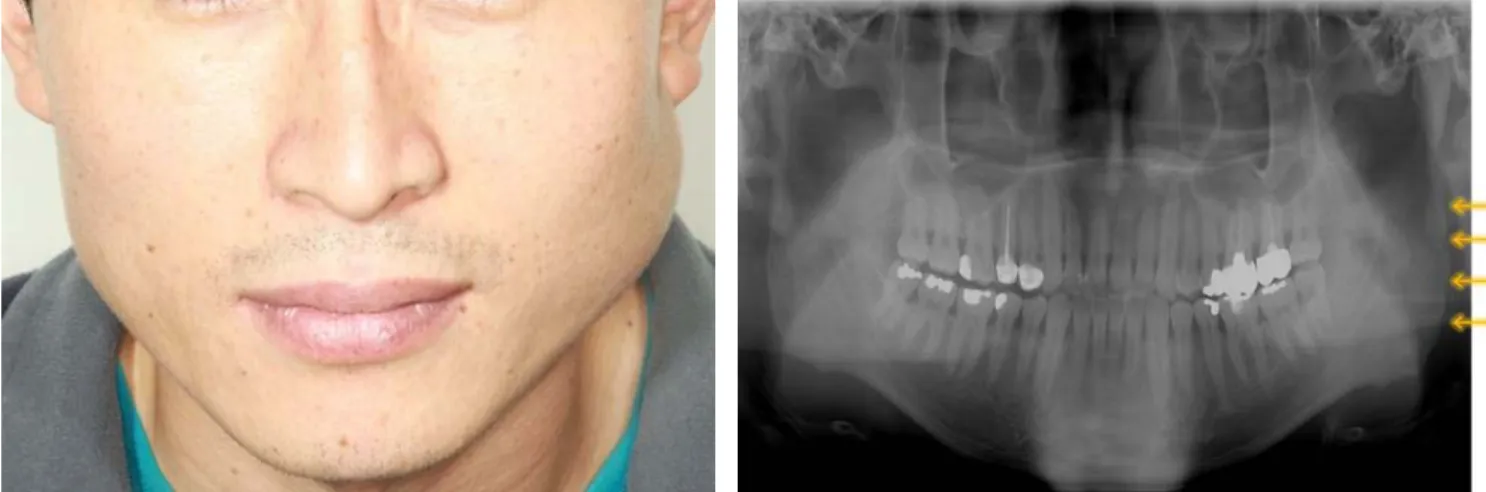
Fig. 1. Preoperative facial view Fig. 2. Preoperative panoramic view.
Ⅱ. CASE REPORT
Thirty-six-year-old male visited with chief complaint of asymptomatic protrusion of mandible angle, left. He did not concisely remember first onset, and stated that the volume of angle was slowly increased. On palpation masseter muscle, it was suspected to be hypertrophic state without pain. The patient showed favorable occlusion with no mouth opening limitation. Panoramic radiography did not revealed any intrabony radiolucent lesion of jaw bone, however there was irregular posterior border on left ramus.
There was 3cm x 3cm sized, well defined, and hypodense lesion inside masseter muscle. The lesion was adjacent to mandible and cortical bone of adjacent mandible showed compressive resorption. The result of ultrasonography showed well-defined hypovascular solid mass, although only blood cells were found on fine-needle aspiration biopsy. Laboratory data were within normal range. Clinical diagnosis was a benign tumor; lipoma, solitary fibrous tumor, neurofibroma, or schwannoma.
Mass was surgically removed under general anesthesia.
After nasotracheal intubation, the lesion was approached through a mucosal incision over the anterior portion of the ramus of the mandible. Blunt dissection was performed within the masseter muscle, and the lesion was identified.
The mass was loosely attached to the muscle and was excised. It measured 3.5cm in diameter, and well encapsulated and gray in color. Histological examination gave the diagnosis of ancient schwannoma consisting of both Antoni A and B cells. Tumor cells were positively stained with s-100 immunohistochemically. Patient was healed without any neurologic sequelae, and maintained without the evidence of recurrence on 9-month follow-up.
Ⅲ. DISCUSSION
The differential diagnosis of mass appearing to arise from the masseter muscle includes benign processes, such as masseteric hypertrophy, hemangioma, lipoma and neurogenic tumor. In this patient, enhanced CT and ultrasonography revealed the mass is neither masseteric hypertrophy nor hemangioma with findings of well-defined mass with hypovascularity. Lipomas are commonly soft and superficial but it can infiltrate entirely into adjacent muscle3). This intramuscular subtype can present as a painless, sharply circumscribed, radiolucent defect within a muscle4). Also, neurogenic tumor also considered, though it has been rarely developed within masseter muscle. Consequently, in this case, histologic findings revealed that it is ancient
Fig. 3. Preoperative C.T. Fig. 4. Ultrasonogram shows
Fig. 5. Low-power photomicrograph of an ancient schwannoma arising in masseter.
Fig. 6. The mass comprises the Antoni A (A) area and the Antoni B (B) area
schwannoma.
Schwannoma is slow-growing, benign neoplasia derived from schwann cell, the sheath cells that cover myelinated nerve fibers1). Ackerman and Taylor (1951) reported that ancient schwannoma could not be distinguished from the other subtypes of schwannoma2). Typically, those lesions that are long-standing may undergo degenerative ‘ancient’
changes dominated by large cystic, myxoid areas with variable bizarre spindle cells and even occasional mitoses5). Reviewing the literature, only seven cases of ancient schwannoma had been reported. The most common site of occurrence in the oral cavity is the anterior portion of
tongue. Reports show that the palate, buccal mucosa and floor of the mouth can be also involved6).
In our case, tumor was identified by clinical symptoms mimicking masseter hypertrophy, and CT revealed the lesion was within in the masseter muscle. There were 2 previous reports of schwannomas arising in intramasseteric region7),8), but in this case, the tumor arose in different portion of masseter, and showed different clinical characteristics.
Nakamura et al. reported 4cm-sized schwannoma arising on coronoid portion of masseter muscle, suggested that it was originated from the branch of masseteric nerve7). He Y et al. reported that 2cm-sized schwannoma arising on
superficial portion of masseter muscle of child8). They reported that there was no bony erosion or destructive lesion. However, tumor of this case was located in deeper portion of masseter than previous cases. Masseteric nerve runs between superior portion of lateral pterygoid muscle and ceiling, running through sigmoid notch, and finally distributes deep portion of masseter. With consideration of this course of masseteric nerve, this tumor is suggestive to be originated from efferent component of masseteric nerve.
In this case, adjacent cortical bone to the tumor showed cortical erosion with scalloped border, even posterior border of ramus with no contact to the tumor showed irregular shape. Schwannoma which arises inside of the bone marrow causes osteolytic lesion, although extraosseous schwannoma rarely causes mandibular erosion. There are 3 mechanisms by which schwannomas may involve bone: (1) a tumor may arise centrally within bone, (2) a tumor may arise within the nutrient canal and produce canal enlargement, or (3) a soft tissue or periosteal tumor may cause secondary erosion and penetration into bone9),10),11). Worth described neural sheath tumors that arise subperiosteally causing saucerization of the bone. These tumors are radiolucent and may or may not have a cortical outline12).
Baranovic et al reported that schwannoma at lingual mucosa can induce the bony erosion13). However, several cases had been reported that bony erosion induced by schwannoma at lingual nerve and mental nerve13),14). In this patient, there was only skeletal muscle around the encapsulated mass and no periosteum, which suggests that this neoplasm might be occurred from inside of the muscle.
Etiologies of schwannoma had been suspected to several sources, but trauma is thought to be an etiology of intraoral schwannoma, especially to the tongue schwannoma. Pineda suggested that the growth of mast cell caused by multiplication of epithelial cells is the cause of schwannoma and Skinner suggested the expansion and irregular
alignment of sheath cell in embryologic phase15),16). Tronconi suggested intraoral irregular stimulus or imbalance of neurotic schwannian fibrotic system, and Quintarelli suggested intraoral trauma17),18). In this case, irregularity at posterior border of mandible which is not contacted to tumor can be explained by modelling caused by masseter hypertrophy. In this process, proliferation of schwann cell might be induced by traumatic activation by excessive constriction of masseter muscle and excessive activation of motor nerve.
Because ancient schwannomas cannot be distinguished from conventional schwannoma by clinical features, histological assessment must be performed.
In summary, this could be the first reported case of ancient schwannoma arising from the masseter muscle found in a 36 years old male patient.
Ⅳ. SOURCES OF SUPPORT IN THE FORM OF GRANTS
This study was supported by Wonkwang University in 2015