Introduction
Anterior cruciate ligament (ACL) ruptures are one of the most common sportsrelated knee injuries. ACL reconstruction is
usually reserved for young, athletic patients and is commonly performed to restore knee stability and reduce the risk of further injuries and progression of degenerative changes
1). Recreational athletes of more than 40 years of age are increasing steadily, and they frequently participate in physically demanding sports
2,3).
Early reports on the treatment of ACL injuries suggested a non
surgical regimen for middleaged patients. Patients were advised to modify their physical activities, along with physical therapy and functional bracing. This conservative treatment approach was based on concerns of higher rates of postoperative arthro
fibrosis, loss of extension, and poorer results following ACL reconstruction in middle aged patients; thus, they are initially indicated for physiotherapy, and the need for surgery is consid
ered afterwards
4). Generally, due to ongoing degenerative changes of intraarticular soft tissues, concomitant chondral damage, and
A Comparison of Results after Anterior Cruciate
Ligament Reconstruction in over 40 and under 40 Years of Age: A MetaAnalysis
KunTae Kim, MD 1 , HyunJung Kim, PhD 2 , HyangIm Lee, MD 3 , YoungJin Park, MD 1 , DongGeun Kang, MD 4 , JunIll Yoo, MD 1 , DongKyu Moon, MD 1 , SungHee Cho, MD 1 , and SunChul Hwang, MD, PhD 1
1
Department of Orthopaedic Surgery, Institute of Health Sciences, Gyeongsang National University Hospital, Gyeongsang National University School of Medicine, Jinju;
2Institute for Evidencebased Medicine, Department of Preventive Medicine, Korea University College of Medicine, Seoul;
3Department of Pathology, Gyeongsang National University Hospital, Gyeongsang National University School of Medicine, Changwon;
4Department of Orthopaedic Surgery, Institute of Health Sciences, Gyeongsang National University Hospital, Gyeongsang National University School of Medicine, Changwon, Korea
Purpose: Anterior cruciate ligament (ACL) injury is one of the most common injuries that occur in the knee, and ACL reconstruction (ACLR) is commonly performed for preventing aggravation of degenerative changes and restoring of knee stability in young, athletic patients. This meta
analysis has a purpose of evaluating the clinical and arthrometrical outcomes of ACLR in a group of middle age patients (40 years and older) and comparing with patients under 40 years of age.
Methods: MEDLINE, EMBASE, the Cochrane Central Register of Controlled Trials, Web of Science, and SCOPUS electronic databases were searched for relevant articles comparing the outcomes of ACLR between younger and older than 40 years of age until December 2016. Data searching, extraction, analysis, and quality assessment were performed based on the Cochrane Collaboration guidelines. Clinical outcomes were evaluated and compared between groups. The results were presented as mean difference for continuous outcomes with 95% confidence intervals whereas risk ratio for binary outcomes.
Results: Seven studies were included in the metaanalysis. Based on International Knee Documentation Committee classification, sidetoside difference, Tegner activity score, Lysholm knee score, there were no significant clinical and mechanical differences between the groups.
Conclusions: This metaanalysis confirmed that after ACLR, middle age (>40 years) and young age (<40 years) patients did not present with significant difference in clinical and arthrometric results.
Keywords: Knee, Anterior cruciate ligament, Reconstruction, Age, Meta-analysis pISSN 2234-0726 · eISSN 2234-2451
Knee Surgery & Related Research
Received August 13, 2017; Revised (1st) October 9, 2017;
(2nd) December 8, 2017; Accepted December 22, 2017 Correspondence to: SunChul Hwang, MD, PhD
Department of Orthopaedic Surgery, Institute of Health Sciences, Gyeongsang National University Hospital, Gyeongsang National University School of Medicine , 79 Gangnamro, Jinju 52727, Korea Tel: +82557508102, Fax: +82557619477
Email: [email protected]
95
This is an Open Access article distributed under the terms of the Creative Commons Attribution NonCommercial License (http://creativecommons.org/licenses/bync/4.0/) which permits unrestricted noncommercial use, distribution, and reproduction in any medium, provided the original work is properly cited.
Copyright © 2018 KOREAN KNEE SOCIETY www.jksrr.org
meniscal injury, the prognosis is not favorable after ACL recon
struction in middle age patients (>40 years). However, it is well known that especially active patents of any age are increasingly unwilling to change their sports activities and request restora
tion of intact overall knee function. Recent data have shown that the results of ACL reconstruction in patients over the age of 40 years, with or without concomitant degenerative changes, are comparable to those in younger patients
4). Good results of ACL reconstruction in patients over 40 years have been widely docu
mented as much as those in younger patients. Although several authors reported no statistically significant difference in clinical results between the two different age groups
5), few systematically reviewed the literature for comparison on the efficacy of ACL reconstruction between over 40 and under 40 years of age.
The purpose of this study is to compare the outcomes of ACL reconstruction between middle age patients (>40 years) and younger patients (<40 years) through systematic review of data extracted from all the included studies. We hypothesized that pa
tients older than 40 years of age would achieve clinical outcomes of ACL reconstruction comparable to those in patients younger than 40 years of age.
Methods
1. Data and Literature Sources
The study design was based on Cochrane review methods. A systematic search of MEDLINE, EMBASE, Cochrane, SCOPUS and Web of science (January 1996 to December 2016) was con
ducted to identify results of ACL reconstruction in over 40 years (middle age patients) and under 40 years (younger patients).
These databases were searched for the relevant articles by use of the following keywords: “anterior cruciate ligament”, “recon
struction”, “age”, and “middle age”. References of each selected article were manually searched for any article that may have been missed during the database search. Authors performed the search for the relevant articles, and the identified articles were included in this study based on consensus. Articles identified were as
sessed individually for inclusion.
2. Study Selection
We used multiple comprehensive databases to find literatures that compared outcomes of ACL reconstruction in over 40 years and under 40 years old. This study was based on the Cochrane methods of review, and reporting was in accordance with the PRISMA (Preferred Reporting Items for Systematic Reviews and MetaAnalyses) statement. To identify relevant studies, we used
the controlled vocabulary and free text words described in Ap
pendix 1 to search MEDLINE, EMBASE, the Cochrane Central Register of Controlled Trials, Web of Science, and SCOPUS da
tabases; we attempted to identify all relevant studies regardless of language, publication type (article, poster, conference paper, instructional course lecture, etc.), publication journal, or pub
lication year. This search was updated in December 2016 and includes reference lists of the studies and any review articles iden
tified. Study inclusion was decided by 2 independent researchers in accordance with selection criteria, and when it was difficult to evaluate the pertinence of the subject after reading titles and ab
stracts, the full article was perused. This metaanalysis included studies that meet the following criteria: (1) ACL reconstruction was done regardless of the presence of meniscal/chondral damage in addition to an ACL injury; (2) clinical outcomes (Tegner score, International Knee Documentation Committee [IKDC] classi
fication, and Lysholm knee score) or an arthrometric evaluation with KT1000 arthrometer (MEDmetric, San Diego, CA, USA) were described and compared between middle age and younger age groups with means and standard deviations (SDs) presented;
(3) ACL reconstruction was performed after 1990s. We excluded studies that did not compare the outcomes of ACL reconstruc
tion over 40 years and under 40 years old and singlearm studies that only described ACL reconstruction in one group. Cadaver studies and concomitant ligament injuries (medial/latera collat
eral ligament and posterior cruciate ligament) were excluded as well.
3. Data Extraction
Two investigators (SCH and DKM) independently recorded following data based on predefined data extraction form: (1) sur
gical technique, (2) type of graft (allograft: bone patella tendon, Achilles tendon, or tibialis anterior tendon; autograft: semitendi
nosus or gracilis tendon), (3) postoperative clinical score, radio
logic finding, and sidetoside difference, (4) sample size of each group, age, and sex, (5) concomitant degenerative change, and (6) type of complication. For records that the two investigators did not reach consensus on, they were reviewed by the third investi
gator.
4. Data Collection and Analysis
We (SCH and DKM) independently assessed the titles or ab
stracts of studies identified by the search strategy and then re
viewed full papers for final inclusion; we resolved uncertainties
through discussion and consensus. We independently abstracted
eligible data onto predefined forms and checked them for accu
racy. We also collected information on study characteristics (au
thors, journal title, and publication year), patient demographic data (sex, age, number of subjects in each group, and graft type), concomitant degenerative change, results of studies including Tegner score, IKDC classification, Lysholm knee score, and arthrometric evaluation with KT1000 arthrometer. Then, we determined the number of subjects and the means and SDs of the demographic data and clinical outcomes in the two age groups.
If theses variables were not reported in the articles, the study au
thors were contacted by email to request these data.
5. Assessment of Methodological Quality
For qualified analysis, the NewcastleOttawa quality assessment scale was adopted. The NewcastleOttawa assessment scale is a tool for evaluating clinical cohort studies, awarding a maximum of 9 stars on total 3 items including selection of subjects, com
parison between the two groups, and the evaluation of results for assessing validity of the research. In this analysis, studies with 1 star through 9 stars were all included. We did not conduct publi
cation bias test using the funnel plot of the 7 studies included in this metaanalysis, as the number of included studies was <10 in each field of research.
6. Statistical Analysis
The main purpose of this review was to compare clinical out
comes between a group of patients under 40 years old and a group of patients over 40 years old following ACL reconstruc
tion. To compare the functional outcome between groups, we assessed the sidetoside differences, the IKDC classification, Lysholm knee score, and Tegner activity score. We used Review Manager ver. 5.3 (The Cochrane Collaboration, Oxford, United Kingdom) to estimate the overall pooled effect size for each out
come, and we conducted a metaanalysis of the included studies using a randomeffects model. For the continuous outcomes, we calculated MDs with 95% confidence intervals (CIs) using an inverse variance method. For binary outcomes, the risk ratio (RR) was calculated. We assessed statistical heterogeneity among the studies using Isquared (I
2), with values of 25%, 50%, and 75%
considered low, moderate, and high, respectively. Cochrane’s Q statistic (chisquare test) was used for heterogeneity and p<0.10 was considered significant for heterogeneity.
Results
1. Identification of Studies
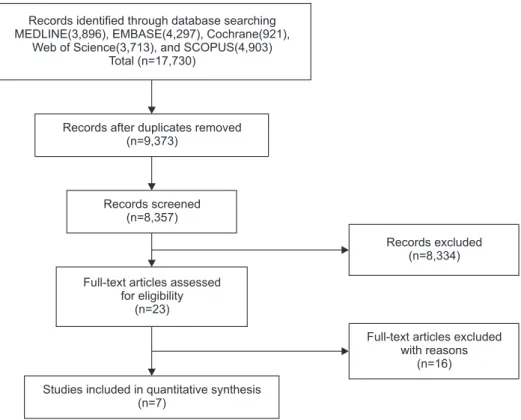
Fig. 1 shows the details of study identification, inclusion, and exclusion. We initially identified a total of 17,730 relevant articles.
Of these, 8,357 were duplicates in the databases. After screening the remaining 9,373 articles using titles and abstracts, we ex
cluded 9,350 because they were not relevant to the purpose of the
Records excluded (n=8,334)
Full-text articles excluded with reasons
(n=16) Records identified through database searching
MEDLINE(3,896), EMBASE(4,297), Cochrane(921), Web of Science(3,713), and SCOPUS(4,903)
Total (n=17,730)
Records after duplicates removed (n=9,373)
Records screened (n=8,357)
Full-text articles assessed for eligibility
(n=23)
Studies included in quantitative synthesis (n=7)
Fig. 1. PRISMA (Preferred Reporting Items for Systematic Reviews and Metaanalyses) flow diagram of identification and selec
tion of the studies included in this meta
analysis.
present study. Then, we excluded 16 articles following thorough a fulltext review of all 23 articles because they were published prior to 1990s, duration of followup period was less than 2 years, ACL reconstruction was performed after mid50s, and the knee joint injury was accompanied by other joint injuries. Finally, we
included 7 studies where such commonly used parameters as ar
thrometric evaluation (sidetoside difference), IKDC classifica
tion, Lysholm knee score, and Tegner activity score were adopted and groups were divided by age 40.
Table 1. The Characteristics of Clinical Studies
Study Journal Study design Level of evidence Year Study
period Age (yr),
mean (no.) Graft Concomitant
injury Followup time (mo) Conteduca
et al.
1)Int Orthop Retrospective
cohort study 3 2013 2002–2010 >40: 45.4 (36)
<40: NP (52) Autograft (semitendinosus, gracilis tendon)
Inclusion 42
Viola and
Vianello
9)Knee Surg Sports Traumatol Arthrosc
Retrospective
cohort study 3 1999 1991–1994 >40: 42.6 (11)
<40: 20.3 (11) Allograft (bonepatellar
tendonbone) Exclusion 29
Brandsson
et al.
7)Arthroscopy Retrospective
cohort study 3 2000 1991–1994 >40: 43 (30)
<40: 37 (37) Autograft (bone
patellar tendonbone) Inclusion 31 Gee et al.
8)Phys Sportsmed Retrospective
cohort study 3 2013 2000–2008 <40: 21 (48)
>40: 45 (46) Autograft (bonepatellar tendonbone, Achilles tendon), allograft (tibialis anterior)
Inclusion 60
Wierer et al.
4)Knee Surg Sports Traumatol Arthrosc
Retrospective
cohort study 3 2017 2010–2016 >40: 45 (20)
<40: 27 (39) Autograft (semitendinosus, gracillis tendon)
Exclusion 24
Barber et al.
6)Arthroscopy Retrospective
cohort study 3 2010 2002–2005 <40: 31 (21)
>40: 46 (11) Allograft (bonepatellar
tendonbone) Inclusion 35
Barber et al.
10)Arthroscopy Retrospective
cohort study 3 1996 1992–1994 <40: 27 (170)
>40: 44 (33) Allograft, autograft (bonepatellar tendonbone, Achilles tendon)
Exclusion 12
NP: not provide.
Table 2. The Characteristics of Clinical Studies
Study Technique Complication Radiologic findings
Conteduca et al.
1)Arthroscopic ACL reconstruction Both group: knee stiffness, arthrofibrosis, postoperative infection, wound healing problems, deep vein thrombosis
>40: failure (11%)
>40: osteoarthritis development
Viola and Vianello
9)Arthroscopic ACL reconstruction NP >40: normal or minimal change (small osteophytes without joint line narrowing)
Brandsson et al.
7)Arthroscopic ACL reconstruction >40: postoperative bleeding, meniscal injury >40: OA development Gee et al.
8)Arthroscopic ACL reconstruction >40: graft failure, arthrofibrosis, infection
(8.7%) No definite signs of OA
Wierer et al.
4)Arthroscopic ACL reconstruction NP No definite signs of OA
Barber et al.
6)Arthroscopic ACL reconstruction NP No definite signs of OA
Barber et al.
10)Arthroscopic ACL reconstruction >40: joint stiffness No definite signs of OA
ACL: anterior cruciate ligament, NP: not provide, OA: osteoarthritis.
2. Quality and Publication Bias of the Included Studies All 7 studies
1,4,610)were included for metaanalysis, and the risk of selection bias between the two groups was low. Assessable confounding factors did not exist for evaluation of demographic data. Followup period was recorded: the longer the period, the lower the risk of bias. All 7 studies included in this metaanalysis had a low risk of selection bias and compared demographic data of subjects undergoing ACL reconstructions in over 40 and un
der 40 years of age, with none assessing possible confounding factors. Followup was defined as the interval between surgery and outcome evaluation. A longer interval was associated with a higher risk of bias, because clinical score may change over time because of correction loss.
3. Outcomes of ACL Reconstruction in Age-Based Comparative Studies
A total of 369 ACL reconstructions were performed (170 in young patients; 199 in middle age patients) in the entire studies included. Among the 199 middle age patients, ACL injury only patients were 64 and the remaining 135 patients had degenerative changes with a meniscus tear or chondral damage accompany
ing the ACL injury. As for the surgical technique, anatomical single or doublebundle endoscopic ACL reconstruction, ar
throscopicallyassisted two incision technique, and isolated ACL reconstruction with hamstring tendon graft were performed.
Regarding the graft, autograft (hamstring, gracilis tendon, and bonepatellar tendonbone graft) and allograft (Achilles tendon and tibialis anterior tendon) were used. The followup period
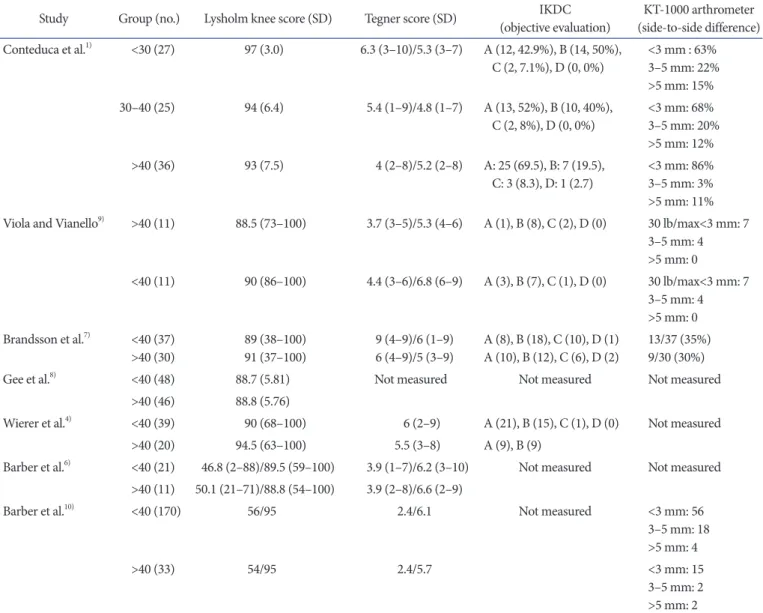
Table 3. Comparison of Clinical Outcomes between Groups in Included Studies
Study Group (no.) Lysholm knee score (SD) Tegner score (SD) IKDC
(objective evaluation) KT1000 arthrometer (sidetoside difference) Conteduca et al.
1)<30 (27) 97 (3.0) 6.3 (3–10)/5.3 (3–7) A (12, 42.9%), B (14, 50%),
C (2, 7.1%), D (0, 0%) <3 mm : 63%
3–5 mm: 22%
>5 mm: 15%
30–40 (25) 94 (6.4) 5.4 (1–9)/4.8 (1–7) A (13, 52%), B (10, 40%),
C (2, 8%), D (0, 0%) <3 mm: 68%
3–5 mm: 20%
>5 mm: 12%
>40 (36) 93 (7.5) 4 (2–8)/5.2 (2–8) A: 25 (69.5), B: 7 (19.5),
C: 3 (8.3), D: 1 (2.7) <3 mm: 86%
3–5 mm: 3%
>5 mm: 11%
Viola and Vianello
9)>40 (11) 88.5 (73–100) 3.7 (3–5)/5.3 (4–6) A (1), B (8), C (2), D (0) 30 lb/max<3 mm: 7 3–5 mm: 4
>5 mm: 0
<40 (11) 90 (86–100) 4.4 (3–6)/6.8 (6–9) A (3), B (7), C (1), D (0) 30 lb/max<3 mm: 7 3–5 mm: 4
>5 mm: 0 Brandsson et al.
7)<40 (37)
>40 (30) 89 (38–100)
91 (37–100) 9 (4–9)/6 (1–9)
6 (4–9)/5 (3–9) A (8), B (18), C (10), D (1)
A (10), B (12), C (6), D (2) 13/37 (35%) 9/30 (30%)
Gee et al.
8)<40 (48) 88.7 (5.81) Not measured Not measured Not measured
>40 (46) 88.8 (5.76)
Wierer et al.
4)<40 (39) 90 (68–100) 6 (2–9) A (21), B (15), C (1), D (0) Not measured
>40 (20) 94.5 (63–100) 5.5 (3–8) A (9), B (9)
Barber et al.
6)<40 (21) 46.8 (2–88)/89.5 (59–100) 3.9 (1–7)/6.2 (3–10) Not measured Not measured
>40 (11) 50.1 (21–71)/88.8 (54–100) 3.9 (2–8)/6.6 (2–9)
Barber et al.
10)<40 (170) 56/95 2.4/6.1 Not measured <3 mm: 56
3–5 mm: 18
>5 mm: 4
>40 (33) 54/95 2.4/5.7 <3 mm: 15
3–5 mm: 2
>5 mm: 2
SD: standard deviation, IKDC: International Knee Documentation Committee.
Study or Subgroup
Over 40 Under 40 Risk ratio
M-H, Random, 95% CI
Risk ratio M-H, Random, 95% CI Brandsson et al. 2000
Conteduca et al. 2013 Viola and Vianello 1999 Wierer et al. 2017
Total events
Heterogeneity: Tau =0.00; Chi =1.27, df=3 (p=0.74); I =0%
Test for overall effect: Z=0.07 (p=0.95)
7) 1) 9) 4)
2 2 2
Total (95% CI)
Weight 6.1%
31.1%
4.9%
57.8%
100.0%
1.04 [0.77, 1.41]
0.94
[0.79, 1.55]
1.01 [0.92, 1.12]
[0.83, 1.08]
1.11
1.00 [0.93, 1.07]
22 32 10 18
82
Events Total 30 36 11 18 95
Events 26 49 9 36
120 Total
37 52 11 37 137
0.7 0.85 1 1.2 1.5
Favours [over 40] Favours [under 40]
Fig. 2. Forest plot of International Knee Documentation Committee (IKDC). CI: confidence interval.
Study or Subgroup
Over 40 Under 40 Risk ratio
M-H, Random, 95% CI
Risk ratio M-H, Random, 95% CI Barber et al. 1996
Brandsson et al. 2000 Conteduca et al. 2013 Viola and Vianello 1999
Total events
Heterogeneity: Tau =0.00; Chi =2.50, df=3 (p=0.48); I =0%
Test for overall effect: Z=1.32 (p=0.19)
10) 7)
9)
2 2 2
Total (95% CI)
1)
Weight 19.7%
39.9%
24.4%
16.0%
100.0%
0.94 [0.35, 2.54]
0.85
[0.16, 0.98]
1.00 [0.33, 3.02]
[0.42, 1.72]
0.40
0.74 [0.48, 1.15]
0.1 0.2 1 2 10
Favours [over 40] Favours [under 40]
4 9 5 4
22
Events Total 33 30 36 11 110
Events 22 13 18 4
57
Total 170 37 52 11 270
0.5 5
Fig. 3. Forest plot of sidetoside difference. CI: confidence interval.
Study or Subgroup
Over 40 Under 40 Mean difference
IV, Random, 95% CI
Mean difference IV, Random, 95% CI Barber et al. 2010
Brandsson et al. 2000 Conteduca et al. 2013 Gee et al. 2013 Viola and Vianello 1999 Wierer et al. 2017
Heterogeneity: Tau =0.00; Chi =2.93, df=5 (p=0.71); I =0%
Test for overall effect: Z=0.96 (p=0.34)
6) 7) 1) 8)
9) 4)
2 2 2
Total (95% CI)
Weight 4.4%
5.1%
37.1%
52.5%
0.7%
0.3%
100.0%
0.70 [ 8.80, 7.40]
2.00 [ 5.54, 9.54]
2.60 [ 5.39, 0.19]
0.10 [ 2.25, 2.45]
1.50 [ 22.57, 19.57]
6.70 [ 24.09, 37.49]
0.83 [ 2.53, 0.87]
20 0 10
Favours [over 40] Favours [under 40]
10 20
89.5 89.0 95.6 88.7 90.0 79.1
21 37 52 48 11 39 208 Mean SD Total
10.3 15.5 4.9 5.8 35.0 44.8 88.8
91.0 93.0 88.8 88.5 85.8 Mean
11 30 36 46 11 20 154 Total SD 11.5 15.8 7.5 5.8 6.8 62.5
Fig. 4. Forest plot of Lysholm knee score. SD: standard deviation, CI: confidence interval.
Study or Subgroup
Over 40 Under 40 Mean difference
IV, Random, 95% CI
Mean difference IV, Random, 95% CI Barber et al. 2010
Brandsson et al. 2000 Conteduca et al. 2013 Viola and Vianello 1999 Wierer et al. 2017
Heterogeneity: Tau =0.64; Chi =17.83, df=4 (p=0.001); I =78%
Test for overall effect: Z=1.33 (p=0.18)
6) 7) 1) 9) 4)
2 2 2