• 검색 결과가 없습니다.

Spark Plasma Sintering of the Ni-graphite Composite Powder Prepared by Electrical Explosion of Wire in Liquid and Its Properties

N/A
N/A
Protected

Academic year: 2021

Share "Spark Plasma Sintering of the Ni-graphite Composite Powder Prepared by Electrical Explosion of Wire in Liquid and Its Properties"

Copied!
11
0
0

로드 중.... (전체 텍스트 보기)

전체 글

(1)

ISSN 1225-7591(Print) / ISSN 2287-8173(Online)

Spark Plasma Sintering of the Ni-graphite Composite Powder Prepared by Electrical Explosion of Wire in Liquid and Its Properties

Minh Thuyet-Nguyen a and Jin-Chun Kim b, *

a

School of Materials Science and Engineering, Hanoi University of Science and Technology, No 1, Dai Co Viet, Hai Ba Trung, Hanoi 100000, Vietnam

b

School of Materials Science and Engineering, University of Ulsan, 93 Daehak-ro, Nam-gu, Ulsan 44610, Republic of Korea (Received February 17, 2020; Revised February 21, 2020; Accepted February 21, 2020)

...

Abstract In this work, the electrical explosion of wire in liquid and subsequent spark plasma sintering (SPS) was introduced for the fabrication of Ni-graphite nanocomposites. The fabricated composite exhibited good enhancements in mechanical properties, such as yield strength and hardness, but reduced the ductility in comparison with that of nickel.

The as-synthesized Ni-graphite (5 vol.% graphite) nanocomposite exhibited a compressive yield strength of 275 MPa (about 1.6 times of SPS-processed monolithic nickel ~170 MPa) and elongation to failure ~22%. The hardness of Ni- graphite composite had a value of 135.46 HV, which is about 1.3 times higher than that of pure SPS-processed Ni (105.675 HV). In terms of processing, this work demonstrated that this processing route is a novel, simple, and low-cost method for the synthesis of nickel-graphite composites.

Keywords: Nanocomposite, Nickel, Graphite nanosheets, Mechanical properties, Electrical explosion of wire

...

1. Introduction

Carbonaceous nanomaterials, including carbon nano- tubes (CNTs), graphene and graphite nanosheet have remarkable potentials about mechanical and physical properties that could be listed as high mechanical strength, high elastic modulus as well as the high electri- cal and thermal conductivity material, which makes them become promising candidates for structural engineering and functional device applications [1]. Graphite recently has attracted considerable attention not only as a cost- effective substitute for carbon nanotubes but also enhance the mechanical properties, corrosion resistance and lighten the weight of parts in various industrial applica- tions [2]. Moreover, because of the excellent thermal conductivity, the graphite helps to dissipate the heat, therefore, metal-graphite composites are widely used for thermal management components in electronic devices.

In addition, metal matrix-graphite composites with the

magnetic matrices are promising materials due to the high potentials for applying in the magnetic field such as recording devices, magnetic shielding [3-6]. Among many kinks of metal-graphite composites, Ni-graphite composites are widely used in many applications such as conductive fillers [7], self-lubrication parts for automo- tive industry and tribological engineering parts [8, 9]. It was also used in electromagnetic interference (EMI) gas- kets, microwave absorber application [10] because of the positive characteristics which were the combination of thier components such as the good thermal, electrical conductivity and magnetic properties of nickel and the low thermal expansion coefficient, high lubrication prop- erties of graphite [11, 12]. Up to now, Ni-graphite com- posites have been mainly used in Ni-coated graphite powder type which was usually fabricated by using chemical and physical techniques such as oxidation and reduction methods [13, 14], or electroless deposition in alkaline coating bath [10, 15, 16]. Ni nanoparticles and

- M. Thuyet-Nguyen: 전임강사, 김진천: 교수

*Corresponding Author: Jin-Chun Kim, TEL: +82-52-712-8061, FAX: +82-52-259-1688, E-mail: [email protected]

(2)

Ni coated graphite composite were also widely used in coating or thin film types which have been applied in many applications requiring friction and wear resistance behavior [11, 17]. In term of bulk materials, the Ni- graphite composites have received less attention. They were typically prepared by a powder metallurgy (PM) process [8, 9, 18, 19]. However, the PM has certain lim- itations that primarily related to the poor affinity between Ni and graphite materials. This was not only led to the rising of weak interfaces between them but also negative effects on the structural, mechanical and magnetic prop- erties of their composites. In addition, the expensive price of the initial powder materials is also known as a disad- vantage of the PM process. Therefore, new methods for synthesis of this composite type have still got a lot of attention from researchers and manufacturers.

In this work, we present a new processing route which is the combination of EEW, ultrasonication and SPS methods for synthesizing the Ni-graphite nanocompos- ites. It is noted that the EEW process has been widely used to fabricate various types of nanosized metallic par- ticles as well as metallic alloyed powders. In addition, the electrical conductivity of graphite enables the EEW to produce nanosized graphite powder from graphite rods. Based on that concept, in this work, Ni-graphite nanocomposite powders were firstly fabricated by the EEW, subsequently sintered by the spark plasma sinter- ing (SPS) process to get the bulk specimens. The proper- ties of the as-synthesized composites include phases, mechanical were investigated then.

2. Experimental

Graphite rods with a diameter of 0.5 mm and Ni wires (purity of 99%) with a diameter of 0.25 mm were used in this work. Before exploding in EEW, the graphite rods were treated with a solution of nitric acid for 12-24 hours, then they were washed with deionized water and ethanol for several times and dried at 60

o

C for 5 hours.

The dried graphite rods were exploded in ethanol to pro- duce the graphite suspension. This suspension was ultra- sonicated for about 1 hour to obtain the better homo- genous. Subsequently, EEW was continuously performed to explode Ni wires (0.25 mm diameter and 40 mm length) in the as-prepared graphite suspension to fabri-

cate the Ni-graphite composite. The explosion times of the graphite rod and Ni wires were calculated based on the volume fraction of graphite and Ni in the desired composite following the formulas (1), (2) and (3).

According to these formulas, the ratio x/y is obviously calculated. Thus, with each value of x that we picked up, there is a correlative value of y. Therefore, the number of the explosion was determined. In this study, the volume fraction of Ni and graphite in their composite was 95 vol.% and 5 vol.%, respectively.

V

graphite

= (1)

V

nickel

= (2)

(3) Where: V

graphite

and V

nickel

are volume fraction of graph- ite and nickel in the desire composite; R

1

- radius of graphite rod; R

2

- is radius of Ni wire; L- the required length for using in EEW and x, y are the number of explosions of graphite rod and Ni wirein EEW, respec- tively.

After the explosion the as-exploded Ni-graphite com- posite powders were collected from their suspension and drying at 80

o

C under vacuum. Then, a heat treatment stage in H

2

atmosphere condition for 2 hours at 400

o

C was used to complete the synthesis of Ni-graphite com- posite powders. TheNi-graphitenano composite powders were then consolidated in the SPS equipment (Mod.

115S, Sumitomo Coal Mining Co.Ltd., Japan) at various temperatures (900

o

C, 1000

o

C and 1100

o

C) in vacuum condition under a pressure of 50 MPafor 10 minutes. The heating rate of SPS process was maintained at 50

o

C/min.

A JSM-6500F field emission scanning electron micro- scope (FE-SEM) and the X-ray diffraction (XRD) analy- ses (RigakuUltima III) were employed to observe the surface morphology, phases and microstructures of both powders and bulk samples. The density of the sintered specimens was measured by the Archimedes method.

The microhardness was measured by using a standard Vickers microhardness tester (Mitutoyo MVK-H1) under a load of 100 g for 15 seconds. In order to obtain a statis- tical distribution which reliably depicts the hardness of the sample, 10 times measurements were performed on

π R

1

2

L x

⋅ ⋅ ⋅ π R

22

⋅ ⋅ ⋅ L y x

y --- R

22

R

12

--- V

graphite

V

nickel

---

=

(3)

each sample. The compression tests were carried out on cylindrical specimens according to the standard ASTM E9-89a by using an INSTRON 5582 equipment to assess the strain, stress and deformation behaviors of the as-sin- tered composites.

3. Results and discussion

3.1 Characterization of as-synthesized graphite and Ni-graphite composite powders

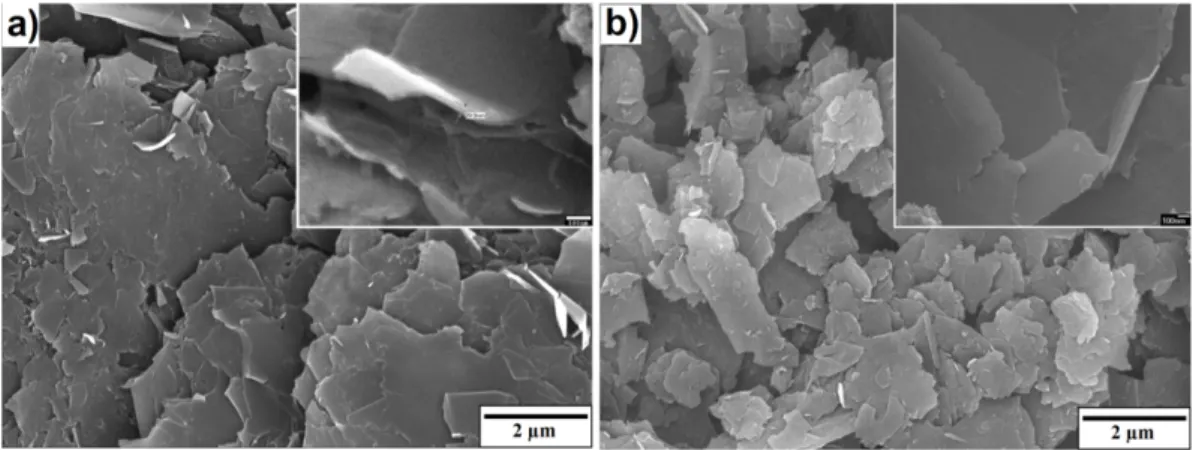
The morphology of the as-prepared graphite in EEW was observed by FE-SEM analysis, the results are shown in Fig. 1. The FE-SEM images show that the as-pre- pared graphite was in form of graphite sheets with the thickness of ~30 nm demonstrating that graphite nanosheets were successfully fabricated by exploding of graphite rods in EEW with ethanol condition. In Fig. 1(a) the graphite nanosheets were stuck together because of the agglomeration phenomenon in nano materials. There- fore, to overcome this phenomenon, after EEW the graphite suspension was ultrasonicated for 1 hour and, due to the effects of ultrasonic vibration

16)

and as shown in the Fig. 1(b), the graphite sheets were separated and relatively uniform with the diameter under 3 μm and the thickness of ~30 nm. The as-prepared graphite nanosheets exhibited a very thin thickness that means they could be endowed with the large surface area, an excellent prop- erty which is responsible for the formation of an electri- cal conductor within the composite or coating materials at the low graphite contents.

In a next step, Ni wires were exploded in the graphite suspension to produce Ni-graphite composite powders which were then collected, dried and heat treated in H

2

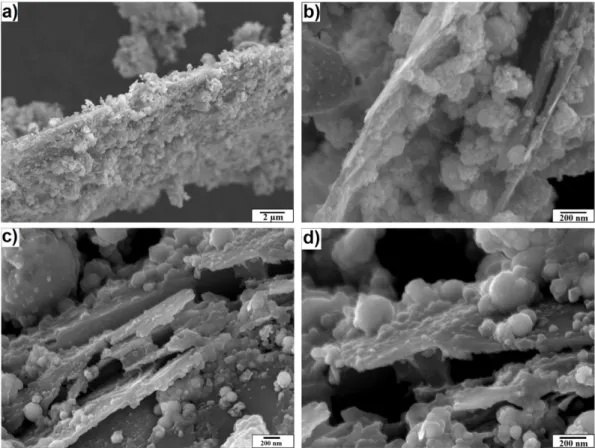
condition. Fig. 2 shows the morphology of the dried and heat treated powders. It could be seen that the Ni parti- cles were in spherical shapes and the particle sizes could be classified into two groups: the first one (nanoparti- cles) with a diameter under 100 nm and the second one (fine particles) with a diameter larger than 100 nm, how- ever, the first group is dominant. Furthermore, the FE- SEM images show that the graphite sheetswere coated by Ni particles on their surfaces. It could be thought that the Ni-coated graphite composite was formed during the EEW process due to the explosion of Ni wires to form Ni nanoparticles and the expansion of Ni nanoparticles into the graphite suspension. The expansion of Ni nanoparti- cles was random, therefore, the coating and the distribu- tion of Ni particles on the graphite nanoplates surface was also random. However, from SEM images we could observe that Ni particles coated tightly and homoge- neously on the surface of graphite nanosheets, even after heat treatment the coating still exhibited a clearly ses- ame-seed structure. It was seemed smoother and stron- ger than that in the as-prepared powders without heat treatment (Fig. 2). Moreover, Ni is known as a good coating ability material therefore, it could play of a valu- able role in the formation of Ni-coated graphite compos- ite powders in EEW process.

The XRD diffraction patterns of the as-prepared pow- ders before and after heat treatment are shown in Figure 3 and Figure 4, respectively. For comparison, phase anal- ysis of pure Ni is also given out. It can be seen that the exploded graphite nanosheets exhibited a typical graph- ite pattern (Fig. 3). Indeed, the two diffraction peaks at 2θ = 26.5

o

and 54.5

o

correspond to the graphite planes (002) and (004) were observed. These peaks were also

Fig. 1. FE-SEM images of graphite nanoplates (a) after EEW, and (b) after sonication.

(4)

observed in the diffraction profile of the Ni-graphite powders but the intensity of them were smaller than that due to the small content of the graphite in the composite and the existence of the coated Ni particles layer on the graphite sheets surfaces. The as-exploded Ni and Ni- graphite powders exposed the typical diffraction peaks of Ni at 2θ = 44.5

o

; 51.8

o

; and 76.4

o

, which was consistent with the indices (111), (200) and (220) of the pure face-

centered cubic (fcc) Ni, respectively. However, in com- paring with the diffraction patterns of pure Ni, the Ni- graphite composite showed some strange peaks, and most of those peaks could not be assigned. This was attributed to the effects of organic solvent (ethanol) on the struc- ture of the products which was reported in some previ- ous studies [20, 21]. Thus, carbon and oxygen atoms Fig. 2. FESEM images of Ni-graphite composite after explosion (a) and (b); after heat treatment (c) and (d).

Fig. 3. XRD pattern of a) pure Ni; b) graphite and c) the exploded Ni; d) the as-prepared Ni-graphite powders before heat treatment.

Fig. 4. XRD pattern of a) pure Ni; b) graphite and c) the

exploded Ni; d) the as-prepared Ni-graphite powders after

heat treatment.

(5)

diluting in the solvent were incorporated in the Ni crys- tal structure led to the formation of the metastable phases during the explosion of Ni wires inthe ethanol condition.

Furthermore, in order to figure out the elements incorpo- rated in the Ni structure, in a previous study, Cho et al.

[21] applied a method named extraction ion chromatogra- phy under an Ar atmosphere for investigation. They reported that the powders which were exploded in etha- nol contained amounts of carbon and oxygen, the evolved gas consists of nickelocene, carbon monoxide, and car- bon dioxide and during heat treatment carbon and oxy- gen escape from the interstitial sites of the Ni structure.

The XRD patterns of heat treated powders are presented in figure 4. After treating in the hydrogen atmosphere, powders were in the pure phase of Ni and graphite. Thus, only three typical peaks of pure Ni and a small peak of graphite were observed in the XRD patterns illustrating the crystalline structure of Ni is recovered.

3.2. Spark plasma sintering of Ni-graphite compos- ite powders

The above as-synthesized Ni-graphite composite pow- ders were then sintered by using SPS machine at 900

o

C, 1000

o

C and 1100

o

C to obtain bulk samples. To evalu-

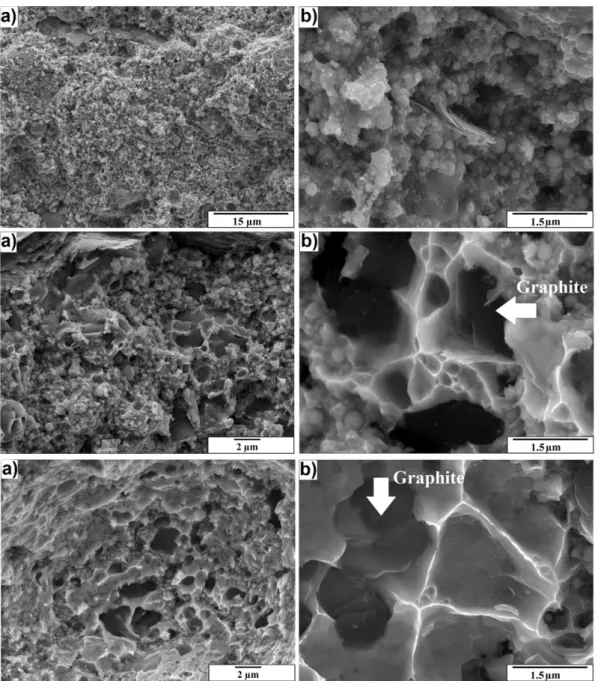
Fig. 5. Fracture surface of the sintered samples with Low and High magnification at (a) and (b) 900

o

C, (c) and (d) 1000

o

C, (e)

and (f) 1100

o

C.

(6)

ate the sintering process and the effect of the sintering temperatures on the characteristics of the sintered bod- ies, the fracture surface of the sintered specimens was examined and presented in Figure 5. The sample pro- cessed at 900

o

C (Fig. 5 a, b) shows no significant signs of necking, but still looks similar to a pressed, green- body powder, the consolidation of composite powders caused by the pressure mainly resulting in no sintering stage occurred at this temperature. At the higher tempera- tures, the fracture surfaces showed the difference in com- parison with that at 900

o

C. Thus, the fracture surfaces of sintered specimens processed at 1000

o

C (Fig. 5 c and d) exhibited the bonding traces between particles corre- sponding to the formation of necks and the occurring of the sintering stage. Those phenomena were more evi- dently observed on the whole fracture surface of the sam- ple sintered at 1100

o

C (Fig. 5 e and f). Thus, the micro- graphs were more like a true fracture surface where the rough surfaces seem to be caused by the tearing motion used during fracture. These fracture surfaces also exposed typical cup and cone type failure characteristics, showing dimples of the order of a few microns in size. In addition, from the micrographs at a higher magnification (Fig. 5 d and f) the dark area with the size of about 1 micron which was attributed the graphite could be observed at the dimple positions on the fracture surface.

From these results, it could be concluded that the mass transformation phenomena which was responsible for the formation and the growth of the necks mainly occured between 1000

o

C and 1100

o

C and the sintering of the Ni-graphite composite powder was better to taken place at 1100

o

C.

3.3. Characterization of the as-sintered Ni-graph- ite composites.

The XRD patterns of the SPS processed Ni-graphite composites are shown in Figure 6. Only carbon and nickel phases were observed in the sintered samples which were confirmed by the typical peaks of pure Ni and a small peak of carbon. In all samples, three typical diffraction reflection peaks of Ni were observed, namely (111), (200) and (220) corresponding to crystallographic planes of nickel at 2θ = 44.5

o

; 51.8

o

; and 76.4

o

, respec- tively. No Ni carbides or oxides were detected in any of those samples, implying that no graphite degradation

occurred into Ni

3

C or NiC. In addition, a small peak at 2θ = 26.5

o

was attributed to graphite, confirming the pres- ence of graphite in sintered samples without any other interfacial product/carbide formation, thus there was no chemical reaction between Ni and graphite during the sintering process.

The microstructure of bulk sample’s surface was

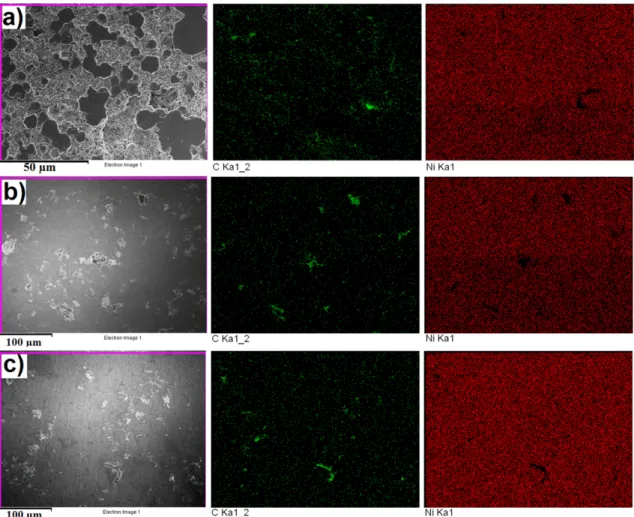
observed by FE-SEM and shown in Fig. 7. It could be

seen that at 900

o

C was not sintered, therefore, it exhib-

ited the rough surface after polishing. At higher sintering

temperature, the bulk sample was in dense with a smoother

surface. The high magnification FE-SEM images (Fig. 8)

exposed the dense of sintered bodies demonstrated one

more time that the samples were consolidated better with

the sintering temperature of 1000 - 1100

o

C (Fig. 8b) in

comparison with that at 900

o

C (Fig. 7a). Based on the

EDS mapping data, sintered samples showed only the

distribution of Ni and carbon phases corresponding to

XRD results. Generally, the carbon and Ni elements dis-

tributed whole the matrix of the bulk sample quite homo-

geneously (Fig. 7). However, in SEM images (Fig. 8) a

second very dark phase was observed on the smooth and

dense surface of the matrix. It was attributed the agglom-

eration of graphite nanosheets which were then con-

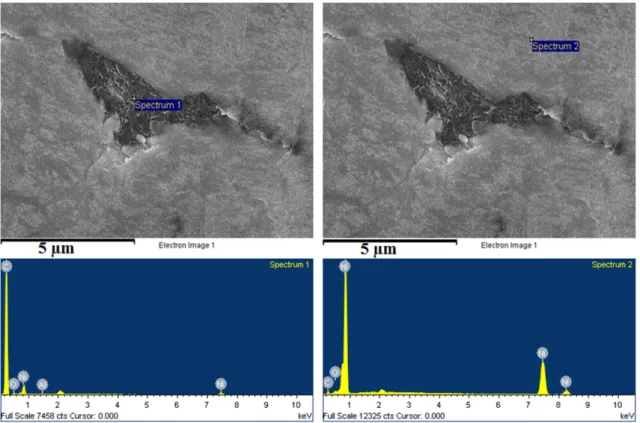
firmed by EDS analysis results showing in Fig. 9. The

size of the agglomeration was detected under 5 μm which

is really smaller than that of 10-15 µm in some previous

studies where the mechanical milling or other mixing

methods were used before sintering [22-24]. This indi-

cates the novelty of the use of EEW, ultrasonication

Fig. 6. XRD patterns of SPS Ni-graphite composite

specimens sintered at 900

o

C, 1000

o

C and 1100

o

C.

(7)

methods in our work in term of achieving the homoge- neous Ni-graphite composite powders and leading to the decrease the agglomeration of graphite in sintered bodies.

The analysis of the density was conducted by using the A&D GF-200 density tester at 13

o

C and the effects of sintering temperatures on the density of the SPS samples were showed in Fig. 10. The caculated density and rela-

tive density of SPS samples were listed in Table 1.

According to the theoretical density of Ni is 8.9 g/cm

3

, and graphite is 2.1g/cm

3

the densities of the SPS Ni and Ni-graphite composite specimens was calculated with the values from 90 to 99% and from 87 to 93%, respec- tively. It could be seen that the low density of graphite led to the decrease in the density of the Ni-graphite com- Fig. 7. FESEM and EDS mapping images of sintered specimens at a) 900

o

C, b) 1000

o

C and c) 1100

o

C.

Fig. 8. High magnification FE-SEM images of sintered specimen at a) 1000

o

C and b) 1100

o

C.

(8)

posites. In addition, the density values could help to ver- ify again the sintering process of the Ni-graphite com- posites. As we have discussed above, at 900

o

C, the sin-

tering did not occur, the powders were only packed by the influence of densification such as the shrinkage of pores, repackage of particles resulting in the low density of sintered bodies. As the temperature increased to above 1000

o

C the mass transportation has been occurred, there- fore, the particles bonded together and led to the increase in the density. The highest density value has achieved for the Ni-graphite composites when sintering temperature was at 1100

o

C (Table 1).

The Vickers microhardness of the sintered Ni-graphite composites was measured and presented in Table 2.

There was a considerable enhancement in the microhard- ness with the addition of 5vol.% graphite into the Ni matrix. The hardness of Ni-graphite composite got the highest value of 135.46 HV when it was sintered at 1100

o

C. This value was about 1.3 times higher than that of pure SPS processed Ni (105.675 HV) in this study and Fig. 9. EDS profiles of the dark and white region phases in the sintered composite sample.

Table 1. Density of sintered samples at various sintering temperature

Samples Ni Ni-graphite composite

Measured density (g/cm

3

) Relative density (%) Measured density (g/cm

3

) Relative density(%)

SPS at 900

o

C 8.092 90.92 7.486 87.45

SPS at 1000

o

C 8.572 96.31 7.659 89.47

SPS at 1100

o

C 8.812 99.01 7.935 92.69

Fig. 10. Relative density of samples sintered at various

temperatures.

(9)

in other previous studies with the hardness value of Ni ranged from 77~109 HV [25-27].

The stress-strain curves of sintered samples of the Ni- graphite composite and the exploded Ni are shown in Fig. 11. The yield strength and elongation properties of sintered samples achieved fromcompression test are listed in Table 3. The curves of the sintered Ni and the as-sin- tered Ni-graphite composite samples show that after the linear region, one observed yielding, and the specimens exhibited plastic deformation and strain hardening. The load increased with the strain with a parabolic depen- dence until the fracture occurred. According to the stress- strain curves, the Ni-graphite composite exhibited a clas- sical strain-hardening behavior all the way from yield to failure which was similar to Ni. However, due to the strengthening ability of the graphite in Ni matrix the compressive yield strength of Ni-graphite composites was higher than that of nickel which was fabricated in the same process. Thus, the compressive yield strength of the Ni-graphite composite was about 275 MPa, which was 1.6 times higher than that of the exploded Ni (170 MPa).

However, in terms of the ductility, while the exploded Ni sample exposed about 32% elongation to failure, the elongation values of the Ni-graphite was smaller than that and it only reached to 22% of the elongation to fail- ure. It is noted that, this value is higher than that in most of previous studies, the elongation of the Ni matrix - car- bonaceous composites just reached to 8-10% [15, 23, 25]. In addition, as shown in Fig. 12, a photograph of a fractured specimen we could realize that in the end of the compression test operation the shear fracture occurred in a macroscopic shear plane inclined at approximately 45 degrees to the compression axis.

The enhancement of the mechanical properties in the Ni-graphite composites above was attributed to a syner- gistic effect of the reinforcement effect coupled with the effect of the matrix grain obtaining from a homogeneous distribution of the graphite in the Ni matrix. Practically, the purpose of the addition of graphite to the metal matrix is also to make use of its high strength, stiffness in order to increase the overall strength of the composite [3, 28, 29]. It is known that when the reinforcement materials are smaller and embedded in the composite, the Table 2. The Vickers microhardness of the sintered Ni-graphite composites

Samples Hardness (HV)

Ni-graphite composite Ni Ni (references)

SPS at 1000

o

C 131.92 ± 5 -

77~109

SPS at 1100

o

C 135.46 ± 5 105.675 ± 8

Fig. 11. Stress-strain curves of as-synthesized Ni-graphite composite and exploded Ni.

Table 3. Yield strength, ultimate strength and elongation properties of as-synthesized Ni-graphite composites and exploded Ni achieved from compression test

Sample Yield Strength (MPa) Ductility (%) Ultimate strength (MPa)

Ni 170 ± 5 32 600 ± 5

Ni-graphite 275 ± 5 22 560 ± 5

Fig. 12. Photographs of the shear fracture in the specimen

after compression test.

(10)

load is transferred to them through the interface and sev- eral new factors come into the picture. Therefore, in this study, it could be thought that the strengthening of the as- synthesized composite by graphite reinforcement was due to the high load-transfer efficiency of graphite in the Ni matrix causing by strong interfacial strength between Ni and graphite which originated from the bonding formed during the sintering process. In addition, it must be noted that strengthening by reinforcement is separate from other strengthening mechanisms, for example, precipita- tion strengthening, grain-refinement strengthening, work hardening, etc., which have been proposed to predict the strength of fiber-reinforced composites and have been applied to metal-graphite composites as well [3]. In this study, the grain-refinement and the Hall-Petch effects work well on describing the enhancement of mechanical properties. Indeed, the presence of graphite acted as sec- ond phases and led to increased nucleation rates during recrystallization processes leading to fine grain structure.

The refined grain size leads to a mechanical response described by the Hall-Petch effect [30]. This relationship is inversely proportional and is valid either for the yield strength or the hardness [3, 26, 31, 32]. Due to the pres- ence of the graphite, the grain growth stagnation was promoted, resulting in a final grain size smaller than that in pure metals under the same conditions resulting in the increase in the amount of grain boundary which hin- dered the dislocation from motioning and therefore improving the hardness.

4. Conclusions

A new processing route which consists of EEW in liq- uid, the ultrasonication, and the SPS methods was suc- cessfully applied in use to fabricate Ni-graphite composite.

Ni-graphite composite powders which were synthe- sized using EEW in ethanol condition shows the spheri- cal shape for Ni particles and nanosheets for graphite. Ni particles distributed and coated on the surface of graph- ite sheets homogeneously.

The bulk specimen of the Ni-graphite composite was fabricated by SPS at 900

o

C, 1000

o

C and 1100

o

C. Accord- ing to the achieved results, the efficient consolidation for Ni-graphite composite was sintering at 1100

o

C for 10 minutes under vacuum condition and a pressure of 50

MPa with a heating rate of 50

o

/min.

The sintered Ni-graphite composite exhibited a sub- stantial enhancement (about is about 1.3 times higher) in microhardness and compressive yield strength (about 1.6 times higher) as compared to SPS processed exploded Ni, under similar processing conditions. The mechanical property enhancement in the Ni-graphite composite can be attributed to reinforcement effects resulting from a homogeneous distribution of graphite in Ni matrix. How- ever, it also showed the reduction in elongation of the as- sintered Ni-graphite composite.

This study presents a simple, economical approach to prepare the bulk Ni-graphite composites, which had desirable mechanical properties that could be considered to use in structural materials. It also has potentials to use for processing of other metal matrix carcbonaceous com- posites.

Acknowledgements

This research was supported by The Leading Human Resource Training Program of Regional Neo industry through the National Research Foundation of Korea (NRF) funded by the Ministry of Science, ICT and future Planning (NRF-2016H1D5A1910587).

References

8[1] R. F. Sohel Rana: Woodhead Publishing (2016).

8[2] G. Sun, X. Li, Y. Qu, X. Wang, H. Yan and Y. Zhang:

Mater. Lett., 62 (2008) 703.

8[3] S. R. Bakshi, D. Lahiri and A. Agarwal: Int. Mater. Rev., 55 (2010) 41.

8[4] A. R. P. Singh, J. Y. Hwang, T. W. Scharf, J. Tiley and R.

Banerjee: Mater. Sci. Technol., 26 (2010) 1393.

8[5] S. W. Kim, W. S. Chung, K. S. Sohn, C. Y. Son and S. Lee:

Korean J. Met. Mater., 47 (2009) 50.

8[6] K. T. Kim, S. I. Cha, S. H. Hong and S. H. Hong: Mater.

Sci. Eng. A, 430 (2006) 27.

8[7] L. S. Tang and M. Mariatti: Polym. Plast. Technol. Eng., 48 (2009) 614.

8[8] Y. Wang, Y. Gao, L. Sun, Y. Li, B. Zheng and W. Zhai:

Results Phys., 7 (2016) 263.

8[9] C. H. Hager, J. Sanders, S. Sharma and A. A. Voevodin:

Wear, 267 (2009)1470.

[10] S. K. Singh, A. K. Yadav, M. J. Akhtar and K. K. Kar:

Adv. Mater. Proc., 2 (2017) 2.

[11] K. Sedláčková, P. Lobotka, I. Vávra and G. Radnóczi:

(11)

Carbon, 43 (2005) 2192.

[12] Y. Yunasfi and W. A. Adi: Int. J. Technol., 3 (2016) 479.

[13] Q. Li, G. Z. Zeng, W. F. Zhao and G. H. Chen: Synth.

Met., 160 (2010) 200.

[14] A. Liu, G. E. Welsch, R. L. Mullen and D. Hazony:

Metall. Mater. Trans. A, 37 (2006) 2849.

[15] Z. Ren, N. Meng, K. Shehzad, Y. Xu, S. Qu, B. Yu and J.

K. Luo: Nanotechnol., 26 (2015) 065706.

[16] X. Xu, Z. D. Cui, S. L. Zhu, Y. Q. Liang and X. J. Yang:

Surf. Coat. Technol., 240 (2014) 425.

[17] H. Zhao, L. Liu, W. Hu and B. Shen: Mater. Des., 28 (2007) 1374.

[18] Y. Yunasfi and W. A. Adi: Int. J. Technol., 3 (2016) 479.

[19] D. V. Dudina, A. V. Ukhina, B. B. Bokhonov, V. I. Mali, A. G. Anisimov, N. V. Bulina and I. N. Skovorodin: Sci.

Sinter., 47 (2015) 237.

[20] L. H. Bac, J. S. Kim and J. C. Kim: Res. Chem.

Intermed., 36 (2010) 795.

[21] C. Cho, Y. C. Ha, C. Kang, Y. S. Jin and G. H. Rim: J.

Korean Phy. Soc., 57 (2010) 1807.

[22] S. Yamanaka, R. Gonda, A. Kawasaki, H. Sakamoto, Y.

Mekuchi, M. Kuno and T. Tsukada: Mater. Trans., 48

(2007) 2506.

[23] T. Borkar, J. Hwang, J. Y. Hwang, T. W. Scharf, J. Tiley, S. H. Hong and R. Banerjee: J. Mater. Res., 29 (2014) 761.

[24] J. Y. Hwang, B. K. Lim, J. Tiley, R. Banerjee and S. H.

Hong: Carbon, 57 (2013) 282.

[25] T. Borkar, H. Mohseni, J. Hwang, T. W. Scharf, J. S.

Tiley, S. H. Hong and R. Banerjee: J. Alloys Compd., 646 (2015) 135.

[26] S. I. Cha, K. T. Kim, S. N. Arshad, C. B. Mo and S. H.

Hong: Adv. Mater., 17 (2005) 1377.

[27] S. Suarez, F. Lasserre and F. Mücklich: Mater. Sci. Eng.

A, 587 (201) 381.

[28] A. Agarwal, S. R. Bakshi and D. Lahiri: CRC press (2011).

[29] S. C. Tjong: Adv. Eng. Mater., 9 (2007) 639.

[30] N. Hansen: Scr. Mater., 51 (2004) 801.

[31] T. Borkar and R. Banerjee: Mater. Sci. Eng. A, 618 (2014) 176.

[32] L. Reinert, M. Zeiger, S. Suarez, V. Presser and Mücklich:

Rsc Adv., 5 (2015) 95149.

수치

Fig. 1. FE-SEM images of graphite nanoplates (a) after EEW, and (b) after sonication.
Fig. 3. XRD pattern of a) pure Ni; b) graphite and c) the exploded Ni; d) the as-prepared Ni-graphite powders before heat treatment.
Fig. 5. Fracture surface of the sintered samples with Low and High magnification at (a) and (b) 900  o C, (c) and (d) 1000  o C, (e) and (f) 1100  o C.
Fig. 8. High magnification FE-SEM images of sintered specimen at a) 1000  o C and b) 1100  o C.
+3

참조

관련 문서