ABSTRACT
The association between alcohol and gastric cancer is stronger in East Asians than in other ethnic groups, presumably due to an aldehyde dehydrogenase 2 (ALDH2) polymorphism.
Therefore, we investigated the relationship between the ALDH2 rs671 polymorphism and gastric cancer in a Korean population. This case-control study included 3,245 hospital patients newly diagnosed with gastric cancer and 8,732 population controls. The ALDH2 rs671 genotype was classified as inactive ALDH2 (GG) or active ALDH2 (GA/AA). The risk of gastric cancer was higher in men with the inactive ALDH2 than in those with active ALDH2 (odds ratio [OR], 1.25; 95% confidence interval [CI], 1.09–1.39), whereas no significant association was found between ALDH2 genotype and gastric cancer in women (OR, 1.00; 95% CI, 0.99–1.02).
In men, the association between ALDH2 genotype and gastric cancer was stronger in current drinkers. Our findings support the previously reported association between inactive ALDH2 and high risk of gastric cancer.
Keywords: Gastric Cancer; Alcohol Drinking; ALDH2
Globally, gastric cancer is the fifth most common cancer and the third most common cause of death from cancer. The incidence of gastric cancer is particularly high in East Asia, including Japan and the Korea.1 Although the incidence of gastric cancer in Korea has decreased slightly since 2011, it is the most common cancer in men and the third most common cancer in women, except for thyroid cancer.2 The high prevalence of Helicobacter pylori infection in East Asia can only partially account for the high rate of gastric cancer3 because the incidence is significantly higher in Eastern Asia than in regions with a similar H. pylori infection prevalence.
Alcohol is associated with various cancers. In particular, the association between upper aerodigestive tract cancer and alcohol consumption is well-established.4 Although several previous studies have shown an association between alcohol consumption and gastric cancer,5-7 the relationship is not as strong as that reported for esophageal and oropharyngeal cancers (i.e., dose-response relationships). However, previous research has shown that the association between alcohol consumption and gastric cancer is stronger in East Asia than in other regions.6
Brief Communication
Received: Mar 20, 2020 Accepted: Mar 26, 2020 Address for Correspondence:
Min–Ho Shin, MD, PhD
Department of Preventive Medicine, Chonnam National University Medical School, 264 Seoyang-ro, Hwasun-eup, Hwasun 58128, Republic of Korea.
E-mail: [email protected]
© 2020 The Korean Academy of Medical Sciences.
This is an Open Access article distributed under the terms of the Creative Commons Attribution Non-Commercial License (https://
creativecommons.org/licenses/by-nc/4.0/) which permits unrestricted non-commercial use, distribution, and reproduction in any medium, provided the original work is properly cited.
ORCID iDs Chang Kyun Choi
https://orcid.org/0000-0002-8257-3114 Sun-Seog Kweon
https://orcid.org/0000-0003-2378-8550 Sang-Hee Cho
https://orcid.org/0000-0002-7995-7862 Hye-Yeon Kim
https://orcid.org/0000-0003-2446-9308 Min-Ho Shin
https://orcid.org/0000-0002-2217-5624 Funding
This research was supported by a grant from the Chonnam National University Hwasun Hospital Institute for Biomedical Science (HCRI14027-22).
Chang Kyun Choi ,1 Sun-Seog Kweon ,1 Sang-Hee Cho ,2 Hye-Yeon Kim ,3 and Min-Ho Shin 1
1Department of Preventive Medicine, Chonnam National University Medical School, Hwasun, Korea
2Department of Hemato-Oncology, Chonnam National University Hwasun Hospital, Hwasun, Korea
3 Gwangju-Jeonnam Regional Cardiocerebrovascular Center, Chonnam National University Hospital, Gwangju, Korea
Association between ALDH2
Polymorphism and Gastric Cancer Risk in a Korean Population
Human Genetics &
Genomics
Disclosure
The authors have no potential conflicts of interest to disclose.
Author Contributions
Conceptualization: Shin MH. Formal analysis:
Choi CK, Shin MH. Methodology: Shin MH.
Investigation: Kweon SS, Cho SH, Kim HY, Shin MH. Writing - original draft: Choi CK, Shin MH.
Writing - reviewing & editing: Choi CK, Kweon SS, Cho SH, Kim HY, Shin MH.
An aldehyde dehydrogenase 2 gene (ALDH2) rs671 missense mutation that affects alcohol metabolism is common in East Asians.8 Alcohol consumption causes an unpleasant alcohol- flush reaction in inactive ALDH2 carriers; thus, these individuals tend to avoid drinking alcohol.9-11 However, findings regarding the association between rs671 variants and gastric cancer are conflicting12-16; therefore, we investigated the association between the ALDH2 rs671 polymorphism and gastric cancer in a Korean population.
The case group consisted of 3,245 patients diagnosed with new-onset gastric cancer by biopsy at Chonnam National University Hwasun Hospital between April 2004 and February 2010.
Patients under 50 years of age were excluded from the study because the control subjects were drawn from a community-based cohort study of adults aged 50 years and older. Gastric cancer was classified according to anatomical site as per the International Classification of Disease 10th edition (ICD-10) as cardia (C16.0), non-cardia (C16.1–16.8), and unspecified (C16.9) and histological type: intestinal, diffuse, mixed type, and unspecified.
The control group included participants from the Dong-gu study, a prospective cohort study of risk factors for chronic diseases including stroke, coronary heart disease, cognitive decline, cancer, and fracture, in Korean adults.17 The Dong-gu study consisted of 9,260 participants aged 50 years and older. Of those, 455 participants with a history of cancer were excluded. Because of missing data, our analysis included 8,732 participants.
Genomic DNA was extracted from peripheral blood using a QIAamp DNA Blood Mini Kit (Qiagen, Valencia, CA, USA) according to the manufacturer's protocol. The ALDH2 rs671 polymorphism was genotyped by high-resolution melting (HRM) analysis using a Rotor-Gene 6000TM (Corbett Research, Sydney, Australia). Polymerase chain reaction (PCR) primers producing a 97-bp amplicon were as follows: forward primer, 5′-TTGGTGGCTACAAGATGTCG-3′ and reverse primer, 5′-CAGGTCCCACACTCACAGTTT-3′.
The reaction mixture for HRM included 200 nM PCR primer, 1 µM SYTO 9 fluorescent dye (Invitrogen, Carlsbad, CA, USA), 0.5U F-Star Taq DNA polymerase (BioFACT Co., Ltd., Daejeon, Korea), and 40 ng genomic DNA in 10 µL reaction volumes. The cycling conditions were started with denaturation at 95°C for 5 minutes, followed by 40 cycles of 95°C for 5 seconds and 58°C for 30 seconds.
Information on smoking history and alcohol consumption was obtained from the medical records of the case group and from interview questionnaires administered to the control group. Alcohol consumption was categorized as current drinker and abstainer in the medical records, and according to the amount and frequency of drinking in the Dong-gu study.
Accordingly, we defined current drinkers as individuals who reported consuming one or more drinks per month and classified participants as current drinkers or abstainers. Smoking history was categorized as current smoker, ex-smoker, and never smoker in the medical records and the Dong-gu study. We classified participants as an ever-smokers (current or ex- smoker) or never smokers.
The baseline characteristics of the case and control participants were assessed according to gender. General characteristics were compared between groups using t-tests for continuous variables and χ2 tests for categorical variables. Multivariate logistic regression analysis was performed to assess the associations between the ALDH2 rs671 polymorphism and gastric cancer. Genotype was categorized as active ALDH2 (GG) and inactive ALDH2 (GA/AA). Active ALDH2 was used as a reference. All models were adjusted for age. Statistical significance was
set at P values below 0.05. All analyses were performed using R (version 3.6.1; R Project, Vienna, Austria).
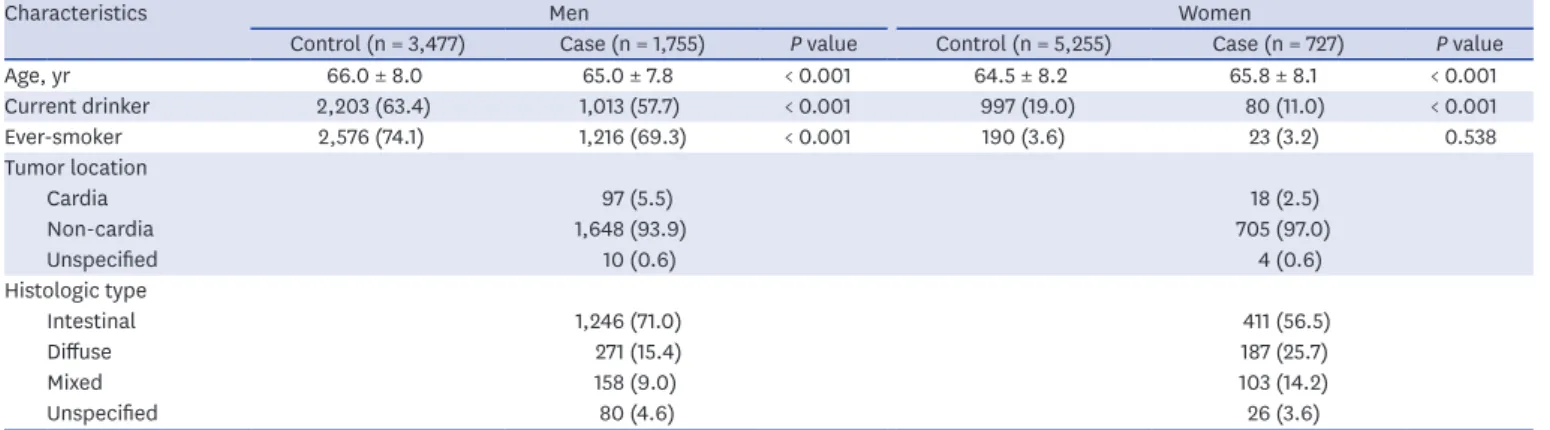
Table 1 shows the baseline characteristics of the case and control groups according to gender.
Men in the control group were older than those in the case group, whereas the women in the case group were older than those in the control group. The current drinker rate was higher in the control group than in the case group in both men and women. The smoking rate was significantly higher in men in the control group than among those in the case group. The non-cardia site was the most common tumor location in men (94.0%) and women (97.0%).
The most common histological type was intestinal, followed by the diffuse and the mixed types in both gender.
Table 2 shows the distribution of the ALDH2 rs671 genotypes and the odds ratios (ORs) and 95% confidence intervals (CIs) for gastric cancer according to gender and alcohol consumption. Using active ALDH2 as the reference group, inactive ALDH2 was associated with an increased risk of gastric cancer (OR, 1.25; 95% CI, 1.09–1.39) in men, but not in women (OR, 1.00; 95% CI, 0.98–1.02). The association between ALDH2 rs671 polymorphism and gastric cancer was more evident in current drinkers than in abstainers. In men, compared to active ALDH2 genotype, the ORs of inactive ALDH2 were 1.33 (95% CI, 1.11–1.59) for current drinker and 0.96 (95% CI, 0.80–1.15) for abstainer (P for interaction = 0.012). In women, the Table 1. Baseline characteristics of cases and controls according to gender
Characteristics Men Women
Control (n = 3,477) Case (n = 1,755) P value Control (n = 5,255) Case (n = 727) P value
Age, yr 66.0 ± 8.0 65.0 ± 7.8 < 0.001 64.5 ± 8.2 65.8 ± 8.1 < 0.001
Current drinker 2,203 (63.4) 1,013 (57.7) < 0.001 997 (19.0) 80 (11.0) < 0.001
Ever-smoker 2,576 (74.1) 1,216 (69.3) < 0.001 190 (3.6) 23 (3.2) 0.538
Tumor location
Cardia 97 (5.5) 18 (2.5)
Non-cardia 1,648 (93.9) 705 (97.0)
Unspecified 10 (0.6) 4 (0.6)
Histologic type
Intestinal 1,246 (71.0) 411 (56.5)
Diffuse 271 (15.4) 187 (25.7)
Mixed 158 (9.0) 103 (14.2)
Unspecified 80 (4.6) 26 (3.6)
All values are given as number (%) or mean ± standard deviation.
P values were calculated by Student's t-test or χ2 test.
Table 2. Distribution of ALDH2 rs671 genotype and age-adjusted odd ratios for gastric cancer according to gender
Variables Men Women
Control (n = 3,477) Case (n = 1,755) OR (95% CI) Control (n = 5,255) Case (n = 727) OR (95% CI) ALDH2 rs671
GG 2,338 (67.2) 1,108 (63.1) 1 (reference) 3,682 (70.1) 502 (69.1) 1 (reference)
AG 1,048 (30.1) 595 (33.9) 1.23 (1.09–1.39) 1,440 (27.4) 210 (28.9) 1.06 (0.89–1.25)
AA 91 (2.6) 52 (3.0) 1.23 (0.87–1.74) 133 (2.5) 15 (2.1) 0.82 (0.46–1.36)
GA/AA 1,139 (32.8) 647 (36.9) 1.25 (1.09–1.39) 1,573 (29.9) 225 (30.9) 1.00 (0.99–1.02)
Current drinker
GG 1,782 (51.3) 773 (44.0) 1 (reference) 896 (17.1) 69 (9.5) 1 (reference)
GA/AA 421 (12.1) 240 (13.7) 1.33 (1.11–1.59) 101 (1.9) 11 (1.5) 1.56 (0.76–2.96)
Abstainer
GG 556 (16.0) 335 (19.1) 1 (reference) 2,786 (53.0) 433 (59.6) 1 (reference)
GA/AA 718 (20.6) 407 (23.2) 0.96 (0.80–1.15) 1,472 (28.0) 214 (29.4) 0.93 (0.78–1.11)
All values are given as number (%).
ALDH2 = aldehyde dehydrogenase 2, OR = odd ratio, CI = confidence interval.
OR for current drinker was higher than that for abstainer; however, the difference was not statistically significant (P for interaction = 0.197).
We investigated the association between ALDH2 rs671 polymorphism and gastric cancer.
Inactive ALDH2 was associated with an increased risk of gastric cancer in men, but not in women. Moreover, this association was stronger in current drinkers than in abstainers.
Our findings are consistent with those of Yang et al.16 who found a significant association between the ALDH2 genotype and gastric cancer in men only. These findings may be explained by the different drinking behaviors in men and women: given the higher
proportion of current drinkers, the risks presented by the inactive ALDH2 genotype is greater for men than for women. In contrast, Zhang et al.15 found no association between ALDH2 and gastric cancer in men or women. We found that the association between ALDH2 and gastric cancer was modified by alcohol consumption. Similarly, several previous studies found a significant association between the ALDH2 genotype and gastric cancer only in individuals with higher alcohol consumption.12-14 Conversely, a case-control study conducted by the National Cancer Center Korea found an association between inactive ALDH2 and higher risk of gastric cancer, regardless of the amount of alcohol consumed.16 This discrepancy may be explained by differences in alcoholic beverage preferences, polymorphism distribution across populations, sample size, or the classification of alcohol consumption.
The reason of increased gastric cancer risk in inactive ALDH2 carriers may be due to the carcinogenic effect of aldehyde accumulation. Acetaldehyde associated with alcoholic beverages is classified as a group 1 carcinogen by the International Agency for Research on Cancer.18 Previous studies have shown that after consuming ethanol, the acetaldehyde concentration in the gastric juice of inactive ALDH2 carriers was 5.6-fold higher than that of active ALDH2 carriers.19
The major strength of our study is the large sample size; ours is the largest case-control investigation of the association between the ALDH2 rs671 polymorphism and gastric cancer.
However, our study has several limitations. First, we did not investigate the effect of another polymorphism such as alcohol dehydrogenase 1B (ADH1B) rs1229984 that are involved in alcohol metabolism. However, previous studies12,14 found no association between ADH1B and the risk of gastric cancer and no evidence of gene-to-gene interactions between ADH1B and ALDH2. Second, we did not investigate a dose-response relationship between alcohol consumption and gastric cancer.
In conclusion, our case-control study found an association between ALDH2 rs671
polymorphism and gastric cancer in a Korean population, suggesting that the carcinogenic effect of alcohol may differ according to the ALDH2 genotype. Therefore, preventative strategies for alcohol-related cancer may need to differ according to the ALDH2 genotype in East Asian populations.
Ethics Statement
At the time of their peripheral blood collections, all case and control subjects provided their informed consent to participate in this study. This study was reviewed and approved by the Institutional Review Boards (IRBs) of Chonnam National University Hospital Hwasun (CUNH IRB-2014-016) and Chonnam National University Hospital (I-2008-05-056).
REFERENCES
1. Bray F, Ferlay J, Soerjomataram I, Siegel RL, Torre LA, Jemal A. Global cancer statistics 2018: GLOBOCAN estimates of incidence and mortality worldwide for 36 cancers in 185 countries. CA Cancer J Clin
2018;68(6):394-424.
PUBMED | CROSSREF
2. Jung KW, Won YJ, Kong HJ, Lee ES. Cancer statistics in Korea: incidence, mortality, survival, and prevalence in 2016. Cancer Res Treat 2019;51(2):417-30.
PUBMED | CROSSREF
3. Suzuki H, Mori H. World trends for H. pylori eradication therapy and gastric cancer prevention strategy by H. pylori test-and-treat. J Gastroenterol 2018;53(3):354-61.
PUBMED | CROSSREF
4. Bagnardi V, Rota M, Botteri E, Tramacere I, Islami F, Fedirko V, et al. Alcohol consumption and site- specific cancer risk: a comprehensive dose-response meta-analysis. Br J Cancer 2015;112(3):580-93.
PUBMED | CROSSREF
5. Duell EJ, Sala N, Travier N, Muñoz X, Boutron-Ruault MC, Clavel-Chapelon F, et al. Genetic variation in alcohol dehydrogenase (ADH1A, ADH1B, ADH1C, ADH7) and aldehyde dehydrogenase (ALDH2), alcohol consumption and gastric cancer risk in the European Prospective Investigation into Cancer and Nutrition (EPIC) cohort. Carcinogenesis 2012;33(2):361-7.
PUBMED | CROSSREF
6. Rota M, Pelucchi C, Bertuccio P, Matsuo K, Zhang ZF, Ito H, et al. Alcohol consumption and gastric cancer risk-A pooled analysis within the StoP project consortium. Int J Cancer 2017;141(10):1950-62.
PUBMED | CROSSREF
7. Sung NY, Choi KS, Park EC, Park K, Lee SY, Lee AK, et al. Smoking, alcohol and gastric cancer risk in Korean men: the National Health Insurance Corporation Study. Br J Cancer 2007;97(5):700-4.
PUBMED | CROSSREF
8. Zhong Z, Hou J, Li B, Zhang Q, Li C, Liu Z, et al. Genetic polymorphisms of the mitochondrial aldehyde dehydrogenase ALDH2 gene in a large ethnic Hakka population in Southern China. Med Sci Monit 2018;24:2038-44.
PUBMED | CROSSREF
9. Takeuchi F, Isono M, Nabika T, Katsuya T, Sugiyama T, Yamaguchi S, et al. Confirmation of ALDH2 as a major locus of drinking behavior and of its variants regulating multiple metabolic phenotypes in a Japanese population. Circ J 2011;75(4):911-8.
PUBMED | CROSSREF
10. Quillen EE, Chen XD, Almasy L, Yang F, He H, Li X, et al. ALDH2 is associated to alcohol dependence and is the major genetic determinant of "daily maximum drinks" in a GWAS study of an isolated rural Chinese sample. Am J Med Genet B Neuropsychiatr Genet 2014;165B(2):103-10.
PUBMED | CROSSREF
11. Cho Y, Kwak S, Lewis SJ, Wade KH, Relton CL, Smith GD, et al. Exploring the utility of alcohol flushing as an instrumental variable for alcohol intake in Koreans. Sci Rep 2018;8(1):458.
PUBMED | CROSSREF
12. Ishioka K, Masaoka H, Ito H, Oze I, Ito S, Tajika M, et al. Association between ALDH2 and ADH1B polymorphisms, alcohol drinking and gastric cancer: a replication and mediation analysis. Gastric Cancer 2018;21(6):936-45.
PUBMED | CROSSREF
13. Shin CM, Kim N, Cho SI, Kim JS, Jung HC, Song IS. Association between alcohol intake and risk for gastric cancer with regard to ALDH2 genotype in the Korean population. Int J Epidemiol 2011;40(4):1047-55.
PUBMED | CROSSREF
14. Hidaka A, Sasazuki S, Matsuo K, Ito H, Sawada N, Shimazu T, et al. Genetic polymorphisms of ADH1B, ADH1C and ALDH2, alcohol consumption, and the risk of gastric cancer: the Japan Public Health Center- based prospective study. Carcinogenesis 2015;36(2):223-31.
PUBMED | CROSSREF
15. Zhang LQ, Song X, Zhao XK, Huang J, Zhang P, Wang LW, et al. Association of genotypes of rs671 withinALDH2 with risk for gastric cardia adenocarcinoma in the Chinese Han population in high- and low- incidence areas. Cancer Biol Med 2017;14(1):60-5.
PUBMED | CROSSREF
16. Yang S, Lee J, Choi IJ, Kim YW, Ryu KW, Sung J, et al. Effects of alcohol consumption, ALDH2 rs671 polymorphism, and Helicobacter pylori infection on the gastric cancer risk in a Korean population. Oncotarget 2017;8(4):6630-41.
PUBMED | CROSSREF
17. Kweon SS, Shin MH, Jeong SK, Nam HS, Lee YH, Park KS, et al. Cohort profile: the Namwon study and the Dong-gu study. Int J Epidemiol 2014;43(2):558-67.
PUBMED | CROSSREF
18. IARC Working Group on the Evaluation of Carcinogenic Risks to Humans. Personal habits and indoor combustions. Volume 100 E. A review of human carcinogens. IARC Monogr Eval Carcinog Risks Hum 2012;100(Pt E):1-538.
PUBMED
19. Maejima R, Iijima K, Kaihovaara P, Hatta W, Koike T, Imatani A, et al. Effects of ALDH2 genotype, PPI treatment and L-cysteine on carcinogenic acetaldehyde in gastric juice and saliva after intragastric alcohol administration. PLoS One 2015;10(4):e0120397.
PUBMED | CROSSREF