Received: April 12 2021, Revised: April 13 2021, Accepted: May 25 2021
Corresponding author: Yoon Ghil Park, Department of Rehabilitation Medicine, Gangnam Severance Hospital, Yonsei University, 20 Eonju-ro 63-gil, Gangnam-gu, Seoul 06229, Korea
Tel: +82-2-2019-3498, Fax: +82-2-2019-4881 E-mail: [email protected]
Copyrights ⓒ The Korean Dysphagia Society,
2021.
Improvement of Dysphagia in a Chronic Brain Injury Patient with Temporomandibular Joint Dysfunction: A Case Report
Kyu Wan Kwak, M.D.
1, Hyo Jeong Lee, M.D.
2, Yoon Ghil Park, M.D., Ph.D.
1
1
Department of Rehabilitation Medicine, Gangnam Severance Hospital, Rehabilitation Institute of Neuromuscular Disease, Yonsei University College of Medicine, Seoul,
2Department of Rehabilitation Medicine, Bundang Jesaeng Hospital, Seongnam, Korea
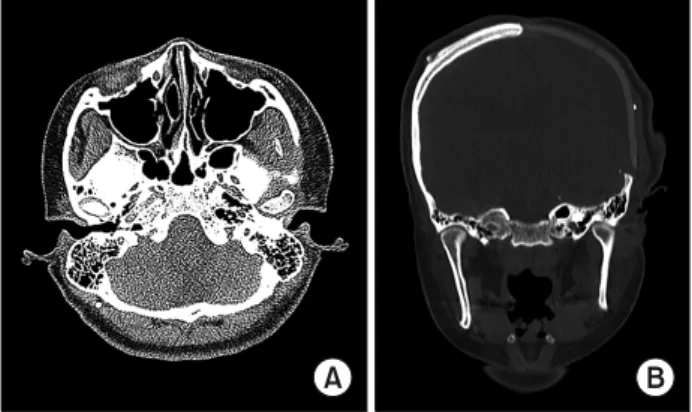
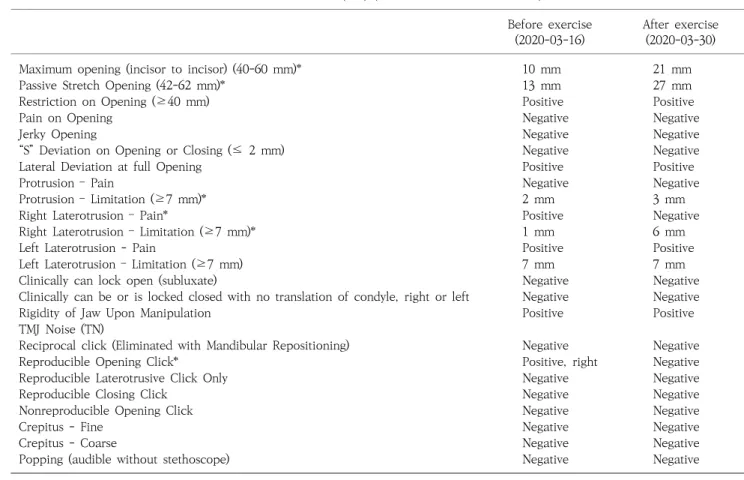
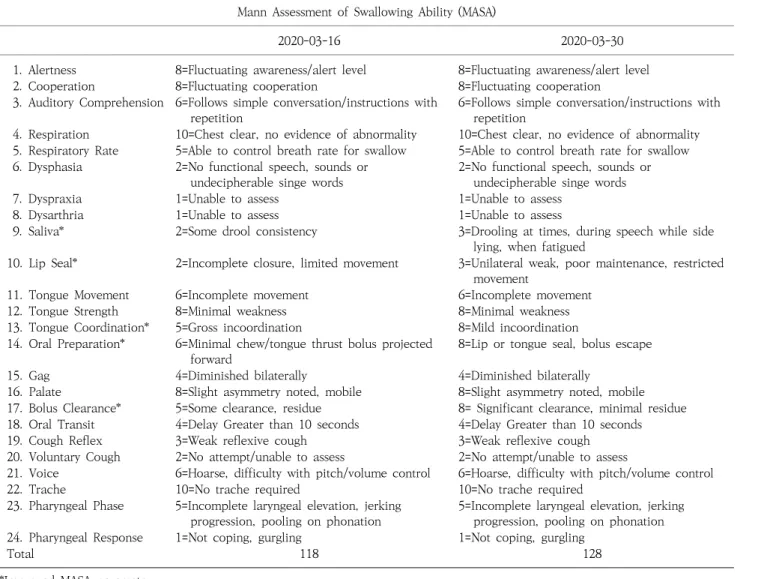
Acquired brain injury patients who present dysphagia associated with temporomandibular joint dysfunction (TMJD) are more common than expected. TMJD is associated with restriction of mouth opening and jaw movements, there- by interfering with the oral phase of the swallowing process. An 18-year-old female with traumatic brain injury mainly complained of dysphagia when first admitted. After nearly one year of conventional dysphagia therapy, the patient could barely eat a minced diet. The videofluoroscopic swallowing study showed that a soft and bite-sized diet was tolerable to the patient, but the restricted mouth opening and mandibular movement imposed a major limitation of the dietary build-up. After examining the imaging studies, the patient was diagnosed with TMJD attrib- uted to muscle lesion and misaligned stomatognathic system. The patient subsequently underwent a stomatognathic alignment and TMJ strengthening exercise program over a span of two weeks, after which the therapeutic effects were evaluated with the craniomandibular index (CMI) and Mann Assessment of Swallowing Ability (MASA) parame- ters, before and after the exercise program. The results showed improvements in the neck mobility and orofacial movements, and the patient was able to consume soft and bite-sized diet in the clinical setting. Thus, we propose that active exercise to achieve postural correction and TMJ muscle strengthening are effective treatment options for dysphagia associated with TMJD. (JKDS 2021;11:147-153)
Keywords: Acquired brain injury, Temporomandibular joint dysfunction, Stomatognathic alignment exercise
INTRODUCTION
Traumatic brain injury (TBI) and stroke-related sensorimotor impairment in stomatognathic system including head and neck muscles, masticatory muscles, and temporomandibular joint (TMJ) results in strength loss in lip, tongue, masticatory muscles,
restriction of bite force and poor quality of
mastication
1. In specific, temporomandibular joint
dysfunction (TMJD) is a collective term, which
consists of masticatory muscle disorders and
mandibular hypomobility disorders specific to the
joint
2. TMJD is clinically associated with restriction of
mouth opening, limitation of the range of motion