• 검색 결과가 없습니다.

Role of Diazotrophic Bacteria in Biological Nitrogen Fixation and Plant Growth Improvement

N/A
N/A
Protected

Academic year: 2021

Share "Role of Diazotrophic Bacteria in Biological Nitrogen Fixation and Plant Growth Improvement"

Copied!
13
0
0

로드 중.... (전체 텍스트 보기)

전체 글

(1)

Role of Diazotrophic Bacteria in Biological Nitrogen Fixation and Plant Growth Improvement

Wansik Shin, Rashedul Islam

1

, Abitha Benson

1

, Manoharan Melvin Joe

1

, Kiyoon Kim

1

, Selvakumar Gopal

1

, Sandipan Samaddar

1

, Somak Banerjee

1

, and Tongmin Sa

1

*

Korea Institute of Planning and Evaluation for Technology in Food, Agriculture, Foresty and Fisheries, Anyang-si, Gyeonggi-do 14055, Korea

1

Department of Environmental and Biological Chemistry, Chungbuk National University, Cheongju, Chungbuk, 28644,

Republic of Korea

(Received: January 8 2016, Revised: February 23 2016, Accepted: February 24 2016)

Though there is an abundant supply of nitrogen in the atmosphere, it cannot be used directly by the biological systems since it has to be combined with the element hydrogen before their incorporation. This process of nitrogen fixation (N 2 -fixation) may be accomplished either chemically or biologically. Between the two elements, biological nitrogen fixation (BNF) is a microbiological process that converts atmospheric di-nitrogen (N 2 ) into plant-usable form. In this review, the genetics and mechanism of nitrogen fixation including genes responsible for it, their types and role in BNF are discussed in detail. Nitrogen fixation in the different agricultural systems using different methods is discussed to understand the actual rather than the potential N 2 -fixation procedure. The mechanism by which the diazotrophic bacteria improve plant growth apart from nitrogen fixation such as inhibition of plant ethylene synthesis, improvement of nutrient uptake, stress tolerance enhancement, solubilization of inorganic phosphate and mineralization of organic phosphate is also discussed. Role of diazotrophic bacteria in the enhancement of nitrogen fixation is also dealt with suitable examples. This mini review attempts to address the importance of diazotrophic bacteria in nitrogen fixation and plant growth improvement.

Key words: Biological nitrogen fixation (BNF), Diazotrophic bacteria, Plant growth promotion, N 2 fixing prokaryotes, nif genes

Biological nitrogen fixation (BNF) can convert atmospheric di-nitrogen (N

2

) into plant-usable form, which improves plant growth and yield.

1)

*Corresponding author: Phone: +82432612561, Fax: +82432715921, E-mail: [email protected]

§
Acknowledgement: This work was supported by the research grant of Chungbuk National University in 2013.

(2)

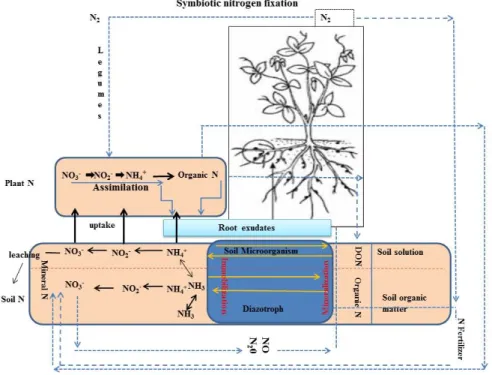
Fig. 1. The plant-soil N cycle and pathways for N transformation mediated by physiological processes (DON = dissolved organic nitrogen) (Richardson et al., 2009).

Introduction

Plants require nitrogen large quantities, since it forms essential component of proteins, nucleic acids, and other cellular constituents (Novoa and Loomis, 1981). The abundant availability of nitrogen in the earth's atmosphere (nearly 80% in the form of N

2

gas) cannot be used directly by biological systems to produce chemicals for growth and reproduction. Before being taken up by the plants, N

2

must first be combined with the hydrogen element. Reduction of N

2

, commonly referred to as

‘nitrogen fixation’ (N

2

-fixation) may be accomplished chemically or biologically. However, N is continually depleted by some processes such as soil erosion, chemical volatilization, denitrification, soil leaching, and perhaps most importantly, removal of N-containing crop residues from the land (Vitousek and Matson, 2009). The N reserve of agricultural soil should be maintained at an optimal level to maintain an adequate amount for crop production (Tilman et al. 2002). This replacement of soil N is generally accomplished by the addition of chemically fixed N in the form of commercial fertilizers of inorganic nature or by the process of biological nitrogen fixation (BNF).

BNF is a microbiological process that converts atmos- pheric di-nitrogen (N

2

) into plant-usable form, which offers as an alternative to inorganic fertilizers (Buyer and Kaufman, 1996). Because of its potential economic and environmental importance of BNF a lot of researchers

(Demba Diallo et al., 2004; Wartiainen et al., 2008) has considered it a very important source of N input in soil. However, N

2

-fixation is not exclusively a biological process since abiotic N

2

-fixation can be mediated by lightning or fires, and oxidizes N

2

to nitrate (NO

3-

).

According to the current knowledge, only prokaryotes (members of the domains Archaea and Bacteria) are capable of performing BNF. Eukaryotic organisms naturally depend on BNF activity of the N

2

- fixing prokaryotes (diazotrophs) for their N supply. Since N is an essential nutrient for all living organisms, N

2

-fixation is a key process of the N-cycle (Zehr et al., 1996).

The importance of BNF in any particular ecosystem depends on the system’s nutrient status for ecosystem development (Cleveland et al., 1999). BNF by free-living heterotrophs play a major role with high accumulations of carbon sources, e.g. in forest soils with high inputs of litter and decaying plant debris (Giller and Day, 1985).

In systems with high concentrations of mineral N, BNF may contribute little to the N-budget (Cleveland et al., 1999). Microbe-mediated mineralization of N to (ammonium) NH

4+

and its subsequent nitrification to NO

3-

is of major significance to N availability (Fig. 1).

Both NH

4+

and NO

3-

are taken up by plants, although many plants prefer the uptake of one over the other (Marschner, 1995). Under aerobic conditions, NH

4+

will be rapidly transformed to NO

3-

by nitrifying micro- organisms (ammonium-oxidizers and nitrite-oxidizers).

Denitrification, a process of anaerobic respiration that

(3)

Fig. 2. Electron transport chain for nitrogenase in Klebsiella pneumoniae. Nitrogenase reductase (Fe protein, NifH) shuttles electrons to dinitrogenase (MoFe protein, NifD and NifK) under consumption of ATP. Dinitrogenase is the site of reduction of the substrates, most importantly N

2

. H

2

production is an obligate part of the process, while acetylene (C

2

H

2

) is an example for an alternative substrate. Genes involved in the transport chain are indicated on the right (Madigan et al., 2000).

transforms NO

3-

to N

2

, thereby completes the N-cycle by returning N to the atmosphere.

Modern agricultural practices and industrialization acts as major sources of fixed N through the production of synthetic N fertilizer and increased NO emissions from fossil fuel combustion. In addition to these new inputs, anthropogenic activities introduced massive changes to the spatial and temporal pattern of N-fluxes, e.g. by transferring N that is contained in the biomass of agri- cultural crops into urban areas where they are consumed (Delwiche, 1981). Chemical fertilizers guarantee the production of food for a steadily growing population.

However, the cost of application, environmental degra- dation and human health pose major limitations to their excessive usage. Another concern is the decline in crop yields under continuous use of N fertilizers.

Discovery of nitrogen fixers

The discovery of N

2

-fixation was attributed to the German scientists Hellriegel and Wilfarth, who in the year 1886 reported that legumes bearing root nodules could use gaseous (molecular) nitrogen. Afterwards, in 1888, Beijerinck succeeded in isolating a bacterial strain later known as Rhizobium leguminosarum from root nodules, Beijerinck (1901) was also responsible for the isolation of Azotobacter sp., while the discovery of N

2

- fixation in blue-green algae was credited to Stewart (1969).

Genetics of BNF

Mechanism involved with biological nitrogen fixation Nitrogen-fixation is a very costly process in terms of its energy requirements and a very complex mechanism not fully elucidated. BNF can be represented by the following equation (Franche et al., 2009), in which two

moles of ammonia are produced from one mole of N

2

, at the expense of 16 ATP moles and a supply of electrons and protons (hydrogen ions):

N

2

+ 16 MgATP + 8e

-

+ 8H

+

→ 2NH

3

+ H

2

+ 16MgADP + 16Pi

The actual reduction of N

2

is performed by the nitrogenase protein complex, which consists of two metalloproteins: the nitrogenase, or nitrogenase molybdenum- iron protein (MoFe protein, NifDK), and the nitrogenase reductase or nitrogenase iron protein (Fe protein, NifH).

The molybdenum-iron-sulfur-homocitrate clusters of the MoFe protein are the actual sites of binding and reduction of the substrate N

2

and other alternative substrates, such as acetylene, protons and many others. The Fe protein is responsible for shuttling electrons to the MoFe protein using at least two Mg ATP per electron (Halbleib et al., 2000) (Fig. 2).

The genes responsible for biological nitrogen fixation

The number and arrangement of genes involved in BNF varies between species to species. The MoFe protein is a tetrameric protein ( α

2

β

2

) encoded by the nifDK genes, and the Fe protein is a homo-dimer ( α

2

) of the nifH gene product (Halbleib and Ludden, 2000).

These genes, along with regulatory genes and accessory

genes coding for enzymes involved in electron transfer

and metal cluster synthesis comprise the nif regulon

(Dean and Jacobson, 1992). The genes nifD and nifK

are usually part of the same operon and appear in the

same organization (as nifDK). Frequently, nifH is also

included in the same operon (nifHDK) (Fani et al.,

2000). The genes nifE and nifN, which play a role in

the biosynthesis of the nitrogenase metal clusters (FeMo-

(4)

co), usually appear together and may have arisen from paralogous ancestor of nifEN and nifDK operon (Fani et al., 2000). These core operons are supplemented by a number of other genes, which code for proteins involved in electron transport (e.g. nifF and nifJ in Klebsiella pneumoniae) or regulation (e.g. nifA) (Dean and Jacobson, 1992) or in FeMo-cofactor synthesis (e.g. nifB, nifV in K. pneumoniae and A. chroococcum).

“Fix” and “nod” genes are associated with BNF and nodule formation in rhizobial species, and many do not have homologues in the asymbiotic model organism K.

pneumoniae or other known free-living diazotrophs (Dean and Jacobson, 1992). In addition to the standard nitrogenase system (nifDK, nifH) two important alternative systems have been identified and characterized. The main difference to the standard system is that these enzymes do not contain molybdenum (Mo). Instead, one of these alternative systems contains vanadium (vnfDK, vnfH) while the other contains only iron and no unusual metals (anfDK, anfH). All three systems are highly homologous but do contain significant sequence differences. The alternative systems are transcriptionally regulated and in most studied organisms, vnf and anf are only expressed under conditions of Mo limitation (Bishop and Premakumar, 1992). However, it was observed that the diazotroph community in termite gut transcribed anfH-like genes even at high Mo concent- rations. Little is known about the importance of these alternative nitrogenase systems in the soil environment and anfH-type sequences have rarely been detected in soil (Poly et al., 2001). However, it was shown that the alternative systems may be important for N

2

-fixation in certain environments, such as termite gut. Only recently a completely novel nitrogenase system was found in Streptomyces thermoautotrophicus (Ribbe et al., 1997). The nitrogenase reductase in this system is a manganese superoxide dismutase that shows no homology to nifH. Interestingly this Mo nitrogenase is not O

2

- sensitive and its energy requirements are significantly lower than the classical nitrogenases (Ribbe et al., 1997).

nifH as a marker gene

While nifH, nifD and nifK genes have all been analyzed phylogenetically, it is nifH that provides the best phylogenetic resolution (Hirsch et al., 1995). Con- sequently this gene has been used more frequently in ecological studies compared to other nif genes. The phylogenetic information content of the gene has been used repeatedly to analyze and describe populations of

uncultivated diazotrophs in different environments including forest soils and agricultural soils (Poly et al., 2001), wetland soils (Piceno et al., 1999), and rhizospheres (Ueda et al., 1995). Aquatic environments including estuaries (Affourtit et al., 2001), marine (Zehr and McReynolds, 1989) and freshwater systems (Zani et al., 2000) have been studied in detail. Even the diazotroph communities in termite guts have been described using molecular analysis of nifH (Ohkuma et al., 1996).

Molecular studies of the diversity of diazotrophic bacteria thus far have been largely based on the nifH gene, which is clustered into four basic groups designated as Clusters I-IV (Chien and Zinder, 1996). The com- position of these major clusters consist of the ‘conventional’

Mo-containing nifH and some vnfH (Cluster I), the

‘second alternative’ non-Mo, non-V containing anfH and nitrogenases from some Archaea (Cluster II), nifH sequences, which are strict anaerobes (e.g. clostridia, sulphate reducers; Cluster III), and a divergent loosely coherent group of nif-like sequences from Archaea and distantly related chlorophyllide reductase genes (Cluster IV). It is not clear whether the vnfH genes within Cluster I can be distinguished from conventional nifH.

Many microorganisms have multiple copies of nitro- genase genes or homologues of nitrogenase genes (Cluster IV). Clostridium pasteurianum was shown to have a nifH gene family (Wang et al., 1988), and has sequences in Clusters II and III. Azotobacter have been observed to have alternative nitrogenases such as vnfH and anfH (Bishop et al., 1986). Cyanobacteria have possible multiple copies of nitrogenase, including a vnfH as well as a second distinct copy of nifH (Thiel et al., 1995). Archaea often have two nifH homologues, in which two copies are in Cluster IV and Cluster III, and in other cases, the homologues are in Cluster II and Cluster III.

Contribution of biological nitrogen fixation in nitrogen requirement

The prospect of utilizing BNF for agricultural purposes has long been the driving force behind N

2

-fixation research. The annual N-demand of the world’s human population (1994: 5.3 billion) has been estimated as 23 Tg (tera gram) of Nitrogen per year, a figure that will increase considerably with the growing human population (Vance and Graham, 1995). In symbiotic systems, the NH

4+

produced by BNF is transferred directly to the

plant where it is bound into organic molecules for

transport (amino acid amides like asparagine and glutamine

or ureides e.g. allantoin). The symbiosis provides the

(5)

diazotroph with a steady influx of carbon sources and regulated oxygen supply which provides the basis for highly efficient N

2

-fixation. Free-living N

2

-fixers (diazo- trophs) will mostly incorporate the N they fix into their own biomass and its availability to plant will be indirect through subsequent mineralization of the biomass (Tchan, 1988). The application of free-living diazotrophs to soil as a method to promote plant growth has proven to be less successful in comparison to symbiotic systems, although many questions concerning their utility remain open. On a global scale asymbiotic nitrogen fixation (ANF) contributes to about 30% to the total biologically fixed N, and can play a significant role in many terrestrial ecosystems (Cleveland et al., 1999). However, in an agricultural context, symbiotic BNF by legumes is considered to be by far the most dominant source of biologically fixed N (Kennedy and Islam, 2001). Other symbiotic systems with agricultural applications include the Azolla-Nostoc (Vaishampayan et al., 2001), and the Frankia-Alder symbioses (Paul and Clark, 1996). All of these symbioses are genetically defined systems that include specific interactions between diazotroph and host-plant (Kennedy and Islam, 2001).

Estimation of nitrogen fixation in the different agricultural systems

There are four methods to estimate nitrogen fixation in plants. They are Acetylene Reduction Assay (Hardy et al., 1973), N-solute Analysis of Xylem Exudate method (Unkovich et al., 2008), total nitrogen difference (TND) method and 15N labeled compounds.

Acetylene Reduction Assay

The nitrogen fixers not only catalyze the reduction of atmospheric N

2

to NH

3

, but can also catalyze the reduction of acetylene to ethylene (C

2

H

4

). The acetylene reduction assay (ARA) is carried out in nodules, de- topped roots, or whole plants in a closed vessel containing 10% acetylene and incubated for few minutes to hours.

A gas chromatograph is used to determine the amount of ethylene formed. The amount of ethylene formed is equal to acetylene reduction thereby the amount of nitrogen fixers are estimated. Data are expressed as nanomoles or micromoles of ethylene produced per hour per plant or per weight unit of nodules. This assay provides a quick measure of nitrogenase activity (but not necessarily of N

2

fixed) under experimental

conditions. For longer estimates, many measurements are done which include diurnal and seasonal changes.

Though this method is cost effective and sensitive, these methods are not used widely, owing to the short- term nature of the assays, and the auto-inhibition of acetylene conversion to ethylene.

Total nitrogen difference (TND) method

The TND method measures BNF on the estimation of the total nitrogen (NT) in the fixing plant accumulated from soil (Ns); the difference in this is attributed to the amount of fixed N (Unkvich et al. 2008). Total N in a control (maintained from non-N

2

-fixing plant) will reflect the Ns. This is based on the assumption that both the N

2

fixing and non-fixing control plants absorb equal amounts of soil N for growth. The major limitation of this method is that it is suited only for soil with low N concentrations.

N-solute Analysis of Xylem Exudate

Analysis of N-solute of xylem exudates is a tool for estimating BNF, because it is based on the fact that nitrogen can be transported to the leaves in the form of (1) ureides, allantoin and allantoic acid, or (2) asparagine and glutamine from BNF. In agricultural soils, nitrate is the most readily available form of N for plant growth, the solutes derived from soil mineral N will contain free nitrate and organic products of nitrate reduction in the roots. The methods are simple and have been used successfully in legumes (Unkovich et al., 2008).This technique is also simple and relatively inexpensive (Danso, 1995). With this technique, many samples can be collected and analysed in a day (Unkovich et al., 2008).

15 N Methods

In this method, the

15

N isotope dilution (ID) method

and

15

N natural abundance (NA) method have been

used to study the estimation. It is generally based on

the principle that the concentration of

15

N in the

atmosphere is different from that of plant and

therefore the analyses of

15

N of the N

2

– fixing plant

and the non - fixing plant is considered as the amount

of N fixed. The small variations of

15

N natural

abundance are usually expressed as δ

15

N values denoting

the relative deviation from the

15

N abundance of

(6)

atmospheric N

2

. When the δ

15

N in soil is significantly different from that of atmospheric N

2

, the δ

15

N in N

2

-fixing plants may be altered compared with non N

2

-fixing plants that rely solely on soil N (reference plant). In the case when soil δ

15

N is not significantly different from that of atmospheric N

2

, soil

15

N can be enriched by

15

N labeled fertilizer and the difference between soil and atmospheric δ

15

N used to estimate contribution of fixed atmospheric N

2

(ID method) is enlarged. There has been an increasing interest in the use of NA method, and quantitative data on N

2

-fixation in various large-scale fields, and from natural forests.

This method provides an accurate estimate of BNF but it is expensive and requires specialized equip- ment and skills (Danso, 1995).

The diversity of diazotrophic bacteria

The most primitive N

2

-fixing organisms, the anaerobic autotrophs, are the first form of life on earth and have the widest distribution in aquatic and soil ecosystems.

Furthermore, N

2

-fixation is widely distributed among the two subdivisions of prokaryotes, including green sulphur bacteria, proteobacteria, methanobacteria, and cyanobacteria. N

2

-fixation, did not emerge in free-living organisms until atmospheric nitrogen was easily available as a substrate and prior to the accumulation of atmospheric oxygen. Nitrogenase becomes damaged by exposure to atmospheric levels of oxygen. Ability of diazotrophs to fix nitrogen is related to the availability of 'free' nitrogen in their immediate environment. Complicating our under- standing of biodiversity among the free-living prokaryotes is the inability to culture them; as a result, many of these organisms remain undiscovered (Ward et al., 1990).

Diazotrophic bacteria are phylogenetically diverse and include organisms with vastly different physiological properties. The capacity to perform BNF has been detected in various phototrophic microorganisms e.g., aerobic phototrophic Cyanobacteria (Vaishampayan et al., 2001), anaerobic purple-sulfur phototrophs like Chromatium, and green-sulfur phototrophs, e.g., Chlorobium (Young, 1992). Despite the large number of known diazotrophic genera, many isolates have never been assessed for BNF capacity. Accordingly, BNF may be even more widespread than currently known (Young, 1992; Madigan et al., 2000). Only a minority of diazotroph species is involved in symbioses, and free-living soil diazotrophs have received comparatively little attention from researchers and still poorly characterized. Free-living aerobic N

2

- fixing bacterial genera found in soil include Azotobacter,

Beijerinckia and Derxia, but the majorities are micro- aerophilic (e.g. Azospirillum, Herbaspirillum) or facultative and obligate anaerobes (e.g. Klebsiella, Clostridium, Erwinia) (Malik and Schlegel, 1981; Hill, 1992).

Diallo et al. (2004) using DGGE, identified forty-four major bands, and when partially sequenced, they yielded 33 different nifH sequences in soil under Acacia tortilis ssp. raddiana and Balanites aegyptiaca cultivation in the dryland part of Senegal. Most sequences were affiliated with the α, β, and γ-proteobacteria and among which nifH sequences were identical to those of Pseudomonas stutzeri and to Azotobacter vinelandii. Roesch et al.

(2008) studied the diversity of nitrogen fixing bacteria associated with the soil; stem and root of field grown maize based on the nifH gene and reported that only two genera, Azospirillum and Azotobacter, were in all samples at over 1%. The other associated bacteria are Beijerinckia, Geobacter, Rhodovulum, Methylobacterium, Methylocystis, Methylosinus, Raoultella, Gluconacetobacter, Methylocella, Delftia, Dechloromonas, Rhizobium, Herbaspiril gene lum, Ideonella, and Klebsiella. Olson et al. (2009) studied the diversity of the nitrogenase (nifH) gene in association with Montipora capitata and Montipora flabellate and reported that these nifH sequences were closely affiliated with known taxa in α, β, γ, and δ -proteobacteria, as well as cyanobacteria. These authors also reported Gamma-proteobacteria as the dominant bacterial class represented, and the bacteria were closely related to the genus Vibrio.

Shu et al. (2011) studied the bulk paddy soil rhizo- sphere for diazotrophic bacterial diversity which was maintained under conventional agriculture and with different durations of organic management based on of the nifH gene. These authors reported α, β and γ as the dominant class of bacteria. Among the order, Pseudomonadales and Rhizobiales are the dominant diazotrophs. Fischer et al. (2011) identified the active diazotrophs in a sugarcane field in Seropedica, Brasil through 16S rRNA and nifH transcript analyses. Through nifH expression transcript analysis, these authors observed Gluconacetobacter spp., Burkholderia spp., Herbaspirillum, Bradyrhizobium sp. and Rhizobium sp. as the major diazotrophic bacteria from sugarcane.

Barua et al. (2012) isolated diazotrophic bacteria

from agricultural lands and coastal saline soils of the

Sundarbans, West Bengal, India, to evaluate the influence

of salinity on crop productivity. The isolates belonging

to genus Agrobacterium and Bacillus were isolated and

identified as diazotrophs based on their ARA activity,

dinitrogen fixation ability and the presence of nifH

(7)

Fig. 3. Biological nitrogen fixing agents in agricultural and terrestrial natural systems (Herridge et al., 2008).

genes. Bahulikar et al. (2014) studied the nitrogen fixing bacterial diversity of Switch grass (Panicum virgatum L.) native to North America. Based on the sequences derived from nifH RNA these authors reported alpha-, beta-, delta-, and gamma Proteobacter as the major groups associated with roots. Among these, Rhizobium and Methylobacterium belonging to alphaproteobacteria, Burkholderia, Desulfuromonas and Geobacter belonging to deltaproteobacteria and Azoarcus belonging to beta- proteobacteria are the dominant diazotrophic bacterial flora of Switch grass. Wang et al. (2015) analysed the diazotrophic bacterial community in the Dongzhen Reservoir, China with DGGE analysis, constructed clone libraries, did quantitative PCR and quantitative reverse transcription (RT)-PCR and examined microbial commu- nities based on nifH gene sequences. Based on these studies these authors reported that Cyanobacteria domi- nated by Cylindrospermopsis raciborskii, and the other class such as alpha proteobacteria and gamma proteo- bacteria were the most dominant microflora.

The different N

2

-fixing organisms and symbioses found in agricultural and terrestrial ecosystems are shown in Fig. 3.

Plant growth promotion by diazotrophic bacteria

Diazotrophic bacteria, by their ability to convert N

2

into NH

3

, which can be used by the plant, belong to the

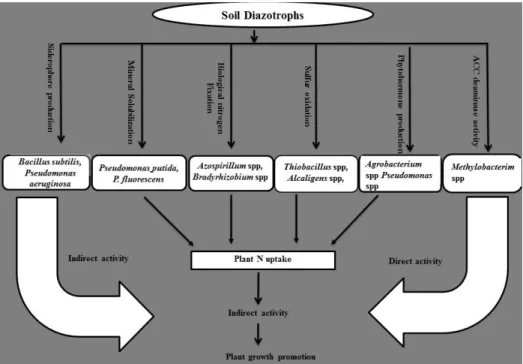
plant growth-promoting bacteria (PGPB). Plant growth promotion (PGP) is a complex phenomenon that often cannot be attributed to a single mechanism and, as outlined in Fig. 4. PGPB may typically display a combination of mechanisms (Kuklinsky-Sobral et al., 2004). Apart from fixing N

2

, diazotrophs can affect plant growth directly by the synthesis of phytohormones and vitamins, inhibition of ethylene synthesis, improvement of nutrient uptake, enhancement of stress resistance, solubilization of inorganic phosphate and mineralization of organic phosphate (Dobbelaere et al., 2003). Indirectly, diazotrophs decrease or prevent the deleterious effects of pathogenic microorganisms, through the synthesis of antibiotics and/or fungicidal compounds, competition for nutrients through production of siderophores or the induction of systemic resistance to pathogens (Dobbelaere et al., 2003). Many soil bacteria encode acdS gene, which degrades 1-aminocyclopropane-1-carboxylic acid (ACC), the direct precursor of ethylene (Glick, 2005;

Prigent-Combaret et al., 2008; Yan et al., 2008;

Rothballer et al., 2008) and introduction of acds gene introduction into A. brasilense resulted in increased root elongation of some plants (Holguin and Glick, 2001).

Production of N-acylhomoserine lactone may be involved in plant growth promotion as observed in some cases (Rothballer et al., 2008). A particular strain of A.

brasilense was reported to be antagonistic of the

parasitic weed Striga, which affect many tropical cereals

by preventing Striga seed germination (Miché et al.,

(8)

Fig. 4. Plant growth promotion mechanisms of diazotrophic bacteria.

2000).

However, free-living N

2

-fixing bacteria were probably the first bacteria used to promote plant growth.

Azospirillum was first isolated in 1970s (Steenhoudt and Vanderleyden, 2000) and this genus has been studied widely, and the study by Bashan et al. (2004) being the most recent one, reported the latest advances in physiology, molecular characteristics and agricultural applications of this genus. Other bacterial genera capable of N

2

-fixation that is probably responsible for plant growth promotion effect are Azoarcus sp., Burkholderia sp., Gluconacetobacter diazotrophicus, Azotobacter sp., Herbaspirillum sp., and Paenibacillus polymyxa (Vessey, 2003). These strains are being isolated from rice, sugar- cane, corn, sorghum, other cereals, pineapple and coffee bean. Rondon et al (2007) reported enhanced biological N

2

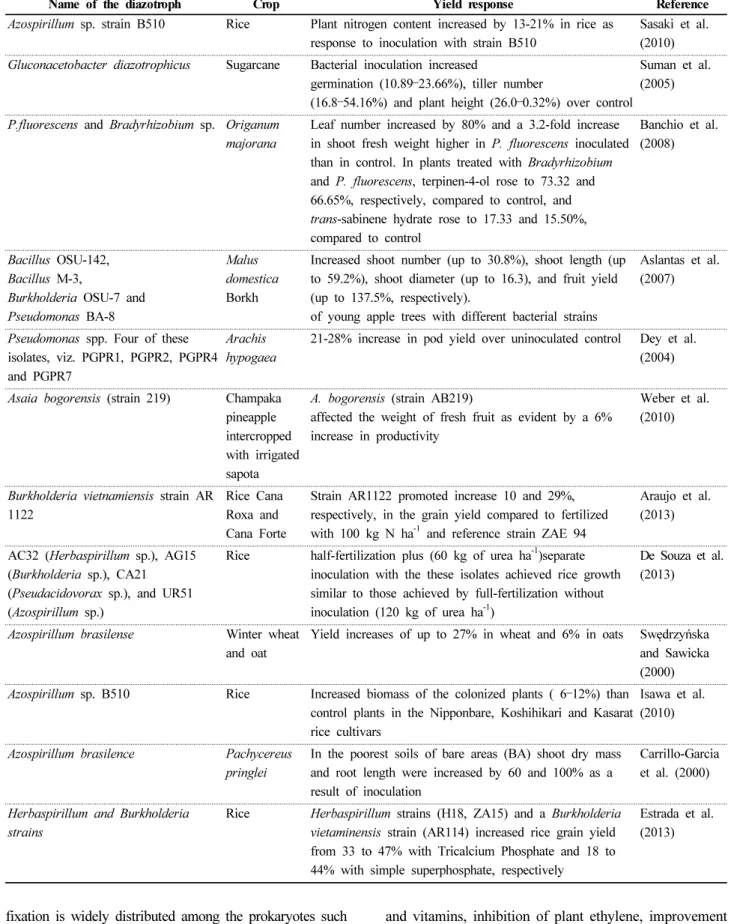
fixation (BNF) in Phaseolus vulgaris L. through the addition of bio-char. These authors reported that the proportion of fixed N increased (50%), when compared to inoculations without bio-char addition (Table 1).

Herridge et al. (2008) reported that the annual N

2

fixation inputs based on BNF are 12 –25 million tons (MT) for pasture and fodder legumes, 5 MT for rice, 0.5 MT for sugar cane, <4 MT for non-legume crop lands and <14 MT for extensive savannas. Taule et al. (2011) reported Pseudomonas, Stenotrophomonas, Xanthomonas, Acinetobacter, Rhanella, Enterobacter, Pantoea, Shinella, Agrobacterium and Achromobacter as the major diazo- trophic bacteria associated with Sugarcane grown in Uruguay. Using

15

N-dilution technique, these authors reported inputs of N from BNF (34.8 –58.8% Ndfa).

Mahieu et al. (2013) studied the association of the legume Anthyllis vulneraria and the grass Festuca arvernensis to be efficient for the phytostabilisation of highly multi-metal contaminated mine tailings. Hassan

et al. (2013) compared the efficiencies of AN8 and AN12 having both nitrogen fixing and ACC deaminase producing ability with ACC5 and ACC8 having only ACC deaminase producing ability for its ability to promote plant growth in Maize under lead polluted soil. Hassan et al. (2014) reported in his studies, diazo- trophic bacteria TAN1 significantly (P < 0.05) increased the root length by 8.25-fold, root fresh weight by 8.36- fold and dry weight by 12.6-fold, shoot length by 6.92- fold, shoot fresh weight by 7.18-fold and dry weight by 6.90-fold, number of leaves by 11.0-fold, chlorophyll a content by 6.25-fold, chlorophyll b content by 10.7-fold and, carotenoid contents by 8.80-fold, when compared to uninoculated control. Based on the results these authors reported that the PGP traits are more effective and resistive against Pb pollution. Puri et al.

(2015) reported that the diazotrophic bacteria Paenibacillus polymyxa P2b-2R enhanced seedling height (25%) and biomass (30%) after 60 days post inoculation in canola.

Conclusion

Nitrogen is one of the key elements essential for the

growth of plants, since they form essential part of

proteins, nucleic acids and cellular constituents. In spite

of its abundance in the atmosphere, nitrogen cannot be

utilized directly by the plants, and to be utilized, it has

to combine with elemental hydrogen. This fixation of

nitrogen is facilitated by diazotrophic bacteria in a

process called as diazotrophic ‘N’ fixation. Biological

nitrogen fixation is facilitated by the nitrogenase enzyme

complex at the expense of 16 ATP molecules. The

nitrogenase enzyme complex is made up of MoFe

protein, which is encoded by nifDK genes. Asymbiotic

nitrogen fixation contributes to 30% of the fixed N. N

2

(9)

Table 1. Yield responses in different crops as influenced by diazotrophic bacterial inoculations.

Name of the diazotroph Crop Yield response Reference

Azospirillum sp. strain B510 Rice Plant nitrogen content increased by 13-21% in rice as response to inoculation with strain B510

Sasaki et al.

(2010) Gluconacetobacter diazotrophicus Sugarcane Bacterial inoculation increased

germination (10.89 –23.66%), tiller number

(16.8 –54.16%) and plant height (26.0–0.32%) over control

Suman et al.

(2005)

P.fluorescens and Bradyrhizobium sp. Origanum majorana

Leaf number increased by 80% and a 3.2-fold increase in shoot fresh weight higher in P. fluorescens inoculated than in control. In plants treated with Bradyrhizobium and P. fluorescens, terpinen-4-ol rose to 73.32 and 66.65%, respectively, compared to control, and trans-sabinene hydrate rose to 17.33 and 15.50%, compared to control

Banchio et al.

(2008)

Bacillus OSU-142, Bacillus M-3,

Burkholderia OSU-7 and Pseudomonas BA-8

Malus domestica Borkh

Increased shoot number (up to 30.8%), shoot length (up to 59.2%), shoot diameter (up to 16.3), and fruit yield (up to 137.5%, respectively).

of young apple trees with different bacterial strains

Aslantas et al.

(2007)

Pseudomonas spp. Four of these isolates, viz. PGPR1, PGPR2, PGPR4 and PGPR7

Arachis hypogaea

21-28% increase in pod yield over uninoculated control Dey et al.

(2004)

Asaia bogorensis (strain 219) Champaka pineapple intercropped with irrigated sapota

A. bogorensis (strain AB219)

affected the weight of fresh fruit as evident by a 6%

increase in productivity

Weber et al.

(2010)

Burkholderia vietnamiensis strain AR 1122

Rice Cana Roxa and Cana Forte

Strain AR1122 promoted increase 10 and 29%, respectively, in the grain yield compared to fertilized with 100 kg N ha

-1

and reference strain ZAE 94

Araujo et al.

(2013)

AC32 (Herbaspirillum sp.), AG15 (Burkholderia sp.), CA21 (Pseudacidovorax sp.), and UR51 (Azospirillum sp.)

Rice half-fertilization plus (60 kg of urea ha

-1

)separate inoculation with the these isolates achieved rice growth similar to those achieved by full-fertilization without inoculation (120 kg of urea ha

-1

)

De Souza et al.

(2013)

Azospirillum brasilense Winter wheat and oat

Yield increases of up to 27% in wheat and 6% in oats Swędrzyńska and Sawicka (2000) Azospirillum sp. B510 Rice Increased biomass of the colonized plants ( 6 –12%) than

control plants in the Nipponbare, Koshihikari and Kasarat rice cultivars

Isawa et al.

(2010)

Azospirillum brasilence Pachycereus pringlei

In the poorest soils of bare areas (BA) shoot dry mass and root length were increased by 60 and 100% as a result of inoculation

Carrillo-Garcia et al. (2000)

Herbaspirillum and Burkholderia strains

Rice Herbaspirillum strains (H18, ZA15) and a Burkholderia vietaminensis strain (AR114) increased rice grain yield from 33 to 47% with Tricalcium Phosphate and 18 to 44% with simple superphosphate, respectively

Estrada et al.

(2013)

fixation is widely distributed among the prokaryotes such as proteobacteria, cyanobacteria, green Sulphur bacteria, and methanobacteria. Diazotrophic bacteria apart from fixing ‘N’ are also involved in diverse plant growth promoting activities such as synthesis of phytohormones

and vitamins, inhibition of plant ethylene, improvement

of nutrient uptake, solubilization of inorganic phosphate

and mineralization of organic phosphate. This mini

review helps us to understand the role of diazotrophic

bacteria in improving soil fertility and plant growth.

(10)

References

Affourtit, J., J.P. Zehr, and H.W. Paerl. 2001. Distribution of nitrogen-fixing microorganisms along the Neuse River Estuary, North Carolina. Microb. Ecol. 41:114-123.

Araújo, A.E. da S., V.L.D. Baldani, P. de S. Galisa, J.A.

Pereira, and J.I. Baldani. 2013. Response of traditional upland rice varieties to inoculation with selected diazotrophic bacteria isolated from rice cropped at the Northeast region of Brazil. Appl. Soil Ecol. 64:49-55. doi:10.1016/j.apsoil.

2012.10.004.

Aslantaş, R., R. Çakmakçi, and F. Şahin. 2007. Effect of plant growth promoting rhizobacteria on young apple tree growth and fruit yield under orchard conditions. Sci. Hort. 111:

371-377. doi:10.1016/j.scienta.2006.12.016.

Bahulikar, R.A., I. Torres-Jerez, E. Worley, K. Craven, and M.K. Udvardi. 2014. Diversity of nitrogen-fixing bacteria associated with switchgrass in the native tallgrass prairie of northern Oklahoma. Appl. Environ. Microbiol. 80:5636-43.

doi:10.1128/AEM.02091-14.

Banchio, E., P.C. Bogino, J. Zygadlo, and W. Giordano. 2008.

Plant growth promoting rhizobacteria improve growth and essential oil yield in Origanum majorana L. Biochem. Syst.

Ecol. 36:766-771. doi:10.1016/j.bse.2008.08.006.

Barua, S., S. Tripathi, A. Chakraborty, S. Ghosh, and K.

Chakrabarti. 2012. Characterization and crop production efficiency of diazotrophic bacterial isolates from coastal saline soils. Microbiol. Res. 167:95-102. doi:10.1016/j.micres.

2011.04.001.

Bashan, Y., G. Holguin, and L.E. de Bashan. 2004. Azospirillum- plant relationships: physiological, molecular, agricultural, and environmental advances (1997-2003) Can. J. Microbiol.

50:521-577.

Beijerinck, M.W. 1901. Über oligonitrophile Mikroben. Zentral Bakteriologische Parasitenk Abt. II 7:561-565.

Bishop, P.E., and R. Premakumar. 1992. Alternative nitrogen fixation systems, pp. 736-762. In G. Stacey, R. H. Burris, and H. J. Evans (ed.), Biological Nitrogen Fixation. Chapman and Hall, New York, NY.

Bishop, P.E., R. Premakumar, D.R. Dean, M.R. Jacobsen, J.R.

Chisnell, T.M. Rizzo, and J. Kopczynski. 1986. Nitrogen fixation by Azotobacter vinelandii strains having deletions in structural genes for nitrogenase. Science 232:92-94.

Buyer, J.S., and D.D. Kaufman. 1996. Microbial diversity in the rhizosphere of corn grown under conventional and low- input systems. Appl. Soil Ecol. 5:21-27.

Carrillo-Garcia, A., Y. Bashan, E.D. Rivera, and G.J. Beth- lenfalvay. 2000. Effects of Resource-Island Soils, Competition, and Inoculation with Azospirillum on Survival and Growth of Pachycereus pringlei, the Giant Cactus of the Sonoran Desert. Restor. Ecol. 8:65-73. doi:10.1046/j.1526-100x.2000.

80009.x.

Chien, Y.T. and S.H. Zinder. 1996. Cloning, functional organization, transcript studies, and phylogenetic analysis of the complete nitrogenase structural genes (nifHDK2) and associated genes in the archaeon Methanosarcina barkeri 227. J. Bacteriol. 178:143-148.

Cleveland, C.C., A.R. Townsend, D.S. Schimel, H. Fisher, R.W. Howarth, L.O. Hedin, S.S. Perakis, E.F. Latty, J.C.

Von Fischer, A. Elseroad, and M.F. Wasson. 1999. Global patterns of terrestrial biological nitrogen (N

2

) fixation in natural ecosystems. Global Biogeochem. Cy. 13:623-645.

Danso, S.K.A. 1995. Assessment of biological nitrogen fixation.

Nutrient Cycling in Agroecosystems. 42:33-41. doi:10.1007/

bf00750498.

de Souza, R., A. Beneduzi, A. Ambrosini, P.B. da Costa, J.

Meyer, L.K. Vargas, R. Schoenfeld, and L.M.P. Passaglia.

2012. The effect of plant growth-promoting rhizobacteria on the growth of rice (Oryza sativa L.) cropped in southern Brazilian fields. Plant Soil 366:585-603. doi:10.1007/

s11104-012-1430-1.

Dean, D.R. and M.R. Jacobson. 1992. Biochemical genetics of nitrogenase. In: Stacy, G., Burris, R.H., Evans, H.J.

(Eds.), Biological Nitrogen Fixation. pp. 763-834. Chapman and Hall, New York.

Delwiche, C.C. 1981. The nitrogen cycle and nitrous oxide, pp. 1-15. In C. C. Delwiche (ed.), Denitrification, nitrification and atmospheric nitrous oxide. John Wiley and Sons, New York, NY.

Dey, R., K.K. Pal, D.M. Bhatt, and S.M. Chauhan. 2004.

Growth promotion and yield enhancement of peanut (Arachis hypogaea L.) by application of plant growth-promoting rhizobacteria. Microbiol. Res. 159:371-394. doi:10.1016/j.

micres.2004.08.004.

Diallo D.M., A. Willems, N. Vloemans, S. Cousin, T.T.

Vandekerckhove, P. de Lajudie, M. Neyra, W. Vyverman, et al. 2004. Polymerase chain reaction denaturing gradient gel electrophoresis analysis of the N2-fixing bacterial diversity in soil under Acacia tortilis ssp. raddiana and Balanites aegyptiaca in the dryland part of Senegal.

Environ. Microbiol. 6:400-15.

Dobbelaere, S., J. Vanderleyden, and Y. Okon. 2003. Plant growth-promoting effects of diazotrophs in the rhizosphere.

Crit. Rev. Plant Sci. 22:107-149.

Estrada, G.A., V.L.D. Baldani, D.M. de Oliveira, S. Urquiaga, and J.I. Baldani. 2012. Selection of phosphate-solubilizing diazotrophic Herbaspirillum and Burkholderia strains and their effect on rice crop yield and nutrient uptake. Plant Soil 369:115-129. doi:10.1007/s11104-012-1550-7.

Fani, R., R. Gallo, and P. Liò. 2000. Molecular evolution of nitrogen fixation: The evolutionary history of the nifD, nifK, nifE and nifN genes. J. Mol. Evol. 51:1-11.

Fischer, D., B. Pfitzner, M. Schmid, J. L. Simões-Araújo, V.

M. Reis, W. Pereira, E. Ormeño-Orrillo, B. Hai, et al. 2011.

(11)

Molecular characterisation of the diazotrophic bacterial community in uninoculated and inoculated field-grown sugar- cane (Saccharum sp.). Plant Soil 356:83-99. doi:10.1007/

s11104-011-0812-0.

Franche, C., K. Lindström, and C. Elmerich. 2009. Nitrogen- fixing bacteria associated with leguminous and non-leguminous plants. Plant Soil. DOI 10.1007/s11104-008-9833-8.

Giller, K.E., and J.M. Day. 1985. Nitrogen fixation in the rhizosphere: significance in natural and agricultural systems.

In A. H. Fitter (ed.), Ecological interactions in soil. Plants microbes and animals. Blackwell Scientific Publications, Oxford.

Glick, B.R., B. Todorovic, J. Czarny, Z. Cheng, J. Duan, and B. McConkey. 2007. Promotion of plant growth by bacterial ACC deaminase. Crit. Rev. Plant Sci. 26:1-16.

Halbleib, C.M., and P.W. Ludden. 2000. Regulation of biological nitrogen fixation. J. Nutr. 130:1081-1084.

Halbleib, C.M., Y.P. Zhang, and P.W. Ludden. 2000.

Regulation of dinitrogenase reductase ADP-ribosyltransferase and dinitrogenase reductase-activating glycohydrolase by a redox-dependent conformational change of nitrogenase Fe protein. J. Biol. Chem. 275:3493-3500.

Hardy, R.W.F., R.C. Burns, and R.D. Holsten. 1973. Applications of the acetylene-ethylene assay for measurement of nitrogen fixation. Soil Biol. Biochem. 5:47-81. doi:10.1016/0038- 0717(73)90093-X.

Hassan, W., R. Bano, F. Bashir, and J. David. 2013. Comparative effectiveness of ACC-deaminase and/or nitrogen-fixing rhizo- bacteria in promotion of maize (Zea mays L.) growth under lead pollution. Environ. Sci. Poll. Res. 21:10983-10996.

doi:10.1007/s11356-014-3083-5.

Hassan, Y.I., D. Lepp, J. He, and T. Zhou. 2014. Draft Genome Sequences of Devosia sp. Strain 17-2-E-8 and Devosia riboflavina Strain IFO13584. Genome announcements 2. doi:10.1128/genomeA.00994-14.

Hellriegel, H. and H. Wilfarth. 1886. Untersuchungen über die stickstoff-nahrung der gramineen und leguminosen.

Beilageheft zu der Zeitschrift des Vereins der Ruebenzucker- Industrie Deutschen Reiche. pp. 1-234.

Herridge, D.F., M.B. Peoples, and R.M. Boddey. 2008. Global inputs of biological nitrogen fixation in agricultural systems.

Plant Soil 311:1-18. doi:10.1007/s11104-008-9668-3.

Hill, S. 1992. Physiology of nitrogen fixation in free-living heterotrophs, pp. 87-134. In G. Stacey, R. H. Burris, and H. J. Evans (ed.), Biological Nitrogen Fixation. Chapman and Hall, New York, NY.

Hirsch, A.M., H.I. McKhann, A. Reddy, J.Y. Liao Y.W. Fang, and C.R. Marshall. 1995. Assessing horizontal transfer of nifHDK genes in eubacteria: nucleotide sequence of nifK from Frankia strain HFPCcI3. Mol. Biol. Evol. 12:16-27.

Holguin, G., and B. R. Glick. 2001. Expression of the ACC deaminase gene from Enterobacter cloacae UW4 in

Azospirillum brasilense. Microbial Ecol. 41:281-288. doi:

10.1007/s002480000040.

Isawa, T., M. Yasuda, H. Awazaki, K. Minamisawa, S. Shinozaki, and H. Nakashita. 2010. Azospirillum sp. Strain B510 Enhances Rice Growth and Yield. Microb. Environ.25:58-61. doi:

10.1264/jsme2.ME09174.

Kennedy, I. R., and N. Islam. 2001. The current and potential contribution of asymbiotic nitrogen fixation to nitrogen requirements on farms: a review. Animal Prod. Sci. 41.

CSIRO Publishing: 447-457. doi:10.1071/EA00081.

Kuklinsky-Sobral, J., W.L. Araujo, R. Mendes, I.O. Geraldi, A.A. Pizzirani-Kleiner, and J.L Azevedo. 2004. Isolation and characterization of soybean-associated bacteria and their potential for plant growth promotion. Environ. Microbiol.

6:1244-1251.

Madigan, M.T., J.M. Martinko, and J. Parker. 2000. Brock Biology of Microorganisms, Ninth ed. Prentice Hall, Upper Saddle River, NJ.

Mahieu, S., J. Escarré, B. Brunel, A. Méjamolle, S. Soussou, A. Galiana, and J.-C. Cleyet-Marel. 2013. Soil nitrogen balance resulting from N fixation and rhizodeposition by the symbiotic association Anthyllis vulneraria/Mesorhizobium metallidurans grown in highly polluted Zn, Pb and Cd mine tailings. Plant Soil 375:175-188. doi:10.1007/s11104-013- 1941-4.

Malik, K.A. and H.G. Schlegel. 1981. Chemolithoautotrophic growth of bacteria able to grow under N2-fixing conditions.

FEMS Microbiol. Lett. 11:63-67.

Marschner, H. 1995. Mineral nutrition of higher plants. 2

nd

edition. Academic Press, London.

Miché, L., M.L. Bouillant, R. Rohr, G. Salle, and R. Bally.

2000. Physiological and cytological studies on the inhibition of Striga seed germination by the plant growth-promoting bacterium Azospirillum brasilense. Eur. J. Plant Pathol. 106:

347-351.

Novoa, R., and R.S. Loomis. 1981. Nitrogen and plant production. Plant soil, 58(1-3), 177-204.

Ohkuma, M., S. Noda, R. Usami, K. Horikoshi, and T. Kudo.

1996. Diversity of nitrogen fixation genes in the symbiotic intestinal microflora of the termite Reticulitermes speratus.

Appl. Environ. Microbiol. 62:2747-2752.

Olson, N.D., T.D. Ainsworth, R.D. Gates, and M. Takabayashi.

2009. Diazotrophic bacteria associated with Hawaiian Montipora corals: Diversity and abundance in correlation with symbiotic dinoflagellates. J. Exp. Mar. Biol. Ecol. 371:

140-146. doi:10.1016/j.jembe. 2009.01.012.

Paul, E.A., and G.E. Clark. 1996. Soil Microbiology and Biochemistry, 2nd ed. Academic Press, San Diego, CA.

Piceno, Y.M., P.A. Noble, and C. R. Lovell. 1999. Spatial

and temporal assessment of diazotroph assemblage composition

in vegetated salt marsh sediments using denaturing gradient

gel electrophoresis analysis. Microb. Ecol. 38:157-167.

(12)

Poly, F., L. Ranjard, S. Nazaret, F. Gourbiere, and L.J.

Monrozier. 2001. Comparison of nifH gene pools in soils and soil microenvironments with contrasting properties.

Appl. Environ. Microbiol. 67:2255-2262.

Prigent-Combaret, C., D. Blaha, F. Pothier, L. Vial, M.A.

Poirier, F. Wisniewski-Dyé, and Moënne-Loccoz, Y. 2008.

Physical organization and phylogenetic analysis of acdR as leucine-responsive regulator of the 1-aminocyclopropane- 1-carboxylate deaminase gene acdS in phytobeneficial Azospirillum lipoferum 4B and other Proteobacteria. FEMS Microbiol. Ecol. 65:202-219.

Puri, A. 2016.Plant growth promotion nitrogen fixation by Paenibacillus polymxya in corn and canola. University of British, Columbia.

Ribbe, M., D. Gadkari, and O. Meyer. 1997. N

2

fixation by Streptomyces thermoautotrophicus involves a molybdenum- dinitrogenase and a manganesesuperoxide oxidoreductase that couple N

2

reduction to the oxidation of superoxide produced from O

2

by a molybdenum-CO dehydrogenase. J.

Biol. Chem. 272:26627-26633.

Richardson, A.E., J.M. Barea, A.M. McNeill and C. Prigent- Combaret. 2009. Acquisition of phosphorus and nitrogen in the rhizosphere and plant growth promotion by micro- organisms. Plant Soil. DOI 10.1007/s11104-009-9895-2 Roesch, L.F.W., F.A.O. Camargo, F.M. Bento, and E.W.

Triplett. 2007. Biodiversity of diazotrophic bacteria within the soil, root and stem of field-grown maize. Plant Soil 302:

91-104. doi:10.1007/s11104-007-9458-3.

Rondon, M. A., J. Lehmann, J. Ramírez, and M. Hurtado.

2006. Biological nitrogen fixation by common beans (Phaseolus vulgaris L.) increases with bio-char additions.

Biol. Fert. Soil. 43:699-708. doi:10.1007/s00374-006-0152-z.

Rothballer, M., B. Eckert, M. Schmid, M., Fekete, A., Scholter, M., Lehner, A., Pollmann, S. and Hartmann, A.

2008. Endophytic root colonization of gramineous plants by Herbaspirillum frisingense. FEMS Microbiol. Ecol. 66:

85-95.

Sasaki, K., S. Ikeda, S. Eda, H. Mitsui, E. Hanzawa, C.

Kisara, Y. Kazama, A. Kushida, et al. 2010. Impact of plant genotype and nitrogen level on rice growth response to inoculation with Azospirillum sp. strain B510 under paddy field conditions. Soil Sci. Plant Nut. 56:636-644. doi:

10.1111/j.1747-0765.2010.00499.x.

Shu, W., G.P. Pablo, Y. Jun, and H. Danfeng. 2011. Abundance and diversity of nitrogen-fixing bacteria in rhizosphere and bulk paddy soil under different duration of organic manage- ment. World J. Microbiol. Biotechnol. 28:493-503. doi:

10.1007/s11274-011-0840-1.

Steenhoudt, O. and Vanderleyden, J. 2000. Azospirillum, a freeliving nitrogen-fixing bacterium closely associated with grasses: genetic, biochemical and ecological aspects. FEMS Microbiol. Rev. 24:487-506.

Stewart, W.D.P. 1969. Biological and ecological aspects of nitrogen fixation by free-living microorganisms. Proc. Roy.

Soc. B. (London) 172:367-388.

Suman, A., A. Gaur, A.K. Shrivastava, and R.L. Yadav.

2005a. Improving Sugarcane Growth and Nutrient Uptake by Inoculating Gluconacetobacter diazotrophicus. Plant Growth Reg. 47:155-162. doi:10.1007/s10725-005-2847-9.

Swędrzyńska, D., and A. Sawicka. 2000. Effect of Inoculation with Azospirillum brasilense on Development and Yielding of Maize (Zea mays ssp. Saccharata L.) under Different Cultivation Conditions. Pol. J. Environ. Stud. 6.

Taulé, C., C. Mareque, C. Barlocco, F. Hackembruch, V. M.

Reis, M. Sicardi, and F. Battistoni. 2011. The contribution of nitrogen fixation to sugarcane (Saccharum officinarum L.), and the identification and characterization of part of the associated diazotrophic bacterial community. Plant Soil 356:35-49. doi:10.1007/s11104-011-1023-4.

Tchan, Y.T. 1988. Some aspects of non-rhizobial diazotrophs:

their past and their future. In I. R. Kennedy (ed.), Micro- biology in action. Research Studies Press Ltd., Letchworth.

Thiel, T., E.M. Lyons, J.C. Erker., and A. Ernst. 1995. A second nitrogenase in vegetative cells of a heterocyst forming cyanobacterium. Proc. Natl. Acad. Sci . USA 92:

9358-9362.

Tilman, D., K.G. Cassman, P.A. Matson, R. Naylor, and S.

Polasky. 2002. Agricultural sustainability and intensive production practices. Nature, 418(6898):671-677.

Ueda, T., Y. Suga, N. Yahiro, and T. Matsuguchi. 1995.

Remarkable N

2

-fixing bacterial diversity detected in rice roots by molecular evolutionary analysis of nifH gene sequences. J. Bacteriol. 177:1414-1417.

Unkovich, M., D. Herridge, and M. Peoples. 2008. Measuring plant-associated nitrogen fixation in agricultural systems.

Australian Centre for Intern. Agri.l Res. 258.

Vaishampayan, A., R.P. Sinha, D.P. Hader, T. Dey, A.K.

Gupta, U. Bhan, and A.L. Rao. 2001. Cyanobacterial biofertilizers in rice agriculture. Bot. Rev. 67:453-516.

Vance, C.P. and P. H. Graham. 1995. Nitrogen fixation in agriculture: application and perspectives., pp. 77-86. In I.

A. Tikhonovich, N. A. Provorov, V. I. Romanov and W.

E. Newton (ed.), Nitrogen Fixation: Fundamentals and Applications. Kluwer Academic Publishers, Dordrecht.

Vessey, J.K. 2003. Plant growth promoting rhizobacteria as biofertilizers. Plant Soil 255:571-586.

Vitousek, P.M., and P.A. Matson.2009. Nutrient cycling and biogeochemistry. Princeton University Press, New Jersey.

Wang, L., Z. Yu, J. Yang, and J. Zhou. 2015. Diazotrophic bacterial community variability in a subtropical deep reservoir is correlated with seasonal changes in nitrogen. Environ.

Sci. Poll. Res. Int. 22:19695-705. doi:10.1007/s11356-015- 5144-9.

Wang, S., J. Chen, and J.L. Johnson .1988. The presence

(13)

of five nifH-like sequences in Clostridium pasteurianum:

sequence divergence and transcription properties. Nucleic Acids Res. 16:439-454.

Ward, D.M., R. Weller, and M.M. Baeson. 1990. 16S RNA sequences reveal numerous uncultured microorganisms in a natural community. Nature 345:63-65.

Wartiainen, I., T. Eriksson, W. Zheng, and U. Rasmussen.

2008. Variation in the active diazotrophic community in rice paddy-nifH PCR-DGGE analysis of rhizosphere and bulk soil. Appl. Soil Ecol. 39:65-75.

Weber, O.B., R.N. Lima, L.A. Crisóstomo, J.A.D. Freitas, A.C.P.P. Carvalho, and A.H.N. Maia. 2009. Effect of diazo- trophic bacterium inoculation and organic fertilization on yield of Champaka pineapple intercropped with irrigated sapota. Plant Soil 327:355-364. doi:10.1007/s11104-009- 0059-1.

Yan, Y., J. Yang, Y. Dou, M. Chen, S. Ping, J. Peng, and W. Lu. 2008. Nitrogen fixation island and rhizosphere competence traits in the genome of root-associated Pseudo- monas stutzeri A1501. Proc. Natl. Acad. Sci. USA. 105:

7564-7569.

Young, J.P.W. 1992. Phylogenetic classification of nitrogen- fixing organisms, pp. 43-86. In G. Stacey, R. H. Burris, and H. J. Evans (ed.), Biological Nitrogen Fixation. Chapman and Hall, New York, NY.

Zani, S., M.T. Mellon, J.L. Collier, and J.P. Zehr. 2000.

Expression of nifH genes in natural microbial assemblages in Lake George, New York, detected by reverse transcriptase PCR. Appl. Environ. Microbiol. 66:3119-3124.

Zehr, J.P. and L.A. McReynolds. 1989. Use of degenerate oligonucleotides for amplification of the nifH gene from the marine cyanobacterium Trichodesmium thiebautii. Appl.

Environ. Microbiol. 55:2522-2526.

Zehr, J.P., S. Braun, Y.B. Chen. and M. Mellon. 1996.

Nitrogen fixation in the marine environment: relating genetic potential to nitrogenase activity. J. Exp. Mar. Biol.

Ecol. 203:61-73.

Zehr, J.P., B.D. Jenkins, S.M. Short, and G.F. Steward. 2003.

Nitrogenase gene diversity and microbial community structure:

a cross-system comparison. Environ. Microbiol. 5:539-554.

수치

Fig. 1. The plant-soil N cycle and pathways for N transformation mediated by physiological processes (DON = dissolved organic  nitrogen) (Richardson et al., 2009).
Fig. 2. Electron transport chain for nitrogenase in  Klebsiella pneumoniae. Nitrogenase reductase (Fe protein, NifH) shuttles  electrons to dinitrogenase (MoFe protein, NifD and NifK) under consumption of ATP
Fig. 3. Biological nitrogen fixing agents in agricultural and terrestrial natural systems (Herridge et al., 2008).
Fig. 4. Plant growth promotion mechanisms of diazotrophic bacteria.
+2

참조

관련 문서

Conclusion: In Neer type II distal clavicle fracture treatment, both groups showed satisfactory result in clinical and radiological outcomes, but the hook plate

To obtain data for the optimal growth conditions for crops in this intelligent plant growing system, sensors were used to measure and control the

Biological treatment of wastewater is an economical green technology, however, the effluent water quality of a biological wastewater treatment facility is

Growth and rosmarinic acid accumulation in callus, cell suspension, and root cultures of wild Salvia fruticosa.. Plant Cell Tissue

This study was performed by observation of the single nonwoven fabric filter bioreactors with the kind of nitrogen sources and conditional change by the

In this study, it can be seen that sex and metabolic syndrome are important for biological factors, and occupation, smoking, and exercise are important

Bone morphogenetic proteins (BMPs) are the most important family of growth factors for bone regeneration and possess a wide array of biological activities,

 The use of cells and biological molecules or cellular and biomolecular processes to solve problems and make