• 검색 결과가 없습니다.

Electrodeposition of Some Selective Metals Belonging to Light, Refractory and Noble Metals from Ionic Liquid Electrolytes

N/A
N/A
Protected

Academic year: 2021

Share "Electrodeposition of Some Selective Metals Belonging to Light, Refractory and Noble Metals from Ionic Liquid Electrolytes"

Copied!
14
0
0

로드 중.... (전체 텍스트 보기)

전체 글

(1)

http://dx.doi.org/10.5229/JKES.2012.15.2.135

− 135 −

Electrodeposition of Some Selective Metals Belonging to Light, Refractory and Noble Metals from Ionic Liquid Electrolytes

Bonita Dilasari, Kyungjung Kwon*, Churl Kyoung Lee

, and Hansu Kim

††

Department of Energy & Mineral Resources Engineering, Sejong University, Seoul 143-747, Korea

School of Advanced Materials & Systems Engineering, Kumoh National Institute of Technology, Gumi, Gyungsangbuk-do 730-701, Korea

††

Department of Energy Engineering, Hanyang University, Seoul 133-791, Korea

(Received July 23, 2012 : Accepted August 30, 2012)

Abstract : Ionic liquids are steadily attracting interests throughout a recent decade and their application is expanding into various fields including electrochemistry due to their unique prop- erties such as non-volatility, inflammability, low toxicity, good ionic conductivity, wide elec- trochemical potential window and so on. These features make ionic liquids become an alternative solution for electrodeposition of metals that cannot be electroplated in aqueous elec- trolytes. In this review, we classify investigated metals into three categories, which are light (Li, Mg), refractory (Ti, Ta) and noble (Pd, Pt, Au) metals, rather than covering the exhaustive list of metals and try to update the recent development in this area. In electrodeposition of light metals, granular fine Li particles were successfully obtained while the passivation of elec- trodeposited Mg layers is an obstacle to reversible deposition-dissolution process of Mg. In the case of refractory metals, the quality of Ta and Ti deposit particles was effectively improved with addition of LiF and pyrrole, respectively. In noble metal category, EMIM TFSA ionic liq- uid as an electrolyte for Au electrodeposition was proven to be effective and BMP TFSA ionic liquid developed a smooth Pd deposit. Pt nanoparticle production from ionic liquid droplet in aqueous solution can be cost-effective and display an excellent electrocatalytic activity.

Keywords : Ionic liquid, Electrodeposition, Light metal, Refractory metal, Noble metal, Morphology

1. Introduction

Ionic liquids are room-temperature molten salts in the liquid state. While ordinary liquids such as water are predominantly made of electrically neutral molecules, ionic liquids are largely made of ions and short-lived ion pairs. They are widely used in electrochemistry due to their unique properties such as non-volatility, inflammability, low toxicity, good ionic conductivity, wide electrochemical potential window and high thermal stability. These features make ionic liquids become an alternative solution for electrodeposition of metals that cannot be e l e c t r o p l a t e d i n a q u e o u s e l e c t r o l y t e s . T h e electrochemical window, which is the potential

range of which the electrolyte is neither oxidized nor reduced, of ionic liquid should be wide enough to provide the reduction of metals with avoiding hydrogen embrittlement of the deposit layers or hydrogen evolution. Ionic liquids should also have a good electrochemical stability to prevent the r e d u c t i o n o f t h e i r c o m p o n e n t s d u r i n g t h e electrodeposition of target metals. For ionic liquids to be practically adopted for electroplating industry, there are other key issues to be addressed. The viscosity of room temperature ionic liquids is much higher (accordingly, the ionic conductivity is lower) t h a n t h a t o f a q u e o u s e l e c t r o l y t e s o r h i g h temperature molten salts due to a difference in ion size and also due to higher void volume. Besides, no definite relationship between the morphology of deposit and the experimental conditions has been

*E-mail: [email protected]

Review

(2)

established.

A few review papers dealing with the overview of metal electrodeposition in ionic liquids can be found elsewhere.

1-3

In this review, we classify investigated metals into three categories, which are light (Li, Mg), refractory (Ti, Ta) and noble (Pd, Pt, Au) metals, rather than covering the exhaustive list of m etals and try to update the recent d eve lop m ent in this area. In contrast to the previous review papers, we pay more attention to deposition m orphology, which has not been intensively compared and analyzed.

2. Light Metals

2.1. Lithium (Li)

A main problem which is commonly found in Li rechargeable battery is the formation of dendritic Li metal deposits during charging, leading to short circuiting and poor cycling properties. Li dendrites are expected to grow because non-uniform films form when Li metal surface reacts with electrolyte solution.

4

In recent years, studies about Li batteries a r e f o c use d o n at te m p ts to a vo id d e nd ritic deposition by adding organic or inorganic reagents to electrolytes.

Sano et al. have studied the electrodeposition process of Li metal by using in situ morphological observation.

5

They investigated the effect of organic reagent vinylene carbonate (VC) addition to two different ionic liquids, N-methyl-N-propylpiperidinium bis(trifluoromethanesulfonyl)amide (PP13 TFSA) and

1-ethyl-3-methylimidazolium bis(fluorosulfonyl)amide (EMIM FSA). Electrodeposition processes were done using Ni f oil as working and counter electrode with Li TFSA as a source of Li. At the beginning of deposition process, potential rapidly drops and then slowly approaches 0 V as shown in Fig. 1(a). The initial decrease in potential is thought to be caused by the decomposition of electrolyte component. In the case of EMIM FSA as an electrolyte, there was no substantial difference between VC-free and VC-added samples. In situ observation by optical microscopy showed that both samples had a large distribution in particle size and some deposits grew fast to become larger than their neighbors. In contrast, for the case of PP13 TFSA, the authors observed a very small distribution in particle size for both VC-free and VC-added samples. Current density had a negligible effect on dendrite formation in the investigated range. The m orphology of deposits in VC-free sam ples obtained at current densities of 50 and 150 µA cm

−2

in EMIM FSA were almost the same. Ex situ observation by SEM showed that the deposit particles on both VC-free and VC-added samples in PP13 TFSA were very fine compared to other samples. The particle shape was dendritic for all samples in EMIM FSA ionic liquid and for the VC-free sample in PP13 TFSA, but the shape became granular for the VC-added sample in PP13 TFSA as shown in Fig. 1(b). It was concluded that PP13 TFSA has higher cathodic stability than that of EMIM FSA because of the coarser deposit

Fig. 1. (a) Change in potential during Li galvanostatic electrodeposition; (b) SEM image of Li electrodeposit formed

galvanostatically on Ni substrate in PP13 TFSA solution with addition of VC at a current density of 50µA/cm

2

and a

charge of 3 C/cm

2

for 60,000 seconds (Reprinted with permission from ref. [5] Copyright 2010 Elsevier B.V).

(3)

grains of samples obtained in EMIM FSA than in PP13 TFSA. Regarding uniform and granular deposit particles for the case of VC-added sample in PP13 TFSA, Sano et al. clarified that the deposit film consisted of decomposed VC as a main component. A similar phenomenon was also reported by Ota et al.,

6

who stated that VC addition to electrolyte led to the formation of surface films consisting of poly-(VC) at elevated temperatures. The gel-like VC-derived polymeric surface film could prevent the deleterious reaction between deposited Li and the electrolyte, which resulted in enhanced cycling efficiency.

2.2. Magnesium (Mg)

The electrodeposition of Mg, one of highly reactive metals, in ionic liquid is a complicated process and has complex problems. The selected electrolyte must be a polar aprotic solvent that should not react with Mg metal. Some previous studies clarified that electrode surface easily become passive. Passivation occurs probably due to the reaction of deposited Mg with several types of ionic liquid electrolyte or with trace water. Moreover, electrode surface could be covered by reduction products of dissolved organic or inorganic Mg salt species. When Mg is considered as an anode for rechargeable batteries, ionic liquid electrolyte should provide a wide electrochem ical window f or reversible deposition-dissolution reaction of Mg.

NuLi et al. have reported for the first time that

Mg metal can be electrodeposited in 1-butyl-3- methylimidazolium tetrafluoroborate (BMIM BF

4

) ionic liquid with 1 M Mg(CF

3

SO

3

)

2

at room temperature.

7

This electrolyte has 4.2 V and 3 V electrochemical windows on Pt disk and Ag plate electrodes, respectively. Four types of substrate (Pt, Ag, Ni and stainless steel) were tried but only Ag substrate was feasible for electrodeposition of Mg.

Cyclic voltammogram of Ag electrodes in Fig. 2(a) shows anodic and cathodic peaks are located near 0 V. The symmetrical shape and the sharp current peak indicate the process is reversible. The morphology of deposited Mg on Ag substrate was smooth and dense as shown in Fig. 2(b) while the morphology of deposits on Pt substrate was dendritic.

These dendritic deposits were easily detached from substrate causing a loss of electrochemical active Mg. A cyclic voltammetry test on Ni electrode exhibited a different behavior from Pt and Ag electrodes such as a strange shape of cathodic peak and a larger anodic charge than cathodic charge, which probably resulted from some side reactions on Ni electrode. Contrary to the three previous substrates, electrodeposition of Mg on stainless steel electrode required a larger overpotential than the other electrodes and a cross-over current was observed when the scan direction was reversed. It was concluded that the deposition and dissolution reaction of Mg in BMIM BF

4

ionic liquid might be related to some complicated interfacial processes that was not clear yet. The authors suggested that

Fig. 2. (a) Cyclic voltammogram of BMIM BF

4

without (curve 1) and with 1 M Mg(CF

3

SO

3

)

2

(curve 2) on Ag plate

electrode at a scan rate 50 mV/s; (b) SEM image of Mg film deposit formed potentiostatically on Ag plate in BMIM BF

4

solution containing Mg(CF

3

SO

3

)

2

at a potential of 0.15 V vs. Pt QRE (Reprinted with permission from ref. [7] Copyright

2005 Elsevier B.V).

(4)

BMIM BF

4

ionic liquid might not be an ideal electrolyte for electrodeposition of Mg due to extremely slow diffusion coefficient in this ionic liquid.

Wang et al.

8

have investigated a possibility to mix two kinds of ionic liquids in order to design an ionic liquid system with a better performance and cycling property based on results from the aforementioned report. They used a mixture of BMIM BF

4

and PP13 TFSA in a ratio of 2:1, 3:1 and 4:1, with 0.3 M Mg(CF

3

SO

3

)

2

as a source of Mg. Conductivity measurements indicated that a mixed solution has a higher conductivity than those of pure solutions and the conductivity increases as the portion of BMIM BF

4

increases. A cyclic voltammetry test showed that the mixed ionic liquid has a wider electrochemical window than that of pure BMIM BF

4

. SEM images at initial deposition on Ag substrate showed small crystallites (10-30 nm).

At steady-state deposition, grains became bigger and deposits became more porous. An EDX analysis revealed that the deposits consisted of Mg and trace of C, O, and F, which were expected from trapped ionic liquid in the porous structure of the Mg deposits. An XRD result showed that alloying of Mg and Ag occurred by diffusion of Mg into the bulk of Ag electrode. There observed a trade- off such that increasing the portion of BMIM BF

4

enhances the conductivity while increasing the portion of PP13 TFSA promotes the cathodic stability. The ratio of 4:1 was suggested to be the m ost suita ble c om pos ition jud ging f ro m a n extremely low initial overpotential and a good cyclability up to 200 cycles.

In contrast with experiment results in ref [7] and [ 8 ] , A m i r et al. found that reversible Mg deposition-dissolution cannot be obtained from ethylmethylimidazolium-R, butylmethylimidazolium tetrafluoroborate and trihexyl(tetradecyl)phosphonium bis(trifluoromethylsulfonyl)imide (P

66614

TFSA) ionic liquids.

9

A cyclic voltammetry measurement with Pt working electrode in BMIM BF

4

containing 0.5 M Mg(CF

3

SO

3

)

2

showing a lack of anodic peak suggested that deposited Mg would probably react with BMIM

+

. Voltam m etric behavior of Mg electrode in the same ionic liquid indicated that Mg surface was passivated from the reaction of Mg

with ionic liquid or trace of water. The authors concluded that the ionic liquid is not compatible with electrolytes in Mg batteries because most commonly used ionic liquids that have high cathodic stability are not suitable as a solvent for reversible Mg deposition-dissolution processes.

Since Shimamura et al. realized that reversible d e p o s i t i o n - d i s s o l u t i o n p r o c e s s e s o f M g a r e practically difficult in ionic liquids containing simple Mg salts, they tried to obtain binary Mg-Li composite by electrodeposition in N,N-diethyl- N-m ethyl-N-(2-m ethoxyethyl) am m onium bis (trifluoromethylsulfonyl)amide (DEME TFSA) containing Mg (TFSA)

2

and Li TFSA.

10

Cyclic voltammetry measurements revealed that addition of Mg salt can suppress the redox process of Li d e p o s i ti o n a n d d is s o lu t io n i n i o n i c l iq u id . Potentiostatic electrodeposition was carried out on Au substrate at a potential − 3.5 V vs. Ag quasi r e f e r e n c e e le c t r o de ( Q R E ) i n D E M E T FS A containing 10 mol% Li TFSA and 10 mol% Mg (TFSI)

2

for 5 hours. An XRD pattern showed only Mg metal was contained in the deposited layers.

Conversely, ICP-AES test results showed that both Mg and Li were chemically found in the deposits with current efficiencies of 28.8% and 24.6%

respectively. Based on these contrast results by XRD and ICP-AES, the authors assumed the deposit layers consisted of amorphous Li containing metallic Mg and concluded that the simple cathodic reduction of Mg is difficult to proceed in DEME TFSA ionic liquid.

3. Refractory Metals

3.1. Tantalum (Ta)

Electrodeposition of Ta in ionic liquid electrolytes has been conducted in order to replace the use of high temperature molten salts of alkali metal halides which has low efficiency. TFSA is a popular choice of anion for Ta as ionic liquids including TFSA anion have high electrochemical stability and large electrochemical window. A major problem in electrodeposition of Ta is the tendency of deposited Ta to form non-stoichiometric subhalide species.

Deposit layers usually show cracks and pores.

Annealing process would be needed for the desired

(5)

morphology of deposited layers. As it is well known that Ta has excellent corrosion resistance properties, it has a high tendency to form Ta oxide on deposited layers.

A b e d i n et al. reported the successful electrodeposition of Ta in room temperature ionic liquid for the first time.

11

Cyclic voltammetry was d o n e i n 1 - b u t y l - 1 - m e t h y l p y r r o l i d i n i u m b i s (trifluoromethanesulfonyl)amide (BMP TFSA) ionic liquid containing 0.5 M TaF

5

on Pt working electrode. When the potential was set at − 2.3 V vs.

Pt QRE for 1 hour, they observed black thick deposit was obtained with poor adherence to the substrate. Reduction and oxidation peaks grew with rising temperature due to kinetic reason. BMP TFSA was found to remain stable up to 300

o

C under inert gas conditions. Temperature also affected the quality of Ta deposit as a better adherence appeared at 200

o

C. SEM and EDX analyses revealed that a deposit made at 200

o

C at a potential of − 1.3 V vs.

Pt QRE for 1 hour was granule particles and contained mainly Ta contaminated with C, O, F and S. In contrast, an XRD analysis showed no evidence for crystalline Ta in the deposit. After annealing process at 800

o

C under vacuum condition for 5 hours, XRD reinvestigation confirmed that the deposit contained crystalline Ta and Ta

2

O

5

. The EDX analysis of annealed sample showed that micro-scale non-stoichiometric Ta subfluoride layers with some trapped ionic liquids grew on a thin crystalline Ta layers (200-300 nm). The authors also

tried to electrodeposit Ta on Au (111) substrate in the same electrolyte. Contrary to the Pt substrate case, the reduction process on Au substrate occurs in two steps. The first step was presumed to be the reduction of Ta (V) to Ta (III) and the second step was the reduction of Ta (III) to elemental Ta.

De po site d Ta o n A u sub str at e al so s how e d enhanced adherence and mechanical quality at 200

o

C compared to room temperature as similarly observed on Pt substrate. A SEM analysis of deposited layers made at 200

o

C at a potential of

− 1.2 V vs. Pt QRE for 1 hour showed thick and dense deposits containing a few cracks. An addition of LiF to the electrolyte was also proved to be an effective way to improve mechanical quality and adherence of electrodeposited Ta. With addition of LiF, the reduction process of Ta (V) to elemental Ta occurred in three steps as observed in cyclic voltammogram (Fig. 3(a)) where three cathodic peaks appear and deposited Ta showed a smooth, coherent and dense layer as shown in Fig. 3(b).

The authors attributed these results to ionic polarizability of Li

+

which can weaken Ta-F bonds and facilitate Ta deposition.

A further study on electrodeposition of Ta was done with a focus on corrosion behavior of electroplated alloy.

12

Based on the results from the previous study,

11

electrodeposition of Ta in BMP TFSA ionic liquid containing 0.25 M TaF

5

and 0.25 M LiF was carried out at 200

o

C on NiTi alloy. A non-stoichiometric layer of Ta subhalide on top of

Fig. 3. (a) Cyclic voltammogram of BMP TFSA containing 0.25 M TaF

5

and 0.25 M LiF on Pt electrode at 200

o

C; (b) SEM image of Ta electrodeposit formed potentiostatically on Pt substrate in BMP TFSA solution containing 0.25 M TaF

5

and 0.25 M LiF at a potential of 1.8 V vs. Pt QRE for 1 hour at 200

o

C (Reprinted with permission from ref. [11]

Copyright 2005 The Owner Societies).

(6)

the elemental Ta was similarly observed and the Ta subhalide layers became thicker with increasing current density. Corrosion measurements of coated and uncoated NiTi alloy revealed some significant results as follows: (i) open circuit potential of the coated sample was about 150 mV higher than that of uncoated one; (ii) polarization curve showed 300 mV of a passive region of uncoated sample while coated sample showed a wider passive region up to 600 mV; (iii) corrosion potential of the coated sample was higher than that of the uncoated one.

These results validate the argument that deposition of Ta as thin as 500 nm thick can increase the corrosion resistance of NiTi alloy.

Borisenko et al. investigated the electrodeposition of Ta at room temperature on flame-annealed Au and on polycrystalline Au substrates in BMP TFSA containing TaF

5

as a source of Ta.

13

A cyclic voltammetry test showed a wide electrochemical window of the ionic liquid up to 6 V. The reduction process of TaF

5

to elemental Ta in this electrolyte takes four subsequent steps. If a deposition rate is very fast with a very slow diffusion rate of F

, the reduction process would involve F

which results in TaF

x

formation. Partial reduction of TaF

x

to elemental Ta will lead to a porous structure and cracks on deposit surface. Increasing temperature and stirring solution can be used to avoid formation of subhalide species and to obtain thicker deposited layers. EDX and XRD analyses indicated that deposited layers mainly consisted of elemental Ta with a minority of Ta oxides. In contrast with high temperature molten salts, Ta can be electrodeposited in thin layers under relatively simple experimental conditions using the ionic liquid.

In order to study the effect of cation, Ispas et al.

have studied the electrodeposition process of Ta using three different ionic liquids: BMP TFSA, 1- ethyl-3-methylimidazolium bis(trifluoromethylsulfo- nyl)amide (EMIM TFSA) and 1-methyl-3-propy- limidazolium bis(trifluoromethylsulfonyl)amide ( P M I M T FS A ) .

1 4

I t w a s f o u n d b y E Q C M measurements that no elemental Ta could be obtained from EMIM TFSA containing 0.5 M TaF

5

neither at room temperature nor at temperatures higher than 100

o

C. The problem of subhalide formation also occurred in this study. By calculating the apparent

molar mass, they found that increasing temperature to 120

o

C could decrease the tendency of subhalide f o r m a t i o n i n t h e f o l l o w i n g o r d e r : E M I M TFSA > PMIM TFSA ≥ BMP TFSA. Similarly to the experiment results in ref. [13], Ta reduction process in this report occurred through several intermediate steps with low rate constants. A square-wave voltammetry showed that rate constants decreased as the oxidation state of Ta approached zero. Desirable morphology of deposits on Au substrate by potentiostatic and galvanostatic electrodeposition experiments was not obtained at room temperature with the range of potential from

1.25 V to − 2.3 V vs. Pt QRE and the current densities of − 0.1 mA/cm

2

and − 0.05 mA/cm

2

. Galvanostatic deposition at room temperature usually ended up with cracked layers, as in potentiostatic deposition, with more roundish grains.

Increasing temperature would reduce cracks and form more compact layers. XPS data displayed that elemental Ta can only be obtained in a narrow deposition range owing to high affinity of elemental Ta to form compounds with F and O.

3.2. Titanium (Ti)

Electrodeposition of Ti is facing several problems to become commercialized such as requirement of large nuclei, very reactive deposit, complex redox process and formation of intermediate species. In recent years, attempts to electrodeposit Ti at room temperature become an interesting research object mainly in determining proper types of ionic liquid as an electrolyte.

Some studies have been done in ionic liquids with TFSA anion thanks to their high electrochemical stability. Mukhopadhyay et al. first investigated e l e c t r o d e p o s i t i o n o f e l e m e n t a l Ti a t r o o m temperature using in situ electrochemical scanning tunneling microscopy (STM).

15

Au (111) was used as a substrate with 0.24 M TiCl

4

as a source of Ti in BMIM TFSA. A current transient curve showing no s ha rp pa ssiv at ion t ra nsi en t ind ica te d n o substantial concentration of TiCl

3

precipitates during TiCl

4

reduction. STM observation showed that 2D islands were formed at a potential − 0.5 V vs. Pt. In the underpotential deposition region below − 1.4 V vs.

Pt, those islands completely covered the Au substrate

(7)

with two atomic layers of Ti. During overpotential deposition process at a potential − 1.8 V vs. Pt QRE, they observed the growth of 3D clusters forming bulk of Ti. After the dissolution of deposited Ti layers, a large number of monatomic depth holes on Au surface were observed, which is indicative of Au-Ti surface alloying.

Endres et al. tried to study further about electrodeposition of Ti from its halides.

16

In contrast with the results in ref. [15], they did not obtain any evidence that elemental Ti could be electrodeposited from its halides in ionic liquids.

No elemental Ti was electrodeposited neither from EMIM TFSA containing 0.25 M TiCl

4

at 100

o

C nor from the ionic liquid using other Ti sources such as TiF

4

and TiI

4

even at 200

o

C. Another attempt in using Ti-isopropanolate as a Ti source and P

66614

TFSA ionic liquid also ended up with observing cation decomposition products instead of elemental Ti. When BMP TFSA was used in electrolyte, some islands on Au (111) surface, which could be attributed to the formation of metal Ti and/or subhalide TiCl

x

, were found at a potential of − 2.2 V vs. Pt. A stepwise shift of potential in anodic direction resulted in small tiny pits on Au surface, indicative of the formation of ultrathin layer of Au- Ti alloy. The authors also reported that TiCl

4

can form complexes with the TFSA anion along with the formation of TiCl

x

. This complex formation could shift the electrode potential for Ti deposition below the cathodic decomposition limit of the ionic liquid. Extended electrodeposition experiments

suggested that limited solubility of Ti halides may be the reason why it was extremely difficult to electrodeposit Ti from its halides.

Based on the past studies about electrochemical se p a r a t i on of C u a n d A u us i ng c o nd u c tin g polymers, Ding et al. tried to implement the same technique for Ti, which needs large nuclei to be electrodeposited.

17

They used glassy carbon (GC) electrode coated with polypyrrole (PPy) in EMIM TFSA solution and found that the conductivity of PPy decreased at low potentials resulting in a very thin film. Another attempt to use monomer pyrrole with concentration 0.06 M was tried in order to study the possibility of pyrrole to create conducting polymer nucleation site in situ. Cyclic voltammogram as shown in Fig. 4(a) indicates the oxidation of pyrrole and the redox reaction of TiCl

4

as well as polypyrrole deposition. Under the same condition as the PPy case (0.18 V for 3 hours), a very smooth surface containing very rich Ti was obtained as shown in Fig. 4(b). The authors also found that TiCl

2

and TiCl

3

have a very limited solubility in EMIM TFSA by investigating the redox chemistry of Ti (II) and Ti (III) chloride. As a result, low solubility of reduced Ti species along with polymerization of pyrrole in situ enabled the stable deposition of elemental Ti at room temperature from TiCl

4

in EMIM TFSA solution.

An alternative way in electrodeposition of Ti

using ionic liquid was introduced by Zhang et al.

18

Instead of adding Ti halides as a source of Ti, they

used Ti oxide by oxidizing pure Ti foil. A cyclic

Fig. 4. (a) Cyclic voltammogram of EMIM TFSA containing 0.59 M TiCl

4

and 0.06 M pyrrole on GC electrode at a scan

rate 50 mV/s; (b) SEM image of Ti electrodeposit formed potentiostatically on GC electrode in EMIM TFSA solution

containing 0.59 M TiCl

4

and 0.06 M pyrrole at a potential of –1.8 V vs. Ag/Ag

+

for 3 hours (Reprinted with permission

from ref. [17] Copyright 2007 Elsevier B.V).

(8)

voltammetry was conducted in AlCl

3

-1-butyl-3- methylimidizolium chloride (AlCl

3

-BMIM Cl) at 343 K using Pt wire as a counter electrode and Ag wire as a reference electrode. A reduction process of TiO

2

in AlCl

3

-BMIM Cl occurred at interface between TiO

2

film and bulk ionic liquid. They summarized the reduction process as follows:

Cathode: TiO

2

+ 4e → Ti + 2O

2−

Anode: 2O

2

→ O

2

↑ + 4e

The authors also tried to electrodeposit Ti from TiO

2

pellet which was synthesized by sol-gel method. Electrolysis reaction rate was very slow and only about 12 wt% of TiO

2

was reduced to metallic Ti after 48 hours at 373 K with higher overpotential applied than that of oxidized Ti foil.

It was concluded that Lewis basic ionic liquid AlCl

3

-BMIM Cl could be used for electrodeposition of elemental Ti from TiO

2

at low temperature.

Nevertheless, this ionic liquid is corrosive and unstable against air and moisture so that it needs special treatment during handling.

4. Noble Metals

4.1. Gold (Au)

Au electrode as an inert material is widely used as a substrate for electrodeposition of metals, semiconductors or conducting polymers in room temperature ionic liquids. However, only few studies have been done regarding electrodeposition

of Au in ionic liquids. A common problem in electrodeposition of Au is the presence of cyanide ( C N

-

) s p e c i e s i n e l e c t r o d e p o s i t i o n b a t h a s decomposition product which could be adsorbed on electrodeposited Au film.

Due to a large electrochemical window (4.6 V on GC electrode), a relatively low dynamic viscosity (40.1 m Pa s at 293 K) and a relatively high conductivity (8.8 mS cm

−1

at 293 K), EMIM TFSA ionic liquid was chosen by Bozzini et al.

19

as an electrolyte for the electrodeposition of Au from K[Au(CN)

2

]. They concluded that an optimal potential for potentiostatic electrodeposition of Au is in the range from − 1.3 V to − 1.6 V vs. Au Q R E . S E M m i c r o g r a p h s s h o w e d t h a t t h e morphology of deposit films was changed from a discontinuous layer of nanometric spheroidal particles to a continuous layer composed of micrometric acicular grains after 180 minutes of electrodeposition process. Based on XPS analysis, they found that deposit films consisted of pure Au w i t h o u t c o n t a m i n a t i o n o f C N

a n d o rg a n i c additives. This is clearly an advantage of EMIM TFSA ionic liquid because Au films produced in aqueous solution are usually contaminated by CN

and organic additives.

20,21

Bozzini et al. also studied the electrodeposition of Au in hydrophobic BMP TFSA bath containing K [ A u ( C N )

2

] .

2 2

T h e y u s e d f l a m e - a n n e a l e d polycrystalline Au as a working electrode and Au wire as a quasi-reference as well as counter

Fig. 5. (a) Cyclic voltammogram of BMP DCA at 293 K and BMP DCA + 0.020 M HAuCl

4

.3H

2

O solution on Ni

substrate at 293 and 333 K; (b) SEM image of Au electrodeposit formed potentiostatically on Ni substrate in BMP DCA

solution containing HAuCl

4

.3H

2

O at a potential of –1 V vs. Au QRE for 4500 seconds (Reprinted with permission from

ref. [23] Copyright 2011 Elsevier B.V).

(9)

e l e c t r o d e . C y c l i c v o l t a m m e t r y s h o w e d t h a t electrochemical window of this ionic liquid is wide enough, about 5 V. From in situ 2D visible-infrared sum frequency generation study, they found that the pyrrolidinium ring of BMP

+

is coadsorbed with CN

-containing species and tends to reorient from a vertical equatorial adsorption conformation under cathodic conditions to an axial conformation-with the ring parallel to the surface-in the anodic range.

De Sá et al. revealed that Au thin films can be electrodeposited in normal atmospheric conditions from HAuCl

4

.3H

2

O in 1-butyl-1-methylpyrrolidinium dicyanamide (BMP DCA).

23

They chose this ionic liquid due to its low viscosity and strong capability to form complex species based on the Lewis basic character of the DCA anion. Cyclic voltammetry using Ni (Fig. 5(a)) and GC electrodes showed that the reduction of Au

3+

is a two-step process. First, Au

3+

was reduced to Au

+

, followed by the reduction of Au

+

to Au

0

. Potentiostatic electrodeposition on Ni substrate at a potential − 1 V vs. Au QRE for 1500 seconds developed golden-brown thin film deposits. For deposition temperatures of 293 K and 333 K, the film morphology was discontinuous with poo r adhe renc e to the substrate . Inc rea sing temperature to 353 K resulted in a thin continuous layer of nanoparticles covered by large dendritic particles. Increasing deposition time will decrease the density of dendrites although very small pores still remain on Au thin films even after 4500 seconds deposition time as shown in Fig. 5(b). The

authors suggested a hypothesis that BMP cation acts as a grain refiner because it forms a large number of solvation layers on a liquid/metal interface hindering the growth of the deposit particles. Electrodeposited Au thin films in BMP DCA ionic liquid were much finer than those deposited from aqueous solutions.

4.2. Palladium (Pd)

Pd metal is usually obtained by electrodeposition from aqueous bath. This conventional method has a problem of low hydrogen overpotential causing hydrogen dissolution in Pd metal and the resulting embrittlement of deposited layers. In order to enhance the quality of Pd deposit and to avoid hydrogen evolution, a new aprotic electrolyte is needed. Room temperature ionic liquids which have wide electrochemical window are expected to be an alternative media for electrodeposition of Pd.

Tai et al. investigated the electrodeposition of Pd- Ag solid solution alloy, which is used for electrical materials and catalytic applications, in Lewis basic 1-ethyl-3-methylimidazolium chloride-tetrafluo- roborate (EMIM Cl-BF

4

) ionic liquid.

24

Poten- tiostatic deposition of Pd-Ag alloy was done on Ni substrate in a range of applied potential from 0.53 to 0.73 V vs. Al QRE at 35

o

C. The diffusion coefficient of Pd

2+

is less than that of Ag

+

leading to a lower Pd content in the deposits than that in the plating bath. Increasing Pd content in plating bath would generate more compact deposits with

Fig. 6. (a) Cyclic voltammogram of BMP TFSA with (—) and without (----) 0.01M PdBr

42

on Pt electrode at 25

o

C at a

scan rate 50 mV/s; (b) SEM image of Pd electrodeposit formed galvanostatically on Ni substrate in BMP TFSA solution

containing PdBr

42

at a current density of 0.01 mA/cm

2

(Reprinted with permission from ref. [26] Copyright 2007 Elsevier

Ltd).

(10)

nodular grains and fine crystal sizes. Moreover, increasing temperature would reduce the overpotential required for the reduction of Pd, which leads to higher Pd content in the deposited alloy.

It is known that BMP TFSA is immiscible with water with a very low melting point (18

o

C) and high electrochemical stability.

25

Triggered by these advantages, Bando et al. investigated BMP TFSA as an electrolyte for electrodeposition of Pd from some Pd halide complexes at room temperature.

26

Fig. 6(a) shows the cyclic voltammogram of Pt electrode in BMP TFSA containing 0.01 M PdBr

42−

. The cathodic and anodic peaks are observed at

−1 .6 V and − 0.4 V, respectively. Potentiostatic cathodic reduction on Ni electrode at − 1.7 V vs.

Ag/Ag

+

developed planar and granular deposits which were identified as metallic Pd by XRD and XPS analyses. Therefore, it was confirmed that the cathodic peak on voltammogram was due to the reduction reaction of Pd

2+

to Pd

0

and the anodic peak could be assigned as the dissolution of e l e c t r o d e p o s i t e d P d . T h e y f o u n d t h a t t h e morphology of deposits obtained by galvanostatic electrodeposition depended on the current densities.

That is, a higher current density results in powdery deposits while a lower current density results in smooth deposits as shown in Fig. 6(b). The authors also examined PdCl

42−

which is commonly used as a source of Pd in industrial Pd electroplating. From c y c l i c v o l t a m m e t r y, i t w a s s h o w n t h a t t h e

electrodeposition of Pd from PdCl

42−

in BMP TFSA was also possible with more negative reduction potentials due to larger donor number of Cl

than that of Br

.

4.3. Platinum (Pt)

Much interest has been paid to the production of Pt nanoparticles in recent years due to their important role as a catalyst in many chemical reactions. Electrodeposition in ionic liquid seems to be an efficient method to produce Pt nanoparticles with simple instrumentation and low cost. Studies usually focus on attempts to electrodeposit Pt n a n o p a r t i c l e s w it h m i n i m u m c o s t a n d h i g h electrocatalytic properties.

He et al. investigated electrodeposition of Pt nanoparticles from room temperature ionic liquids, i.e. BMIM BF

4

and 1-butyl-3-methylimidazolium hexafluorophosphate (BMIM PF

6

) for the first time.

27

These two ionic liquids have significant different properties. The viscosity of hydrophobic BMIM PF

6

is 2-3 tim es larger than that of hydrophilic BMIM BF

4.

Cyclic voltammetry of GC electrode showed that both ionic liquids have e l e c t r o c h e m i c a l w i n d o w m o r e t h a n 4 V.

Potentiostatic reduction was carried out in both ionic liquids with H

2

PtCl

6

as a source of Pt at a potential − 1.5 V vs. Ag/AgCl. For comparison, electrodeposition of Pt was also done in HClO

4

aqueous solution at potential − 0.1 V vs. Ag/AgCl.

Fig. 7. (a) Cyclic voltammogram of BMIM PF

6

droplet containing H

2

PtCl

6

supported onto GC electrode in 0.1 M KPF

6

solution (curve 2) and at bare GC electrode in the pure ionic liquid solvent (curve 1) and in 0.1 M KPF

6

solution (curve 3)

at a scan rate 100 mV/s; (b) SEM images of Pt nanoparticles electrodeposited on ITO electrodes from BMIM PF

6

droplet

containing H

2

PtCl

6

supported onto ITO in 0.1 M KPF

6

solution at a potential of -1.5 V vs. Ag/AgCl for 500 seconds

(Reprinted with permission from ref. [28] Copyright 2007 Elsevier B.V).

(11)

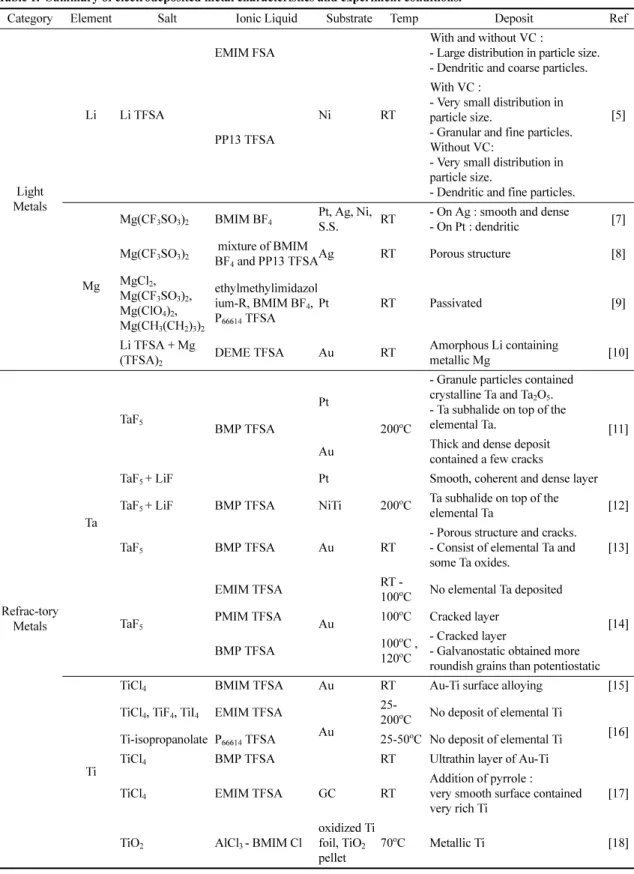
Table 1. Summary of electrodeposited metal characteristics and experiment conditions.

Category Element Salt Ionic Liquid Substrate Temp Deposit Ref

Light Metals

Li Li TFSA

EMIM FSA

Ni RT

With and without VC :

- Large distribution in particle size.

- Dendritic and coarse particles.

[5]

PP13 TFSA

With VC :

- Very small distribution in particle size.

- Granular and fine particles.

Without VC:

- Very small distribution in particle size.

- Dendritic and fine particles.

Mg

Mg(CF

3

SO

3

)

2

BMIM BF

4

Pt, Ag, Ni,

S.S. RT - On Ag : smooth and dense

- On Pt : dendritic [7]

Mg(CF

3

SO

3

)

2

mixture of BMIM

BF

4

and PP13 TFSA Ag RT Porous structure [8]

MgCl

2

, Mg(CF

3

SO

3

)

2

, Mg(ClO

4

)

2

, Mg(CH

3

(CH

2

)

3

)

2

ethylmethylimidazol ium-R, BMIM BF

4

, P

66614

TFSA

Pt RT Passivated [9]

Li TFSA + Mg

(TFSA)

2

DEME TFSA Au RT Amorphous Li containing

metallic Mg [10]

Refrac-tory Metals

Ta TaF

5

BMP TFSA

Pt

200

o

C

- Granule particles contained crystalline Ta and Ta

2

O

5

. - Ta subhalide on top of the

elemental Ta. [11]

Au Thick and dense deposit

contained a few cracks

TaF

5

+ LiF Pt Smooth, coherent and dense layer

TaF

5

+ LiF BMP TFSA NiTi 200

o

C Ta subhalide on top of the

elemental Ta [12]

TaF

5

BMP TFSA Au RT

- Porous structure and cracks.

- Consist of elemental Ta and some Ta oxides.

[13]

TaF

5

EMIM TFSA

Au

RT -

100

o

C No elemental Ta deposited PMIM TFSA 100

o

C Cracked layer [14]

BMP TFSA 100

o

C ,

120

o

C

- Cracked layer

- Galvanostatic obtained more roundish grains than potentiostatic

Ti

TiCl

4

BMIM TFSA Au RT Au-Ti surface alloying [15]

TiCl

4

, TiF

4

, TiI

4

EMIM TFSA Au

25-

200

o

C No deposit of elemental Ti Ti-isopropanolate P

66614

TFSA 25-50

o

C No deposit of elemental Ti [16]

TiCl

4

BMP TFSA RT Ultrathin layer of Au-Ti

TiCl

4

EMIM TFSA GC RT

Addition of pyrrole :

very smooth surface contained very rich Ti

[17]

TiO

2

AlCl

3

- BMIM Cl

oxidized Ti foil, TiO

2

pellet

70

o

C Metallic Ti [18]

(12)

AFM images of Pt deposit in the ionic liquids showed uniform and fairly dense Pt nanoclusters with a size less than 100 nm. An obvious difference appeared in Pt deposits obtained from HClO

4

aqueous solution which has much bigger particle size. To examine the electrocatalytic properties, electrodeposited Pt films were tested for the electro- oxidation of methanol and Pt films prepared in either BMIM BF

4

or BMIM PF

6

ionic liquids exhibited high electrocatalytic current densities compared to that prepared in HClO

4

aqueous s o l u t i o n . T h e a u t h o r s c o n c l u d e d f r o m t h e comparison of the size of Pt nanoclusters that the electrodeposition of Pt in the ionic liquids has a competitive edge judging from higher catalytic performance and utilization efficiency.

Yu et al. demonstrated a new method to electrodeposit Pt nanoparticles using ionic liquid droplet in aqueous solution to minimize the amount of expensive commercial ionic liquids.

28

They found that water–immiscible ionic liquid is able to form a stable droplet on electrode surface with maintaining physical, chemical and electrochemical properties in

aqueous solution. Based on the cyclic voltammogram in Fig. 7(a), the electrochemical window obtained with a BMIM PF

6

droplet on GC electrode in 0.1 M KPF

6

solution is about 3 V, which is wider than that obtained on bare GC electrode in the same aqueous solution but is narrower than that in pure ionic liquid solvent. Electrodeposition of Pt nanoparticles was carried out with a BMIM PF

6

droplet containing 0.1 M H

2

PtCl

6

supported on GC or indium tin oxide (ITO) substrates in 0.1 M KPF

6

solution at potential − 1.5 V vs. Ag/AgCl for 500 seconds. By observing UV-vis spectra of the BMIM PF

6

droplet containing H

2

PtCl

6

before and after the addition of distilled water to a cell, the authors observed that H

2

PtCl

6

was stably dissolved into the ionic liquid droplet and the transfer of H

2

PtCl

6

from ionic liquid phase to distilled water was almost negligible during electrodeposition process. The SEM image of Fig. 7(b) shows that the morphology of deposited Pt nanoparticles was uniform with a size r a n g i n g f r o m 3 0 0 t o 4 0 0 n m , l a r g e r t h a n electrodeposited in pure BMIM PF

6

solvent. This might result from the presence of the trace amount Table 1. Continued

Category Element Salt Ionic Liquid Substrate Temp Deposit Ref

Noble Metals

Au

K[Au(CN)

2

] EMIM TFSA

Si wafers coated with 200 nm of Cu

RT

- Micrometric acicular grains - Without contamination of CN

-

and organic additives

[19]

K[Au(CN)

2

] BMP TFSA Au RT [22]

HAuCl

4

.3H

2

O BMP DCA Ni

20

o

C, 60

o

C

Discontinuous with poor adherence

[23]

80

o

C

Thin continuous layer of nanoparticles covered by large dendritic particles

Pd

PdCl

2

- AgCl EMIM Cl-BF

4

Ni 35

o

C Compact deposits with nodular grains and fine crystal [24]

PdBr

42-

, PdCl

42-

BMP TFSA Ni RT

- Higher current density (0.05 mA cm

2

) : powdery deposits.

- Lower current density (0.01 mA cm

2

) : smooth deposits.

[26]

Pt

H

2

PtCl

6

BMIM BF

4

,

BMIM PF

6

GC RT

- Uniform and fairly dense with a size less than 100 nm.

- High catalytic performance.

[27]

H

2

PtCl

6

BMIM PF

6

droplet GC, ITO RT

- Uniform with a size ranging from 300 to 400 nm.

- Excellent electrocatalytic activity.

[28]

(13)

of water in the ionic liquid droplet which decreases its viscosity.

29

Meanwhile, Pt nanoparticles deposited from the ionic liquid droplet had an excellent electrocatalytic activity toward the oxidation of m e th an ol. T hi s m e th od c a n be s uita bl e f or electrodeposition of bimetal nanoparticles such as Pt-Ru nanoparticles. Considering the economical usage of ionic liquids, this method can be a promising technique to electrodeposit metal nanoparticles at room temperature with minimum cost.

5. Conclusions

We have reviewed the application of ionic liquids to electrodeposition of metals, in particular, belonging to light, refractory and noble metals.

Electrodeposition of light metals has a problem of dendrite formation in deposit layers. Addition of organic reagent might be necessary to obtain granular and fine particles. For example, a good morphology of Li deposits was obtained in PP13 TFSA with addition of VC. In the case of Mg, the passivation of deposited layers by reaction of Mg metal with ionic liquids hinders the reversible deposition-dissolution process of Mg. Although there wa s a report whe re sm ooth Mg f ilm s were successfully deposited on Ag substrate in BMIM BF

4

, it seems difficult to obtain the reversible deposition-dissolution process in ionic liquids.

Imidazolium and pyrrolidinium-based ionic liquids with TFSA anion have been used to electrodeposit refractory metals. Due to their high reactivity, deposits of refractory metals have a tendency either to form subhalide species or to be re-oxidized. Ta deposit layers usually have a porous structure and cracked surface. Addition of LiF salt was proved to be an effective way to improve quality of Ta deposits resulting in smooth and dense layers. A very smooth Ti surface was obtained in EMIM TFSA by addition of pyrrole which might create nucleation sites in situ. Adsorption of CN

onto electrodeposited Au film should be avoided and there was a report where Au film deposited free of CN

c ontam ination in EMIM TFSA. In the potentiostatic deposition of Pd-Ag alloy, increasing Pd content in plating bath leads to nodular grains and fine crystal size while the galvanostatic

electrodeposition of Pd with low current density produces smooth deposits. Ionic liquids with BMIM cation have been effective for the synthesis of uniform Pt nanoparticles with high electrocatalytic performance. Finally, we summarized the results discussed hitherto in Table 1.

Acknowledgements

This study was supported by the R&D Center for Valuable Recycling (Global-Top Environmental Technology Development Program) funded by the Ministry of Environment. (Project No.: 11-A14-MR)

References

1. F. Andres, ‘Ionic liquids: solvents for the electrode- position of metals and semiconductors’ Chem. Phys.

Chem., 3, 144 (2002).

2. A. P. Abbott and K.J. McKenzie, ‘Application of ionic liquids to the electrodeposition of metals’ Phys. Chem.

Chem. Phys., 8, 4265 (2006).

3. W. Simka, D. Puszczyk and G. Nawrat, ‘Electrodeposition of metals from non-aqueous solutions’ Electrochim. Acta, 54, 5307 (2009).

4. D. Aurbach, E. Zinigrad, Y. Cohen and H. Teller, ‘A short review of failure mechanisms of lithium metal and lithiated graphite anodes in liquid electrolyte solutions’

Solid State Ionics, 148, 405 (2002).

5. H. Sano, H. Sakaebe and H. Matsumoto, ‘Observation of electrodeposited lithium by optical microscope in room temperature ionic liquid-based electrolyte’ J. Power Sources, 196, 6663 (2011).

6. H. Ota, Y. Sakata, Y. Otake, K. Shima, M. Ue and J.

Yamaki, ‘Structural and functional analysis of surface film on Li anode in vinylene carbonate-containing electrolyte’ J. Electrochem. Soc., 151, A1778 (2004).

7. Y. N. NuLi, J. Yang and P. Wang, ‘Electrodeposition of magnesium film from BMIM BF

4

ionic liquid’ Appl.

Surf. Sci., 252, 8086 (2006).

8. P. Wang, Y. N. NuLi, J. Yang and Z. Feng, ‘Mixed ionic liquids as electrolyte for reversible deposition and dissolution of magnesium’ Surf. Coat. Tech., 201, 3783 (2006).

9. N. Amir, Y. Vestfrid, O. Chusid, Y. Gofer and D. Aurbach,

‘Progress in nonaqueous magnesium electrochemistry’

J. Power Sources, 174, 1234 (2007).

10. O. Shimamura, N. Yoshimoto, M. Matsumoto, M.

Egashia and M. Morita, ‘Electrochemical co-deposition of magnesium with lithium from quaternary ammonium- based ionic liquid’ J. Power Sources, 196, 1586 (2011).

11. S. Zein El Abedin, H. K. Farag, E. M. Moustafa, U.

Welz-Biermann and F. Endres, ‘Electroreduction of

(14)

tantalum fluoride in a room temperature ionic liquid at variable temperatures’ Phys. Chem. Chem. Phys., 7, 2333 (2005).

12. S. Zein El Abedin, U. Welz-Biermann and F. Endres, ‘A study on the electrodeposition of tantalum on NiTi alloy in an ionic liquid and corrosion behaviour of the coated alloy’ Electrochem. Commun., 7, 941 (2005).

13. N. Borisenko, A. Ispas, E. Zschippang, Q. Liu, S. Zein El Abedin, A. Bund and F. Endres, ‘In situ STM and EQCM studies of tantalum electrodeposition from TaF

5

in the air- and water-stable ionic liquid 1-butyl-1- methylpyrrolidinium bis(trifluoromethylsulfonyl)amide’

Electrochim. Acta, 54, 1519 (2009).

14. A. Ispas, B. Adolphi, A. Bund and F. Endres, ‘On the electrodeposition of tantalum from three different ionic liquids with the bis(trifluoromethyl sulfonyl)amide anion‘

Phys. Chem. Chem. Phys., 12, 1793 (2010).

15. I. Mukhopadhyay, C. L. Aravinda, D. Borissov and W.

Freyland, ‘Electrodeposition of Ti from TiCl4in the ionic liquid l-methyl-3-butyl-imidazolium bis(trifluoromethyl- sulfone)imide at room temperature: study on phase formation by in situ electrochemical scanning tunneling microscopy’ Electrochim. Acta, 50, 1275 (2005).

16. F. Endres, S. Zein El Abedin, A. Y. Saad, E. M.

Moustafa, N. Borissenko, W. E. Price, G. G. Wallace, D.

R. MacFarlane, P. J. Newman and A. Bund, ‘On the electrodeposition of titanium in ionic liquids’ Phys.

Chem. Chem. Phys., 10, 2189 (2008).

17. J. Ding, J. Wu, D. MacFarlane, W. E. Price and G.

Wallace, ‘Induction of titanium reduction using pyrrole and polypyrrole in the ionic liquid ethyl- methyl-imidazolium bis(trifluoromethanesulphonyl) amide’ Electrochem. Commun., 10, 217 (2008).

18. X.-Y. Zhang, Y.-X. Hua, C.-Y. Xu, Q.-B. Zhang, X.-B.

Cong and N. Xu, ‘Direct electrochemical reduction of titanium dioxide in Lewis basic AlCl3-1-butyl-3- methylimidizolium ionic liquid’ Electrochim. Acta, 56, 8530 (2011).

19. B. Bozzini, E. Tondo, A. Bund, A. Ispas and C. Mele,

‘Electrodeposition of Au from [EMIm][TFSA] room- temperature ionic liquid: An electrochemical and Surface-

Enhanced Raman Spectroscopy study’ J. Electroanal.

Chem. 651, 1 (2011).

20. B. Bozzini, L. D’Urzo and C. Mele, ‘Electrodeposition of Cu from cyanoalkaline solutions in the presence of CPC and PEG’ J. Electrochem. Soc., 152, C255 (2005).

21. B. Bozzini and A. Fanigliulo, ‘Raman spectroscopy of organic species incorporated into electrodeposited gold layers’ Trans. Inst. Met. Finish., 80, 25 (2002).

22. B. Bozzini, B. Busson, C. Humbert, C. Mele, P. Raffa and A. Tadjeddine, ‘Investigation of Au electrodeposition from [BMP][TFSA] room-temperature ionic liquid containing K[Au(CN)

2

] by in situ two-dimensional sum frequency generation spectroscopy’ J. Electroanal.

Chem., 661, 20 (2011).

23. A.I. de Sá, S. Eugénio, S. Quaresma, C.M. Rangel and R. Vilar, ‘Electrodeposition of gold thin films from 1- butyl-1-methylpyrrolidinium dicyanamide Au

3+

Solutions’

Thin Solid Films, 519, 6278 (2011).

24. C-C. Tai, F-Y. Su and I-W. Sun, ‘Electrodeposition of palladium-silver in a Lewis basic1-ethyl-3-methylimida- zolium chloride-tetrafluoroborate ionic liquid‘ Electrochim.

Acta, 50, 5504 (2005).

25. D. R. MacFarlane, J. Sun, J. Golding, P. Meakin and M.

Forsyth, ‘High conductivity molten salts based on the imide ion’ Electrochim. Acta, 45, 1271 (2000).

26. Y. Bando, Y. Katayama and T. Miura, ‘Electrodeposition of palladium in a hydrophobic1-n-butyl-1-methylpyrro- lidinium bis(trifluoromethylsulfonyl)imide room-tem- perature ionic liquid’ Electrochim. Acta, 53, 87 (2007).

27. P. He, H. Liu, Z. Li and J. Li, ‘Electrodeposition of platinum in room-temperature ionic liquids and electrocatalytic effect on electro-oxidation of methanol’

J. Electrochem. Soc., 152, E146 (2005).

28. P. Yu, J. Yan, J. Zhang and L. Mao, ‘Cost-effective electrodeposition of platinum nanoparticles with ionic liquid droplet confined onto electrode surface as micro- media’ Electrochem. Commun., 9, 1139 (2007).

29. J. A. Widegren, A. Laesecke and J.W. Magee, ‘The effect

of dissolved water on the viscosities of hydrophobic

room-temperature ionic liquids’ Chem. Commun., 1610

(2005).

수치

Table 1. Summary of electrodeposited metal characteristics and experiment conditions.

참조

관련 문서

▪ When we control the potential of the working electrode with respect to the reference, it is equivalent to controlling the energy of the electrons within the

Yanga, “Mesoporous activated carbon fiber as electrode material for high-performance electrochemical double layer capacitors with ionic liquid electrolyte”, J...

▪ The total current in bulk solution is given by.. 4.3 MIXED MIGRATION AND DIFFUSION NEAR AN ACTIVE ELECTRODE. 2)

Consider the motion of a particle of mass m which is constrained to move on the surface of a cone of half-angle α and which is subject to a gravitational force g. Let the

▪ This equation provides a handy rule of thumb for estimating the thickness of a diffusion layer (e.g., how far product molecules have moved, on the average, from an electrode

The electrode tool with the magnet inserted therein is machined in the workpiece and is moved in the direction inducing the external magnetic force, so that

– Any string of “only” terminals obtained by repeating step 2 is a Any string of only terminals obtained by repeating step 2 is a sentence in the language. “a dog runs

The electrochemical stability in concrete environments exploited the MMO electrode as a suitable, embeddable reference electrode for corrosion monitoring in concrete