Journal of the American Heart Association
ORIGINAL RESEARCH
Long-Term Clinical Outcomes of
Nonhyperemic Pressure Ratios: Resting Full-Cycle Ratio, Diastolic Pressure Ratio, and Instantaneous Wave-Free Ratio
Joo Myung Lee , MD, MPH, PhD*; Seung Hun Lee , MD, PhD*; Doyeon Hwang, MD; Tae-Min Rhee, MD;
Ki Hong Choi, MD; Jinseob Kim, MD, MPH; Jinhyoung Park, PhD; Hyung Yoon Kim, MD; Hae Won Jung, MD;
Yun-Kyeong Cho, MD, PhD; Hyuck-Jun Yoon , MD, PhD; Young Bin Song , MD, PhD; Joo-Yong Hahn, MD, PhD;
Chang-Wook Nam , MD, PhD; Eun-Seok Shin , MD, PhD; Joon-Hyung Doh, MD, PhD;
Seung-Ho Hur , MD, PhD; Bon-Kwon Koo , MD, PhD
BACKGROUND: Nonhyperemic pressure ratios (NHPRs) such as instantaneous wave-free ratio, resting full-cycle ratio, or dias- tolic pressure ratio have emerged as invasive physiologic indices precluding the need for hyperemic agents. The current study sought to evaluate the long-term prognostic implications of NHPRs compared with fractional flow reserve (FFR).
METHODS AND RESULTS: NHPRs were calculated from resting pressure tracings by an independent core laboratory in 1024 vessels (435 patients). The association between NHPRs and the risk of 5-year vessel-oriented composite outcomes (VOCO, a composite of cardiac death, vessel-related myocardial infarction, and ischemia-driven revascularization) were analyzed among 864 deferred vessels. Lesions with positive NHPRs (instantaneous wave free ratio, resting full-cycle ratio, and diastolic pressure ratio ≤0.89) or FFR (≤0.80) showed significantly higher risk of VOCO at 5 years than those with negative NHPRs or FFR, respectively. Discriminant ability for 5-year VOCO was not different among NHPRs and FFR (C-index: 0.623–0.641, P for comparison=0.215). In comparison of VOCO among the groups with deferred concordant negative (NHPRs−/FFR−), deferred discordant (NHPRs+/FFR− or NHPRs−/FFR+), and revascularized vessels, the cumulative incidence of VOCO were 7.5%, 14.4%, and 14.8% (log-rank P<0.001), respectively. The deferred discordant group showed similar risk of VOCO with the revascularized vessel group (hazard ratio, 0.981; 95% CI 0.434–2.217, P=0.964).
CONCLUSIONS: Currently available invasive pressure-derived indices showed similar prognostic implications for vessel-related events at 5 years. Deferred lesions with discordant results between NHPRs and FFR did not show higher risk of vessel-related events at 5 years than revascularized vessels.
REGISTRATION: URL: https://www.clini caltr ials.gov; Unique identifiers: NCT01621438, NCT01621438.
Key Words: coronary artery disease ■ diastolic pressure ratio ■ fractional flow reserve ■ instantaneous wave-free ratio ■ ischemia ■ prognosis ■ resting full-cycle ratio
Correspondence to: Bon-Kwon Koo, MD, PhD, Department of Internal Medicine and Cardiovascular Center, Seoul National University Hospital, 101 Daehang- ro, Chongno-gu, Seoul 110-744, South Korea. E-mail: [email protected]
Supplementary Materials for this article are available at https://www.ahajo urnals.org/doi/suppl/ 10.1161/JAHA.120.016818
*Dr Joo Myung Lee and Dr Seung Hun Lee contributed equally to this work.
For Sources of Funding and Disclosures, see page 10.
© 2020 The Authors. Published on behalf of the American Heart Association, Inc., by Wiley. This is an open access article under the terms of the Creative Commons Attribution-NonCommercial License, which permits use, distribution and reproduction in any medium, provided the original work is properly cited and is not used for commercial purposes.
JAHA is available at: www.ahajournals.org/journal/jaha
See Editorial by Paul et al.
Downloaded from http://ahajournals.org by on February 24, 2021
I
n the assessment of coronary artery stenosis to guide treatment decision making in the cardiac cath- eterization laboratory, pressure-derived physiologic indices have been important diagnostic and prog- nostic tools. Based on numerous clinical publications,fractional flow reserve (FFR)-guided treatment is now regarded as a reference invasive physiologic index.1-3 A physiologic index which does not require hyperemia, instantaneous wave-free ratio (iFR), has been intro- duced and subsequent clinical trials have shown that an iFR-guided strategy was noninferior to a FFR-guided strategy for 1-year clinical outcomes.4,5 Further studies evaluated various definitions of pressure-derived indi- ces,6,7 such as resting full-cycle ratio (RFR) or diastolic pressure ratio (dPR), and presented identical diagnos- tic ability among iFR, RFR, and dPR. A later study also presented that these nonhyperemic pressure ratios (NHPRs) have similar diagnostic ability in defining in- travascular imaging-defined stenosis severity,8 in diag- nosing positron emission tomography (PET)-defined myocardial ischemia,9,10 and share similar prognostic implications for clinical events at 2 years.10
Nevertheless, there are no previous reports regard- ing the long-term prognostic implications of NHPRs.
Furthermore, an important issue in daily practice would be the long-term prognosis of deferred lesions with discordant results between NHPRs and FFR com- pared with revascularized lesions. In this regard, we sought to evaluate the long-term prognosis after defer- ral of revascularization according to NHPRs and com- parative prognosis of deferred lesions with discordant results with revascularized lesions.
METHODS
Anonymized patient level data will be made available by the corresponding author for reasonable requests.
Consent was not obtained for data sharing, but the presented data are anonymized and the risk of identi- fication is minimal.
Study Design and Patient Population
The study population was derived from the 3V FFR- FRIENDS study (3-vessel fractional flow reserve for the assessment of total stenosis burden and its clini- cal impact in patients with coronary artery disease, NCT01621438)11 and the 13N-ammonia PET regis- try.12-14 The 3V FFR FRIENDS study was a prospective, multinational, and multicenter study which enrolled consecutive patients who were at least 18 years old and had >30% stenosis by visual estimation in major epicardial coronary arteries and underwent success- ful FFR measurement in 3 major coronary arteries.11 In the 13N-ammonia PET registry, patients with avail- able 13N-ammonia PET within 3 months of measuring FFR in left anterior descending coronary artery were enrolled.12-14
In both studies, patients with depressed left ven- tricular systolic function (ejection fraction <35%), acute ST-elevation myocardial infarction within
CLINICAL PERSPECTIVE
What Is New?
• Prognostic implications of nonhyperemic pres- sure ratios (NHPRs) and fractional flow reserve (FFR) were similar according to binary cut-off values (≤0.89 and ≤0.80, respectively) or as continuous values.
• Positive NHPRs or FFR showed consistently higher risk of 5-year vessel-oriented com- posite outcome than negative NHPRs or FFR across various subgroups of patient or lesion characteristics.
• Deferred lesions with discordant results be- tween NHPRs and FFR showed higher risk of 5-year vessel-oriented composite outcome than those with concordant negative results;
however, it did not show excess higher risk of 5-year vessel-oriented composite outcome than revascularized lesions.
What Are the Clinical Implications?
• Any pressure-derived physiologic index, re- gardless of being nonhyperemic or hyperemic, can be used in the cardiac catheterization labo- ratory under the same clinical indications.
• Although treatment decision making to re- vascularize or defer can be made based on 1 physiologic index, simultaneous measurement of both NHPRs and FFR would provide better risk stratification of patients when revasculariza- tion is deferred.
Nonstandard Abbreviations and Acronyms
%DS percent diameter stenosis dPR diastolic pressure ratio FFR fractional flow reserve iFR instantaneous wave free ratio NHPRs non-hyperemic pressure
ratios
Pa proximal aortic pressure Pd distal arterial pressure PET positron-emission tomography RFR resting full-cycle ratio
VOCO vessel-oriented composite outcome
Downloaded from http://ahajournals.org by on February 24, 2021
72 hours, previous coronary artery bypass graft surgery, chronic renal disease, abnormal epicardial coronary flow (TIMI [thrombolysis in myocardial in- farction] flow <3), or planned coronary artery bypass graft surgery after diagnostic angiography were ex- cluded. Total patient population was 1024 vessels (435 patients) and 160 vessels were revascularized.
The enrolled patients were included in other pub- lished studies.11-15 The study protocol was approved by the Institutional Review Board or Ethics Committee at each participating center and all patients provided written informed consent.
Coronary Physiologic Measurements and Angiographic Analysis
Coronary angiography was performed using standard techniques. Angiographic views were obtained fol- lowing the administration of intracoronary nitrate (100 or 200 µg). All angiograms were analyzed at a core laboratory (Seoul National University Hospital) blinded to other data. Quantitative coronary angiography was performed in optimal projections with validated soft- ware (CAAS II, Pie Medical System, Maastricht, the Netherlands). Minimal lumen diameter, reference ves- sel size, and lesion length were measured, and percent diameter stenosis was calculated.
All coronary physiologic measurements were ob- tained as previously described.12 Briefly, the pres- sure-temperature sensor guide wire (Abbott Vascular, Santa Clara, CA, USA) was zeroed and equalized to aortic pressure, and then positioned at the distal seg- ment of a target vessel. Intracoronary nitrate (100 or 200 µg) was administered before each set of phys- iologic measurements. Resting distal arterial pres- sure/proximal aortic pressure was calculated as the ratio of mean distal coronary artery pressure to mean aortic pressure in resting state. Continuous infusion of adenosine (140 µg/kg per minute) was used to in- duce hyperemia. Intravenous infusion of adenosine was maintained until sustained maximal hyperemia and completion of pullback recording. Hyperemic proximal aortic pressure and distal arterial pressure were obtained, and FFR was calculated as the low- est average of 3 consecutive beats during adenosine infusion. After measurements, the pressure wire was pulled back to the guide catheter and the presence of pressure drift was checked. In patients with acute cor- onary syndrome, physiologic interrogation was per- formed in non-culprit vessels. Derivations of NHPRs were performed in off-line analysis, as previously de- scribed.10 The iFR was calculated using automated algorithms acting over the wave-free period over a minimum of 5 beats.14-16 dPR was also calculated from each individual waveform as an average distal arte- rial pressure/proximal aortic pressure over the entire
period of diastole.7 The iFR and dPR were calculated using dedicated MATLAB (MathWorks, Inc., Natick, MA, USA). RFR was calculated from each individual waveform using a fully automated off-line software algorithm (RFR release 2.0, Abbott Vascular, Santa Clara, CA, USA). Among the total 1024 pressure trac- ings, RFR calculation was not possible in 11 vessels due to insufficient quality of resting pressure tracings.
All pressure tracings were collected and validated at the core laboratory (Samsung Medical Center) in a blinded fashion.
Patient Follow-up, Outcome Measurements, and Adjudication of Clinical Events
Clinical data were obtained at outpatient clinic visits or by telephone contact when needed. An independ- ent clinical events committee whose members were unaware of clinical, angiographic, and physiologic data adjudicated all events. The primary outcome was ves- sel-oriented composite outcome (VOCO) at 5 years in- cluding cardiac death, target vessel-related myocardial infarction and target vessel-related ischemia-driven revascularization. All event records were reviewed to assess vessel-related clinical events and were defined according to the Academic Research Consortium, including the addendum to the definition of myocar- dial infarction. All deaths were considered cardiac un- less an undisputable noncardiac cause was present.
Ischemia-driven revascularization was defined as a re- vascularization procedure for patients with recurrence of angina and positive noninvasive test or positive inva- sive physiologic test, silent myocardial ischemia proven by positive noninvasive test or positive invasive physi- ologic test, or acute coronary syndrome with a clear culprit lesion. In order to compare clinical outcomes according to positive or negative pressure derived in- dices, the cut-off values of ≤0.89 for NHPRs and ≤0.80 for FFR were used.
Statistical Analysis
Data were analyzed on a per-patient basis for clinical characteristics and on a per-vessel basis for compari- son of lesion characteristics, physiologic indices, and vessel-related clinical outcomes. Among patients who underwent multivessel measurements, the vessel with the lowest FFR value was selected as a representative vessel of that patient for the per-patient analysis. For per-vessel analyses, a generalized estimating equa- tion with an independent correlation structure was used to adjust for intrasubject variability among ves- sels from the same patient. In comparison of clinical outcomes according to cut-off values of NHPRs and FFR, event rates were calculated based on Kaplan–
Meier censoring estimates, and the log-rank test was
Downloaded from http://ahajournals.org by on February 24, 2021
used to compare survival curves between groups.
In comparisons of clinical outcomes among groups, a per-vessel comparison of cumulative incidence of target vessel-related events was performed using marginal Cox proportional hazard regression mod- els to calculate hazard ratio (HR) and 95% CI with adjustment for the clustered data.17 The assumption of proportionality was assessed graphically by log- minus-log plot, and Cox proportional hazard mod- els for all clinical outcomes satisfied the proportional hazards assumption. In order to explore the prog- nostic implications of invasive physiologic indices as continuous values, estimated VOCO rates at 5 years derived from the marginal Cox proportional hazards regression model were plotted according to invasive physiologic indices. Discriminant ability for the risk of VOCO at 5 years was presented as Harrell’s c-index.
All probability values were two-sided and P<0.05 was considered statistically significant.
RESULTS
Patient and Lesion Characteristics
Patient and lesion characteristics of total study popu- lation are presented in Table S1. Mean age of popula- tion was 63.8±9.7 years and 78.4% were male. Most patients presented with stable angina (87.1%) with in- termediate epicardial coronary stenosis (mean percent diameter stenosis of 44.3±17.5%). Among the total 1024 vessels, 160 vessels were revascularized. In compari- son of lesion characteristics according to cut-off val- ues of NHPRs and FFR, the lesions with below cut-off value consistently showed significantly worse lesion severity than those with above cut-off value (Table S2).
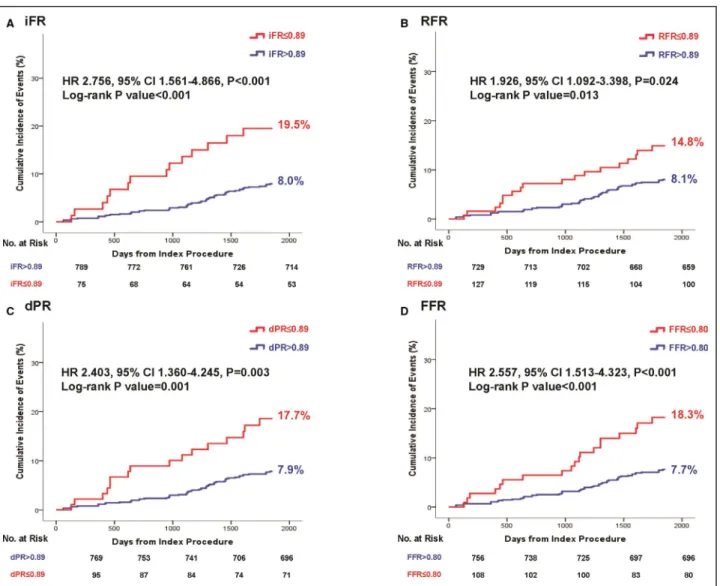
Figure 1. Comparison of vessel-oriented composite outcome at 5 years according to invasive physiologic indices.
Comparison of the risk of VOCO at 5 years between positive vs negative (A) iFR, (B) RFR, (C) dPR, or (D) FFR according to their cut-off values. dPR indicates diastolic pressure ratio; FFR, fractional flow reserve; HR, hazard ratio; iFR, instantaneous wave-free ratio; and RFR, resting full-cycle ratio.
Downloaded from http://ahajournals.org by on February 24, 2021
Clinical Outcomes According to Cut-off Values of Invasive Physiologic Indices
Figure 1 and Table 1 demonstrate vessel-related clin- ical outcomes at 5 years according to cut-off values of NHPRs and FFR among deferred vessels. Lesions with positive NHPRs (≤0.89) showed significantly in- creased risk of VOCO compared to those with nega- tive NHPRs (>0.89) (Figure 1A, 1B, 1C, respectively for iFR, RFR, dPR). Classification by FFR showed the same results (Figure 1D). The significant differences in the risk of VOCO were driven mostly by the higher risk of vessel-related ischemia-driven revasculariza- tion in lesions with positive NHPRs or FFR (Table 1).
Comparison of Prognostic Implications of Invasive Physiologic Indices
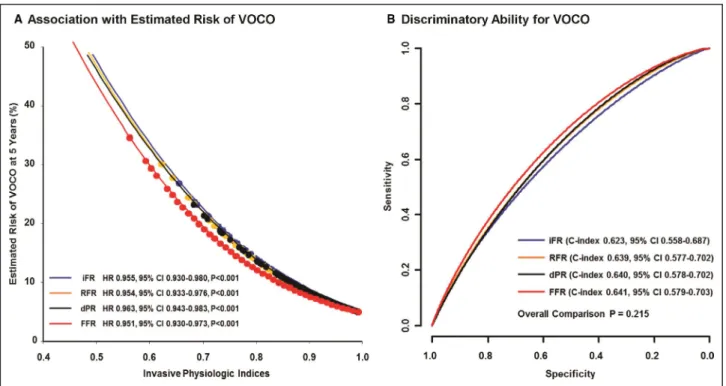
When the associations between NHPRs or FFR with the estimated risk of VOCO at 5 years were evaluated, all invasive physiologic indices showed similar asso- ciation with the risk of VOCO as continuous values.
HR per 0.01 increase of NHPRs or FFR was not dif- ferent across all the physiologic indices (Figure 2A).
Discrimination ability for VOCO at 5 years was not dif- ferent among iFR, RFR, dPR, and FFR (overall com- parison P=0.215; Figure 2B).
Influence of Patients or Lesion-Related Factors in Prognostic Implications of Invasive Physiologic Indices
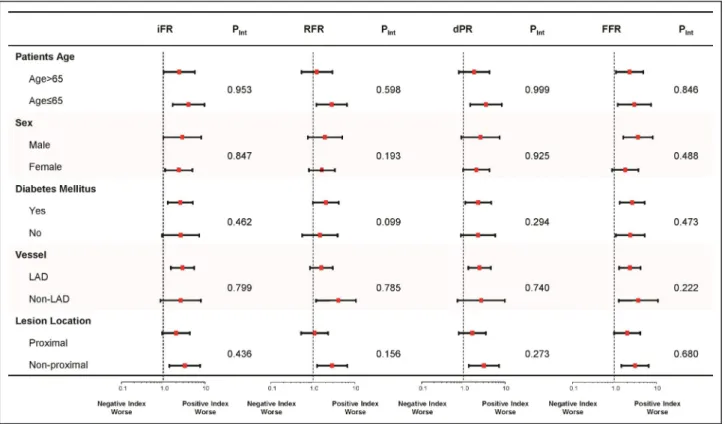
The influence of patient- or lesion-related factors to prognostic implications of NHPRs or FFR was evalu- ated by subgroup analysis. The higher risk of VOCO in lesions with positive NHPRs or FFR were similarly observed, regardless of patient’s age, sex, presence of diabetes mellitus, target vessels, or location of stenosis in target vessels without significant interactions. In ad- dition, the skewed risk of VOCO in lesions with posi- tive NHPRs or FFR than negative lesions was similarly observed across all the invasive physiologic indices (Figure 3).
Comparative Clinical Outcomes According to Treatment Decision and Invasive Physiologic Indices
In order to evaluate comparative prognosis accord- ing to the treatment modality and the discordance or concordance between NHPRs and FFR, the out- comes were compared among the 3 groups: revascu- larized vessels with positive FFR (revascularized group;
n=124), deferred vessels with concordant negative re- sults between NHPRs and FFR (concordant negative group; n=688), and deferred vessels with discordant results between NHPRs and FFR (discordance group;
Table 1. Comparison of Clinical Outcomes at 5 Years According to Pressure-Derived Physiologic Indices Negative iFR (>0.89)Positive iFR (≤0.89)P Value*Negative RFR (>0.89)Positive RFR (≤0.89)P Value†Negative dPR (>0.89)Positive dPR (≤0.89)P Value‡Negative FFR (>0.80)Positive FFR (≤0.80)P Value§ Per-vessel analysis (n=864)789/864 (91.3%)75/864 (8.7%)729/856 (85.2%)127/856 (14.8%)769/864 (89.0%)95/864 (11.0%)756/864 (87.5%)108/864 (12.5%) Cardiac death2.6% (20)5.6% (4)0.1212.7% (19)4.2% (5)0.3512.8% (21)3.3% (3)0.7283.1% (23)0.9% (1)0.230 Myocardial infarction1.2% (9)2.8% (2)0.2061.3% (9)1.8% (2)0.7091.2% (9)2.4% (2)0.3981.2% (9)2.1% (2)0.538 Ischemia-driven revascularization5.6% (43)15.8% (11)<0.0015.7% (40)11.8% (14)0.0095.5% (41)14.9% (13)<0.0014.9% (36)17.4% (18)<0.001 VOCO‖8.0% (62)19.5% (14)<0.0018.1% (58)14.8% (18)0.0137.9% (60)17.7% (16)0.0017.7% (57)18.3% (19)<0.001 The cumulative incidence of clinical outcomes is presented as Kaplan–Meier estimates during the median follow-up of 1855.0 days. P values were log-rank or Breslow P value in survival analysis. dPR, diastolic pressure ratio; FFR, fractional flow reserve; iFR, instantaneous wave-free ratio; RFR, resting full-cycle ratio; and VOCO, vessel-oriented composite outcomes. *Log rank P values for the comparison of cumulative incidence of events between negative and positive iFR groups. †Log rank P values for the comparison of cumulative incidence of events between negative and positive RFR groups. RFR could not be calculated among 8 vessels. ‡Log rank P values for the comparison of cumulative incidence of events between negative and positive dPR groups. §Log rank P values for the comparison of cumulative incidence of events between negative and positive FFR groups. ‖VOCO included cardiac death, vessel-related myocardial infarction, and vessel-related ischemia-driven revascularization.
Downloaded from http://ahajournals.org by on February 24, 2021
n=57). In this analysis, 74 vessels with discordant clas- sification among NHPRs were excluded.
Table 2 shows the patient and lesion character- istics among the 3 groups and the revascularized group showed the worst profile of lesion severity.
Among the 3 groups, the cumulative incidence of VOCO at 5 years was 14.8%, 14.4%, and 7.5% for the revascularized group, defer with concordant neg- ative group, and defer with discordance group, re- spectively. Compared with the revascularized group, the concordant negative group showed significantly lower risk of VOCO (HR, 0.478; 95% CI, 0.268–0.852, P=0.012). Conversely, the discordant group showed similar risk of VOCO with the revascularized group (HR, 0.981; 95% CI, 0.434–2.217, P=0.964; Figure 4 and Table 3).
DISCUSSION
The current study investigated the prognostic im- plications of NHPRs including iFR, RFR, and dPR for 5-year vessel-related outcomes. The main find- ings are as follows. First, prognostic implications of
NHPRs and FFR were similar according to binary cut-off values (≤0.89 and ≤0.80, respectively) or as continuous values. Second, positive NHPRs or FFR showed consistently higher risk of VOCO than nega- tive NHPRs or FFR across various subgroups of pa- tient or lesion characteristics. Third, deferred lesions with discordant results between NHPRs and FFR showed higher risk of VOCO than those with con- cordant negative results. However, deferred lesions with discordant results between NHPRs and FFR did not show higher risk of VOCO than revascularized lesions.
Given the high interindividual variability in estimat- ing angiographic stenosis severity and low diagnos- tic yield of noninvasive stress tests for myocardial ischemia,18,19 invasive physiologic indices-based treatment decision making has been the standard to define functionally significant epicardial coronary stenosis in the cardiac catheterization laboratory.20 Despite ample evidence supporting its clinical rele- vance and prognostic benefit over angiography-only based treatment, the adoption rate of FFR-guided strategy remains low and variable.21 As there is no need for hyperemia and related medical costs, NHPR
Figure 2. Association and discrimination ability of invasive physiologic indices with estimated risk of VOCO at 5 years.
A, The association between 5-year VOCO risk and invasive physiologic indices (iFR, RFR, dPR, or FFR). All physiologic indices showed significant association with 5-year VOCO risk as continuous values. Blue, orange, black, and red lines represent regression lines for iFR, RFR, dPR, and FFR as continuous values, respectively. Blue, orange, black, and red circles represent each patient’s iFR, RFR, dPR, and FFR values and estimated VOCO rates according to their values, respectively. The marginal Cox proportional hazard regression models to calculate hazard ratio and 95% CI with adjustment for the clustered data. B, Discriminant ability (Harrell’s c-index) of invasive physiologic indices for the occurrence of VOCO at 5 years. Blue, orange, black, and red lines represent receiver- operating curve for iFR, RFR, dPR, and FFR, respectively, as continuous values. dPR indicates diastolic pressure ratio; FFR, fractional flow reserve; HR, hazard ratio; iFR, instantaneous wave-free ratio; RFR, resting full-cycle ratio; and VOCO, vessel-oriented composite outcomes.
Downloaded from http://ahajournals.org by on February 24, 2021
has the potential for raising the adoption rate of physiologic indices-guided strategy in daily practice.
Landmark trials demonstrated similar 1 year clinical outcomes following iFR-guided strategy versus FFR- guided strategy4,5 and both indices have been rec- ommended at an equivalent level.20 After introduction of iFR, pressure-wire manufacturers developed their own NHPRs with slightly different definitions, such as RFR or dPR. Previous studies support that those NHPRs share similar diagnostic performance for intra- vascular imaging-defined anatomic stenosis severity, inducible myocardial ischemia defined by indepen- dent reference tests, and prognostic implications.6-10 However, the long-term prognosis of NHPR- guided clinical decision making has not yet been evaluated. As NHPRs and FFR possess different conceptual bases and evaluate different aspects of the coronary circulation,14,22 it is essential to evaluate their long-term prognostic implications. The current study reported the association between 5-year ves- sel-related events and invasive physiologic indices, and showed both NHPRs and FFR share similar risk stratification ability according to their current cut-off values. These pressure-derived indices, regardless of measurement conditions (nonhyperemic versus
hyperemic), showed similar association with the risk of VOCO as continuous values and also shared simi- lar discriminant ability. In addition, positive NHPRs or FFR showed consistently higher risk of VOCO than negative NHPRs or FFR across various subgroups of patient or lesion characteristics. These results imply that the important issue may not be which index to choose, but rather how to increase the rate of its use in daily practice.
Another important question is how to interpret and treat the discordant results between NHPRs and FFR. In this study, the discordance among dif- ferent NHPRs was found in only 74 vessels out of 1024 vessels (7.2%). Previous studies showed that discordance among different NHPRs does not have prognostic significance.10,23 For discordance be- tween NHPRs and FFR, previous studies showed that only lesions with concordant abnormal results in both NHPRs and FFR showed significantly increased risk of VOCO at 2 years23,24 or patient-oriented com- posite outcome at 5 years.25 These previous studies suggested the lack of difference in clinical outcomes between 2 types of discordance (NHPRs−/FFR+ or NHPRs+/FFR−). In the current study, the vessel-re- lated outcomes were compared with revascularized
Figure 3. Subgroup analysis for prognostic meaning of invasive physiologic indices in deferred patients.
Subgroup analysis according to patient and lesion characteristics in comparing the risk of VOCO between positive and negative NHPRs or FFR. The higher risk of VOCO in lesions with positive NHPRs or FFR than negative lesions was observed across all subgroups without significant interaction P values and across all invasive physiologic indices including iFR, RFR, dPR, and FFR. dPR indicates diastolic pressure ratio; FFR, fractional flow reserve; iFR, instantaneous wave-free ratio; NHPR, nonhyperemic pressure ratios; Pint, interaction P value; RFR, resting full-cycle ratio; and VOCO, vessel-oriented composite outcomes.
Downloaded from http://ahajournals.org by on February 24, 2021
lesions using 5-year outcome data. The deferred lesions with concordant negative results (NHPRs–/
FFR–) showed lower risk of VOCO than the other groups. However, deferred lesions with discordant results between NHPRs and FFR showed similar risk of VOCO with revascularized lesions up to 5 years of follow-up. These results imply that there might be a risk continuum from concordant negative to concor- dant abnormal lesions, and the lesions with abnor- mal results in 1 of the physiologic indices might have that risk profile between them. The lack of difference in the risk of VOCO between deferred discordant
lesions and revascularized lesions support the safety of deferral of revascularization for lesions with discor- dant results. However, the possibility of late vessel-re- lated events of those lesions and higher incidence of discordance in left anterior descending artery, which usually has the largest subtended myocardium, war- rants meticulous follow-up with intensive medical treatment for patients with discordant results among the physiologic indices.
The current study results imply two clinical impli- cations in daily practice. First, any pressure-derived physiologic index, regardless of being nonhyperemic
Table 2. Comparison of Baseline Patient and Lesion Characteristics Among Revascularized Vessels, Concordant Negative Defer, and Discordant Defer Groups According to Nonhyperemic Pressure Ratios and Fractional Flow Reserve*
Revascularized Vessels Concordant Negative Defer Discordant Defer P Value
Per patient analysis (N=406) 109/406 (26.8%) 253/406 (62.3%) 44/406 (10.8%)
General characteristics
Age, y 63.2±10.2 63.8±9.6 64.3±8.5 0.791
Male 86 (78.9%) 195 (77.1%) 36 (81.8%) 0.759
Ejection fraction (%) 61.3±6.5 61.6±6.6 61.0±7.0 0.811
Cardiovascular risk factors
Hypertension 61 (56.0%) 166 (65.6%) 27 (61.4%) 0.217
Diabetes mellitus 42 (38.5%) 87 (34.4%) 14 (31.8%) 0.662
Hypercholesterolemia 80 (73.4%) 172 (68.0%) 32 (72.7%) 0.537
Current smoker 31 (28.4%) 45 (17.8%) 6 (13.6%) 0.035
Previous MI 7 (6.4%) 24 (9.5%) 0 (0.0%) 0.078
Previous PCI 19 (17.4%) 87 (34.4%) 18 (40.9%) 0.002
Clinical presentations 0.509
Stable angina 90 (83.3%) 211 (86.1%) 41 (93.2%)
Unstable angina 12 (11.1%) 23 (9.4%) 1 (2.3%)
Non-ST elevation myocardial infarction 6 (5.6%) 11 (4.5%) 2 (4.5%)
SYNTAX score 15.0 (11.0–21.0) 10.0 (5.0–16.0) 11.5 (8.5–17.5) <0.001
Per-vessel analysis (n=869) 124/869 (14.3%) 688/869 (79.2%) 57/869 (6.6%)
Measured vessel location <0.001
Left anterior descending artery 87 (70.2%) 163 (23.7%) 37 (64.9%)
Left circumflex artery 17 (13.7%) 274 (39.8%) 15 (26.3%)
Right coronary artery 20 (16.1%) 251 (36.5%) 5 (8.8%)
Quantitative coronary angiography
Reference diameter, mm 2.9±0.5 3.1±0.6 2.7±0.4 <0.001
Minimum lumen diameter, mm 1.0±0.4 1.9±0.7 1.3±0.5 <0.001
Diameter stenosis, % 64.8±12.9 38.8±15.5 49.7±13.9 <0.001
Lesion length, mm 18.6±11.9 8.7±5.8 11.8±8.9 <0.001
Coronary physiological parameters
Instantaneous wave-free ratio (iFR) 0.80±0.16 0.98±0.03 0.92±0.05 <0.001
Resting full-cycle ratio (RFR) 0.79±0.16 0.97±0.03 0.90±0.04 <0.001
Diastolic pressure ratio (dPR) 0.80±0.15 0.97±0.03 0.91±0.04 <0.001
Fractional flow reserve (FFR) 0.67±0.10 0.92±0.06 0.80±0.04 <0.001
Values are mean±SD, median (interquartile ranges, 25th–75th), or n (%). MI indicates myocardial infarction; PCI, percutaneous coronary intervention; and SYNTAX, Synergy between PCI with Taxus and Cardiac Surgery score.
*Among the total 1024 vessels, 74 vessels with discordance among NHPRs, 53 vessels with deferred revascularization despite concordant abnormal results in both NHPRs and FFR, 11 vessels with unavailable RFR, and 17 vessels which were revascularized despite FFR >0.80 were excluded from this analysis.
Downloaded from http://ahajournals.org by on February 24, 2021
or hyperemic, can be used in the cardiac catheter- ization laboratory under the same clinical indications.
Different nomenclature or definition of each index or unavailability of 1 specific vendor’s console should not be a hurdle in applying the physiology-guided strategy in clinical practice. What is more important is not which index should be used, but rather there be standard- ization of measurement protocol and assurance of the accuracy of measurement. Second, although treat- ment decision making to revascularize or defer can be made based on 1 physiologic index, simultaneous measurement of both NHPRs and FFR would provide better risk stratification of patients when revascular- ization is deferred. In patients with discordant results between NHPRs and FFR, continued efforts including
meticulous medical treatment and secondary preven- tion are warranted.
Limitations
Some limitations should be acknowledged. First, NHPRs were calculated off-line in an independent physiology core laboratory. Second, the decision for revascularization of the target lesion was mainly made based on FFR value, and not on NHPRs. Third, com- parison of NHPR-guided versus FFR-guided strategy in specific patient subsets could not be performed, because the current study was not randomly allo- cated into two different strategies. Fourth, participat- ing investigators were not blinded to the physiologic
Figure 4. Comparison of 5-year clinical outcomes classified by NHPRs and FFR.
The cumulative incidence of VOCO at 5 years are compared among revascularized vessels, deferred vessel with concordant negative results in both NHPRs and FFR, and deferred vessel with discordant results between NHPRs and FFR (NHPRs−/FFR+ or NHPRs+/FFR−). FFR indicates fractional flow reserve;
HR, hazard ratio; NA, not available; NHPRs, nonhyperemic pressure ratios; and VOCO, vessel-oriented composite outcomes.
Downloaded from http://ahajournals.org by on February 24, 2021
indices, and this might have influenced their man- agement strategies for these patients. Nevertheless, all clinical events were independently adjudicated by the clinical events adjudication committee. Fourth, the current study population had relatively low clini- cal and anatomical risk. Fifth, the number of deferred lesions with discordant results between NHPRs and FFR was relatively small. Similarly, the number of re- vascularized lesions was relatively small. In addition, the overall cumulative incidence of events was rela- tively low during the 5-year follow-up period. In this re- gard, further investigations with more participants and a longer follow-up period are needed. Sixth, because this was not a randomized controlled trial, possibility of selection bias or unmeasured confounders should be considered in interpreting the results. Seventh, the iFR and dPR values used in the current study were calculated using off-line software. Because the manu- facturers of iFR and dPR did not publicly share infor- mation about cycle window, cycle landmark detection, cycle filtering, and cycle averaging, these values might not be essentially the same values as the commercial- ized indices.
CONCLUSIONS
Currently available invasive pressure-derived indices showed similar prognostic implications for vessel-re- lated events at 5 years. Deferred lesions with discord- ant results between NHPRs and FFR did not show higher risk of vessel-related events at 5 years than re- vascularized vessels.
ARTICLE INFORMATION
Received April 28, 2020; accepted June 30, 2020.
Affiliations
From the Division of Cardiology, Department of Internal Medicine, Heart Vascular Stroke Institute, Samsung Medical Center, Sungkyunkwan University School of Medicine, Seoul (J.M.L., S.H.L., K.H.C., Y.B.S., J.-Y.H.),
Department of Internal Medicine and Cardiovascular Center, Seoul National University Hospital, Seoul (D.H., T.-M.R., B.-K.K.); Department of Epidemiology, School of Public Health, Seoul National University, Seoul (J.K.); Department of Biomedical Engineering, Sungkyunkwan University, Suwon, Gyeonggi-do (J.P.); Department of Cardiovascular Medicine, Chonnam National University Hospital, Gwangju (H.Y.K.); Department of Cardiology, Daegu Catholic University Medical Center, Daegu (H.W.J.);
Department of Medicine, Keimyung University Dongsan Medical Center, Daegu (Y.-K.C., H.-J.Y., C.-W.N., S.-H.H.); Division of Cardiology, Ulsan Medical Center, Ulsan (E.-S.S.); Department of Medicine, Inje University Ilsan Paik Hospital, Goyang (J.-H.D.); and Institute on Aging, Seoul National University, Seoul, South Korea (B.-K.K.).
Sources of Funding
This study was supported by a research grant from Abbott Vascular. The company had no role in study design, conduct, data analysis, or manuscript preparation.
Disclosures
Dr Joo Myung Lee received a research grant from St. Jude Medical (Abbott Vascular) and Philips Volcano. Dr Joo-Yong Hahn received a research grant from St. Jude Medical (Abbott Vascular). Dr Bon-Kwon Koo received an in- stitutional research grant from St. Jude Medical (Abbott Vascular) and Philips Volcano. The remaining authors have no disclosures to report.
Supplementary Materials
Tables S1–S2
REFERENCES
1. De Bruyne B, Fearon WF, Pijls NH, Barbato E, Tonino P, Piroth Z, Jagic N, Mobius-Winckler S, Rioufol G, Witt N, et al. Fractional flow reserve-guided PCI for stable coronary artery disease. N Engl J Med.
2014;371:1208–1217.
2. van Nunen LX, Zimmermann FM, Tonino PA, Barbato E, Baumbach A, Engstrom T, Klauss V, MacCarthy PA, Manoharan G, Oldroyd KG, et al.
Fractional flow reserve versus angiography for guidance of PCI in pa- tients with multivessel coronary artery disease (FAME): 5-year follow-up of a randomised controlled trial. Lancet. 2015;386:1853–1860.
3. Xaplanteris P, Fournier S, Pijls NHJ, Fearon WF, Barbato E, Tonino PAL, Engstrom T, Kaab S, Dambrink JH, Rioufol G, et al. Five-year outcomes with PCI guided by fractional flow reserve. N Engl J Med.
2018;379:250–259.
4. Davies JE, Sen S, Dehbi HM, Al-Lamee R, Petraco R, Nijjer SS, Bhindi R, Lehman SJ, Walters D, Sapontis J, et al. Use of the instan- taneous wave-free ratio or fractional flow reserve in PCI. N Engl J Med.
2017;376:1824–1834.
5. Gotberg M, Christiansen EH, Gudmundsdottir IJ, Sandhall L, Danielewicz M, Jakobsen L, Olsson SE, Ohagen P, Olsson H, Omerovic E, et al. Instantaneous wave-free ratio versus fractional flow reserve to guide PCI. N Engl J Med. 2017;376:1813–1823.
Table 3. Comparison of Clinical Outcomes at 5 Years Among Revascularized Vessels, Concordant Negative Defer, and Discordant Defer Groups According to Nonhyperemic Pressure Ratios and Fractional Flow Reserve*
Revascularized Vessels Concordant Negative Defer Discordant Defer P Value
Per-vessel analysis (n=869) 124/869 (14.3%) 688/869 (79.2%) 57/869 (6.6%)
Cardiac death 2.5% (3) 2.7% (18) 3.6% (2) 0.893
Myocardial infarction 1.6% (2) 1.2% (8) 0.0% (0) 0.647
Ischemia driven revascularization 13.2% (16) 5.0% (33) 11.2% (6) <0.001
VOCO† 14.8% (18) 7.5% (51) 14.4% (8) <0.001
The cumulative incidence of clinical outcomes is presented as Kaplan–Meier estimates during the median follow-up of 1855.0 days. P values were log-rank or Breslow P value in survival analysis. VOCO indicates vessel-oriented composite outcomes.
*Among the total 1024 vessels, 155 vessels were excluded from this analysis (74 vessels with discordance among NHPRs, 53 vessels with deferred revascularization despite concordant abnormal results in both NHPRs and FFR, 11 vessels with unavailable RFR, and 17 vessels which were revascularized despite FFR >0.80).
†VOCO included cardiac death, vessel-related myocardial infarction, and vessel-related ischemia-driven revascularization.
Downloaded from http://ahajournals.org by on February 24, 2021
6. Svanerud J, Ahn JM, Jeremias A, van ’t Veer M, Gore A, Maehara A, Crowley A, Pijls NHJ, De Bruyne B, Johnson NP, et al. Validation of a novel non-hyperaemic index of coronary artery stenosis severity: the Resting Full- cycle Ratio (VALIDATE RFR) study. EuroIntervention. 2018;14:806–814.
7. Van’t Veer M, Pijls NHJ, Hennigan B, Watkins S, Ali ZA, De Bruyne B, Zimmermann FM, van Nunen LX, Barbato E, Berry C, et al. Comparison of different diastolic resting indexes to iFR: are they all equal? J Am Coll Cardiol. 2017;70:3088–3096.
8. Lee JM, Choi KH, Koo BK, Zhang J, Han JK, Yang HM, Park KW, Song YB, Hahn JY, Choi SH, et al. Intravascular ultrasound or optical coherence to- mography-defined anatomic severity and hemodynamic severity assessed by coronary physiologic indices. Rev Esp Cardiol (Engl Ed). 2019: S1885- 5857(19)30340-8. https://doi.org/10.1016/j.rec.2019.11.001.
9. Lee JM, Hwang D, Choi KH, Kim CH, Bang JI, Suh M, Paeng JC, Cheon GJ, Koo BK. Diagnostic performance of nonhyperemic pressure ratios assessed by (13)N-ammonium positron emission tomography. JACC Cardiovasc Interv. 2019;12:1517–1518.
10. Lee JM, Choi KH, Park J, Hwang D, Rhee TM, Kim J, Park J, Kim HY, Jung HW, Cho YK, et al. Physiological and clinical assessment of rest- ing physiological indexes. Circulation. 2019;139:889–900.
11. Lee JM, Koo BK, Shin ES, Nam CW, Doh JH, Hwang D, Park J, Kim KJ, Zhang J, Hu X, et al. Clinical implications of three-vessel fractional flow reserve measurement in patients with coronary artery disease. Eur Heart J. 2018;39:945–951.
12. Lee JM, Kim CH, Koo BK, Hwang D, Park J, Zhang J, Tong Y, Jeon KH, Bang JI, Suh M, et al. Integrated myocardial perfusion imaging diagnos- tics improve detection of functionally significant coronary artery stenosis by 13N-ammonia positron emission tomography. Circ Cardiovasc Imaging.
2016;9:e004768. https://doi.org/10.1161/CIRCI MAGING.116.004768.
13. Hwang D, Jeon KH, Lee JM, Park J, Kim CH, Tong Y, Zhang J, Bang JI, Suh M, Paeng JC, et al. Diagnostic performance of resting and hy- peremic invasive physiological indices to define myocardial ischemia:
validation with 13N-ammonia positron emission tomography. JACC Cardiovasc Interv. 2017;10:751–760.
14. Lee JM, Hwang D, Park J, Zhang J, Tong Y, Kim CH, Bang JI, Suh M, Paeng JC, Cheon GJ, et al. Exploring coronary circulatory response to stenosis and its association with invasive physiologic indexes using absolute myocardial blood flow and coronary pressure. Circulation.
2017;136:1798–1808.
15. Lee JM, Park J, Hwang D, Kim CH, Choi KH, Rhee TM, Tong Y, Park JJ, Shin ES, Nam CW, et al. Similarity and difference of resting distal to aortic coronary pressure and instantaneous wave-free ratio. J Am Coll Cardiol. 2017;70:2114–2123.
16. Sen S, Escaned J, Malik IS, Mikhail GW, Foale RA, Mila R, Tarkin J, Petraco R, Broyd C, Jabbour R, et al. Development and validation of a new adenosine-independent index of stenosis severity from cor- onary wave-intensity analysis: results of the ADVISE (ADenosine Vasodilator Independent Stenosis Evaluation) study. J Am Coll Cardiol.
2012;59:1392–1402.
17. Berhane K, Weissfeld LA. Inference in spline-based models for multiple time-to-event data, with applications to a breast cancer prevention trial.
Biometrics. 2003;59:859–868.
18. Patel MR, Peterson ED, Dai D, Brennan JM, Redberg RF, Anderson HV, Brindis RG, Douglas PS. Low diagnostic yield of elective coronary angiography. N Engl J Med. 2010;362:886–895.
19. Maron DJ, Hochman JS, Reynolds HR, Bangalore S, O’Brien SM, Boden WE, Chaitman BR, Senior R, López-Sendón J, Alexander KP, et al. Initial Invasive or Conservative Strategy for Stable Coronary Disease. N Engl J Med. 2020;382:1395–1407. https://doi.org/10.1056/
NEJMo a1915922.
20. Neumann FJ, Sousa-Uva M, Ahlsson A, Alfonso F, Banning AP, Benedetto U, Byrne RA, Collet JP, Falk V, Head SJ, et al. 2018 ESC/
EACTS guidelines on myocardial revascularization. Eur Heart J.
2019;40:87–165.
21. Johnson NP, Koo BK. Coronary psychology: do you believe? JACC Cardiovasc Interv. 2018;11:1492–1494.
22. Nijjer SS, de Waard GA, Sen S, van de Hoef TP, Petraco R, Echavarria- Pinto M, van Lavieren MA, Meuwissen M, Danad I, Knaapen P, et al.
Coronary pressure and flow relationships in humans: phasic analysis of normal and pathological vessels and the implications for stenosis assessment: a report from the Iberian-Dutch-English (IDEAL) collabora- tors. Eur Heart J. 2016;37:2069–2080.
23. Lee JM, Rhee TM, Choi KH, Park J, Hwang D, Kim J, Park J, Kim HY, Jung HW, Cho YK, et al. Clinical outcome of lesions with discordant results among different invasive physiologic indices- resting distal cor- onary to aortic pressure ratio, resting full-cycle ratio, diastolic pressure ratio, instantaneous wave-free ratio, and fractional flow reserve. Circ J.
2019;83:2210–2221.
24. Lee JM, Shin ES, Nam CW, Doh JH, Hwang D, Park J, Kim KJ, Zhang J, Ahn C, Koo BK. Clinical outcomes according to fractional flow reserve or instantaneous wave-free ratio in deferred lesions. JACC Cardiovasc Interv. 2017;10:2502–2510.
25. Lee SH, Choi KH, Lee JM, Hwang D, Rhee TM, Park J, Kim HK, Cho YK, Yoon HJ, Park J, et al. Physiologic characteristics and clinical outcomes of patients with discordance between FFR and iFR. JACC Cardiovasc Interv. 2019;12:2018–2031.
Downloaded from http://ahajournals.org by on February 24, 2021
Supplemental Material
Downloaded from http://ahajournals.org by on February 24, 2021
Patients (N=435) Lesions (N=1.024)
General characteristics Target vessel
Age (years) 63.8 ± 9.7 Left anterior descending artery 387 (37.8%)
Male 341 (78.4%) Left circumflex artery 339 (33.1%)
Ejection fraction (%) 61.6 ± 6.6 Right coronary artery 298 (29.1%)
Cardiovascular risk factors Quantitative coronary angiography
Hypertension 274 (63.1%) Reference diameter, mm 2.97 ± 0.59
Diabetes mellitus 156 (35.9%) Minimum lumen diameter (mm) 1.67 ± 0.69
Hypercholesterolemia 309 (71.2%) Diameter stenosis, % 44.3 ± 17.5
Current smoker 96 (22.1%) Lesion length, mm 10.8 ± 8.2
Clinical presentation Coronary physiologic parameters Mean ± SD Median (25th-75th)
Stable angina 379 (87.1%) Instantaneous wave-free ratio (iFR) 0.94 ± 0.10 0.97 (Q1-Q3: 0.92-1.00)
Unstable angina 37 (8.5%) Resting Full-Cycle Ratio (RFR) 0.92 ± 0.09 0.95 (Q1-Q3: 0.90-0.98)
Myocardial infarction 19 (4.4%) Diastolic Pressure-Ratio (dPR) 0.93 ± 0.09 0.96 (Q1-Q3: 0.91-1.00)
SYNTAX score 11.0 (Q1-Q3: 7.0-18.0) Fractional Flow Reserve (FFR) 0.87 ± 0.11 0.89 (Q1-Q3: 0.81-0.95)
Values are mean ± SD, median (interquartile ranges, 25th-75th), or n (%).
SYNTAX, Synergy between PCI with Taxus and Cardiac Surgery score.
Downloaded from http://ahajournals.org by on February 24, 2021