J F E S
Journal of Forest and Environmental Science
Journal of Forest and Environmental Science Vol. 30, No. 3, pp. 267-276, August, 2014 http://dx.doi.org/10.7747/JFS.2014.30.3.267
Production, Assessment and Marketing of
Lichens for Economic Upliftment and Livelihood Generation of Rural Communities in Kumaun Himalaya
Girish Chandra Pant*
Indian Council of Forest Rreseach and Education, New Delhi 110022, India
Abstract
Collection of lichen together with tree twigs of oak and other trees bearing abundant growth of lichens is a common practice among the villagers and the rivals residing near Oak forests in Kumaun Himalaya. Nainital forest division represents about Twenty nine percent vegetation of the Oak forest in Kumaun Himalaya. In Kumaun, the lichen trade share is decreasing at an alarming rate of 21.93% which requires immediate actions by the Government. Lichen contributed significantly to household earnings with off-farm activities and this sector was found second highest income creator after Agriculture. It is a source of cash income during the season of extraction, which increases economic access to food. It has been observed in the present study that the secondary collector and transporters together get maximum share (>50%) of income generated from lichen, thus economic exploitation of the poorly educated people by the traders was still prevalent in the area. To improve the socio-economic standard of the people of Kumaun, it may is necessary to increase and improve the lichens resources of the area. There is a strong need for scientific management, best harvesting practices and strict monitoring of resources. The present study was conducted to assess the present and future resource potential for the conservation and sustainable management of lichens, existing market mechanism, role of Lichens in economic upliftment and livelihood generation of rural communities in Kumaun Himalaya.
Key Words: Lichens, production, marketing, rural people, employment generation
Received: July 30, 2013. Revised: January 23, 2014. Accepted: February 4, 2014.
Corresponding author: Girish Chandra Pant
Indian Council of Forest Rreseach and Education, New Delhi 110022, India Tel: 91-11-26100534, Fax: 91-11-26100534, E-mail: [email protected]
Introduction
Interest in NTFPs has grown with increasing awareness about tropical forest deforestation and rising recognition of the need to add value to forest resources, in order to com- pete with other land uses. Kumaun Himalayas includes dif- ferent physiographical features with varied climatic con- ditions and soils support a variety of vegetation types rang- ing from tropical deciduous forest in the foot hills to the al-
pine meadows above the timber line. Vegetaion between 2,200 m and 2,800 m altitude exhibits a dense canopy of Quercus floribunda at most situations and occupies an inter- mediate range between Q. leucotrichophora and Quercus semecarpifolia. In Kumaun Himalaya, 49,106.39 ha is under Oak forests out of which maximum (29%) distributed in Nainital forest division. Lichens comprise a unique group of plant that consists of two unrelated organism, a fungus and an alga, growing together in a close symbiotic
association. Until 17th century some lichens were already being exploited and were included in the herbal account of medicinally useful plants. The first report on the lichen of Kumaun and Himalaya is evident in the work of Babington (1852) who described about 45 lichens species from Kumaun. Kumaun is rich in lichen diversity. In Uttarakhand, about 500 spp. are present out of which 158 species are reported from Kumaun Himalayan (Kumar 2008). Sati et al. (1992) described 8 species of lichens sup- ported by Q. leucotrichophora trees from Nainital Hill. From Pithoragadh and Almora district of Kumaun Himalaya, 20 species of lichens, found on Q. leucotrichophora, are reported by the Upreti and Chaterjee (1999). Lichen collection, to- gether with tree twigs of Oak and other trees bearing lux- uriant growth of lichen, is a common practice among villag- ers in moist temperate regions of the Western Himalaya (Kumar and Upreti 2008; Kumar 2009). Members of the Parmeliaceae and Physciaceae families are the ones most exploited commercially and are recommended for inclusion in the CITES list by Upreti et al. (2005). Lichen growth on different tree habitats (Upreti and Chatterjee 1999; Negi and Upreti 2000), were extensively studied. Depletion of li- chen population is a matter of concern from conservation point of view because of several reasons; such as being unique symbiotic organisms they contribute to biodiversity and they are ecologically important as food, shelter and nes- tingmaterials for a variety of wild animals (Mc Cune and Geiser 1997). From Uttarakhand hills, approximately 750 metric tons of lichens were collected and 800 metric tons were imported from other states of India like Himachal Pradesh, Sikkim and Assam, out of which about 50-80 tons were exported (Shah 1997). Shah (1997) and Upreti et al.
(2005) also emphasizes the need for protection and con- servation of lichens in India due to their intensive ex- ploitation in areas where dependence for livelihoods is high on biodiversity, with little alternatives, or where high value commercial products are derived from biodiversity. The ap- proaches of protecting the species through restriction and ban are not only ineffective (Olsen 1997; Olsen and Helles 1997), but also destructive to both the nature and society.
Materials and Methods
Three sites were selectected in Nainital District for the
present study which are located between 79o26’ and 79o24’
east longitude and 29o24’ and 29º26’ north latitude. The el- evations of the three sites (Kilburry, China peak and Kunjkharak) are 2,540, 2,200 and 2,460 msl, respectively.
Geographical area of District Nainital is 3,422 Km. and is divided in to two zones viz. Hilly and Bhabar. The hilly re- gion in outer Himalayas is known to geologist as Krol. The underground water level is very deep in this region.
Average daily temperature varies from 8oC to 22oC. The climate is monsoon temperate. Frequent snowfall is com- mon in the winter season.
The study area Kilburry, China peak and Kunjkharak are dominated by Oak forest and are important collection cen- ters of lichens .The people in these areas have experiences of more than 10 years in Lichen collection and trading.
Recording experiences of all the stakeholders is best for as- sessment of the impact of Lichen collection.
Sampling procedure
In Kumaun, legally, collection of only the fallen lichen on ground is allowed (Kumar 2008). One plot each of 0.22 ha (110x20 m) was demarcated inside the three selected Oak dominated forest study sites. Thirty permanent subplots of 1x1 m area ha were placed within each plot. The tree den- sity in the area was estimated by placing 10 random quad- rates of 10x10 m area (Saxena and Singh 1982) while can- opy cover was measured with the help of a densiometer. The fallen lichen taxa from each permanent plot were collected at fortnightly interval (represented on monthly basis) dur- ing March 2008 to February 2009. Fallen twigs on the ground, bearing lichens were collected carefully and were placed in poly bags for further identification. The lichens were scratched of the twigs using a sharp knife. Fresh weight of the collected material (lichens and twigs) were taken using an electronic balance which was oven dried at 60oC for 48 hours till constant weight. Seasonally collected fallen lichen and twig samples were weighted separately (Kumar 2008).
Fortnightly information on climatic conditions of the area were documented and collection data records were made about the visit of troop of langurs (Prestbytis entellus), events of heavy snowfall, heavy rainfall, strong wind blow- ing, hails, human activities (such as harvesting of fodder, lopping of branches for fuel wood, timber and agriculture
Table 2. Seasonal pattern of lichen fall and twigs dry mass estimation at three sites
Months (year 2008-09)
Dry mass of fallen material at (mg/m2)
China peak Kilburry Kunjakharak
Lichen Twigs Lichen Twigs Lichen Twigs
March April May June July August September October November December January February*
Total
7.5 (±1.2) 27.1 (±3.5) 14.5 (±2.0) 9.5 (±1.5) 12.3 (±5.0) 6.5 (±1.2) 10.3 (±1.6) 5.4 (±2) 4.8 (±1.5) 4.3 (±1) 3.50 (±1.5)
105.7 (±19)
18.7 (±1.5) 56.2 (±5.0) 43.5 (±5.0) 28.3 (±2.5) 35.1 (±4.5) 17.2 (±1.5) 32.5 (±4.0) 17.1 (±1.5) 15.6 (±1.5) 15.3 (±2.5) 14.20 (±2.5.)
293.70 (±32)
8.5 (±2.0) 29.4 (±2.0) 18.5 (±2.0) 11 (±2.5) 15 (±1.5) 6.5 (±2.2) 8 (±1.6) 6.4 (±2) 5.8 (±1.5) 5.3 (±1) 3.5 (±1.5)
117.9 (±19.8)
25.1 (±4.0) 62.1 (±5.0) 51.3 (±3.5.0) 42.2 (±4.5) 48.5 (±5.0) 21.3 (±3.5) 22.0 (±4.5) 18.5 (±2.0) 18.1 (±1.5) 16.2 (±2.5.) 12.5 (±5.0)
337.8 (±38.50)
9.5 (±5.0) 22.4 (±2.0) 36.5 (±2.0) 17.5 (±1.5) 20.3 (±2.5) 7.2 (±2.2) 8.5 (±1.6) 6.5 (±2) 5.8 (±1.5) 5.5 (±1) 4.5 (±1.5)
144.2 (±19.8)
35.5 (±4.5) 68.5 (±5.0) 77.2 (±5.0) 43.3 (±4.5) 45.7 (±3.5.0) 28.5 (±5.0) 38.4 (±4.0) 25.5 (±3.5) 19.3 (±2.0) 18.2 (±1.5) 16.20 (±2.5.)
416.3 (±41)
*The lichen fall could not be counted during February because of the inaccessibility of sites due to heavy rains and accumulation of snowfall.
Note: In brackets, standard deviations (SD) are given.
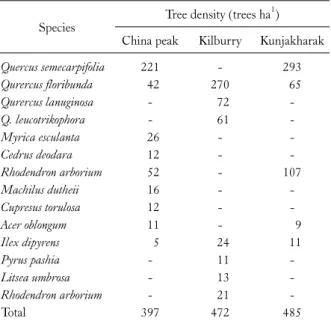
Table 1. Tree density and Canopy cover at three sites
Species Tree density (trees ha1) China peak Kilburry Kunjakharak Quercus semecarpifolia
Qurercus floribunda Qurercus lanuginosa Q. leucotrikophora Myrica esculanta Cedrus deodara Rhodendron arborium Machilus dutheii Cupresus torulosa Acer oblongum Ilex dipyrens Pyrus pashia Litsea umbrosa Rhodendron arborium Total
221 42 - - 26 12 52 16 12 11 5 - - - 397
- 270 72 61 - - - - - - 24 11 13 21 472
293 65 - - - - 107
- - 9 11 - - - 485 implements) etc. A survey was conducted from September 2008 to March 2009. The respondents from the area were selected randomly on the basis of their involvement in the lichen collection trade. Thirty Lichem collectors and six contractors were interviwed on each site to assess the pri- mary information. The questionnaires were filled through a
long discussion with the respondent. Information was col- lected from collectors, contractors (middlemen), small and big traders, commission agents from two trading centers (Ramnagar and Tanakpur) in order to know the quantum of trade,to identify the marketing channels, price spread, and prospective markets of Lichens. Secondary data was collected from records of Uttarakhand Forest department and Forest Development Corporation.
Results
Tree density and Canopy cover
The study shows that tree density (485 trees ha1) was maximum in Q. semecarpifola dominated forest in Kunjak- harak and minimum in the China peak forest (397 trees ha¹) dominated by Quercus semecarpifolia (Table 1).
Seasonal pattern of lichen fall and twigs dry mass estimation
The minimum annual lichen fall was in Mixed Oak for- est in China peak (105.7±9 mg DM m-2) and maximum in Oak dominated mixed forest in Kunjakharak (144.2±19.8 mg DM m-2) (Table 2). Oak dominated mixed forest in Kunjakharak also had maximum twig fall of 416.3±41 mg
DM m-2) among all three study sites. In the study sites, generally the lichen fall was highest in the month of April followed by May. In the market lichens are sold along with twigs, therefore, we need to consider both lichens and twigs to which they are attached. Thus, the annual fall of market- able material is 5.6 kg ha-1 yr-1 in Kunjakharak, 4.6 kg ha-1 yr-1 in Kilburry and 4 kg ha-1 yr-1 in china peak.
Study on the source of lichen substratum indicated that 44.30% were from fallen lichen (including twigs collec- tion), 55.20% from trees (stem and branches) and 0.50%
from rocks.
Availability of lichen and employment generation from collection in Kumaun
Total area under Oak forest in Kumaun is 49,106.39 ha.
As per the study, the average quantity available for collec- tion was 4.73 kg ha-1.Thus, in present condition, the esti- mated quantity that can be collected annually from Oak for- ests of Kumaun, with five years rotation period, is 464.55 t yr-1. During the study, it was observed that in the month of April and May the herbaceous cover was almost negligible and hence during this period collection of lichens is quit convenient from the ground.
The observed quantity collected by primary collector was about 3.5-5 kg and by laboures about 6.5-7.0 kg li- chen/day/collector. The lichen is collected directly from the trees as well as from the ground. The estimated quantity that can be collected annually, with five years rotation peri- od, in present condition from Oak forests of Kumaun is 464.55 t yr-1 and collection of this quantity requires on an average 61 villagers or 38 laborers day-1 year-1 (for every collection season of six month).
The lichen collection season is mainly of six months (October to April) in a year in Kumaun. Lichen fall was more after visit of monkeys/ languors to the sites and occa- sional storms. Seasonal pattern of lichen fall was similar to that of twig fall. After April, collection of lichen is com- pletely banned due to fire prone season. The collected ma- terial can be transported up to 15th May every year. From July to September the produce cannot be collected because of monsoon season. Monsoon is the most effective season for lichen growth. One secondary collector collects the pro- duce from about 15-20 primary collectors. On an average quantity of lichen is about 2,400 kg per trader per season
and the total quantity of lichen loaded from three sites comes out to be 5.71 tons per season. Among the various collection centers in the area, collection at Ghoghokhan was maximum (1.05 tons) followed by Kilburry (0.84 tons), Saud (0.74 tons) and Palli head lowest (0.53 tons) lichen collection per season.
Marketing of Lichen in Kumaun Himalaya
It is important to know the past and the present mode of marketing of the lichen trade. Before 2005-06, the trade of lichen and other medicinal plants were not regulated. After October 2004, apart from Zila Bhasaj Sangh (ZBS) and Kumaun Mandal Vikas Nigam (KMVN), Forest Depart- ment of Uttarakhand took active role by involving Uttarakhand Forest Development Corporation (UKVVN).
Now in case of Lichen and other zari- booti sector, the Zila Bhasaj Sangh provides training to the collectors on scien- tific harvesting technique and Uttarakhand Forest Development Corporation plays important role in market- ing (including auction) of Lichens and, thus, reducing ex- ploitation of collectors from contractors and middlemen.
The Nodal Officer of forest department allots the area in the month of September every year to agencies involved for collection of lichen. Lichens are collected by primary (registered villagers) collectors selected by the agencies for collection. The villagers and labourers collect the produce and after drying sell the produce to the local registered vil- lagers (contractors). They generally have retail shops in the village itself where they store lichens. When sufficient quantity of lichen is collected, they tabulate the quantity of lichen in terms of sack bags (one sac contains about 50 kg), number of trucks to be loaded. Divisional forest officer through concerned range officer issue permission for export the material to the depot for auction after depositing royalty (presently Rs 21000 tons-1), including tax. In Kumaun, two depots namely Ramnagar, Tankpur are established by Uttarakhand Forest Development Corporation where auc- tion of lichen and other Zari-Buti takes place.
There is another method of marketing localy known as
“Nizi Bhoomi” or “Naap land” (personal land) method.
This is a method in which the villagers collect lichens from their private land or private forest. The lichens collected as per this method, 88% of the amount received from the sale of produce is paid back to the lichen traders or collectors.
Table 3. Expenses admisable to the different agencies based on sale price for lichens
Source of produce Royalty Storage &
Packaging
Transpo-rtation
(%) Market risk Revolving fund Service
charge Total Reserve forest, Van anchayat
Agricultural/ Private land
8% or actual -
1% or actual 1% or actual
5% or actual 5% or actual
5% or actual -
1% or actual 1%
5%
5%
25%
12%
Expenses admisable to the different agencies involved in collection after completion of sale are presented in Table 3.
Analysis of collection price at primary collector level The villagers (primary collectors) sell the lichen, locally called as “Chadila” or “zula”, weekly or twice in a week at the retail shops of the local collectors (secondary collector) in the villages. The study indicated that primary collector gets about Rs. 25-50 per kg for lichens depending upon its quality and as well as availability in the area being collected.
It was also observed that the value addition of lichens at primary lavel was not in practice, however, at the secondary collector level, the value addition is done by the grading of lichens. The process of grading involves separating the dif- ferent qualities of lichens for marketing. Generally lichens are graded in three different grades on the basis of presence of “Phoolmal” by secondary collector before transporting the material to sale depots.
Grade A, supposed to be the best quality and without bark or moss attached to it, is known as Phoolmaal in local language. The collection rate for this material is about Rs.
45-50 per kg for the primary collectors. Grade B contains the mixed percentage of grade A, mosses, twigs and bark of trees. The collection rate of this grade is varies between Rs.
25-45 per kg for the primary collectors. Grade C, com- monly known as 'Patthar Chura,' is growing over the rock surface (saxicolous lichens). The collection rate for primary collectors of this grade is about or below Rs. 25 per kg.
Marketing process at depots
Stacking of the bags in lots (about one truck load in one lot) was carried out after reaching at depots and then the produce is placed for auction. A sale list was prepared and distributed to all registered purchaser before 24 hours so that interested purchaser can inspect the material and max- imum sale price can be obtained. Estimated quantity was al- so published in local news papers of the area by concerned
sale division. Generally, the auction was conducted on two dates prefixed monthly for each auction site. This is a public auction and any person intersted in buying the produce can participate in auction after registering or depositing the gate money of Rs. 5000 which is refundable after auction. With the satisfaction of collecting agency, the highest bid is ac- cepted in auction. The highest bidder has to deposit 25% of sale price as security which is later on adjusted in sale price or forfeited if the sale price is not deposited with in period.
After approval of highest bid for the lot, the purchaser gets seven days time for depositing the sale price and after re- ceiving sale price export permission is issued by cocerning depot officer. Then the produces is loaded in truck and transported to its destination places.
The auction system in Ramnagar mandi was started from October 2004 and from January 2005 in Tanakpur.
During the year 2007-08 and 2008-09, among the four agencies responsible for collection of lichen (UKVVN, ZBS, KMVN, Owner of Nizii Bhomii), maximum quan- tity (56.12%) was collected by KMVN which also recieved maximum sale price (59.29%) at Tanakpur depot. Van Panchayats collected maximum quantity for the same peri- od (39.68% quantity wise and 43.33% sale price wise) at Ramnager depot. During the 2007-8 and 2008-09, a total of 142.82 tons lichen was traded with a total sale price of Rs. 8.07 millions in Kumaun (Table 4). It is also evident from the study that Ramnagar depot not only the biggest mandi (market) but maximum produce traded in this man- di was lichen. Observation about estimated expenses and profit per truck are calculated and presented in Table 5.
In Kunjakharak the estimated annual income was max- imum (Rs. 10120) followed by Kilburry (Rs. 8300) and China peak (Rs. 7280).
Households of village Ghookhan depends highly on li- chen based activity to conduct their livelihood (38%) and of the Mehrora (26.6%) were found less dependent on lichen sector among the study sites (Table 6). At all the collection
Table 4. Status of lichens traded by different agencies (2007-08 and 2008-09) in Kumaun Himalaya
Name of agencies Year
Tanakpur depot Ramnager depot
Quantity (tons)
Sale rate (Rs.)
Sale price (Rs.)
Quantity (tons)
Sale rate (Rs.)
Sale price (Rs.) Uttarakhand Forest Development
Corporation Zila Bhasaj Sangh
Kumaun Mandal Vikash Nigam
Van Panchayat.
Others
Total
2007-08 2008-09 2007-08 2008-09 2007-08 2008-09 2007-08 2008-09 2007-08
10.64 1.26 7.05 5.11 9.33 21.44 - - - 54.83
6532.87 7051 4055.78 7615 5520.47 7509
-
-
6951888 887862 2857986 3887457 5148776 16097644
-
- 35831614
4.73 6.17 15.75 7.22 6.68 12.20 27.01 7.92 0.33 88.01
5915.75 655450 5197.36 5867.56 4876.50 5798.74 5433.59 5691.00 6000.00
2795725 4046616 8184961 4237082 3259742 7071570 14674442 450687 198900 44919718
Table 5. Calculation of profit for "A" grade lichens per truck for the contractors
Capacity of a truck
Collection charges of one truck ‘A’ grade lichen @
Rs. 5000 kg-1
Eexpences/Truck up to Mandi (Rs.) Sale price @ Rs.
7200.00 kg-1 Profit
40 Qtls. Rs. 200000 Roylity @Rs.200/qtl.=Rs. 2000x40=Rs.8400 Storage and packging @1%=Rs. 2880 Transport @200x40=Rs. 8000 Market risk @5%=Rs. 14400 Revolving fund @1%=Rs. 2880 Servicecharge @5%=Rs. 14400 Total expenses=Rs. 50560
Rs. 288000 288000-200000+50560=
49440 per truck or 1236 per qtl.
Table 6. Percentage of households engaged in lichen activity Name of village Households engaded (in %)
Saud Ghughukhan Bassi Pungoot Palli Bagad Mahrora
25.6 38.0 32.5 30.23 35.32 36.5 26.6
Table 7. Contribution of lichens in income generation of lichen stakeholders
Sources of income Contribution of lichens (%) Agriculture and Horticulture
Service Dairy
Agriculture labor Tourism Shopkeeping Lichen
62.2 2.5 5.5 5.5 0.65 1.3 22.5
sites, Lichen sector found second highest (22.5%) contrib- utor to generate income after Agriculture (62.2%) (Table 7). In all collection sites of the division the secondary collec- tor and transporters together get maximum share (>50%) of income generated from lichen and a negative trend in primary collectors share was observed in the study sites with increase the distance from the market or increase in re-
moteness (Table 8). Lichen transporters and traders get second maximum benefit from lichen sector as compared to other sources like labor, tourism and shop etc.. The earned money by the lichens sector stakeholders from all villages was mostly used to meet food requirements of the household.
Table 8. Benefit sharing (%) from lichen collection at different stakeholder’s level
Levels of stakeholders Bassi Ghughukhan Saud Palli Bagad Mahrora Pungoot
Primary Collector Off road transportation
Secondary collector (Traders at village) Grader & sorter at village
Loader and Packer Transporter
24.5 2.5 27.0 0.5 6.5 39.0
24.0 2.5 28.2 1.0 5.77 38.6
25.0 2.2 28.4 0.3 6.7 37.4
28.2 2.8 25.5 0.5 8.5 34.5
27.0 2.6 25.4 1.7 9.3 34.0
27.3 2.5 24.3 1.5 9.4 35.0
28.5 3.0 24.5 1.7 9.2 33.1
Discussion
Historically, mankind has depended on non-wood re- sources for meeting his basic needs (FAO 1992). India, which has more than half of its population in rural areas and a large tribal population, depends on forest produce for their sustenance (Sawhney and Engel 2003). Despite the globalization of the World’s economy and the rise of in- dustry, NTFPs still remains an important source of income for hundreds of millions for rural livelihoods (Poffenberger 2006). An estimated 80% of the population of the develop- ing world use NWFP (Non-Wood Forest Products) to meet some of their health and nutritional needs (FAO 2008). It is an important source of income for the poor in many developing countries. NTFPs cannot be harvested for an indefinite period without proper management and domestication practices to maintain their yield.
Collection of lichens from the trees is not allowed be- cause lichens are very slow growing plants are pioneer plants in all the epiphytes. If the lichens are extracted from any plant species, the other epiphytes like orchids, mosses and angiosperms can be effected and unable to re-sprout.
Lichen exploitation is a common practice among the villag- ers in moist temperate regions of the Kumaun Himalayan.
The lichens are collected together with tree twigs Oaks and other trees bearing luxuriant growth of lichen. Lichens from Uttarakhand hills are traded in the plains of the coun- try for medicinal uses such as tonics, febrifuges and antipyretic. For a scientific and judicious management of resources, their thorough assessment or inventory prepara- tion is a must, to know the supply side and in order to fix yield for sustained management (Gusiya 1990).
The seasonal pattern of lichen fall and twigs dry mass es- timation study revals that the higher canopy cover and tree
density in Kunjakharak contributed to larger total lichen fall mass together with tree twigs in the studied sites.
Himalayan region of the state and lichen mass depends on tree cover, size & shape of tree, age of tree, climate of the re- gion (Kumar 2008). Du Rietz (1945) attempted to corre- late certain tree species with dominance of epiphytic lichens and termed them as Lichen Rich-Bark species and Lichen Poor-Bark species.It was observed during the study that Q.
semecarpifolia is Lichen Rich-Bark tree. Hakulinen (1966) has reported that reduction in lichen growth caused by less light might conceivably be offset by an increase in moisture in a shaded habitat.The precipitation peculiar to the high al- titudes raise the atmospheric humidity; the snow amount in winter as well as the frequency of clouds in summer are wa- ter reservoirs favoring the development of lichen flora.
At the study sites, generally the lichen fall was highest in the month of April followed by May. The market lichens are sold along with twigs, therefore we need to consider both lichens and twigs towhich they are attached. The twig fall consisted of both twigs without lichens and twigs with attached lichens. In all three sites more than 73% mass of epiphytic lichens was contributed by the canopy twigs of the forest. The abscission of wood is promoted by higher tem- peratures in the annual cycle (summer and rainy seasons) although abscission continues, though irregularly, through out the year as a mechanism of canopy-clearing by self-pruning (Singh and Singh 1992). Kumar (2008) also observed and reported that more than 70% mass of major epiphytic lichens was contributed by the canopy twigs and remaining 30% lichen mass contributed by tree branches and trunk or bole. Wolseley and Pryor (1999) studied the lichen communities on twigs of Quercus petrarea (Matt.
Liebl.) in Welsh woodlands and concluded that there is a correlation between environmental condition and lichen
communities of twigs. Bark texture, roughness, pH and po- sition of twigs, amount of moisture as rain tracks or humid- ity, aspect and illumination of the surface, acidification of the atmosphere are the specific characteristics of the sub- stratum influence the growth of lichens on twigs. Kumar (2009) suggested the growth of lichens might be depends on type of substratum, forest type, light, temperature and moisture condition.
The lichen fall pattern between the three study sites were similar and indicates that lichen fall has a definite seasonal pattern. The knowledge of lichen fall patterns can help col- lectors to decide on strategy to collect lichen. In the month of April and May the herbaceous cover on the ground was almost negligible, hence during this period collection of li- chens is quit convenient. Lichens could be seen all over the study sites following movement of monkeys. It shows that these events seem to hasten twig fall. Pattern of seasonal twig fall was similar to that of lichen fall, which indicate that lichen growth would hasten twig fall.
The present work showed that on an average one secon- dary collector collects the produce from about 15-20 pri- mary collectors and collects about 24 qtl per season and the total quantity of lichen loaded from three sites comes out to be 5.71 tons per season. Kumar (2008) has hypothized that only fallen lichen (fall from trees) collection should be al- lowed to provide livelihood to stakeholders living in high al- titude and temperate regions of Uttarakhand. Lichens col- lected from different substratum by the collector’s were maximum from trees (stem and branches). The marketable material fallen lichen that can be collected to the tune of 5.6 kg/ha/yr in the Quercus semecarpifolia dominated mixed for- est and 4 kg/ha/yr in Mixed Oak forest. Kumar (2009) also observed the annual fall of marketable material is about 6.4 kg/ha/yr in the close canopy forest and 4.9 kg/ha/yr in open canopy forest. Quercus semecarpifolia is an excellent host tree for lichen growth in temperate Himalayas, as the dense, dome-shaped canopy of the tree provide ample amount of shade and moisture on main trunk andbranches, which are suitable for colonization by lichens and many other epi- phytes (Rawat et al. 2007).
The collection season of Lichens was observed to be about six months (October to March). The quantity col- lected by laborer (6.5-7.0 kg lichen/day) was much higher then the quantity collected by primary collector about
(3.5-5.0 kg lichen/day). Villagers (primary collectors) col- lect lichens as a part time job apart from their agricultural and other household activities compared to hired laborer who are experts and hired especially for this job. Kumar (2009) also observed and reported that a trained collector can easily collect 6-8 kg of lichens with twigs from the ground. In present situation as per Government orders, the Zila Bhesajh Sangh Sahkari Samiti (ZBSSS) provides training on scientific harvesting technique to the lichen col- lectors of different agencies involved in lichen collection and the major role of the Uttarakhand Van Vikas Nigam (UK.V.V.N.) is marketing of lichens. The primary collec- tors due to small quantity collected by them are ignorant of the market price and actual income. The value addition by the grading of lichens takes place at the secondary collector level (trader’s level), and the price doubles when these li- chens reach the central market. Hence the income of pri- mary collector can increase if value addition takes place at primary collector’s lavel.
In the study area most of the products were gathered during the summer season due to their availability in that period. Only lichens were extracted during Kharif (rainy season) and winter seasons respectively. It is remarkable that Lichen not only contributed significantly to household earnings with off-farm activities as Lichen sector was found second highest income creator after Agriculture.
Non-Timber Forest Products provide food, medicines, fi- bres and cash income for rural households (Okafor et al.
1994). It is a source of cash income during the season of ex- traction, which increases economic access to food. Study observed that secondary collector and transporters together get maximum share (>50%) of income generated from li- chen, thus economic exploitation of the poorly educated people by the traders. Besides, local people should also be educated about the negative effects of man-made factors;
protection should be proactively followed by the Government through forest department in forest land and in revenue lands by revenue department involving local people.
Conclusion
Lichen fall has a definite seasonal pattern and its knowl- edge can help collectors to decide on strategy of lichen col-
lection as lichen collection trade sector was second highest to generate income after agriculture for the local community. Economic exploitation of the poorly educated people by the traders is still prevalent even after the involve- ment of government agencies in this trade. Lichen trade share is in an alarming situation and requires immediate ac- tions at Government label.
Agriculture is the primary occupation of the peoples of the Kumaun, but due to the subsistence nature of hill agri- culture, they are partially dependent on surrounding forest resources for their livelihood. To improve the socio-eco- nomic standard of the people of Kumaun, it may also be necessary to increase and improve the lichens resources of the area.There is a strong call for scientific management, best harvesting practices and strict monitoring of resources.
Results of introduction of rotational collection of Lichens regarding sustainable management and conservation are still to come. Government agencies have the monopoly over the Lichens trade. As these forests are mainly natural and by declaring these forests as Organic forests the demand and sale prices of Lichens collected from these forests will go up. Since the objective of Lichens collection is to im- prove livelihoods and conservation of forest resources, these resources can best be assured through a process of gradual domestication in human-modified systems. Unless urgent actions are taken to reverse the existing tendency of harvest- ing Lichens from the wild, these Lichens will disappear be- fore they are acknowledged.
References
Babington C. 1852. Lichenes Himalayenses: being an Enumera- tion of the Lichens collected in the Himalaya Mountains etc.
during the years 1847 and 1848. Hooker's J Bot Kew Gard Misc 4: 243-253.
Bhandari BS, Mehta JP, Tiwari SC. 2000. Fire and nutrient dy- namics in a Heteropogon contortus grazingland of Garhwal Himalaya. J Trap For 41: 33-39.
Du Rietz GE. 1945. Om fattigbark- och Rikbarksamhallen.
Svenks Botanisk Tidsskrift 39: 147-150.
Hakulinen R. 1966. Uber die Wachstumgeschwindigheit einiger Laubflechten. Ann Bot Fenn 3: 67-79.
FAO. 1992. Forest, trees and food. Food and Agricultural Organization of the United Nations, Rome, Italy.
FAO. 2008. Non Wood Forest Products. Food and Agricultural Organization of the United Nations, Rome, Italy.
Gusiya KC. 1990. Management plan for east Almora Forest Division (1990-91 to 1999-2000). Wworking plan circle sec- ond, U.P. Nainital.
Kumar B. 2009. Growth rate of two corticolous lichens in Chopta forest (Garhwal Himalaya), India. Indian J Bot Res 5: 235-238.
Kumar B. 2008. Lichen species distribution, cover and fall in a Quercus leucotrichophora (J E Smith) forest of Garhwal Himalaya. Ph.D. Thesis, HNB Garhwal University, Srinagar (Garhwal).
Kumar B, Upreti DK. 2008. An account of lichens on fallen twigs of three Quercus species in Chopta forest of Garhwal Himalayas, India. Ann Forest 16: 92-98.
Kumar N, Saxena N, Alagh Y, Mitra K. 2000. India: Alleviating Poverty through Forest Development. Evaluation Country Case Study Series, World Bank Operations Evaluation Department, The World Bank, Washington, DC.
Mc Cune B, Geiser L. 1997. Macrolichens of Pacific Northwest.
Oregon State University Press, Corvallis, U S A.
Negi HR, Upreti DK. 2000. Species diversity and relative abun- dance of lichens in Rumtek catchment of Hemis National Park in Ladakh. Curr Sci 78: 1105-1112.
Olsen CS. 1997. Commercial Non-Timber Forestry in Central Nepal: Emerging Themes and Priorities. Ph.D. Dissertation.
Department of Economics and Natural Resources. Veterinary and Agricultural University, Denmark.
Olsen CS, Helles F. 1997. Making the poorest poorer: policies, laws and trade in medicinal plants in Nepal. J World Forest Resource Manag 8: 137-158.
Rawat S, Upreti DK, Singh RP. 2007. Quercus semecarpifolia - an excellent host tree for lichen growth in temperate Himalayas.
Paper presented at the International Tropical Ecology Congress held at Forest Research Institute, Dehra Dun, India during 2-5 Dec. 2007.
RoyalOkafor JC, Omoradion FI, Amaja. 1994. Non-Timber Forest Products (Nigeria): Consultancy Paper prepared by the Tropical Forest Actions Programme (TFAP) Forest Manage- ment, Evaluation and Co-ordination Units (FORMECU) and Federal Department of Forestry (FDF) Abuja, Nigeria, pp 8.
Ruiz Pérez M. 2005. Poverty Alleviation and Forest Conservation:
The Role of Non- Timber Forest Products. In: NTFPs between poverty allevation and market forces. Switzerland.
Sati SC, Joshi P, Tewari P. 1992. Some corticolous lichens of Nainital, Kumaun Himalaya. II. In: Microbial activity in the Himalaya (Khulbe RD, ed). Shree Almora Book Depot, Almora, U.P, India, pp 273-277.
Sawhney P, Engel. 2003. Importance of Non-Timber Forest Produce for subsistence and income generation in the life of local people. Case of Bandhavgarh National Park, India. Centre for Development Research (ZEF), Bonn.
Saxena AK, Singh JS. 1982. A phytosociological analysis of woody species in forest communities of a part of Kumaun Himalaya.
Vegetatio 50: 3-22.
Shah NC. 1997. Lichens of Economic Importance from the Hills of Uttar Pradesh, India. J Herbs Spices Med Plants 5: 69-76.
Singh JS, Singh SP. 1992. Forests of Himalaya : structure, func- tioning, and impact of man. Gyanodaya Prakashan, Nainital, India.
Upreti DK, Chaterjee S. 1999. Distribution Of lichen on Quercus and Pinus trees in Almora district, Kumaon Himalayas, India.
Geophytology 28: 41-49.
Upreti DK, Divakar PK, Nayaka S. 2005. Commercial and ethnic use of lichens in India. Economic Botany 59: 269-273.
Wolseley PA, Pryor KV. 1999. The potential of epiphytic twig com- munities onquercus petraeain a welsh woodland site (tycanol) for evaluating environmental changes. Lichenologist 31: 41-61.