INTRODUCTION
Osteoarthritis patients are characterized by older pop- ulation, chronic disease, and mostly women. Since they
are in chronic condition, long-term management strate- gies would be more beneficial than short-term interven- tion. Lifestyle modification by adopting health behaviors is required for this population to manage symptoms and signs more effectively and economically. Healthy People
Effects of a Sun-style Tai Chi Exercise on Arthritic Symptoms, Motivation and the Performance of Health Behaviors in Women
with Osteoarthritis
Rhayun Song1, Eun-Ok Lee2, Paul Lam3, Sang-Cheol Bae4
Purpose. Tai Chi exercise, an ancient Chinese martial art, has drawn more and more attention for its health ben- efits. The purpose of the study was to identify the effects of a Sun-style Tai Chi exercise on arthritic symp- toms (joint pain and stiffness), motivation for performing health behaviors, and the performance of health behaviors among older women with osteoarthritis.
Methods. Total of 72 women with the mean age of 63 years old were recruited from outpatients clinic or public health centers according to the inclusion criteria and assigned randomly to either the Tai Chi exercise group or the control. A Sun-style Tai Chi exercise has been provided three times a week for the first two weeks, and then once a week for another 10 weeks. In 12 weeks of study period, 22 subjects in the Tai Chi exercise group and 21 subjects in the control group completed the posttest measure with the dropout rate of 41%.
Outcome variables included arthritic symptoms measured by K-WOMAC, motivation for health behavior, and health behaviors.
Results. At the completion of the 12 week Tai Chi exercise, the Tai Chi group perceived significantly less joint pain (t = 2.19, p = 0.03) and stiffness (t = 2.24, p = 0.03), perceived more health benefits (t = 2.67, p = 0.01), and performed better health behaviors (t = 2.35, p = 0.02), specifically for diet behavior (t = 2.06, p = 0.04) and stress management (t = 2.97, p = 0.005).
Conclusion. A Sun-style Tai Chi exercise was found as beneficial for women with osteoarthritis to reduce their perceived arthritic symptoms, improve their perception of health benefits to perform better health behav- iors.
Key Words : Tai Chi exercise, Osteoarthritis, Health behavior, Motivation
1. Associate professor, Department of Nursing, Chungnam National University 2. Professor, College of Nursing, Seoul National University.
3. Family physician, Conjoint lecturer, University of New South Wales, NSW 2209, Australia
4. Associate professor & Director, The Hospital for Rheumatic Disease, Hanyang University Medical Center.
Grant supporter: Supported by the Korea Research Foundation (Grant No. 2002-042-F00100), Seoul, Korea.
Corresponding author: Rhayun Song RN, PhD, Chungnam National University, Department of Nursing, 6 Munwha 1-Dong, Jung Gu, Dae Jeon 301-747, Korea,
Tel: 82-42-580-8331 Fax: 82-42-584-8915 E-mail: [email protected] Received September 22, 2006 ; Accepted February 2, 2007
2010 advocated the adherence of regular exercise as an effective self-management technique for individuals with arthritis (Center for Disease Control and Prevention USA, 2005). However, only 10 30% of aging popula- tion engages regular exercise (Resnick & Nigg, 2003), and those with chronic disease such as arthritis would be expected to exercise even less.
Adoption of health behavior can be successful when the intervention is implemented based on motivation theories. Research has indicated that motivational factors are the best psychological determinant of health behav- iors and exercise adherence (Jensen & Lorish, 1994;
Song, 2006). Motivation is defined by an integrated cog- nitive and emotional process, anchored by personal goals that direct, energize, and regulate goal-directed be- haviors (Ford, 1992). In previous literature, intervention strategies to motivate older adults to perform health be- haviors have focused on enhancing cognitive process through health education classes (Heidrich, 1998). A clinical study revealed that the perceived self-efficacy, benefits, barriers, interpersonal influences were the sig- nificant determinants of physical activity and healthy eating among rural women aged 50 to 69 (Walker, Pullen, Hertzog, Boeckner, & Hageman, 2006). On the other hand, the emotional component of the motivation process has also received attention. A study on older adults showed that the adherence of health-promotion programs for older adults could be enhanced by associat- ing exercise with pleasant sensations; pleasant or un- pleasant feelings of fun, boredom or fear were reported as main reasons of quitting exercise among older adults (Resnick & Spellbring, 2000). An intervention study supported this premise, showing that enhancing emotion (emotional salience) and cognitive components (self effi- cacy, perceived benefits, and perceived barriers) of moti- vation improved the performance of health behaviors among older adults of exercise program (Song, June, Kim, & Jeon, 2004).
Since motivational factors are the common determi- nants of adopting health behaviors, it can be assumed that an adoption of single health behavior through en- hancing motivation would influence to perform more of other health-related behaviors (Song, 1997). A study of health promotion in the work-place by Pender and col- leagues (1990) reported the employees with a longer pe- riod of participation in fitness activities also performed better in other dimensions of a healthy lifestyle. An in- tervention study for elderly in residential homes also
supported this assumption, showing that those who par- ticipated in exercise class were more motivated to per- form health behaviors, consequently performed more health behaviors than their counterparts (Song, June, Kim, & Jeon, 2004). Therefore, it may be possible to en- courage an individual to perform the physical exercise which he or she prefers to initiate and maintain it, and then the enhanced motivation will lead to the better per- formance of other related health behaviors.
Recently, Tai Chi exercise, an ancient Chinese martial art, has drawn more and more attention for its health benefits. Tai Chi exercise consists of slow but continuous movements of body parts combined with deep diaphrag- matic breathing and relaxation, while maintaining body posture upright (Lam, 1998). Among major types of Tai Chi forms, the 12 forms of a Sun-style Tai Chi exercise has been applied to arthritis patients, supporting its ben- efits of enhancing muscle strengths, flexibility, and phys- ical fitness (Song, Lee, Lam, & Bae, 2003). Tai Chi exer- cise was also related to pain management, better bal- ance, risk reduction for falls, and improving quality of life (Klein & Adams, 2004). A study on inactive older adults with random assignment reported that the partici- pants of Tai Chi intervention for 6 months significantly improved self-efficacy and perceived physical function (Li, Harmer, McAuley, & Fisher, 2002). Only a few stud- ies has been found to link Tai Chi exercise and cognitive factors of motivation, yet various health benefits of Tai Chi exercise could lead to potential benefits in health promotion (Lan, Lai, & Chen, 2002). Considering the characteristics of Tai Chi exercise and the potential inter- action of exercise participation with other health behav- iors, implementation of Tai Chi exercise could be an ini- tiating factor to motivate this population to perform more various health behaviors.
The purpose of the study was to identify effects of a Sun-style Tai Chi exercise on arthritic symptoms (joint pain and stiffness), motivation for health behaviors, and the performance of health behaviors in women with os- teoarthritis.
METHODS
Research Design and Subjects
An experimental design with randomized assignment with pretest and posttest was utilized for the purpose of the study. The women older than 55 years of age who has been diagnosed with osteoarthritis were recruited
from outpatient clinics of university hospitals and public health centers. The list of potential subjects has been re- viewed by the primary physician to confirm the inclu- sion criteria and those who agreed to participate in the study were included in the study. The inclusion criteria for the patients were: (1) clinical and radiographic evi- dence of osteoarthritis, (2) no chronic disease or disabili- ty that would hinder from performing Tai Chi exercise such as ischemic heart disease or cerebrovascular attack, and (3) no participation in any regular exercise program during the previous year.
Total of 72 women with osteoarthritis were recruited and randomly assigned by Excel program to the Tai Chi exercise group for 38 subjects and to the control group for 34 subjects. At the end of the study, 22 subjects of the Tai Chi group and 21 of the control group remained for the posttest measure with 43% and 39% of dropout rates, respectively. The reasons for the dropout were having surgery for knee replacement, being tied up for taking care of grandchildren or postpartum care for their daughters, moving out to other part of the city, or too far to come to the exercise site. Those in the control group were able to attend the Tai Chi exercise program after the study had been completed.
Data collection procedure
A face to face interview was performed for each indi- vidual to fill out the questionnaire which took approxi- mately 15 20 minutes for each interview. Total of three research assistants were trained prior to the study to make consistency of interview style. The same research assistant conducted an interview with an individual at the pretest and the posttest in 12 weeks. The interview for each group was scheduled before and after the inter- vention program separately.
The preparation phase of the study was to train exer- cise leaders for the Tai Chi program for arthritis patients.
The exercise leaders were nurses who participated in a certificate workshop for Tai Chi program prior to the study, and practiced together until performing the 12 forms confidently. A registered standardized videotape (ISBN 1-885538-84-7) was provided to exercise leaders to guide them in performing each form of Tai Chi cor- rectly. During the Tai Chi exercise program, one exercise leader taught a form of Tai Chi movement step by step, and the other two assisted the session to make sure the safety and correct posture of exercise for the partici- pants.
Intervention Procedure
The Tai Chi exercise program for arthritic patients de- veloped by Lam and his colleagues consists of warm-up exercise, 12 main movements, and cool-down exercise, and described in detail elsewhere (Song, Lee, Lam, &
Bae, 2003). Tai Chi exercise sessions were held in the classroom of the university with non-slippery floor and ample space convenient to perform the exercise. The subjects of the Tai Chi exercise group performed one- hour exercise session three times a week for the first two weeks until they learned the 12 forms of Tai Chi move- ment step-by-step enough to perform them correctly by themselves at home.
From the third week to the last week, the exercise group came to the supervised exercise session once a week, but they were expected to perform Tai Chi move- ment 3-4 times a week at home for another 10 weeks.
The contract method and weekly follow-up calls from exercise leaders were used to motivate the participants to perform Tai Chi exercise regularly. The frequency and duration of Tai Chi performance at home were recorded on their exercise log, which was assessed during every weekly session.
Measurements Motivation
The motivation to perform health behaviors was mea- sured by the Motivation Scale for Health Behavior de- veloped in a previous study with myocardial infarction patients (Song & Lee, 2001). The 28 items of the scale were assessed to assure its applicability to the older peo- ple who participated in the present study by modifying expressions easier to understand for them. The Motivation Scale for Health Behaviors comprises the variables of perceived self-efficacy (6 items), perceived benefits (7 items), perceived barriers (10 items), and emotional salience (5 items), representing the cognitive and emotional appraisal constructs of motivation. Since each subscale represents specific component of motiva- tion, motivation was assessed based on four motivational variables rather than the total scores.
Perceived self-efficacy was measured by a 4-point forced-choice Likert scale, with each item ranked from 1 (not confident at all) to 4 (very confident). Perceived benefits/barriers and emotional salience were measured with a 4-point Likert format, ranging from strongly dis- agree (1) to strongly agree (4). The negatively worded items were reversely scored so that the higher scores in
the total motivation scale represented a more motivated state. Song and Lee (2001) reported the validity of the motivational scale, and showed that the reliability coeffi- cients for each sub-dimension were 0.73 0.86. The Cronbach’s alpha for the 28-item motivation scale was 0.81, in previous study with older population (Song et al., 2004).
Health Behaviors
The performance of health behaviors was measured by a Health Behavior Scale that was also developed by Song and Lee (2001) developed in cardiac patients. The scale consisted of 5 specific behaviors such as health re- sponsibility (5 items), diet behavior (8 items), exercise (4 items: mostly related to physical activities such as using staircase or walking short distance), stress management (5 items), and smoking habits (3 items). Although it has been developed with cardiac population, the scale was used for the study, because it has been previously ap- plied to older adults and focused 5 specific health behav- iors which were consistent to the focus of the present study. The 25-item scale was self-reported on a 4-point response format to determine the frequency of each be- havior from 1 (never) to 4 (routinely). Higher scores re- fer to the more-frequent performance of health behav- iors. The psychometrics of the Health Behavior Scale has been reported previously (Song & Lee, 2001). The Cronbach’s alpha coefficient for the health behavior scale was 0.82 in the previous study with older popula- tion (Song et al., 2004).
Arthritic Symptoms
The K-WOMAC (Bae et al., 2001) was used to assess arthritic symptoms of joint pain and stiffness of the sub- jects. The subscales of pain (5 items), stiffness (2 items) uses a 5-point Likert scale ranging from none (0) to ex- treme (4). Scores are generated by summing the coded responses to provide a score within the range of 0 20 for pain and 0?8 for stiffness. The reliability, validity, and responsiveness of the K-WOMAC have been reported in a previous study (Bae et al., 2001), and the Cronbach al- phas for the subscales of pain and stiffness were 0.81- 0.96 respectively in patients with osteoarthritis.
Data Analysis
At the completion of data entry, SPSSWIN V 11.0 was used to analyze the data with an alpha level set at .05.
Independent t-tests and Chi-square analyses were used
to test the homogeneity between the Tai Chi exercise group and the control group. Fisher’s exact test was used when more than 20% of the cells had expected count less than five. Independent t-tests were used with the difference scores in mean change between pretest and posttest to compare the effects of Tai Chi exercise.
RESULTS
1. Homogeneity tests on demographic characteristics and the outcome variables at the pretest
There were no significant differences between the groups in any of the demographic characteristics (Table 1). The subjects had an average age of 63 years with the range of 55 to 74 years, and the average time since diag- nosis was 9.8 years with the range of 1 to 27 years. The subjects from both groups received about 9 years of edu- cation. The comparisons on categorical variables be- tween the groups were made by Fisher’s exact test due to the small expected count, reporting no significant group differences. Most of the subjects were married, and perceived their economic status as middle or low.
Only 3 individuals (14%) of each group did not have any religion. About 28% of the subjects had never per- formed any type of habitual exercise after their diagno- sis, while 2 (9.1%) and 6 (28.6%) subjects of the experi- mental and the control groups, respectively, maintained their exercise habits for longer than 3 months. More than half of both groups perceived their present health as poor or very poor, while no one perceived their health status as excellent. The results on group compar- isons on outcome variables also showed no significant differences between the groups (Table 2).
2. Effects of Tai Chi exercise on arthritic symptoms, motivation, and the performance of health behav- iors
At the completion of 12 weeks of Tai Chi exercise, the Tai Chi exercise group reported significantly less pain (t
= 2.19, p = 0.03) and stiffness (t = 2.24, p = 0.03) in their joints, while the control group had either more pain (K-WOMAC score increased from 8.90 to 9.52) and stiffness (from 3.57 to 3.81).
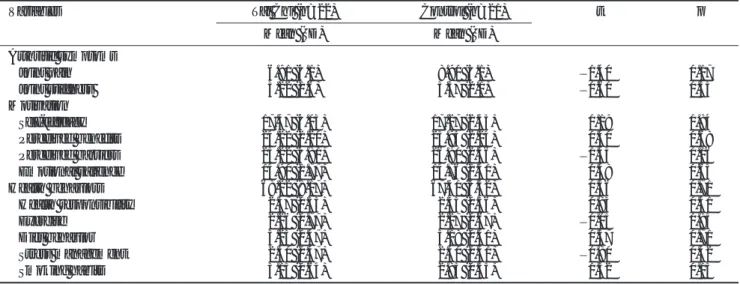
Four subscales of motivation were compared between the groups, and the Tai Chi exercise group showed signif- icant more perceived benefits than the control group (t = 2.67, p = 0.01). The group differences in mean changes of other motivational variables were not significant
(Table 3).
The group comparisons were conducted on the perfor- mance of health behaviors and specific health behaviors of health responsibility, exercise, diet behavior, stress management, and smoking habits. The Tai Chi group
performed significantly more health behaviors than the control group, and specific health behaviors of diet be- havior and stress management showed significant differ- ences (t = 2.06, p = 0.04, t = 2.97, p = 0.005 respective- ly). Other dimensions of health behaviors were not sig-
Table 1. Homogeneity Tests on Demographic Characteristics of the Subjects
Variables Tai Chi (n=22) Control (n=21) t p
Mean (SD) Mean (SD)
Age (years) 64.8 (6.0) 62.5 (5.6) 1.20 0.23
Education (years) 9.0 (3.8) 8.8 (4.1) 0.11 0.90
Diagnosis period (years) 10.4 (7.1) 9.2 (7.2) 0.53 0.59
Frequency (%) Frequency (%) Fisher p
Marital status
Single/others 2 (9.0) 1 (4.8) 0.55
Married 15 (68.2) 14 (66.7)
Widowed 7 (31.8) 7 (33.3)
Perceived economic status
High 1 (4.5) 1 (4.8) 0.32
Middle 13 (59.1) 13 (61.9)
Low 8 (36.4) 7 (33.3)
Religion
None 3 (13.6) 3 (14.3) 0.96 0.89
Catholic 3 (13.6) 3 (14.3)
Protestant 6 (27.3) 8 (38.1)
Buddhism 10 (45.5) 7 (33.3)
Current Exercise habits
Never 6 (27.3) 6 (28.6) 3.54 0.32
Mostly do not exercise 7 (31.8) 6 (28.6)
Exercise < 3 months 7 (31.8) 3 (14.3)
Exercise > 3 months 2 (9.1) 6 (28.6)
Present health
Very poor 3 (13.6) 3 (14.3) 0.16
Poor 9 (40.9) 8 (38.1)
Good 10 (45.5) 10 (47.6)
Values are from Fisher’s exact test
Table 2. Homogeneity Tests on Major Study Variables at the Pretest
Variables Tai Chi (n=22) Control (n=21) t p
Mean (SD) Mean (SD)
Arthritic symptoms
Joint pain 6.91 (4.1) 8.90 (5.1) 1.40 0.17
Joint stiffness 3.22 (1.6) 3.57 (2.1) 0.60 0.55
Motivation
Self-efficacy 17.47 (4.03) 17.27 (2.45) 0.19 0.84
Perceived benefits 24.22 (2.20) 23.95 (2.24) 0.40 0.68
Perceived barriers 25.22 (4.81) 26.90 (2.56) 1.43 0.16
Emotional salience 14.90 (1.77) 14.76 (1.41) 0.48 0.63
Health behaviors 68.22 (8.17) 67.40 (6.32) 0.36 0.71
Health responsibility 02.47 (0.55) 02.35 (0.36) 0.83 0.41
Exercise 02.26 (0.77) 02.27 (0.67) 0.05 0.95
Diet behavior 03.23 (0.47) 03.18 (0.41) 0.37 0.71
Stress management 02.30 (0.47) 02.40 (0.41) 0.80 0.42
Smoking habits 03.13 (0.64) 02.85 (0.55) 1.52 0.13
nificantly different between the groups.
DISCUSSION
As there is currently no cure for osteoarthritis, the role of exercise in reducing arthritic symptoms and slowing progression to serious disease has been receiving in- creasing attention (Bennell & Hinman, 2007). In the pre- sent study, a Sun-style Tai Chi exercise was applied to women with osteoarthritis for 12 weeks, and the find- ings showed that women who participated in Tai Chi ex- ercise program perceived less pain and stiffness in their joints, and perceived more health benefits, and conse- quently performed more health behaviors. The recent intervention study with osteoarthritis patients also re- ported similar results using K-WOMAC that those who participated in Tai Chi exercise for 8 weeks perceived significantly less joint pain (M = 4.22, SD = 2.92) and joint stiffness (M = 2.01, SD = 1.51) compared to those in aquatic exercise or self help management groups (Lee, 2006). Tai Chi exercise is characterized as slow and gen- tle movements with low intensity, which would make easier for arthritic patients to move their joints with less perceived pain (Lam, 1998). Based on the recent meta- analysis and large randomized controlled trials, clinical guidelines consistently recommended exercise program to reduce pain and improve function with careful plan- ning for individualized and patient centered program taking into account factors such as age, co-morbidity, and overall mobility (Fransen, McConnell, & Bell,
2002).
While the health benefits of exercise for individuals with chronic disease have been well established in previ- ous research, the safety issues should be emphasized es- pecially for the population with arthritis who are sub- jects to get injured by conducting exercise (Clyman, 2001). The present study used a stepwise progressive teaching method with exercise precaution that has been suggested for Tai Chi for Arthritis program. According to this teaching method, the subjects with arthritis should learn the movements of a Sun-style Tai Chi step by step and gradually increase their intensity and duration of ex- ercise with allowing resting time to prevent from aggra- vating the arthritic symptoms (Lam, 2006). A Sun-style Tai Chi exercise are characterized by slow and continu- ous movements with follow up steps and higher stance with bending knees less than other types of Tai Chi (Song, 2006). This characteristics of follow up steps and higher stance were found helpful to make less burden on individual’s knee and ankle, and consequently the par- ticipants were able to perform exercise slowly with less pain. The research team of the study assured to apply the characteristics of a Sun-style Tai Chi exercise to maximize beneficial effects while preventing any poten- tial injury. The choice of exercise applicable to the arthri- tis patients should be based on the right form and inten- sity prescribed to meet the characteristics of the disease (Clyman, 2001). At the completion of 12 week Tai Chi exercise, the subjects of the present study reported sig- nificantly less pain and stiffness with no exercise related Table 3. Mean Group Comparisons in Arthritic Symptoms, Motivation for Health Behaviors, and the Performance of Health Behaviors at the Posttest
Variable Posttest scores Difference in mean change
Tai Chi (n=22) Control (n=21) Tai Chi (n=22) Control (n=21) t p
Mean (SD) Mean (SD) Mean (SD) Mean (SD)
Arthritic symptoms
Joint pain 4.45 (2.61) 9.52 (4.69) 2.45 (3.96) 0.61 (5.16) 2.19 0.03
Joint stiffness 2.27 (1.57) 3.81 (1.80) 0.95 (1.58) 0.23 (1.89) 2.24 0.03
Motivation
Self-efficacy 18.12 (3.67) 17.20 (3.18) 0.65 (3.78) 0.06 (4.08) 0.60 0.55
Perceived benefits 25.86 (2.31) 24.52 (2.18) 2.36 (2.12) 0.57 (2.27) 2.67 0.01
Perceived barriers 24.54 (2.95) 26.42 (4.19) 1.86 (4.15) 0.47 (3.90) 1.12 0.26
Emotional salience 14.77 (1.63) 13.76 (1.13) 0.28 (2.86) 1.00 (1.73) 0.97 0.33
Health behaviors 75.22 (10.32) 67.28 (12.57) 7.00 (8.00) 0.70 (9.29) 2.35 0.02
Health responsibility 2.79 (0.67) 2.44 (0.76) 0.31 (0.66) 0.09 (0.66) 1.09 0.28
Exercise 2.56 (0.71) 2.38 (0.84) 0.30 (0.68) 0.10 (0.61) 1.01 0.32
Diet behavior 3.41 (0.37) 3.05 (0.64) 0.17 (0.32) 0.07 (0.48) 2.06 0.04
Stress management 2.69 (0.49) 2.32 (0.58) 0.39 (0.50) 0.08 (0.54) 2.97 0.005
Smoking cessation 3.42 (0.61) 3.14 (0.67) 0.28 (0.62) 0.28 (0.80) 0.01 0.99
injury, which could support for safe application of Tai Chi exercise to this population.
According to evidence-based recommendations for ex- ercise in managing osteoarthritis, however, exercise pro- gram should be accompanied with strategies to improve and maintain adherence and motivation to promote a positive lifestyle change (Bennell & Hinman, 2007). The present study was based on an assumption that the adoption of one specific health behavior, a regular par- ticipating of Tai Chi exercise, would lead to motivate an individual to aware of and perform other dimensions of healthy lifestyle (Song, 1997). The study results revealed that the participants of the Tai chi exercise program for 12 weeks perceived more health benefits and performed better health behaviors than those in the control group.
Similarly, older adults who performed regular exercise for 10 weeks reported better performance of health be- haviors including more active physical activities (Song et al., 2004). The intervention study of urinary inconti- nence supported the relationship between motivation and the interaction of health behaviors, reporting that the patients who had practiced better health promoting behaviors were more motivated to follow a home exer- cise program that led to a successful therapy (Shinopulos
& Jacobson, 1999). The relationship between single health behavior and multiple health behaviors through motivation as common determinants could lead to a ba- sis for multiple behavioral modifications, and should be further identified to build health promotion strategies.
However, except for perceived benefits, other dimen- sions of motivation only slightly enhanced not enough to be significant. Perceived benefits along with self efficacy and perceived barriers are recognized as one of major determinants of physical activities and health behaviors in the literature (Kaewthummanukul & Brown, 2006). A study with older adults living in residential homes also reported that the exercise participants reported signifi- cantly more perceived benefits than those who dropped out, and consequently better performance of health be- haviors (Song et al., 2004).
The findings that several motivational variables were not significant in the present study can be explained by two aspects. First, the pretest scores of self-efficacy and emotional salience were already relatively high (item means = 3.2 and 3.7 respectively in 4 point scale), so the intervention effects could be limited due to ceiling effect.
The other reason may be due to the selection of the in- strument that has more general target behavior (health
behaviors) in this population. Self-efficacy has been proven to have major influence on behavioral modifica- tion, especially when is targeted for a specific behavior such as exercise or diet, rather than health behaviors in general. When the target behavior of self-efficacy is more general such as overall health behaviors as the case of this present study, the influence of self-efficacy on the target behavior tends to be weak (Song et al., 2004). A randomized intervention study for older adults showed that individuals in the exercise program experienced sig- nificantly improved in exercise efficacy than the control group, but reported not significant in efficacy to ‘adhere to exercise’ that was more general target (Hughes et al., 2004). Since the target behavior of self-efficacy in the present study was health behaviors which were more general than each specific health behavior, it may be less effective to improve self-efficacy by the exercise inter- vention.
The limitation of the study findings can be considered as the following points. Although the group assignments were made randomly by computer assigning numbers of excel program, the number of subjects for each group were relatively small and individual variance (within group variance) could reduce the study power. The dif- ference scores between pretest and posttest were used for the final analysis to consider individual variance at the pretest, but the small sample size and high dropout rates (48%) should be considered in interpreting the re- sults. In addition, the study period of 12 weeks was con- sidered long enough to lead significant changes in per- ceived benefits and behavioral modification, but not enough to result in significant improvement of other mo- tivational variables. Further study would be required to determine the motivational variables that lead to lifestyle modification in long term.
CONCLUSION
The study findings reveal the potential effect of Tai Chi exercise program to apply to the patients with os- teoarthritis in a long-term basis. According to the find- ings, a Sun-style Tai Chi exercise could be applied to those with osteoarthritis in outpatient clinics or public health centers if they are not in acute inflammatory stage to lead successful behavioral modification by reducing arthritic symptoms. There is a need to develop the long term management strategies for the population with chronic illness, because they are required to engage in
health behavior including exercise longer than 3-6 months to have beneficial effects. Therefore, the pro- gram needs to provide comprehensive services to assess individual physiological and psychological needs, to teach the benefits and barriers via health education and counseling, and it should use an exercise program that is enjoyable and safely applicable to this population such as Tai Chi exercise. Motivation strategies are required to improve exercise adherence to become habitual exercise, in turn will lead to healthier lifestyle and improved qual- ity of life for those with chronic illness.
References
Bae, S. C., Lee, H. S., Yun, H. R., Kim, T. H., Yoo, D. H., & Kim, S.
Y. (2001). Cross-cultural adaptation and validation of Korean Western Ontario and McMaster Universities (WOMAC) and Lequesne osteoarthritis indices for clinical research.
Osteoarthritis Cartilage, 9, 746-750.
Bennell, K., & Hinman, R. (2007). Exercise as a treatment for os- teoarthritis. Curr Opin Rheumatol, 17(5), 634-640.
Centers for Disease Control and Prevention (2005). Monitoring progress in arthritis management-United States and 25 states, 2003. MMWR Morb Mortal Wkly Rep, 54(19), 484-488.
Clyman, B. (2001). Exercise in the treatment of osteoarthritis. Curr Rheumatol Rep, 3, 520-523.
Dishman, R. K., & Ickes, W. (1981). Self-motivation and adherence to therapeutic exercise. J Behav Med, 4, 421-438.
Ford, M. E. (1992). Motivating humans: goals, emotions, and per- sonal agency beliefs. Newbury Park, CA: Sage.
Fransen, M., McConnell, S., & Bell, M. (2002). Therapeutic exercise for people with osteoarthritis of the hip or knee: A systematic review. J Rheumatol, 29, 1737-1745.
Heidrich, S. M. (1998). Health promotion in old age. Annu Rev Nurs Res, 16, 173-195.
Hughes, S. L., Seymour, R. B. Campbell, R., Pollak, N., Huber, G.,
& Sharma, L. (2004). Impact of the fit and strong intervention on older adults with osteoarthritis. Gerontologist, 44, 217-228.
Jenson, G. M., & Lorish, C. D. (1994). Promoting patient coopera- tion with exercise programs: Linking research, theory and practice. Arthritis Care Res, 7, 181-189.
Kaewthummanukul, T., & Brown, K. C. (2006). Determinants of employee participation in physical activity: Critical review of the literature. AAOHN J, 54(6), 249-261.
Klein, P. J., & Adams, W. D. (2004). Comprehensive therapeutic
benefits of Taiji: A critical review. Am J Phys Med Rehabil, 83, 735-745.
Lam, P. (1998). New horizons ... developing tai chi for health care.
Aust Fam Physician, 27, 100-101.
Lam, P. (2006). Teaching Tai Chi effectively. Narwee, AU: Tai Chi productions.
Lan, C., Lai, J., & Chen, S. (2002). Tai Chi Chuan: An ancient wis- dom on exercise and health promotion. Sports Med, 32, 217- 224.
Lee, H. (2006). Comparison of effects among Tai Chi exercise, aquatic exercise, and a self-help program for patients with knee osteoarthritis. J Korean Acad Nurs, 36, 571-580.
Li, F., Harmer, P., McAuley, E., Fisher, J., Duncan, T. E., &
Duncan, S. C. (2001). Tai Chi, self-efficacy, and physical func- tion in the elderly. Prev Sci, 2, 229-239.
Pender, N. J., Walker, S. N., Sechrist, K. R., & Frank-Stromborg, M.
(1990). Predicting health promoting lifestyles in the workplace.
Nurs Res, 39, 326-332.
Resnick, B., & Nigg, C. (2003). Testing a theoretical model of exer- cise behavior for older adults. Nurs Res, 52(2), 80-88.
Resnick, B., & Spellbring, A. M. (2000). Understanding what moti- vates older adults to exercise. J Gerontol Nurs, 26(3), 34-42.
Shinopulus, N. M., & Jacobson, J. (1999). Relationship between health promotion lifestyle profiles and patient outcomes of biofeedback therapy for urinary incontinence. Urol Nurs, 19, 249-253.
Song, R. (1997). Effects of the 12-week cardiac rehabilitation exer- cise program on interactions among healthy lifestyle compo- nents. J Soonchunhyang Med College, 3, 265-275.
Song, R. (2006a). Analyzing motivational factors to predict health behaviors among older adults. J Korean Acad Adult Nurs, 18, 523-532.
Song, R. (2006b). Applying Tai Chi from nursing perspective. J Nurs Query, 15(1), 106-119.
Song, R., June, K. J., Kim, C. G., & Jeon, M. Y. (2004).
Comparisons of motivation, health behaviors, and functional status among elders in residential homes in Korea. Public Health Nurs, 21, 361-371.
Song, R., & Lee, H. (2001). Managing health habits for myocardial infarction patients. Int J Nurs Stud, 38, 375-380.
Song, R., Lee, E. O., Lam, P., & Bae, S. C. (2003). Effects of Tai Chi exercise on pain, balance, muscle strength, and perceived diffi- culties in physical functioning in older women with osteoarthri- tis: a randomized clinical trial. J Rheumatol, 30, 2039-2044.
Walker, S. N., Pullen, C. H., Hertzog, M., Boeckner, L., &
Hageman, P. A. (2006). Determinants of older rural women’s activity and eating. West J Nurs Res, 28, 469-474.