197
Available online at http://www.kccp.or.kr pISSN: 1226-6051
임산부의 약물 인식 및 복약 순응도 조사연구
유기연*
동덕여자대학교 약학대학
(2013년 8월 27일 접수·2013년 9월 9일 수정·2013년 9월 10일 승인)
Drug Safety Perception and Medication Adherence in Pregnancy
Ki Yon Rhew*
College of Pharmacy, Dongduk Women's University, Seoul 136-714, Korea (Received August 27, 2013·Revised September 9, 2013·Accepted September 10, 2013)
Background: Many factors including drugs, dietary supplements, and food intake can affect the development and organ formation of fetuses. Because of this, subject tends to avoid consuming things like coffee, alcohol, or cigarettes due to the risks they pose during pregnancy. Therefore, analysis of drugs and favorite food consump- tion is needed and important to ensure safe health management for subject. Purpose: This study was con- ducted domestically to analyze these factors in South Korea. Method: The survey was conducted from pregnancy-related online communities for six days and the survey results were received via email for analysis.
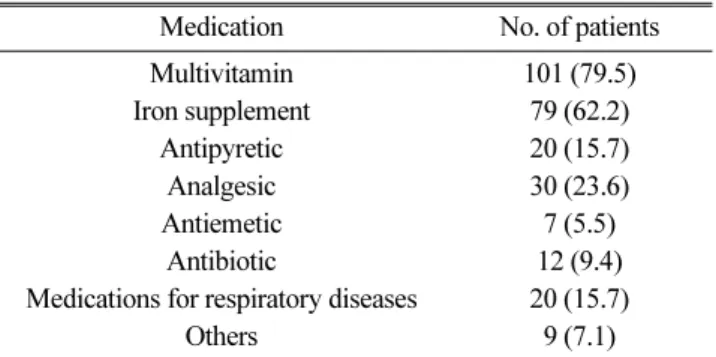
Result: A total of 127 subjects answered the questionnaire via email; the characteristics of subjects are widely varied in their ages, education levels, job statuses, and residences. The questionnaire included the intake of dietary supplements during pregnancy including vitamins and the result showed that the subjects took 2.23 dif- ferent kinds of supplements on average. In order of highest frequency, 101 subjects took multivitamins; 79 sub- jects took an iron supplement; 30 subjects took analgesics; 20 subjects took prescribed antipyretic and medication for upper respiratory diseases; 12 subjects took antibiotics; 7 subjects took antiemetics. Their compli- ances were different in each medication categories. Only 8% of subjects answered that they had asked a phar- macist for medication information during pregnancy. In addition, 78% of subjects answered that they never counseled with anyone about pregnancy related medication use. Conclusion: In conclusion, many subjects took medication including dietary supplements. The role of pharmacists should be actively developed to improve sub- ject care such as education about subject’s medication uses and their food consumption behavior.
□ Key words - Pregnancy, Medication adherent, Medication safety perception, Favorite foods
The early stages of pregnancy are critical in the devel- opment and organ formation of fetuses.1) Drugs, dietary supplements, and food intake during pregnancy can affect both the mother and the fetus. Because of this, subjects tend to avoid consuming things like coffee, alco- hol, or cigarettes due to the risks they pose during preg- nancy. However, it is very common to use recommended supplements for subject like vitamins or iron or medica- tions for minor medical conditions like infections or dys-
pepsia. In addition, the use of medications for chronic diseases including high blood pressure, depression, and thyroid disease, etc. are common during pregnancy as well. As a lot of subject are exposed to substances such as coffee, alcohol, and cigarette, etc. Continuous research is being conducted on the effects of this lifestyle on the mother and the fetus
Much research showed that providing vitamins and min- erals to subject prevents anemia and teratogenesis.
According to meta-analysis from Goh et al. (2006), the taking of multivitamins with folic acid has a positive effect in the prevention of teratogenesis, including neural tube defects.2) Research on the prevention of iron deficiency anemia from taking iron and zinc is still ongoing3) and a
Correspondence to : Ki Yon Rhew
College of Pharmacy, Dongduk Women’s University 23-1 Wolgok-dong, Seongbuk-gu, Seoul, Korea
Tel: +82-2-940-4519, Fax: +82-2-940-4159 E-mail: [email protected]
study revealed that taking iron-folic acid twice a week before childbirth significantly improves the intelligence of children at 6 months old.4) In addition, omega-3 supple- mentation reduced postpartum depression of the mother5) and calcium supplement reduced rates of bone calcium deposition.6) Due to these benefits, these supplements are recommended to many subject.
In contrast, however, negative effects of dietary sup- plements and other substances have been found in the studies. There is a study which showed that taking iron supplements increases the rates of gestational diabetes mellitus (GDM) in subjects with elevated risk of GDM.7) Also, cigarette smoking during pregnancy can result in an increase of blood lead levels and is released along with bone calcium, affecting the fetus.8) Coffee or high-cocoa-content chocolate intake stimulates fetus activities and increases uterine muscle constriction of the mother.9)
In other words, the use of drugs and other substances during pregnancy has various effects in mother and fetus. Thus it is important for pharmacists to educate mothers on the effects of food and medication on both her and the fetus and to counsel on the importance of strict adherence to dietary restrictions.
According to the review from Jamie et al. (2011), the reasons given for taking prescription drugs and other med- ications greatly varies between countries and thus, domes- tic resources on drug use, medication adherence, substance use, and subject education for drug use in pregnancy are needed.10) Unfortunately, research for subject education on drug and dietary supplement use in pregnancy is currently very limited in South Korea even though majority of sub- ject are taking these substances, including vitamins. This study was conducted domestically to analyze these factors in South Korea. The results could present medication use for pregnant women and would be beneficial in develop- ing role of pharmacists on drug and substance use for pregnant woman in South Korea.
METHOD
The survey was conducted from pregnancy-related
online communities on internet websites for six days from December 17th to December 22nd, 2012. The questionnaire was posted online on these websites targeting women who were pregnant longer than 28 weeks and the survey results were received via email for analysis. Subjects were allowed to choose multiple answers when applicable and to exclude questions that were not applicable. The unan- swered items were excluded in the analysis.
Subjects
General data of survey subjects including age, education level, occupation status, and living conditions, etc. were collected and pregnancy-related information including number of sibilings, history of miscarriage, etc. were col- lected. Health-related questions were also asked including first OB/GYN visit after pregnancy, physical exam, and regular check-up visits before pregnancy. Correlation between the collected data and medication/food intake of the subjects was analyzed.
Food and Substance Consumption in Pregnancy
Data on subjects' alcohol drinking, cigarette smoking, coffee drinking, and consumption of food containing caf- feine, etc. were collected and their frequency was ana- lyzed to show their food consumption.Perception of Medication Use and Adherence in Pregnancy
The following data were collected and analyzed if the subjects were taking medications for treatment or preven- tion of their chronic conditions: type of medication (for instance, blood pressure medication, blood sugar medica- tion, or asthma medication), medication adherence during pregnancy, medication awareness, and its potential effect on the fetus. In addition, data on compliance, safety awareness, effect on fetus, and type of drug use of the following were collected for analysis: dietary supplements including folic acid and iron, and short-term use of antibiotics, antipyret- ics, and antiemetics during pregnancy.
Food and Substance Perception and Consumption in
Pregnancy
Subject education on taking medication in pregnancy and the subjects' drug awareness were analyzed from the questionnaire including the following: types of drug that subjects think are helpful in pregnancy, subjects' ability to classify pregnancy/lactation drugs, whether the subjects have been educated on medication regard- ing pregnancy, and sources where the subjects have acquired pregnancy-related information from.
Statistical Analysis
Frequency analysis was utilized for data on the char- acteristics of the subjects and the survey results while Chi square test and Fisher's exact test were used to ana- lyze the subjects' knowledge, awareness, and adher- ence, etc. to medication. SPSS® version 20.0 software was used for analysis of all the data with two-tailed test (p-value < 0.05).
RESULT
Characteristics of Subjects
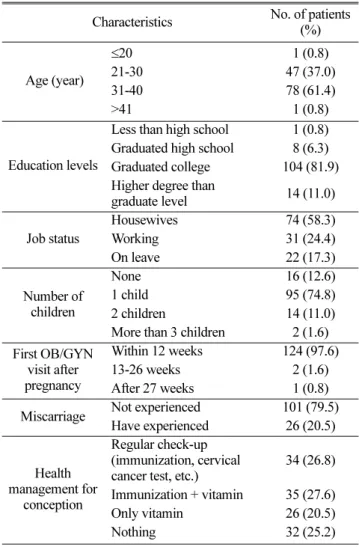
GeneralA total of 127 subjects answered the questionnaire via email from December 17th to December 22nd, 2012. Age groups of the subjects in the order of frequency were: 78 subjects (61.4%) in 31-40 years old, 47 subjects (37.0%) in 21-30 years old, 1 subject (0.8%) less than 20-year-old, and 1 subject (0.8%) over 40 years old. The education lev- els of the subjects were as follows: 104 subjects (81.9%) graduated college; 14 subjects (11%) had equivalent to or higher degree than graduate level; 8 subjects (6.3%) grad- uated high school; 1 subject (0.8%) had less than high school education level. Compared to nationwide education level data of 2008 in South Korea, the subjects are consid- ered highly educated.11) Most of the subjects were not working as 74 subjects (58.3%) were housewives; 31 sub- jects (24.4%) were working; and 22 subjects (17.3%) were on leave. The subjects resided in various cities nationwide except for Jeju-do: 37 subjects (29.1%) in Seoul, 35 sub- jects (27.6%) in Gyeonggi-do, 18 subjects in Gyeongsang- do, 13 subjects in Chungcheong-do, 12 subjects in Busan, 8 subjects in Incheon, 3 subjects in Jeolla-do, and 1 subject
in Ulsan (Table 1).
Pregnancy-related
Excluding the child the subjects were then pregnant with, 95 subjects (74.8%) answered that they have 1 child; 16 subjects (12.6%) answered they have none; 14 subjects (11%) answered they have 2 children; and 2 subjects (1.6%) answered they have more than 3 chil- dren. 101 subjects (79.5%) answered they have not experienced miscarriage while 26 subjects (20.5%) answered they have experienced miscarriage and 6 sub- jects (4.8%) among them had 2 or more miscarriages in the past. For the questions on hospital visits, 124 sub- jects (97.6%) answered they first visited OB/GYN in early stages of their pregnancy (within 12 weeks of pregnancy); 2 subjects (1.6%) answered they first vis- ited in trimester (13-26 weeks); 1 subject (0.8%) had her first visit after 27 weeks of pregnancy. 35 subjects
Table 1. General characteristics of subjects.
Characteristics No. of patients (%)
Age (year)
≤20 1 (0.8)
21-30 47 (37.0)
31-40 78 (61.4)
>41 1 (0.8)
Education levels
Less than high school 1 (0.8) Graduated high school 8 (6.3) Graduated college 104 (81.9) Higher degree than
graduate level 14 (11.0)
Job status
Housewives 74 (58.3)
Working 31 (24.4)
On leave 22 (17.3)
Number of children
None 16 (12.6)
1 child 95 (74.8)
2 children 14 (11.0)
More than 3 children 2 (1.6) First OB/GYN
visit after pregnancy
Within 12 weeks 124 (97.6)
13-26 weeks 2 (1.6)
After 27 weeks 1 (0.8) Miscarriage Not experienced 101 (79.5)
Have experienced 26 (20.5)
Health management for
conception
Regular check-up (immunization, cervical cancer test, etc.)
34 (26.8) Immunization + vitamin 35 (27.6)
Only vitamin 26 (20.5)
Nothing 32 (25.2)
(27.6%) answered they did not have a physical exam but completed immunization; 34 subjects (26.8%) regu- larly received check-ups, including cervical cancer tests; 32 subjects (25.2%) were not interested in physi- cal exam or immunization; 26 subjects (20.5%) had immunization for pregnancy and were taking vitamins even though they had not had a physical exam. The results show that most of the subjects were interested in pregnancy and health. (Table 1)
Food and Substance Perception and Consumption in Pregnancy
95 subjects (74.8%) answered they did not drink alco- hol during pregnancy; 18 subjects (14.2%) consumed alcohol 1-2 times during pregnancy while 14 subjects (11%) who answered had 3-5 alcoholic drinks. However, none had more than 6 drinks of alcohol. All 127 subjects had no cigarette smoking experience during their preg- nancy. Regarding coffee intake, 56 subjects (44.1%) answered they occasionally had 1 cup of coffee per day (intermittent dose); 43 subjects (33.9%) had 1-2 cups per day; 22 subjects did not drink coffee at all. None answered they had more than 3 cups of coffee per day and 6 subjects did not answer the question. The subjects were also asked where they consumed caffeine-contain- ing drinks other than coffee (green tea, black tea, choco- late, etc.). 83 subjects (65.4%) answered they try to avoid caffeine intake; 41 subjects (32.3%) answered they do not care; 2 subjects (1.6%) answered they never had caf- feine intake; 1 subject (0.8%) did not answer. (Table 2)
Perception of Medication Use and Adherence in Pregnancy
According to the survey results, 120 subjects (94.5%) were taking no medication for the treatment of previ- ously present chronic conditions and only 5 subjects did; 2 subjects (1.6%) did not answer the question.
Among the 5 subjects who were taking medications for chronic medical conditions, 3 subjects (2.4%) were tak- ing them for allergic rhinitis; 1 subject (0.8%) was tak- ing a steroid; 1 subject (0.8%) was taking prescription diet medicine. Among the 5 subjects (4.0%) who were
taking medications, adherence was less than 40% dur- ing pregnancy in 4 subjects (3.2%) while only 1 subject answered greater than 80% of adherence during preg- nancy. 4 subjects commented that "it is possible that medication use can negatively affect the fetus but as long as I am taking as directed by doctor or pharmacist, I think it is safe" while 2 subjects commented that they are worried the medication use might affect the fetus.
The questionnaire included dietary supplement intake during pregnancy including vitamins and the result showed that the subjects had taken 2.23 different kinds of supplements on average. In order of highest fre- quency, 35 subjects (27.6%) took 2 kinds of supple- ments; 24 subjects (18.9%) took 3 kinds; 23 subjects took 1 kind of supplement; 20 subjects (15.7%) did not take any kind of supplement; 11 subjects took 4 differ- ent kinds; 10 subjects (7.9%) took 5 kinds; 4 subjects (3.1%) took 6 kinds of supplements (Table 3).
A total of 101 subjects (79.5%) answered they have taken multivitamins including folic acid and 72 subjects self-reported that they were greater than 80% adherent;
12 subjects were 60-79% adherent; 9 subjects were less than 40% adherent; and 8 subjects were 40-59% adher- ent. 82 subjects answered that vitamins and dietary sup- Table 2. Characteristics of food and substance consumption in pregnancy.
Food and Substance Consumption behavior No. of patients (%)
Alcohol in pregnancy
not drinking 95 (74.8) 1-2 times 18 (14.2) 3-5 times 14 (11.0) more than 6 times 0 (0.0) Cigarette smoking smoking 0 (0.0)
no smoking 127 (100.0)
Coffee (cups/day)
not drinking 22 (17.3) less than 1 56 (44.1) 1-2 cups 43 (33.9) more than 3 cups 0 (0.0)
None answered 6 (4.7)
Foods contains caffeine
never had
caffeine intake 2 (1.6) try to avoid
caffeine intake 83 (65.4) do not care 41 (32.3) None answered 1 (0.8)
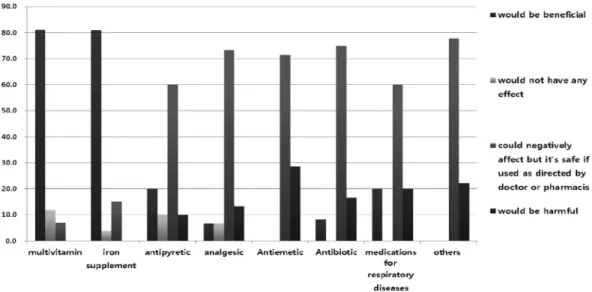
plements would be beneficial to both the mother and the fetus; 12 subjects answered they would not have any effect while 7 people answered that supplements could negatively affect the fetus but they are safe if used as directed by doctor or pharmacist (Fig. 1, Fig. 2).
In order of highest frequency, 79 subjects (62.2%) answered they were taking iron supplements and 54 subjects were greater than 80% adherent; 11 subjects were 60-79% adherent; 8 subjects were less than 40%
adherent; 6 subjects were 40-59% adherent. For the question on the safety of iron supplement use, 64 sub- jects answered that it has a positive effect for both the mother and the fetus while 12 subjects answered it could be harmful to the fetus but it is safe if used as directed by the doctor or pharmacist. 3 subjects answered they think it has no effect on either the mother or the fetus (Fig. 1, Fig. 2).
A total of 20 subjects (16%) have taken prescribed
antipyretics for fever and among these subjects, 6 sub- jects had 40% adherence; 6 subjects had 40-59% adher- ence; 6 subjects had greater than 80% adherence; 2 subjects had 60-79% adherence. In addition, among the subjects who have taken antipyretic, 12 subjects answered that it may be harmful to the fetus but it is safe if used as directed by doctor or pharmacist; 4 sub- jects answered they think it has positive effect and 2 subjects answered it is safe and has no effect while 2 subjects think it is harmful to the fetus and extremely concerned (Fig. 1, Fig. 2).
The use of analgesics for headache or pain was found in 30 subjects and 14 subjects answered they avoided the use as much as possible and had less than 40%
adherence. 9 subjects had greater than 80% adherence;
5 subjects had 46-59% adherence and 2 subjects had 60-79% adherence. A majority of the subjects had less than 60% adherence but 22 subjects commented that they think it could have negative effect on fetus but it is safe if taken as directed by doctor or pharmacist. 4 sub- jects commented that the use of analgesic will be harm- ful to fetus and 2 subjects answered that it has no effect. Also, 2 subjects answered that it has a positive effect (Fig. 1, Fig. 2).
Antiemetic use due to morning sickness during preg- nancy was discovered only in 7 subjects and 4 subjects among them had less than 40% adherence; 2 subjects had greater than 80% adherence while 1 subject had 40-59%
Table 3. Medication use in Pregnancy.
Medication No. of patients
Multivitamin 101 (79.5)
Iron supplement 79 (62.2)
Antipyretic 20 (15.7)
Analgesic 30 (23.6)
Antiemetic 7 (5.5)
Antibiotic 12 (9.4)
Medications for respiratory diseases 20 (15.7)
Others 9 (7.1)
Fig. 1. Compliance of each medication categories in pregnancy.
adherence, showing different characteristics among the subjects. 5 subjects commented that it is safe to use an antiemetic if taken as directed by a doctor or pharmacist; 2 subjects commented that they are extremely concerned as it may be harmful to fetus (Fig. 1, Fig. 2).
Antibiotic use during pregnancy was found in 12 sub- jects and 4 of the subjects were 80-89% adherent and 2 subjects were 60-79%, 40-59%, and less than 40%
adherent, respectively. 9 subjects commented that the use of antibiotic may have negative effects to fetus but it is safe to use if taken as directed by doctor or phar- macist. 2 subjects commented that it will be harmful to the fetus while 1 subject thought it has no effect. The rate of adherence greatly varied but it was discovered that a majority trusted medical teams and think the use of the medication is safe as long as directed by doctor (Fig. 1, Fig. 2).
The use of medications for respiratory diseases and cold was found in 20 subjects and 8 subjects had adher- ence of greater than 80%; 4 subjects were 60-79%, 40- 59%, less than 40%, respectively. 12 subjects answered that the use is safe if taken as directed; 4 subjects com- mented that it has positive effects on both the mother and the fetus; 4 subjects answered the use is harmful. It was discovered that safety awareness and adherence are not much correlated (Fig. 1, Fig. 2).
In addition to previously discussed medications, 9 subjects have taken other medications for indigestion, rhinitis, etc. and 5 subjects were less than 40% adher- ent; 4 subjects were greater than 80% adherent, respec- tively. 7 subjects have commented that the use is safe if taken as directed and 2 subjects answered it has posi- tive effects in both the mother and the fetus.
Subject Education on Medication Use in Pregnancy
The following were the results from the questionnaire given to the subjects regarding helpful supplements in pregnancy (multiple answers were allowed): 125 subjects (98.4%) answered prenatal vitamin; 125 subjects (98.4%) answered iron; 73 subjects (53.5%) answered calcium; 68 subjects (53.5%) answered omega-3. In addition, 99 sub- jects answered they were never educated on pregnancy- related medication use while only 22 subjects answered that they were. 6 subjects chose not to answer. Subjects were also questioned on where they usually acquire preg- nancy-related information and 59 subjects answered from their doctor; 50 subjects answered from the web; 21 sub- jects answered from their acquaintances. Only 10 subjects answered that they ask a pharmacist and 1 subject answered that they asked a nurse for information. As shown from the results, the role of the pharmacist is very low as a resource of pregnancy-related information.Fig. 2. Perception of safety about each medication categories in pregnancy.
Correlation in Characteristics of Subjects with Food and Medication Intake
The population of this study was not large enough to confirm a correlation in characteristics of the subjects with rates of food and substance intake or medication use.
DISCUSSION
Many researchers have revealed that approximately 20-50% of subject take prescription drugs other than vitamins in their early pregnancy12-14) and they take 13.6 different types of medication on average.15) In a study conducted on women who were pregnant for more than 22 weeks, it was discovered that 53.8% had started OB/GYN visits in their early pregnancy. In con- trast, most subjects (97.6%) in South Korea had seen the doctor in the early stages of their pregnancy. Also, it was found that interest in healthcare before pregnancy was also high. As this article was based on the ques- tionnaire conducted online, the population of the research consists of the subjects with high interest in pregnancy and those who were willing to gain informa- tion on pregnancy.
From previous research on medication use in preg- nancy, 28 types of medication in average were used in pregnancy and 55.1% were prescribed an antiemetic16) However, from this research, it was found that subject in South Korea take 2.23 types of medications on average and the rate of antiemetic use during pregnancy was 5.5%, which is extremely low compared to other coun- tries. The result can be explained from a cultural aspect of South Korea. People tend to have more negative thoughts on the use of medications during pregnancy than western countries and especially, morning sickness is not considered a medical condition that requires treat- ment due to a lack of awareness of the disease. In addi- tion, as alternative medicines including acupuncture are very commonly used to reduce morning sickness rather than pharmaceutical treatment, the rate of pharmaceutical treatment for morning sickness is low compared to west- ern countries.
According to the results from previously available
research, adherence of mineral supplements were gener- ally low compared to prescription medications,17) but from the results of the questionnaire conducted, it was found that adherence to vitamin supplements was high compared to prescription drugs. From the same study, 26.5% of subjects have taken prescription drug during their pregnancy including 8.3% who have taken anti- emetic, and 7.8% who took it for chronic respiratory dis- eases. However, only 7.2% of the subjects used vitamins or dietary supplements. In contrast, the results from the questionnaire showed 79.5% of the subjects using sup- plements including folic acid and iron supplement use was also high as 62.2% of the subjects were taking it.
From a study conducted in Demark, 82% of subject knew the benefits of folic acid in pregnancy and 51% of the subjects were taking the recommended dose of folic acid from the Department of Health in Denmark. As it was statistically significant that subjects with higher edu- cation levels had more knowledge on folic acid supple- ments, had higher rate of folic acid use, and were aware of the recommended dose as well,18) it can be concluded that the subjects in South Korea from this study had high rate of adherence to folic acid or iron supplements intake due to their higher education level than the average.
There are studies available which showed that one of the possible factors that affect medication adherence during pregnancy is tablet size.19-20) A limitation of this study was that the questionnaire did not include factors that affect medication adherence, thus the causes of lower adherence in prescription drugs than supplements could not be analyzed. However, as results showed that subjects' trust of healthcare professionals was high, it is important to conduct more studies in order to find causes of low medication adherence and to improve adherence.
According to a study conducted in Geneva in 2008,21) 21.7% of the subjects have smoked cigarettes once dur- ing pregnancy and 9.2% continued smoking until giving birth but from this study, none of the subjects answered that they smoked cigarette in pregnancy. This result can also be explained by cultural aspects of South Korea.
People are more conservative in women smoking ciga-
rettes, especially subject, compared to western cultures.
Also, a lower rate of alcohol use was discovered in this study compared to studies conducted in other countries.
From the study in Geneva, 36.3% of the subject answered that they consumed alcohol during pregnancy but from this study 25.2% of the subjects had alcohol drinks in pregnancy. Continuous study on the effect of alcohol during pregnancy on the health of the child is being conducted but the following risks were shown:
premature birth or miscarriage, development of ADHD in childhood, and reduced neurological development of the child.22-23)
Data on effect of caffeine consumption to the mother and the fetus during pregnancy are not well established but education on the food and substances including caf- feine are critical. Therefore, education on not only med- ication use in pregnancy but also food or substance use including alcohol and cigarettes is extremely important.
Additionally, the results from this studied showed that 80.0% of the subjects have never been counseled or educated on medication use in pregnancy and only 8%
asked pharmacist for information.
CONCLUSION
The results from this study revealed that a majority of subject in South Korea use multivitamins, supplements including iron, and prescription drugs. Surprisingly, adherence of prescription medications was lower than vitamins or dietary supplements and subject education on medication use in pregnancy was lacking and not effec- tively done. For the future medication monitoring or edu- cation on food and medication in pregnant woman, the role of pharmacists should be actively developed to improve subject care. In addition, various methods of increasing medication adherence should be studied for effective treatment in pregnancy.
ACKNOWLEDGEMENT
This study was supported by the Dongduk Women's University Grant.
REFERENCES
1. Sadler TW. Langman’s medical embryology. 10th ed.
Baltimore: Lippincott Williams and Wilkins; 2006.
2. Goh YI, Bollano E, Einarson TR, et al., Prenatal multivitamin supplementation and rates of congenital anomalies: a meta-analysis. J Obstet Gynaecol Can 2006;
28(8): 680.
3. M Saaka. Combined Iron and Zinc Supplementation Improves Haematologic Status of Subject in Upper West Region of Ghana. Ghana Med J 2012; 46(4): 225-33.
4. Hanieh S, Ha TT, Simpson JA, et al., The effect of intermittent antenatal iron supplementation on maternal and infant outcomes in rural viet nam: a cluster randomised trial.
PLoS Med 2013;10(6): e1001470. doi: 10.1371/journal.
pmed.1001470. Epub 2013 Jun 18
5. Mozurkewich E, Chilimigras J, Klemens C, et al., The mothers, Omega-3 and mental health study. BMC Pregnancy Childbirth 2011; 11: 46. doi: 10.1186/1471-2393-11-46.
6. O'Brien KO, Donangelo CM, Ritchie LD, et al., Serum 1,25-dihydroxyvitamin D and calcium intake affect rates of bone calcium deposition during pregnancy and the early postpartum period. Am J Clin Nutr 2012; 96(1):
64-72.
7. Chan KK, Chan BC, Lam KF, et al., Iron supplement in pregnancy and development of gestational diabetes-a randomised placebo-controlled trial. BJOG 2009;116(6):
789-97.
8. Chelchowska M, Jab³onka-Salach K, Ambroszkiewicz J, et al., Effect of cigarette smoking on blood lead levels in subject. Med Wieku Rozwoj 2012;16(3):196-204.
9. Buscicchio G, Piemontese M, Gentilucci L, et al., The effects of maternal caffeine and chocolate intake on fetal heart rate. J Matern Fetal Neonatal Med 2011; 25(5): 528- 530.
10. Jamie R Daw, Prescription drug use during pregnancy in developed countries: a systematic review. Pharmacoepidemiol Drug Saf 2011; 20(9): 895-902.
11. Statistics Korea. http://kostat.go.kr (Last accessed on April 22, 2013)
12. Andrade SE, Gurwitz JH, Davis RL, et al., Prescription drug use in pregnancy. Am J Obstet Gynecol 2004;
191(2): 398-407.
13. Olesen C, Sorensen HT, de Jong-van den Berg LTW, et al., Prescribing during pregnancy and lactation with reference to the Swedish classification system: a population-based study among Danish women. Acta Obstet Gynecol Scand 1999;
78(8): 686-92.
14. Olesen C, Steffensen FH, Niesen GL, et al., Drug use in first pregnancy and lactation: a population-based survey among Danish women: the EUROMAP group. Eur J Clin Pharmacol 1999; 55(2): 139-44.
15. Lacroix I, Damase-Michel C, Lapeyre-Mestre M, et al., Prescription of drugs during pregnancy in France. Lancet 2000; 356: 1735-6.
16. Oliveira FA, Gama DP, Leopardi Md, et al., Self-reported adherence to prescribed medicines during pregnancy. Rev Bras Ginecol Obstet 34(4):147-52.
17. Sawicki E, Stewart K, Wong S, et al., Medication use for chronic health conditions by subject attending an Australian maternity hospital. Aust N Z J Obstet Gynaecol 2011; 51(4):
333-8.
18. Rasmussen MM, Clemmensen D. Folic acid supplementa- tion in subject. Dan Med Bull 2010; 57(1): A4134.
19. Nguyen P, Nava-Ocampo A, Levy A, et al., Effect of iron content on the tolerability of prenatal multivitamins in pregnancy. BMC Pregnancy Childbirth 2008; 15(8):
17-24.
20. Koren G, Pairaideau N. Compliance with prenatal vitamins.
Subjects with morning sickness sometimes find it difficult.
Can Fam Physician 2006; 52(11): 1392-3.
21. Dupraz J, Graff V, Barasche J, et al., Tobacco and alcohol during pregnancy: prevalence and determinants in Geneva in 2008. Swiss Med Wkly 2013; 25: 143-150.
22. Jagielska I, Kazdepka-Ziemiñska A, Stankiewicz M, et al., Alcohol-woman, pregnancy and a newborn child.
Przegl Lek 2012; 69(10): 1108-10.
23. de Zeeuw P, Zwart F, Schrama R, et al., Prenatal exposure to cigarette smoke or alcohol and cerebellum volume in attention-deficit/hyperactivity disorder and typical develop- ment. Transl Psychiatry 2012; 2: 84-92.