• 검색 결과가 없습니다.

Change of eye position in patients with orthophoria and horizontal strabismus under general anesthesia

N/A
N/A
Protected

Academic year: 2021

Share "Change of eye position in patients with orthophoria and horizontal strabismus under general anesthesia"

Copied!
7
0
0

로드 중.... (전체 텍스트 보기)

전체 글

(1)

Vol. 19:55-61, 2005

Change of Eye Position in Patients with Orthophoria and Horizontal Strabismus under General Anesthesia

Hee Chan Ku, MD

1

, Se-Youp Lee, MD

2

, Young Chun Lee, MD

1

Department of Ophthalmology, Uijongbu St. Mary's Hospital, College of Medicine, The Catholic University of Korea

1

, Seoul, Korea

Department of Ophthalmology, Dongsan Medical Center College of Medicine, Keimyung University of Korea

2

, Deagu, Korea

We studied the relationship between eye position in the awakened state and in the surgical plane of anesthesia in orthophoric and horizontal strabismus patients. We classified 105 orthophoric and horizontal strabismus patients into 5 groups, measured the eye position at the primary position by photographic measurement of the corneal reflex positions and undertook a quantitative study of eye position. Under general anesthesia, the mean divergence was 39.7±8 PD for the esotropia group, 36.6

±11.7 PD for exophoria, 27.4±8.1 PD for orthophoria, and 11.1±10.2 PD for exotropia I (≤30 PD). Therefore, the esotropia group had the largest amount of divergence among the groups, but the eye position of the exotropia II (>30 PD) group was rather convergent at 11.0±6.5 PD. According to the eye position of the fixating and nonfixating eyes in the esotropia group, both eyes converged with an angle deviation of 14.4±4.8 PD divergent and 14.1±4.8 PD divergent, respectively (P=.71).

In the exotropia groups (I, II), the fixating eye diverged but the nonfixating eye rather converged.

Therefore, the angle deviation was 19.0±2.1 PD divergent for the fixating eye and 18.2±6.4 PD divergent for the nonfixating eye (P=.68). In conclusion, under general anesthesia, eye positions in the awakened state and in the surgical plane of anesthesia were convergent or divergent, and showed a tendency to converge into the position of 25-35 PD divergent. Therefore, we could not distinguish fixating eye from nonfixating eye under general anesthesia.

Key words: Converge, Diverge, Photographic measurement

Reprint requests to Young Chun Lee, MD. Department of Ophthalmology, Uijongbu St. Mary's Hospital, College of Medicine, The Catholic University of Korea, #65-1 Kumoh-dong, Uijongbu-si, Gyeonggi-do 480-130, Korea. Tel: 82-31-820-3110, Fax: 82-31-847- 3418, E-mail: [email protected]

This study was presented at the 89

th

Annual Meeting of the Korean Ophthalmological Society, April, 2003 and as a poster at the ARVO Annual meeting, 2004, Florida, USA.

A part of the printing expenses of this study was supported by the Catholic Medical Center, Seoul, Korea.

Generally, eye position after general anesthesia in orthophoria and strabismus has been reported to be divergent.

1-8

In 1890, Grut

1

reported that eye position during sleep, death, blindness, and after anesthesia is divergent, and in 1958 Moller

2

measured the change of eye position after ether anesthesia. Subsequently, numerous studies have

reported the eye position after general anesthesia in

strabismus and orthophoria patients, and even the correlation

of eye position after general anesthesia has been reported. In

Korea, it has been reported by Lee et al

3

, Kim et al

4

, An et

al

5

, and Lim et al

6

in strabismus patients, and by Lee and

Kim

7

on orthophoria. In these studies, eye position was

measured during the awakened state by the alternative prism

cover test, and after general anesthesia the squint angle was

measured by Hirschberg or Krimsky prism test. Therefore,

the shortcoming of these studies is the lack of objectivity in

the comparison of eye position between before and after

anesthesia. However, in 1987 Brodie

27

applied Hirschberg to

enumerate the evaluation of eye position by taking the

pictures of the front view and quantitatively measuring the

corneal reflex position. This method is known to be more

(2)

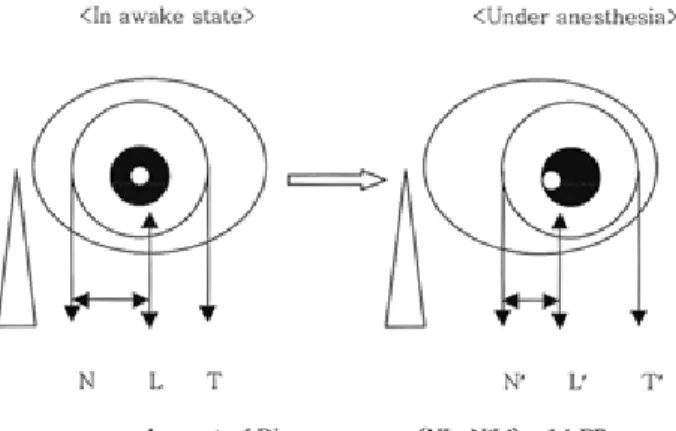
Fig. 1. Schematic illustration of eye position in both the awakened state and the surgical plane of anesthesia.

objective for evaluating eye position and has been reported in Korea by Lee and Lee.

26

In our study, pictures of horizontal strabismus patients and orthophoria individuals in the awakened state and under general anesthesia were taken by digital camera, the corneal reflex position was assessed by measuring the distance based on the nasal limbus, and the change of the monocular position was also measured by distinguishing between the fixating and nonfixating eyes. In addition, it was examined whether the eye position during the awakened state correlated to that under general anesthesia. Further investigation included the change of the position of both eyes in orthophoria, and the change of the position of both nonfixating and fixating eyes in strabismus patients.

MATERIALS AND METHODS

The study was performed from August 2002 to March 2003 on 30 patients with orthophoric eye position, 30 exophoria patients who underwent surgery for horizontal strabismus, 30 exotropia patients, and 15 esotropia patients (total 105 patients). Patients with a history of extraocular muscle surgery, neurological diseases, and accompanied vertical strabismus were excluded from the study population.

The age distribution was from 4 years to 38 years with a mean age of 12.5 years.

The squint angel was measured one day prior to surgery by asking the patients to stare at the focus of the camera at 40 cm distance in front, placing a ruler on the forehead, and taking pictures. At the time of photography, the corneal

reflex was almost on the center of the cornea of orthophoria and exophoria (intermittent exotropia), that of the fixating eye was on the center of the cornea and that of the nonfixating eye was skewed from the center of the cornea to the nasal limbus in exotropia patients, whereas in esotropia patients that of the fixating eye was in the center of the cornea and that of the nonfixating eye was skewed from the center of the cornea to the lateral limbus.

Anesthesia was induced after the inhalation of oxygen by administering 5 mg/Kg pentobarbital and 1 mg/Kg succinyl- choline, after which endotracheal intubation was performed.

Anesthesia was subsequently maintained by carbon dioxide and oxygen, and 20-30 minutes after anesthesia the muscle relaxant vecuronium (0.1 mg/Kg) was administered, and eye position was measured. The eye position under general anesthesia was measured by placing a ruler on the spot 40 cm vertically above the glabella of the patient, and taking pictures by digital camera.

The calculation of the squint angle was measured by defining the middle of the nasal limbus and lateral limbus as the center of the cornea, the reflex spot on the cornea was determined. Subsequently, in the orthophoria group, the distance from the center of the cornea and the corneal reflex was measured, whereas in the strabismus eyes, the distance from the nasal limbus to the corneal reflex was subtracted from half of the corneal diameter, and the difference before and after anesthesia was calculated by the difference of the distance from the nasal limbus to the corneal reflex spot.

The results in millimeters were multiplied by 14 according to the conventional conversion rate of 14 Prism diopter/

mm,

14

and taken as the squint angle. In all calculations, the right and left eyes were calculated separately and subsequently added (Fig. 1).

Statistical analysis was performed using SPSS 11.5, the mean value within each group was compared by t-test and Mann-Whitney test, the mean value among each group was compared by Kruskal-Wallis one-way ANOVA, and p value less than 0.05 was considered statistically significant.

RESULTS

In the orthophoria group, the eye position before anesthesia was 3.9±3.5 PD and after anesthesia was 31.4±

7.6 PD, giving a divergence of 27.4±8.1 PD. In the

exotropia group, before anesthesia was 5.6±3.5 PD and

(3)

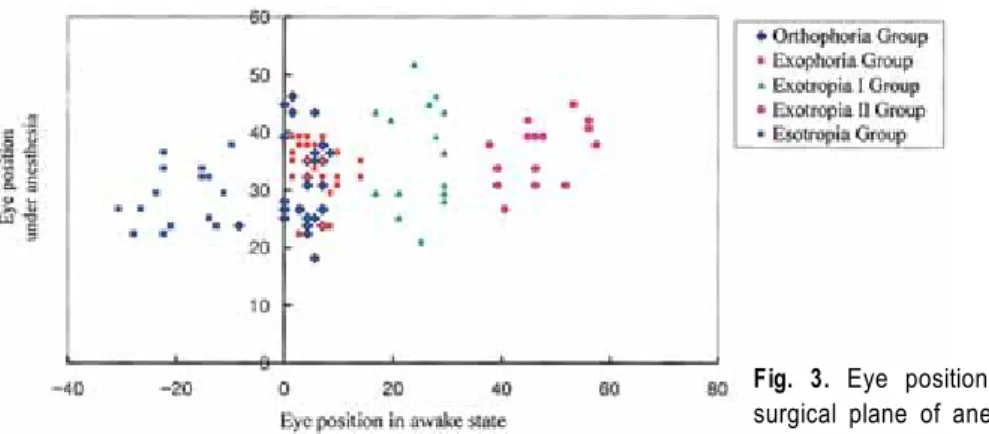
Fig. 2. Eye position in both the awakened state and the surgical plane of anesthesia.

Eye position in awakened state

Eye position under anesthesia

Amount of divergence Orthophoria group (N=30)

Exophoria group (N=30) Exotropia I group (N=15) Exotropia II group (N=15) Esotropia group (N=15)

- 3.9±3.5 PD - 5.6±3.5 PD -24.9±4.7 PD -47.1±6.5 PD -17.9±6.4 PD

31.4±7.6 PD 34.0±4.6 PD 36.0±9.1 PD 36.6±5.2 PD 21.8±7.5 PD

-27.4±8.1 PD -36.6±11.7 PD -11.1±10.2 PD -11.0±6.5 PD -39.7±8.0 PD

P=.000* P=.006*, P=.137

(+: Divergence, -: Convergence)

*Multiple comparison between 5 groups,

Multiple comparison between 4 groups with the esotropia group excluded.

(Statistics by Kruskal-Wallis one-way ANOVA).

Table 1. Eye position in both the awakened state and the surgical plane of anesthesia after anesthesia was 34.0±4.6 PD, giving a divergence of

36.6±11.7 PD. Among the 30 orthophoria patients, 29 cases showed positive angle kappa, and 1 (3.33%) showed negative angle kappa.

In the exotropia group, dependent on the degree of strabismus during the awakened state, a tendency toward changing eye position to different directions after anesthesia was detected. In exotropia under 30 PD (exotropia I group), it was primarily divergent after anesthesia, while in exotropia over 30 PD (exotropia II group), a convergent tendency was detected. In the exotropia I group, before anesthesia was 24.9±4.7 PD and after anesthesia was 36.0

±9.1 PD, giving a divergence of 11.1±0.2 PD. In the exotropia II group, before anesthesia was 47.1±6.5 PD and after anesthesia was 36.6±5.2 PD, giving a convergence of 11.0±6.5 PD. In addition, in the esotropia group, the convergence was 39.7±8.0 PD, from before anesthesia of 17.9±6.4 PD to after anesthesia of 21.8±7.5 PD, that was the largest among the 5 groups. The exotropia II group had a convergence of 11±6.5 PD. There was no statistically significant difference among the 4 groups after the esotropia

group was excluded (P=0.137). However, there was a significant difference among all 5 groups (P=0.006), although since nonparametric tests were performed, post-hoc tests could not be performed. Finally, in all orthophoria and horizontal strabismus patients, the eye position after general anesthesia showed a divergent tendency of 25-35 PD (Table 1 and Figs. 2 and 3).

In the orthophoria group, before anesthesia the right eye was 0.2±0.1 PD and the left eye was 0.3±0.1 PD, and after anesthesia it was 13.6±6.6 PD and 13.6±5.0 PD, giving divergences of 13.4±6.5 PD and 13.3±4.9 PD, respectively. The difference of divergence between the two eyes was not significant (P=0.45) (Table 2).

In the exotropia group, measuring the fixating and nonfixating eyes separately, before anesthesia the fixating eye was 1.7±3.6 PD and the nonfixating eye was 34.3±

12.9 PD, with the difference between the two eyes being

significant (P<0.01). After anesthesia, the fixating eye

showed divergence of 17.3±5.7 PD and the nonfixating eye

showed convergence of 16.1±6.5 PD, and the divergent

position of the fixating eye was 19.0±2.1 PD and of the

(4)

Right eye Left eye P-value Eye position in awakened state

Eye position under anesthesia Amount of divergence

0.2±0.1 PD 13.6±6.6 PD 13.4±6.5 PD

0.3±0.1PD 13.6±5.0PD 13.3±4.9PD

0.34*

0.45*

(+: Divergence, -: Convergence)

*Statistics by t-test.

Table 2. Change of eye position of the right and left eyes in the orthophoria group (N=30)

Fixating eye Nonfixating eye P-value

Eye position in awakened state Eye position under anesthesia Amount of divergence

1.7±3.6 PD 19.0±2.1 PD 17.3±5.7 PD

-34.3±12.9 PD -18.2±6.4 PD -16.1±6.5 PD

<0.01*

0.68*

(+: Divergence, -: Convergence)

*Statistics by t-test.

Table 3. Change of eye position of the fixating and nonfixating eyes in the exotropia group (N=30)

Fixating eye Nonfixating eye P-value

Eye position in awakened state Eye position under anesthesia Amount of divergence

-1.6±4.7 PD 14.4±4.8 PD 20.0±4.8 PD

-17.7±0.9 PD 14.1±4.8 PD 31.8±8.9 PD

<0.01*

0.71*

(+: Divergence, -: Convergence)

*Statistics by Mann-Whitney test.

Table 4. Change of eye position of the fixating and nonfixating eyes in the esotropia group (N=15)

nonfixating eye was 18.2±6.4 PD, with the difference between the two eyes not being statistically significant (P=

0.68) (Table 3).

In the esotropia group, before anesthesia, the fixating eye was -1.6±4.7 PD and the nonfixating eye was -17.7±0.9 PD, and similar to the result for exotropia, the difference between the two eyes was statistically significant (P<0.01).

After anesthesia, the divergence of the fixating and nonfixating eyes was 20.0±4.8 PD and 31.8±8.9 PD,

respectively. In the divergent position, the fixating eye was 14.4±4.8 PD and the nonfixating eye was 14.1±4.8 PD, with the difference between the two eyes not being statistically significant (P=0.71) (Table 4).

DISCUSSION

It is known that even the eye position that showed

orthophoric position during the awakened state changed to

Fig. 3. Eye position in both the awakened state and the

surgical plane of anesthesia.

(5)

various positions after general anesthesia. In 1890, Grut

1

reported that during sleep, death, blindness, and after anesthesia, the eye position was divergent, and thus the anatomical position of the eye at the resting state was divergent. Brenin

8

reported that the eye position during anesthesia is divergent, and Cattel

9

that the eye position after death is diverse and not always divergent. Moses

10

reported that after anesthesia, the eye was centrally positioned, and Moller

2

reported that the squint angle was reduced in esotropia patients following the administration of morphine or atropine during general anesthesia. Recently, in Korea, it has been reported that the eye position after anesthesia generally showed a divergent tendency.

3-7

Regarding the cause of this divergence of eye position after general anesthesia, Burford

11

reported that after general anesthesia, the tension of the extraocular muscle was lost and the action potential did not appear. Brenin

8

reported that after general anesthesia, the slowdown and blocking of the neurotrans- mission to the extraocular muscles occurred and thus the eye was in the anatomically resting position, and at that time, due to the anatomical morphology of the orbital structure, the eyes became divergent. Worth and Chavasse

12

reported that this was due to the residual divergence of the orbital axis that occurred during anesthesia.

In regard to the eye position after general anesthesia, Apt and Isenberg

19

reported that the divergence was 11.9 PD in exotropia and 43.1 PD in esotropia in 317 strabismus patients, and Romano and Gabriel

20

that 66 patients showed divergence, and 9 showed no change in 77 strabismus patients. Lee et al

3

reported that all 42 study subjects showed divergence, with a divergence of 13.1 PD in exotropic patients and 22.7 PD in esotropic patients. In exotropia patients, as the strabismus angle before anesthesia was smaller, and in esotropia patients, as the squint angle before anesthesia was larger, the divergence of the eye was larger during general anesthesia. Ohmi et al

21

reported that in 62 exotropia patients, 60 showed divergence and 2 showed no change, and that in 80 exotropia patients, 57 showed divergence, 17 showed convergence, and 6 showed no change. Mitsui et al

22

reported that among 10 esotropia patients, 9 showed divergence and 1 showed convergence. In Korea, Lim et al

6

reported that all 27 esotropia patients showed divergence, and that in 140 exotropia patients, 6 showed divergence, 107 showed convergence 27 showed no change. In our study, orthophoria, exotropia, and esotropia

showed divergence during general anesthesia; however, among exotropia patients, the group over 30 PD showed convergence. The cause is that in this esotropia II group, as the fixating eyes showed divergence and the nonfixating eyes showed convergence, the sum of the fixating and nonfixating eyes showed convergence. In addition, measuring the divergence of the right and left eyes in orthophoria patients separately, the eye positions were not different (P=

0.45). In the exotropia and esotropia groups, the differences between fixating and nonfixating eyes were not detected, which suggests that regardless of the presence of strabismus, the resting state of the fixating and nonfixating eyes is defined, and that it is not different between the two eyes unless the orbital bony structure is asymmetric. Hence, as described by Duke-Elder,

24

the eye after anesthesia is switched to the absolute resting state of the eye that does not reflect the type and degree of strabismus as well as the dominant eye in the awakened state, and they converged at the position of 25~35 PD. Hence, since the degree of deviation of the orbit during the awakened state is not reflected in the eye position after general anesthesia, it appears that the eye position after general anesthesia is not a factor to be considered for the determination of the eye to be operated on, the surgical method, or the surgical degree.

On the other hand, in esotropia, the divergence rate after general anesthesia was larger than that of the other groups.

However, the eye position after anesthesia was more to the medial side than in the other groups because the neuro- transmission of the medial rectus muscle is bigger than that of the lateral rectus muscle, the tension relaxation of the extraocular muscles is not sufficient, and neurotransmission of the medial rectus muscle remains. Therefore, due to the excess neurotransmission of the medial rectus muscle for a long period, the ratio of the medial rectus muscle fiber against the lateral rectus muscle becomes unbalanced, and thus the tension of the lateral rectus muscle is relaxed sufficiently while a portion of the medial rectus muscle is not relaxed, which may cause the insufficient divergence.

Different from the eye position measurement during the

awakened state, the eye position after general anesthesia was

measured by Hirshberg or Krimsky prism test method in the

studies reported so far.

5,6,19,20

However, in our study, the

squint angle was measured by applying the pictures of the

eye position taken by digital camera both during the

awakened state and after general anesthesia. The reasons

(6)

were that first, the error due to the difference in measuring method could be reduced by standardizing the method for eye position measurement both during the awakened state and after general anesthesia, second, in the measurement of the squint angle after general anesthesia by applying Krimsky prism tests, the location of the corneal reflex on the center of the cornea was confirmed by the estimation of the investigators and thus the measurement error may have been substantial, third, the separate measurement of the eye position of the right and left eyes was feasible because the change of the eye position of the right and left, fixating and nonfixating eyes could be evaluated independently, and fourth, the angle kappa could be measured. Hence, for distinguishing between strabismus and phoria, although using the Hirshberg method and digital photography for the measurement is less accurate than the alternative prism cover test, it is advantageous in terms of providing a uniform measurement method for the eye position.

In our study with the eye position measurement based on the corneal reflex, the distance from the nasal limbus to the corneal reflex was measured. The eye position measurement by corneal reflex consists of two methods: one based on the corneal nasal limbus and the other based on the center of the pupil. Barry and Backes

25

reported that the former method is more accurate than the latter method because it is difficult to determine the accurate center of the pupil with the pupils skewed on pictures, and because the measurement based on the center of the pupil requires the conversion of other values. In our study, the center of the pupil was difficult to determine in many cases, and in the eyes with severe deviation the distance from the center of the pupil to the corneal reflex measured photographically was shorter than the actual distance, producing a larger error. Therefore, the distance based on the nasal limbus of the cornea was measured. The length actually measured was converted by the Hirschberg ratio, 14 PD/mm, which is based on the report by Hirschberg in 1886

18

indicating that 1 mm represents 8° deviation. Subsequently, several investigators have reported slightly different values, and recently Brodie

27

reported the deviation of 21 PD per mm. In Korea, Lee and Lee

26

reported the deviation of 15.2 PD per mm.

In all orthophoria patients under the awakened state except one, the corneal reflex was in the medial side of the center of the cornea. The case with the corneal reflex on the lateral side was confirmed to be negative angle kappa. In the

orthophoria group, the average distance from the center of the cornea to the corneal reflex was positive, 3.9±3.5 PD, and 1 out of 30 patients showed a negative angle kappa of -11.2 PD. Generally according to Donders,

23

the angle kappa shows a positive value of 5.082° on average. On the other hand, in our study, the angle kappa was not adjusted during the measurement of the squint angle, except for orthophoria.

For the adjustment of the angle kappa in the strabismus patient group, the angle kappa of each eye was measured after covering one eye, from which the value from the squint angle obtained during the staring with both eyes was subtracted. However, as the angle kappa of the orthophoria group was not substantial, at 3.9±3.5 PD, it is believed that it did not affect the overall result significantly.

During the induction phase of anesthesia, the depolarizing

muscle relaxant succinylcholine and the non-depolarizing

muscle relaxant vecuronium were used. In regard to

succinylcholine action, France et al

13

reported that succinyl-

choline induced the unpredictable contraction of the

extraocular muscle for at least 15 minutes after intravenous

injection. Mindel et al

14

reported that before and during

anesthesia, the administration of succinylcholine selectively

induced the contraction of the muscle fiber with complex

neuromuscular junction in the outer muscle layer, that

stimulation was blocked in the muscle fiber with a single

neuromuscular junction in the inner layer of muscle, and

thus that the eye position becomes the position of the

conscious state. Lingua et al

15

reported that during anesthesia,

the eye position treated with succinylcholine immediately

after surgery correlated to the eye position one week after

surgery. Similarly, in Korea, Lee and Jin

16

reported that

during general anesthesia, the eye position after the

presurgical injection of succinylcholine was correlated with

that one day before surgery. Although the effect of

succinylcholine on the eye position is substantial in such

manners, Lingua et al

17

reported that the reactive time of

succinylcholine is short in that it is degraded and inactivated

fast within 1~3 minutes. In our study, the squint angle was

measured 20 minutes after anesthesia when the effect of

succinylcholine had worn off. To prevent the ion passage

becoming unopenable and the depolarization due to the

competitive binding of acetylcholine to the acetylcholine

receptor, the representative, non-polarizing, muscle relaxant,

vecuronium

28

that blocks the neuromuscular transmission

pathway was administered to induce sufficient muscle

(7)

relaxation.

In conclusion, regardless of the eye position during the awakened state, the eye position after general anesthesia is divergent or convergent, resulting in a pattern of convergent to divergent position of 25~35 PD. Therefore, before anesthesia the eye position was unpredictable, and it was impossible to distinguish between the fixating and nonfixating eyes in manifest strabismus. This may be because the eye position under general anesthesia is not related to that during the awakened state. Additional studies are required to investigate the correlation of eye position after strabismus surgery to that in the awakened state from anesthesia.

REFERENCES

1. Grut HE. A contribution to the pathogeny of concomitant squinting.

Trans Ophthalmol Soc UK 1890;10:1.

2. Möller PM. Influence of anesthesia and premedication on the squint angle. Acta Ophthalmol 1958;36:499-501.

3. Lee SY, Seong GJ, Kim HB. Eye position of strabismus patients under general anesthesia. J Korean Ophthalmol Soc 1987;28:117-20.

4. Kim SJ, Oh JS, Kim JM. A study of the change in angle deviation under general anesthesia in horizontal strabismus patients. J Korean Ophthalmol Soc 1989;30:115-22.

5. An GJ, Cho YA, Jung HR. The change of the squint angle under general anesthesia using pancuronium bromide (Myoblock

®

). J Korean Ophthalmol Soc 1989;30:773-8.

6. Lim ST, Kim SJ, Park YG. A clinical study: change of the eye position under general anesthesia. J Korean Ophthalmol Soc 1995;36;2243-51.

7. Lee DS, Kim SY. Eye position of orthophoric patients under general anesthesia. J Korean Ophthalmol Soc 2001;42:1303-8.

8. Brenin GM. The position of rest during anesthesia and sleep. Arch Ophthalmol 1957;57:323-6.

9. Cattel HW. Post-mortem pathology. Philadelphia: JB Lippincott, 1905;73.

10. Moses RA. Adler’s physiology of the eye. St. Louis: CV Mosby, 1970;75.

11. Burford G. Involuntary eyeball motions during anesthesia and sleep, relationship to cortical rhythmic potentials. Anesth Anal 1941;20:191.

12. Worth C, Chavasse B. Squint, 9th ed. London: Bailliere Tyndal &

Cox, 1959;714-8.

13. France NK, France TD, Woodburn JD Jr, Burbank OP. Succinylcholine alteration of the forced duction test. Ophthalmology 1980;87:1282-7.

14. Mindel JS, Raab EL, Eisenkraft JB, Teutsch G. Succinyldicholine- induced return of the eyes to the basic deviation. Ophthalmology 1980;87:1288-95.

15. Lingua RW, Azen S, Szirth B, et al. Succinylcholine as a predictor in strabismus surgery. J Pediatr Ophthalmol Strabismus 1983;20:145-8.

16. Lee IS, Jin YH. Succinylcholine induced - ocular position under the general anesthesia. J Korean Ophthalmol Soc 1987;28:387-91.

17. Lingua RW, Azen SP, Walonker F, et al. A comparison of the succinylcholine induced ocular position and the postoperative alignment in strabismus. J Pediatr Ophthalmol Strabismus 1986;

23:69-73.

18. Hirschberg J. Beitrage zur Lehre vom Schielen und von der Schieloperation. Centralbl prakt Augenh 1886;10:5-9.

19. Apt L, Isenberg S. Eye position of strabismus patients under general anesthesia. Am J Ophthalmol 1977;84:574-9.

20. Romano P, Gabriel L. Intraoperative adjustment of eye muscle surgery.

Correction based on eye position during general anesthesia. Arch Ophthalmol 1985;103:351-3.

21 Ohmi E, Oguri K, Yoshiya I, Kitamura S. Eye position of squinting eyes during general anesthesia. Acta Ophthalmol Jap 1975;79:540.

22. Mitsui Y, Tamura O, Hirai KI, et al. An electromyographic study of esotropia. Br J Ophthalmol 1981;65:161-6.

23. Donders FC, Moore WD. On the anomalies of accommodation and refraction of the eye. London: New Sydenhan Society, 1864.

24. Duke-Elder S. System of ophthalmology. Vol. 6. St. Louis: CV Mosby, 1973;96.

25. Barry JC, Backes A. Limbus versus pupil center for ocular alignment measurement with corneal reflexes. Invest Ophthalmol Vis Sci 1997;38:2597-607.

26. Lee JA, Lee HY. New method for measurement of strabismic angle using corneal reflex and photograph. J Korean Ophthalmol Soc 2002;43:1988-92.

27. Brodie SE. Photographic calibration of the Hirschberg test. Invest Ophthalmol Vis Sci 1987;28:736-42.

28. McKenzie AG. Prelude to pancuronium and vecuronium. Anaesthesia

2000;55:551-6.

수치

Fig. 1. Schematic illustration of eye position in both the  awakened state and the surgical  plane of anesthesia.
Fig. 2. Eye position in both the  awakened state and the surgical plane of anesthesia.Eye positionin awakened stateEye positionunder anesthesia Amount of divergenceOrthophoria group (N=30)Exophoria group (N=30)Exotropia I group (N=15)Exotropia II group (N=
Table 2. Change of eye  position of the right and left eyes in the orthophoria  group  (N=30)

참조

관련 문서

The second method is for compensation thermal expansion offering pre-load assembling that the temperature change by the repetitive movement and the friction

The characteristic change according to the main design parameters of the magnetic gear can be confirmed, and the difference in loss and efficiency according

In this study, therefore, the method for measuring residual stresses using ESPI technique that is one of the laser applied measurement technique excellent in the view

The subjects were bowling community members and general bowling users in G Metropolitan City in 2013 selected by a convenience sampling

First, in the difference in Taekwondo image, Taekwondo loyalty, and memorial intention according to the general characteristics (gender, nationality,

In a difference according to position, fairness and immediacy show a statistically meaningful difference, and centers have the lowest awareness about the

1 John Owen, Justification by Faith Alone, in The Works of John Owen, ed. John Bolt, trans. Scott Clark, &#34;Do This and Live: Christ's Active Obedience as the

Regarding SI or BI EMG measured at upright posture on hard platform, bio-feedback group under the condition with opening both eye and aqua group under the condition with