http://crossmark.crossref.org/dialog/?doi=10.14474/ptrs.2018.7.3.114&domain=pdf&date_stamp=2018-09-25
Received: 24 August, 2018 Revised: 13 September, 2018 Accepted: 13 September, 2018 Corresponding author: Hwa-Kyung Shin (ORCID https://orcid.org/0000-0003-3876-0710)
Department of Physical Therapy, Graduate School of Health and Welfare, Daegu Catholic University, 13-13 Hayang-ro, Geumnak-ri, Hayang-eup, Gyeongsan 38430, Republic of Korea
Tel: 82-53-850-2532 Fax: 82-53-359-6772 E-mail: [email protected]
This is an Open-Access article distributed under the terms of the Creative Commons Attribution Non-Commercial License (http://creativecommons.org/licenses/
by-nc/4.0) which permits unrestricted non-commercial use, distribution, and reproduction in any medium, provided the original work is properly cited.
Copyright © 2018 Korean Academy of Physical Therapy Rehabilitation Science
https://doi.org/10.14474/ptrs.2018.7.3.114 pISSN 2287-7576
eISSN 2287-7584
Phys Ther Rehabil Sci 2018, 7 (3), 114-118 www.jptrs.org
Comparison of driving cognition on paretic side in drivers following stroke
Na Ri Gang, Hwa-Kyung Shin
Department of Physical Therapy, Graduate School of Health and Welfare, Daegu Catholic University, Gyeongsan, Republic of Korea
Objective: The left and right sides of the brain has different roles. This study investigated the differences in cognitive driving ability between stroke survivors with damage to the left brain and right brain. Therefore, the purpose of this study was to compare the driving cognitive ability of left and right hemispheric drivers following stroke.
Design: Cross-sectional study.
Methods: The Stroke Drivers’ Screening Assessment (SDSA) from the UK was translated to the Korean Stroke Drivers’
Screening Assessment (K-SDSA) to meet the specific traffic environments of Korea. The SDSA is composed of 4 tasks :1) a dot cancellation task that measures concentration and visuospatial abilities necessary for driving, 2) a directional matrix task to meas- ure spatio-temporal executive function required for driving, 3) a compass matrix task to measure accurate direction determination ability required for driving, and 4) recognition of traffic signs and reasoning ability to understanding traffic situation. The SDSA assessment time is about 30 minutes. The K-SDSA was used to compare the cognitive driving abilities between 15 stroke survivors with left and 15 stroke survivors with right brain damage.
Results: There were significant differences between the persons with stroke patients with left brain lesions (right hemiplegia) compared to the persons with stroke with right brain lesions (left hemiplegia) (p<0.05). It was found that the cognitive driving abil- ity of those with right brain damage was lower than that of the group of left brain damage.
Conclusions: This research investigated the driving cognitive ability of persons with stroke. The therapists can use this in- formation as basis for the driving test and training purposes. It could also be used as a basis to understanding if the cognitive ability of not only stroke survivors but also those with brain damage is adequate to actually drive.
Key Words: Cognition, Drive, Hemiplegia
Introduction
Driving is an important contribution to quality of life in which it is considered to be a basic part of everyday life and can be an important means of voluntary participation in so- cial activities and preventing social isolation [1-5]. The es- sential elements for safe driving are visual perception, cog- nitive ability, athletic performance, hearing and perform- ance [6]. However, stroke drivers suffer from functional im- pairments and stroke-related disturbances in their athletic, cognitive, or visual perception skills. This phenomenon is
considered to be an important social problem because it can seriously affect the saftey of the driver himself/herself as well as other drivers [7,8]. The step-by-step process of driv- ing rehabilitation consists of a clinical assessment, off-road evaluation, on-road driving evaluation, vehicle modification, driver education and training, and total fitting and operation.
In this case, the evaluation of clinical cognitive and motor functions required for safe driving should be performed in- doors and should be assessed accurately before performing the actual road driving evaluation, which may be dangerous.
However, there is a lack of research on evaluations tools to
A B
C D
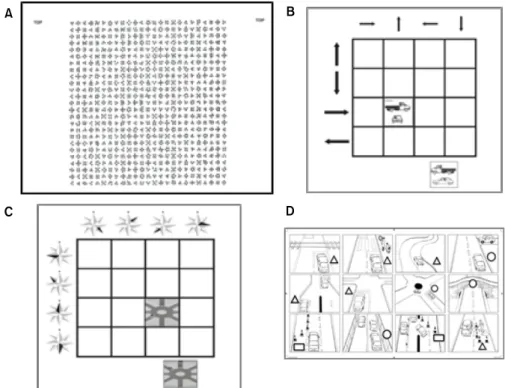
Figure 1. Four sub-tests of Stroke Drivers’
Screening Assessment. (A) Dot can- cellation. (B) Square matrices direc- tions. (C) Square matrices compass.
(D) Road sign recognition.
assess the ability of stroke drivers [5]. Therefore, this study aimed to evaluated the drivers’ cognitive abilities and com- pare the abilities with left and right hemispheric drivers.
Methods Subjects
Participants in this study were 30 chronic stroke drivers who had a stroke 6 months ago (15 with left hemiparesis, 15 with right hemiparesis). The selection criteria for the sub- jects were that they had a Mini Mental State Examination- Korea (MMSE-K) score of 24 or more, had a driver’s li- cense, and had an average of 2 years or more of driving expe- rience prior to the onset of stroke. The subjects are currently assumed to be driving at least twice a week. Prior to partic- ipating in the experiment, all participants were informed about the experimental procedures and agreed to participate.
This study was approved by the Institutional Review Board of the Daegu Catholic University (IRB No. CUIRB-2016- 0109).
Experimental tools and procedures
The Korean Stroke Driver’s Screening Assessment (K-SDSA) was used. This is a cognitive assessment tool that is used for examining the driving competence of stroke drivers, which was developed at the University of Nottingham, UK, and
translated into Korean [9]. The SDSA is composed of 4 tasks in total and is measured in the following order: a dot can- cellation task that measures concentration and visuospatial abilities necessary for driving, a directional matrix task to measure spatio-temporal executive function required for driving, a compass matrix task to measure accurate direction determination ability required for driving, and recognition of traffic signs and reasoning ability to understanding traffic situation. The SDSA assessment time is about 30 minutes [10,11].
Dot cancellation
In order to assess visual attention and concentration abil- ities, there are 3 bundles of 3 points, 4 points, and 5 points, totaling up to 625 (25 rows×25 columns) (Figure 1A).
Participants must find and mark the 4-point bundle of these dots within a limited time of 15 minutes (900 seconds).
Scoring is done by counting the number of ‘x’ made in a group other than a 4-point bundle group, which are the false positives.
Square matrices directions
This is designed to measure the ability to accurately de-
termine the combination of four directions (front, back, left,
and right) of a square matrix as a task of measuring spa-
tio-temporal executive functions required for driving
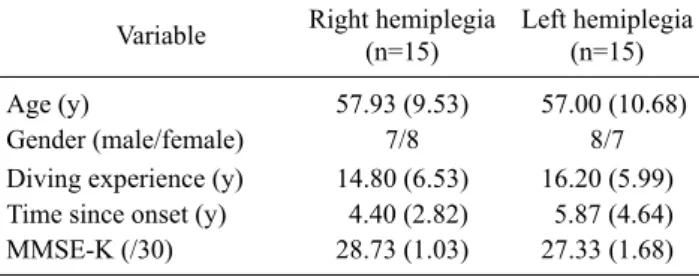
Table 1. General characteristics of participants (N=30) Variable Right hemiplegia
(n=15)
Left hemiplegia (n=15)
Age (y) 57.93 (9.53) 57.00 (10.68)
Gender (male/female) 7/8 8/7
Diving experience (y) 14.80 (6.53) 16.20 (5.99) Time since onset (y) 4.40 (2.82) 5.87 (4.64)
MMSE-K (/30) 28.73 (1.03) 27.33 (1.68)
Values are presented as mean (SD) or number only.
MMSE-K: Mini Mental State Examination-Korea.
(Figure 1B). Large arrows pointing to different directions are drawn on the left side of the grid plate consisting of 16 squares (4 squares×4 squares), and small arrows pointing in different directions are drawn at the top. Participants were given 16 cards with one truck and one car drawn in different directions. The participants placed the card on the grid plate where the pointing direction of the large arrow coincided with the traveling direction of the trunk and at the same time the pointing direction of the small arrow coincided with the traveling direction of the passenger car. This task had to be carried out within a maximum of 5 minutes (300 seconds), and one point was given each time the truck and the car were placed in appropriate positions, with a total possible score of 32 points.
Square matrices compass
This task measures the spatio-temporal executive func- tion, which is designed to measure the ability to accurately judge eight different directions (east, west, south, north, southeast, southwest, northeast, northwest) (Figure 1C).
There are 16 squares (4 spaces×4 spaces) drawn on the grid plate. The compass is displayed on the left side and the upper side respectively with a total of 8. In a format similar to the direction matrix task, place participants on the grid so that the black directions of the top and left compasses and the di- rection of the two cars drawn on the card match. On the roundabout drawn on each of the 16 cards, participants placed two vehicles each on the grid plate so that the direc- tion of the two cars were aligned with the direction of the black display of the compass. The maximum performance time for the assignment is 5 minutes (300 seconds), with a maximum of 32 points for each properly placed vehicle.
Road sign recognition
This is designed to measure the recognition of traffic signs that express traffic conditions and the ability to under- stand traffic situations (Figure 1D). This task is composed of 12 traffic signs drawn on the grid (4 spaces×3 spaces) and consist of 12 traffic signs that match the traffic conditions and 7 non-matching cards. Of the 19 cards, Place the card in the appropriate space. The performance time is up to 3 mi- nutes (180 seconds). If the scoring is well arranged for each traffic situation, one point is allocated to each properly placed card, and the maximum score is 12 points.
Data analysis and statistics
The scores of the K-SDSA’s detailed tasks collected from
the participants of this study were calculated by using the discriminant formula presented by the SDSA in the UK.
Next, the ineligibe scores were subtracted from each in- dividual eligible score and the final score score was calculated. When scores are derived from each discriminant equation of eligibility and ineligibility, the higher of the two scores determines the evaluation of the individual’s percep- tion of driving ability. For example, if a participant's eligible score is higher than the ineligible score, the participant is considrered to be an eligible driver, and is the opposite case for ineligibile scores.
An Independent sample t-test was performed to compare the qualifying score, ineligibiliy score, and final judgment score of the right hemiplegia patient groups with the scores of the left hemiplegic patient group. For statistical analysis, IBM SPSS Statistics ver. 22.0 software (IBM Co., Armonk, NY, USA) was used. The significance level was set at 0.05.
Pass equations:
(Dt×0.012)+(Df×0.216)+(Ss×0.409)+(Rs×1,168)−
13.79
Fail equations:
(Dt×0.017)+(Df×0.035)+(Ss× 0.185)+(Rs×0.813)−10.042
Dt: dot cancellation time (seconds) Df: dot cancellation false positive score Ss: square matrices compass score Rs: road sign recognition score
Results
General characteristics of subjects
There was no statistically significant difference in age,
duration of illness, duration of disease, and MMSE-K in the
right hemisphere group and the left hemisphere group
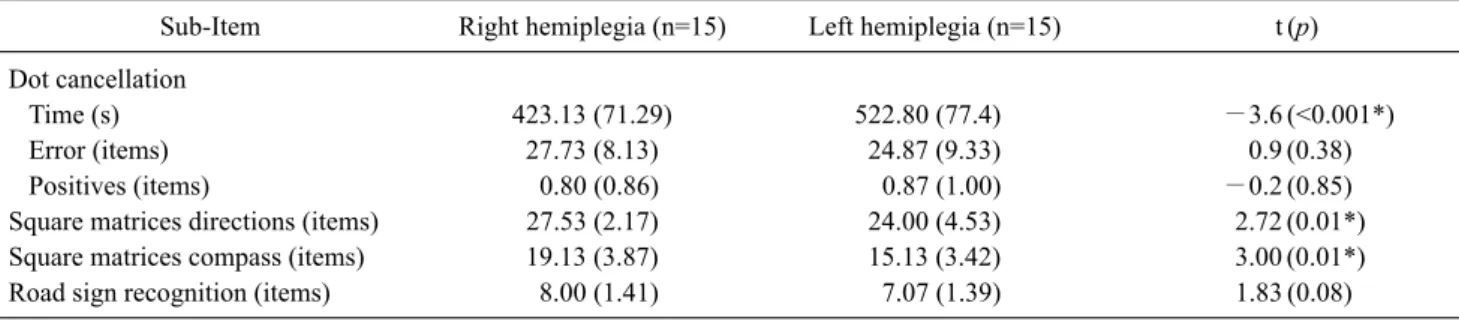
Table 2. Comparison of SDSA scores between the right and left hemiplegia groups (N=30)
Sub-Item Right hemiplegia (n=15) Left hemiplegia (n=15) t (p)
Dot cancellation
Time (s) 423.13 (71.29) 522.80 (77.4) −3.6 (<0.001*)
Error (items) 27.73 (8.13) 24.87 (9.33) 0.9 (0.38)
Positives (items) 0.80 (0.86) 0.87 (1.00) −0.2 (0.85)
Square matrices directions (items) 27.53 (2.17) 24.00 (4.53) 2.72 (0.01*)
Square matrices compass (items) 19.13 (3.87) 15.13 (3.42) 3.00 (0.01*)
Road sign recognition (items) 8.00 (1.41) 7.07 (1.39) 1.83 (0.08)
Values are presented as mean (SD).
SDSA: Stroke Drivers’ Screening Assessment.
*p<0.05.
Table 3. Comparison of SDSA scores between the right and left hemiplegia groups (N=30)
Paretic side Right hemiplegia (n=15) Left hemiplegia (n=15)
t (p) Pass (n=13) Fail (n=2) Pass-fail (n=15) Pass (n=7) Fail (n=8) Pass-fail (n=15)
Score 9.16 (1.94) 5.84 (1.17) 1.41 (1.43) 8.73 (1.97) 7.12 (1.10) −0.31 (1.57) 3.13 (0.04*) Values are presented as mean (SD).
SDSA: Stroke Drivers’ Screening Assessment.
*p<0.05.
(p>0.05) (Table 1).
The subjects’ K-SDSA results
As a result of performing the tasks of K-SDSA, the time required for the point clearing task was significantly longer in the left hemiplegic group (p<0.05) than in the right hemi- plegic group (Table 2). The direction matrix task and com- pass matrix task scores were significantly lower in the left hemiplegic group than in the right hemiplegic group (p<
0.05). In addition, as a result of the K-SDSA’s detailed task, 13 persons were classified as ‘stroke pass’ in the right hemi- plegic group and 2 persons were classified as ‘stroke fail’
and there were 7 persons who were ‘eligible’ and 8 persons who were ‘ineligible’ (Table 3). In the comparison of the scores obtained by subtracting the ineligibility score from the eligible score, that is, the discriminant score, the scores in the left hemiplegic group was significantly lower than the right hemiplegic group (p<0.05) (Table 3).
Discussion
Driving is an activity requiring visual perception ability, athletic ability, and cognitive ability. However, stroke driv- ers may have limitations in driving due to impaired exercise, cognition, visual perception abilities, and various stroke
complications [12]. This is a very important social problem because it can seriously affect the safety of others as well as their own safety. Therefore, the driving of the disabled pop- ulation requires a detailed and specialized driving ability as- sessment and rehabilitation program according to the extent and contents of the disability [13].
In order to investigate the difference in driving ability be- tween the right hemiplegia group and the left hemiparesis group, the British SDSA was used for predicting the driver's cognitive ability of the stroke driver. The results of this study are as follows. MMSE-K, the most commonly used cogni- tive function test for stroke drivers, can detect cognitive dys- function in daily life in a short period of time, but it has limi- tations in evaluating the cognitive function of the driver [14]. The SDSA is a test tool that can distinguish the charac- teristic cognitive ability necessary driving in a short amoutn of time of about 30 minutes. The K-SDSA, which is made for the Korean traffic environment, can accurately predict the driving ability of the stroke driver [6].
The purpose of this study was to evaluate the cognitive
ability of persons with stroke who are currently driving. The
study was conducted on 15 patients with right hemiplegia
and 15 patients with left hemiplegia who had drivig experi-
ence prior to the onset of stroke. The K-SDSA was used to
evaluate the cognitive ability of stroke drivers. The results
showed that the left hemiplegic group had lower driving cognitive abilities than the right hemiplegic group. This can be inferred from the fact that the impairment of the spatial perception power of the right brain had an effect on driving cognitive ability [15].
The results of this study can be used as basic data to de- termine whether the driver's cognitive abilities are suitable for driving by using K-SDSA prior to resuming actual driv- ing after the onset of stroke. If the driver's cognitive abilities are inadequate, he or she can participate in a rehabilitation program or a driving simulation program that improves the spatial perception power of the right brain in order to help re- turn to safe driving. As for limitations of this study, the num- ber of subjects were low, and there was a lack of information on the specific areas of brain damage. In future studies, it is necessary to study driving cognitive abilities according to the sites of brain damage.
Acknowledgements
This research was supported by Basic Science Research Program through the National Research Foundation of Korea (NRF) funded by the Ministry of Education, Science and Technology (No. 20139079).
Conflict of Interest
The authors declared no potential conflicts of interest with respect to the authorship and/or publication of this article.
References
1. Kang HK, Chung YJ. Effects of treadmill training with real optic flow scene on balance and balance self-efficacy in individuals following stroke: a pilot randomized controlled trial. Phys Ther Rehabil Sci 2012;1:33-9.
2. Carr DB. Assessing older drivers for physical and cognitive impairment. Geriatrics 1993;48:46-51.
3. Lim MYL, Loo JHY. Screening an elderly hearing impaired pop- ulation for mild cognitive impairment using Mini-Mental State Examination (MMSE) and Montreal Cognitive Assessment (MoCA). Int J Geriatr Psychiatry 2018;33:972-9.
4. Kim CY, Min WK. The effects of virtual reality-based physical therapy in stroke patients. Phys Ther Rehabil Sci 2013;2:7-11.
5. Perrier MJ, Korner-Bitensky N, Mayo NE. Patient factors asso- ciated with return to driving poststroke: findings from a multi- center cohort study. Arch Phys Med Rehabil 2010;91:868-73.
6. Akinwuntan AE, Wachtel J, Rosen PN. Driving simulation for evaluation and rehabilitation of driving after stroke. J Stroke Cerebrovasc Dis 2012;21:478-86.
7. Ekeh AP, Herman K, Bayham D, Markert R, Pedoto M, McCarthy MC. Pilot evaluation of the short-term effect of driv- ing simulation on novice adolescent drivers. J Trauma Acute Care Surg 2013;75:83-6.
8. Akinwuntan AE, O'Connor C, McGonegal E, Turchi K, Smith S, Williams M, et al. Prediction of driving ability in people with re- lapsing-remitting multiple sclerosis using the stroke driver screening assessment. Int J MS Care 2012;14:65-70.
9. Korner-Bitensky N, Bitensky J, Sofer S, Man-Son-Hing M, Gelinas I. Driving evaluation practices of clinicians working in the United States and Canada. Am J Occup Ther 2006;60:428- 34.
10. Radford KA, Lincoln NB, Murray-Leslie C. Validation of the stroke drivers screening assessment for people with traumatic brain injury. Brain Inj 2004;18:775-86.
11. George S, Crotty M. Establishing criterion validity of the Useful Field of View assessment and Stroke Drivers' Screening Assessment: comparison to the result of on-road assessment. Am J Occup Ther 2010;64:114-22.
12. Aufman EL, Bland MD, Barco PP, Carr DB, Lang CE. Predictors of return to driving after stroke. Am J Phys Med Rehabil 2013;92:627-34.
13. Akinwuntan AE, Gantt D, Gibson G, Kimmons K, Ross V, Rosen PN, et al. United States version of the Stroke Driver Screening Assessment: a pilot study. Top Stroke Rehabil 2013;20:87-92.
14. Park MO, Kim CB, Shin HK, Son JW. A validation study of the Korean stroke driver’s screening assessment. J Korean Soc Occup Ther 2015;23:87-102.
15. Akinwuntan AE, De Weerdt W, Feys H, Pauwels J, Baten G, Arno P, et al. Effect of simulator training on driving after stroke:
a randomized controlled trial. Neurology 2005;65:843-50.