Environmental Science
Vol. 36, No. 4, pp. 259-266, December, 2020 https://doi.org/10.7747/JFES.2020.36.4.259
IBA Treatment of Poplar Cuttings and Soil Composition Amendment for Improved Adaptability and Survival
Wonwoo Cho1, Romika Chandra2, Wi-young Lee1 and Hoduck Kang2,*
1Department of Forest Bioresources, National Institute of Forest Science, Suwon 16631, Republic of Korea
2Department of Biological and Environmental Science, Dongguk University, Goyang 10326, Republic of Korea
Abstract
Poplar trees from the Salicaceae family over the years have been utilized for various reasons which include prevention of deforestation as well as phytoremediation. This study aims to determine the optimal pre-treatment and soil conditions required for propagation of poplar cuttings for increased initial adaptability and survival rate. Five poplar clones (Hanan, 110, 107, DN-34, 52-225) were selected for IBA, soil composition treatments on propagation. IBA pre-treatment of cuttings were utilized 0, 10, and 100 mg l-1 concentrations. Soil compositions were amended with TKS-2+perlite 2:1 (v:v) and sandy clay loam mixed with artificial soil. According to the greenhouse results 10 mg l-1 of IBA showed a significant increase in plant height whereas 100 mg l-1 inhibited plant growth except in clone 110. Soil composition severely affected root growth and hence overall growth of the clones. Sandy clay loam soil had poor to stunted growth compared to TKS-2+perlite.
Key Words: hybrid poplar, soil composition, indolebutyric acid, PGR, pre-treatment
Received: August 7, 2020. Revised: October 25, 2020. Accepted: October 26, 2020.
Corresponding author: Hoduck Kang
Department of Biological and Environmental Science, Dongguk University, Goyang 10326, Republic of Korea Tel: 82-31-961-5121, Fax: 82-31-961-5108, E-mail: [email protected]
Introduction
Populus, a deciduous tree species belonging to the Salicaceae family includes poplar, aspen and cottonwood. These tree species stand out from others due to their fast growing ability. Poplar is mostly native to the Northern Hemisphere however 74 species are distributed around the world espe- cially in temperate and cold regions (Riemenschneider et al.
2001). Due to rapid growth and adaptability poplars are be- ing utilized for preventing desertification as well as phytor- emediation purposes (Robinson et al. 2000).
Cutting propagations are commonly used for mass pro- liferation of poplars. Cutting refers to growing the tree as a complete object by planting in soil the cutting of a partic-
ular portion of the tree such as branch, root, bud or leaves.
For propagation purposes these trees can be grown in large quantities with the same genetics as the mother tree. This can be achieved in a short period of time with less economic and technological burden hence; poplar is being evaluated as an optimal species for preventing desertification espe- cially in terms of costs and efficiency (Lilley and Walker 1974). China and Mongolia are using poplar as the main tree species for preventing desertification, and JICA (Japan International Cooperation Agency) has reported the ach- ievement of planting poplar in dried desert areas of China (Ichikumi 1994).
Various studies have been conducted on soil types and PGR pre-treatment on cutting propagations (Hodge 2004;
Harfouche et al. 2007). Genetic variations in the rooting ability of cuttings of different Populus species, families and clones have been studied for over half a century worldwide (Polle et al. 2013). Rooting of the cuttings is a complex process regulated by multiple hormones (Achard et al.
2006) and various genetic studies have provided ample evi- dence to support the role of plant growth regulators in root development (Saini et al. 2013). The most important regu- lators are auxin and cytokinins (Hausman et al. 1997). The main auxins that influence rooting of poplar cuttings in- clude indole acetic acid (IAA) and indole butyric acid (IBA). IBA is more stable than IAA, and more importantly, IBA can convert to IAA via a mechanism that is similar to fatty acid -oxidation (Rogg et al. 2001). Hence, the need to study optimal IBA pre-treatment requirements for the various clones under consideration in this study. Alongside pre-treatment conditions, soil composition also plays a cru- cial role when studying propagation. The two major soil types utilized in this study were sandy clay loam and TKS 2+perlite 2:1 (v:v).
The purpose of this study was to investigate the optimal conditions for pre-treatment and soil composition for prop- agation of poplar cuttings in order to increase the initial adaptability and overall survival rate of the clones.
Materials and Methods
Experiment materials
Five poplar clones (Hanan, 110, 107, DN-34, 52-225) were selected for examining the influence of IBA pre-treat- ment and soil type on cutting propagation. The poplar cut- tings were taken from the nursery at Dongguk University, Seoul, South Korea, and gotten targeting thick branches of poplar clones with 1-1.5 cm among the shoot from the pre- vious year which was being managed after being introduced to Korea. The length of the cuttings were 15 cm with a 120 cuttings prepared for each clone. Initial planting and ex- periments were conducted in the greenhouse (elevation 168 m) located in Gaeryu-ri, Pochun-si, Gyeonggi-do.
IBA pre-treatment and soil composition growth characteristics
Collection and preparation of cuttings were made a day before the cuttings, and in order to examine changes in
growth according to pre-treatment, the cuttings were dip- ped in three different concentrations of IBA 0, 10, 100 mg l-1 solution for 12 hours after preparation. In order to exam- ine the changes in growth according to soil composition, ar- tificial soil was mixed with TKS-2 (FloraGard Ltd., Oldenvurg, Germany)+Perlite 2:1 (v:v) and sandy clay loam which were filled into seedling boxes (W:H:L 25×60×20 cm). For each treatment condition 20 cuttings (5×4 repeated) were prepared. TKS-2 soil was used be- cause it is a soil conditioner of German FloraGard with ex- cellent moisture and organic matter content, and sandy clay loam .
The growth characteristics of the cuttings for each con- dition were measured based on plant height, number of leaves, leaf length, leaf width, root length, rhizomes, weight, dry weight of above and underground parts. To measure dry weight, harvested leaves, stems and roots were placed in paper bags and dried for 48 hours at 70ºC in a dry-oven and the change in measurements were recorded.
T/R ratio was calculated by dividing the dry weight of the above ground parts by the dry weight of the roots.
Chlorophyll fluorescent reactions according to IBA pre-treatment and soil composition
Chlorophyll fluorescent reactions were measured for comparing the physiological characteristics according to the IBA pre-treatment and soil composition. The poplar cut- tings were pre-treated with the concentrations of IBA 10 mg l-1 solution for 12 hours after preparation and compared fluorescence response values according to soil compositions.
The fluorescent reaction values of healthy plants growing in the nursery were used as a control group. For measurement, a continuous source chlorophyll fluorometer, OS 30P, ADC BioScientific Ltd., UK was used, and the measure- ments was taken by attaching the sample clip that blocks light before measurement against the leaf and after adapt- ing to the dark condition for 20 minutes (Kim et al. 2011).
During measurement, 3,000 mol m-2s-1 PAR light was examined. A comparison analysis was made by measuring the variables of initial fluorescent reaction (Fo), maximum fluorescent reaction (Fm), maximum changing value of flu- orescent reaction (Fv=Fm−Fo) and photochemical re- action efficiency (Fv/Fm).
Table 2. Effects of soil types and IBA treatment on the cutting growth of 110 poplar clone Treatment
Plant height (cm)***
No. of leaves per plant*
Leaf length (cm)**
Leaf width (cm)**
Root length (cm)**
No. of roots per plantns
Root diameter (cm)**
Clone Soil type
IBA (mg l-1)
110 T+P 0 30.87±2.93c 28.33±3.51b 7.97±1.17b 7.43±0.35b 40.83±12.10a 20.00±6.08 2.30±0.95a 10 55.43±5.38a 42.67±8.02a 9.37±1.40b 8.87±1.98ab 42.37±6.14a 25.33±3.51 2.49±0.65a 100 43.10±6.06b 28.00±8.54b 10.90±1.13a 10.10±1.65a 37.07±1.89a 25.67±10.12 2.26±0.24a SCL 0 15.88±3.88e 26.00±5.29b 4.98±0.83c 4.68±0.91c 19.95±5.85b 21.00±8.29 1.18±0.33b 10 21.38±5.58d 37.75±5.12ab 4.95±0.59c 4.23±0.32c 20.98±2.87b 18.50±5.26 1.30±0.15b 100 17.35±5.80de 23.75±7.18b 5.28±0.30c 4.98±0.69c 16.63±1.86b 13.50±7.77 0.69±0.25b Values are means±standard deviation. Means within columns followed by the same letters are not significantly different level by Duncan’s multiple range test.
T+P, TKS-2+Perlite (2:1,v:v); SCL, sandy clay loam; ns, non significant.
*Significant at the 5% level. **Significant at the 1% level.***Significant at the 0.1% level.
Table 1. Effects of soil types and IBA treatment on the cutting growth of Hanan poplar clone Treatment
Plant height (cm)***
No. of leaves per plant*
Leaf length (cm)***
Leaf width (cm)***
Root length (cm)***
No. of roots per plant***
Root diameter (cm)**
Clone Soil type
IBA (mg l-1)
Hanan T+P 0 44.93±6.38b 33.33±5.86a 7.27±0.15b 7.57±0.35b 25.40±8.12abc 20.67±0.58b 2.32±0.89a 10 66.10±3.08a 29.33±7.37ab 9.73±0.55a 9.53±0.67a 28.47±7.63ab 28.03±2.05a 2.27±0.41a 100 44.07±6.90b 23.33±9.61abc 8.30±0.96ab 8.43±1.16ab 34.93±5.53a 10.33±3.51d 2.30±0.36a SCL 0 12.10±6.42c 21.00±4.08bc 5.23±1.91c 5.15±1.23c 17.00±4.35b 14.50±4.04cd 0.99±0.33b 10 16.30±6.43c 21.50±5.45bc 4.40±0.76c 4.88±0.36c 21.03±5.58bc 14.00±2.45cd 0.71±0.21b 100 9.70±3.14c 17.25±3.77c 4.58±0.68c 4.43±0.64c 17.63±3.55c 16.25±2.99bc 0.71±0.19b Values are means±standard deviation. Means within columns followed by the sameletters are not significantly different level by Duncan’s multiple range test.
T+P, TKS-2+Perlite (2:1,v:v); SCL, sandy clay loam.
*Significant at the 5% level. **Significant at the 1% level. ***Significant at the 0.1% level.
Statistical analysis
The data from this experiment are presented as means ± standard deviation obtained from three or more repetitions.
One-way analysis of variance (ANOVA) followed by Duncan’s Multiple Range Test using SPSS Version 21 (IBM Corp., USA) was performed with statistical sig- nificance accepted at p˂0.05.
Results
IBA pre-treatment and growth
Growth characteristics of poplar cuttings according to IBA pre-treatment had shown various values for each
measurement feature and each poplar clone (Table 1-5).
Especially, plant height increase has shown significantly higher values for all poplar clones in 10 mg l-1 IBA treat- ment groups, and in other clones excluding 110 clones, 100 mg l-1 treatment was found to inhibit plant height growth of poplar clones. When IBA is used to promote rooting for in- itial survival of poplar cuttings, it is determined that it should be dipped for 24 hours in 10 mg l-1 to be most effective.
Soil composition and growth
Growth of each poplar clone based on soil composition was distinguishable. In sandy clay loam soil, the growth of all clones had shown poor growth status compared to
Table 3. Effects of soil types and IBA treatment on the cutting growth of 107 poplar clone Treatment
Plant height (cm)***
No. of leaves per plantns
Leaf length (cm)***
Leaf width (cm)***
Root length (cm)***
No. of roots per plant**
Root diameter (cm)***
Clone Soil type
IBA (mg l-1)
107 T+P 0 70.40±13.18a 25.33±6.66 9.93±0.64a 9.50±0.10b 48.90±5.12a 20.33±5.86ab 2.56±0.51a 10 59.10±7.13a 33.33±8.39 10.47±1.00a 9.73±0.67b 31.70±7.53b 25.00±6.24a 2.91±0.45a 100 41.40±9.26b 13.67±5.51 11.07±1.36a 11.37±0.55a 22.30±1.71c 16.67±4.73abc 1.76±0.47b SCL 0 14.18±0.31c 20.25±6.95 5.85±1.26b 5.50±1.75c 16.18±2.05cd 8.75±4.19c 1.15±0.36bc
10 21.00±1.90c 26.50±8.23 6.25±0.98b 6.13±1.04c 18.90±5.34cd 15.50±4.80bc 0.81±0.38bc 100 15.63±5.94c 21.50±11.12 6.05±0.44b 5.70±0.24c 12.90±3.13c 10.50±5.26b 1.00±0.51bc Values are means±standard deviation. Means within columns followed by the same letters are not significantly different level by Duncan’s multiple range test.
T+P, TKS-2+Perlite (2:1,v:v); SCL, sandy clay loam; ns, non significant.
**Significant at the 1% level. ***Significant at the 0.1% level.
Table 4. Effects of soil types and IBA treatment on the cutting growth of DN-34 poplar clone Treatment
Plant height (cm)***
No. of leaves per plant*
Leaf length (cm)***
Leaf width (cm)***
Root length (cm)*
No. of roots per plantns
Root diameter (cm)***
Clone Soil type
IBA (mg l-1)
DN-34 T+P 0 55.90±2.69b 34.67±8.08ab 8.20±0.89a 7.20±0.66b 23.60±4.92a 26.00±2.00 1.64±0.30a 10 67.97±3.12a 32.00±11.53ab 9.13±0.85a 8.03±0.81ab 20.67±0.72ab 26.00±6.24 1.61±0.09a 100 52.87±8.92b 39.33±7.77a 9.10±1.93a 9.30±2.50a 24.73±10.28a 21.67±6.03 1.93±0.18a SCL 0 20.73±6.02c 24.25±4.99bc 4.78±0.97b 4.35±0.74c 18.58±3.96ab 17.50±5.26 0.71±0.24b 10 26.23±5.51c 32.75±4.99ab 5.15±0.87b 4.68±0.92c 13.10±1.78b 22.50±10.66 0.54±0.15b 100 28.70±2.53c 19.75±5.12c 5.43±0.79b 4.75±0.57c 12.78±2.10b 18.75±1.71 0.72±0.11b Values are means ±standard deviation. Means within columns followed by the same letters are not significantly different level by Duncan’s multiple range test.
T+P, TKS-2+Perlite (2:1,v:v); SCL, sandy clay loam; ns, non significant.
*Significant at the 5% level. ***Significant at the 0.1% level.
TKS-2+Perlite conditions. In 100 mg l-1 IBA treatment for clone 52-225 all cuttings in sandy clay loam were found dead (Table 5).
Growth characteristics of poplar clones
Among the items measured from IBA pre-treatment conditions, growth status of each poplar clone was com- pared based on plant height which has shown significant differences throughout the poplar clones. Hanan had ex- cellent growth with plant height of 66.1 cm in IBA 10 mg l-1 and TKS-2+Perlite soil treatment group (Table 1). For clone 110, IBA pre-treatment had positively influenced growth and had an excellent height of 55.43 cm in 10 mg l-1
treatment group (Table 2). Clone 107 had shown the lon- gest shoot growth of 70.4 cm in the control group. Clone 107 also showed significant resulting values along with the control group in IBA 10 mg l-1 treatment group whereas in 100 mg l-1 treatment group, overall growth was poor (Table 3). Clone DN-34 had shown a significant difference in IBA 10 mg l-1 and TKS-2+Perlite soil treatment group with the plant height value of 67.97 cm (Table 4). Clone 52-225 had shown growth of 45.33 cm in IBA 10 mg l-1 and TKS-2+
Perlite soil treatment group but had poor shoot growth of 23.3 cm in 100 mg l-1 IBA treatment (Table 5).
Table 5. Effects of soil types and IBA treatment on the cutting growth of 52-225 poplar clone Treatment
Plant height (cm)***
No. of leaves per plantns
Leaf length (cm)**
Leaf width (cm)**
Root length (cm)**
No. of roots per plant
Root diameter Clone Soil (cm)
type IBA (mg l-1)
52-225 T+P 0 42.07±13.17a 15.67±4.16 11.27±0.67ab 9.70±0.50a 31.90±3.06ab 14.67±0.58ab 1.79±0.13b 10 45.33±3.86a 18.00±5.57 12.57±2.11a 10.17±0.96a 39.90±8.31a 18.67±4.73ab 2.60±0.48a 100 23.20±5.41b 18.33±1.53 9.23±0.55bc 8.07±0.47bc 26.80±6.91bc 13.00±2.65ab 2.06±0.38b SCL 0 6.78±2.70c 13.25±3.59 6.45±1.91c 5.88±1.26c 14.45±3.88d 10.50±4.80b 0.44±0.18c 10 6.00±3.43c 13.00±2.94 7.10±2.41c 7.00±2.34c 17.53±7.21cd 22.00±8.68a 0.82±0.27c
100 - - - - - - -
Values are means±standard deviation. Means within columns followed by the same letters are not significantly different level by Duncan’s multiple range test.
T+P, TKS-2+Perlite (2:1,v:v), SCL, sandy clay loam; ns, non significant.
*Significant at the 5% level. **Significant at the 1% level. ***Significant at the 0.1% level.
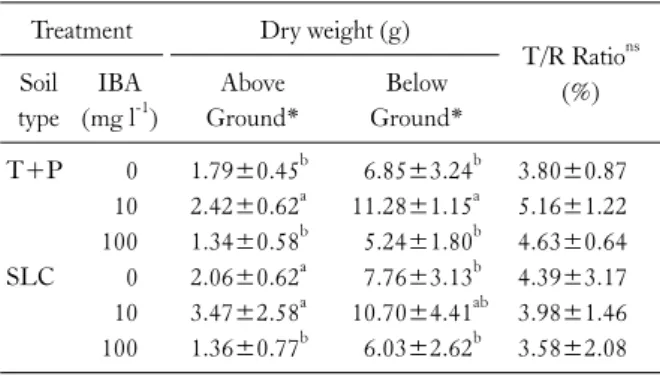
Table 6. Effect of soil types and IBA treatment on dry weight and T/R ratio for the sum of all poplar clones
Treatment Dry weight (g)
T/R Rations Soil (%)
type IBA (mg l-1)
Above Ground*
Below Ground*
T+P 0 1.79±0.45b 6.85±3.24b 3.80±0.87 10 2.42±0.62a 11.28±1.15a 5.16±1.22 100 1.34±0.58b 5.24±1.80b 4.63±0.64 SLC 0 2.06±0.62a 7.76±3.13b 4.39±3.17 10 3.47±2.58a 10.70±4.41ab 3.98±1.46 100 1.36±0.77b 6.03±2.62b 3.58±2.08 Values are means±standard deviation. Means within columns fol- lowed by the same letters are not significantly different level by Duncan’s multiple range test.
T+P, TKS-2+Perlite (2:1,v:v); SCL, sandy clay loam; ns, non significant.
*Significant at the 5% level.
Dry weight analysis
Although changes in the root length, weight and rhi- zome according to IBA pre-treatment were expected, no clear significant differences were found in the aboveground and underground dry weights comparison. In addition, it was difficult to confirm the significant influence of IBA pre-treatment on rooting through T/R ratio. This is be- cause when rooting is active, the upper shoot growth is also vigorous. However, in comparison the dry weight sum of all poplar clones in 10 mg l-1 IBA pre-treatment had highest
dry weight which indicated that 10 mg l-1 IBA pre-treat- ment was effective in increasing the dry weight without the differences in soil composition and clones. Table 6 shows the dry weight and T/R ratio for the sum of all poplar clones in each treatment.
Physiological characteristics according to IBA pre-treatment of the soil composition
After the cuttings, Fo value had increased and Fm value had decreased thus conclusively, it was observed that the Fv/Fm value was either similar or had decreased when compared to the control group. This meant that the cut- tings itself act as a stress factor to the plants before adapting after rooting, and like the sandy clay loam, soil lacking the nutrition with high sand content and uneven drainage was thought to strengthen its degree. When examining the characteristics of each clone, Hanan, 110, 107 and DN-34 clones have shown similar values as the control group in TKS-2+Perlite soil. In sandy clay loam, a lower value was observed indicating that the clones were exposed to stress.
In the case of clone 52-225, the control group was 0.81 but the measurement value after the cuttings had shown poor values of 0.74 for both TKS-2+Perlite soil and sandy clay loam (Table 7).
Table 7. Effects of soil type and IBA 10 ppm treatment on the Chlorophyll fluorescence of poplar clones
Clone Soil type IBA
(mg l-1)
Chlorophyll fluorescence
Fons Fmns Fv/Fm*
Hanan Control 0 81.75±5.50 433.00±21.60 0.81±0.02a
T+P 10 74.00±5.70 398.00±43.12 0.81±0.01a
SLC 10 97.25±6.24 399.50±21.61 0.76±0.03b
110 Control 0 103.40±6.99 451.20±59.92 0.77±0.02ab
T+P 10 84.60±8.99 389.60±33.85 0.78±0.01a
SLC 10 98.80±16.30 360.20±46.05 0.73±0.03b
107 Control 0 74.60±7.37 408.20±33.06 0.82±0.01a
T+P 10 76.80±12.68 334.80±20.58 0.77±0.04a
SLC 10 94.40±4.56 313.60±44.60 0.69±0.05b
DN-34 Control 0 98.00±9.54 462.33±24.42 0.79±0.02a
T+P 10 73.80±9.01 363.20±33.81 0.80±0.01a
SLC 10 93.60±7.02 415.60±36.74 0.77±0.02a
52-225 Control 0 82.00±4.53 445.40±44.42 0.81±0.03a
T+P 10 94.00±13.02 359.40±35.75 0.74±0.04b
SLC 10 89.80±6.72 348.20±50.93 0.74±0.03b
Values are means±standard deviation. Means within columns followed by the same letters are not significantly different level by Duncan’s multiple range test.
Control: Nursery T+P, TKS-2+Perlite (2:1,v:v); SCL, sandy clay loam; ns, non significant.
*Significant at the 5% level.
Discussion
Poplar cuttings and rooting promotion
Soil temperature suitable for root cuttings have been de- termined to be between 10-15ºC (Dumant 1979; Hansen 1986), and through this research, the dH2O dipping treat- ment during the cutting pre-treatment was found to be ef- fective for generating the potential root vitality of poplar cuttings (Petersen and Phipps 1976; Hansen et al. 1993;
Riemenschneider 1997). During the cutting propagation, auxins such as IBA (indole-3butyric acid) and NAA (-naphthalenneacetic acid) are commonly used to facili- tate rooting (Kwak and Jung 1980). However, in the case of poplar, since asexual breeding is more convenient and eco- nomical, a study on the treatment of growth regulation is insufficient. Although there are studies which investigated the best optimal conditions for rooting environment by compositely applying the length of cuttings of 4 crossbreed poplar clones with the pre-treatment and methods of vari- ous growth regulators (DesRochers and Thomas 2003), a study which was artificially conducted in the environment similar to dry and semi-dry areas with an expectation of low
growth is considered insufficient.
PGR effects on cutting propagation
The auxin pre-treatment method consists of dipping process and dressing method. In the dipping process, a va- riety of results can be seen depending on the relationship between the concentration and dipping time. Generally, cuttings are dipped for a longer period in 100-200 mg l-1 in concentrations, however in high concentrations of 1,000- 2,000 mg l-1, it was necessary to be effective even with a second of dipping (Cooper 1944). Depending on the spe- cies, instant dipping treatment in a high concentration was reported to be effective for improving the rooting ratio (Shim et al. 1993; Cheong 2018), and for poplar cuttings, a need for additional future studies are being raised.
During the cutting propagation, there could be a differ- ence in the growth of plant roots depending on the soil configuration. Especially, the growth of roots is known to be influenced by the physical attributes and phys- icochemical properties of soil (Yoshida et al. 1992; Kang 1998). Soil porosity and permeability have a positive corre- lation, and the amount of air existing in soil pores affect the
respiration of roots and this was found to influence the overall growth of plants (Choi et al. 2000). In this study, the sandy clay loam soil having relatively small pores and per- meability was detrimental to the growth of poplar cuttings.
Soil composition and effects on clone growth As a result of examining the influence of soil composition on the growth changes of poplar clones’ roots, in TKS-2+
Perlite cuttings, root length and weight had all shown sig- nificant values. Especially the growth values of rhizomes showed high significant differences in all clones. An influ- ence of IBA pre-treatment on the growth changes of poplar clone roots was not as large as the difference in growth ac- cording to soil composition.
When examining the above results, cuttings with TKS-2+Perlite soil and IBA 10 ppm pre-treatment were excellent for growth, thus it is thought that efficient poplar clone proliferation having rich biomass can be possible.
Cutting treatment with IBA 10 mg l-1 for 24 hours had shown some degree of difference depending on the soil composition but it was observed to have a significant effect on the growth of poplar clones. Unstable growth was ob- served in sandy clay loam.
Fluorescence as a measurement of environmental stress
Fo (Minimum Fluorescence) refers to the minimum flu- orescence among the fluorescent reaction generated by ele- vated chlorophyll molecules of photosystem II antenna be- fore moving to the centre of photosystem II: PS II reaction, and Fm (Maximum Fluorescence) refers to the maximum fluorescence induced by irradiation of saturated light which can completely reduce the amount of light (U et al. 1994;
Won et al. 2008). Fv/Fm represents the maximum photo- chemical efficiency of Photosystem II (Parkhill et al. 2001).
Fo, Fm and Fv/Fm can identify the degree of stress on the plant and can be utilized as the measurement standard of physiological seedling quality for each seedling condition, and when the plant undergoes stress, Fo will increase but Fm will decrease (U et al. 1994). The results of Fv/Fm in this study showed significantly lower values in sandy clay loam.
Conclusion
In order to explore the optimal conditions for mass prop- agation of cuttings, a cutting propagation experiment was conducted by differentiating the growth regulator pre-treat- ment and soil composition of cuttings. For mass prop- agation of poplar cuttings, the optimal conditions from this study were concluded as TKS-2+Perlite soil and 10 mg l-1 IBA pre-treatment for 24 hours. Even these conditions seems conclusive for now, further pre-treatment studies are required to show the most appropriate pre-treatment and soil conditions for mass propagation of poplar cuttings.
Acknowledgements
This study was supported by R&D Program for Forest Science Technology (Project No. 2012021B10-1718-AA01) provided by Korea Forest Service (Korea Forestry Promotion Institute) and Global Ph. D. Fellowship Program through the National Research Foundation of Korea (NRF) funded by the Ministry of Education (NRF- 2014H1A2A1020690).
References
Achard P, Cheng H, De Grauwe L, Decat J, Schoutteten H, Moritz T, Van Der Straeten D, Peng J, Harberd NP. 2006.
Integration of plant responses to environmentally activated phy- tohormonal signals. Science 311: 91-94.
Cheong EJ. 2018. Propagation of three rubus species native to Korea by stem cutting. J For Environ Sci 34: 173-175.
Choi BJ, Sang CK, Choi EJ, Noh SA. 2000. Effect of rooting me- dia on rooting and root growth of rose cuttings. Hortic Sci Technol 18: 819-822.
Cooper WC. 1944. The concentrated-solution-dip method of treat- ing cuttings with growth substances. Proc Am Soc Hortic Sci 44: 533-541.
DesRochers A, Thomas BR. 2003. A comparison of pre-planting treatments on hardwood cuttings of four hybrid poplar clones.
New For 26: 17-32.
Dumant MJ. 1979. [Implantation de taillis de peupliers echelonnes au cours de la saison froide]. Ann Rech Sylvic Tome (1):
253-263. French.
Hansen EA. 1986. Planting date affects survival and height growth of hybrid poplar. For Chron 62: 164-169.
Hansen EA, Netzer DA, Tolsted DN. 1993. Guidelines for Establishing Poplar Plantations in the North-Central U.S.
USDA Forest Service, North Central Forest Experiment Station, St. Paul, MN. Research Note NC-363.
Harfouche A, Baoune N, Merazga H. 2007. Main and Interaction Effects of Factors on Softwood Cutting of White Poplar (Populus alba L.). Silvae Genet 56: 287-294.
Hausman JF, Evers D, Kevers C, Gaspar T. 1997. Internal controls of root induction in poplar shoots raised in vitro. J Appl Bot 71:
104-107.
Hodge A. 2004. The plastic plant: root responses to heterogeneous supplies of nutrients. New Phytol 162: 9-24.
Ichikuni M. 1994. Proceedings of the Japan-China International Symposium on the Study of the Mechanism of Desertification.
Research and Development Bureau, Science and Technology Agency, Tsukuba, pp 53-58.
Kang MJ. 1998. Effect of leat numbers, rooting media and cell size of tray on the rooting and nursery quality of chrysanthemum cuttings. MS thesis. Catholic University of Taegu-Hyosung, Gyeongsan, Korea. (in Korean)
Kim DI, Park GS, Kim GN, Lee HG, Park BH. 2011.
Physiological responses of roadside trees by regional groups and species in Daejeon City. J Korean For Soc 100: 88-94.
Kwack BH, Chung HJ. 1980. The effect of NAA-dip treatment on rooting greenwood cuttings of various ornamental plant species in vinyl moist chamber. J Korean Soc Hortic Sci 21: 91-97.
Lilley RM, Walker DA. 1974. An improved spectrophotometric assay for ribulosebisphosphate carboxylase. Biochim Biophys Acta 358: 226-229.
Parkhill JP, Maillet G, Cullen JJ. 2001. Fluorescence‐based max- imal quantum yield for PSII as a diagnostic of nutrient stress. J Phycol 37: 517-529.
Petersen LA, Phipps HM. 1976. Water soaking pretreatment im- proves rooting and early survival of hardwood cuttings of some populus clones. Tree Plant Notes 27: 20-22.
Polle A, Klein T, Kettner C. 2013. Impact of cadmium on young
plants of Populus euphratica and P. × canescens, two poplar species that differ in stress tolerance. New For 44: 13-22.
Riemenschneider DE. 1997. Breeding and nursery propagation of cottonwood and hybrid poplars for use in intensively cultured plantations. General Technical Report PNWGTR-419. pp 38-42.
Riemenschneider DE, Stanton BJ, Vallee G, Perinet P. 2001.
Poplar breeding strategies. In: Poplar Culture in North America (Dickmann D, Isebrands JG, Eckenwalder JE, Richarson J, eds). NRC Research Press, Ottawa, pp 43-76.
Robinson BH, Mills TM, Petit D, Fung LE, Green SR, Clothier BE. 2000. Natural and induced cadmium-accumulation in pop- lar and willow: implications for phytoremediation. Plant Soil 227: 301-306.
Rogg LE, Lasswell J, Bartel B. 2001. A gain-of-function mutation in IAA28 suppresses lateral root development. Plant Cell 13:
465-480.
Saini S, Sharma I, Kaur N, Pati PK. 2013. Auxin: a master regu- lator in plant root development. Plant Cell Rep 32: 741-757.
Shim KK, Seo Bk, Cho NH, Kim KH, Shim SC. 1993. Study on the Korean Native Stewartia (Stewartia koreana)-II. Seed Germination and Softwood Cutting of Korean Native Stewartia (Stewartia koreana). Hortic Environ Biotechnol 34: 160-166.
U ZK, Song SJ, Hanse U. 1994. Stress effects on photosynthesis of greenhouse plants as measured by the fluorescence method.
Korean J Environ Agric 13: 183-190.
Won JY, Lee CY, Oh DJ, Kim SM. 2008. Changes of chlorophyll fluorescence and photosynthesis under different shade materials in korean ginseng (Panax ginseng C. A. Meyer). Korean J Med Crop Sci 16: 416-420.
Yoshida H, Hayashi T, Harada T, Konishi K. 1992. Effects of me- dium composition and pre-treatment on rooting of plug nursery plant. Acta Hortic 319: 441-446.