• 검색 결과가 없습니다.

Micro-Structure Measurement and Imaging Based on Digital Holography

N/A
N/A
Protected

Academic year: 2021

Share "Micro-Structure Measurement and Imaging Based on Digital Holography"

Copied!
4
0
0

로드 중.... (전체 텍스트 보기)

전체 글

(1)

257

Micro-Structure Measurement and Imaging Based on Digital Holography

Kyeongsuk Kim*, Hyunchul Jung*, Hoseob Chang**, Changdoo Kee*** and Naseem Akhter*

Abstract Advancements in the imaging and computing technology have opened the path to digital holography for non-destructive investigations of technical samples, material property measurement, vibration analysis, flow visualization and stress analysis in aerospace industry which has widened the application of digital holography in the above fields. In this paper, we demonstrate the non-destructive investigation and micro-structure measurement application of digital holography to the small particles and a biological sample. This paper gives a brief description of the digital holograms recorded with this system and illustratively demonstrated.

Keywords: Non-Destructive Investigation, Fourier Transformation, Digital Holography

`Received: March 31, 2010, Revised: May 31, 2010, Accepted: June 10, 2010. *Department of Mechanical Design Engineering, Chosun University, Seoseok-dong, Dong-gu, Gwangju 501-759, Korea, **Laser Center, Chosun University, Seoseok-dong, Dong-gu, Gwangju 501-759, Korea, ***School of Mechanical System Engineering, Chonnam National University, Yongbong-ro, Buk-gu, Gwangju 500-757, Korea, ✝Corresponding Author: [email protected]

Journal of the Korean Society for Nondestructive Testing Vol. 30, No. 3 (2010. 6)

1. Introduction

Digital holographic interferometry(DHI) is a promising method for non-destructive investigation, micro-structure measurement and its visualization of technical samples, because it can provide not only the intensity-contrast images but also the phase contrast images which have great importance in imaging world (Lee et al., 2006; Maldatue, 2000). Advances in the recent years in holographic interferometry have come largely from the advances in recording materials, recording methods, computer processors and image processing techniques, which has ultimately resulted in digital holography (Knox, 1966, Zhang and Yamaguchi, 1998; Qu et al., 2007). Digital holographic interferometry, which uses electronic detectors and numerical reconstruction, provides full field, non-invasive access to objects and allows high sensitivity and accuracy of measurement of interference phase with high spatial resolution.

Successful applications to problems are many but they still limited to laboratory level because commercial systems are not available and custom instruments are relatively expensive to buy and operate, although, our main interest lies in the non-destructive application of transparent specimens for image visualization.

Several articles have been published in the literature that have successfully attempted to explain the digital holography and its application to non-destructive investigation (Yamaguchi and Zhang, 1997; Matsushima et al., 2003). In this paper, we demonstrate the non-destructive application of digital holography to the some biological samples and small particles detection.

This paper gives a brief description of the

digital holography and digital hologram

reconstruction using basic diffraction theory of

light. In our case, the reconstruction of digital

hologram is based on the angular spectrum

method(ASM). It is also known as plane wave

expansion method (Yamaguchi et al., 2001). The

(2)

258 Kyeongsuk Kim, Hyunchul Jung, Hosseob Chang, Changdoo Kee and Naseem Akhter

brief experimental procedure is explained in the following section.

2. Basic Theory

In holography, the superposition of the object wave and reference wave produces a holographic interference pattern that is recorded by a CCD camera. Using the ASM, one can extract information about the wave field that gives rise to the holographic interference pattern (Knox, 1966, Zhang and Yamaguchi, 1998; Qu et al., 2007; Yamaguchi and Zhang, 1997; Matsushima et al., 2003). Suppose that the hologram plane and the parallel image plane are designated by the   and ′′′ coordinates, respectively. The two-dimensional(2D) complex wave field 

′′ on the parallel image plane is numerically reconstructed from the complex hologram wave field 

   using the ASM, which can accurately reconstruct the complex wave field on the image plane. The angular spectrum is the Fourier transform of the complex hologram wave field:

 

 

 

 ∞∞

 

  

 (1) where 

and 

are the spatial frequencies.

Normally, this spectrum contains the zero-order diffraction and a pair of twin-image components. The real image and virtual image are located symmetrically opposed with respect to the center of the image. The distance from each image to the center depends on the incidence angle of the reference wave, which must be large enough to ensure a complete separation of the zero-order diffraction. The zero-order diffraction and one of the twin image components can be removed by using a numerical band-pass filter (Qu et al., 2007), and the reconstructed wave field can be obtained from the inverse Fourier transform of the filtered angular spectrum:

′′

 

 ∞∞







  

  

 



 

 

  





 

(2) where 

 

 

 

 ,    and ′′

is the separation between the image plane and hologram plane. The main advantages of the ASM are consistent pixel resolution, easy filtering of noise and background components, and the possibility of small object-to-hologram distances because the minimum distance requirement does not apply. The computational procedure is no heavier in this case than for the Fresnel approximation or other methods. The numerical diffraction of the hologram results in a reconstructed optical field as a matrix of complex numbers, yielding the amplitude and phase images. One of the advantages of the system presented here is that it does not require physical scanning, as is the case for optical scanning holography. Therefore, the apparatus is not complicated to set-up. Despite its simplicity, the digital holographic method offers an excellent potential for 3D microscopy in biomedical imaging applications.

3. Experiment and Results

An experiment is performed to demonstrate

the micro-measurement and non-destructive

investigation for the application of digital

holography. A schematic of the holographic

system based on a Mach-Zender interferometer

is shown in the Fig. 1. It consists of two

mirrors (M1 and M2) and two beam splitters

(BS1 and BS2) form the Mach–Zender

interferometer. The laser beam generated by the

He-Ne laser is split into two beams (reference

and object beams). All the specimens are

illuminated with a collimated He-Ne laser beam

(by collimating lens, L) of wavelength

632.8 nm. Special filters (SF1 and SF2) are

used for reducing noise and aberrations present

(3)

Journal of the KSNT Vol. 30 No. 3 259

Fig. 1 Set-up of the digital holographic system

Fig. 2 Diffraction patterns of small particles

(a) Small particles

(b) 3D prospective of small particles

(c) Bacteria

(d) 3D prospective of bacteria

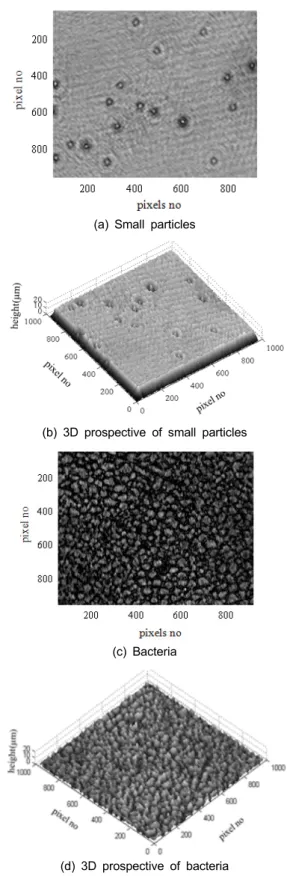
Fig. 3 Micro-structure images of small particles &

bacteria and its 3D prospective in the beam. The off-axis geometry is

considered, the separation of the real image and virtual image can be controlled by second beam splitter(BS2). Zero- order and one of the twin image components can be removed by using a numerical band-pass filter. The holograms formed by the interference between the object and the reference beams were captured by a CCD camera with the pixel size

× 

  ×  , pixel pitch 4.65 μm and transmitted to a computer by means of a Frame Grabber card. The diffraction patterns for the small particles are shown in the Fig. 2. We obtained the complex hologram of three-dimensional object consisting of slide of bacteria of size about 10 µm~15 µm and small particles of size vary from 20 µm to 30 µm.

Small particles are produces by spray nozzles on

slide glass. The reconstructed images of small

particles is shown in the Fig. 3(a) and the

(4)

260 Kyeongsuk Kim, Hyunchul Jung, Hosseob Chang, Changdoo Kee and Naseem Akhter

Fig. 3(c) shows the Candida Albican bacteria, both specimens have micro-structure, which is easily obtained by this digital holographic technique.

In this technique focusing can be adjusted numerically to reconstruct images at arbitrary positions after unfocused holograms are acquired.

These bacteria used as the specimen was grown directly on a cover glass in a culture solution.

The cover glass was put on a slide glass with the living cells between them. The object beam entered the specimen from the slide glass side.

One can also obtain the three-dimensional prospective of these specimens using this technique, these reconstructed images contain 3D information in the form of two-dimensional complex matrix. The three-dimensional prospective of these specimens are shown in the Fig. 3(b) and 3(d) respectively.

4. Conclusion

The digital holographic technique is used for recording and reconstructing digital holograms and generating holographic interferograms for non-destructive testing. The applications of digital holography, especially in the field of nondestructive investigations and micro-structure measurement of technical samples are of particular importance. Another superiority of digital holography is that focusing can be adjusted numerically to reconstruct images at arbitrary positions after unfocused holograms are acquired. However the applicability of this technique was limited to the laboratory environment due to the cumbersome optics and requirement of vibration isolation and controlled ambient lighting. In this study we obtained the images of some micro-structure specimens for non-destructive evaluation.

Acknowledgement

This work was supported (in part) by the research funds from Chosun University, 2009.

References

Knox, C. (1966) Holographic Microscopy as a Technique for Recording Dynamic Microscopic Subjects, Science, Vol. 153, pp. 989-990

Lee, K. J., Jang, H. S., Jung, H. C. and Kim, K.

S. (2006) Quantitative Out-of-Plane Deformation Measurement of Pressure Vessel with the Defect Using Shearography, Journal of the Korean Society for Precision Engineering, Vol. 23, No.

10, pp. 36-42

Maldague, X. P. V. (2000) Trends in Optical Nondestructive Testing and Inspection, P. K.

Rastogi, D. Inaudi, Editors Elsevier Science, Switzerland

Matsushima, K., Schimmel, H. and Wyrowski, F.

(2003) Fast Calculation Method for Optical Diffraction on Titled Planes by Use of the Angular Spectrum of Plane Waves, J. Opt. Soc.

Am. A, Vol. 20, pp. 1755–1762

Weijuan Qu et al., (2007) Digital Holographic Interferometry and the Angular Spectrum Method Applied to Measuring the Domain Inversion in Ferroelectric Crystal, J. Opt. A: Pure Appl. Opt., Vol. 9, pp. 480-485

Yamaguchi, I., Kato, J.-i., Ohta, S. and Mizuno, J. (2001) Image Formation in Phase-Shifting Digital Holography and Applications to Microscopy, Appl. Opt., Vol. 40, pp. 6177–6186 Yamaguchi, I. and Zhang, T. (1997) Phase- Shifting Digital Holography, Opt. Lett. Vol. 22, pp. 1268–1270

Zhang, T. and Yamaguchi, I. (1998) Three-

Dimensional Microscopy with Phase-Shifting

Digital Holography, Opt. Lett. Vol. 23, No. 15,

pp. 1221–1223

수치

Fig. 2 Diffraction patterns of small particles

참조

관련 문서

In this paper, photosensitivity measurement interferometer using a Electronic Speckle Pattern Interferometry theory develope and verify through a comparative

In this paper, we developed a data management system for shipboard machinery equipment and the monitoring application for the verification of the utility, and we

1. Prismless layer was commonly observed on the fissure enamel in young and mature premolar. There were no differences in micro-structure and etching

Based on numerical and experimental investigation results of the proposed H-S 3 HI strategy, the feasibility of harvesting the cooler-induced micro-vibration was demonstrated

In this paper, the crack detection algorithm of micro-electro mechanism systems(MEMS) based grid-type sensor is comprehended for detecting micro cracks using

In this paper, micro optical interferometer consists of sensor form that analyzes optical measurement mechanism of inner surface displacement interferometer and we

In the proposed optical fiber-based digital holography, the degree of phase shift could be precisely controlled by the pump light, and it was confirmed that

We estimated the structure of search service market to regard the degree of overlap among search engines’ results as a similarity measure.. This study identified a market