
B. W. Min ( )
경북대학교 생태환경대학 생태환경시스템학부
(Division of Ecological and Environment System, Kyungpook National University, Sangju, Korea)
e-mail: [email protected] D. C. Cheong
전북농업기술원 남원고령지화훼시험장
(Namwon Alpine Floricultural Experiment Station, Namwon, Korea)
안개초(Gypsophila paniculata L.)로부터 dihydroflavonol 4-reductase 유전자의 분리 및 분석
민병환 ・ 정동춘
Molecular cloning, sequences analysis and in vitro expression of the dihydroflavonol 4-reductase gene from Gypsophila paniculata L.
Byung Whan Min ・ Dong Chun Cheong
Received: 9 March 2010 / Accepted: 12 March 2010
ⓒKorean Society for Plant Biotechnology
Abstract Dihydroflavonol 4-reductase (DFR) is a key enzyme of the flavonoid biosynthesis pathway which catalyses the NADPH-dependent reduction of 2R,3R-trans-dihydroflavonols to leucoanthocyanidins. In this study we describe cloning and expression of the genes encoding the flavonoid-bio- synthetic enzyme DFR in Gypsophila paniculata L. Inspec- tion of the 1279 bp long sequence revealed an open reading frame 1063 bp, including a 36 bp 5' leader region and 181 bp 3' untranslated region. Comparison of the coding region of this DFR cDNA sequence including the sequences of Arabidopsis thaliana, Citrus sinensis, Dianthus caryophyllus, Ipomoea batatas, Matthiola incana, Nierembergia sp, Pe- tunia hybrida, Solanum tuberosum, Vitis vinifera reveals an identity higher than 69% at the nucleotide level. The func- tion of this nucleotide sequences was verified by comparison with amino acid sequences of the amino-terminus and tryptic peptides from purified plant enzyme, by northern blotting with mRNA from wild type and mutant plants, by in vitro expression yielding and enzymatically active reductase, as indicated by the small leucopelargonidin peak. Genomic southern blot analysis showed the presence of only one gene for DFR in Gypsophila paniculata.
서 론
꽃과 과일을 비롯한 여러 식물체의 화려한 색소는 이 미 유전학자, 화학자 및 생화학자들의 관심의 대상이 되 었으며 최근에 와서는 식물분자생물학의 발전에 따라 분 자생물학자들의 연구대상으로 부각되고 있다. 아울러 지 난 10여년간에는 계속적인 화훼시장에서의 수요의 증가 에 따라 생산의 양적인 증가와 더불어 질적인 면에서 다 양성을 추구하는 화훼육종의 필요성이 더욱 절실하며 이 분야의 선구자적인 위치에 있는 네덜란드의 화훼산업은 계속적인 발전을 하고 있다. 근래의 세계적인 동향을 살 펴보면 전통적인 육종방법에 DNA재조합기술과 유전자 전이 및 조직배양기술이 가미되어 새롭고 다양한 화색의 창출을 유도하는 효과적인 방법으로 각광을 받고 있으며 실지로 1987년에 독일 Max-Planck 식물육종학연구소의 Meyer그룹은 petunia에 옥수수의 A1유전자를 전이시켜 지구상에 존재하지않는 주홍색의 petunia를 만들었다는 보고가 있고 (Meyer et al. 1987), 네덜란드 자유대학의 Mol 그룹은 anthocyanin 생합성과정의 첫 번째 효소인 chalcone synthase (CHS) 유전자를 antisense로 전이시켜 역시 petunia 의 다양한 색소변화를 관찰한 바 있다 (Krol et al. 1988).
그러나 이러한 보고는 아직 기초적인 단계로써 색소유전 자의 전이를 통하여 색소발현을 유도하는 가능성을 시사 하였으며 최근에 와서는 다양한 색소유전자의 cloning과 inbred line의 확보를 통하여 화훼산업의 발전에 새로운 장을 열었다. 근래에 와서는 오스트레일리아의 Florigene 사와 일본의 Suntory사가 카네이션에 delphinidin유도체를 도입하여 보라색의 카네이션을 개발하여 상품화 하였으 며 Davies 등은 1998년에 알팔파에서 분리한 chalcone ketide DOI:10.5010/JPB.2010.37.1.089
Research Article
Fig. 1 Schematic flavonoid pathway DFR: flavanone 3β-hydroxylase, F3'H: flavonoid 3'-hydroxylase DFR: dihydroflavonol 4-reductase,
ANS: anthocyanidin synthase Fig. 2 G. paniculata L. cultivar ‘Red Sea’
reductase (CHKR) 유전자를 페튜니아에서 발현시켜 노란 색의 발현을 유도하였다. 그 외에도 최근에 와서는 적색 의 카네이션을 유전자의 도입을 통해 delphinidin의 발현 을 강화하여 자주색의 카네이션으로 변환시킨 보고도 있 으며 (Brugliera et al. 2000) cyanidin과 delphinidin의 발현을 동시에 강화하여 흑색에 근접한 색소의 발현을 유도하였 고 (Koes et al. 2000), 장미에 있어서도 대사공학을 이용 한 delphinidin발현의 유도로 청색에 근접한 장미의 개 발에 성공했다는 보고도 있다 (Katsumoto et al. 2007). An- thocyanin 생합성의 중요한 중간기질인 dihydroflavonol로부 터 flavan-3,4-diols로의 효소활성에 대한 연구는 Pseudotsuga 세포배양으로부터 분리한 효소로부터 최초로 행하여 졌 고 (Stafford and Lester 1982), 1985년 Heller 등에 의하 여 Matthiola incana의 흰꽃의 돌연변이종을 연구한 결과 dihydroflavonol 4-reductase가 anthocyanin 생합성에 관여 한 다고 보고하였다. 효소 DFR은 dihydroflavonol로부터 flavan -3,4-diols 로의 stereospecific reduction을 NADPH를 조효소 로 사용하여 촉매하며(Fig. 1) 이미 꽃으로부터 DFR을 추 출하여 효소활성에 대한 실험은 Matthiola incana 이외에 도 Callistephus chinensis (Ruhnau and Forkmann 1988), Petunia hybrida (Forkmann and Ruhnau 1987) Dahlia hybrida (Fisher et al. 1988) 그리고 Dianthus caryophyllus (Stich et al. 1992) 등이 보고된 바 있다.
분자생물학적 접근을 위한 DFR 유전자의 분리에 대한 보고는 Zea mays (O'Reilly et al. 1985), Antirrhinum majus (Martin et al. 1985), Petunia hybrida (Beld et al. 1989), Hordeum vulgare (Kristiansen and Rohde 1991), Arabidopsis thaliana (Schirley et al. 1992), Gerbera hybrida (Helariutta et al 1993), Lycopersicon esculentum (Bongue-Bartelsman et al.
1994), Rosa hybrida (Tanaka et al. 1995), Matthiola incana (Min et al. 1998), Dianthus caryophyllus (Lee et al. 2004) 그 리고 Callistephus chinensis (Min 2006) 등이 있다. 본 연구 에 사용된 식물체인 안개초는 영명으로 baby's breath으로
불려지며 이미 꽃시장의 상당부분을 점유하고 있는 상업 성이 높은 고급초화이나 이에 대한 생화학 및 분자생물 학적 기초연구는 거의 이루어지지 않았다. 또한 안개초 는 화색의 종류가 다양하지 못하여 핑크색의 색소발현체 계를 가진 품종인 ‘Flamingo’와 ‘Red Sea’를 제외하고는 전부 백색의 표현형을 나타내고 있어 고전 육종의 중요 한 표지식물로 가치가 있는 것으로 알려져 왔다. 이러한 특징을 가진 안개초에 적합한 flavonoids 생합성 관련 유 전자를 형질전환을 통해 도입하여 색소발현체계를 변환 시키면 상업적 측면에서 매우 가치있는 시도라고 사료된 다. 본 실험에서는 백색계통의 안개초에 색소유전자를 전이하여 새로운 색소발현체계를 가진 품종을 육종하기 위하여 핑크색 계통의 품종인 ‘Red Sea’의 꽃봉오리로부 터 mRNA를 분리하여 cDNA-library를 만들고, 이 library로 부터 DFR 유전자를 cloning 하였으며 sequencing을 통하여 그들의 염기서열을 분석하였고 나아가 분리유전자의 다 양한 발현에 대한 실험을 수행하였다.
재료 및 방법 식물재료
안개초 (Gypsophila paniculata L.) 품종 중 핑크색의 색 소발현체계를 가진 ‘Red Sea’(Fig. 2)는 남원 고령지 화훼 시험장으로부터 분양받아 학교 내의 온실에서 화분에 심 어 재배하였으며 cDNA-library의 제작을 위한 재료 및 효 소활성 측정을 위한 재료로 사용하였다. 또 다른 핑크색 의 색소발현체계를 가진 ‘Flamingo’와 일반적으로 가장 많이 재배하는 품종인 백색의 ‘Bristol Fairy’는 화원에서 구입하여 사용하였으며 Northern blot 분석 등에 사용하였 다. 재료는 각 조직별로 수확하여 즉시 액체질소로 냉동 후 -70℃에 저장하여 필요에 따라 사용하였다
mRNA의 분리
10 g의 안개초의 꽃봉오리로부터 guanidine hydrochloride 방법 (Logemann et al. 1987)을 변형하여 total RNA를 분리 하였고, 이 total RNA로부터 mRNA를 분리하기 위하여 oligo-dt-cellulose (Sigma, USA)를 사용하였고 buffer A [10 mM Tris-HCl (pH7.4), 0.4 M NaCl, 0.2% SDS]와 buffer B [10 mM Tris-HCl (pH 7.4), 0.1 M NaCl, 0.2% SDS]로 씻어 준 후 분리하였다. 분리된 mRNA의 순도를 측정하기 위 하여 UV-spectrophotometer를 통하여 확인하였다 (Sambrook et al. 1989).
cDNA-library의 합성
안개초 cDNA-library 구축을 위하여 핑크색의 색소발현 체계를 가진 품종인 ‘Red Sea’의 꽃봉오리로부터 5 ㎍의 poly(A+)-mRNA를 분리하여 사용하였다. cDNA-library를 합성하기 위하여 Pharmacia (USA) 제품인 cDNA-library 합 성 kit를 사용하여 cDNA를 합성하고 이 ds-cDNA는 Lambda-ZAP II vector에 삽입시킨 후 재조합시켰으며 재 조합 된 lambda-zap II는 in vitro packaging (Stratagene, USA) 과 amplification을 통하여 cDNA-library를 완성하였다.
유전자의 기내발현
분리한 DFR 유전자가 목적했던 유전자임을 확인하기 위하여 분리유전자를 template로 T7 RNA polymerase를 사 용하여 기내에서 transcription 시키고 [35S]-methionine (Amersham, USA)을 사용한 reticulocyte lysate system (Promega, USA)에 의해 translation 시켜 기내발현을 수행하였다. In vitro trans- lation을 위하여 2 ㎕의 1 mM amino acid mixture (Promega, USA), 5 ㎍ 의 poly(A+) RNA 및 40 ㎕ reticulocyte lysate (Promega, USA)를 혼합한 후 이 혼합물은 1 시간 동안 30℃
에서 incubation 하고 Sephadex G50 (Phamacia, USA) column 을 사용하여 전체량을 1 ㎖에 맞추고 enzyme buffer [0.1 M Tris/HCl (pH 7.5), 20 mM sodium ascorbate]를 통하여 정 제하였다.
Genomic DNA의 분리 및 Southern blot 분석
유전자의 분석을 위하여 안개초의 어린꽃잎으로부터 Manning (1991)의 방법을 이용하여 genomic DNA를 분리 하였다. 분리된 안개초의 DNA를 제한효소 EcoRV와 XhoI 으로 각각 절단한 후 0.8% agarose gel에 전기영동하고 이 를 nylon membrane (Hybond-N, Amersham, USA)으로 옮긴 후 안개초의 DFR cDNA를 probe로 이용하여 Southern blot hybridization을 실행하였다 (Southern 1975).
Northern blot 분석
Northern blot 분석을 위해서는 핑크색인 ‘Flamingo’와
‘Red Sea’ 및 백색인 ‘Bristol Fairy’의 어린 꽃봉오리로부 터 total RNA를 추출하였고 (Logemann et al. 1987), 전기영 동은 1.2% formaldehyde agarose gel 상에서 수행하였으며 Sambrook 등(1989)의 방법에 준하여 안개초의 DFR cDNA 의 1.3 kb절편을 32P로 labeling하여 probe로 사용하였다.
Hybridization은 50% formamide, 5 X SSC, 0.05 mol phosphate buffer, Denhardt's solution을 이용하여 42℃에서 수행하였다.
DFR 효소 활성의 측정
DFR 효소활성 측정은 Heller 등(1985)의 방법에 의하여 수행하였다. 기본적인 효소활성의 측정을 위해서 전체 용량을 50 ㎕로 하였으며 자세한 조성은 5-50 ㎕의 효소 추출액, 0.04 nM 방사성기질 ([14C]-dihydrokaempferol, 167Bq), 250 nM NADPH, 2.8 mM 2-mercaptoethanol을 첨가한 0.1M Mcllvaine buffer (pH 6.8) 그리고 10% (v/v) glycerol 등 이다.
이 혼합물을 25°C에서 30 분간 항온기에서 각각의 반응 을 유도한 후 즉시 2번 (50, 30 ㎕) 반복하여 ethyl acetate 로 추출한 후 추출액은 thin layer chromatography (TLC)를 통 하여 분석하였고 여기에 사용된 solvent system은 chloroform/
acetic acid/water (10 : 9 : 1)로 혼합하였다. TLC 위의 방사 선의 정량분석은 TLC analyzer (Berthold, Germany)을 사용 하여 수행하였다.
결과 및 고찰
안개초로부터 DFR 유전자의 분리 및 염기서열 분석
10 g의 꽃봉오리로 부터 guanidium chloride방법을 사용 하여 total RNA를 분리한 결과 4.841 mg을 얻었고 1차 oligo-dt-cellulose column을 통하여 38 ㎍의 mRNA를 얻었 으며 2차 column을 통과한 후 15 ㎍의 순수한 mRNA를 분석하였다. 이 중 5 ㎍의 mRNA를 cDNA-library의 합성 에 사용하였다. 합성된 cDNA-library로부터 카네이션의 DFR-cDNA를 probe로 하여 screening하여 본 결과 5개의 positive clone을 분리하였고 이것으로부터 phage-DNA를 분리하여 EcoRI으로 처리해 본 결과 5개 clone 모두 1.2 kb-1.5 kb 크기의 insert를 가지고있었다. 이 clone들을 페 튜니아의 DFR유전자를 probe로 Southern blot 분석을 통해 검정해 본 결과 모두 DFR 유전자임을 확인하였다. 분리 한 5개의 서로 다른 크기의 DFR 유전자를 각각 G1-G5로 명명하였고, 벡터 pUC19에 cloning 하여 염기서열분석을 수행한 결과 1.5 kb 크기의 clone G3만이 full size clone임
Fig. 3 Nucleotide and predicted amino-acid sequence of DFR-cDNA clone from G. paniculata
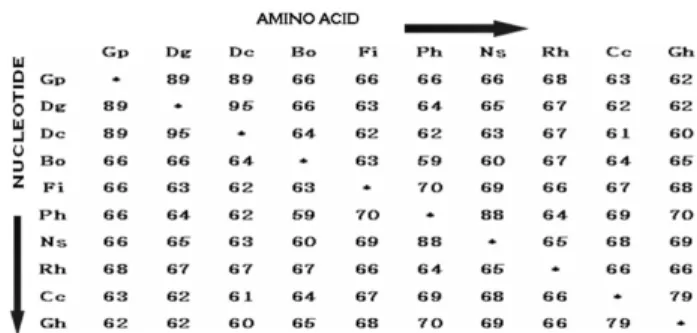
Fig. 4 Comparison of the nucleotide and amino acid homology of DFR (%).
Gp: G._paniculata Dg: Dianthus_gratianopolitanus Dc: Dianthus_
caryophyllus Bo: Brassica_oleracea Fi Forsythia_intermedia Ph:
Petunia_hybrida Ns: Nierembergia_sp Rh Rosa_hybrid Cc: Callistephus_
chinensis Gh: Gerbera_hybrid 을 확인하였다. 염기서열 분석 결과를 보면 안개초의 DFR
유전자는 1471 bp 이며 이 중 coding region은 1047 bp 였고 349 amino acid를 인지하였다. 또 이 유전자는 190 bp의 leader sequence와 288 bp 의 trailer sequence 및 18 bp의 poly(A) tail을 가지고 있었다 (Fig. 3). Start codon과 stop codon을 살펴보면 start codon은 AAAATGG로 Joshi (1987a) 가 발표한 식물체의 고유의 codon과 일치하며 ATG의 -3 위치에 purin 염기가 나타났다. 유전자의 3' 말단에 나타 나는 polyadenylation signal AATAAA 는 TAA translation stop codon으로부터 41 bp downstream 위치에 있으며 polyadeny- lation site에서 172 bp upstream 위치에 존재하였다 (Joshi 1987b). 이들 유전자의 염기서열의 유사성을 Dianthus_
gratianopolitanus (Yagishita et al. 2000), Dianthus_caryophyllus (Lee et al., 2004), Brassica_oleracea (Min et al. 2002), Forsythia_
intermedia (Rosati et al. 1997), Petunia_hybrida (Beld et al.
1989), Nierembergia_sp (Ueyama et al. 2006), Rosa_hybrid (Tanaka et al. 1995), Callistephus_chinensis (Min 2006), Gerbera_
hybrid (Helariutta et al. 1993) 등의 DFR 유전자와 비교해 보면 nucleotide level 에서는 각각 89, 89, 66, 66, 66, 66, 68, 63, 62%를 나타내었고 amino acid level에서도 역시 같은 수치의 유사성을 나타내었다 (Fig. 4). 이러한 수치에서 보 듯 안개초의 DFR 유전자는 같은 Caryophyllaceae과에 속 하는 카네이션 (Dianthus caryophyllus)과 nucleotide level 에 서 89%, amino acid level에서 89%로 가장 높은 일치성을 보였다. 또한 같은 Solanaceae과에 속하는 Petunia hybrid 와 Nierembergia sp의 경우도 88%의 높은 일치성을 나타
내었다. 유사한 결과는 다른 색소유전자인 CHS (Niesbach -Klösgen et al. 1987)와 DFR (Lee et al. 2004)의 염기서열분 석에서도 보고된 바 있으며 식물분류학이나 진화학적 측 면에 큰 의미가 있다고 사료된다.
유전자의 기내 발현
분리한 유전자의 발현을 증명하기 위하여 in vitro tran- scription과 translation을 통하여 protein의 생성 여부를 알 아보았다. 먼저 유전자를 Bluescript KS+ vector에 cloning 한 후 T7-RNA-Polymerase 와 T3-RNA-Polymerase를 이용하 여 transcription 시키고 생성된 mRNA를 다시 reticulocyte system과 [35S] -Methionin labelling을 이용하여 translation을
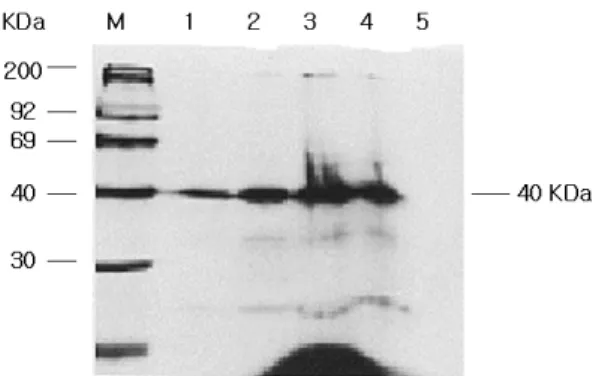
Fig. 5 In vitro expression of the DFR cDNA clone of G.
paniculata. M: [14C]-methylated markerprotein, 1-4: Sense mRNA of G. paniculata (1, 2, 5, or 8㎕) 5: Antisense mRNA of G.
paniculata as a negative control
Fig. 6 Southern blot analysis of genomic DNA from wild type G.
paniculata 1: Digestion with EcoRV. 2. Digestion with XhoI
Fig. 7 Northern blot analysis of poly(A+)RNA from the wild type and mutant of G. paniculata. 1: Wild type cultivar ‘Flamingo’
(pink) 2: Wild type cultivar ‘Red Sea’ (pink) 3, 4: Mutant cultivar
‘Bristol Fairy’ (white) Hybridization of the same blot with a rRNA probe was performed to test equal loading
유도한 후 생성된 protein을 SDS-PAGE를 통해 확인해 본 결과 분리한 DFR유전자와 같은 40 kDa 크기의 protein을 확인하였다 (Fig. 5).
분리유전자의 Southern blot 분석
분리한 안개초의 DFR 유전자가 genome에 얼마나 존재 하는지 확인하기 위하여 Southern blot 분석을 수행하였 다. cDNA-library 제작에 사용하였으며 핑크색의 색소발 현체계를 가진 ‘Red Sea’의 꽃잎으로부터 DNA를 분리한 후 cDNA상에 1개의 cutting site를 가진 제한효소인 EcoRV 과 XhoI으로 처리하고 DFR cDNA를 probe로 hybridization 을 해 본 결과 각각의 lane에 동일한 강도를 가진 두개의 band를 보였다. Fig. 6에서 보는 바와 같이 제한효소 EcoRV로 처리한 경우 각각 6.5 kb, 3.2 kb 크기의 band가, XhoI으로 처리한 경우 각각 5.8kb, 4.4kb 크기의 band를 나 타냄으로써 안개초의 DFR 유전자는 genome 내에 오직 한
개가 존재한다는 것을 알 수 있다. 이러한 결과는 이미 보고된 금어초 (Martin et al. 1985), 페튜니아 (Beld et al.
1989), 카네이션 (Lee et al. 2004), 과꽃 (Min 2006), stock (Min et al. 1998), 옥수수 (O’ Reilly et al. 1985), 오렌지 (Lo Piero et al. 2006) 등과 일치하며 페튜니아의 DFR 유전자 는 3개의 copy를 보였으나 실제로 오직 하나의 유전자 DFR-A 만이 DFR 기능을 가지고 있음을 증명하였고, 장 미 (Tanaka et al. 1995)의 경우 많은 copy 수를 확인하였으 나 식물재료가 inbred line이 아니며 tetraploid 식물이기 때 문에 정확한 copy 수를 단정하기 힘들다는 어려움이 있 고 거베라 (Helariutta et al. 1993)의 genome에는 다양한 수 의 DFR 유전자가 존재하고 있는 것으로 알려졌으며. 다 른 flavonoid 생합성 관련 유전자의 경우 Beld 등 (1989)의 보고에 의하면 페튜니아는 적어도 8개의 CHS 유전자와 2개의 CHI 유전자가 존재하며 Ipomoea batatas (Shiokawa et al. 1999)의 경우는 3개의 서로 다른 염기서열을 가진 FHT 유전자를 분리했다는 보고가 있다. 그 외 대부분 식 물의 genome 에는 단지 하나의 DFR 유전자가 있음이 보 고되었다.
백색인 Bristol Fairy의 Northern blot 분석
본 실험의 최종 목적은 현재 백색과 핑크색의 색소발 현체계를 가진 안개초를 적합한 유전자의 형질전환을 통 하여 다양한 색소발현체계를 가진 품종의 육성이므로 기 존의 백색 안개초에 대한 발현 검정은 필수적인 기초실 험이다. 우선 현재 가장 많이 재배되고 있는 안개초 품종 인 ‘Bristol Fairy’에 있어 어떠한 유전자가 blocking되어 백 색을 나타내는지 검정하기 위하여 본 실험에서 분리한 안개초의 DFR cDNA를 probe로 사용하여 DFR 유전자의 발현을 Northern blot 분석을 통하여 조사하였다. ‘Bristol Fairy’의 꽃봉오리로부터 mRNA를 분리하고 Northern blot 분석을 수행한 결과 Fig. 7에서 보는 바와 같이 1.3 kb크 기의 강한 signal을 보였고, positive control로 사용한 핑크 빛의 색소발현체계를 가진 ‘Flamingo’와 ‘Red Sea’의 경우 도 동일한 결과를 나타내었다. 이러한 결과로 분석해 보
Fig. 8 Radioscan of TLC (Thin Layer Chromatography) on cel- lulose from DFR assays using [14C]-naringenin as substrate. A.
Assay with in vitro synthesized DFR using poly(A+)RNA from flower buds of wild-type Gypsophila. B. Assay with crude extract of wild-type Gypsophila. as a positive control C. Assay with re- ticulocyte lysate as a negative control. Lpg: leucopelargonidin DHK:
dihydrokaempferol
면 백색의 안개초인 ‘Bristol Fairy’의 DFR 유전자는 적어 도 flavonoid 생합성 과정에서 온전하게 발현됨을 알 수 있었다. DFR 유전자를 제외한 다른 flavonoid 생합성 관 련 유전자의 blocking 가능성을 추측할 수 있는데 DFR 이 후의 유전자인 ANS (anthocyanidin synthase)와 FGT (flavonoid glucosyl transferase) 유전자 중 하나가 blocking 되거나 혹 은 double blocking의 가능성도 생각할 수 있다. CHS 유전 자의 경우는 진화학적으로 매우 안정되어 있기 때문에 blocking될 가능성이 희박하며, CHI 유전자가 blocking될 경우는 chalcone의 축적에 의해 황색의 색소발현을 나타 내므로 역시 blocking될 가능성이 적다 (Heller 1993). 적어 도 본 실험에서는 DFR 유전자는 정상적으로 발현하고 있음을 증명하였고 그 밖의 유전자는 계속적으로 분리하 고 있으므로 앞으로 분석을 수행할 예정이다.
DFR 유전자의 효소 활성 측정
분리한 유전자의 효소활성을 측정하기 위하여 Sephadex G50 column을 통해 Translation mixture를 정제하여 DFR 활 성 실험을 수행하였다. DFR 활성은 NADPH를 cofactor로 사용하여 (14C)dihydrokaempferol(DHK)이 (14C)leucopelargonidin (Lpg)으로 전이되는 양을 TLC 위에서 측정하였다. Fig. 8 의 결과에서 보는 바와 같이 translation products의 경우 작 은 leucopelargonidin peak를 나타냄으로써 기대했던 DFR 효소 활성을 보였고 (Fig. 8A), negative control로 reticulocyte
lysate만 넣어준 경우는 전혀 효소 활성을 보이지 않았다 (Fig. 8C). 반면에 positive control로 사용한 ‘Red Sea’의 꽃 으로부터 분리한 효소를 사용한 활성 측정의 결과는 trans- lation products 보다 높은 활성을 나타내었다(Fig. 8B). 이 러한 결과를 종합하면 분리한 DFR-cDNA는 진정한 DFR 유전자임을 확인할 수 있다.
적 요
Dihydroflavonol 4-reductase(DFR)는 flavonoid 생합성 경로 의 가장 중심부에 작용하는 효소로 2R,3R-trans-dihydro- flavonols로부터 leucoanthocyanidins 으로의 변환을 촉매한 다. 본 연구에서는 색소유전자의 전이를 통하여 새로운 색소발현체계를 가진 품종을 육종하기 위한 기초연구로 안개초 (Gypsophila paniculata L.)의 꽃봉오리로부터 cDNA- library를 합성하였고 카네이션의 DFR 유전자를 probe로 사용하여 anthocyanin 합성경로의 중요 효소의 하나인 DFR 유전자를 분리하였다. 염기서열분석을 수행하여 분리유 전자의 크기가 1279 bp이며 이 중 coding region은 1063 bp 임을 확인하였다. 이미 밝혀진 다른 식물체의 DFR 유전 자와 서로 염기서열의 일치성을 비교해 본 결과 Cheddar pink, 카네이션, 양배추, 개나리, 페튜니아, cup flower, 장 미, 과꽃 및 거베라에서 각각 62% 이상을 나타내었다. 분 리유전자의 발현을 확인하기 위하여 Northern blot 분석 및 인위적으로 기내에서의 transcription과 translation을 수 행하였고, 분리한 유전자의 효소활성을 측정해 본 결과 leucopelargonidin의 작은 peak를 확인하였다. Southern blot 분석 결과 안개초의 DFR 유전자는 다른 대부분의 식물 체와 유사하게 한 개가 존재함을 확인하였다.
사 사
본 연구는 농촌진흥청 바이오그린 21 사업단의 지원을 받아 수행하였다.
인용문헌
Beld M, Martin C, Huits H, Stuitje AR, and Gerats AGM (1989) Flavonoid synthesis in Petunia hybrida: partial character- ization of dihydroflavonol-4-reductase genes. Plant Mol Biol 13:491-502
Bongue-Bartelsman M, O'Neill SD, Tong Y, and Yoder JI (1994) Characterization of the gene encoding dihydroflavonol 4-re- ductase in tomato. Gene 138(1-2):153-157
Brugliera F, Tull D, Holton TA, Karan M, Treloar N, Simpson K, Skurozynska J, and Nason JG (2000) Introduction of a
cytochrome b5 enhances the activity of flavonoid 3’5’ in transgenic carnation. Sixth International Congress of Plant Molecular Biology. University of Laval, Quebec, 6-8 Davies K, Bloor S and Spiller G (1998) Production of yellow
colour in flower: redirection of flavonoid biosynthesis in petunia. Plant J 13:259-266
Fisher D, Stich K, Britsch L and Grisebach H (1988) Purification and characterization of (+) dihydroflavonol (3-hydroxyflavanone) 4-reductase from flower of Dahlia varabilis. Arch Biochem Biophys 264:40-47
Forkmann G and Ruhnau B (1987) Distinct substrate specificity of dihydroflavonol 4-reductase from flowers of Petunia hybrida.
Z Naturforsch 42c:1146-1148
Helariutta Y, Elomaa P, Kotilainen M, Seppänen P and Teeri TH (1993) Cloning of cDNA coding for dihydroflavonol 4-re- ductase (DFR) and characterization of dfr expression in the corollas of Gerbera hybrida var. Regina (Compositae). Plant Mol Biol 22:183-193
Heller W, Forkmann G, Britsch L and Grisebach H (1985) Enzymatic reduction of dihydroflavonols to flavan-3,4-cis-diols with flower extracts from matthiola incana and its role in anthocyanin biosynthesis. Planta 165:284-287
Joshi CP (1987a) An inspection of the domain between putative TATA box a translation start site in 79 plant genes. Nucleic Acids Res 15:6643-6653
Joshi CP (1987b) Putative polyadenylation signals in nuclear genes of higher plants: a compilation and analysis. Nucleic Acids Res 15:9627-9640
Katsumoto Y, Fukuchi-Mizutani M, Fukui Y, Brugliera F, Holton TA, Karan M, Nakamura N, Yonekura-Sakakibara N, Togami J, Pigeaire A, Ashikari T, Kusumi T, Mason JG and Tanaka Y (2007) Engineering of the rose flavonoid biosynthesis path- way successfully generated blue-hued flowers accumulating delphinidin. Plant Cell Phisiol 48:1589-1600
Kristiansen KN and Rohde W (1991) Structure of the Hordeum vulgare gene encoding dihydroflavonol 4-reductase and mo- lecular analysis of ant18 mutants blocked in flavonoid syn- thesis. Mol Gen Genet 230:49-59
Koes R, De Vetten N and Mol J (2000) Cytochrome b5from petunia. PCT-international Patent Application No. WO 00/09720 Krol AR van der, Lenting PE, Veenstra J, van der Meer IM, Koes
RE, Gerats AGM, Mol JNM and Stuitje AR (1988) An anti- sense chalcone synthase gene in transgenic plants inhibits flower pigmentation. Nature 333:866-869
Lee HJ, Nahm SH, Ahn BJ, Joung HY and Min BW (2004) Cloning of cDNA coding for dihydroflavonol 4-reductase (DFR) and characterization of dfr expression in carnation petals. J Kor Soc Hort Sci 45:49-54
Logemann J, Schell J and Willmitzer L (1987) Improved method for the isolation of RNA from plant tissue. Anal Biochem 163:16-20
Manning K (1991) Isolation of nucleic acid from plants by dif- ferential solvent precipitation. Analytical Biochem. 195:45-50 Martin C, Carpenter R, Sommer H, Saedler H and Coen E (1985)
Molecular analysis of instability in flower pigmentation of Antirrhimum majus, following isolation of the pallida locus
by tranposon tagging. EMBO J 4:1625
Meyer P, Heidmann I, Forkmann G and Saedler H (1987) A new petunia flower colour generated by transformation of a mutant with a maize gene. Nature 330:677-678
Min BW, Kim SW, Oh SC and Liu JR (1998) Cloning and characterization of dihydroflavonol 4-reductase (DFR) from Matthiola incana R. Br. Korean J Plant Tissue Culture 25:
341-346
Min BW and Park SY (2003) Brassica_oleracea dihydroflavonol 4-reductase (DFR) mRNA accession number AY228487 EMBL-library
Min BW (2006) Cloning and expression study of dihydroflavonol 4-reductase from summer aster. Hort Environ Biotechnol 47:222-229
O'Reilly C, Shephard N, Pereira A, Schwarz-sommer Zs, Bertram I, Robertson DS, Peterson PA and Saedler H (1985) Molecular cloning of the a1 locus of Zea mays using the transposible elements En and Mu1. EMBO J 4:877
Rosati C, Cadic A, Duron M, Renou JP and Simoneau P (1997) Molecular cloning and expression analysis of dihydroflavonol 4-reductase gene in flower organs of Forsythia x intermedia.
Plant Mol Biol 35:303-311
Ruhnau B and Forkmann G (1988) Flavan-3,4-diols in antho- cyanin biosynthesis, enzymatic formation with flower extracts from Callistephus chinensis. Phytochemistry 27:1035-1039 Sambrook J, Fritsch EF and Maniatis T (1989) Molecular cloning:
a laboratory manual, 2nd, Cold Spring Harbor Laboratory, Cold Spring Harbor, NY
Shiokawa K, Murata T, Noguchi H, Hoshino A and Iida S (1999)Ipomoea batatas mRNA for flavanone 3-hydroxyrase, complete cds accession number AB023790 EMBL-library Shirley B, Hanley S and Goodman HM (1992) Effects of ionizing
radiation on a plant genome: analysis of two Arabidopsis transparent testa mutations. Plant Cell 4:333-347
Southern EM. 1975. Detection of specific sequences among DNA fragments separated by gel electrophoresis. J Mol Biol 98:
503-517
Stafford HA and Lester HL (1982) Enzymic and nonenzymic reduction of (+)-dihydroquercetin to its 3,4-diol. Plant Physiol 70:695-698
Stich K, Eidenberger T, Wurst F and Forkmann G (1992) En- zymatic conversion of dihydroflavonols to flavan-3,4-diols using flower extracts of Dianthus caryophyllus L. (carnation).
Planta 187:103-108
Tanaka Y, Fukui Y, Fukuchi-Mizutani M, Holton TA, Higgins E and Kusumi T (1995) Molecular cloning and characterization of Rosa hybrida dihydroflavonol 4-reductase gene. Plant Cell Physiol 36:1023-1031
Ueyama Y, Katsumoto Y, Fukui Y, Fukuchi-Mizutani M, Ohkawa H, Kusumi T, Iwashita T and Tanaka Y (2006) Molecular characterization of the flavonoid biosynthetic pathway and flower color modification of Nierembergia sp. Plant Biotechnol 23:19-24
Yagishita Y, Ohya T and Kita N (2000) Dianthus_gratianopolitanus dihydroflavonol 4-reductase mRNA accession number AF291097 EMBL-library

![Fig. 8 Radioscan of TLC (Thin Layer Chromatography) on cel- cel-lulose from DFR assays using [ 14 C]-naringenin as substrate](https://thumb-ap.123doks.com/thumbv2/123dokinfo/4872236.287767/6.892.88.417.106.429/radioscan-layer-chromatography-lulose-assays-using-naringenin-substrate.webp)
