Trend Analysis of the Research on Bee Venom Acupuncture in South Korea, Based on Published Articles
Chang Hyun Han
1, Yong Seok Lee
2, Soo Hyun Sung
1, Bong Hyo Lee
3, Hwa Young Shin
3, Young Joon Lee
21Department of Medical History & Literature Group, Korea Institute of Oriental Medicine
2Department of Preventive Medicine, College of Korean Medicine, Daegu Haany University
3Department of Acupuncture, Moxibustion and Acupoint, College of Korean Medicine, Daegu Haany University Original Article
⋅Received:30 November 2015 ⋅Revised:30 December 2015 ⋅Accepted:30 December 2015
⋅Correspondence to:Young Joon Lee
Department of Preventive Medicine, College of Korean Medicine, Daegu Haany University
#1 Haanydae-ro, Gyeongsan, Gyeongbuk, 38610, Republic of Korea Tel:+82-53-819-1296, Fax:+82-53-819-1576, E-mail:[email protected])
Background: This study investigated current research trends in bee venom acupuncture in Korea.
Materials and methods: The literature in Korea was reviewed using the search engines Science and Technology Society Village, Korean Studies Information Service System, National Discovery for Science Leaders, and Oriental Medicine Advanced Searching Integrated System. The keywords searched were “bee venom,” “apitoxin,”
“apitherapy,” and “bee sting.” We selected 412 studies, which included Korean literary studies, experimental studies, and clinical studies.
Results: We classified them by publication year, research type, disease and topic, and quality assessment. Among bee venom-related studies, clinical studies (235 studies) outnumbered experimental studies (149 studies) and literary studies (28 studies). Nineteen experimental studies concentrated on the theme of “anticancer.” In the type analysis of clinical studies, lumbar disorders comprised 45 of 235 studies, followed by the effect on body. Forty-two randomized controlled trials (RCTs) have been published from 2003 to date (2015). Twenty-two studies used appropriate randomization methods. Fourteen studies had a Jadad score of 4–5 points; 15 studies, 1–3 points; and 13 studies, 0 points.
Conclusions: Bee venom treatment is based on Korean traditional medicine theory. Numerous research studies suggest its effectiveness. Effort and academic approach on bee venom are expected to receive a positive evaluation.
Key Words : Bee venom, Korean medicine, Pharmacopuncture
Introduction
Bee venom therapy is a new acupuncture method.
It uses the effects of needling and the biochemical pharmacological reactions of bee venom in treating diseases by artificially extracting and purifying venom from the venom sac of live bees, and then injecting it into the area or the acupoints associated with a disease
1). In clinical practice, bee venom
acupuncture is applied to treat diseases such as musculoskeletal diseases, immune system diseases, and nervous system diseases through the use of its effective features such as anti-inflammatory effect, analgesic effect, and continuous thermal stimulation on the treated part, and immune function enhancement and activation
2).
Under these changes, one of the largest features in
the field of acupuncture in Korea is pharmacopuncture
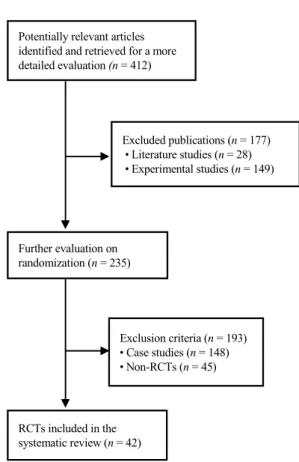
Excluded publications (n = 177) • Literature studies (n = 28) • Experimental studies (n = 149) Potentially relevant articles
identified and retrieved for a more detailed evaluation (n = 412)
Further evaluation on randomization (n = 235)
Exclusion criteria (n = 193)
• Case studies (n = 148)
• Non-RCTs (n = 45)
RCTs included in the systematic review (n = 42)
Fig. 1. Flowchart of the trial selection process.
-related research. Bee venom acupuncture (BVA) is a treatment method that involves applying chemical stimulation and physical stimulation on the acupoints of the human body, along with the existing pharmacopuncture therapy. It originated from bee sting therapy, which has been used among ordinary people for a long time to stimulate an affected area or on acupoints with live bees. By collecting bee venom from bees with bee venom collectors and securing safety through a sterile purification process, pharmacopuncture preparations for treatment have become commercially available to Korean medicine doctors. Bee venom was successfully developed with significantly reduced allergic reaction, which is a substantial problem. In Korea, numerous studies have been conducted with this venom and good efficacy results are continuously reported
3). The authors aimed to report the results of an analysis on bee venom-related research studies published to date in Korea so as to investigate the current trends in research on bee venom and determine directions to move toward in the future.
Materials and Methods
1. Materials
To review current research articles, we used four databases in South Korea: Science and Technology Society Village (KISTI), Korean Studies Information Service System (KISS), National Discovery for Science Leaders (NDSL), and Oriental Medicine Advanced Searching Integrated System (OASIS). The key words were “bee venom,” “apitoxin,” “apitherapy,”
and “bee sting.” Furthermore, studies published in 2015 that were not yet available in database systems were manually searched for inclusion by reviewing journals.
We included literary studies (e.g., review), experimental studies (e.g., in vivo, in vitro), and clinical studies (e.g., randomized clinical trials
[RCTs], non-RCTs, case reports or series, brief reports) on BVA. We excluded non–BVA-related studies, studies without full texts, and duplicate files.
In the first step, the search focused on the titles and the abstracts. In the second step, studies were selected or extracted by reviewing the full texts.
As a result, 412 studies were selected for primary analysis. Based on the study method, clinical studies were then selected for secondary analysis. Forty-two RCTs, which excluded case studies and nonrandomized controlled trials (non-RCT), were selected for additional analysis (Figure 1).
2. Methods
Data extraction and analysis were performed by
two authors (Dr. Han and Professor Lee), who read
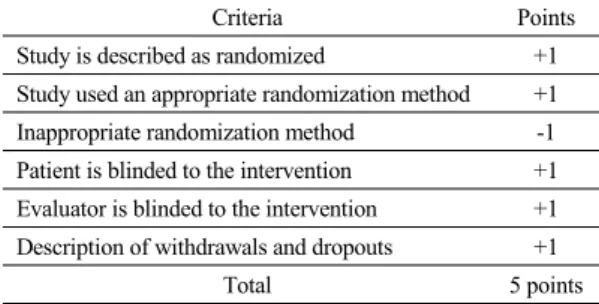
Table 1. Modified Jadad Score.
Criteria Points
Study is described as randomized +1 Study used an appropriate randomization method +1 Inappropriate randomization method -1 Patient is blinded to the intervention +1 Evaluator is blinded to the intervention +1 Description of withdrawals and dropouts +1
Total 5 points
and analyzed the full texts of the extracted data or abstracts when full texts were unavailable. The primarily selected studies were analyzed according to the year of publication and the type of study. The type of study was classified into three types:
literature study, experimental study, and clinical study. A literature study was defined as a study that comprehensively investigated and described in the findings of various literature reports with respect to a certain disease or a study with a historical focus on the literature reports. An experimental study was defined as a study that released the results of experiments with animals or cells. A clinical study included case reports.
The secondarily selected RCTs were analyzed by subdividing them by general status and research quality assessment. The general status was analyzed with regard to the year of publication, target disease, bee venom treatment methods, control group setting, treatment and follow-up duration, assessment tools, treatment outcomes, ethical approval, and adverse event reports. The research quality assessment was performed using the modified Jadad score, as described in the study by White and Ernst
4), which is slightly modified from the existing Jadad score because it is difficult for acupuncture practitioners to be blinded (Table 1).
In terms of measurement, a randomized study was assigned 1 point, a study that used an appropriate randomization method was assigned 1 point, a study
with inappropriate randomization was assigned -1 point (an undescribed randomization method was also assigned -1 point), a study in which the patients were blinded to intervention was assigned 1 point, a study in which the evaluator was blinded to the intervention was assigned 1 point, and a study that described withdrawals and dropouts was assigned 1 point.
Results
1. Study of bee venom
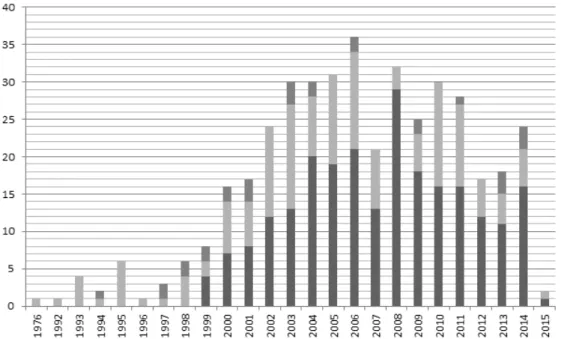
1) The number of published studies by year Since 1976, when Experimental Studies on the Effect of Bee Venom Therapy on the Analgesic, Anti-pyretic and Anti-inflammatory Action by Koh
5)was published for the first time in Korea, the research of bee venom has steadily increased. Each year since 2000, related studies have been published in the double-digits. In 2003, more than 30 related studies were first published. In 2006, the number of published studies was the highest with 36 studies.
Until 1999, experimental focused research was conducted; clinical studies began thereafter and have been conducted to a greater extent than literature or experimental research (Figure 2).
2) The number of published studies, according to the study method
The included studies were classified into three types, according the study method: literature studies, experimental studies, and clinical studies. Among 412 studies, there were 235 clinical studies (accounting for 57%), 149 experimental studies (36%), and 28 literature studies (7%) (Figure 3).
2. Classification of the literature studies.
Literature studies related to bee venom can be
largely classified into two categories. The first class
of studies investigated research trends or analyzed
Fig. 2. Number of studies published on bee venom.
Fig. 3. The classification, according to the study method. Fig. 4. The percentage of literature studies, classified by type.
studies obtained by searching the MEDLINE database (U.S. National Library of Medicine, Bethesda, MD) or journals; the second class of studies examined treatment theories with bee venom based on studies or past literature. The former class included 19
(68%) studies on research trends and literature
analysis, whereas the latter class included nine (32%)
studies on bee venom therapy (Figure 4).
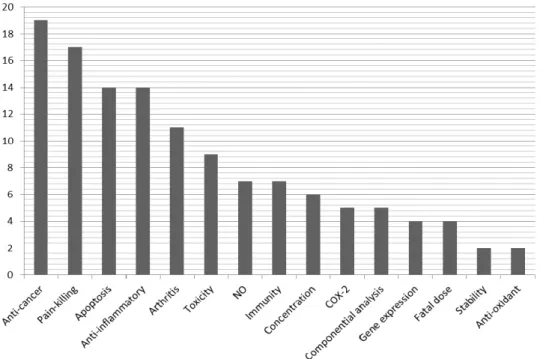
Fig. 5. The proportion of experimental papers, classified by theme.
3. The classification of the experimental studies, according to theme.
Experimental research papers related to bee venom were classified according to the purpose and theme. One study can have several purposes and themes; therefore, related studies were organized by allowing overlaps. The results were as follows: 19 studies most frequently dealt with the theme of anticancer, followed by 17 studies on pain control, 14 studies on apoptosis, 14 studies on anti-inflammatory effects, and 11 studies anti-arthritis effects. Overlapping may occur when classifying themes. For example, experiments on nitric oxide (NO) is often for its antioxidant effects and experiments on cyclooxygenase-2 (COX-2) is often to determine its anti-inflammatory analgesic action. In addition, experiments on apoptosis mostly use cancer cells, which may be intended to determine an anticancer effect (Figure 5).
4. Classification of clinical studies, according to the region of the disease.
The studies on diseases in clinical studies were classified by the region of the disease. It was difficult to classify the region of a disease because some cases involved multiple regions in a study;
however, a widely covered region was classified as the region of a disease in the study and a region with an extensive range was classified as a systemic disease. The classified regions were largely divided into facial and head, neck, upper limb, spine and torso, lumbar, genitalia, pelvic limb, and systemic disease. The studies were divided by the subject of
“nonpatients” or “hypersensitivity reactions.” The
most studied region with a disease was the lumbar
region with 45 (19%) studies, followed by systemic
disease with 38 (16%) studies and the upper limb
with 37 (16%) tudies. It was followed by (in
decreasing order) pelvic limb (13%), neck part (9%),
facial and head (8%), hypersensitivity reaction (8%),
Fig. 6. The percentage of clinical studies, classified by the region of the disease.
spine and torso (5%). With regard to a single disease, lumbar herniation of the nucleus pulposus was the most commonly studied disease among lumbar diseases with 22 studies. When expanding the region of the disease to the entire spine (i.e., cervical, thoracic, lumbar), lumbar herniation of the nucleus pulposus had the highest number of clinical cases. In addition, 12 (8%) studies were related to bee venom hypersensitivity reaction, even if there was a single case per study. Musculoskeletal diseases (e.g., fracture, arthritis, ligament disease, herniation of the nucleus pulposus) overall accounted for approximately 66% of the total studies (Figure 6).
Random-controlled Trials of Bee Venom
1. The study diseases and the number of study participants
There were seven studies on degenerative knee osteoarthritis, six studies on shoulder pain caused by stroke sequelae, six studies on back pain and herniation of the nucleus pulposus, four studies on ankle sprain, five studies on facial paralysis, four
studies on neck disease, two studies on carpal tunnel disease, one study on patients with stroke and upper limb spasticity, one study on tennis elbow, one study on central post-stroke pain, one study on cancer pain, one study on heart rate variability, one study on musculoskeletal diseases, one study on rheumatoid arthritis, and one study on allergic reaction. With regard to the number of study participants, one study had fewer than 10 participants, three studies had 11–
20 participants, 9 studies had 21–30 participants, 14 studies had 31–40 participants, 7 studies had 41–49 participants, 5 studies had 50–60 participants, 2 studies had 60–70 participants, and one study had more than 90 participants.
Bee venom treatment methods
1. Manufacturers and types.
There were 19 self-mixed studies that used dried
bee venom. Seventeen studies were provided by the
Korean Pharmacopuncture Institute, three studies
were prepared by Kyunghee Medical Center, and
three studies were prepared by Jasaeng Oriental
Medicine Hospital. Twenty-nine studies used bee venom (BV) only, 6 studies used sweet bee venom (SBV) only, and seven studies used both SBV and BV.
2. The injection site and the number of acupoints.
Four studies used one acupoint, nine studies used the A-shi point, and three studies used the joint cavity. Most studies used a variety of acupoints ranging from three points to 10 points or more.
3. The amount of injected BV into each acupoint.
Depending on the concentration, the amount of BV injection by acupoint varied from 0.01 cc to 0.1 cc, based on the study. In some studies that were included in the present study, the injected amount was changed, depending on the patients and the response.
4. The total amount of injected BV.
The total amount of injected BV also varied, and usually ranged from 0.1 cc to 1.0 cc. The highest amount used was 1.5 cc.
5. Needling depth.
In 11 studies, the needling depth was precisely indicated by the centimeter unit. However, in most studies the needling depth was ambiguously described as “subcutaneous,” “in blood,” or “intradermal,” or was not mentioned.
6. Treatment duration.
The treatment duration varied. Three studies evaluated one-time treatment. Two studies had a duration for a long-term period or 8 weeks or more;
one study had a duration of 5 weeks; nine studies had a duration of 4 weeks; 10 studies had a duration
of 2 weeks to less than 4 weeks; and six studies had a duration of less than 2 weeks, except for the three studies with the one-time treatment. In 11 studies in which the treatment duration varied according to the individual patient, the treatment duration was not indicated or could not be determined.
7. The frequency of BVA treatments.
The frequency of BVA treatment varied: three studies examined one-time treatments only, four studies examined daily treatments, 15 studies examined three times weekly treatments or every other day treatments, eight studies examined twice weekly treatments, and five studies examined 2–3 times weekly treatments. Seven studies did not indicate the frequency of treatment.
8. Total number of BVA treatments.
The total number of BVA treatments was variously distributed, and the highest number of treatments was 16 sessions, which was reported in two studies. Nine studies reported more than 10 treatments; this number excludes the studies that reported 16 treatments. Seventeen studies reported five treatments to fewer than nine treatments, and accounted for most studies. Ten studies reported fewer than four treatments, except for the three studies that used a one-time treatment. In one study, the total number of treatments was unknown.
Control group setting and combined treatment Most studies had one control group. Three studies had two control groups and one study had three control groups. Among studies having one control group, 10 studies adopted a saline solution to treat the control group; seven studies had no treatment, except for combined treatment; six studies adopted common acupuncture to treat the control group;
seven studies compared SBV and BV, and eight
studies adopted other control group treatments.
Assessment tool
The visual analog scale (VAS) was the most commonly used assessment tool, which was used in 30 studies of the 42 included studies. In addition, a variety of assessment tools were used: five studies used the Yanagihara's unweighed grading system (Y-system), four studies used painless passive range of motion (ROM) of shoulder external rotation, three studies used the Ankle-Hindfoot Scale (AHS), five studies used the Oswestry Low Back Disability Questionnaire (ODI), three studies used the Numerical Rating Scale (NRS), three studies used the pain rating score, two studies used the Nine Point Scale, and three studies used the Neck Disability Index (NDI).
Treatment outcomes
Seventeen studies indicated that the results of the assessment as treatment results were statistically significant, eight studies indicated that the results of the assessment were partially effective, and 17 studies indicated no difference between the groups.
Ethical approval and skin test
With regard to ethical approval, four studies only were approved by the institutional review board (IRB) with consent, 10 studies received written consent, and three studies provided explanation and obtained verbal consent. However, in most studies information on written consent or IRB approval was not included.
The skin test and related information was described in 20 studies. However, it was not mentioned in the remaining 22 studies.
Modified Jadad score
1. Randomization.
All included studies reported being randomized.
However, 21 studies were performed by appropriate randomization, and the remaining 21 studies merely reported that randomization was performed or were studied in an inappropriate way.
2. Blinding.
A total of 23 studies had patients blinded to the intervention, whereas the remaining 19 studies had patients unblinded to the intervention. Among the studies having patient blinding, only two studies had the evaluator blinded as well.
3. Dropouts or withdrawals.
Twenty-three studies mentioned dropouts, whereas the remaining 19 studies did not mention dropouts.
Discussion
Research articles related to bee venom began in France with the results of an experiment on applying bee stings to patients with rheumatoid disease, which was first reported in 1858 by Desjardin
48). In 1968, Habermann
49)reported the biochemical constituents of BV, and thereafter several experimental and clinical research studies with regard to the efficacy, effect, and allergic reaction of each constituent of BV have been actively published in many countries such as the United States, China, Russia, and Northern Europe. In addition, a recent attempt to analyze BVA for rheumatoid arthritis was performed through a systematic literature review and meta-analysis;
however, there is low-quality evidence, based on one
study, that BVA can significantly reduce pain and
improve the quality of life of patients with
rheumatoid arthritis, compared to the placebo control
(i.e., a normal saline injection). However, the number
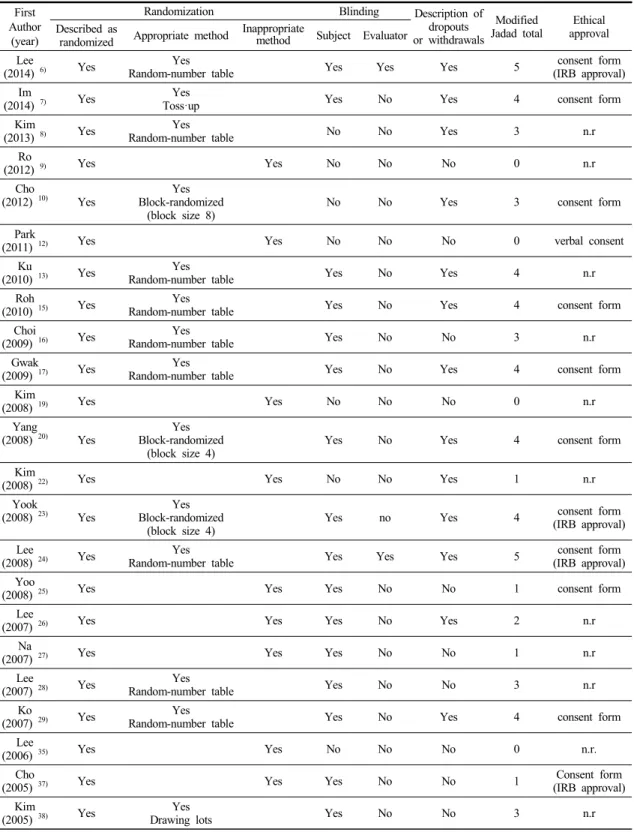
Table 3. Quality scores for the included randomized-controlled trials, according to the modified Jadad score.
First Author
(year)
Randomization Blinding Description of
dropouts or withdrawals
Modified
Jadad total Ethical approval Described as
randomized Appropriate method Inappropriate
method Subject Evaluator Lee
(2014) 6) Yes Yes
Random-number table Yes Yes Yes 5 consent form
(IRB approval) Im
(2014) 7) Yes Yes
Toss·up Yes No Yes 4 consent form
Kim
(2013) 8) Yes Yes
Random-number table No No Yes 3 n.r
Ro
(2012) 9) Yes Yes No No No 0 n.r
Cho
(2012) 10) Yes
Yes Block-randomized
(block size 8) No No Yes 3 consent form
Park
(2011) 12) Yes Yes No No No 0 verbal consent
Ku
(2010) 13) Yes Yes
Random-number table Yes No Yes 4 n.r
Roh
(2010) 15) Yes Yes
Random-number table Yes No Yes 4 consent form
Choi
(2009) 16) Yes Yes
Random-number table Yes No No 3 n.r
Gwak
(2009) 17) Yes Yes
Random-number table Yes No Yes 4 consent form
Kim
(2008) 19) Yes Yes No No No 0 n.r
Yang
(2008) 20) Yes
Yes Block-randomized
(block size 4) Yes No Yes 4 consent form
Kim
(2008) 22) Yes Yes No No Yes 1 n.r
Yook
(2008) 23) Yes Yes
Block-randomized
(block size 4) Yes no Yes 4 consent form
(IRB approval) Lee
(2008) 24) Yes Yes
Random-number table Yes Yes Yes 5 consent form
(IRB approval) Yoo
(2008) 25) Yes Yes Yes No No 1 consent form
Lee
(2007) 26) Yes Yes Yes No Yes 2 n.r
Na
(2007) 27) Yes Yes Yes No No 1 n.r
Lee
(2007) 28) Yes Yes
Random-number table Yes No No 3 n.r
Ko
(2007) 29) Yes Yes
Random-number table Yes No Yes 4 consent form
Lee
(2006) 35) Yes Yes No No No 0 n.r.
Cho
(2005) 37) Yes Yes Yes No No 1 Consent form
(IRB approval) Kim
(2005) 38) Yes Yes
Drawing lots Yes No No 3 n.r
First Author
(year)
Randomization Blinding Description of
dropouts or withdrawals
Modified Jadad total
Ethical approval Described as
randomized Appropriate method Inappropriate
method Subject Evaluator Song
(2005) 40) Yes
Yes Random-stratified
sampling Yes Yes Yes 5 verbal consent
An
(2004) 43) Yes Yes No No No 0 verbal consent
Lee
(2003) 45) Yes Yes
Toss·up No No Yes 3 n.r.
Chung
(2003) 46) Yes Yes
Toss·up No No Yes 3 n.r.
Lee
(2003) 47) Yes Yes
Toss·up No No Yes 3 n.r.
Lee
(2014) 6) Yes Yes No No No 0 consent form
Im
(2014) 7) Yes Yes No No No 0 n.r.
Kim
(2013) 8) Yes Yes
Random-number table Yes No Yes 4 consent form
Lee
(2011) 11) Yes Yes No No No 0 n.r.
Park
(2011) 12) Yes Yes
Toss·up Yes No Yes 4 n.r.
Ku
(2010) 13) Yes Yes
Toss·up Yes No Yes 4 n.r.
Park
(2010) 14) Yes Yes
Toss·up Yes No Yes 4 n.r.
Choi
(2009) 16) Yes Yes No No No 0 n.r.
Gwak
(2009) 17) Yes Yes No No No 0 n.r.
Kang
(2008) 18) Yes Yes No No No 0 n.r.
Kim
(2008) 19) Yes Yes No No No 0 n.r.
Kim
(2008) 21) Yes Yes No No No 0 n.r.
Kim
(2008) 22) Yes Yes No No Yes 1 n.r.
Yook
(2008) 23) Yes Yes Yes No Yes 2 Consent form
IRB: institutional review board; n.r.: not reported.
of studies, their quality, and the total sample size were too low to draw firm conclusions
50). Since a thesis by Kweon
51)in 1992, many studies have been published to date in Korea.
In this regard, the authors attempted to conduct a typical analysis of BV-related studies to analyze and classify comprehensively the trends and content of
BV-related studies published until 2015, and thereby to explore the directions of BV-related studies and address problems. In addition, the authors analyzed research trends and the research quality of RCT-designed studies by using various assessment criteria and the modified Jadad scale.
An examination of the number of studies by type
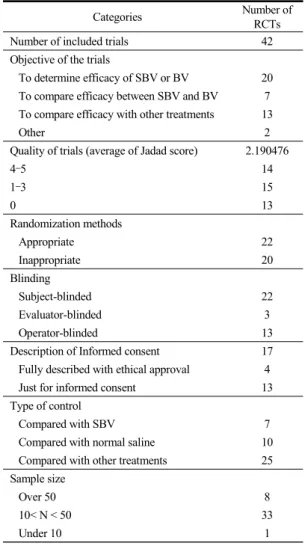
Table 4. Summary of methods in the included random-controlled trials.
Categories Number of
RCTs
Number of included trials 42
Objective of the trials
To determine efficacy of SBV or BV 20 To compare efficacy between SBV and BV 7 To compare efficacy with other treatments 13
Other 2
Quality of trials (average of Jadad score) 2.190476
4–5 14
1–3 15
0 13
Randomization methods
Appropriate 22
Inappropriate 20
Blinding
Subject-blinded 22
Evaluator-blinded 3
Operator-blinded 13
Description of Informed consent 17 Fully described with ethical approval 4
Just for informed consent 13
Type of control
Compared with SBV 7
Compared with normal saline 10 Compared with other treatments 25 Sample size
Over 50 8
10< N < 50 33
Under 10 1
BV: bee venom; RCT: random-controlled trial; SBV: sweet bee venom.