
Development of a List of Potentially Inappropri- ate Drugs for the Korean Elderly Using the Delphi Method
Dong Sook Kim, PhD1, Soon Im Heo, PhD2, Suk Hyang Lee, PharmD, PhD3
1Research Department, Health Insurance Review and Assessment Service; 2Department of Public Administration, University of Seoul, Seoul; 3Ajou University College of Pharmacy, Suwon, Korea
Objectives: This study aimed to develop a list of potentially inappropriate drugs for the elderly in Korea using the Delphi technique. Methods: A Delphi evaluation with a two-round survey was used to reach a consensus on the criteria for inap- propriate medications for the elderly in an outpatient setting. The expert panel consisted of 7 family medicine specialists, 3 psychiatrists, 1 neurologist and 3 clinical pharmacists. The level of inappropriateness was determined by considering clinical importance of the risk and availability of alternative therapy, and was rated on a scale of 1 (very low) to 4 (very high). The drugs were categorized into three groups. The first group (Group 1) was drugs that should be avoided. The second (Group 2) was for drugs that need to be monitored. And the third (Group 3) was for drugs with a low level of risk. Results: We took a list of 60 ingredients for drugs and created a list of 57 potentially inappropriate ingredients for the elderly, independent of diagnosis. Forty-two drugs were classified as Group 1. 13 drugs were classified as Group 2. And 2 drugs were classified as Group 3. Ninety-three drugs were potentially inappropriate for the elderly with 29 diagnoses. Groups 1, 2, and 3 included 63, 28, and 3 drugs, respectively. Conclusions: This study is an important development of a list of drugs potentially inappropriate for the elderly in Korea. The application of this list may be useful for identifying potentially inappropriate medication uses and decreasing drug-related problems.
Keywords: Drug Utilization Review, Elderly Patients, Prescription
Healthc Inform Res. 2010 December;16(4):231-252.
doi: 10.4258/hir.2010.16.4.231 pISSN 2093-3681 • eISSN 2093-369X
Received for review: October 15, 2010 Accepted for publication: December 23, 2010 Corresponding Author
Suk Hyang Lee, PharmD, PhD
Ajou University College of Pharmacy, Woncheon-dong, Yeongtong-gu, Suwon 443-749, Korea. Tel: +82-31-219-3679, Fax: +82-31-219-3675, E-mail: [email protected]
This is an Open Access article distributed under the terms of the Creative Com- mons Attribution Non-Commercial License (http://creativecommons.org/licenses/by- nc/3.0/) which permits unrestricted non-commercial use, distribution, and reproduc- tion in any medium, provided the original work is properly cited.
ⓒ 2010 The Korean Society of Medical Informatics
I. Introduction
As the elderly population grows, the prevalence of aging- related disease and drug expenditure has increased in Korea.
The population of age 65 or more has reached 9.6% of the to- tal population in the year 2006, and is projected to be 14.3%
by 2018 and 20.8% by 2026 [1]. Despite the fact that only 9.6
% of the population is aged 65 or older, they still account for 25% of total health expenditure, which is a relatively high medical cost compared to other age groups [2]. An aging society implies that there is a higher prevalence of chronic degenerative disease, which leads to more prescriptions for drug therapy. About 90.9% of the elderly have chronic dis- ease, and in Korea, it has been reported that 73.8% of the elderly have more than two chronic diseases [3]. It has also been reported that 77.7% of the elderly are currently tak- ing at least one medication [4]. This is a common problem
Original Article
in many countries, for instance in the United States, where more than 80% of the elderly take more than one medication [5].
Frequent exposure to medications increases the likelihood of developing complications from drug therapy. A high rate of medication use makes older adults particularly vulnerable to medication-related problems, combined with age-related physiological changes in the way drugs are absorbed, distrib- uted, metabolized, and excreted [6]. Inappropriate medica- tion use in elderly patients has been linked to a large share of adverse drug reactions [7], worsening physical functions [8], and excess health care utilization. Therefore, the use of inap- propriate medications by elderly patients is an important concern for patient safety and for the rational use of health care resources.
Copper [9] reported that 10-35% of the elderly report adverse effects after medication, and that 1/3 of all hospi- talizations of elderly patients are partly due to adverse drug reactions. Hanlon et al. [10] reported that 35% of outpatients experience drug-related side effects; 29% of those patients revisited medical facilities, including emergency rooms, to treat these side effects.
Since the 1990s, criteria have been used to assess inap- propriate medication use. At the beginning implicit criteria was developed, but which is often considered impractical to use in population-based studies. So the explicit criteria were developed by panels of experts in geriatric medicine and pharmacology. Two sets of explicit criteria, the Beers crite- ria [6,11,12] and Canadian criteria [13], have been used for safer drug administration and preparation, clinical educa- tion, health outcomes, and medical cost and benefits analysis for the last decade. Beers et al. [11] quantified the appropri- ateness of drug prescriptions for nursing home residents, and added the severity noting high or low risk in 1997 [12].
Since then, Beers criteria were updated for the Beers criteria in 2002 [6]. The Beers criteria selected inappropriate drugs for use at outpatient and long-term care facilities for the el- derly by an extensive literature review and a modified Delphi method, as evaluated by twelve geriatrics and pharmacology specialists. The Beers criteria categorize the drugs into two groups, either independent of diagnosis (ID) or considering diagnosis (CD), depending on the critical condition. This method was then selected for nursing home regulation by Center for Medicare & Medicaid Service (CMS) in July 1999, and for quality indicators for managed care plans by Health Plan and Employer Data and Information Set (HEDIS) [6,14]. Zhan’s classification consists of 33 categories of drugs, which are categorized as prohibited for the elderly regardless of dosage, frequency and duration; potentially inappropriate;
or appropriate under certain conditions [15]. McLeod et al.
[13] developed the Canadian criteria for inappropriate prac- tices in prescribing for elderly people.
Although the Beers criteria (1997, 2003) [6,12] and the Canadian criteria (1997) [13] were developed based on an extensive literature review and expert opinions, they are applied to drugs used for patients in long-term care such as nursing homes. Thus, these criteria may not be useful to assess medications given for a short time period in an out- patient setting. In addition, it may not be possible to apply the criteria to Korean people directly, since the criteria are developed for drugs used in the United States only. Addi- tionally, the expert consensus panel consisted of 6 different nationalities and some of the drugs in the list are not avail- able in South Korea. Therefore, list of potentially inappropri- ate medication for the Korean elderly need to be developed.
The purpose of this study is to develop the list of potentially inappropriate drugs for the elderly in Korea using the Del- phi technique, to reach consensus on a list from the expert panel.
II. Methods
1. Study Process
In order to identify applicable criteria for medication use for elderly persons in a community setting in Korea, this study included several steps. First, previously published criteria for potentially inappropriate drugs was reviewed and matched with the list for reimbursable drugs in Korea. Next, a survey questionnaire for the expert panel was developed. Then, opinions from the expert panel through a Delphi evaluation were compared with the Beers criteria and the Canadian criteria, and then the level of inappropriateness was deter- mined, taking into account adverse effects and availability of substitutable drugs.
2. Selection of Drugs for Which a Decision is Required We adopted list from Beers criteria [6,11,12], Canadian cri- teria [13] and Zhan’s classification [15] using Fialova et al.’s therapeutic classification [16], and identified 17 therapeutic classes as potentially inappropriate drugs, regardless of the disease. While the Beers criteria [6] indicated barbiturates as a class of drugs, we specified barbiturates to include amytal sodium, pentobarbital, secobarbital, and thiopental. With regard to disease-specific potentially inappropriate drugs for the elderly, the disease code is provided from persons who are in charge of the medical records. For this category, β-adrenergic blocking agent, anticholinergics, antihista- mines, antispasmodics, antidepressants, decongestants,
Medication Use Criteria in the Elderly non steroidal anti-inflammatory drugs (NSAIDs), calcium
channel blocker, tricyclic antidepressants (TCA), thiazide diuretic, steroids, conventional antipsychotics, and long ben- zodiazepine are included.
3. Questionnaires for the Expert Panel
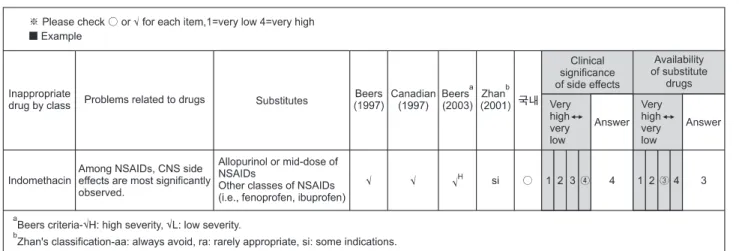
Adverse effects of pharmaceuticals and the drugs that can be substituted are presented in questionnaires for the Delphi evaluation. Three main questions for the expert panel mem- bers were clinical importance of side effects, availability of possible substitute drugs, and conditions for which drugs should be used. The first two questions were answered on 4-response Likert scales and the last question was open ended.
The drug-related side effects were summarized after a re- view of Beers et al. [11,12,6], McLeod et al. [13], and Zhan et al. [15], and substitutable drugs were as specified by the WHO Collaborating Center [17], KIMS data, and MICRO- MEDEX Healthcare Series (Figure 1). The second round questionnaires were consisted of evaluating appropriateness of indicators using potentially inappropriate drugs for the elderly and suggesting other opinion in the second round if they did not agree with results from the first round.
4. The Expert Panel Members and Data Collection The expert panel consisted of 14 geriatric specialists, includ- ing 7 family medicine specialists, 3 psychiatrists, 1 neurolo- gist and 3 clinical pharmacists. The expert panel performed the survey in two rounds.
From the first round of Delphi evaluations, the drugs were categorized into three groups based on answers from the first two questions. Drugs for which more than 50% of panel members answered level 3 or 4 for both questions were classified as group 1. If less than 50% of panel members answered level 3 or 4 for either question, those drugs were
identified as group 2 and the remaining drugs were identi- fied as group 3 (Table 1).
In the second round, the expert panel could suggest their opinion if they did not agree with results from the first round and the utility data of drugs with group 1 were pro- vided for reference. The categories were adjusted and final- ized into three groups for the elderly: drugs that should be avoided (group 1), those that need to be monitored (group 2), and drugs with a low level of risk (group 3).
III. Results
1. Potentially Inappropriate Drugs, Independent of Diag- nosis
The expert panel developed a list of 57 potentially inappro- priate ingredients for the elderly, independent of diagnosis, among the 60 ingredients. Forty-two drugs were classified
Table 1. The operational definition of agreement Agree on clinical
importance of adverse effects (no. of experts)
Agree on substitutable
drug (no. of experts) Level
8-14 8-14 1
4-7 2
0-3 2
4-7 8-14 2
4-7 3
0-3 3
0-3 8-14 3
4-7 3
0-3 3
Figure 1. Example for survey questionnaire. NSAIDs: non steroidal anti-inflammatory drugs, CNS: central nervous systems.
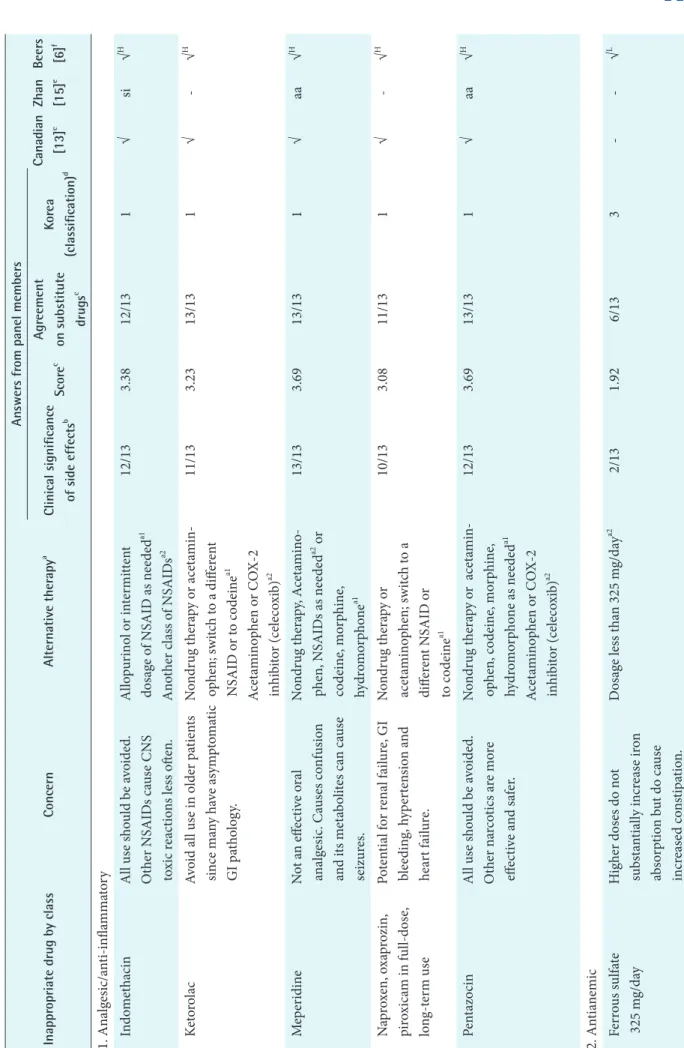
Table 2. Comparison of potentially inappropriate drugs for the elder patients independent of diagnosis Inappropriate drug by classConcernAlternative therapya
Answers from panel members Canadian [13]cZhan [15]eBeers [6]fClinical significance of side effectsbScorecAgreement on substitute drugsc
Korea (classification)d 1. Analgesic/anti-inflammatory IndomethacinAll use should be avoided. Other NSAIDs cause CNS toxic reactions less often.
Allopurinol or intermittent dosage of NSAID as neededa1 Another class of NSAIDsa2
12/133.3812/131√si√H KetorolacAvoid all use in older patients since many have asymptomatic GI pathology.
Nondrug therapy or acetamin- ophen; switch to a different NSAID or to codeinea1 Acetaminophen or COX-2 inhibitor (celecoxib)a2
11/133.2313/131√-√H MeperidineNot an effective oral analgesic. Causes confusion and its metabolites can cause seizures.
Nondrug therapy, Acetamino- phen, NSAIDs as neededa2 or codeine, morphine, hydromorphonea1
13/133.6913/131√aa√H Naproxen, oxaprozin, piroxicam in full-dose, long-term use
Potential for renal failure, GI bleeding, hypertension and heart failure.
Nondrug therapy or acetaminophen; switch to a different NSAID or to codeinea1
10/133.0811/131√-√H PentazocinAll use should be avoided. Other narcotics are more effective and safer.
Nondrug therapy or acetamin- ophen, codeine, morphine, hydromorphone as neededa1 Acetaminophen or COX-2 inhibitor (celecoxib)a2
12/133.6913/131√aa√H 2. Antianemic Ferrous sulfate 325 mg/dayHigher doses do not substantially increase iron absorption but do cause increased constipation.
Dosage less than 325 mg/daya2 2/131.926/133--√L
Medication Use Criteria in the Elderly
Table 2. Continued 1 Inappropriate drug by classConcernAlternative therapyaAnswers from panel members Canadian [13]cZhan [15]eBeers [6]fClinical significance of side effectsbScorecAgreement on substitute drugscKorea (classification)d 3. Antiarrhythmic AmiodaroneAssociated with QT prolongation and torsades de pointes. Lack of efficacy in the elderly.
Class III antiarrhythmic agent, ibutilide, dofetillidea210/133.0810/131--√H Digoxin 0.125 mg/day (except in atrial arrhythmias)
Doses should not exceed 0.125 mg/d except when treating atrial arrhythmias. Dimin- ished renal clearance increases the risk of toxicity.
Dosage no more than 0.125 mg/day except atrial arrhythmias. close monitoring on serum concentrationa2
9/132.925/132--√L DisopyramideStrong anticholinergic and negative inotropic effects make this agent a poor antiarrhythmic choice.
Digoxin, quinidine, procainamidea112/133.4611/131√si√H 4. Anticholinergic Anticholinergic and antihistamines: chlorpheniramine, diphenhydramine, hydroxyzine, cyproheptadine, promethazine
All nonprescription and many prescription antihistamines can have potent anticholiner- gic effects and cause confusion and sedation. To treat allergic reactions, use nonanticholin- ergic antihistamines rather than these agents.
Antihistamines without anticholinergic effecta19/142.9312/141-si√H Gastrointestinal antispas modics: dicyclomine, hyoscyamine, propanthe- line, belladonna alkaloidsAll have uncertain effectiveness and are strongly anticholiner- gic. Avoid all use - particularly long-term use.
Stop unless severe gastrointestinal spasmodic diseasea2
12/143.299/141-aa√H
Table 2. Continued 2 Inappropriate drug by classConcernAlternative therapyaAnswers from panel members Canadian [13]cZhan [15]eBeers [6]fClinical significance of side effectsbScorecAgreement on substitute drugscKorea (classification)d 5. Anticlotting Dipyridamole, short-actingShort-acting form (persantine) may cause orthostatic hypoten- sion. Long-acting form may be appropriate in persons who have artificial heart valves.
ASA, ticlopidinea1 ASA, clopidogela24/132.3110/122√si√L TiclopidineNo more effective than ASA in preventing clotting; safer alternatives exist.
Aspin, clopidogela2 9/133.0812/131-si√H 6. Antidepressant AmitriptylineBecause amitriptyline and doxepin are very sedating and anticholinergic, their use should be avoided.
TCA or SSRI without active metabolitesa1 TCA: nortriptyline, desipramine, protriptyline, venlafaxine, duloxetin SSRI: fluvoxamine, fluoxetine
10/142.8611/141√si√H Doxepin12/143.1412/141-si√H Fluoxetine (daily)Has a long half-life and can produce insomnia and agita- tion. Safer alternatives exist.
Other SSRI10/142.7114/141--√H ImipramineMay cause antigholinergic side effectsTCA or SSRI without active metabolites8/142.7114/142√-- 7. Antihypertensive ClonidinePotential for hypotension and CNS side effects.Other antihypertensive drugsa17/132.6912/132--√L DoxazosinPotential for hypotension and dry mouth. Can exacerbate symp- toms of stress incontinence and mixed-cause incontinence.
Other antihypertensive drugsa15/132.3812/132--√L
Table 2. Continued 3 Inappropriate drug by classConcernAlternative therapyaAnswers from panel members Canadian [13]cZhan [15]eBeers [6]fClinical significance of side effectsbScorecAgreement on substitute drugscKorea (classification)d MethyldopaAll use should be avoided. Methyldopa causes bradycardia and can exacerbate depression in the elderly. Safer antihyper- tensives are available.
Other antihypertensive drugsa110/133.0812/131-si√H Nifedipine, short-actingPotential for hypotension and constipation.Other antihypertensive drugsa16/132.5413/132--√H Reserpine 0.25 mg/dayAll use should be avoided. Safer antihypertensives are available.Other antihypertensive drugsa110/133.2313/131√si√H 8. Antipsychotic MesoridazineCNS and extrapyramidal side effects.Dose changea2 12/143.4612/141--√H ThioridazineGreater potential for CNS and extrapyramidal side effects.Discontinue9/103.509/101--√H 9. All barbiturates except phenobarbital and except seizure control Amytal sodium, pentobarbital, secobarbital, thiopentalAre highly addictive and cause more adverse effects than most sedative or hypnotic drugs in elderly patients
Nondrug therapy or lower dosage of short-half-life BZDa1 Nondrug therapy or short- half-life BZD as needed (i.e., lorazepam, midazolam, alpra- zolam). Barbiturate for only seizure treatmenta2
14/143.7913/141√aa√H 10. Ergot mesyloid Ergoloid mesylateAll use should be avoided. Have not been shown effective in the doses studied.
Another migraine treatment drugsa26/142.4311/142--√L
Table 2. Continued 4 Inappropriate drug by classConcernAlternative therapyaAnswers from panel members Canadian [13]cZhan [15]eBeers [6]fClinical significance of side effectsbScorecAgreement on substitute drugscKorea (classification)d 11. H2 antagonist CimetidineCan cause confusion and delirium.Another H2-blockera2 3/132.2312/132--√L 12. Hormonal Estrogens only (oral)No cardioprotective effect. Significant risk of carcinogenic effects (breast and endome- trial cancer)
Estrogen/progesteron combinationa25/132.239/132--√L MethyltestosteronePotential for prostatic hyper- trophy and cardiac problems.10/132.774/132--√H 13. Hypoglycemic ChlorpropamideAll use should be avoided. Other oral hypoglycemics have shorter half-lives and do not cause SIADH.
Sulfonylurea class 2nd genera- tion oral hypoglycemic agents or other oral hypoglycemic agentsa2
13/133.6912/131-aa√H 14. Laxative Long-term use of stimu- lant laxative: bisacodyl, cascara sagrada
May be appropriate in the presence of opiate analgesic use. Otherwise, may exacer- bate bowel dysfunction.
For constipation without using narcotic pain killer, nondrug therapy then bulk laxatives (i.e., psyllium) or osmotic laxatives (i.e., magnesium oxidea2
8/132.7713/131--√H 15. Muscle relaxants and antispasmodics Carisoprodol, chlorzoxa- zone, cyclobenzaprine, metaxalone, methocar- bamol, orphenadrine
The doses needed to achieve a therapeutic effect generally produce anticholinergic side- effects poorly tolerated by the elderly.
Nondrug therapy and medical nutrition therapy, calcium-channel blocker for diarrhea, physical therapy, heat and cold or TENS+a1
10/133.0812/131√ra√H Oxybutynin short-release formbShort term for severe gastroin- testinal spasmodic diseasea211/142.9311/141-si√H
Medication Use Criteria in the Elderly
Table 2. Continued 5 Inappropriate drug by classConcernAlternative therapyaAnswers from panel members Canadian [13]cZhan [15]eBeers [6]fClinical significance of side effectsbScorecAgreement on substitute drugscKorea (classification)d 16. Sedative ChlordiazepoxideThese agents have very long half-lives, cause prolonged sedation and increase the risk of falls and fractures.
Nondrug therapy or low dos- age of short-half-life BZDa1 Nondrug therapy or short- half-life BZD as needed (ie, alprazolam, lorazepam, midazolam)a2
13/143.2914/141√ra√H Diazepam11/133.0812/131√ra√H FlurazepamThese agents have very long half-lives, cause prolonged sedation and increase the risk of falls and fractures
11/133.3812/131√aa√H Triazolam 0.25 mg/dayWith rare exceptions, the agents should be used only in persons who are physically dependent or who are be- ing treated with short-course therapy for an acute condi- tion.
Nondrug therapy, minimum dosage for short-term as neededa2
6/102.808/101√-√H Short-acting BZD, lorazepam 3 mg/day, oxazepam 60 mg/day, alprazolam 2 mg/day, temazepam 15 mg/day
5/132.388/132√H 17. Stimulant Methylphenidate (to treat depression)May cause agitation, stimula- tion of CNS and seizuresSSRI or short-half-life TCA without active metabolitea210/132.9211/131√--
into group 1 (drugs that need to be avoided), 13 drugs into group 2 (drugs that need to be monitored), and 2 drugs into group 3 (drugs with minimal harm to the elderly) (Table 2).
Table 2 shows the list of potentially inappropriate drugs, in- dependent of diagnosis. Among all of the drugs from drugs of both Beer Criteria [6] and Canadian Criteria [13], thirty drugs were not listed and three ingredients that are consid- ered to be inappropriate for the elderly were excluded. The drugs that were excluded were antibacterial (nitrofurantoin), antiemetic (trimethobenzamide) and vasodilatory (cy- clandelate). The unlisted drugs were analgesic/anti-inflam- matory (mefenamic acid, phenylbutazone), anticholinergic (tripelennamine, dexchlorpheniramie, clidinum, clidinum- chlordiazepoxide), antidiarrheal (diphenoxylate), antiemetic (trimethobenzamide), antihypertensive (guanadrel, guaneth- idine), antipsychotic (perphenazine-amitriptyline), diuretic (ethacrynic acid), hormonal (dessicated thyroid), laxative (mineral oil), niacin, sedative (meprobamate, quazepam, halazepam, chlorazepam), stimulants (amphetamine and anorexics, methylphenidate) and vasodilatory (isoxsuprine, nylidin).
Iron supplements were categorized into group 3. For the treatment of anemia, a daily dose of less than 325 mg per day is recommended, due to the risk of constipation. NSAIDs with a high risk of central nervous system side effects, gas- trointestinal ulcer bleeding, renal failure, high blood pressure and heart failure are included in group 1. Acetaminophen, for minor pain relief, or other NSAIDs, with fewer side ef- fects, are recommended for a minimum period as substitute drugs. For chronic pain, such as arthritis, COX-2 inhibitors are recommended for patients that do not have any risks for cardiovascular events, such as myocardial infarction. Nar- cotic analgesics, meperidine and pentazocin are categorized into the group 1, and are also included in the Beers, Canadi- an, and Zhan criteria. Due to adverse side effects of these an- algesics, including confusion and hallucination, the risk that these may occur among patients with delirium or dementia would have increased. For severe pain relief, other narcotic analgesics such as codeine, morphine or hydromorphine are recommended. Aspirin and clopidogrel are relatively safe an- ticoagulants to use for the elderly. Ticlopidine is categorized into group 1, due to its side effect on inducing myelosuppres- sion. Anticholinergic drugs are categorized into group 1, due to the adverse effects of confusion, hallucination, worsening dementia, sedation, dry mouth, urinary retention, hydro- dipsomania and ischuria. Second-generation antihistamine drugs are recommended for use instead of antihistamine/
anticholinergic combination drugs. Among antispasmodic agents, dicyclomine and propantheline are categorized into Table 2. Continued 6 Inappropriate drug by classConcernAlternative therapyaAnswers from panel members Canadian [13]cZhan [15]eBeers [6]fClinical significance of side effectsbScorecAgreement on substitute drugscKorea (classification)d 18. Vasodilator Pentoxifylline (to treat dementia)Ineffective treatment for dementia and moderate risk of side effects
Discontinue6/122.8311/122√-- Oxybutynin in class 15 was classified anticholinergic in Fialova et al. [16]. However, it is classified as muscle relaxants and antiasmonic according to Beers criteria [6]. CNS: central nervous system, NSAIDs: non steroidal anti-inflammatory drugs, GI: gastrointestinal, ASA: acetylsalicylic acid, TCA: tricyclic antidepressant, SSRI: selective serotonin reuptake inhibitor, BZD: benzodiazepines, SIADM: syndrome of inappropriate antidiuretic hormone secretion. a References for substitute drugs: a1 McLeod [13], a2 MICROMEDEX (www.micromedex.com). b Indicates the number of respondents who answered 3 or more points/number of re- spondents for the agreement on the clinical importance of side effect and alternative drugs. c The average scores among those who answered the clinical importance of side effect as 4-likert scale. d Korean classification: group 1 drugs need to be avoided, group 2 drugs need to be monitored, group 3 drugs without need of monitoring due to minimal danger to the elderly. e Zhan's classification - aa: always avoid, ra: rarely appropriate; si: some indications. f Beers criteria - √H : high severity, √L : low severity.
Medication Use Criteria in the Elderly group 1. It is recommended to discontinue use of anticholin-
ergic agent medications unless severe gastrodynia is present.
Oxybutynin, which is rapidly absorbed, is recommended to use for only a short period. Antidepressants with strong an- ticholinergic effects, such as amitriptyline, imipramine and doxepin, are categorized into group 1. For substitute drugs, TCAs without persistent active metabolites, such as nortryp- tyline, desipramine and protriptyline or selective serotonin reuptake inhibitor (SSRI), or with a short half-life such as fluvoxamine, are recommended. Fluoxetine, which has a long half-life, is categorized into group 1. Muscle relaxant or antispasmodic agents, such as carisoprodol, chlorzoxazone, cyclobenzaprine, metaxalone, methocarbamol and orphen- adrine, also have strong anticholinergic side effects. There- fore, instead of these, non-pharmacological therapy, medical nutrition therapy or physical therapy is recommended. Anti- hypertensive drugs with central nervous system side effects, such as clonidine, methyldopa and reserpine, are categorized into group 1 or 2. These medications are rarely used; howev- er, they are required to be taken into consideration. An alpha blocker such as doxazocin, and a short-acting calcium block- er such as nifedipine, are in high risk that they carry a high risk of patient fall due to orthostatic hypotension. Instead, a long-acting calcium blocker and a low dose of diuretics are recommended for hypertensive drugs. Benzodiazepines are less addictive and have fewer side effects than barbiturates (group 1), including fewer falls, fractures and CNS side ef- fects (e.g., stupor). However, diazepam, chlordiazepoxide and flurazepam with a long half-life are categorized into group 1, due to a high risk of side effects with an increased effect of sedation. Instead, benzodiazepines (group 2) with a short half-life are recommended. The increased sensitivity of drug effects among the elderly requires lower doses; lo- razepam 3 mg/day, oxazepam 60 mg/day, alprazolam 2 mg/
day, and temazepam 15 mg/day, as needed for a minimum period.
2. Potentially Inappropriate Medical Use in Older Adults Considering Diagnoses or Conditions
As shown in Table 3, there were 93 drugs potentially inap- propriate for the elderly with 29 diagnoses, group 1, group 2, and group 3 included 63, 28, and 3 drugs, respectively.
Drugs for anorexia and malnutrition (dextroamphetamine, methamphetamine, pemolin) and cognitive impairment (dextroamphetamine, methamphetamine, and pemollin) were excluded from Beers’s criteria [6] because they were not included in the reimbursable drug list in Korea. Chlor- diazepoxide-amitriptyline, clidinium-chlordiazepoxide, quazepam and halazepam needed to be carefully monitored
for chronic obstructive pulmonary disease (COPD) patients, and guaethidine for patients with depression were excluded because they are not on the market in Korea. Phenylpropa- nolamine hydrochloride for hypertension was also removed from the US market in 2001 and Beers criteria. On the other hand, anorexia and malnutrition (fluoxetin) was removed based upon the consensus among the researcher.
Among 29 diseases, the clinical importance of syndrome of inappropriate secretion of antidiuretic hormone (SI- ADH)/hyponatremia has not been appreciated. Therefore, Citalopram and fluoxepine are categorized into group 3.
Because TCAs in group 1, including amitryptyline, doxepin, imipramine, carry a high risk of arrhythmia due to an in- crease in electrocardiogram (ECG) QT interval, SSRIs are recommended as antidepressants for elderly patients with arrhythmia. Anticholinergic drugs, such as oxybutynin and tolerodine (which have side effects such as urinary retention) antihistamine agents, antispasmodic agents, antidepressants, and muscle relaxants are categorized into group 1. Any ad- verse effects of anticholinergic drugs, muscle relaxants and barbiturates on the CNS should be carefully monitored. It is recommended to stop the use of methylphenidate (group 1). With an increase in the prevalence of COPD among the elderly, long acting drugs such as diazepam, chlordiazepate and chlordiazepoxide with a risk of respiratory inhibition are categorized into group 1. Group 1 included the substitute drug, propanolol (group 1), which inhibits bronchodilata- tion. For patients with hypertension, drugs that interact with the sympathetic nervous system, such as amphetamines, phenylpropanolamine (approval cancelled), pseudoephed- rine and appetite suppressants, are categorized into group 1.
For insomnia patients, drugs with stimulatory effects, such as amphetamines, methylphenidate, monoamine oxidase inhibitor (MAOI), and theophylline are included in group 1. Since antidopaminergic and anticholinergic agents could worsen Parkinson’s disease, it is recommended that meto- clopramide, gastroprokinetic agents. And tacrine, an anti- cholinergic agent, be substituted for domperidone and other Alzheimer medications, respectively. Trycyclic antidepres- sants with a risk of orthostatic hypotension and syncope are categorized into group 1. For patients with stress-induced urinary incontinence, alpha-blockers including doxazocin, prazocin and terazocin and TCAs are categorized into group 1, due to worsening urinary incontinence.
IV. Discussion
As the aged population grows, the prevalence of chronic de- generative diseases has increased, along with the number of
Table 3. Comparison of potentially inappropriate medication use in the older adults considering diagnoses or condition [6,13] Disease/inappropriate drugConcernAlternative therapyaAnswers from panel members Canadian [13]Beers [6]c Clinical significance in side effectsAgreement on substitute drugsKorea (classification)b A. Alimentary 1. Gastric or duodenal ulcers Aspirin (325 mg use)May exacerbate existing ulcers or produce new/additional ulcers.
Acetaminophen or COX-2 inhibitor10/1313/131-√H NSAIDs excluding Coxib11/1312/131-√H 2. Peptic ulcer NSAIDs (long-term use)j May cause recurrence of peptic ulcer.Nondrug therapy or acet- aminophen or NSAID with gastroprotective agenta1
12/1310/131√ 3. Chronic constipation Amitriptyline HClMay exacerbate constipationSSRIa2 7/1312/132-√L Doxepine HCl7/1313/132-√L Iimipramine HCl7/1312/132-√L Anticholinergicsh Nondrug therapy, bulk or osmotic laxatives as neededa28/1311/131-√L Calcium channel blockere Another class of hypertensive drugsa26/1311/132-√L 4. Anorexia and malnutrition MethylphenidateConcern due to appetite-sup- pressing effectsDiscontinuea2 11/147/132-√H 5. Obesity OlanzapineMay stimulate appetite and increase weight gainLoxapine. Monitoring the diet and weighta29/149/141-√H 6. NDDM Steroids (long-term use)k May worsen NDDM.Inhaled steroid or bronchidi- lator with close monitoring of blood glucose levela1
12/136/132√-
Medication Use Criteria in the Elderly
Table 3. Continued Disease/inappropriate drugConcernAlternative therapyaAnswers from panel members Canadian [13]Beers [6]c Clinical significance in side effectsAgreement on substitute drugsKorea (classification)b B. Blood and blood forming organs 7. Blood clotting disorders or receiving anticoagulant therapy AspirinMay prolong clotting time and elevate INR values or inhibit platelet aggregation, resulting in an increase potential for bleeding.
Mimimal dose with carefully monitoring INR and hemorrhagea2
9/134/132√H Clopidogrel11/137/132√H Dipyridamole10/139/132√H Ticlopidine10/1310/132√H NSAIDsj May cause increased bleeding for patients already receiving.Nondrug therapy; or acet- aminophen or NSAID with gastroprotective agenta1
7/128/122√√H CimetidineMay inhibit warfarin metabolism and increase the risk of bleeding.
Another histamine-receptor antagonista16/1211/122√- ASA May cause increased bleeding for patients already receiving.Acetaminophen for not anticoagulant but antipyretic drugsa1
8/118/111√- 8. Raynaud disease β-adrenergic blocking agent (long-term use)lMay worsen Raynaud disease.Calcium-channel blockera1 9/1311/131√- C. Cardiovascular system 9. Arrhythmias Amitriptyiline HClConcern due to proarrhythmic effects and ability to produce QT interval changes.
SSRIa2 11/1312/131-√H Doxepine HCl12/1312/131-√H
1
Table 3. Continued Disease/inappropriate drugConcernAlternative therapyaAnswers from panel members Canadian [13]Beers [6]c Clinical significance in side effectsAgreement on substitute drugsKorea (classification)b Imipramine HCl11/1313/131-√H 10. Heart failure DisopyramideNegative inotropic effect. Po- tential to promote fluid reten- tion and exacerbation of heart failure.
Encainide or flecainide, indecainide, moricizinea210/1312/121-√H Alginate bicarbonate, biphosphate, citrate phosphate, salicylate, sulfate Nondrug therapy. If neces- sary, close monitoring blood pressure required. Diuretics as neededa2
10/139/131-√H Calcium channel blockere May worsen heart failure.Diuretics or ACE inhibitor or botha18/1312/131√- β2/adrenergic blocking agentlMay exacerbate heart failure.Nitratea1 6/1310/132√- NSAIDsj (long-term use) May cause salt and water reten- tion, may worsen heart failure.Nondrug therapy or acetaminophen with close monitoring arrythmiaa1
7/1310/132√- TCAm May worsen heart block.SSRIa1 10/1314/141√- 11. Hypertension AmphetamineMay produce elevation of blood pressure secondary to sympa- thomimetic activity.
Discontinue, nondrug therapya211/1311/131-√H Diet pill Phenylpropanolamine HCl Pseudoephedrine NSAIDsj (long-term use)May cause salt and water re- tention and exacerbation of hypertension.
Nondrug therapy, acetamino- phen or ASA, or close moni- toring of blood pressurea1
8/139/131√-
2
Medication Use Criteria in the Elderly
Table 3. Continued Disease/inappropriate drugConcernAlternative therapyaAnswers from panel members Canadian [13]Beers [6]c Clinical significance in side effectsAgreement on substitute drugsKorea (classification)b 12. Postal hypotension ChlorpromazineMay worsen postural hypoten- sion and cause falls.Strong antipsychotic drugs such as haloperidol with continuous monitoring of blood pressurea1
11/1412/141√- TCAm May worsen postural hypoten- sion and cause falls.SSRI with continuous moni- toring of blood pressurea110/1412/141√- G. Genito urinary system and sex hormones 13. BPH TCAm May cause urinary retension in patients with BPH SSRI a1 9/139/131√- 14. Bladder outflow obstruction FlavoxateMay decrease urinary flow, lead- ing to urinary retention.-12/1310/121-√H Oxybutynin-11/139/121-√H Tolterodine-11/139/121-√H Anticholinergicsh -10/137/122-√H Antihistaminesn -11/1310/121-√H Antispasmodicsd -12/139/12 1-√H Antidepressantsf -9/138/121-√H Decongestantq -9/137/122-√H Muscle relaxantsni -10/139/121-√H 15. Stress incontinence DoxazosinMay produce polyuria and worsening of incontinence.Another class of antihypertensive drugsa2 9/1312/131-√H Prazocin10/1312/131-√H Terazosin10/1312/131-√H
3
Table 3. Continued Disease/inappropriate drugConcernAlternative therapyaAnswers from panel members Canadian [13]Beers [6]c Clinical significance in side effectsAgreement on substitute drugsKorea (classification)b Amitriptyiline HClSSRIa2 7/1313/131-√H Doxepine HCl8/1313/131-√H Imipramine HCl7/1312/132-√H AnticholinergicsNondrug therapya2 9/138/131-√H Long benzodiazepinesp -9/139/131-√H 16. SIADH/hyponatremia CitalopramMay exacerbate or cause SIADHTCAa2 3/1311/133-√L Fluoxepines4/1311/133-√L Fluvoxamine6/1311/132-√L Paroxetine5/1311/132-√L Sertaraline4/1312/132-√L 17. Renal failure NSAIDsj (long-term use)May worsen renal failure, may cause salt and water retention.Nondrug therapy or acet- aminophena18/107/102√- M. Musculo-skeletal system 18. Gout Thiazide diureticg May precipitate or worsen gout.Another class of hypertensive drugsa29/1312/121√- N. Nervous system 19. Cognitive Impairment MethylphenidateConcern due to CNS-altering effects.Discontinue or nondrug therapya210/148/141-√H Muscle relaxantsi 11/144/132-√H Anticholinergicsh 13/145/142-√H Antispasmodicsd 12/146/142-√H Barbituratesr 12/1412/141-√H
4
Medication Use Criteria in the Elderly
Table 3. Continued Disease/inappropriate drugConcernAlternative therapyaAnswers from panel members Canadian [13]Beers [6]c Clinical significance in side effectsAgreement on substitute drugsKorea (classification)b 20. Depression MethyldopaMay produce or exacerbate depression.Another class of hypertensive drugs11/1413/141-√H Reserpine12/1412/141-√H 21. Insomnia AmphetaminesConcern due to CNS stimulant effects.Discontinuea2 13/1411/141-√H MethylphenidateDiscontinuea2 11/1410/141-√H Theophylline (Theodur)Another class of bronchodilator a212/1412/141-√H Decongestantsq Nondrug therapya2 10/148/142-√H MAOIs TCAa2 12/1411/141-√H 22. Parkinson's disease MetoclopramideConcern due to antidopaminer- gic/cholinergic effects.Domperidonea2 11/1410/141-√H TacrineAnother class of drugs such as nootropicsa212/1412/141-√H Conventional antipsychoticsoSSRIa2 13/1414/141-√H 23. Receiving and MAOIs to treat depresseion SSRIt May extend adverse effects of SSRIAvoid combining; ensure a wash-out period of at least 7 days if switching from and MAOI to an SSRIa1
Excluded due to contraindication√- 24. Seizure or epilepsy ChlorpromazineMay lower seizure thresholds.-11/1310/131-√H Clozapine-11/139/131-√H
5
Table 3. Continued Disease/inappropriate drugConcernAlternative therapyaAnswers from panel members Canadian [13]Beers [6]c Clinical significance in side effectsAgreement on substitute drugsKorea (classification)b Thioridazine-12/1310/131-√H Thiothixene-12/1310/131-√H 25. Seizure disorder BupropionMay lower seizure thresholds.-10/1312/131-√H 26. Syncope or falls Amitriptyiline HClMay produce ataxia, impaired psychotmotor function, syncope, and additional falls.
SSRIa2 10/1312/131-√H Doxepine HCl11/1313/131-√H Imipramine HCl12/1312/131-√H Short-to intermediate- acting benzodiazepinesu-9/139/131-√H R. Respiratory system 27. Asthma β-adrenergic blocking agentlMay exacerbate respiratory disease or heart failureAnother class of antihyper- tensive drugsa19/127/132√- 28. COPD ChlorazepateCNS adverse effects. May induce respiratory depression. May exacerbate or cause respiratory depression.
Nondrug therapya2 11/138/131-√L Chlordiazepoxide10/139/131-√L Diazepam10/138/121-√L PropranololMay exacerbate respiratory depression.Calcim channel blockera2 9/1311/131-√L β-adrenergic blocking agentlNitrate, calcium-channel blockera111/1310/131√- S. Sensory organs
6
![Table 2. Continued 1 Inappropriate drug by classConcernAlternative therapyaAnswers from panel membersCanadian [13]cZhan [15]eBeers [6]fClinical significance of side effectsbScorecAgreement on substitute drugscKorea (classification)d 3](https://thumb-ap.123doks.com/thumbv2/123dokinfo/5231906.127391/5.935.155.804.93.1133/inappropriate-classconcernalternative-therapyaanswers-memberscanadian-significance-effectsbscorecagreement-drugsckorea-classification.webp)
![Table 2. Continued 2 Inappropriate drug by classConcernAlternative therapyaAnswers from panel membersCanadian [13]cZhan [15]eBeers [6]fClinical significance of side effectsbScorecAgreement on substitute drugscKorea (classification)d 5](https://thumb-ap.123doks.com/thumbv2/123dokinfo/5231906.127391/6.935.126.826.72.1134/inappropriate-classconcernalternative-therapyaanswers-memberscanadian-significance-effectsbscorecagreement-drugsckorea-classification.webp)
![Table 2. Continued 3 Inappropriate drug by classConcernAlternative therapyaAnswers from panel membersCanadian [13]cZhan [15]eBeers [6]fClinical significance of side effectsbScorecAgreement on substitute drugscKorea (classification)d MethyldopaAll use sho](https://thumb-ap.123doks.com/thumbv2/123dokinfo/5231906.127391/7.935.169.795.110.1133/inappropriate-classconcernalternative-therapyaanswers-memberscanadian-significance-effectsbscorecagreement-classification-methyldopaall.webp)
![Table 2. Continued 4 Inappropriate drug by classConcernAlternative therapyaAnswers from panel membersCanadian [13]cZhan [15]eBeers [6]fClinical significance of side effectsbScorecAgreement on substitute drugscKorea (classification)d 11](https://thumb-ap.123doks.com/thumbv2/123dokinfo/5231906.127391/8.935.134.828.113.1133/inappropriate-classconcernalternative-therapyaanswers-memberscanadian-significance-effectsbscorecagreement-drugsckorea-classification.webp)
![Table 2. Continued 5 Inappropriate drug by classConcernAlternative therapyaAnswers from panel membersCanadian [13]cZhan [15]eBeers [6]fClinical significance of side effectsbScorecAgreement on substitute drugscKorea (classification)d 16](https://thumb-ap.123doks.com/thumbv2/123dokinfo/5231906.127391/9.935.152.805.97.1138/inappropriate-classconcernalternative-therapyaanswers-memberscanadian-significance-effectsbscorecagreement-drugsckorea-classification.webp)
![Table 3. Comparison of potentially inappropriate medication use in the older adults considering diagnoses or condition [6,13] Disease/inappropriate drugConcernAlternative therapyaAnswers from panel membersCanadian [13]Beers [6]c Clinical significance in s](https://thumb-ap.123doks.com/thumbv2/123dokinfo/5231906.127391/12.935.136.821.105.1127/potentially-inappropriate-considering-inappropriate-drugconcernalternative-therapyaanswers-memberscanadian-significance.webp)
![Table 3. Continued Disease/inappropriate drugConcernAlternative therapyaAnswers from panel membersCanadian [13]Beers [6]cClinical significance in side effectsAgreement on substitute drugsKorea (classification)b B](https://thumb-ap.123doks.com/thumbv2/123dokinfo/5231906.127391/13.935.138.821.76.1133/inappropriate-drugconcernalternative-therapyaanswers-memberscanadian-significance-effectsagreement-drugskorea-classification.webp)
![Table 3. Continued Disease/inappropriate drugConcernAlternative therapyaAnswers from panel membersCanadian [13]Beers [6]c Clinical significance in side effectsAgreement on substitute drugsKorea (classification)b Imipramine HCl11/1313/131-√H 10](https://thumb-ap.123doks.com/thumbv2/123dokinfo/5231906.127391/14.935.125.827.91.1131/inappropriate-drugconcernalternative-therapyaanswers-memberscanadian-significance-effectsagreement-classification-imipramine.webp)
