튜브형 충돌에너지흡수부재의 좌굴불안전성에 대한 연구
The study on the buckling instability of tube type crash energy absorber
최 원 목* 정 현 승** 권 태 수***
Choi, Won-Mok Jung, Hyun-Sung Kwon, Tae-su
--- ABSTRACT
There are normally two types of the energy absorbers used in the crashworthiness of trains. The first is a structure type, which mainly used in not only the primary structures of the train but also the crash energy absorbers at the accident. The second is a module type, which just absorbs the crash energy independent of the primary structures and attached to the structures of the train. The expansion and inversion tube are widely used as the module type crash energy absorbers, especially in the train. The tubes should not be buckled under the load acting on the end of the tube in longitudinal direction during absorbing the crash energy. The buckling stability of the tubes is affected by the boundary conditions, thickness and length of tube.
In this study, the effects of the length and thickness of the tubes on the buckling load are studied by using the ABAQUS, a commercial finite element analysis program, and then presents the guideline to design the tube. The analysis processes to compute the buckling load consist of a linear buckling analysis and a nonlinear post-buckling analysis. The buckling modes are evaluated by the linear buckling analysis, as using these modes, the buckling loads are computed by the nonlinear post-buckling analysis.
---
1. 서론
열차에 사용되는 충돌에너지 흡수부재는 크게 두 가지로 나누어진다. 첫 째는 열차의 구조적 강도를 유지해주는 프레임역할을 하는 동시에 충돌에너지 흡수부재역할을 하는 structure type이고, 두 번째는 단순히 충돌에너지만 흡수하는 module type이다. 연결기 및 경충돌안전장치와 같이 차체에 부착되는 에 너지흡수부재는 주로 module type이고, 열차의 전두부 또는 객차사이의 에너지흡수구역에는 사용되는 에너지흡수부재는 주로 structure type이다. 현재 국내․외에서 개발 중인 열차전두부에는 structure type 의 에너지흡수부재보다 module type이 많이 사용하고 있다.
Module type의 충돌에너지흡수부재로는 팽창(expansion) 및 역위(inversion) 튜브와 같은 튜브형부재 가 많이 사용되고 있다. 일반적으로 사용되는 충돌에너지 흡수부재는 부재의 굽힘변형에너지를 이용해 충돌에너지를 흡수하지만, 팽창형 에너지흡수튜브는 압입다이가 튜브의 길이방향으로 진행할 때 발생하 는 원주방향의 인장변형에너지를 이용해 충돌에너지를 흡수한다. 팽창형 에너지흡수튜브는 충돌 시 균일 한 압입하중특성을 보이는 장점을 가지고 있다. 하지만, 튜브의 길이가 증가하거나 두께가 얇아지면 낮 은 압입하중에서 좌굴이 발생하기 때문에 충돌사고 시 치명적인 결과를 가져올 수 있다.
---
* 최 원 목, 비회원, 한국과학기술연합학원대학교 E-mail : [email protected]
TEL : (031)460-5274 FAX : (031)460-5279
** 한국철도기술연구원
*** 한국철도기술연구원
튜브의 팽창 및 역위는 튜브의 끝단을 가공하는 소성가공공정의 한 과정으로 끝단가공 시 발생하는 튜브의 좌굴에 대한 연구는 Rosa 및 Rodrigues(1)에 의해 연구되었으며, 복합재의 국부좌굴(local buckling)에 대한 연구는 Oh 및 Kim(2)에 의해 연구되었다.
본 연구는 튜브의 좌굴에 주요한 영향을 미치는 설계인자를 찾기 위해 상용유한요소프로그램인 ABAQUS/standard와 ABAQUS/explicit를 사용하여 linear buckling 해석과 nonlinear post-buckling 해석을 수행하였다. 또한, 주요 설계변수가 국부좌굴(local buckling) 및 전체좌굴(global buckling) 그리 고 좌굴하중(critical load)에 미치는 영향을 연구하였다. 주요 설계변수로는 튜브길이(L)와 두께가(t)가 선택되었으며, 현재 한국철도기술연구원에서 개발 중인 경충돌안전장치에 장착될 에너지흡수튜브와 일반 철도전두부에 사용될 에너지흡수튜브를 기초로 변수의 범위를 선정하였다. 동적하중을 받는 튜브의 좌 굴하중을 구하기 위해 먼저 linear buckling 해석을 수행하였으며, linear buckling 해석에서 계산된 좌 굴 모드를 선형조합하여 ABAQUS/Explicit를 이용한 nonlinear post-buckling해석의 imperfection조건 으로 사용하였다.
2. 유한요소 모델
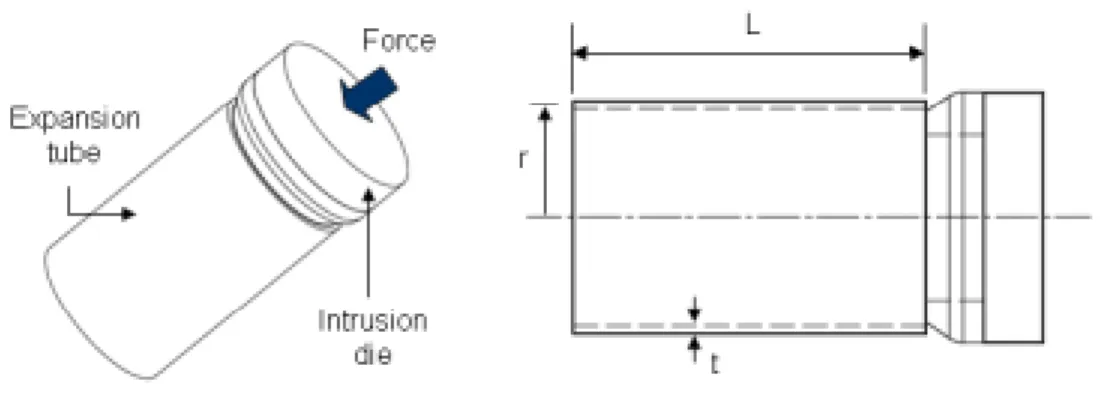
충돌에너지흡수튜브는 크게 팽창튜브와 역위튜브로 나누어진다. 두 튜브의 기본적인 형상은 그림 1과 같이 길이(L)과 두께(t)를 가지는 원통형이므로 길이와 두께를 설계변수로 선정하였다. 현재 개발 중인 일반철도전두부와 경충돌안전장치에 사용될 튜브의 용량은 아직 개발단계이므로 자세하게 정해지지 않 았지만 길이는 대략 200mm ~ 500mm, 두께는 10mm 이하가 될 것이므로 변수 값은 이 범위에 맞게 선택되었다. 튜브의 반지름(r)은 두께의 중심까지 100mm이다. 표 1은 변수의 종류와 변수연구에 사용된 변수의 범위를 나타낸다.
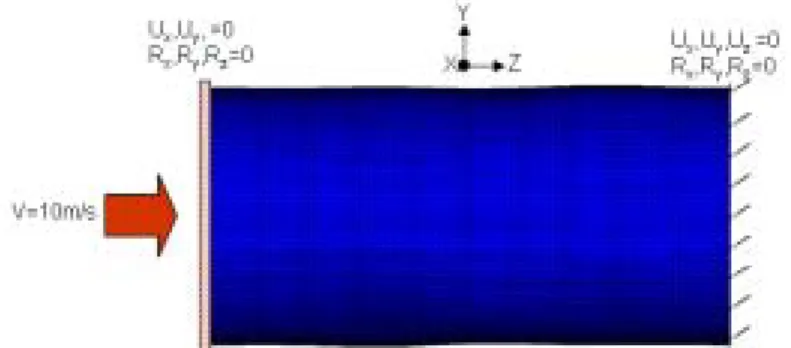
튜브의 linear buckling 해석 및 nonlinear post-buckling 해석을 수행하기위해 상용유한요소프로그램 인 ABAQUS를 사용하였으며, buckling analysis에 사용된 요소는 4개의 절점을 가진 shell요소인 S4R 이다. 해석에 적용된 경계조건은 실제 사용될 튜브를 가장유사하게 표현하기위해 아랫면의 모든 자유도 (Ux, Uy, Uz, Rx, Ry, Rz)를 구속하였으며, 윗면은 길이방향의 자유도(Uz)를 제외한 나머지 자유도를 구속 하였다.
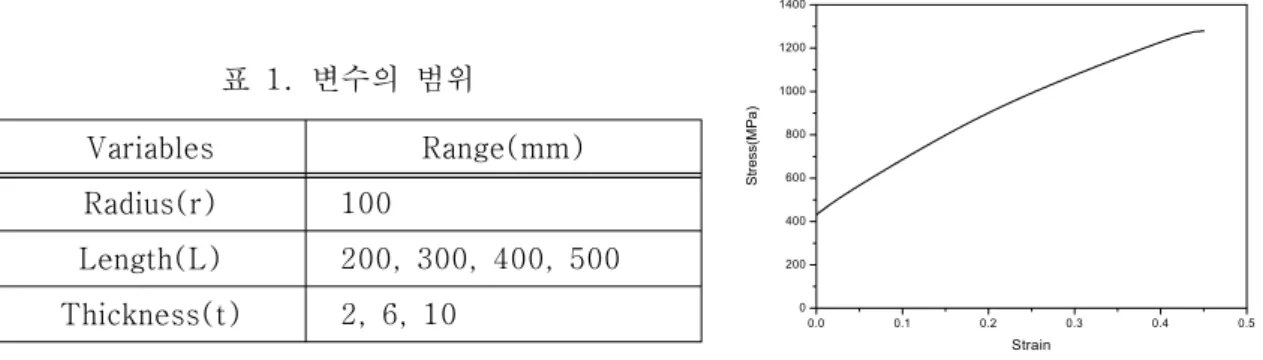
튜브의 재료는 최근 POSCO에서 개발된 TWIP강으로 항복강도는 약 430MPa이고 인장강도는 약 1200MPa이다. 그림 2는 TWIP의 응력-변형률선도이다.
그림 1. Expansion tube
표 1. 변수의 범위
Variables Range(mm) Radius(r) 100
Length(L) 200, 300, 400, 500 Thickness(t) 2, 6, 10
그림 2. Stress-strain curve(TWIP)
0.0 0.1 0.2 0.3 0.4 0.5
0 200 400 600 800 1000 1200 1400
Stress(MPa)
Strain
3. Linear buckling 해석
Linear buckling 해석은 재료가 선형인 즉 stiff한 구조물의 buckling mode와 critical load를 구하기 위해 수행된다. 축하중을 받는 튜브의 buckling mode는 크게 두 가지로 나누어진다. 첫째는 global buckling mode이고, 둘째는 local buckling mode이다. global buckling mode는 튜브의 두께에 비해 상 대적으로 길이가 매우 긴 경우 발생하고 local buckling mode는 튜브의 두께가 너무 얇거나 길이가 짧 을 때 발생한다. 그림 3은 tube의 global buckling mode와 local buckling mode를 나타낸 그림이다.
ABAQUS/standard의 subspace solver를 이용하여 모든 변수에 대해 linear buckling 해석은 수행한 결과 global buckling mode는 발생하지 않았고 local buckling mode만 발생하였다. 그림 4는 L = 300mm, t = 6mm 인 튜브의 linear buckling 해석결과로 3가지 local buckling mode를 보여준다.
그림 3. Representative buckling modes. (a) global buckling,
(b) local buckling.
그림 4. Three local buckling modes(L=300mm, t=6mm)
4. Nonlinear post-buckling 해석
에너지흡수튜브와 같이 재료의 비선형성이 좌굴하중에 큰 영향을 주는 구조물의 경우 linear buckling 해석으로는 정확한 좌굴하중을 구할 수 없기 때문에 재료의 비선형성 및 경계조건을 고려한 nonlinear post-buckling 해석을 수행하였다. 또한, 본 연구에 사용된 에너지흡수튜브는 동적인 축하중을 받으므로 ABAQUS/Explicit를 이용한 dynamic 해석을 통해 post-buckling 해석을 수행하였다.
일반적으로 선형재료를 가진 튜브에 발생하는 좌굴하중을 구하기 위해 식 (1)과 (2)가 사용된다. 식 (1)은 Euler의 columns 이론을 Engesser와 Shanley가 수정한 식으로 global buckling의 임계하중을 구 할 때 사용된다.(3) 식 (1)은 튜브길이( l)와 반지름( R0)의 함수로, 임계응력( σcr)은 튜브길이의 제곱에 반 비례하다는 것을 알 수 있다. 식 (2)는 Timoshenko에 의해 유도된 얇은 두께를 가진 튜브의 임계응력 을 나타는 식으로 local buckling이 발생하는 임계응력을 계산 할 때 사용된다. 그리고 식 (1)은 반지름 ( r0)과 두께( t)의 함수로 두께가 커질 수 록 임계응력( σcr)이 증가함을 알 수 있다.
σcr=0.5Cπ2Et(rl0)2 (1)
σcr= 1
3(1-ν2) Et t
r0 (2)
여기서, C 는 튜브의 양 끝단의 경계조건과 관련된 상수이고(만약, 양 끝단 고정이면 C=4), ν는 프와 송비이다. 그리고 Et는 tangent modulus이다. 위의 식은 재료의 비선형성이 고려되지 않았으므로 정확 한 좌굴하중을 구하기 위해서는 재료의 비선형성을 고려한 nonlinear post-buckling해석을 수행해야 되 지만 식 (1)과 (2)를 분석하면 주요변수에 따른 좌굴하중의 변화경향을 예측할 수 있다.
튜브는 대표적인 imperfection sensitivity 경향을 나타내는 구조물로 geometry imperfection을 고려 하지 않고는 정확한 좌굴하중을 구할 수 없기 때문에 post-buckling해석의 전 단계인 linear buckling해 석에서 구한 buckling mode는 매우 중요하다. linear buckling 해석결과 각 요소의 buckling mode는 튜브의 지름 방향이므로 geometry imperfection은 α×t가 된다. 여기서 t는 튜브의 두께이고 α는 두께 에 대한 백분율이다. Silvestre와 Camotim(4)의 연구에서는 FEM을 이용한 local buckling 해석을 위해
α = 15% 로 가정하였다. 본 연구에서는 linear buckling 해석에서 구한 buckling mode를 선형조합한 geometry imperfection을 nonlinear post-buckling해석에 사용하였다.
그림 5는 nonlinear post-buckling 해석을 수행하기 위한 유한요소모델이다. 튜브의 dynamic 해석을 수행하기 위해 길이 방향으로 한쪽면의 모든 자유도를 구속하였고, v=10m/s의 속도를 가하여 nonlinear post-buckling해석을 수행하였다.
그림 5. Boundary conditions
5. 해석결과
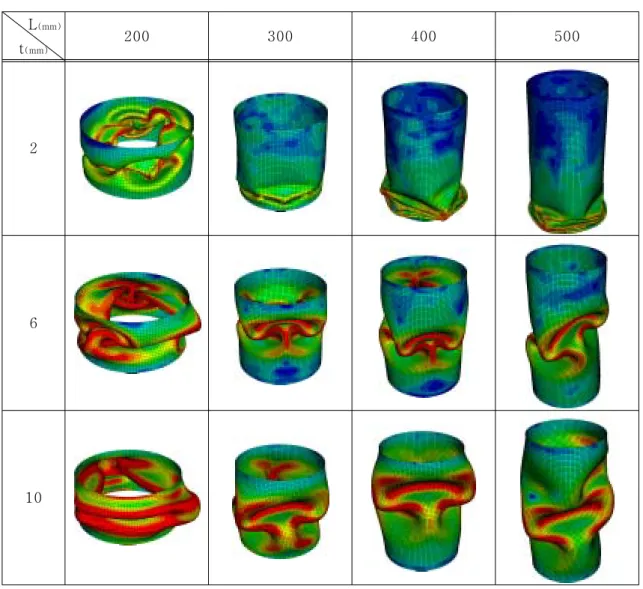
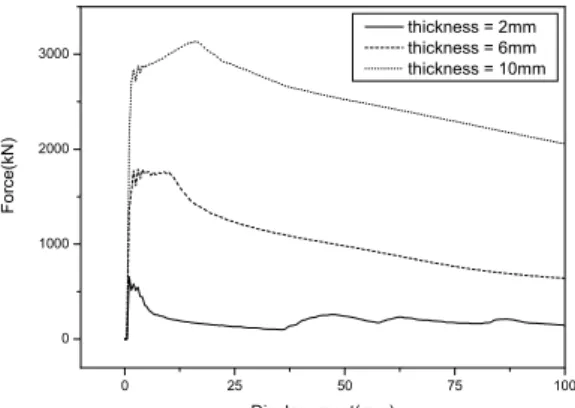
ABAQUS/explicit를 사용하여 nonlinear post-buckling해석을 수행한 결과 global buckling은 발생하 지 않았지만, 모든 변수에 대해 local buckling이 발생하였다. 표 2는 튜브의 최종변형형상을 변수의 값 에 따라 나타낸 그림이다. 길이가 200mm인 경우 두께에 상관없이 중간부분에서 좌굴이 발생하였으나, 200mm이상인 경우 두께가 2mm일 때 아랫부분에서 좌굴이 발생하였고, 6mm와 10mm일 때는 튜브의 중간부분에서 좌굴이 발생하였다.
그림 6과 그림 7은 길이가 각각 200mm와 500mm인 튜브의 붕괴하중변화를 나타낸 그림으로, 좌굴이 발생한 이후 붕괴하중이 감소하는 불안정한 거동을 보이고 있다. 그림 8은 튜브길이에 따른 좌굴하중의 변화를 나타낸 그래프이다. 길이가 200mm~500mm인 튜브는 global buckling이 아닌 local buckling이 발생하므로, local buckling의 임계응력을 나타낸 식 (2)에서와 같이 튜브의 길이가 좌굴하중에 거의 영 향을 미치지 않음을 알 수 있다. 그림 9는 튜브두께에 따른 좌굴하중의 변화를 나타낸 그래프로, 두께가 커질수록 좌굴하중이 선형적으로 증가함을 알 수 있다. 표 3은 변수에 따른 좌굴하중의 크기를 정리한 것으로, 차후 충돌에너지 흡수튜브를 설계할 때 필요한 설계데이터이다. 만약 압입하중이 1500kN인 튜 브를 설계한다면 튜브길이는 충돌에너지흡수량에 따라 500mm까지 마음대로 선택할 수 있다. 또한, 약 6mm이상의 두께를 가진 튜브를 설계한다면 좌굴은 발생하지 않을 것이다.
표 2. Final deformation modes L(mm)
t(mm)
200 300 400 500
2
6
10
그림 6. Axial force versus crushing distance (L=200mm)
0 25 50 75 100
0 1000 2000 3000
Force(kN)
Displacement(mm)
thickness = 2mm thickness = 6mm thickness = 10mm
그림 7. Axial force versus crushing distance (L=500mm)
0 25 50 75 100
0 1000 2000 3000
Force(kN)
Displacement(mm)
thickness = 2mm thickness = 6mm thickness = 10mm
그림 8. Axile force versus tube length
200 300 400 500
0 500 1000 1500 2000 2500 3000 3500
Force(kN)
Tube length(mm)
thickness = 2mm thickness = 6mm thickness = 10mm
그림 9. Axile force versus tube thickness
2 4 6 8 10
0 1000 2000 3000
Load(kN)
Tube thickness(mm) length = 200mm
length = 300mm length = 400mm length = 500mm
표 3. Critical load of the tube(kN) L(mm)
t(mm)
200 300 400 500
2 634.9 578.2 651.2 659.5
6 2034 1714.8 1851 1773.5
10 2916.6 2821.4 2931.7 2838.5
6. 결론
충돌에너지흡수튜브를 설계하기위해서는 우선 충돌에너지흡수전략에 따른 에너지흡수용량을 정해야한 다. 정해진 흡수용량 하에서 튜브에 좌굴이 발생되지 않아야 성공적으로 충돌에너지를 흡수 할 수 있다.
본 연구에서는, 현재 한국철도기술여구원에서 개발 중인 경충돌안전장치 및 일반철도전두부에 장착될 에너지흡수튜브를 기초로 튜브의 주요설계변수인 튜브길이 및 두께의 변화에 따른 좌굴하중의 변화를 확인하기 위해 변수연구를 수행하였고, 튜브의 좌굴에 영향을 미치는 주요변수 및 좌굴경향을 확인하였 다. 또한, 특정 압입하중을 받는 에너지흡수튜브를 설계하기 위한 해석적 접근방법에 대해 기술하였다.
주요결과를 정리하면 다음과 같다.
① 충돌에너지를 흡수하는 방법에 따라 에너지흡수튜브는 팽창형(expansion type)과 역위형(inversion
type)으로 나누어진다. 팽창형은 튜브를 원주방향으로 인장시켜 충돌에너지를 흡수하는 방법이고, 역위 형은 튜브를 안에서 밖으로 역위시켜 충돌에너지를 흡수하는 방식이다. 두 방식모두 압입다이가 튜브의 길이방향으로 진행하면서 튜브를 팽창시키거나 역위시키므로 초기 압괴하중에 좌굴이 발생하지 않으면 된다.
② 주요설계변수로 튜브길이(L)와 두께(t)가 선택되었으며, 경충돌안전장치 및 일반철도전두부에 장착 될 에너지흡수튜브를 기초로 변수의 범위를 설정하여 변수연구를 수행하였다.
③ Nonlinear post-buckling 해석을 위해 linear buckling 해석에서 구한 buckling deformation mode를 geometry imperfection으로 사용하였다.
④ 해석결과 global buckling은 발생하지 않았지만 모든 변수 범위에서 local buckling이 발생하였다.
그 이유는 표 1의 변수범위 안에 있는 튜브는 지름에 비해 길이가 짧으므로 global buckling mode가 발생되지 않았기 때문이다.
⑤ local buckling이 발생하였으므로 튜브길이는 좌굴하중에 거의 영향을 미치지 않았으나 튜브두께는 매우 큰 영향을 미쳤다.
참고문헌
1. P. A. R. Rosa, J. M. C. Rodrigues, P. A. F. Martins (2003), "External inversion of thin-walled tubes using a die: experimental and theoretical investigation", International Journal of Machine Tools & Manufacture, Vol.43, pp.787-796
2. Se-Hee. Oh, Kwang-Soo. Kim, Chun-Gon. kim (2006), "An efficient postbuckling analysis technique for composite stiffened curved panels", Composite Structures, Vol.74, pp.361-369 3. F. R. Shanley (1947), "Inelastic column theory", J. Aerosol Sci, Vol.14, pp.261
4. Derrick. C. Y. Yap, Cregory. J. Hancock (2006), "Interaction Buckling and Postbuckling in the Distortional Mode of Thin-Walled Sections", Research Report No R870
5. "REPORT SAFETRAIN", 2001
6. ABAQUS/Explicit THEORETICAL MANUAL