메니에르병의 최신 연구경향
계명대학교 의과대학 이비인후과학교실
남성일
Recent Research Trend for Ménièreʼs Disease
Sung-Il Nam
Department of Otorhinolaryngology, Keimyung University School of Medicine, Daegu, Korea
⋅Received May 23, 2017 Revised May 29, 2017 Accepted May 31, 2017
⋅Corresponding Author:
Sung-Il Nam
Department of Otorhinolaryngology, Keimyung University School of Medicine, 56 Dalseong-ro, Jung-gu, Daegu 41931, Korea Tel: +82-53-250-7715
Fax: +82-53-256-0325 E-mail: [email protected]
⋅Copyright ⓒ 2017 by The Korean Balance Society.
All rights reserved.
⋅This is an open access article distributed under the terms of the Creative Commons Attribution Non-Commercial License (http://creativecommons.org/licenses/by-nc/4.0) which permits unrestricted non-commercial use, dis- tribution, and reproduction in any medium, provided the original work is properly cited.
Ménièreʼs disease is a poorly understood disorder of the inner ear characterized by intermittent episodic vertigo, fluctuating hearing loss, ear fullness and tinnitus.
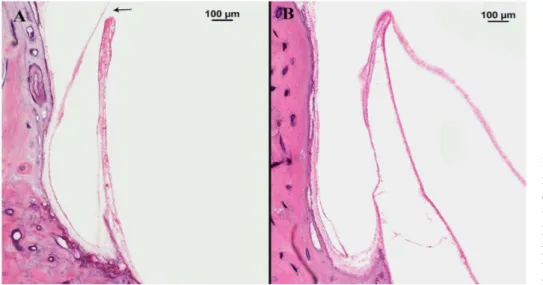
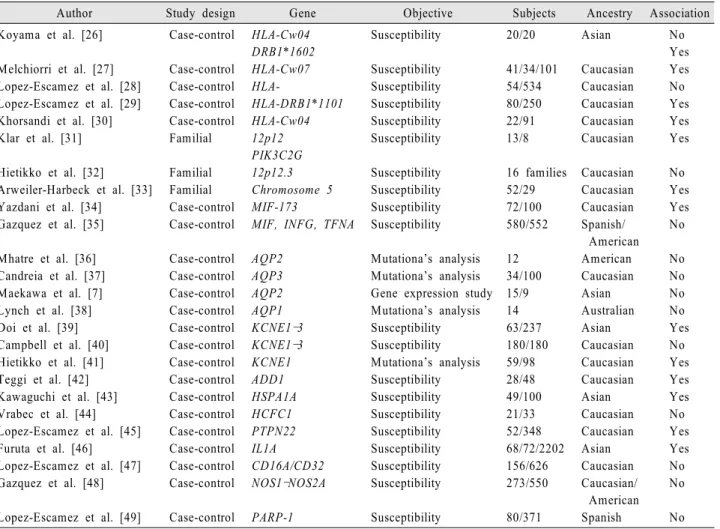
In this paper, we present a review of the histopathology, cytochemistry, gene, blood-labyrinthine barrier and imaging of Ménièreʼs disease. Histopathology is significant for neuroepithelial damage with hair cell loss, basement membrane thickening, perivascular damage and microvascular damage. Cytochemical alterations are significant for altered AQP4 and AQP6 expression in the supporting cell, and altered cochlin and mitochondrial protein expression. Since the discovery of aquaporin water channels (AQP1, AQP2, AQP3, AQP4, AQP5, AQP6, AQP7 and AQP9), it has become clear that these channels play a crucial role in inner ear fluid homeostasis. Several gene studies related to Ménièreʼs disease have been published, but there is no clear evidence that Ménièreʼs disease is associated with a special gene. Currently, imaging techniques to determine the extent and presence of endolymphatic hydrops are being studied, and further studies are needed to correlate the visualization of the endolymphatic hydrops with clinical symptoms.
Res Vestib Sci 2017;16(2):39-46 Keywords: Endolymphatic hydrops; Inner ear; Ménière disease; Genes; Vestibular;
Magnetic resonance imaging; Aquaporins