259
Copyright © 2020 The Korean Society of Fisheries and Aquatic Science pISSN:0374-8111, eISSN:2287-8815
서 론
젓갈류는 어패류의근육
,
내장또는생식소등에다량의식 염을가하여자가소화및미생물이분비하는효소작용에의하 여알맞게분해시켜숙성시킨우리나라의전통적인수산발효식품으로독특한풍미가있어예로부터즐겨애용하여왔다
(Cha
and Lee, 1985).
중국의기록을보면,
기원전3
세기에쓰여진주 례(周禮)
에수산발효식품의문자인,
해(醢),
자(鮓),
지(鮨)
가나타나며
, 5
세기경에저술된제민요술(齊民要術)
에서도수산발효기술이소개되고있다
(Lee, 1993).
한편우리나라젓갈에 대한최초의문헌적기록을보면,
삼국사기8
편(
신문왕3
년, AD 683
년)
에기록된왕의왕비에대한폐백음식에술,
간장,
된장 및육포와함께젓갈(醢)
이소개되고있다.
그후조선시대의음식디미방
(1670
년),
산림경제(1715
년)
및 증보산림경제(1765
년)
에서는4
가지의수산발효법이소개되는데,
어패류에단지 식염만을첨가하여발효시킨염해법(鹽醢法),
생선에식염,
술,
곡분,
야채유및향신료등을첨가하여발효시킨주국어법(酒麴 漁法),
생선에식염,
누룩,
향신료등을넣어알코올발효를시킨어육장법
(魚肉醬法)
과어패류의육질에찹쌀,
맥아가루및향신료로발효시킨식해법
(食醢法)
등이있다(Lee, 1993; Cha et
al., 2019).
그러나우리나라전통적수산발효식품은염전이나계절별어획여부등과같은지역및환경적인특성에의해염 해법과식해법만이계승발전되었다
(Suh, 1987).
대부분의염 해법(Yumhae method)
은어체에25-30%
의식염을첨가하여3
개월에서수년간발효시킨다음,
젓(fermented fish paste)
과젓 국(fish sauce)
형태로제조되어유통되고있으며,
식해법은다전통 수산발효식품의 향기성분에 관한 연구
차용준·김진현·심진하·유대웅*
창원대학교 식품영양학과
Studies on the Flavor Compounds in Traditional Salt-Fermented Fishes
Yong-Jun Cha, Jin Hyeon Kim, Jin Ha Sim and Daeung Yu*
Department of Food and Nutrition, Changwon National University, Changwon 51140, Korea
Nowadays, two types, Yumhae and Sikhae methods, remained as traditional seafood fermentation methods in Ko- rea. In this study, flavor compounds in two types of salt-fermented fishes made by Yumhae method such as anchovy Engraulidae sp., shrimp Caridea sp., squid Decapodiformes sp., big eyed herring Clupea sp., gizzard shad Dorosoma sp. and hairtail Trichiurus sp., and made by Sikhae method such as Alaska pollack Gadus Chalcogrammus and squid. Volatile compounds detected in all salt-fermented fishes were composed mainly of aldehydes (45), ketones (39), alcohols (45), acids (12), esters (47), N-containing compounds (43), aromatic hydrocarbons (37), S-containing compounds (26), furans (10), and miscellaneous compounds (40) in salt-fermented fishes made by Yumhae method.
Meanwhile, alcohols (47), terpenes (38), S-containing compounds (22), carbonyl compounds (19 aldehydes, 18 ke- tones), esters (13), and acids (14). Aroma-active compounds were identified by Gas chromatography/mass spec- trometry/olfactometry and aroma extract dilution analysis in salt-fermented anchovy, shrimp and tuna ( Thunnini sp.) sauce. Ethyl 2-methylbutanoate (candy/sweet) and 2-ethyl-3,5-dimethylpyrazine (nutty/baked potato-like) were predominant odorants in salt-fermented anchovy, whereas dimethyl trisulfide (cooked cabbage/soy sauce-like), 2-eth- yl-3,5-dimethylpyrazine, and (E,E)-2,4-heptadienal (fatty/grainy) in salt-fermented shrimp, and dimethyl trisulfide, 3-methylbutanal (dark chocolate-like), and 3-methylthiopropanal (baked potato-like) in tuna sauce.
Keywords: Salt-fermented fishes, Flavor, Aroma-active, Yumhae , Sikhae method
*Corresponding author: Tel: +82. 55. 213. 3513 Fax: +82. 55. 287. 7924 E-mail address: [email protected]
This is an Open Access article distributed under the terms of the Creative Commons Attribution Non-Commercial Licens (http://creativecommons.org/licenses/by-nc/3.0/) which permits unrestricted non-commercial use, distribution, and reproduction in any medium, provided the original work is properly cited.
Received 21 April 2020; Revised 12 May 2020; Accepted 25 May 2020
저자 직위: 차용준(명예교수), 김진현(대학원생), 심진하(대학원생), 유대웅 (교수)
https://doi.org/10.5657/KFAS.2020.0259 Korean J Fish Aquat Sci 53(3), 259-272, June 2020
차용준
ㆍ
김진현ㆍ
심진하ㆍ
유대웅260
량의식염을첨가하는대신에어패류에곡류및맥아가루를첨 가하여저식염
(5-10%)
의젖산발효(lactic acid fermentation)
를 시키는방법으로염전이없는동·
남해안을중심으로발전하였 다(Cha et al., 2019).
한편우리나라에서전통계승된수산발효식품을조사한결과 를보면
,
첫째,
전(whole fish)
어체에고식염을처리하여제조한 젓갈류는18
종으로,
멸치젓,
정어리젓,
조기젓,
황새기젓,
오징 어젓,
자리젓,
볼락젓,
반지젓(
밴댕이젓),
메가리젓,
곤쟁이젓,
갈치젓,
꼴뚜기젓,
병어젓,
모쟁이젓(
숭어새끼젓),
준치젓,
가자 미얼간젓,
청어젓(
비웃젓)
및낙지젓등이며,
둘째,
내장을이 용하여제조한젓갈류는9
종으로,
창란젓,
명란젓,
대구아가미젓
,
해삼창자젓,
고등어내장젓,
갈치내장젓(
갈치속젓),
전복내 장젓,
전어밤젓,
성게알젓등이며,
셋째,
패류를이용한젓갈류 는7
종으로,
조개젓,
굴젓,
바지락젓,
피조개젓,
소라젓(
또는무 룩젓),
오분자기젓,
홍합젓등이고,
넷째,
갑각류젓은3
종으로 새우젓,
게장및방게젓등으로,
총37
종의염해법이소개되고 있다(Lee, 1993).
한편식해법으로는가자미식해,
멸치식해,
명 태밥식해,
동태식해등4
종이소개되고있으나(Lee, 1993),
현 재는오징어식해가강원지역에서많이제조된다는것을감안 하면품목도시대에따라많이변화한다고볼수있다.
한편우리나라젓갈류
(
염신류)
의총생산량을보면, 2012
년 에35,107 M/T
이생산되었고, 2015
년에40,091 M/T
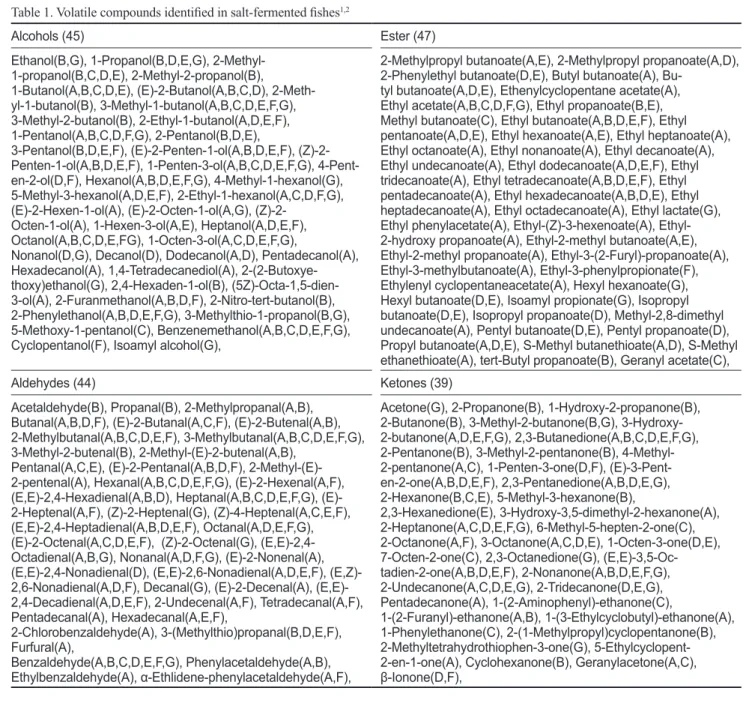
으로약Table 1. Volatile compounds identified in salt-fermented fishes1,2
Alcohols (45) Ester (47)
Ethanol(B,G), 1-Propanol(B,D,E,G), 2-Methyl- 1-propanol(B,C,D,E), 2-Methyl-2-propanol(B), 1-Butanol(A,B,C,D,E), (E)-2-Butanol(A,B,C,D), 2-Meth- yl-1-butanol(B), 3-Methyl-1-butanol(A,B,C,D,E,F,G), 3-Methyl-2-butanol(B), 2-Ethyl-1-butanol(A,D,E,F), 1-Pentanol(A,B,C,D,F,G), 2-Pentanol(B,D,E),
3-Pentanol(B,D,E,F), (E)-2-Penten-1-ol(A,B,D,E,F), (Z)-2- Penten-1-ol(A,B,D,E,F), 1-Penten-3-ol(A,B,C,D,E,F,G), 4-Pent- en-2-ol(D,F), Hexanol(A,B,D,E,F,G), 4-Methyl-1-hexanol(G), 5-Methyl-3-hexanol(A,D,E,F), 2-Ethyl-1-hexanol(A,C,D,F,G), (E)-2-Hexen-1-ol(A), (E)-2-Octen-1-ol(A,G), (Z)-2-
Octen-1-ol(A), 1-Hexen-3-ol(A,E), Heptanol(A,D,E,F), Octanol(A,B,C,D,E,FG), 1-Octen-3-ol(A,C,D,E,F,G),
Nonanol(D,G), Decanol(D), Dodecanol(A,D), Pentadecanol(A), Hexadecanol(A), 1,4-Tetradecanediol(A), 2-(2-Butoxye- thoxy)ethanol(G), 2,4-Hexaden-1-ol(B), (5Z)-Octa-1,5-dien- 3-ol(A), 2-Furanmethanol(A,B,D,F), 2-Nitro-tert-butanol(B), 2-Phenylethanol(A,B,D,E,F,G), 3-Methylthio-1-propanol(B,G), 5-Methoxy-1-pentanol(C), Benzenemethanol(A,B,C,D,E,F,G), Cyclopentanol(F), Isoamyl alcohol(G),
2-Methylpropyl butanoate(A,E), 2-Methylpropyl propanoate(A,D), 2-Phenylethyl butanoate(D,E), Butyl butanoate(A), Bu-
tyl butanoate(A,D,E), Ethenylcyclopentane acetate(A), Ethyl acetate(A,B,C,D,F,G), Ethyl propanoate(B,E), Methyl butanoate(C), Ethyl butanoate(A,B,D,E,F), Ethyl pentanoate(A,D,E), Ethyl hexanoate(A,E), Ethyl heptanoate(A), Ethyl octanoate(A), Ethyl nonanoate(A), Ethyl decanoate(A), Ethyl undecanoate(A), Ethyl dodecanoate(A,D,E,F), Ethyl tridecanoate(A), Ethyl tetradecanoate(A,B,D,E,F), Ethyl pentadecanoate(A), Ethyl hexadecanoate(A,B,D,E), Ethyl heptadecanoate(A), Ethyl octadecanoate(A), Ethyl lactate(G), Ethyl phenylacetate(A), Ethyl-(Z)-3-hexenoate(A), Ethyl- 2-hydroxy propanoate(A), Ethyl-2-methyl butanoate(A,E), Ethyl-2-methyl propanoate(A), Ethyl-3-(2-Furyl)-propanoate(A), Ethyl-3-methylbutanoate(A), Ethyl-3-phenylpropionate(F), Ethylenyl cyclopentaneacetate(A), Hexyl hexanoate(G), Hexyl butanoate(D,E), Isoamyl propionate(G), Isopropyl butanoate(D,E), Isopropyl propanoate(D), Methyl-2,8-dimethyl undecanoate(A), Pentyl butanoate(D,E), Pentyl propanoate(D), Propyl butanoate(A,D,E), S-Methyl butanethioate(A,D), S-Methyl ethanethioate(A), tert-Butyl propanoate(B), Geranyl acetate(C),
Aldehydes (44) Ketones (39)
Acetaldehyde(B), Propanal(B), 2-Methylpropanal(A,B), Butanal(A,B,D,F), (E)-2-Butanal(A,C,F), (E)-2-Butenal(A,B), 2-Methylbutanal(A,B,C,D,E,F), 3-Methylbutanal(A,B,C,D,E,F,G), 3-Methyl-2-butenal(B), 2-Methyl-(E)-2-butenal(A,B),
Pentanal(A,C,E), (E)-2-Pentanal(A,B,D,F), 2-Methyl-(E)- 2-pentenal(A), Hexanal(A,B,C,D,E,F,G), (E)-2-Hexenal(A,F), (E,E)-2,4-Hexadienal(A,B,D), Heptanal(A,B,C,D,E,F,G), (E)- 2-Heptenal(A,F), (Z)-2-Heptenal(G), (Z)-4-Heptenal(A,C,E,F), (E,E)-2,4-Heptadienal(A,B,D,E,F), Octanal(A,D,E,F,G), (E)-2-Octenal(A,C,D,E,F), (Z)-2-Octenal(G), (E,E)-2,4- Octadienal(A,B,G), Nonanal(A,D,F,G), (E)-2-Nonenal(A), (E,E)-2,4-Nonadienal(D), (E,E)-2,6-Nonadienal(A,D,E,F), (E,Z)- 2,6-Nonadienal(A,D,F), Decanal(G), (E)-2-Decenal(A), (E,E)- 2,4-Decadienal(A,D,E,F), 2-Undecenal(A,F), Tetradecanal(A,F), Pentadecanal(A), Hexadecanal(A,E,F),
2-Chlorobenzaldehyde(A), 3-(Methylthio)propanal(B,D,E,F), Furfural(A),
Benzaldehyde(A,B,C,D,E,F,G), Phenylacetaldehyde(A,B), Ethylbenzaldehyde(A), α-Ethlidene-phenylacetaldehyde(A,F),
Acetone(G), 2-Propanone(B), 1-Hydroxy-2-propanone(B), 2-Butanone(B), 3-Methyl-2-butanone(B,G), 3-Hydroxy- 2-butanone(A,D,E,F,G), 2,3-Butanedione(A,B,C,D,E,F,G), 2-Pentanone(B), 3-Methyl-2-pentanone(B), 4-Methyl- 2-pentanone(A,C), 1-Penten-3-one(D,F), (E)-3-Pent- en-2-one(A,B,D,E,F), 2,3-Pentanedione(A,B,D,E,G), 2-Hexanone(B,C,E), 5-Methyl-3-hexanone(B),
2,3-Hexanedione(E), 3-Hydroxy-3,5-dimethyl-2-hexanone(A), 2-Heptanone(A,C,D,E,F,G), 6-Methyl-5-hepten-2-one(C), 2-Octanone(A,F), 3-Octanone(A,C,D,E), 1-Octen-3-one(D,E), 7-Octen-2-one(C), 2,3-Octanedione(G), (E,E)-3,5-Oc- tadien-2-one(A,B,D,E,F), 2-Nonanone(A,B,D,E,F,G), 2-Undecanone(A,C,D,E,G), 2-Tridecanone(D,E,G), Pentadecanone(A), 1-(2-Aminophenyl)-ethanone(C),
1-(2-Furanyl)-ethanone(A,B), 1-(3-Ethylcyclobutyl)-ethanone(A), 1-Phenylethanone(C), 2-(1-Methylpropyl)cyclopentanone(B), 2-Methyltetrahydrothiophen-3-one(G), 5-Ethylcyclopent- 2-en-1-one(A), Cyclohexanone(B), Geranylacetone(A,C), β-Ionone(D,F),
간증가하였다가그후로
2018
년까지30,000 M/T
내외의수 준에머물러있다.
품목별생산량(2018
년도기준)
은멸치젓이9,012 M/T
으로가장많고,
다음으로새우젓이9,003 M/T,
명란젓
5,119 M/T,
오징어젓3,850 M/T,
창란젓1,598 M/T,
굴(
어리 굴)
젓276 M/T,
조개젓143 M/T,
황석어젓107 M/T
순이며, 8
제품만오로지통계에적용되고있는실정이다
(KOSIS, 2020).
Table 1. Continued
N-Contaning compounds (43) S-Contaning compound (26)
1H-Pyrrole(C), 2-Methyl-1H-pyrrole(C), 3-Ethyl-1H-pyrrole(A), Pyrazine(B,C), Methylpyrazine(B,C), 2,3-Dimethylpyrazine(B,C), 2,5-Dimethylpyrazine(B,C,E), 2,6-Dimethylpyrazine(A,B,C,E,G), Trimethylpyrazine(A,B,C,D,E), Tetramethylpyrazine(A,B,C,E), ), 2-Ethylpyrazine(B), 2-Ethyl-5-methylpyrazine(B,C), 2-Ethyl- 6-methylpyrazine(A,C), 2,3,5-Trimethyl-6-ethylpyrazine(C), 3-Ethyl-5-methylpyrazine(C), 3-Ethyl-2,5-dimethylpyrazine(B,C), 3-Ethyl-3,6-dimethylpyrazine(D,F), 2,3-Diethyl-
5-methylpyrazine(C), 2-Allyl-3-methylpyrazine(C), 2-Ethyl-3,5- dimethylpyrazine(C,D,E), 2-Ethyl-3,6-dimethylpyrazine(B,C,D,F), 2-Isopropylpyrazine(B), 5-Isopropyl-2-methylpyrazine(B), 3,5-Diethyl-2-methylpyrazine(A,C), Pyridine(A,C,D,E,F), 2-Methylpyridine(A,C,D,E), 4-Methylpyridine(B), 2,5-Dimethylpyridine(B), 2,3-Dimethylpyridine(B), 2,4-Dimethylpyridine(A,C), 2,6-Dimethylpyridine(B), 2-Ethylpyridine(A,B,D,E), 3-Ethylpyridine(A,D,E,F), 2-Propylpyridine(B), 1-Methyl-2(1H)-pyridinone(C), 3-Acetoxypyridine(A,F), 4,5-Dimethylpyrimidine(B,C), 4,6-Dimethylpyrimidine(B), 5-Ethyl-2-ethylpyridine(C), Benzenemethanamine(B), Hexamethyl lenetetramine(A,C,F), Hydrogen azide(B), Indole(C,D), Trimethylamine(B),
Trimethyloxazole(B)
Dimethyl sulfide(B), Dimethyl disulfide(A,B,C,D,E,F), Di- methyl trisulfide(A,B,C,D), Isobutylisopropylsulfide(D), Allyl sulfide(B,D,E), (Methylthio)ethane(B), 1-Ethenyl- methyl disulfide(B), 2-(Methylthio)propane(B),
2,4-Dithiapentane(B), 3-(Methylthio)-propanal(F), Thiazole(B), 2-Acethylthiazole(A,C), Benzothiazole(A,B,D,E,F),
2-Methylthiophene(D,E), 2-Ethylthiophene(A,D),
2-Propylthiophene(A,D), 2-Thiophenecarboxaldehyde(A), 3,5- 3-Thiophenecarboxaldehyde(C), 3,5-Dimethyl-1,2,4- trithiolane(C,D,F), Isothiocyanatocyclohexane(B), Methane- sulfonyl chloride(B), Methanethiol(B), Methyl thioacetate(D,E), Methyl thiobutanoate(D), S-Methyl butanethioate(B), S-Methyl ethanethioate(B)
Acids (12)
Acetic acid(B,G), Propiolic acid(G), Propanoic acid(B,C), 2-Methylpropanoic acid(B), 2,2-Dimethylpropanoic acid(B), Bu- tanoic acid(A,B,C), 2-Methylbutanoic acid(B), 3-Methylbutanoic acid(B,G), Pentatonic acid(C,G), Hexanoic acid(G), Octanoic acid(G), Nonanoic acid(G),
Furans (10) Miscellaneous compounds (40)
2-Ethylfuran(A,B,D,E,F), 2-Propylfuran(A), 2-Butylfuran(A), 2-Pentylfuran(A,D,,E,F,G), 2-Furancarboxaldehyde(C,D), 5-methyl-2-furancarboxyaldehyde(B), 2-Furanmethanol(A,B), (E)-(Penten-ethyl)furan(G), 5-Ethyl-2(5H)-furanone(B), Dihydro- 5-propyl-2(3H)-furanone(B),
Ethylcyclopropane(A,C), Ethylcyclopentane(A),
Heptane(A,C,D,F), 2-Methylheptane(A,C,D,F), 1,1,2,3-Te tramethylcyclopropane(A,C,D,F), 1,2-Dimethyl-(E)- cyclohexane(A,C,D,F), 1,2-Dimethylcyclohexane(A), Propylcyclohexane(C), Propylcyclopentane(C), 1-Eth- yl-2-methylcyclopentane(A,C,F), 3-Ethylheptane(B), Octane(A,C,D,F), 2-Methyloctane(A,C,D,F), Nonane(A,C,D,F), 3-Methylnonane(C,D,F),
Decane(A,B,C,D,F), 3-Methyldecane(B), Undecane(A,B,D), 2-Undecene(C), Dodecane(B,D), 4-Methylundecane(B), 5-Methylundecane(B), 2,6-Dimethylundecane(B,D,F),
3-Methyldodecane(B), 4-Methyldodecane(B), Tridecane(B,D,E), Tetradecane(A,B,C,D,E,F,G), Pentadecane(A,B,C,D,E), 2,6,10,14-Tetra-methylpentadecane(A,C,D,E,F), Hexadecane(A,B,D,E,F), Heptadecane(A,B,C,D,E,F), Heptadecene(A,E), 2,6, 10,14-Tetramethylhexadecane(D ,F), Octadecane(A,E), Nonadecane(A,E), Nonadecene(A), 2-Nitropropane(B), 4-Octyne(G), 3-Dodecyne(C),
Chloroform(C,D,E) Aromatic hydrocarbons and terpenes (37)
α-Amorphene(B), α-Copaene(B), α-Pinene(B), γ-Cadinene(B), δ-Cadinene(B), Camphene(B), (-)-Limonene(B,D,E,G), (+)-Limonene(G), (Z)-Calamenene(B), Benzene(B,E), C4- Alkylbenzene(B), Toluene(A,B,C,F), o-Xylene(A,C,D), m- Xylene(A,C,D,F), p-Xylene(A,C,F), Ethylbenzene(A,C,F,G), Styrene(A,C,D,G), 1,2,3-Trimethylbenzene(B),
1,2,4-Trimethylbenzene(E), Propylbenzene(E),
1,2,3,4-Tetramethylbenzene(G), 1,2,4,5-Tetramethylbenzene(E), 1,4-Dichlorobenzene(C), Methyl(1-methylethyl)benzene(B), Pentamethylbenzene(B), Phenol(A,B,C,D,E,F), o-Cresol(D), m-Cresol(B), Phenylether(C), 2-(1,1-dimethylethyl)-
5-methylphenol(G), 4-(Methylthio)-phenol(F),
Naphthalene(A,B,C,D,E,F), 1-Methylnaphthalene(A,B,D,E), 2-Methylnaphthalene(B,D,E), 2,7-Dimethylnaphthalene(B), 1-Ethylnaphthalene(B), 3-tert-Butyl-4-hydroxyanisole(A,D),
1Anchovy Engraulidae sp. (A) referred by Cha (1992, 1994a, 1994b) and Cha and Cadwallader (1995); Anchovy Engraulidae sp. sauce (B) by Udomsil et al. (2011), Cha et al. (1998a) and Shimoda et al. (1996); Shrimp (Caridea sp.) (C) by Pongsetkul et al. (2015), Pongsetkul et al.(2019) and Cha and Cadwallader (1995); Big-eyed-herring Clupea sp. (D) by Cha (1994b), Cha et al. (1998c) and Cha and Cadwallader (1995); Gizzard shad Dorosoma sp. (E) by Cha et al. (1998b); Hairtail Trichiurus sp. (F) by Cha (1994b) and Cha and Cadwallader (1995);
Squid Decapodiformes sp. (G) by Choi et al. (1995) and Huang et al. (2018). 2Alphabets in parentheses indicates identified salt-fermented
차용준
ㆍ
김진현ㆍ
심진하ㆍ
유대웅262
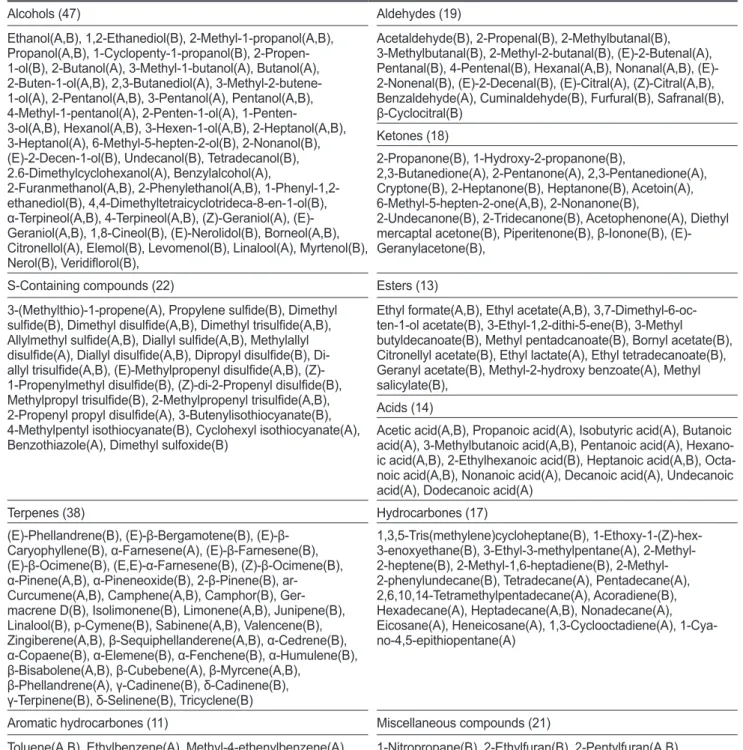
Table 2. Volatile compounds in salt-fermented Sikhae1,2
Alcohols (47) Aldehydes (19)
Ethanol(A,B), 1,2-Ethanediol(B), 2-Methyl-1-propanol(A,B), Propanol(A,B), 1-Cyclopenty-1-propanol(B), 2-Propen- 1-ol(B), 2-Butanol(A), 3-Methyl-1-butanol(A), Butanol(A), 2-Buten-1-ol(A,B), 2,3-Butanediol(A), 3-Methyl-2-butene- 1-ol(A), 2-Pentanol(A,B), 3-Pentanol(A), Pentanol(A,B), 4-Methyl-1-pentanol(A), 2-Penten-1-ol(A), 1-Penten-
3-ol(A,B), Hexanol(A,B), 3-Hexen-1-ol(A,B), 2-Heptanol(A,B), 3-Heptanol(A), 6-Methyl-5-hepten-2-ol(B), 2-Nonanol(B), (E)-2-Decen-1-ol(B), Undecanol(B), Tetradecanol(B), 2.6-Dimethylcyclohexanol(A), Benzylalcohol(A),
2-Furanmethanol(A,B), 2-Phenylethanol(A,B), 1-Phenyl-1,2- ethanediol(B), 4,4-Dimethyltetraicyclotrideca-8-en-1-ol(B), α-Terpineol(A,B), 4-Terpineol(A,B), (Z)-Geraniol(A), (E)- Geraniol(A,B), 1,8-Cineol(B), (E)-Nerolidol(B), Borneol(A,B), Citronellol(A), Elemol(B), Levomenol(B), Linalool(A), Myrtenol(B), Nerol(B), Veridiflorol(B),
Acetaldehyde(B), 2-Propenal(B), 2-Methylbutanal(B), 3-Methylbutanal(B), 2-Methyl-2-butanal(B), (E)-2-Butenal(A), Pentanal(B), 4-Pentenal(B), Hexanal(A,B), Nonanal(A,B), (E)- 2-Nonenal(B), (E)-2-Decenal(B), (E)-Citral(A), (Z)-Citral(A,B), Benzaldehyde(A), Cuminaldehyde(B), Furfural(B), Safranal(B), β-Cyclocitral(B)
Ketones (18)
2-Propanone(B), 1-Hydroxy-2-propanone(B),
2,3-Butanedione(A), 2-Pentanone(A), 2,3-Pentanedione(A), Cryptone(B), 2-Heptanone(B), Heptanone(B), Acetoin(A), 6-Methyl-5-hepten-2-one(A,B), 2-Nonanone(B),
2-Undecanone(B), 2-Tridecanone(B), Acetophenone(A), Diethyl mercaptal acetone(B), Piperitenone(B), β-Ionone(B), (E)- Geranylacetone(B),
S-Containing compounds (22) Esters (13)
3-(Methylthio)-1-propene(A), Propylene sulfide(B), Dimethyl sulfide(B), Dimethyl disulfide(A,B), Dimethyl trisulfide(A,B), Allylmethyl sulfide(A,B), Diallyl sulfide(A,B), Methylallyl disulfide(A), Diallyl disulfide(A,B), Dipropyl disulfide(B), Di- allyl trisulfide(A,B), (E)-Methylpropenyl disulfide(A,B), (Z)- 1-Propenylmethyl disulfide(B), (Z)-di-2-Propenyl disulfide(B), Methylpropyl trisulfide(B), 2-Methylpropenyl trisulfide(A,B), 2-Propenyl propyl disulfide(A), 3-Butenylisothiocyanate(B), 4-Methylpentyl isothiocyanate(B), Cyclohexyl isothiocyanate(A), Benzothiazole(A), Dimethyl sulfoxide(B)
Ethyl formate(A,B), Ethyl acetate(A,B), 3,7-Dimethyl-6-oc- ten-1-ol acetate(B), 3-Ethyl-1,2-dithi-5-ene(B), 3-Methyl butyldecanoate(B), Methyl pentadcanoate(B), Bornyl acetate(B), Citronellyl acetate(B), Ethyl lactate(A), Ethyl tetradecanoate(B), Geranyl acetate(B), Methyl-2-hydroxy benzoate(A), Methyl salicylate(B),
Acids (14)
Acetic acid(A,B), Propanoic acid(A), Isobutyric acid(A), Butanoic acid(A), 3-Methylbutanoic acid(A,B), Pentanoic acid(A), Hexano- ic acid(A,B), 2-Ethylhexanoic acid(B), Heptanoic acid(A,B), Octa- noic acid(A,B), Nonanoic acid(A), Decanoic acid(A), Undecanoic acid(A), Dodecanoic acid(A)
Terpenes (38) Hydrocarbones (17)
(E)-Phellandrene(B), (E)-β-Bergamotene(B), (E)-β- Caryophyllene(B), α-Farnesene(A), (E)-β-Farnesene(B), (E)-β-Ocimene(B), (E,E)-α-Farnesene(B), (Z)-β-Ocimene(B), α-Pinene(A,B), α-Pineneoxide(B), 2-β-Pinene(B), ar- Curcumene(A,B), Camphene(A,B), Camphor(B), Ger- macrene D(B), Isolimonene(B), Limonene(A,B), Junipene(B), Linalool(B), p-Cymene(B), Sabinene(A,B), Valencene(B), Zingiberene(A,B), β-Sequiphellanderene(A,B), α-Cedrene(B), α-Copaene(B), α-Elemene(B), α-Fenchene(B), α-Humulene(B), β-Bisabolene(A,B), β-Cubebene(A), β-Myrcene(A,B),
β-Phellandrene(A), γ-Cadinene(B), δ-Cadinene(B), γ-Terpinene(B), δ-Selinene(B), Tricyclene(B)
1,3,5-Tris(methylene)cycloheptane(B), 1-Ethoxy-1-(Z)-hex- 3-enoxyethane(B), 3-Ethyl-3-methylpentane(A), 2-Methyl- 2-heptene(B), 2-Methyl-1,6-heptadiene(B), 2-Methyl- 2-phenylundecane(B), Tetradecane(A), Pentadecane(A), 2,6,10,14-Tetramethylpentadecane(A), Acoradiene(B), Hexadecane(A), Heptadecane(A,B), Nonadecane(A), Eicosane(A), Heneicosane(A), 1,3-Cyclooctadiene(A), 1-Cya- no-4,5-epithiopentane(A)
Aromatic hydrocarbones (11) Miscellaneous compounds (21)
Toluene(A,B), Ethylbenzene(A), Methyl-4-ethenylbenzene(A), 4-Isopropyltoluene(A), o-Xylene(A), m-Xylene(A), p-Xylene(A,B), Styrene(A), Phenol(A), 4-Methoxyphenol(A), Naphthalene(A),
1-Nitropropane(B), 2-Ethylfuran(B), 2-Pentylfuran(A,B), 2-Acetylfuran(B), 2-Acetylpyrrole(A,B), 2-Allyl-1,3-dioxolane(B), 2-Butyl-1,3-dioxolane(B), 2-Pyrrolidinethione(B), 4-(Me- thylthio)butanenitrile(B), Butanenitrile(B), Chloroform(A), 4,5-Dehydroisolongifolene(B), Aromadrene(B), Calamenene(B), Perillene(B), β-Cedrenoxide(B), β-Elemene(B), β-Himachlene(B), β-Ionone epoxide(B), Butyrolactone(A), Tetramethylpyrazine(A)
1Alaska Pollack Gadus Chalcogrammus (A) referred by Cha et al. (2002) and Cha et al. (2019); Squid (Decapodiformes sp.) (B) by Choi et al. (2001). 2Alphabets in parentheses indicates identified salt-fermented Sikhae.
앞으로오랜전통을가진수산발효산업의활성화를위해서는 소비자가선호하는눈높이에맞춘젓갈제품으로탈바꿈하는연 구가많이시도되어야할것으로생각된다
.
구글스칼라
(Google Scholar)
에서“
젓갈”
을검색하면1960
년 부터2020
년까지3,840
편의논문이있고,
이를다시“
젓갈,
가 공”
으로분류하면1,960
편, “
젓갈”,“
제조”
로하면2,030
편이검 색된다. “
젓갈,“
영양성분”
은330
편이검색되고있어,
젓갈의가 공개발에많은연구가시도되었으나,
그결과물은산업현장의 호응에만족하지못한것으로생각된다.
더구나“
젓갈”,“
향기성 분”
에대한검색결과는단지47
편으로나타났다.
향기성분의분 석및동정에고가장비또는첨단장비가필요한애로점은있지 만,
앞으로젓갈의품질향상과소비자가기대하는감각적인요 소를만족시켜품질고급화를위해서는향기성분에관한연구 가집중되어야할것이다.
이에본연구에서는젓갈의향기성분 에관한그동안의연구들을정리하여젓갈제품의품질고급화 를위한개발연구에기여하고자한다.
염해법으로 제조한 젓갈류의 향기성분
우리나라에서생산량이많은대표적인젓갈인멸치젓
,
멸치액 젓,
새우젓,
오징어젓을비롯하여전어젓,
갈치내장(
속)
젓및밴 댕이젓에서분리동정된휘발성화합물을각그룹별로정리한 결과는Table 1
과같다.
원료의식품학적특성에따라발효과정 중자가효소나미생물분비효소에의한분해과정을거쳐생성 되는저급분자량의휘발성물질조성이많이다르겠지만,
개략 적으로보면,
지방의분해및산화과정으로거쳐생성되는알데히드류
(45
종)
나케톤류(39
종)
과같은카르보닐화합물이나알 코올류(45
종)
대체로많이검출되었다.
또한산류(12
종)
도생성 되고이러한산류와알코올간의반응을통하여생성되는에스 테르류(47
종)
가일반적인경향이었다.
또한질소함유화합물류(43),
방향족화합물류(
테르펜류포함, 37
종),
함황화합물류(26
종)
및퓨란류(10
종)
종등으로분류되었고,
탄화수소화합물(40
종)
이주류인기타화합물로분류되었다.
알코올류
알코올류는시판 멸치젓
(Cha, 1992; Cha, 1994b; Cha and Cadwallader, 1995)
과koji
로 숙성시킨 멸치젓(Cha, 1994a)
의 경우13-15
종이 동정되었다(Table 1).
함량면에서는알데 히드류다음으로많이검출되었고,
멸치액젓이나새우젓에비 해함량도많았다(Fig. 1). C
4-C
8의n-
알코올이주로검출되었 으며, 1-penten-3-ol, 1-octen-3-ol, (E)-2-penten-1-ol, hexanol, 3-methyl-1-butanol, (E)-2-butanol
등6
종의함량이많았으나,
높은역치로인하여다른화합물에비해젓갈의냄새에그기 여도는낮다고하였다(Heath and Reineccius, 1986).
멸치액젓 에서는향기성분의포집방법에따라Headspace gas
법(5-20
종)
과Vacuum-SDE (Stream Distillation-Solvent Extraction) (16
종)
에서화합물의수가상이하였다(Shimoda et al., 1996; Cha et al., 1998a; Udomsil et al., 2011).
동정된알코올류는멸치젓 에서검출된것과동일하게C
4-C
7계열의알킬-(
또는알케닐-)
알코올류였다.
한편새우젓의알코올류는SPME (solid phase microextraction)
법으로 분석한 태국산 새우젓에서는6-8
종 이동정되었고, SDE (simultaneous steam distillation-solvent
Fig. 1. Amounts of volatile compounds in salt-fermented anchovy Engraulidae sp. (■), anchovy sauce (■) and shrimp Caridea sp. (□)a. 1, Al- cohols; 2, Aldehydes; 3, Ketones; 4, Esters; 5, S-containing compounds; 6, N-containing compounds; 7, Aromatic hydrocarbones. a Anchovy by Cha and Cadwallader (1995); anchovy sauce by Cha et al. (1998b); shrimp by Cha and Cadwallader (1995).26,085.0 27,943.0
4,775.6
13,585.1
1,362.2
2,448.0 2,225.2
432.6
217.7
88.8
25.2
113.6
264.0 200.6
2,237.7
18,836.0
1,290.5
4,031.0 5,017.0
40,720.8
1,917.0
1.0 10.0 100.0 1000.0 10000.0
1 2 3 4 5 6 7
Amounts (μg/g)
Groups
30,026.9 75,475.1
5,785.7
22,426.8 23,585.8
844.5 40,398.6
22,500.0 16,039.7 25,516.0
61,056.0
4,908.7 5,145.9 2,378.0 4,468.9 4,093.3 5,122.0 28,347.7
7,413.9
1,865.9 2,628.0 5,814.3
10,410.0
1,598.4 305.8 0.0
8,121.5 0.0
20000.0 40000.0 60000.0 80000.0 100000.0 120000.0
1 2 3 4 5 6 7 8 9
Amounts (μg/g)
Groups
33,385.3
6,782.7
14,582.0
2,296.2
20,186.5
1,369.0 3,166.4 5,566.6
303,576.7 43,736.0
0 10,000 20,000 30,000 40,000 50,000
1 2 3 4 5 6 7 8 9 10
Amounts ((μg/g)
Groups
차용준
ㆍ
김진현ㆍ
심진하ㆍ
유대웅264
extraction)
법으로 분석한 한국산 새우젓에서3
종만이 검출되었다
(Cha and Cadwallader, 1995; Pongsetkul et al, 2015;
Pongsetkul et al, 2019).
알코올은 지방산의2
차적분해산물 로알려져있으며(Tanchotikul and Hsieh, 1989),
새우젓이멸 치젓에비해지방함량이낮기때문에화합물수나함량이적 은것으로추정된다(Cha and Cadwallader, 1995).
밴댕이젓의경우총
17-20
종의알코올이검출되었는데,
멸치젓에서함량이많았던
6
종이외에2-phenylethanol (floral, rose
향)
의함량 이많이검출되었다(Cha, 1994b; Cha and Cadwallader, 1995;
Cha et al., 1998c).
전어젓에서는총18
종의알코올이동정되었 고, 1-penten-3-ol, butanol, 3-methyl-1-butanol, 1-hexen-3-ol, 1-octen-3-ol, hexanol
및2-phenylethanol
의함량이많이검출 되었다(Cha et al., 1998b).
그러나전체적인함량을비교하여 볼때밴댕이젓,
갈치내장젓에비하여매우낮았다(Fig. 2).
갈치 내장젓의알코올류는멸치젓및밴댕이젓에서검출된화합물과 비슷한경향을보였으나,
특히2-furanmetanol (burning
향)
및2-phenyletanol (Floral, rose
향)
의함량이지배적으로많았다. 알데히드류
시판 멸치젓의 알데히드류는
14-17
종이 검출되었고,
직접 담아서30
일숙성한경우24
종으로다른젓갈류에비해가장 많이동정되었다(Table 1) (Cha, 1994a).
그리고함량면에서 도멸치젓이가장많았다(Fig. 1).
주로benzaldehyde (almond
향), 3-methylbutanal (chocolate
향), (E)-2-pentenal (grass
향), hexanal (cut-glass
향), (E)-2-hexenal, (E)-, (Z)-2-hep- tenal, (E,E)-2,4-heptadienal (green
향), (E,E)-2,4-hexadienal, 2-phenylacetaldehyde (sweet
향)
등의화합물이지배적이었는데
,
이들alkanal
및alkenal
류는멸치젓갈의fatty-oily
같은향 에기여하며, dienal
류는좋은fried-fatty
향에기여한다고하였 다(Heath and Reineccius, 1986; Vejaphan et al., 1988).
한편alkanal, alkenal
및alkadienal
류는발효중지방산화로부터생 성되는데,
멸치젓은ω-3
와ω-6
지방산의함량이많으므로,
지 방산화에민감하다고하였다(Cha and Cadwallader, 1995).
멸 치액젓에서는benzaldehyde
를포함하여C
4-C
8계열의alkane, alkene
및dienal
류가상당량검출되었다.
또한3-(methylthio) propanal (baked potato, soy sauce
향)
의함량이많았다.
이는methionine
의Strecker degradation
반응으로형성되는데,
역 치가0.02 ng/g
으로매우낮고, OV (odor value)
가높아멸치 액젓의지배적인물질로사료된다(Cha et al., 1998a; Jeong et al., 2008).
새우젓에서는5
종이동정되었다.
지방함량은멸치 젓(11.1%)
에비해새우젓(2.1%)
이매우낮기때문에상대적으 로적게검출되었다고추정되며(Cha and Cadwallader, 1995), benzaldehyde
와2-, 3-methylbutanal, 4-heptenal, (E)-2-buten- al
등이검출되었다.
한편밴댕이젓에서는12-14
종이동정되었 는데, 3-methylbutanal (dark chocolate, roast bean
향)
의함량 이지배적이었으며(Cha et al., 1997),
이로인하여알데히드류 의함량도어떤젓갈류에비해많이검출되었다(Fig. 2).
그리고2-methylbutanal (chocolate
향), (E,E)-2,4-heptadienal, benzal- dehyde, (E,Z)-2,6-nonadienal
등의함량이많았다.
전어젓에서 는hexanal (cut-grass
향), benzaldehyde
의함량이가장많았고,
다음으로(E,E)-2,4-heptadienal (stale, grainy
향), 3-methylbu- tanal
및(Z)-4-heptanal (boiled potato
향)
의순이었다.
갈치내 장젓에서동정된21-22
종의알데히드류는모두C
4-C
16계열의alkanal, alkenal
및dienal
류이었는데,
이중benzaldehyde
와 Fig. 2. Amounts of volatile compounds in salt-fermented big eyed herring Clupea sp. (■), hairtail Trichiurus sp. (■) and gizzard shad Do- rosoma sp. (□)a. 1, Alcohols; 2, Aldehydes; 3, Ketones; 4, Esters; 5, S-containing compounds; 6, N-containing compounds; 7, Aromatic hydrocarbones; 8, Furans; 9, Miscellaneous compounds. aBig eyed herring by Cha (1994b), Cha et al. (1998c), and Cha and Cadwallader (1995); Hairtail by Cha (1994b), and Cha and Cadwallader (1995); Gizzard shad by Cha et al. (1998b).26,085.0 27,943.0
4,775.6
13,585.1
1,362.2
2,448.0 2,225.2
432.6
217.7
88.8
25.2
113.6
264.0 200.6
2,237.7
18,836.0
1,290.5
4,031.0 5,017.0
40,720.8
1,917.0
1.0 10.0 100.0 1000.0 10000.0
1 2 3 4 5 6 7
Amounts (μg/g)
Groups
30,026.9 75,475.1
5,785.7
22,426.8 23,585.8
844.5 40,398.6
22,500.0 16,039.7 25,516.0
61,056.0
4,908.7 5,145.9 2,378.0 4,468.9 4,093.3 5,122.0 28,347.7
7,413.9
1,865.9 2,628.0 5,814.3
10,410.0
1,598.4 305.8 0.0
8,121.5 0.0
20000.0 40000.0 60000.0 80000.0 100000.0 120000.0
1 2 3 4 5 6 7 8 9
Amounts (μg/g)
Groups
33,385.3
6,782.7
14,582.0
2,296.2
20,186.5
1,369.0 3,166.4 5,566.6
303,576.7 43,736.0
0 10,000 20,000 30,000 40,000 50,000
1 2 3 4 5 6 7 8 9 10
Amounts ((μg/g)
Groups
3-methylbutanal
의 함량이지배적이었다.
저식염오징어젓에 서는methional (3-methyl thiopropanal)
이검출되었으며,
대부 분이앞에소개된젓갈류에서와마찬가지로지방산산화로부터 생성된지방족알데히드류가대부분이었다(Choi et al., 1995;
Huang et al., 2018).
케톤류
멸치젓에서는
4-10
종의케톤류가 동정되었는데,
함량은알 코올및알데히드에비하여상대적으로적었다(Fig. 1).
케톤류 는지방산의가열산화및분해로생성되며,
낮은역치로인하 여신선한생선냄새에기여한다고알려져있는데(Josephson and Lindsay, 1986),
대부분의멸치젓에서(E,E)-3,5-octadien- 2-one (fatty-fruity
향), 1-(2-furanyl)-ethanone
및2,3-butane- dione (butter
향)
의 함량이매우많아,
이들 화합물이 멸치젓 의냄새성분에어느정도기여할것으로사료된다(Cha, 1994;
Cha and Cadwallader, 1995).
멸치액젓에서는4-7
종의 케톤 류가검출되었고,
이중에서2-propanone, (E)-3-penten-2-one, 2-butanone (cheese
향), 3-methyl-2-butanone, 2-pentanone, (E,E)-3,5-Octadien-2-one
및2,3-butanedione
의 함량이상대 적으로많았다.
새우젓에서는동정된6-9
종의화합물중2-pen- tanone, 2-hexanone, 2-heptanone
및(E,E)-3,5-Octadien-
2-one
의함량이많았고,
한국산새우젓에서는카로테노이드색소의분해산물인
β-ionone
과terpene
유도체인geranylacetone
이검출되었다(Cha and Cadwallader, 1995).
밴댕이젓의케톤 류함량은멸치젓,
멸치액젓및새우젓에비해많았다(Fig. 2).
대표적으로
2,3-butanedione, (E,E)-3,5-octadien-2-one, (E)- 3-penten-2-one, 2,3-pentanedione, 2-undecanone
등의 함량 이많았다.
전어젓에서는14
종의케톤류가동정되었으나,
함량 면에서는밴댕이젓에비해적었다. 2,3-Butanedione
이가장많 은함량이었고,
다음으로2,3-pentanedione
및(E)-3-penten-2- one
순이었다.
갈치내장젓에서는2,3-butanedione
이가장지배적이었고
, β-ionone
도상당량검출되었다.
오징어젓에서는버터향을 가지는
acetoin (3-hydroxy-2-butanone)
을 비롯하여, 3-methyl-2-butanone, 2-heptanone, 2-nonanone
등의화합물 함량이많았다(Choi et al., 1995; Huang et al., 2018).
에스테르류
멸치젓에서 동정된에스테르류
(13-19
종)
에서ethyl acetate, ethyl butanoate, propyl butanoate, butyl butanoate, ethyl tetra- decanoate
및ethyl hexadecanoate
등6
종의함량이많았다.
에 스테르는젓갈의숙성중자가효소나미생물효소의작용으로 단백질및지방으로부터생성된카르복실산과알코올류와의에 스테르화로생성된다(Cha and Cadwallader, 1995). Ethyl bu- tanoate
는치즈의독특한풍미에관여한다고알려져있다(Cha, 1994b).
멸치액젓에서도ethyl acetate
의함량이가장많았고,
다음으로ethyl butanoate, tert-butyl propanoate
등의순이었 다.
이러한경향은새우젓에서도ethyl acetate
가함량이지배적이었으며
, geraniol
로부터acetate ester
화유도물인geranyl acetate
는한국산새우젓에서소량검출되었다(Cha and Cad- wallader, 1995).
밴댕이젓에서는10-13
개의에스테르류가검 출되었는데, butanoate
계열의에스테르류가종류도많고함량 도지배적이었다.
한편전어젓의에스테르류(15
종)
는멸치젓이 나밴댕이젓과같이butanoate
계열의에스테르류가대부분이 며, ethyl butanoate
가지배적인함량을차지하였다.
반면에갈 치내장젓에서는ethyl acetate
와ethyl tetradecanoate
의 함량 이지배적으로많았으며,
오징어젓에서는ethyl acetate, ethyl lactate, hexyl hexanoate, isoamyl propionate
등의에스테르류 가동정되었다.
함질소화합물류
멸치젓에서동정된함질소화합물
(5-7
종)
은대부분pyridine
화합물로서pyridine, 2-methylpyridine, 3-ethylpyridine
및3-acetoxypyridine
이대부분이었고,
일부는trimethylpyrazine, tetramethylpyrazine, 3,5-diethyl-2-methylpyrazine
등의nutty
향을 가지는pyrazine
계열과popcorn
및nutty
향을 가지는3-ethyl-1H-pyrrole
도 검출되었다. Alkylpyridine
류는불쾌한 생선냄새를가지는물질로알려져있는데,
멸치젓에서그함량 은낮았다(Cha and Cadwallader, 1995).
멸치액젓에서는pyri- dine
류, pyrazine
류, pyrimidine
류및amine
류등의다양한함 질소화합물이검출되었다. Pyrimidine
류는pyridine
류같은냄새를가지며
, pyrazine
류는아미노산또는다양한질소화합물로부터가열중
Strecker degradation
을거쳐Maillard
반응에의 해형성되어지며,
많은식품에서nutty, peanut/almond
향을가 진다고알려져있다(Shimoda et al., 1996; Cha et al., 1998a).
이와같이멸치젓에서검출되지않았던